分类: business

  • Zijin investeert US$ 30 miljoen in nieuw zonnepark voor groene goudwinning

    Zijin investeert US$ 30 miljoen in nieuw zonnepark voor groene goudwinning

    Zijin Rosebel Gold Mines has officially inaugurated its second solar park, marking a significant advancement in its commitment to sustainable mining operations. The newly activated facility, boasting a capacity of 25 megawatts, represents a strategic effort to reduce dependency on fossil fuels and minimize harmful emissions. This initiative aligns with the company’s broader environmental goals, following the August introduction of seven fully electric 90-ton mining trucks—the first of their kind in the region.

    Suriname’s Minister of Public Works, Stephen Tsang, praised the investment as a powerful signal to the international community. In an interview with Starnieuws, he emphasized that multinational corporations like Zijin are not obligated to pursue sustainable development but are choosing to lead by example. He noted that the solar park enhances energy independence in an eco-friendly manner and serves as a model for other major enterprises and the state-owned energy company EBS. Minister Tsang connected the project to Suriname’s national ambition for a green policy, supported by the country’s 92% forest coverage.

    Construction of the solar farm, spanning 20 hectares and equipped with 40,572 solar panels, converters, and storage batteries, was completed in eight months. According to Karel Abinie, Electrical Superintendent at Rosebel, and Jerry Huangfu of Zijin Longking Clean Energy, the installation will supply approximately 17% of the mine’s annual energy demand. Currently, 5 MW of energy is stored in batteries, with plans to expand storage capacity to improve energy security.

    The project required a total investment of over $30 million USD and is expected to pay for itself within a decade. The inauguration ceremony was attended by Jerry Huangfu, Minister Tsang (representing President Jenny Simons), Xian Jian Guo—CEO of Zijin Gold International—and Liu Zhenhua from the Chinese Embassy. Officials highlighted the growing cooperation between Suriname and China, particularly in sustainable and green development initiatives.

  • Debunking some myths shaping Saint Lucia’s energy laws

    Debunking some myths shaping Saint Lucia’s energy laws

    In a striking analogy highlighting institutional conflict of interest, Saint Lucia’s energy sector faces critical scrutiny over whether electricity providers should dictate energy policy. This situation mirrors allowing drug dealers to write drug laws—a fundamentally flawed approach that stifles progress, limits employment opportunities, and prevents consumer investments from yielding financial returns during economically challenging times.

    While residents face restrictions on residential and commercial solar installations, the island’s primary utility provider LUCELEC has strategically expanded its own solar capabilities. The company has developed a 3MW solar farm in La Tourney Vieux-Fort and installed a 75kW rooftop system at its Cul-de-Sac headquarters, simultaneously investing in its solar subsidiary Energise.

    Despite abundant sunshine, Saint Lucian families continue grappling with exorbitant energy costs. The authentic impediments to solar adoption are structural rather than technical, perpetuated by LUCELEC’s substantial influence over energy policy through repeatedly debunked arguments.

    Myth 1: Grid Destabilization Concerns
    The notion that excessive solar integration causes blackouts persists despite evidence from smaller grids achieving remarkable stability. Kauaʻi in Hawai’i, serving 70,000 residents, operates at nearly 70% renewable energy—primarily rooftop solar—through sophisticated grid management including smart inverters, grid-forming batteries, demand response mechanisms, and community collaboration. The genuine challenge involves modernizing infrastructure rather than limiting solar potential.

    Myth 2: Cost-Shifting to Non-Solar Customers
    Contrary to claims that solar users avoid fair grid contribution, research from Lawrence Berkeley Lab and Brookings Institution demonstrates solar adoption reduces peak demand, decreases infrastructure requirements, and lowers generation costs. These substantial benefits frequently remain unacknowledged in policy deliberations. Evidence-based legislation must recognize solar’s comprehensive value for creating balanced energy futures.

    Myth 3: Financial Inaccessibility Argument
    The perception of solar as prohibitively expensive contradicts reality: if households can pay electricity bills, they can afford solar. Photovoltaic technology has been commercially available in Saint Lucia for over fifteen years, with prices declining below $5 per watt for specific projects. Local financial institutions offer financing options eliminating upfront costs, with monthly payments frequently matching or outperforming conventional utility bills. Commercial systems typically achieve return-on-investment within three to five years, delivering decades of subsequent savings.

    Myth 4: Baseload Power Necessity Fallacy
    The outdated concept requiring constant fossil fuel generation is superseded by modern grid flexibility. Australia—an industrialized island nation—anticipates sourcing over 75% of energy from solar and wind by 2030 without cross-border electricity dependence. Distributed solar networks combined with battery storage and smart grid technology effectively balance energy systems, eliminating baseload power requirements.

    Myth 5: Utility Policy Dominance Justification
    LUCELEC’s policymaking influence stems from governmental capacity gaps rather than inevitable monopoly rights. Recent policies favor obsolete technologies and protect the utility’s diminishing generation role rather than facilitating renewable transition. Establishing an independent committee guided by empirical evidence and national interests should determine energy policy, with LUCELEC providing technical consultation without legislative authority.

    Citizen investments warrant equal protection to monopoly interests. As Barbados Prime Minister Mia Mottley articulated regarding abundant solar and wind resources, “Why should we be paying the price for energy when we have those gifts in abundance?” Embracing this perspective enables Saint Lucia to forge equitable, sustainable energy futures through regulatory modernization and renewable adoption.

  • Different activities held throughout Business Month in November 2025

    Different activities held throughout Business Month in November 2025

    Saint Lucia has launched an expansive Business Month celebration throughout November 2025, uniting the nation’s commercial ecosystem under the forward-looking theme ‘Securing Tomorrow, Powered by Sustainability, Built on Resilience.’ The initiative, now marking its tenth anniversary since its establishment by Commerce Minister Emma Hippolyte, features 25 coordinated events designed to highlight the private sector’s critical role in national development.

    The official commencement on October 30 saw strong endorsements from business leaders including Brian Louisy, Executive Director of the Saint Lucia Chamber of Commerce, who emphasized that “businesses are the backbone of the economy” while specifically acknowledging the contributions of farmers, fishermen, and entertainers as essential business operators. Minister Hippolyte reaffirmed her ministry’s comprehensive engagement across all economic sectors.

    A significant development emerged on November 11 with the expansion of the Micro, Small and Medium Enterprise (MSME) Loan-Grant Facility, introducing specialized support for bakers and producer cooperatives. Sophia Alfay-Henry revealed that the program has already exceeded expectations, benefiting over 700 MSMEs despite initially planning for just 500 applications. The facility specifically promotes automation, standardization, and value addition while improving financial access for small enterprises.

    Educational institutions joined the celebration through innovative programs like the Agribusiness Pitch Competition hosted by the Ministry of Agriculture in partnership with the Saint Lucia TVET Institute. Held on November 21 in Dennery, the event featured Form 4 and Form 5 students presenting value-added agricultural products addressing market needs, climate resilience, and food security. Sonia Bispack, Head of the TVET Department, observed the profound impact on participants who experienced the satisfaction of creating marketable products.

    The youth entrepreneurship movement gained further momentum through the Youth Investment Forum 2025 on November 25, organized by the Youth Economy Agency (YEA). Chairman Thomas Leonce articulated the transformative power of branding, telling young entrepreneurs that “a strong brand is more than a logo or a catchy slogan” but rather “the story of the business.” The agency continues to provide comprehensive support through business registration, financial literacy, product development, and market access initiatives.

    The month-long program included numerous collaborative events including the Saint Lucia-Taiwan Partnership Trade Show (November 7-9), Accountants Week (November 8-15), and Global Entrepreneurship Week (November 17-23), demonstrating the government’s holistic approach to economic development through multi-sector partnerships.

  • Touchstone begins drilling in central block after 19 years

    Touchstone begins drilling in central block after 19 years

    Touchstone Exploration Inc. has officially recommenced development drilling operations in Trinidad’s Central Block, marking the first such activity in the region since 2006. The energy company, led by President and CEO Paul Baay, initiated drilling at the Carapal Ridge-3 development well near Princes Town in southern Trinidad.

    The Ministry of Energy and Energy Industries confirmed the operational restart on December 1, highlighting that Touchstone assumed control of the 6,600-acre Central Block following a successful transfer from Shell Trinidad Central Block Ltd on May 16. Since acquiring the asset, the company has conducted comprehensive resource evaluations and formulated plans for four developmental wells across the block.

    Notably, the ministry facilitated an accelerated timeline that enabled drilling operations to begin three weeks ahead of the original schedule. Touchstone’s internal projections indicate that production from the Central Block could potentially exceed 50 million standard cubic feet per day (mmscf/d) of natural gas.

    In an official statement, the Ministry expressed enthusiasm for the renewed drilling activity: “These investments in drilling by Touchstone are welcomed as they aid in bringing much needed natural gas to market. The MEEI welcomes this renewed activity in our onshore natural gas fields and looks forward to further collaboration with all operators in revitalising our energy sector to benefit the citizens of the Republic of TT.”

    The development represents a significant step in revitalizing Trinidad’s domestic energy sector and addressing the nation’s natural gas supply requirements through increased exploration activity.

  • International investors still gung-ho on Jamaica, says Bartlett

    International investors still gung-ho on Jamaica, says Bartlett

    NEGRIL, Westmoreland — Jamaica’s tourism industry demonstrates remarkable resilience as investor confidence remains steadfast following the devastating impact of Category 5 Hurricane Melissa. Tourism Minister Edmund Bartlett confirmed that all previously announced hotel expansion projects will proceed without delay, signaling strong global belief in the destination’s long-term viability.

    During an inspection tour of Negril’s recovery progress, Bartlett revealed that not a single investor has withdrawn or postponed development plans despite widespread infrastructure damage. This extraordinary vote of confidence comes as Jamaica enters its critical winter tourism season with approximately 65% of properties operational.

    Substantial development projects continue according to schedule across multiple parishes. The Palladium resort group will commence construction on 1,000 additional rooms in January 2026, while Sandals International has reaffirmed its commitment to previously announced developments. Bahia Principe is not only refurbishing its existing 1,300 rooms but adding 365 luxury suites, potentially creating 3,000 new jobs alongside their current workforce of 2,000 employees.

    Minister Bartlett characterized this sustained investment as testament to Jamaica’s symbolic resilience and the international community’s trust in the destination’s recovery capabilities. “Within one month of experiencing the worst weather event in the northern Caribbean, we can genuinely declare that Jamaica is open and ready for business,” Bartlett stated.

    The tourism minister extended gratitude to international visitors and partners while praising utility companies, government agencies, and hospitality workers for their extraordinary recovery efforts. Bartlett projected that over 80% of tourism assets would be operational by mid-2026, reaching 90% capacity by early 2027.

    Highlighting Jamaica’s competitive advantage of diverse destination experiences—from Ocho Rios and Port Antonio to Kingston and Negril—Bartlett invited global travelers to support recovery efforts through visitation. “The best way to support Jamaica after Melissa is to visit us,” he urged, describing the nation as a “wonderful piece of paradise” poised for full restoration.

  • Grenadian Young Adult Financial Foundation Guide for ages 18–25

    Grenadian Young Adult Financial Foundation Guide for ages 18–25

    Financial expert Leron Joseph, BSc Financial Management, has developed a structured financial foundation guide specifically targeting Grenadian young adults aged 18-25. This comprehensive framework emphasizes early financial discipline as the cornerstone of long-term independence rather than pursuing quick wealth solutions.

    The guide outlines a multi-phase approach beginning with professional development fundamentals. Establishing a strong work ethic, developing soft skills, and building credibility form the essential foundation. The strategy recommends initiating banking relationships with Grenada Co-operative Bank, known as ‘The Bank of the People,’ which offers accessible entry with EC$50 startup deposits and extensive CONNEX ATM network coverage nationwide.

    Upon accumulating savings of $500-$550, young adults should transition to credit union membership. Institutions like Ariza Credit Union and Nexa Credit Union provide superior loan rates, profit-sharing dividends, and community-focused financial services while maintaining CONNEX network accessibility.

    The financial blueprint introduces a tiered savings system progressing through three distinct levels:

    – Level 1 (Foundation): 1-10% of net income for habit formation over 4-6 months
    – Level 2 (Growth): 11-20% of gross income for financial discipline development over 6-12 months
    – Level 3 (Golden Range): 21-30% of gross income for long-term investments and major purchases

    Long-term stability requires maintaining consistent income streams, early contributions to the National Insurance Scheme (NIS) for retirement security, and establishing a robust 6-9 month emergency fund. The methodology stresses that financial independence emerges from structured preparation, patience, and consistent financial habits rather than speculative wealth-building approaches.

    The guide includes practical resources such as sample budget templates and savings plans, providing tangible tools for implementation. This holistic approach addresses both immediate financial behaviors and long-term wealth-building strategies specifically tailored to Grenada’s financial ecosystem.

  • Bissumbhar en Kotzebue herkozen als VSB-topduo tot 2029

    Bissumbhar en Kotzebue herkozen als VSB-topduo tot 2029

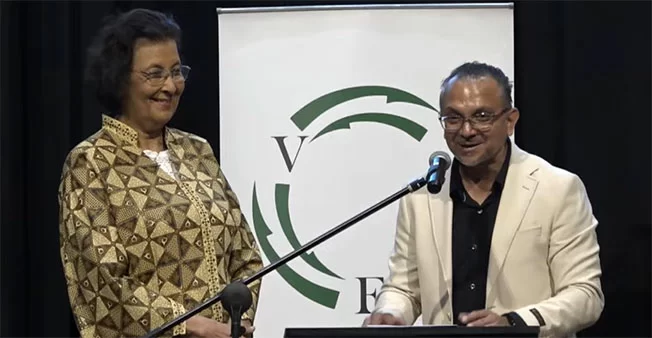
    In a decisive show of confidence, the Suriname Business Association (VSB) has unanimously reappointed Rekha Bissumbhar and Mervel Kotzebue to continue leading the organization for another three-year term spanning 2025-2029. The ratification occurred during the general members’ assembly where representatives voiced overwhelming support through acclamation.

    The extended nomination period yielded no alternative candidates, paving the way for the current leadership’s uncontested continuation. The attending membership formally endorsed the board’s proposal with enthusiastic applause, signaling strong approval of the incumbent administration’s direction.

    Speaking on behalf of both appointees, Chairwoman Bissumbhar expressed gratitude for the renewed mandate, pledging their complete dedication to further strengthening the organization’s capabilities and influence. “We are honored by this demonstration of trust and commit to intensifying our efforts in advancing VSB’s strategic objectives,” Bissumbhar stated.

    The leadership duo brings complementary expertise from critical economic sectors. Bissumbhar contributes over 25 years of executive experience from Suriname’s oil and gas industry, currently serving as Director Upstream at Staatsolie where she oversees exploration and production operations. Kotzebue, as CEO of DP World Paramaribo, offers extensive maritime and logistics sector knowledge, having previously represented the transport industry within VSB’s governance structure.

    This continuity in leadership comes at a pivotal time for Surinamese businesses navigating global economic challenges and regional opportunities. The reappointment suggests member confidence in the current strategic trajectory and institutional stability.

  • Flow employee recognised for outstanding customer service at CACU awards

    Flow employee recognised for outstanding customer service at CACU awards

    KINGSTON, Jamaica — Alicia Tucker, a Business Support Officer at telecommunications provider Flow Jamaica, has been distinguished with the Consumer Advisory Committee on Utilities (CACU) Customer Service Distinction Award for her exceptional client relationship management. The honor was formally presented during a ceremony held at the Jamaica Pegasus Hotel on November 26.

    Tucker, who specializes in servicing Liberty Business clients, stood out among seven shortlisted Flow employees, all nominated directly by customers for their consistent performance in issue resolution, relationship maintenance, and overall service excellence. In her acceptance remarks, Tucker emphasized that her professional philosophy is deeply rooted in authentic empathy and a person-first approach.

    “My methodology is driven by profound understanding and empathetic engagement,” Tucker stated. “Everyone values exceptional customer treatment, and being in a role that allows me to provide such service, I adhere to the principle of treating customers exactly as I would wish to be treated. Investing time to comprehend a client’s unique circumstances can convert even highly difficult exchanges into opportunities for trust-building and positive engagement.”

    Other notable nominees included customer service agents Anna-Kay Coward and Yashemabeth Walker, operations associate manager Kenroy Bartley, as well as technicians Omar Simpson, Oneil Livermore, and Leo Martin—the latter securing the first runner-up accolode.

    Tucker further highlighted that the core values of effective customer service are universally embraced within the Flow corporate environment. “Adopting a customer-centric model demands patience, humility, and mutual respect in every task and interaction. By upholding these standards, we not only enhance customer relations but also guarantee that each individual feels genuinely appreciated and assisted.”

    This award underscores Flow Jamaica’s ongoing organizational commitment to elevating customer experience and reinforcing service quality across all client touchpoints.

  • Dominican economist at FIED urges Africa to build its own farm–to–market highways

    Dominican economist at FIED urges Africa to build its own farm–to–market highways

    At the International Forum of Dynamic Women Entrepreneurs (FIED) in Ouagadougou, agricultural economist McCarthy Marie delivered a compelling vision for transforming Africa’s agricultural trade landscape. Speaking before delegates from approximately 30 African nations, Marie emphasized that unlocking the full potential of intra-African trade requires urgent investment in physical infrastructure and thoughtful food processing policies.

    The Dominican economist, who accompanied Creole music icon Ophelia to the forum, presented a dual-focused strategy during a high-level panel on strengthening agricultural trade. His first priority addressed the continent’s infrastructure deficit, noting that reliable transportation networks form the foundation of successful trade ecosystems.

    “We must establish efficient pathways from farming communities to distribution centers,” Marie asserted. “This demands substantial investment not just in export corridors but within rural areas themselves—roads, storage facilities, logistics systems, and market infrastructure are all essential components.”

    Marie highlighted the paradoxical reality where shipping agricultural products to Europe often proves easier and cheaper than transporting them to neighboring African regions. He advocated for developing an integrated continental grid of farm-to-market highways connecting West, Central, East, and Southern Africa through both road and rail networks.

    Turning to food policy, the economist issued a cautionary warning based on Caribbean experiences with ultra-processed foods. He noted that aggressive promotion of heavily processed products has led to devastating health consequences, including skyrocketing rates of diabetes, hypertension, and cardiovascular diseases that now overwhelm public health budgets.

    “African nations have the unique opportunity to design food systems that protect public health rather than compromise it,” Marie advised. “Processing is necessary, but over-processing creates preventable health crises.”

    The economist pointed to Burkina Faso’s cotton sector as an exemplary model of value chain development. He praised how Burkinabè producers have mastered the entire production process—from cultivation to spinning, dyeing, design, and garment fabrication—thereby capturing more value within the country.

    Marie further advocated for increased utilization of intellectual property tools, particularly geographical indications. He suggested that legally protecting products like Burkinabè cotton textiles through geographical indications could significantly enhance their market value and establish recognizable quality benchmarks worldwide.

    The forum, which gathered entrepreneurs, investors, and policymakers from across Africa, focused on practical strategies to strengthen intra-continental trade, with agriculture identified as a crucial driver for job creation, food security, and industrialization.

  • FIHAV 2025 ends with Cuba’s economic highlights

    FIHAV 2025 ends with Cuba’s economic highlights

    Havana’s International Trade Fair has become the focal point for significant foreign investment policy revelations, with government officials detailing an ambitious macroeconomic stabilization program. Deputy Prime Minister and Minister of Foreign Trade and Foreign Investment Oscar Perez-Oliva presented these transformative measures during the 8th Investment Forum, capturing the attention of international companies and economic experts alike.

    The comprehensive reforms include the strategic expansion of Special Economic Zones beyond the established Mariel Special Development Zone (ZEDM) model. These new zones will target specific sectors including technology parks and real estate development, creating specialized hubs for foreign investment.

    Financial innovation forms a cornerstone of the new policy framework, particularly through Selective Swap Operations. This sophisticated financial mechanism enables targeted debt restructuring to generate foreign currency earnings and secure international financing. The government simultaneously introduced a groundbreaking real estate initiative that allows foreign investors to fund residential projects under specific conditions.

    All proposed business ventures must demonstrate financial self-sufficiency in foreign currency while adhering to stringent requirements for heritage conservation, energy efficiency standards, and implementation of renewable energy sources. These environmental and cultural protections form an integral part of the investment criteria, ensuring sustainable development aligns with economic objectives.