作者: admin

  • Emergency at Sea

    Emergency at Sea

    A life-threatening medical emergency at sea ended with a successful rescue last Thursday, after a team of off-duty medical providers and Trinidad and Tobago Defence Force members stepped in to save an elderly female passenger on the fast ferry MV Buccoo Reef. The incident unfolded around 7:30 a.m., roughly one hour into the vessel’s scheduled voyage from Port of Spain to Scarborough, when the woman suddenly began experiencing severe chest pain before losing consciousness. What followed was a coordinated, race-against-time effort that has since sparked calls for mandatory first aid training for all ferry crew members.

    When the emergency was first announced over the ferry’s public address system, no crew members immediately stepped forward to assist. Akiela Chance, a Defence Force officer traveling on the ferry, was the first to respond to the passenger’s side. As she recounted to the *Express* on Saturday, “I was the female soldier present, and I was the first person to step in and assist the elderly lady while others stood by. I approached her and asked what the issue was and whether she had any known medical conditions. I was told she was experiencing chest pain.”

    Chance worked with another passenger to carefully move the seated woman to the floor, adjusted her clothing to ease her breathing while preserving her privacy, and immediately started cardiopulmonary resuscitation (CPR). She then instructed other bystanders to repeat the call for any medical professionals on board. A medical kit was retrieved, and 15 minutes later, Dr. Emillie Alpheus, an accident and emergency registrar at Scarborough General Hospital, arrived at the scene. Coast Guard Petty Officer Noko Baird soon joined to assist with continuing compressions before Alpheus took over lead resuscitation efforts.

    Upon reaching the patient, Alpheus found the woman already unresponsive with no detectable pulse, and immediately requested an Automated External Defibrillator (AED) — a piece of life-saving equipment she was surprised to find the ferry actually carried. As Alpheus waited for the device and began chest compressions alone, a second physician, an American vacationing on the ferry who was certified in Basic Life Support, offered to take turns performing compressions, which are physically draining to administer continuously.

    The team split roles: the visiting physician led chest compressions while Alpheus managed the patient’s airway, following the standard 30 compressions to two rescue breaths protocol. When the AED arrived, they delivered a defibrillation shock to the patient’s heart, then immediately resumed CPR. Mid-cycle, Alpheus detected the patient pushing against the airway device, and after completing the compression cycle, confirmed the woman had achieved Return of Spontaneous Circulation (ROSC) — meaning her heart had restarted. The elderly woman soon regained consciousness.

    Following the successful revival, the captain turned the ferry back to Port of Spain, with Coast Guard vessels escorting the vessel to port. Ambulance crews were already on standby at the terminal, and immediately transferred the patient to a nearby hospital for ongoing care. As of the latest update, the woman remains hospitalized but is recovering steadily.

    Alpheus, who shared that this was the second life-saving CPR effort she has led in two years, expressed gratitude for the positive outcome in an interview with the *Express*. “I just glad it was a good outcome. I am thankful for all who was around that was able to help and lend a holding hand — the other physician who was on vacation, the patient care assistant and the other members of staff from the Buccoo Reef. I am grateful that we were able to help this family. I got word from her relatives that she is doing well and from the doctors over there that she is doing better. So thankful for that and praises to God,” she said.

    In an official statement issued the day of the incident, the Port Authority of Trinidad and Tobago (PATT) confirmed the medical emergency, activated emergency protocols, and confirmed that ambulance crews met the vessel on its return to port. The authority declined to comment on the patient’s specific medical condition per privacy guidelines.

    A video of the rescue circulating on social media originally misstated the details of the incident, but the woman who recorded the video corrected the account in a public comment, clarifying that the woman suffered a potential cardiac event rather than a simple fainting spell, and that two off-duty doctors led the rescue rather than crew. She also noted that untrained crew members appeared disoriented during the emergency, writing, “They need to train boat crew in first aid. Everyone was moving like headless chicken. But God is good.”

    Chance echoed that call for reform, telling the *Express* that all ferry crew members should receive formal, up-to-date first aid and emergency response training to be prepared for similar incidents at sea. Members of the public have also shared widespread wishes for the patient’s full recovery following the viral spread of the rescue video.

  • Slain WPC was dedicated mother, efficient worker

    Slain WPC was dedicated mother, efficient worker

    A 10-year veteran of Trinidad and Tobago’s municipal police force and a devoted mother of three has been lost to a fatal on-duty shooting that has shaken the southern city of San Fernando and sparked urgent calls for political accountability over rising violent crime.

    Forty-two-year-old Anuska Eversley, an acting corporal based at the San Fernando Municipal Police Station, died early Sunday after being shot in the neck while on duty. A resident of Edinburgh 500, she leaves behind three children aged 18, 15 and 7. The shooting was also followed by the theft of multiple firearms and rounds of ammunition from the station’s secure strong room.

    Eversley’s death carries an extra layer of tragedy: it came exactly three years after her brother was gunned down in a separate violent attack. On the same date in 2021, Daniel Eversley, known by the nickname “Ghost”, was killed in a shooting at a car wash in Forres Park, Claxton Bay.

    San Fernando Mayor Robert Parris, who has known Eversley professionally for years, shared intimate memories that painted a portrait of a woman fully committed to both her career and her family. Two years ago, Parris said, Eversley reached out to him to calm her daughter’s pre-exam anxiety ahead of the national Secondary Entrance Assessment (SEA). That small interaction forged a parental bond between them.

    “After that incident, whenever we met, we talked as parents, about our children,” Parris recalled in an interview with the Express. “That’s how I knew she was such a dedicated mother.”

    Across his 16 years working with the San Fernando City Corporation, Parris added, Eversley earned a reputation as an exceptionally efficient, reliable member of the municipal police force. In an official statement of condolence released Monday, Parris framed her death as an incalculable loss for the entire community.

    “This is a devastating loss for our city. I have known acting Corporal Eversley for many years, and I remember her as a dedicated and committed officer who served with quiet strength, professionalism, and pride. Her passing has left a profound void within the Municipal Police and the wider San Fernando community,” the statement read.

    Parris has called on Minister of Homeland Security Roger Alexander and Commissioner of Police Allister Guevarro to launch a prompt, full investigation into what he described as a “tragic and disturbing event.” Senior law enforcement colleagues echoed Parris’ praise, with one senior officer noting Eversley consistently performed her duties to the best of her ability and was widely respected across the force.

    Wendell Eversley, the victim’s uncle and a prominent local activist who survived being held hostage during the 1990 coup attempt in Port of Spain, has publicly called for the immediate dismissal of both the Minister of Homeland Security and the Minister of Defence over the killing. He called the attack on a police station “an indictment on the State,” noting it is the most severe incident targeting a police facility in the country since the 1990 coup bombing of the Port of Spain Police Headquarters.

    Pointing to the stolen cache of guns and ammunition removed from the station’s strong room after the attack, Wendell Eversley raised alarming questions about national security. “Are we going to see another 1990? Look around and see. Are we all safe in this country?” he asked. He also questioned the government’s repeated promises to curb violent crime, noting that criminals appear to be gaining ground amid the current wave of violence.

    With the ruling United National Congress approaching its first anniversary in power, Wendell Eversley questioned what the party could possibly celebrate after a sustained period of rising murder rates. “Inviting the public to come out. To come out and celebrate what? Celebrate blood flowing on the streets? Celebrating murders upon murders?” he said. In a social media video posted Monday, he added that the nation could no longer accept a daily reality of bloodshed. “It is time for the minister of Homeland Security and the minister of Defence to be fired. It is a sad day for Trinidad and Tobago, and mainly the State,” he said.

    The Trinidad and Tobago Municipal Police Service (TTMPS) also released an official statement confirming Eversley first enlisted in the municipal police force on July 1, 2008, and had been assigned to the San Fernando unit in her most recent posting.

    “The TTMPS and its partner agencies extend sincere condolences to her relatives, friends and colleagues,” the release said.

  • Alexander: Full confidence  in TTPS to probe WPC killing

    Alexander: Full confidence in TTPS to probe WPC killing

    A shocking brazen attack inside a Trinidad and Tobago police station has left one veteran officer dead and triggered a major national security manhunt after dozens of firearms and thousands of rounds of ammunition were stolen from the facility’s secured armory. The incident unfolded Sunday, April 19, 2026, at the San Fernando Municipal Police Station on Lady Hailes Avenue, where a colleague discovered the body of 42-year-old Corporal Anuska Eversley, a mother of three, who suffered a fatal gunshot wound to the neck. An initial inventory by law enforcement confirmed that 62 firearms and more than 4,000 rounds of ammunition were missing from the station’s stored cache, prompting the highest level of response from the country’s national security agencies.

    Hours after the grim discovery, Minister of Homeland Security Roger Alexander addressed reporters at the Southern Division Headquarters in San Fernando, where he publicly reaffirmed his unwavering confidence in the Trinidad and Tobago Police Service (TTPS) to lead a thorough investigation and bring the perpetrators to justice. When pressed on whether the government had discussed implementing a nationwide curfew to curb escalating violence following the attack, Alexander confirmed no such proposal had been put forward for consideration, noting that Attorney General of Trinidad and Tobago had already received a preliminary briefing on the incident and would receive updates as the investigation progresses.

    Alexander pushed back against growing public criticism that the current administration is failing to get a handle on rising violent crime, arguing that years of unaddressed criminal activity cannot be reversed overnight. “Criminality is something that grows from strength to strength. So we must now intercept it, treat with it, dismantle it, and then you will see the benefits of it. It is not a ‘now process’—it is an ongoing process,” he told reporters. When asked about a social media post from Wendell Eversley, a relative of the slain officer, calling for his dismissal, Alexander said he had not yet seen the post and would not comment until he could review the content directly.

    In a separate statement released to media Sunday, Minister of Defence Wayne Sturge announced the Trinidad and Tobago Defence Force (TTDF) had immediately moved to an elevated operational posture to support the TTPS and Municipal Police Service in the ongoing investigation and manhunt. Sturge urged the public to remain calm and avoid unsubstantiated rumors, noting that intelligence assets have been deployed across the country and continuous monitoring is underway to respond to any emerging threats. “All necessary resources are being applied to secure the environment and advance the investigation,” Sturge said, adding that the defence ministry is coordinating closely with police leadership and the broader national security network to deliver a unified, disciplined response.

    Local Government Minister Khadijah Ameen echoed calls for patience, urging members of the public and media to refrain from speculation that could undermine the ongoing investigation. In an official statement, Ameen said she is awaiting a full briefing from the Assistant Commissioner responsible for Municipal Police before offering further comment, and extended deep condolences to Eversley’s family, loved ones, and fellow officers. The Ministry of Local Government confirmed the tragedy in an official release, noting that Eversley was killed while on active duty, and that investigators are working systematically to map out the full sequence of events. “This tragic incident serves as a solemn reminder of the risks undertaken daily by members of the Municipal Police Service in their commitment to public safety and national service,” the release read. The ministry pledged to release additional details to the public as soon as they are cleared by investigators.

    The high-profile attack has reignited long-simmering public debate over government efforts to combat organized crime and improve security at law enforcement facilities across the twin-island nation, with investigators now working against the clock to recover the stolen cache of weapons before they can be trafficked into illegal street networks.

  • …Family’s anguish after cop murdered

    …Family’s anguish after cop murdered

    In the pre-dawn hours of Sunday, a senseless act of violence at a southern Trinidad and Tobago police station left a decorated 15-year veteran officer dead and triggered a massive manhunt after more than 60 firearms and thousands of rounds of ammunition were stolen from the facility’s secure strong room.

    Thirty-eight-year-old Anuska Eversley, an acting corporal with the Trinidad and Tobago Municipal Police Service (TTMPS), was found fatally shot in the neck by a colleague just after 4:40 a.m. at the San Fernando Municipal Police Station, located on King’s Wharf along Lady Hailes Avenue. The fellow officer, returning to the station’s charge room after an absence, discovered the space dark, the strong room ajar, and blood seeping from Eversley’s dormitory quarters, where her half-clothed body lay on a mattress. She had last been seen alive just before 11 p.m. Saturday while on duty.

    The brutal killing has sent waves of grief and shock through the officer’s family, her colleagues, and the Trinidad and Tobago public. Grieving relatives gathered at the cordoned-off crime scene Sunday morning, weeping openly as one heartbroken relative cried out, “WHY Father, why?” in anguish over the loss.

    Within hours of the discovery, Police Commissioner Allister Guevarro confirmed that a serving police officer had been taken into custody for questioning in connection with the attack, and all officers who were on shift with Eversley the night of the killing would be required to provide formal statements as part of the investigation. Addressing reporters at a press briefing at the Southern Division headquarters in San Fernando, Guevarra called the incident an immediate top priority for law enforcement, and spoke candidly about the heartbreak that would come from one of their own being involved.

    “I would be very disheartened that an officer, sworn to protect the rights of citizens and uphold the laws of Trinidad and Tobago, could do something so heinous to one of his officers,” he said.

    Initial official inventories of the stolen arsenal confirm attackers made off with 52 Glock pistols, six shotguns, four MPX-style rifles, and more than 4,000 rounds of 9mm ammunition. A multi-agency investigative response has been launched, involving homicide detectives from Homicide Region III, tactical teams from the Inter-Agency Task Force, the Multi-Option Police Section, the Southern Division Task Force, and air and coastal support units. Crime scene investigators have already begun processing the site, collecting forensic evidence and conducting fingerprint analysis, and the station remains on lockdown as the probe progresses.

    Commissioner Guevarro told reporters Sunday that investigators have not uncovered any evidence to suggest the attack was a coordinated targeted strike on law enforcement by an external criminal group, adding that no further details would be released while the investigation is active. When asked about the massive security breach that allowed the weapons to be stolen from the station’s secure storage, Guevarro said all gaps would be uncovered during the investigation and the incident would serve as a learning moment to improve future security protocols.

    Assistant Commissioner of Municipal Police Surrendra Sagramsingh clarified that approximately seven officers were scheduled for the overnight shift from Saturday to Sunday, though several were deployed to outlying substations, leaving roughly five officers on-site at the San Fernando main station. He confirmed that Eversley was not alone on the premises when she was killed, contradicting early unconfirmed reports that she had been working the overnight shift by herself.

    Addressing public anxiety over the stolen weapons cache and the brazen attack on a police facility, Guevarro moved quickly to reassure the public that the incident is an isolated one, and that there is no cause for undue panic. He emphasized that existing emergency powers granted under the current state of emergency are sufficient for law enforcement to respond effectively, and that there are no plans to implement new curfews or expand emergency measures at this time.

    “Let them know that of the resolve of the law enforcement, not just the TTPS or the municipal police,” Guevarro said, speaking directly to the perpetrators. “We will not sit idly by and allow this sweet country of Trinidad and Tobago to be overrun by any criminality behaviour. We have less than 500 serious criminals in this country holding 1.4 million persons to ransom; we will not allow that to happen, rest assured.”

    Guevarro extended official condolences to Eversley’s family, friends, and colleagues, noting that the 15-year veteran left her home Saturday night to serve the public, and ultimately made the ultimate sacrifice for her community. “She lost her life while on duty. She had parents and she had children. I urge us all to take cognisance of the fact that police officers make the ultimate sacrifice,” he said.

    As of Sunday evening, investigations remain ongoing, with law enforcement working to recover all stolen firearms and bring all those responsible for Eversley’s killing to justice.

  • Stolen guns could fuel surge in violent crime

    Stolen guns could fuel surge in violent crime

    A brazen attack on the San Fernando Municipal Police Station that left on-duty officer Woman Police Constable Anuska Eversley dead and an arsenal of 56 firearms and thousands of ammunition rounds missing has triggered urgent warnings from top security experts, who say the stolen weapons are likely already in the possession of criminal networks and could spark a major surge in violent street and organized crime across the country.

    The incident, which unfolded at a facility designed to be one of the most secure state-controlled sites in the region, has prompted searing criticism of existing national security protocols, particularly as the attack took place while the nation was already under a state of emergency that grants law enforcement expanded arrest and investigative powers.

    Security consultant Dr. Garvin Heerah, in an interview with local newspaper *Express* following the attack and death of Eversley, called the incident a deeply troubling indicator of how rapidly organized criminal groups have grown in boldness, capability, and ambition. Unlike past criminal activity that largely operated on the margins of state control, Heerah emphasized that this attack marks a dangerous new phase: criminal networks are now willing to directly target state security infrastructure, kill active law enforcement officers, and seize military-grade weaponry to expand their own operational power.

    “The killing of a police officer in this context is not merely an attack on an individual public servant, it is a direct assault on the sovereign authority of the state,” Heerah explained. He added that the breach represents one of the most sensitive and urgent national security threats the country has faced in recent years, while also exposing critical flaws in the multi-layered security systems that are supposed to protect law enforcement facilities across the nation.

    Police stations and municipal law enforcement bases are required to be secured through a combination of physical barriers, procedural checks, and technological monitoring, making a breach of this scale particularly alarming. Heerah noted that the attack points to systemic vulnerabilities that demand immediate, comprehensive assessment and remediation at every similar law enforcement installation across the country.

    Beyond the systemic failure, the loss of such a large cache of weapons creates an immediate public safety crisis. Heerah warned that the stolen firearms, now circulating among criminal elements, carry a drastically elevated risk of widespread violent crime, including gang-related reprisal attacks, escalating inter-gang conflict, and expanded large-scale organized criminal operations.

    To address the crisis, Heerah has called on Police Commissioner Allister Guevarro to launch a full-scale, multi-agency investigation and response. He stressed that coordinated collaboration between intelligence units, investigative divisions, forensic services, and specialized tactical teams will be critical to unraveling the attack. Heerah also noted that advanced technological tools, including surveillance analytics, digital forensics, communications tracking, and cross-agency data integration, will be essential to identifying the perpetrators, reconstructing the sequence of the attack, and recovering the stolen arsenal before it can be deployed in future criminal activity.

    Heerah framed the incident as a critical wake-up call for national security leaders, urging an immediate overhaul of security protocols at all state security installations across the island. “Immediate reviews of access control systems, armoury management procedures, personnel vetting, surveillance coverage, and rapid response mechanisms must be undertaken as urgent precautionary measures,” he said.

    Leading criminologist Dr. Renee Cummings echoed these concerns, going a step further to argue that the attack amounts to a damning indictment of the country’s protective services, especially given the ongoing state of emergency that grants police maximum legal authority to prevent such incidents.

    Cummings posed a sharp rhetorical question: “How does a failure of this magnitude occur during a period of maximum authority?” She explained that even with expanded police powers, basic security controls failed across every critical domain: armoury security, site surveillance, command oversight, and on-duty personnel protection.

    She emphasized that the attack took place inside a facility that was supposed to operate as a hardened, impenetrable fortress, designed to withstand criminal attempts at intrusion. “When the State cannot secure the controlled environment of its own installation or safeguard an on-duty officer within it, its capacity to deliver public safety at scale is not credible,” Cummings said. “If the State cannot guarantee the controlled safety of one officer within its own walls, on what basis can it claim to secure the safety of an entire nation?”

  • Dominican Republic aviation sector generates US$400 million annually

    Dominican Republic aviation sector generates US$400 million annually

    The Caribbean nation of the Dominican Republic is experiencing a robust, sustained expansion in its general aviation sector, with official data showing that the industry now contributes roughly $400 million in annual economic output. This rapid growth is overwhelmingly fueled by rising demand for private jet and executive travel, a trend deeply tied to the country’s thriving international tourism industry. Newly released statistics from the Dominican Airport Department confirm strong operational activity across the nation’s major air facilities, cementing the country’s growing reputation as a leading private aviation hub in the Caribbean region.

    Looking at early 2026 operational data, the sector’s momentum remains clearly visible across the country’s busiest general aviation airports. In January 2026, La Romana International Airport claimed the top spot for private, non-commercial flight operations, recording 482 total takeoffs and landings. It was followed closely by La Isabela International Airport—better known locally as El Higüero—with 410 operations, and Punta Cana International Airport, one of the nation’s top tourism gateways, with 380. By February 2026, the rankings shifted slightly, with El Higüero moving into first place with 478 operations. La Romana dropped to second with 402, while Punta Cana held third position with 318. Several other airports across the country also contribute to the growing sector, including Cabo Rojo Airport, Osvaldo Virgil Domestic Airport, Samaná El Catey International Airport, and Gregorio Luperón International Airport.

    Year-over-year data leaves no doubt that the upward trajectory is accelerating, rather than slowing. Total general aviation operations across the country jumped from 13,951 in 2024 to 18,909 in 2025, a 35% increase that marks one of the fastest growth rates for general aviation in the Caribbean. El Higüero, Punta Cana, and La Romana have consistently remained the three busiest hubs for this activity throughout the expansion. Through the first two months of 2026, the nation has already logged thousands of private operations, including a steady stream of inbound private jet flights originating from Miami. These flights are part of targeted tourism initiatives such as the “Flying Caribbean Adventure,” a program designed to attract high-net-worth international travelers to less-visited Dominican destinations including Montecristi. Beyond expanding the aviation sector itself, these initiatives deliver tangible economic benefits to local communities, driving increased spending on hospitality, local attractions, and services that support livelihoods across the country.

  • Dominican Republic showcases aviation potential at SUN ’n FUN Expo 2026

    Dominican Republic showcases aviation potential at SUN ’n FUN Expo 2026

    LAKELAND, Florida — The Dominican Republic’s national Airport Department has wrapped up a high-profile, productive run of participation at SUN ‘n FUN Aerospace Expo 2026, one of the most prominent global gatherings for the general aviation industry, which took place this year in central Florida’s Lakeland.

    Over the course of the event, the Dominican delegation hosted a dedicated exhibition booth designed to showcase the Caribbean nation’s growing aviation infrastructure, investment opportunities, and unique advantages for general aviation operators. The space drew steady interest from a broad cross-section of attendees, from licensed private pilots and commercial aviation business owners to hobbyist aviation enthusiasts, all curious about what the Dominican Republic has to offer for the sector.

    Central to the delegation’s outreach was the core branding message: “Dominican Republic is friendly for pilots.” Team members used the platform to highlight key assets that set the country apart, including its extensive air connectivity across the Caribbean and the Americas, regulatory and infrastructure conditions favorable to general aviation operations, and ongoing public and private investments to expand and upgrade the country’s aeronautical ecosystem.

    Backed by full support from the Dominican Republic Ministry of Tourism, the country’s involvement in the 2026 expo extended far beyond simple exhibition work. Delegates also held a series of technical knowledge-sharing sessions and strategic partnership meetings with international industry leaders, with the stated goal of aligning the country’s aeronautical development with global best practices and cutting-edge innovation in the sector.

    Senior Dominican officials noted in closing remarks that consistent participation in major international aviation events does more than raise the country’s profile: it cements the Dominican Republic’s standing as a top competitive destination for aeronautical tourism in the Caribbean, while also demonstrating the government and industry’s shared commitment to driving long-term, sustainable growth for the entire national aeronautical sector.

  • Meeting between Cuban and U.S. delegations confirmed

    Meeting between Cuban and U.S. delegations confirmed

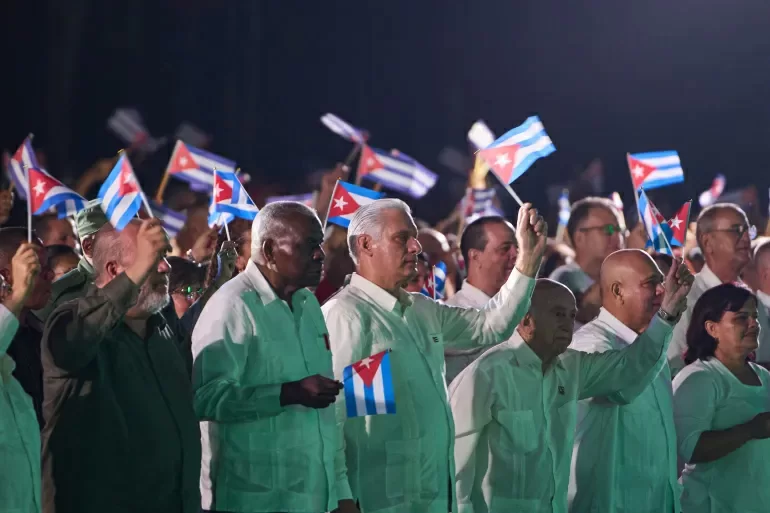
    In an exclusive interview with Cuba’s official state newspaper Granma published on April 20, 2026, a senior Cuban foreign ministry official has confirmed that recent high-level diplomatic meetings between Cuban and U.S. delegations took place on Cuban soil, while pushing back against inaccurate foreign media reporting about the nature of the talks.

    Alejandro García del Toro, deputy director for U.S. Affairs at Cuba’s Ministry of Foreign Affairs (Minrex), spoke publicly to Granma to address growing speculation in international press coverage surrounding the closed-door bilateral discussions. García del Toro acknowledged that the negotiations are a sensitive matter that Cuban authorities have intentionally handled with deliberate discretion, a longstanding approach for diplomatic engagement with the United States that has been consistent across years of rocky bilateral relations.

    Contrary to unconfirmed claims circulating in some foreign outlets, García del Toro officially confirmed that the meeting between the two delegations occurred recently in Cuba. The U.S. delegation included ranking officials at the level of undersecretary of State, while Cuba’s side was represented by officials at the vice-minister level from the foreign ministry.

    García del Toro explicitly refuted a narrative that had been circulated by some U.S. media outlets, which claimed that one side had imposed rigid timelines for progress or used coercive language during the talks. He clarified that the entire exchange between the two delegations was conducted on the basis of mutual respect and professional diplomatic protocol, rejecting any characterization of the discussions as confrontational or one-sided.

    A core priority for the Cuban delegation during the talks, García del Toro emphasized, was pushing for the elimination of the U.S.-imposed energy blockade on Cuba. He described the long-running economic coercion measure as an unjustified punishment that inflicts widespread harm on the entire Cuban civilian population. Beyond its impact on Cuba, García del Toro framed the blockade as a form of global blackmail against sovereign nations, noting that all independent states hold the inherent right to export fuel to Cuba in line with established principles of free international trade.

  • 7 charged in fatal attack on garbage truck driver in Santiago

    7 charged in fatal attack on garbage truck driver in Santiago

    In the Dominican Republic’s second-largest city of Santiago, a brutal coordinated fatal attack has left one man dead and seven motorcycle taxi drivers facing serious murder charges, with state prosecutors now pushing to hold the accused behind bars ahead of their trial. The victim, identified as Deivy Carlos Abreu Quezada, worked as a garbage truck driver when he was ambushed by the group following a multi-kilometer chase that ended in the immediate grounds of the city’s Palace of Justice.

    Prosecutors have formally named the seven defendants as Adony Antonio Ureña Ventura, Andrés Monclú González, Carlos Andrés Roa Morán, Miguel García Balbuena, Joanfry Joel Núñez, Juan Carlos Soto Ortiz, and Kevin Francisco Metz Cruz. Court documents allege the men acted in concert to pursue, block, and carry out the deadly assault on Abreu Quezada. After the attack, the injured driver was rushed to Santiago’s Presidente Estrella Ureña Hospital, where medical teams were unable to save his life.

    Top law enforcement officials have moved swiftly to formalize charges in the high-profile case. Dominican Attorney General Yeni Berenice Reynoso directly ordered local prosecutors to file preliminary murder charges against all seven suspects. Quirsa Abreu Peña, chief prosecutor for the Santiago region, has characterized the killing as a pre-planned, coordinated attack rather than a spontaneous outbreak of violence stemming from a road dispute.

    Early investigative findings outline how the deadly confrontation unfolded. The conflict erupted from a minor traffic accident between Abreu Quezada’s garbage truck and the motorcyclists, investigators confirmed. What began as a small roadway dispute quickly escalated, with the group of mototaxi drivers launching a pursuit that stretched for several kilometers as they repeatedly tried to force the garbage truck to stop. Desperate to escape the pursuing group, Abreu Quezada drove to the Palace of Justice seeking safety — but the mob followed him to the courthouse steps, where they carried out the fatal stabbing attack, according to official allegations.

  • Blokkade Straat van Hormuz remt Iran-VS gesprekken

    Blokkade Straat van Hormuz remt Iran-VS gesprekken

    Tensions between Iran and the United States have reached a new boiling point in the Middle East, with Tehran issuing a non-negotiable precondition for the next round of planned peace talks set to take place in Islamabad, multiple informed sources have confirmed. Iran will only participate in the negotiations if Washington immediately lifts its ongoing naval blockade of Iranian ports, a position that has been formally backed by both a senior insider source speaking to Al Jazeera and Iran’s ambassador to Pakistan.

    Pakistan, which is facilitating the proposed talks, has launched intensive diplomatic outreach to push for Iran’s participation: both the country’s prime minister and foreign minister have held direct talks with Iran’s president and foreign minister to persuade Tehran to join the dialogue, while Iran’s Supreme National Security Council convened a special meeting to deliberate on the decision. Despite these diplomatic efforts, deep skepticism persists across Tehran’s leadership. Iranian officials and insiders warn that the talks could drag on indefinitely without any concrete progress on two core demands: the full lifting of crippling Western sanctions and the unfreezing of billions of dollars in Iranian assets held overseas. Additional distrust stems from past negotiation rounds, which were ultimately followed by joint US-Israeli military conflict, leading Iranian sources to frame the current talks proposal as a potential strategic distraction rather than a genuine path to peace. Official Iranian state media has further underscored this position, with the state news agency IRIB confirming that Tehran currently has no plans to attend the next round of talks, while other local outlets point to the ongoing blockade and what they call Washington’s “unreasonable and unrealistic demands” as major barriers to any productive dialogue.

    The diplomatic standoff has been compounded by a recent military escalation, announced by former US President Donald Trump: US forces seized an Iranian cargo vessel, the Touska, as it attempted to pass through the US blockade near the Strait of Hormuz. According to Trump, the vessel’s crew ignored repeated warnings from a US guided-missile destroyer operating in the Gulf of Oman, prompting US forces to damage the ship’s engine room before US Marines boarded and seized the vessel.

    In response to what Tehran calls “armed piracy” by the US, Iran’s military has issued a formal warning of imminent retaliation. A spokesperson for the Khatam Al-Anbiya military command told Iranian news agency ISNA that the Islamic Republic of Iran will respond soon and carry out retribution for the US military action.

    The escalating tensions have already sent shockwaves through global energy markets, driving a sharp spike in international crude oil prices. On Monday, the US benchmark West Texas Intermediate (WTI) jumped 7.5% to settle at $90.17 per barrel, while the global benchmark Brent crude rose 6.5% to hit $96.27 per barrel. Data from shipping analytics firm Kpler shows that more than 20 vessels passed through the Strait of Hormuz on Saturday, the highest daily volume since March 1, including five vessels carrying Iranian cargoes such as oil products and metals.

    The ongoing crisis carries sweeping global economic consequences, as the Strait of Hormuz remains one of the world’s most critical chokepoints for global energy trade. Before the current blockade was imposed, roughly 20% of the world’s daily oil supply passed through the waterway. The recent escalation-driven jump in oil prices is already fueling broader inflationary pressures, pushing up costs for consumers across every continent. Higher fuel prices trigger a cascading effect across global supply chains, raising operating costs for transportation and manufacturing sectors that are core to global economic growth, a dynamic that many economists warn could slow overall global expansion. Oil-importing developing nations are disproportionately vulnerable to these price spikes, with the potential to exacerbate existing domestic political and social unrest. Global markets and businesses are already reacting to the heightened uncertainty, with persistent price increases putting additional pressure on household budgets and pushing up costs for nearly all goods and services. For central banks around the world, this creates a difficult policy balancing act between supporting stagnant economic growth and taming persistent rising prices.