作者: admin

  • Nevis’ Hon. Eric Evelyn pays Courtesy Call on IPU Secretary General Martin Chungong

    Nevis’ Hon. Eric Evelyn pays Courtesy Call on IPU Secretary General Martin Chungong

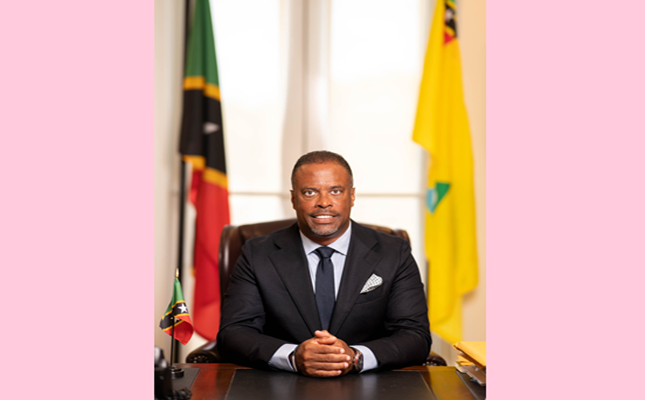
    ISTANBUL, TÜRKIYE – Diplomatic engagement between small island nations and global parliamentary bodies took center stage this month, as the 152nd Assembly of the Inter-Parliamentary Union (IPU) brought together parliamentary leaders from across the globe for talks on cross-border cooperation and shared global challenges. On the sidelines of the week-long gathering, Hon. Eric Evelyn, Deputy Premier of Nevis and elected representative to the National Assembly of the Federation of St. Kitts and Nevis, held a formal courtesy call with outgoing IPU Secretary-General Martin Chungong on April 17, 2026.

    Chungong, a trailblazing leader who made history in 2014 when he became the first African and the first non-European to take up the post of IPU Secretary-General, will wrap up his third and final term in office on June 30 this year. Throughout his 12-year tenure, Chungong has centered his leadership on advancing progressive global priorities, from youth political empowerment and gender parity in parliamentary governance to improved child health outcomes and international action on environmental sustainability. Re-elected twice to the role, he leaves a legacy of expanded inclusion and advocacy for underrepresented nations in global parliamentary dialogue.

    Evelyn, who is leading St. Kitts and Nevis’ delegation to the 152nd IPU Assembly, characterized the discussion as warm, constructive, and mutually beneficial.

    “I brought greetings from the Speaker and all Members of our National Assembly, as well as from the entire Government and people of St. Kitts and Nevis,” Evelyn shared in comments following the meeting. “I also extended our sincere gratitude to both the IPU and the Government of Türkiye for their generous hospitality, and for giving our delegation the chance to take part in this critical global gathering.”

    Beyond formal greetings, Evelyn offered his personal congratulations to Chungong for his exceptional leadership and decades of impactful contributions to global parliamentary cooperation across his three terms in office.

    In response, Chungong expressed his appreciation for St. Kitts and Nevis’ long-standing active engagement with IPU initiatives, and reaffirmed the organization’s unwavering commitment to supporting the Caribbean federation, most notably through targeted capacity-building programs for national parliamentary actors. He also issued an encouragement for the National Assembly of St. Kitts and Nevis to move toward full IPU membership in the coming years.

    Chungong underscored the IPU’s core commitment to inclusive global participation, noting that even non-member parliaments are welcomed to contribute to the body’s work through participation in key events and development-focused initiatives aligned with national priorities.

    The 152nd IPU Assembly has served as a platform for delegates to address a wide range of pressing global issues, with a particular focus this year on climate action and environmental protection – a topic close to Evelyn’s professional portfolio. In addition to his roles as Deputy Premier and parliamentarian, Evelyn serves as Minister of Agriculture and Fisheries in the Nevis Island Administration. On April 19, he took on a leading role at the assembly, moderating a dedicated workshop titled “Parliamentary Leadership in Protecting Our Blue Planet.” The session brought together parliamentary leaders to discuss urgent interconnected challenges facing coastal and island nations, including accelerating sea level rise, accelerating declines in marine biodiversity, and the urgent need to protect fragile coastal ecosystems.

    The meeting between Evelyn and Chungong marks another step in deepening ties between the Caribbean federation and the world’s largest international parliamentary organization, with continued collaboration on capacity building and climate action expected in the years ahead.

  • Backlash, debate follow viral photo of woman posing on V.C. Bird monument

    Backlash, debate follow viral photo of woman posing on V.C. Bird monument

    A photograph showing a female tourist reclining in a suggestive pose on a national monument honoring Antigua and Barbuda’s founding father has exploded across social media platforms, igniting a fierce, divided public conversation over cultural respect, public reaction, and the protection of heritage sites. The monument stands as a tribute to Sir Vere Cornwall Bird, a towering figure in the Caribbean nation’s modern history who guided Antigua and Barbuda to full independence from colonial rule in 1981. Widely celebrated as the country’s “Father of the Nation,” Bird’s legacy is a core source of national collective pride, imbuing the site with profound historical and cultural meaning that makes the viral photo all the more controversial.

    In the wake of the image’s widespread circulation, thousands of online commenters have voiced sharp condemnation of the tourist’s actions, labeling them disrespectful, offensive, and deeply inappropriate for a site of such national significance. Many argue that sacred national landmarks demand universal reverence from all visitors, regardless of their origin. Some have gone further, demanding formal consequences for the woman, ranging from financial fines to deportation, while others have raised pointed questions about site management, asking how such a photo could be taken without intervention from on-site staff.

    A consistent thread among critical voices emphasizes the responsibility of international travelers: all guests should take the time to research local cultural norms and sensitivities before visiting important heritage sites, especially those honoring revered national figures. This perspective argues that ignorance of local customs is not an excuse for behavior that insults a nation’s shared history.

    However, a growing contingent of online users has pushed back against the widespread outrage, arguing that the response to the incident has been disproportionate. Supporters of this view note that the tourist herself has already taken accountability: she voluntarily removed the original image from her social media and issued a public expression of regret after seeing the scale of the negative reaction. Many argue that the woman’s willingness to correct her mistake should de-escalate the situation, and that the continued mass sharing of the photograph is actually what amplifies the disrespect to Bird’s legacy, rather than addressing it.

    One social media user summed up this position, writing, “She’s a tourist taking a picture by a statue… she was respectful enough to remove the picture after she saw comments.” Multiple commenters have also criticized users who continue to repost the viral image, arguing that the ongoing circulation unnecessarily drags out the controversy and amplifies division for clout. Others have called for a more measured, constructive approach, framing the incident as a learning opportunity to educate travelers on cultural sensitivity rather than a moment for blanket condemnation.

    Some members of the public have even downplayed the entire incident, describing it as either a harmless misstep or a lighthearted mistake that has been blown far out of proportion. This group also points to far more pressing systemic issues facing Antigua and Barbuda that deserve far more public attention and resources than a tourist’s bad photo op.

    Beyond the immediate debate over the tourist’s actions, the incident has prompted broader institutional questions: it has forced policymakers and heritage site managers to reexamine how public monuments are protected, and whether clearer on-site signage, formal visitor guidelines, or enhanced staff training are needed to prevent similar missteps from happening in the future.

  • ABLP to Launch Manifesto Today as Campaign Enters Final Phase

    ABLP to Launch Manifesto Today as Campaign Enters Final Phase

    As the Caribbean nation of Antigua and Barbuda heads toward its upcoming general election, the ruling Antigua and Barbuda Labour Party (ABLP) is set to take a major step in its campaign on Monday, April 20, with the official launch of its election manifesto at the American University of Antigua. This confirmation came directly from Gaston Browne, the nation’s current Prime Minister and ABLP leader, during an appearance on Pointe FM’s popular Browne and Browne Show.

    During the live broadcast, Browne framed the manifesto rollout as a cornerstone of the party’s final campaign push, designed to crystalize the party’s policy agenda for voters ahead of polling day. Beyond confirming the logistics of the launch, the Prime Minister issued a public call to action for all registered voters, urging them to complete pre-election preparations well in advance to ensure they can cast their ballots without issue. Specifically, he reminded residents to check the validity of their voter identification cards, a critical step for participating in the general vote.

    Browne also emphasized that the ruling party has seen a steady uptick in grassroots support across the country in recent weeks, positioning the manifesto launch as a strategic move to build on this growing momentum as the campaign enters its final stretch. This optimistic assessment of the party’s standing was echoed by other contributors to the broadcast, who pointed to tangible indicators of ABLP’s strong organizational capacity heading into the vote.

    Among those contributors was Comrade Donna Shire, who highlighted that campaign activity has been robust and well-coordinated across every electoral constituency. Shire specifically noted that the party’s events have drawn high levels of visible, energetic participation from young voters, a trend that has boosted the campaign’s overall energy and expanded its reach to new demographics. High turnout at recent ABLP rallies and public events was also cited as further evidence of the party’s growing traction with the electorate.

    The manifesto launch arrives at a time when all political parties in Antigua and Barbuda are ramping up their outreach efforts to win over undecided voters. All competing parties are expected to center their electoral platforms on three core policy areas: economic growth strategy, expanded social welfare programs, and large-scale infrastructure development projects. While Browne stopped short of revealing specific policy pledges from the ABLP manifesto during his radio appearance, he confirmed that the document will lay out the party’s comprehensive roadmap for continuing national development and stable governance if the ABLP retains power after the election.

  • Hon. Eric Evelyn Represents St. Kitts and Nevis at 152nd IPU Assembly in Türkiye

    Hon. Eric Evelyn Represents St. Kitts and Nevis at 152nd IPU Assembly in Türkiye

    As the 152nd Assembly of the Inter-Parliamentary Union (IPU) kicked off on April 15, 2026 in Istanbul, Türkiye, the small Caribbean federation of St. Kitts and Nevis brought frontline climate perspectives to the global parliamentary stage, with Deputy Premier of Nevis and Member of Parliament Eric Evelyn leading the nation’s delegation.

    The five-day gathering, running through April 19, brings together more than 1,000 parliamentary delegates from over 150 nations, including more than 650 sitting members of parliament and dozens of parliamentary speakers. Founded as the world’s largest inclusive multilateral forum for legislative representatives, the IPU currently counts 183 member parliaments across every inhabited continent, creating space for cross-border dialogue on shared threats from climate change to geopolitical instability, and working to strengthen collaborative global governance.

    Against a backdrop of persistent global geopolitical tension and widespread socioeconomic inequality, this year’s assembly centers its general debate on a timely question: how legislative bodies can foster collective hope, and advance lasting peace and equitable justice for coming generations. Beyond plenary discussions, delegates will deliberate on two landmark resolutions set to guide global parliamentary action in the coming years. The first, put forward by the IPU Standing Committee on Peace and International Security, examines parliaments’ critical role in building robust, inclusive post-conflict management frameworks to support sustained stability in fragile regions. The second, led by the Standing Committee on Sustainable Development, focuses on forging a fairer, more resilient global economy through strengthened cross-border cooperation on taxation and trade policy—an issue of outsized importance to Small Island Developing States (SIDS) like St. Kitts and Nevis, which face unique economic vulnerabilities in the global trading system.

    A key highlight of Evelyn’s participation at the assembly sees him take on the role of moderator for a dedicated high-level workshop focused on ocean conservation and climate action, titled “Parliamentary leadership in protecting our blue planet.” The session will center on urgent, underaddressed global challenges: accelerating sea level rise that threatens to displace coastal and island communities, the ongoing decline of vulnerable marine biodiversity, and the preservation of critical coastal ecosystems that buffer communities from climate disasters and support local livelihoods.

    For St. Kitts and Nevis, a low-lying island nation already grappling with the tangible, daily impacts of climate change, Evelyn’s leadership of this workshop brings much-needed visibility to the perspectives of SIDS, which are often disproportionately affected by climate change despite contributing the least to global greenhouse gas emissions. The delegation’s presence at the 152nd IPU Assembly underscores St. Kitts and Nevis’s longstanding commitment to active engagement in global multilateral dialogue, and its dedication to advancing priorities that matter to both the federation and the wider Caribbean region on the international stage.

  • WATCH: PM Browne Says New CMC Complex Will Cut Food Imports, Lower Prices

    WATCH: PM Browne Says New CMC Complex Will Cut Food Imports, Lower Prices

    In a recent interview on Pointe FM’s popular Browne and Browne Show, Prime Minister Browne of Antigua and Barbuda outlined an ambitious government-led initiative to transform the country’s existing food distribution network through the development of a new Central Marketing Corporation (CMC) complex, a project he says will cut national food import volumes, stabilize consumer prices and strengthen long-term food security.\n\nBrowne emphasized that the core goal of the overhaul is to expand domestic food production and processing capacity, while making consistent, high-quality, affordable staples and animal products accessible to all households across the nation. “We have to prepare ourselves to make sure that we can sustain ourselves, and at the same time to make sure that we can produce good quality and affordable produce and meats,” he told listeners.\n\nAt the heart of the initiative is the conversion of the CMC into a fully integrated, one-stop “food emporium” that connects local smallholder farmers, independent food vendors and end consumers through a centralized distribution and processing hub. To accommodate this major expansion, the Antigua and Barbuda government has already invested $9 million to acquire the 5.5-acre former Kennedy’s Club property in Cassada Gardens, which will serve as the site for the main complex. “We have already bought the facility, it’s on five and a half acres,” Browne confirmed.\n\nThe new campus will host a full range of food-focused infrastructure, including a public supermarket, open-air farmers’ market, temperature-controlled cold storage, dry storage for non-perishable goods, and dedicated agro-processing units built exclusively to handle locally grown produce and harvested livestock. With these new facilities in place, Browne explained, local producers will be able to bring their goods directly from farm to market, cutting out unnecessary middleman markup that raises costs for consumers.\n\nA critical pillar of the plan to expand domestic meat production is the construction of new chicken and pork abattoirs in Piers, work on which is already progressing. Browne noted that these modern facilities will be capable of processing livestock into consumer-ready cuts, including fresh split chicken portions, and will be open for use by small-scale local livestock farmers who currently lack access to professional processing infrastructure.\n\nTo further reduce production costs for local meat producers, the government also plans to build a dedicated domestic feed mill. This facility will cut the sector’s reliance on expensive imported animal feed, bringing down input costs and making locally raised meat far more price-competitive with imported alternatives. “We also will be establishing a feed mill to drive down the costs,” Browne said.\n\nWhile long-term expansion of domestic production is the core focus, Browne outlined immediate short-term measures to deliver price relief to consumers: the CMC has already partnered with a United Kingdom-based supplier to import lower-cost staple food products, with the first shipments scheduled to arrive within a few months. “That should start within a matter of months,” he confirmed.\n\nBrowne argued that this dual strategy—ramping up local food output while securing more affordable imported goods in the near term—will stabilize domestic food prices and shield consumers from volatile global price shocks, including the impact of rising tariffs in major international export markets. He warned that without developing competitive local food alternatives, the country would remain vulnerable to worsening external price pressures as import volumes continue to climb. “Imports continue to increase, and you never can tell,” he said.\n\nBeyond immediate price relief, the expanded CMC network is designed to cut the country’s total food import bill, improve strained foreign exchange balances, and build a more resilient, reliable national food supply chain. To illustrate the untapped potential of scaling local production, Browne pointed to his own private agricultural operation, which currently produces roughly 150 pigs per year raised to modern food safety standards.\n\n“This is just going to be quite a beautiful food emporium to accommodate our farmers and to have CMC import more produce and meats at an affordable price,” Browne said, adding that the CMC overhaul forms one part of a wider government agenda to modernize Antigua and Barbuda’s agricultural sector, support small and medium local food businesses, and raise overall living standards for residents across both islands.

  • Antigua and Barbuda Government Moves to Secure $150M to Ramp-up Housing Loans for Public Servants

    Antigua and Barbuda Government Moves to Secure $150M to Ramp-up Housing Loans for Public Servants

    Prime Minister Gaston Browne of Antigua and Barbuda has announced that the national government is pursuing up to $150 million in climate-focused international financing to dramatically expand a subsidized housing loan initiative targeting public servants and low-income households struggling with unsafe, deteriorating homes.

    In comments shared during an interview with local outlet Pointe FM, Browne confirmed that formal funding requests have already been submitted to two major global climate bodies: the Global Environmental Fund and the United Nations Loss and Damage Fund. The administration is targeting roughly $135 million from these international sources, with the government committing to inject an additional $15 million in domestic matching funds during the initiative’s first year of operation to get the programme off the ground.

    Unlike traditional mortgage and home repair lending that requires strict credit qualifications, the expanded programme will offer low-interest loans directly to individual borrowers who are locked out of standard banking financing. Concessional rates will sit between 2% and 3% annual interest, with extended repayment terms stretching up to 30 years to keep monthly payments accessible for low-income households. “We’ll be giving loans directly to individuals who ordinarily would not qualify for bank loans… and make it really affordable,” Browne explained in his interview.

    The new initiative is designed to scale up a smaller existing housing programme run through the government’s SURF Fund, which has already distributed approximately $17 million in targeted housing loans to eligible residents. This injection of new capital will allow the government to extend the programme’s reach across every region of the country, moving beyond pilot projects in urban centers to address widespread dilapidated housing in rural and coastal communities that have long been overlooked.

    Browne framed the housing programme as a critical climate resilience measure, making the case that substandard, aging housing leaves local communities far more vulnerable to the extreme weather events—including Category 5 hurricanes—that increasingly threaten small island developing states like Antigua and Barbuda. “If you have people living in substandard homes… and we have a Category 5 storm, the houses can’t stand up,” he noted, adding that ongoing talks with international funding partners have been productive and that he remains confident the government will secure the requested financing.

    A key structural feature of the programme is its design as a revolving fund: monthly repayments from existing borrowers will be cycled back into the pool of capital to issue new loans to additional eligible households, creating a self-sustaining initiative that can grow gradually over time without relying on repeated government infusions.

    Beyond climate resilience, Browne positioned the programme as a centerpiece of the administration’s broader national agenda to boost living standards and modernize Antigua and Barbuda’s national housing stock. He also issued a challenge to political critics, noting that the government has publicly outlined a clear, concrete funding stream for the initiative and called on opponents to detail their own plans for addressing the country’s substandard housing crisis. “We are telling you precisely where the money is going to come from,” he said.

  • UPP candidates are broke and seeking office for a job, ABLP leader says

    UPP candidates are broke and seeking office for a job, ABLP leader says

    As the election season heats up in Antigua and Barbuda, incumbent Prime Minister and head of the Antigua and Barbuda Labour Party (ABLP) Gaston Browne has launched a sharp pre-election critique of the rival United Progressive Party (UPP), claiming the long-out-of-power opposition bloc is financially broken and would impose harmful economic policies if voted into office.

    Speaking during his regular segment on local radio station Pointe FM’s Browne and Browne Show, Browne laid out his core allegation: many opposition candidates are running for public office not out of a commitment to public service, but as a desperate source of personal income after a decade-long stretch out of government. “When entities have been out of government for a long time… many of them, they have no income,” Browne told listeners.

    The prime minister went further, naming specific individual opposition figures and accusing them of lacking basic financial stability. He claimed some have not even kept up with their own pension contributions, questioning whether such candidates are fit or prepared to take on national leadership roles. Browne argued that these financial strains would shape governing decisions if the UPP wins, warning that officeholders facing personal financial precarity could govern out of self-interest or even act out of long-held vindictiveness toward their political rivals.

    Browne tied these personal allegations to broader concerns about the opposition’s uncosted policy platform, pointing out that UPP candidates have yet to explain how they will pay for the campaign promises they have laid out to voters. “Notice they never said that they’re not going to increase taxes up to this point,” he noted.

    He spelled out the specific risks he says voters and public sector workers face: to fund their campaign pledges, a UPP administration would be forced to implement broad tax increases and cut public spending. Among the possible changes Browne cited were the return of a personal income tax, general tax hikes across the board, and mass layoffs of public sector workers – a warning he directed straight at civil servants.

    “Public servants better understand… if you think that… you can make the mistake and elect them and see what happens,” Browne said, adding that after years in opposition, the UPP could target public sector workers for political retaliation.

    In contrast, Browne highlighted his own administration’s track record on public sector employment, emphasizing that ABLP has committed to protecting public sector jobs regardless of workers’ political affiliation. “Not one person will be sent home… notwithstanding your political persuasion,” he said, though he acknowledged one rare exception that came from a ministerial decision outside the government’s official policy.

    As of press time, the United Progressive Party has not issued any public response to Browne’s allegations made during the radio broadcast.

  • LISTEN: Antigua negotiating deal to transship thousands of Japanese cars through expanded port

    LISTEN: Antigua negotiating deal to transship thousands of Japanese cars through expanded port

    Prime Minister Gaston Browne, leader of the Antigua and Barbuda Labour Party, has disclosed that the island nation’s government is currently holding negotiations with a Japanese automobile dealership to establish Antigua and Barbuda as a transshipment hub for thousands of vehicles. This initiative forms the opening phase of a far-reaching infrastructure project designed to expand the country’s primary port and elevate its status as a central logistics and trade node for the Caribbean region.

    Speaking during an appearance on Pointe FM’s *Browne and Browne Show*, Browne explained that the proposed transshipment agreement hinges on creating sufficient storage capacity to house thousands of incoming vehicles before they are routed to their final destinations. The entire port modernization and expansion initiative is structured in multiple sequential phases, with the vehicle transshipment project marking the first step of the multi-year transformation, he confirmed. Currently, the project remains in its early developmental stages, with planning and preliminary negotiations ongoing.

    One of the most controversial components of the expansion plan is the proposed clearing of Rat Island, a small landmass near the existing port, to reclaim additional space for expanded cargo storage and logistics operations. Browne confirmed that the island will be leveled to create the flat, usable land required to accommodate the growing volume of goods and vehicles passing through the port. Beyond expanding cargo and vehicle storage, the development blueprint also includes the construction of multiple new marinas positioned between Fort James and Judge Bay, as well as on the eastern edge of Fort James. These marinas are intended to boost the island’s thriving yachting tourism sector and increase overall vessel berthing capacity.

    The expansion project does not stop at vehicle transshipment and yachting infrastructure. The Antigua and Barbuda government is actively pursuing a suite of additional partnerships to cement the country’s role as a full-service regional shipping hub. Browne noted that a fully developed transshipment gateway will deliver tangible benefits to local businesses, allowing them to source imported goods from South American and European markets at lower overall costs, reducing the price of consumer and industrial goods across the island.

    Another key revenue-driving component of the plan is the installation of dedicated liquefied natural gas (LNG) and conventional fuel storage tanks, which will enable the port to offer bunkering services to passing commercial and leisure vessels. Browne explained that this new service will create a standalone profit center for both the port authority and the West Indies Oil Company (WIOC), generating consistent new revenue for the country.

    To accommodate the projected growth in transshipment activity, the redeveloped port will be redesigned to allow cargo ship berthing on both sides of the St. John’s harbour, effectively doubling available berthing space to handle increased shipping volumes. Browne emphasized that this structural upgrade is a critical requirement to support the higher traffic that will come with the country’s new role as a transshipment hub.

    When fully completed, Browne projected that the expanded port could grow its total economic contribution to as much as 10 percent of Antigua and Barbuda’s overall gross domestic product. The initiative is a core part of the government’s broader strategy to diversify the country’s revenue streams and strengthen long-term economic resilience. Framing the project as a transformative milestone for the nation, Browne described the current period as an exciting moment for Antigua and Barbuda, as the government works to position the small island state as a leading competitor in regional maritime trade and logistics.

  • Twenty-six graduate from RSS Tactical Course, strengthening National Security in Saint Kitts and Nevis

    Twenty-six graduate from RSS Tactical Course, strengthening National Security in Saint Kitts and Nevis

    BASSETERRE, Saint Kitts – On April 17, 2026, 26 personnel from across Saint Kitts and Nevis’ key security and law enforcement agencies marked a major milestone for national and regional safety, graduating from the first Basic Tactical Training Course of the year hosted by the Regional Security System (RSS) Training Institute.

    The graduating class included officers from the Royal St. Christopher and Nevis Police Force, St. Kitts-Nevis Defence Force, His Majesty’s Prison Service, and St. Kitts and Nevis Customs and Excise Department. The commencement ceremony and celebratory parade took place at National Heroes Park in Conaree, where outstanding performers were recognized with specialized awards for their excellence across different training disciplines.

    The 12-week intensive training program ran from January 26 to April 17, designed to address the complex, interconnected nature of 21st-century security threats. Trainees completed both theoretical instruction and hands-on practical exercises across land and sea operational scenarios, covering core tactical skills including ambush operations, targeted raids, reconnaissance missions, casualty evacuation protocols, and border security drills. In a nod to evolving criminal trends, the curriculum also integrated critical specialized modules on financial investigations, asset recovery, anti-money laundering frameworks, and digital forensics.

    Awards were presented to top-performing participants to honor their standout work: Stefen Modeste, a police constable, took the prize for Best Map Reading; fellow constable Kyle Grant earned awards for Best Pistol Shot and Best Drills; Jerzelle Challenger claimed the title of Best Physical Performer (Female), and Kelly-Ann Francis was recognized as Best Turn Out Student. Sergeant Vallen Rogers of His Majesty’s Prison won Best Rifle Shot, while Kuame Rey of the Customs and Excise Department dominated multiple categories, taking home awards for Best First Aid, Best Physical Performer (Male), and overall Best Student.

    Commissioner of Police James Sutton praised the graduates in his remarks, emphasizing that their successful completion of the rigorous course reflects a collective commitment to reinforcing national security and improving operational readiness, efficiency, and cross-agency collaboration across Saint Kitts and Nevis’ security sector.

    “Across our region, and indeed globally, law enforcement agencies are confronted with increasingly diverse challenges including transnational organised crime, cyber-enabled offences, illicit trafficking, terrorism, environmental threats, and other emerging risks,” Sutton said. “These realities demand that we remain prepared, adaptable, and professionally equipped to respond effectively.”

    Atlee Rodney, Deputy Executive Director of the RSS, commended Saint Kitts and Nevis Prime Minister Dr. Terrance Drew – who also serves as Minister of National Security – for his proactive leadership in advancing the nation’s security capacity. Rodney explained that the customized training initiative grew directly out of a national security assessment Dr. Drew ordered in 2025, which identified critical skills gaps within local security forces.

    Unlike standard RSS tactical courses that bring together officers from across all RSS member states to foster regional integration, this session was specially tailored to meet Saint Kitts and Nevis’ specific needs, Rodney noted. “When the prime minister identifies critical priority gaps within the security forces and asked decisively to close them, the RSS stands ready. When a nation requires over 20 highly trained operators drawn from the police, defence force, prison service and the customs department in just twelve weeks, the RSS delivers,” he said, referencing the bloc’s core principle of “Strength through Unity.” Rodney added that the RSS will continue to partner with Saint Kitts and Nevis and other member states to strengthen collective regional security frameworks.

    For his part, Prime Minister Drew extended personal congratulations to all graduating officers, announcing a $1,000 bonus for every graduate to celebrate their achievement, with an increased $1,500 bonus for Best Student Kuamo Rey.

  • Doing Business in the Dominican Republic: What Every U.S. Investor Needs to Know About Dominican Corporate Law

    Doing Business in the Dominican Republic: What Every U.S. Investor Needs to Know About Dominican Corporate Law

    For foreign investors, the Dominican Republic has emerged as one of the most compelling high-growth markets in the Caribbean, drawing billions in annual foreign direct investment (FDI) thanks to its strategic location, pro-investment policies, and access to global trade agreements. Yet, even as the market matures beyond its outdated reputation as an untested frontier, success or failure for U.S. investors often hinges on a single critical factor: whether they have properly navigated the country’s distinct civil law legal framework before committing capital. Guillermo Estrella Ramia, Managing Partner of Dominican full-service corporate law firm Estrella & Tupete, Abogados, has spent more than 20 years guiding cross-border investors through this complex landscape, emphasizing that legal structure is not an afterthought—it is a core component of any viable investment strategy.

    The Dominican Republic’s investment story has transformed dramatically over the past decade. Consistently ranking as one of the top FDI recipients in the Caribbean, the country drew more than US$4.5 billion in inbound investment in 2025 alone, spread across key sectors including tourism, real estate, manufacturing in free trade zones, and financial services. According to the 2025 U.S. State Department Investment Climate Statement, the Dominican government actively courts foreign capital through generous tax incentives, a strategic geographic location close to North American markets, and its longstanding membership in the Dominican Republic-Central America Free Trade Agreement (CAFTA-DR). Even with these advantages, the report highlights that successful investment depends heavily on addressing core legal considerations: transparent regulatory enforcement, clear land tenure documentation, and consistent application of rules across sectors.

    A maturing investment market does not equate to a simpler one. Today, higher stakes and more complex cross-border transactions demand a deep understanding of the Dominican Republic’s civil law system, which is rooted in French legal tradition and differs fundamentally from the common law framework that U.S. investors are accustomed to. Rules governing corporate governance, contract enforcement, due diligence standards, and asset protection operate on fundamentally different principles, meaning preparation is not optional—it is a prerequisite for mitigating risk.

    The first and most consequential decision any foreign investor must make is selecting the right corporate structure, a step that is often underestimated in early-stage planning. The Dominican legal system offers several entity options, each with distinct implications for liability, tax obligations, governance flexibility, and capital movement.

    For most foreign investors bringing significant capital to the market, the Sociedad por Acciones Simplificada (S.A.S.) has become the go-to corporate vehicle. Introduced under the amended Companies Law 479-08, the S.A.S. offers unmatched governance flexibility: it requires only a single shareholder, allows capital to be denominated in any currency, and enables customized corporate charters tailored to nearly any operational model. Unlike the traditional Sociedad Anónima (S.A.), which mandates a minimum of seven shareholders and imposes rigid governance rules, the S.A.S. is designed for speed, adaptability, and compatibility with multi-jurisdictional investment structures.

    For investors that prefer to enter the market through an existing parent company, alternative structures are available. A branch office enables foreign firms to operate locally without establishing a separate legal entity, though it leaves the parent company fully liable for all local operations. For larger strategic investments such as joint ventures and mergers and acquisitions (M&A), far more robust legal engineering is required: shareholders’ agreements, tag-along and drag-along provisions, change-of-control clauses, and sector-specific regulatory approval processes that vary widely across industries. Each entry path carries a unique risk profile, tax treatment, and exit strategy, making the structural choice a core business decision rather than a routine administrative task.

    The Dominican Republic’s regulatory framework is layered, starting with a constitutional guarantee of equal treatment for foreign and domestic investors. On top of that foundational protection, sector-specific regulatory bodies oversee everything from real estate and tourism to telecommunications and financial services. Navigating this system successfully requires not just knowledge of the law, but institutional fluency: understanding which agency holds authority over a given project, what timelines are realistic for approvals, and where discretionary authority exists within the rules. This integrated approach sits at the core of Estrella Ramia’s practice, which structures investments by weaving together regulatory, contractual, tax, and institutional considerations into a single coherent legal strategy. “The practice is not defined by isolated legal areas,” Estrella Ramia explains, “but by the capacity to integrate legal disciplines in service of concrete economic objectives.”

    CAFTA-DR provides meaningful treaty-level protections for U.S. investors, including national treatment, most-favored-nation status, and access to international arbitration for investment disputes. These protections are enforceable, but they are a last resort, not a first line of defense. Operating at the intergovernmental treaty level, they cannot replace properly drafted contracts, well-structured corporate entities, and thorough transaction-level due diligence. The strongest protection any investor can have is the legal structure put in place before closing a deal.

    Due diligence in the Dominican Republic follows civil law methodology, which differs in key respects from U.S. common law practice. For real estate transactions, title verification requires formal searches through the national Registro de Títulos (Title Registry) and analysis of cadastral records, a system with its own procedural logic and occasional gaps. Corporate due diligence requires review of all mercantile registry filings, shareholder agreements, tax clearance documentation, and a full history of regulatory compliance. For M&A deals, due diligence must also cover outstanding labor obligations, environmental permits, and the transferability of sector-specific operating licenses.

    Dominican contract law is codified rather than precedent-based, a difference that has major implications for U.S. investors. In common law systems, judges can fill gaps in incomplete contracts by referencing prior judicial decisions. In the Dominican civil law system, contracts must be fully comprehensive, as judges have far less latitude to resolve ambiguities or incomplete clauses through judicial interpretation. Every undefined term, ambiguous provision, or unaddressed contingency creates the potential for costly future disputes.

    Key clauses that require specialized local legal expertise include governing law and dispute resolution mechanisms (whether local courts, local arbitration, or international arbitration through bodies like the ICC or AAA), currency and foreign exchange provisions that clarify liability for exchange rate fluctuations between U.S. dollars and Dominican pesos, regulatory condition precedents that outline outcomes if required approvals are delayed or denied, and exit and liquidation provisions that outline how capital will be recovered if the venture underperforms or a partner exits. These are not trivial formalities—they form the contractual architecture that defines an investor’s actual rights if a dispute arises, which is an almost inevitable possibility in any long-term investment.

    Most Dominican law firms specialize in a single narrow practice area, such as real estate, corporate law, immigration, or litigation. Estrella & Tupete, Abogados operates under a different model, with a transversal, integrated practice that combines corporate structuring, regulatory navigation, contract drafting, tax planning, and M&A advisory into a single end-to-end service for cross-border investors. This model addresses a core practical need for U.S. investors: cross-border transactions rarely fit into neat legal silos. For example, a single hotel acquisition simultaneously involves real estate law, tourism regulation, labor compliance, environmental rules, and corporate governance.

    The firm’s three-office footprint across the country is a deliberate strategic advantage, not a marketing choice. Its Santiago office serves the Cibao region, home to the country’s northern industrial and agricultural sectors. Its Santo Domingo office sits at the center of the country’s corporate and financial activity, handling regulatory filings and government relations. The Punta Cana office anchors the firm’s work in the eastern tourism and real estate corridor, which attracts the majority of U.S. investment in the country. This geographic coverage allows the firm to serve investors with projects spanning multiple regions, delivering on-the-ground support that translates to tangible operational advantages.

    “The legal structure of an investment is not an administrative task that follows the business decision. It is part of the business decision. When it is designed well, it enables the project. When it is designed poorly, it becomes the project’s biggest liability,” Estrella Ramia says.

    At its core, the Dominican Republic offers U.S. investors a genuine, high-potential opportunity: a fast-growing economy, a legally grounded FDI framework, treaty-level investment protections, and an increasingly sophisticated private sector eager to partner with international capital. But as with any emerging market, opportunity and risk are inseparable. Consistent success for investors follows a clear pattern: retaining experienced local legal counsel before a term sheet is signed, not after; finalizing the corporate structure before capital is transferred; negotiating contract terms before business relationships become complicated; and selecting attorneys who understand both the letter of the law and the business objectives that the legal structure is meant to serve.

    This standard has been the foundation of Estrella Ramia’s practice for more than two decades in the Dominican legal market. It is no longer a niche differentiator—at a time when the country draws billions in annual FDI, it is the minimum requirement for responsible, successful investment.

    ### Frequently Asked Questions
    **Can a U.S. citizen own 100% of a company in the Dominican Republic?**
    Yes. The Dominican Constitution and Foreign Investment Law guarantee equal treatment for foreign and domestic investors, with no broad sector-wide ownership restrictions for most industries. U.S. investors can hold 100% ownership in sectors including tourism, real estate, retail, and financial services, among others.

    **What is the most common corporate structure for foreign investors in the Dominican Republic?**
    The Sociedad por Acciones Simplificada (S.A.S.) is the preferred structure for most foreign investors, as it allows a single shareholder, offers maximum governance flexibility, and can be incorporated relatively quickly. The traditional Sociedad Anónima (S.A.) is more commonly used for larger ventures with multiple partners.

    **Does CAFTA-DR provide meaningful legal protection for U.S. investors in the Dominican Republic?**
    Yes, though with important caveats. CAFTA-DR provides national treatment, most-favored-nation status, and access to international arbitration for investment disputes. However, these treaty-level protections complement, rather than replace, solid transaction-level legal structuring, comprehensive contracts, and thorough due diligence.

    **How does due diligence work differently in the Dominican Republic compared to the U.S.?**
    The Dominican Republic operates under a civil law system, so due diligence follows different procedures than U.S. common law practice. Real estate due diligence requires formal searches through the Registro de Títulos and cadastral record analysis, while corporate due diligence centers on mercantile registry filings, shareholder agreements, and regulatory compliance history. Unlike common law, Dominican contracts must be fully comprehensive because judges cannot fill gaps in incomplete contracts using judicial precedent.

    **What should a U.S. investor do first when considering an investment in the Dominican Republic?**
    The single most effective step to protect an investment is to retain experienced local corporate counsel before beginning to structure the transaction. Entity selection, contract terms, regulatory pathways, and due diligence scope all require analysis specific to Dominican law and the relevant investment sector. Engaging counsel at the outset, rather than after a deal is substantially agreed upon, eliminates avoidable risk.

    *Disclaimer: This content is for informational and institutional purposes only. It does not constitute legal advice. Investors seeking specific guidance on Dominican Republic investment structuring should consult a licensed local attorney.*