作者: admin

  • Cricket farewell  for Rashme

    Cricket farewell for Rashme

    The Cedros cricket community gathered in solemn tribute yesterday to honor Rashme Deoajit, a prominent local cricketer whose life was tragically cut short by violence. Mourners wearing cricket uniforms raised their bats in a final salute during the emotional funeral service for the 28-year-old, who was cremated in her cricket attire at Mosquito Creek’s Shore of Peace.

    Deoajit, affectionately known as “Pumpkin” among her loved ones, was discovered murdered at her Granville residence on Tuesday. Contrary to initial speculation about stab wounds, autopsy results confirmed her cause of death as blunt force trauma to the head combined with strangulation. Investigators believe the fatal attack occurred mere hours before her body was found by a family member.

    Eulogist Carina Ramkissoon painted a vivid portrait of Deoajit as a multidimensional personality who embodied passion both on and off the cricket field. Beyond her athletic prowess, Deoajit served as the emotional anchor for her family, renowned for her nurturing nature and exceptional skill in preparing medicinal bush and fish teas for ailing community members. Her talents extended to culinary arts, fishing, card games, and spirited singing and dancing that often dominated gatherings.

    Remarkably, Deoajit demonstrated practical versatility as well, capable of handling home repairs including roof maintenance, plumbing, and landscaping. Her distinctive humor manifested in characteristically warm greetings where she would approach loved ones to place flowers behind their ears.

    Geraldine George, physical education teacher at Cedros Secondary School, highlighted Deoajit’s instrumental role in securing championship titles for the school’s girls’ cricket team between 2014 and 2016. “She was not only like a team member, she was like a sister to us and a daughter,” George stated while surrounded by grieving teammates.

    The ceremony included sobering reflections on community safety from notable attendees including former MP and government minister Glenn Ramadharsingh, who emphasized the importance of recognizing warning signs in interpersonal relationships. He urged vigilance regarding behavioral red flags such as unexplained rage, jealousy, extreme sadness, or signs of mental health challenges among those with access to personal spaces.

    Police reports indicate Deoajit had been socializing with a suspect at her home prior to her death, with witnesses noting subsequent arguing between the two. The tragic discovery occurred when her brother, receiving no response to repeated calls, entered through a window to find her lifeless in a bloodied bedroom.

    As the community grapples with this devastating loss, Ramkissoon’s words resonated with mourners: “Although it’s difficult today to see beyond the sorrow, may looking back in memory help to comfort you tomorrow.”

  • ‘Serious concern’ over  minister’s parking row

    ‘Serious concern’ over minister’s parking row

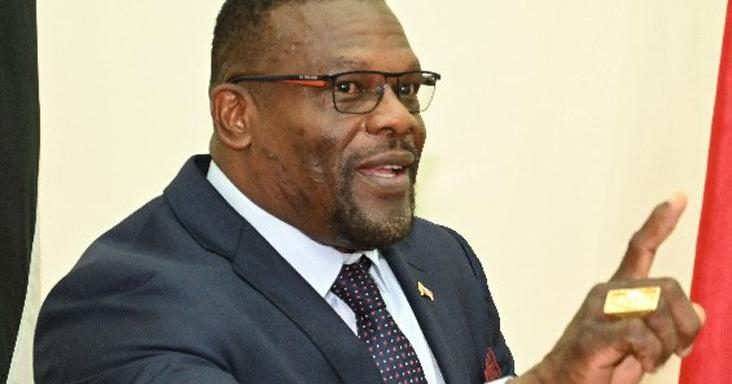
    A contentious incident involving Housing Ministry Minister Phillip Alexander has ignited nationwide discourse on disability rights and legal accountability after he was photographed occupying a reserved parking space for persons with disabilities at a Maraval SuperPharm on March 15. The images, disseminated on social media by former minister Randall Mitchell, prompted immediate public criticism and official responses from advocacy groups.

    Minister Alexander defended his actions by citing parking shortages caused by a nearby food court and claiming authorization from a security guard—an individual allegedly cropped from the circulated photograph. This justification was met with skepticism from disability advocates and law enforcement representatives.

    Kahaya Tuckerin, principal of the National Centre for Persons with Disabilities (NCPD), emphasized in a Wednesday interview that reserved parking spaces must be respected regardless of circumstances. “There should always be empathy whether the security guard gave the green light to park there or not,” she stated, highlighting that disabilities may be either visible or invisible and that proper permits displayed on dashboards are required for legal access. Tuckerin reinforced the organization’s advocacy message: “We always appeal to people to ‘see the ability, not the disability.’”

    The Estate Police Association (EPA) issued a strongly worded statement on Thursday expressing “serious concern” over the incident without directly naming Alexander. The association condemned the suggestion that security personnel could legally authorize parking in designated disabled spaces, calling such notions “troubling” and emphasizing that these spaces represent legal protections rather than privileges.

    EPA President Deryck Richardson underscored that no public official holds authority to circumvent national laws for personal convenience. The association highlighted the precarious position of security officers who may face pressure from powerful individuals to facilitate unlawful actions, warning that officers complying with such requests risk disciplinary consequences while those issuing directives often evade accountability.

    The association reminded all security personnel that their uniforms “represent the rule of law, not the will of any individual” and urged adherence to legal duties and professional standards. Public office holders were reminded that leadership requires exemplary conduct and that Trinidad and Tobago’s laws apply equally to all citizens.

    Current regulations stipulate a $2,000 fine for illegal use of disabled parking spaces, though the demerit points system previously associated with this violation has been abolished by the current administration.

  • Rowley hit for  ‘wajang’ language

    Rowley hit for ‘wajang’ language

    Trinidad and Tobago’s Homeland Security Minister Roger Alexander has issued a scathing condemnation of former Prime Minister Dr. Keith Rowley, characterizing his recent statements on law enforcement protocols as “irresponsible and reckless.” The political confrontation emerged after Rowley suggested that legal advice obtained by the Attorney General could encourage security forces to employ lethal measures based solely on suspicion.

    At a Tuesday news conference, Rowley referenced a King’s Counsel opinion regarding the legality of US kinetic strikes against drug trafficking vessels in international waters. The former prime minister extrapolated this maritime precedent to suggest it created an “inducement” for Trinidadian law enforcement to apply similar lethal force standards on land. “If it is okay to kill people on the ocean on suspicion,” Rowley questioned, “isn’t it easier to kill people on land on the same suspicion?”

    Minister Alexander provided the Trinidad and Tobago Police Service’s explicit clarification to the Express, emphasizing that all officers operate under a strict “use of force” policy that clearly delineates when deadly force is legally permissible. Alexander expressed particular concern that Rowley’s commentary endangered police personnel by potentially emboldening criminal elements. “The former prime minister was reckless,” Alexander stated, “and only criminal elements will find great pleasure in that statement.”

    The security minister further criticized Rowley’s employment of derogatory language toward current Prime Minister Kamla Persad-Bissessar, who he reportedly called a “jamette” during the political exchange. Alexander characterized this terminology as “wajang” and “gutter language,” expressing profound disappointment as an African male who was taught to respect women as queens. “How can you sit aside and call a person’s name like that?” Alexander questioned, noting that such language reflects “shameful behavior” unbecoming of any former national leader.

    Rowley’s original comments referenced the Leahy Act, a United States human rights policy that prohibits military assistance to foreign security units implicated in gross human rights violations. The former prime minister revealed that during his administration, US authorities had approached him with concerns about extra-judicial killings by named police officers, suggesting that the current administration’s position might conflict with international human rights standards.

  • ADLA announces airfare hikes due to rising jet fuel prices

    ADLA announces airfare hikes due to rising jet fuel prices

    Santo Domingo, Dominican Republic – The Dominican aviation industry is implementing across-the-board fare increases in response to a significant jump in jet fuel costs, according to an announcement from Omar Chahín, President of the Dominican Association of Airlines. The decision comes after a 21-peso per-unit increase in aviation fuel prices, which represents one of the most substantial operational expenses for carriers operating in the region.

    Chahín detailed that the global energy market volatility, particularly influenced by ongoing geopolitical tensions involving Iran, has created unsustainable pressure on airline operating margins. The sector has reached a point where continued absorption of these repeated cost increases is no longer financially viable, necessitating immediate fare adjustments to ensure operational sustainability.

    Despite these economic challenges, the Dominican aviation sector demonstrates remarkable resilience and continued expansion. Multiple carriers including Air Century, Sky High Aviation Dominicana, RED Air, and Sunrise Airways Dominicana are actively broadening their route networks across the Caribbean, Central America, South America, and North America. This expansion supports both the growing tourism industry and enhances connectivity for the Dominican diaspora community.

    Industry executives have issued cautions that the current situation remains fluid. Should the global fuel market experience additional price escalations, further corrective measures may be required, potentially leading to subsequent fare increases in the upcoming months. The sector remains cautiously optimistic while monitoring international energy market developments closely.

  • INTRANT bans cargo vehicle circulation for Easter 2026

    INTRANT bans cargo vehicle circulation for Easter 2026

    Santo Domingo – In a significant move to enhance road safety during one of the busiest travel periods, Dominican transportation authorities have unveiled comprehensive restrictions on cargo vehicle circulation for the upcoming 2026 Easter holiday. The National Institute of Transit and Land Transportation (INTRANT) has formally enacted Resolution 005-2026, establishing a nationwide prohibition on freight transport from 6:00 a.m. on Thursday, April 2, through 5:00 a.m. on Monday, April 6.

    The sweeping measure applies to all cargo vehicles, including those typically granted Restricted Access Zone (ZAR) permits, with additional restrictions placed on oversized loads, double-trailer trucks, and overweight vehicles. Authorities have specifically emphasized that these categories will receive no authorization during the restricted period.

    Critical exemptions have been established for vehicles transporting essential supplies including fuel, food products, drinking water, pharmaceutical products, and medical equipment. Emergency service vehicles such as ambulances, utility maintenance units, and other essential service providers will also remain operational throughout the restriction period.

    Enforcement mechanisms will include substantial penalties for violations, with fines equivalent to one minimum public sector wage as stipulated under Law 63-17. To streamline permissions for exempted vehicles, INTRANT has implemented a digital application system that generates QR-coded verification permits for authorized transport.

    This initiative represents a core component of the government’s broader strategic framework aimed at optimizing traffic flow and reducing accident rates during periods of peak seasonal travel, reflecting ongoing commitments to improved road safety and efficient public mobility.

  • Two dead in plane mishap in New York

    Two dead in plane mishap in New York

    A tragic runway collision at New York’s LaGuardia Airport has resulted in two fatalities and multiple injuries, prompting federal investigations into aviation safety protocols. The incident occurred Sunday night at approximately 11:45 PM when Air Canada Express Flight 8646, operated by Jazz Aviation, struck an Aircraft Rescue and Firefighting vehicle while landing on Runway 4.

    The CRJ-900 aircraft, arriving from Montreal with 72 passengers and crew aboard, collided with the emergency vehicle despite apparent clearance communications. Federal Aviation Administration officials confirmed both pilots perished in the accident, while nine individuals remain hospitalized with serious injuries. Over 40 people reportedly sustained various injuries during the mishap.

    Visual evidence from the scene reveals substantial damage to the aircraft’s nose section, underscoring the severity of the impact. The airport suspended all operations until 2:00 PM Monday, creating significant disruptions to air traffic throughout the Northeast corridor.

    Port Authority Executive Director Kathryn Garcia addressed media concerns during a press briefing, acknowledging the complexity of the ongoing investigation. Both the FAA and National Transportation Safety Board have launched comprehensive probes into the circumstances surrounding the collision.

    Aviation safety concerns have been reignited by this incident, particularly following several high-profile accidents in recent years, including last year’s fatal American Airlines crash at Reagan Airport. The released audio transcripts indicating clearance authorization prior to the collision have raised questions about communication protocols and ground operations safety measures at major airports.

  • Israël onderschat mogelijk Iraanse militaire capaciteiten

    Israël onderschat mogelijk Iraanse militaire capaciteiten

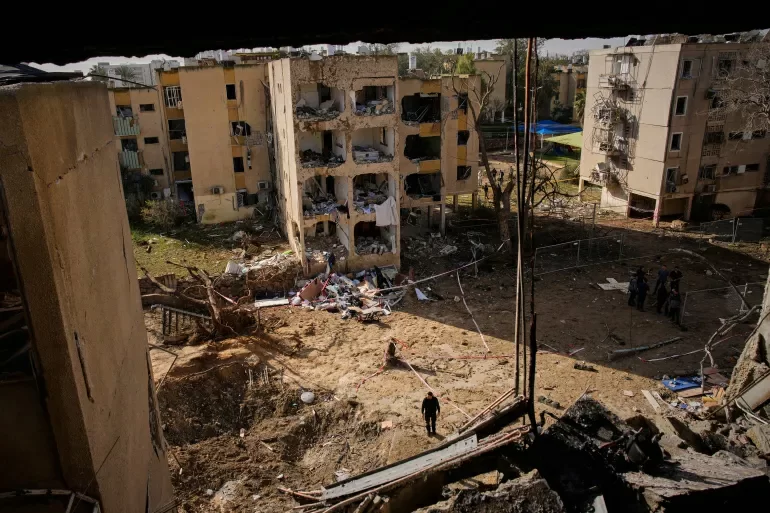
    Recent Iranian missile strikes targeting Israeli cities adjacent to nuclear facilities have exposed critical vulnerabilities in Israel’s defense architecture. The attacks, which injured approximately 180 people and forced mass evacuations, represent a significant escalation in the ongoing conflict that began on February 28th.

    The offensive came in direct response to Israeli-American airstrikes on Iran’s Natanz nuclear complex days earlier. Iranian forces employed sophisticated cluster munitions and ballistic missiles capable of bypassing Israel’s renowned Iron Dome system. Uzi Rubin, founder of Israel’s missile defense program, confirmed Iran possesses “the Middle East’s most extensive and diversified missile arsenal,” with capabilities that complicate interception efforts.

    Prime Minister Benjamin Netanyahu characterized the events as “an exceptionally challenging evening in our battle for survival” as civilians experienced unprecedented direct impacts of warfare. Health Ministry reports indicate over 4,500 casualties since the conflict’s inception.

    The strategic dimension has expanded dramatically, with Iran effectively blockading the Strait of Hormuz – a critical global oil transit route – prompting U.S. President Donald Trump to threaten retaliatory strikes against Iranian energy infrastructure. Military analysts note the conflict has entered a dangerous new phase targeting nuclear installations on both sides.

    Defense specialist Miriam Cohen warned: “These demonstrations of precision and range suggest Israel may have underestimated Iranian capabilities. We’re potentially facing a more prolonged and devastating confrontation than previous engagements.” The situation remains volatile as both nations continue targeting strategic assets while international organizations condemn the use of banned cluster weapons.

  • Friday calls for end to Cuba embargo, support for Haiti

    Friday calls for end to Cuba embargo, support for Haiti

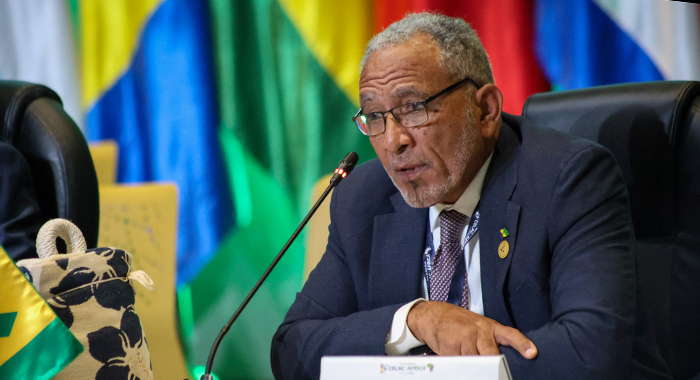
    Prime Minister Godwin Friday of St. Vincent and the Grenadines has issued a powerful appeal for hemispheric solidarity, calling for the immediate termination of the United States’ economic embargo against Cuba and increased international support for Haiti during his address at the CELAC summit in Colombia.

    Addressing fellow leaders from the Americas, Friday characterized the six-decade-long sanctions against Cuba as “anti-development measures” that continue to inflict severe hardship on the Cuban population. He specifically highlighted how extraterritorial provisions and Cuba’s controversial designation as a state sponsor of terrorism have crippled the nation’s access to international financial systems and impeded socioeconomic progress.

    The Vincentian leader emphasized that the overwhelming majority of United Nations member states have consistently voted to condemn the embargo, with 165 countries supporting a resolution last year demanding its cessation. Despite this global consensus, Washington maintains its position, recently exacerbating Cuba’s energy crisis through efforts to restrict oil shipments to the island.

    Turning to the deteriorating situation in Haiti, Friday expressed profound solidarity with the Haitian people as they confront escalating gang violence and political instability following President Jovenel Moïse’s 2021 assassination. He advocated for Haitian-led solutions, strengthened security institutions, and concrete actions against illicit arms trafficking while supporting the timeline for elections outlined in the National Pact for Stability.

    Friday positioned these dual challenges as critical tests of international commitment to justice and South-South cooperation, urging CELAC and African nations to form a united front. He concluded with a vision of a coordinated Global South capable of reshaping international law, global governance structures, and development financing toward greater equity.

  • In war Medicine, the miracle of Life

    In war Medicine, the miracle of Life

    At Havana’s Ramón González Coro Maternity and Obstetrics Hospital, medical professionals continue delivering critical care to high-risk pregnancies and newborns despite severe resource constraints, demonstrating remarkable resilience through innovative problem-solving and international solidarity.

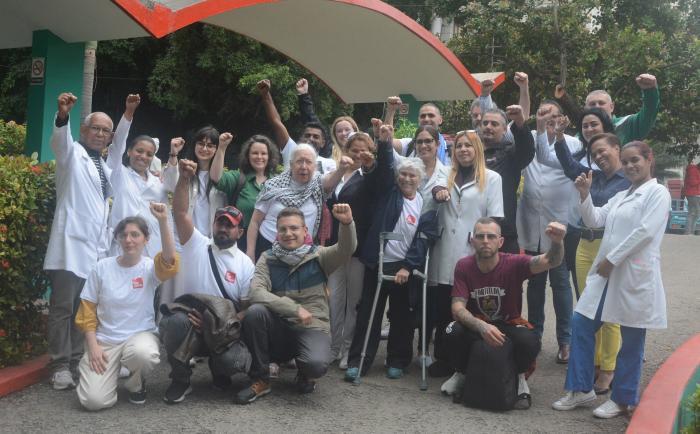
    A European Solidarity Convoy arrived on March 17th with approximately five tons of medical supplies, medicines, and basic necessities, providing crucial support to the facility that specializes in complex cases including pregnant women with diabetes, heart conditions, and cancer. The delegation expressed astonishment at Cuba’s ability to maintain medical services amid significant challenges.

    Dr. Otto Rafael Recio, the institution’s director, explained their approach using a medical metaphor: “Much like a fetus with intrauterine growth restriction prioritizes vital organs, our country is focusing on essential healthcare functions.” The hospital has implemented strategic reorganizations of surgical activities and patient care to ensure service continuity.

    The reality of practicing “wartime medicine” was detailed by oncologist Raiza Ruiz, who described working with an “absolute minimum for everything.” Most medications and treatments for her specialty require imports, but Cuba faces purchasing restrictions despite having budget allocations through programs like the Maternal and Child Health Program (PAMI).

    Innovative solutions emerge from necessity. Two recently graduated engineers successfully repaired a previously unusable anesthesia machine by developing their own software when donors couldn’t provide the necessary programming. The equipment now functions fully, saving lives instead of collecting dust.

    The hospital has faced extreme situations, including generator failures during surgeries that required completion using emergency lamps. For newborns on German-made Dragger ventilators, battery replacements are unavailable due to trade restrictions, forcing staff to resort to manual ventilation during power outages.

    Andrea Santor of solidarity organization Cuba Va recalled how Cuba extended medical assistance to Italy during COVID-19’s devastating peak in Turin: “A small island, with fewer resources than capitalist countries, extended a helping hand when we needed it most.”

    Patient Maureen Echevarría Peña, hospitalized throughout her third trimester for hypertension and diabetes, expressed confidence in her medical team despite resource limitations. “The hospital has gone to great lengths to ensure I lack nothing,” she stated, focusing on her upcoming delivery rather than material shortages.

    The emotional visit concluded with a profound acknowledgment from a convoy member: “Thank you for the effort you make despite the difficulties, for the example of resilience you are.”

  • For Cuba, “Humanity Made Solidarity”

    For Cuba, “Humanity Made Solidarity”

    HAVANA – In a powerful demonstration of global solidarity, over 600 delegates from 33 nations convened at the Cuban Institute of Friendship with the Peoples (ICAP) headquarters on March 21st for the “Our America to Cuba Convoy” welcoming ceremony. The event featured Cuba’s highest leadership, including President Miguel Díaz-Canel Bermúdez, and became a platform for resounding condemnation of the six-decade US economic embargo against the Caribbean nation.

    David Adler, co-general coordinator of Progressive International, set the tone by declaring: “Cuba has taught us what international solidarity means. We will never leave Cuba alone because fighting for Cuba is fighting for the right to self-determination of the peoples of the world.” Adler characterized the US blockade as a unique humanitarian crisis, asserting that convoy members represented millions globally who reject the policy of economic suffocation.

    The gathering served three fundamental purposes, according to Adler: humanitarian support for a nation under unprecedented sanctions, defense of Cuba’s revolutionary achievements as a viable alternative to capitalism, and resistance against what participants termed “genocidal policies” of the US government.

    Manolo de los Santos, executive director of The People’s Forum, praised Cuba’s resilience, stating: “This nation has given us the greatest lesson in what it means to create a true alternative to the horrors of capitalism and imperialism.” He explicitly labeled the blockade as “an act of genocide” for depriving Cubans of basic rights to life, peace, and normal international relations.

    Brazilian student leader Bianca Borges, president of the National Union of Students of Brazil, framed the event as elevating “the banners of solidarity, anti-imperialism, hope, and sovereignty” against imperial domination. She emphasized that solidarity with Cuba remains fundamental for achieving a just, integrated Latin America free from foreign domination.

    Fernando González Llort, Hero of the Republic and ICAP president, reaffirmed Cuba’s commitment to internationalist principles, telling attendees: “You represent the certainty that no imperial siege can ever imprison the dignity of our peoples. The homeland we defend is not a strip of land under siege—it is a piece of humanity that refuses to surrender.”

    The ceremony concluded with participants vowing to combat media misinformation about Cuba upon returning to their home countries, positioning the convoy as the beginning of sustained international advocacy rather than a singular event.