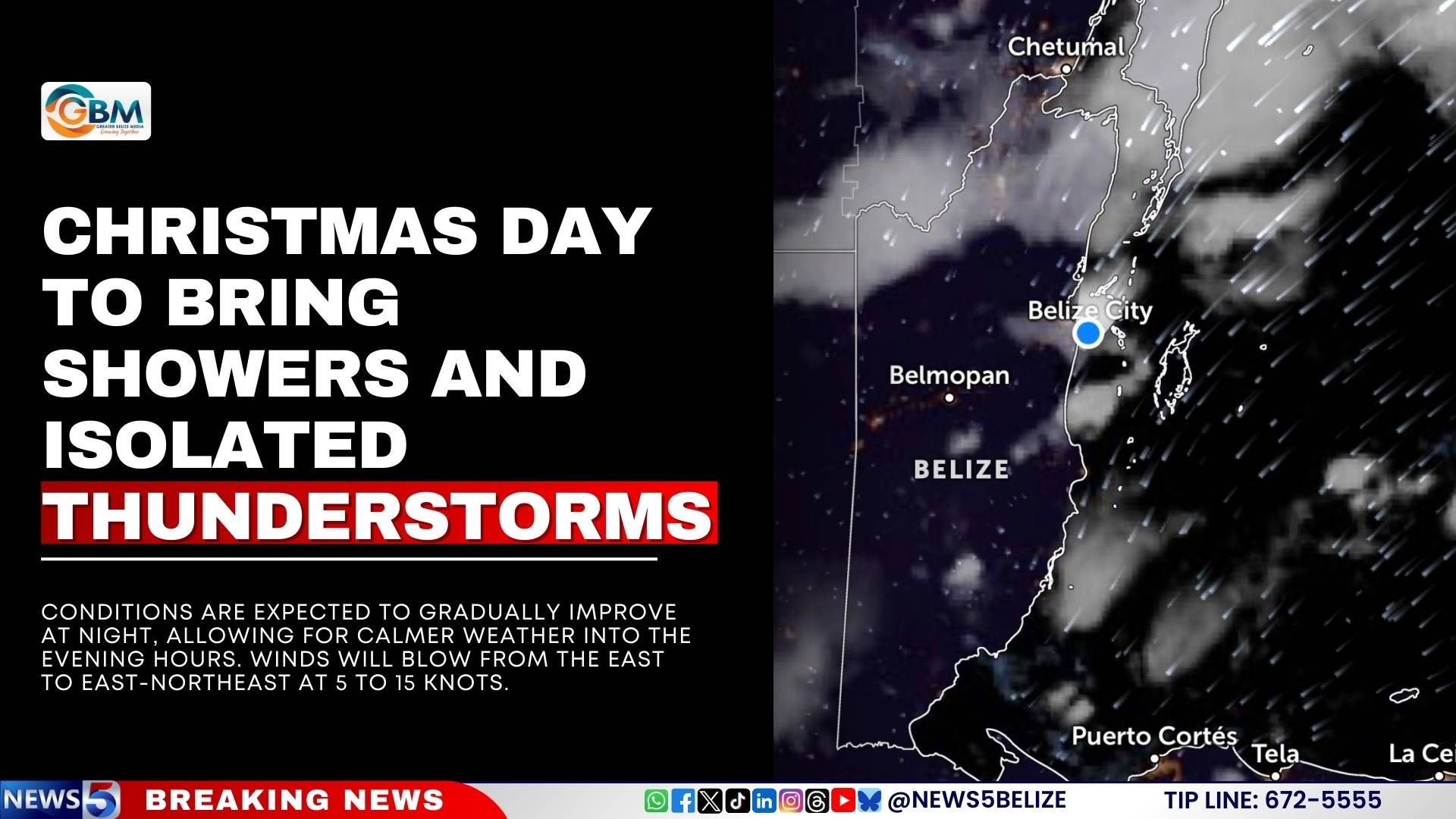
Meteorological authorities in Belize have issued a detailed weather outlook for Christmas Day, December 25, 2025, indicating predominantly wet conditions throughout the daylight hours. According to the National Meteorological Service, citizens should anticipate intermittent showers, sustained periods of rain, and isolated thunderstorms developing across various regions. These conditions are predicted to be most active during the afternoon before gradually subsiding toward evening. Weather patterns are expected to stabilize after nightfall, creating more favorable conditions for evening Christmas gatherings and festivities. Wind patterns will remain moderate throughout the day, originating from the east to east-northeast with speeds ranging between 5 to 15 knots, providing some relief from potential humidity. Temperature variations will be observed between coastal and inland regions. Coastal areas will experience daytime highs around 82°F (approximately 28°C) with nighttime temperatures dropping to near 75°F (24°C). Inland territories will see slightly warmer conditions, reaching up to 84°F (29°C) during the day before cooling to approximately 70°F (21°C) overnight. Meteorological experts advise residents organizing outdoor celebrations to monitor weather developments closely and prepare for potential disruptions, particularly during the first half of the day when precipitation is expected to be most intense.
作者: admin
-

Police Commissioner’s 2025 Christmas message
In an extraordinary Christmas address that transcended traditional law enforcement messaging, Police Commissioner Enville Williams delivered a powerful reflection on national resilience and social cohesion to the people of St. Vincent and the Grenadines. Speaking as both police commissioner and native son, Williams articulated a vision of security that extends beyond conventional policing measures to encompass the fundamental bonds of community.
The Commissioner reflected on the distinctive tranquility that envelops the Caribbean nation during Christmas morning—what he characterized as ‘the silence of a nation catching its breath.’ His message highlighted the country’s remarkable demonstration of political maturity during recent transitional periods, noting that despite regional scrutiny, the nation avoided descending into chaos that often accompanies political changes elsewhere.
Williams emphasized that true national security constitutes a social covenant rather than merely a law enforcement responsibility. He described this security as a collective promise where neighbors safeguard each other’s homes while police protect the streets. The Commissioner specifically acknowledged various segments of Vincentian society, including mothers in Fancy, fishermen in the Grenadines rebuilding after Hurricane Beryl’s devastation, and youth in Kingstown navigating an evolving future.
The address proposed that the most effective protection against criminality emerges not from weaponry but from unity cultivated around Christmas tables. Williams identified shared meals, communal caroling, and reconciliation of past grievances as fundamental components of national security. He urged citizens to approach 2026 unburdened by 2025’s conflicts, advocating for the replacement of anger with brotherhood and collective construction of a brighter future.
Concluding his message, Commissioner Williams extended Christmas wishes on behalf of all police officers maintaining watch during holiday celebrations, invoking peace across the nation’s diverse geography from mountain peaks to distant cays.
-

SVG Christian Council 2025 Christmas message
The early sounds of Christmas carols emerging in September establish a profound atmosphere of generosity and compassion that defines the holiday season. These musical traditions transcend mere entertainment, serving as spiritual preparation for the sacred observance of Christmas across both Western and Eastern Christian traditions. While Western churches celebrate from December 25 through January 6 (Epiphany), Eastern churches observe from January 6 through February 2 (Presentation of Christ).
The period of Advent preceding Christmas represents a time of spiritual reflection and anticipation of Christ’s arrival. This preparation finds its theological foundation in John 3:16, which encapsulates the divine sacrifice: “God so loved the world that he gave his only Son, that whoever believes in him should not perish but have eternal life.” This scriptural truth invites deep contemplation and calls for response through worship, prayer, and committed service to humanity and creation.
As communities throughout St. Vincent and the Grenadines gather for festive celebrations—exchanging gifts, sharing meals, and strengthening bonds—the Christian Council emphasizes the opportunity to extend this season’s spirit beyond personal circles. The Council encourages citizens to embody values of goodwill, generosity, and care within their homes, villages, workplaces, and institutions.
Following recent electoral proceedings, the Christmas message offers a timely inspiration for national unity and collaborative progress. Drawing from Matthew 1:21’s proclamation (“She will bear a son, and you are to name him Jesus, for he will save his people from their sins”), the Council advocates for collective self-reflection and positive transformation. Rather than engaging in destructive criticism, the focus should shift toward constructive renewal and mutual support in building a better future.
The inclusion of the complete “Joy to the World” lyrics serves as both celebration and proclamation, emphasizing themes of divine kingship, redemption, and universal blessing. This carol’s message of Christ ruling “with truth and grace” resonates particularly in the contemporary context of national development.
The St. Vincent and the Grenadines Christian Council extends heartfelt wishes for a Blessed Christmas and Happy New Year to all citizens, encouraging the embodiment of Christmas values throughout the coming year.
-

First-time mom welcomes baby girl on Christmas morning
A heartwarming Christmas miracle unfolded as first-time mother Tameisha Forde received an early and unexpected present—the birth of a healthy baby girl on Christmas morning. The newborn, arriving ahead of her January due date, was described by an elated Forde as her ‘perfect Christmas gift,’ marking an unforgettable start to the holiday season.
The festive period at the hospital proved to be exceptionally busy for maternity staff. Nursing Officer Hilda Dyall reported a notable surge in deliveries, confirming that by noon on December 25th, two additional women had already given birth. Medical staff anticipated more arrivals before the day concluded, suggesting a potential Christmas baby boom trend.
This special delivery not only brought immense personal joy to Forde but also highlighted the dedicated healthcare professionals working through the holidays. The simultaneous births created an atmosphere of shared celebration within the maternity ward, turning Christmas Day into an occasion of multiplied happiness and new beginnings for multiple families.
-

ABHTA Mourns Death of Barbuda Tourism Advocate George Jeffery
The tourism community of Antigua and Barbuda is grieving the profound loss of George Jeffery, a revered figure whose decades-long dedication to showcasing Barbuda’s ecological treasures left an indelible mark on the island’s tourism identity. The Antigua & Barbuda Hotels and Tourism Association (ABHTA) formally announced his passing, celebrating his legacy as a passionate ambassador who masterfully intertwined environmental conservation with visitor experiences.
Jeffery’s professional life was intrinsically linked to Barbuda’s most prized natural landmarks. He became synonymous with the Frigate Bird Sanctuary, one of the Caribbean’s most significant avian habitats, and the pristine Barbuda Lagoon, where he conducted immersive tours and educational programs. His profound knowledge of the island’s unique ecosystem, combined with an authentic and welcoming demeanor, transformed standard tours into profound cultural and environmental exchanges.
Beyond guiding visitors, Jeffery was a foundational advocate for sustainable tourism models that prioritized environmental integrity and community benefit. His philosophy ensured that tourism development remained respectful of Barbuda’s delicate ecology while empowering local residents. The ABHTA’s statement emphasized that his efforts were instrumental in crafting Barbuda’s international reputation as a destination for discerning travelers seeking authentic and environmentally rich experiences.
The association has extended its deepest sympathies to Jeffery’s family, his colleagues at the Barbuda Tourism Office, and the wider community, which regarded him not just as a tourism professional but as a custodian of their natural heritage. His passing represents a significant loss for the region’s sustainable tourism movement, leaving a void that underscores the critical role of dedicated individuals in community-based tourism.
-

Anthony Smith Jr. Extends Christmas Greetings to All Saints West and Antigua & Barbuda
In a warm holiday message resonating across All Saints West and the wider Antigua & Barbuda, the Smith family has extended heartfelt Christmas wishes to their community. Anthony Smith Jr., on behalf of the family, expressed profound gratitude for the enduring love, support, and trust shown by their constituents and fellow citizens.
The communiqué, shared publicly, framed the festive season as a time for collective reflection and appreciation for shared blessings. Emphasizing themes of unity and togetherness, the message highlighted the intrinsic strength found in community bonds, positing that ‘community is family.’ The Smiths’ greeting invoked the traditional hallmarks of the holiday—peace, joy, laughter, and love—as blessings for every household.
Concluding with wishes for a safe and joyful holiday season, the communication was underscored with hashtags signaling its origin and intent, including #MerryChristmas, #FromOurFamilyToYours, #AllSaintsWest, and the politically suggestive #CountryFirst and #WeStillLegitWithSmith, hinting at a continued connection to public service and community leadership.
-
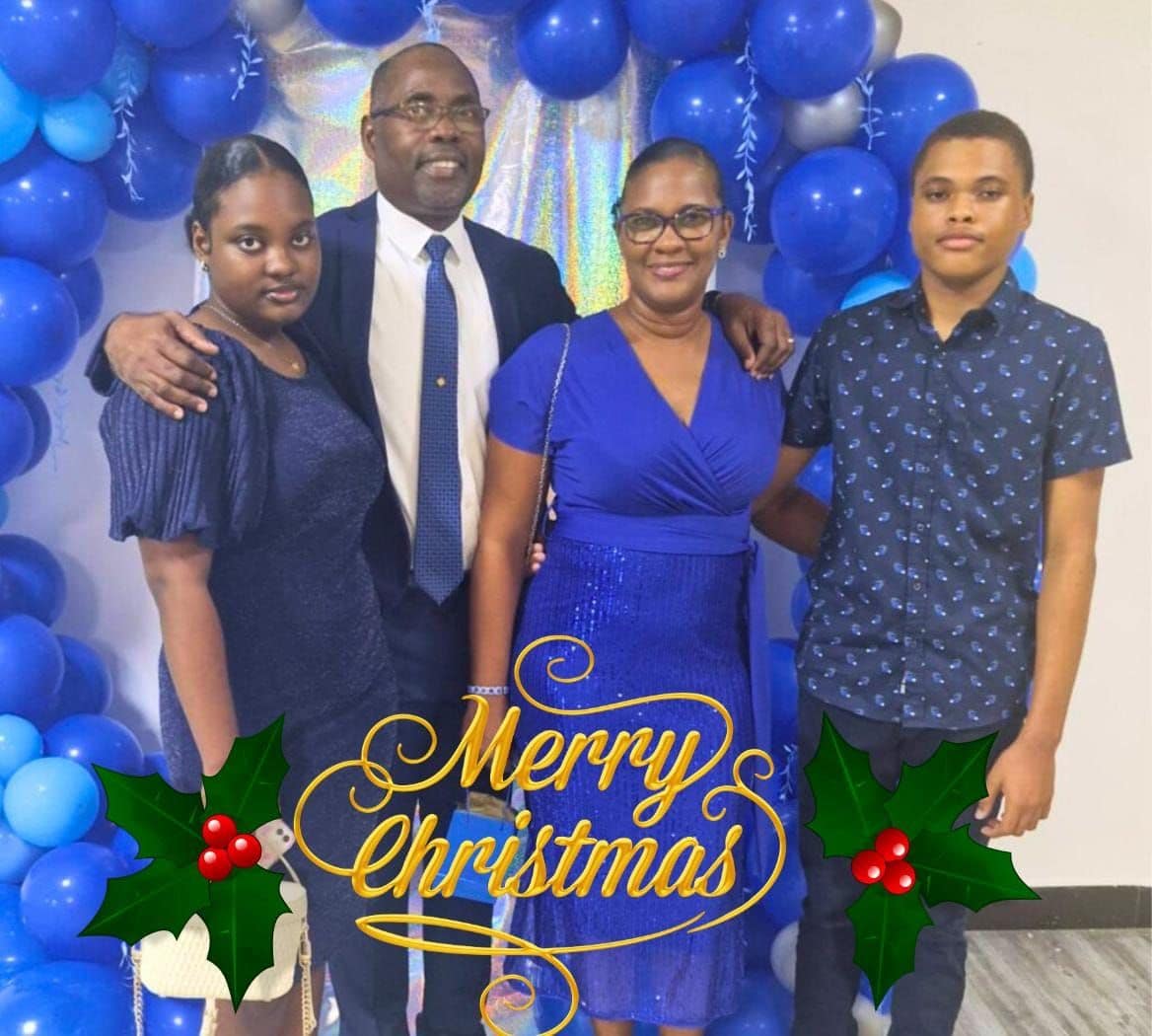
MP Richard S. Lewis Shares Message of Faith, Giving and Peace
In a seasonal address resonating with spiritual significance and communal solidarity, Richard S. Lewis, Member of Parliament for St. John’s Rural West, has disseminated a heartfelt Christmas message to his constituents and the wider public. The communication, imbued with theological reflection, centers on the quintessential values of the holiday season.
Grounding his message in biblical scripture, the parliamentarian opened with a quotation from the Gospel of Matthew (1:21), underscoring the Christian celebration of the birth of Jesus Christ. The discourse characterizes Christmas as a paramount period for spiritual rejuvenation, advocating for heightened focus on the preeminence of faith in daily life.
Moving beyond theological observance, Lewis championed the ethos of altruism and charitable giving. He emphatically stated, ‘There is joy in giving,’ and encouraged citizens to embrace this spirit, advocating for a Christmas dedicated to supporting those in need within the community. This call to action frames the holiday not merely as a time of celebration, but as an opportunity for tangible compassion and social responsibility.
The MP extended personal and familial wishes for the festive period, expressing hope that the season imparts profound meaning and renewed energy for a prosperous new year. His benediction invoked a desire for universal experience of ‘the light of laughter, the warmth of love, and the joy of gratitude,’ extending these good wishes beyond the immediate festivities.
Concluding with a specific acknowledgment of the residents of the St. John’s Rural West Constituency, the message closed with the traditional salutations of ‘Merry Christmas’ and a final blessing of ‘Peace be unto you,’ cementing its tone of benevolent goodwill and inclusive celebration.
-

DNO Christmas Shodo : Relive the magic of culture and creativity
The Dominica News Online (DNO) network is reviving its acclaimed cultural programming this holiday season, bringing back three cherished specials that spotlight Dominican artistic excellence. Originally broadcast in 2021, 2023, and 2024, these meticulously produced showcases highlight the nation’s extraordinary talents across musical performance, comedic arts, culinary traditions, and diverse cultural expressions.
These programming initiatives were conceived as cultural preservation projects, capturing the vibrant essence of Dominican creativity while providing quality entertainment that resonates with both local and diaspora audiences. The specials achieved significant viewer engagement upon their initial releases, generating widespread appreciation for their authentic portrayal of Dominican cultural heritage.
This strategic holiday rebroadcast serves dual purposes: introducing these cultural treasures to new audiences while offering dedicated viewers an opportunity to rediscover their favorite moments. The Christmas timing aligns with traditional periods of family gathering and cultural reflection, making the content particularly relevant for seasonal viewing.
All three full-length programs are currently available through DNO’s digital platforms, providing on-demand access to these cultural documents that collectively form an important archive of contemporary Dominican artistic achievement. The rebroadcast initiative demonstrates media’s role in cultural conservation while leveraging digital technology to make heritage content perpetually accessible.
-
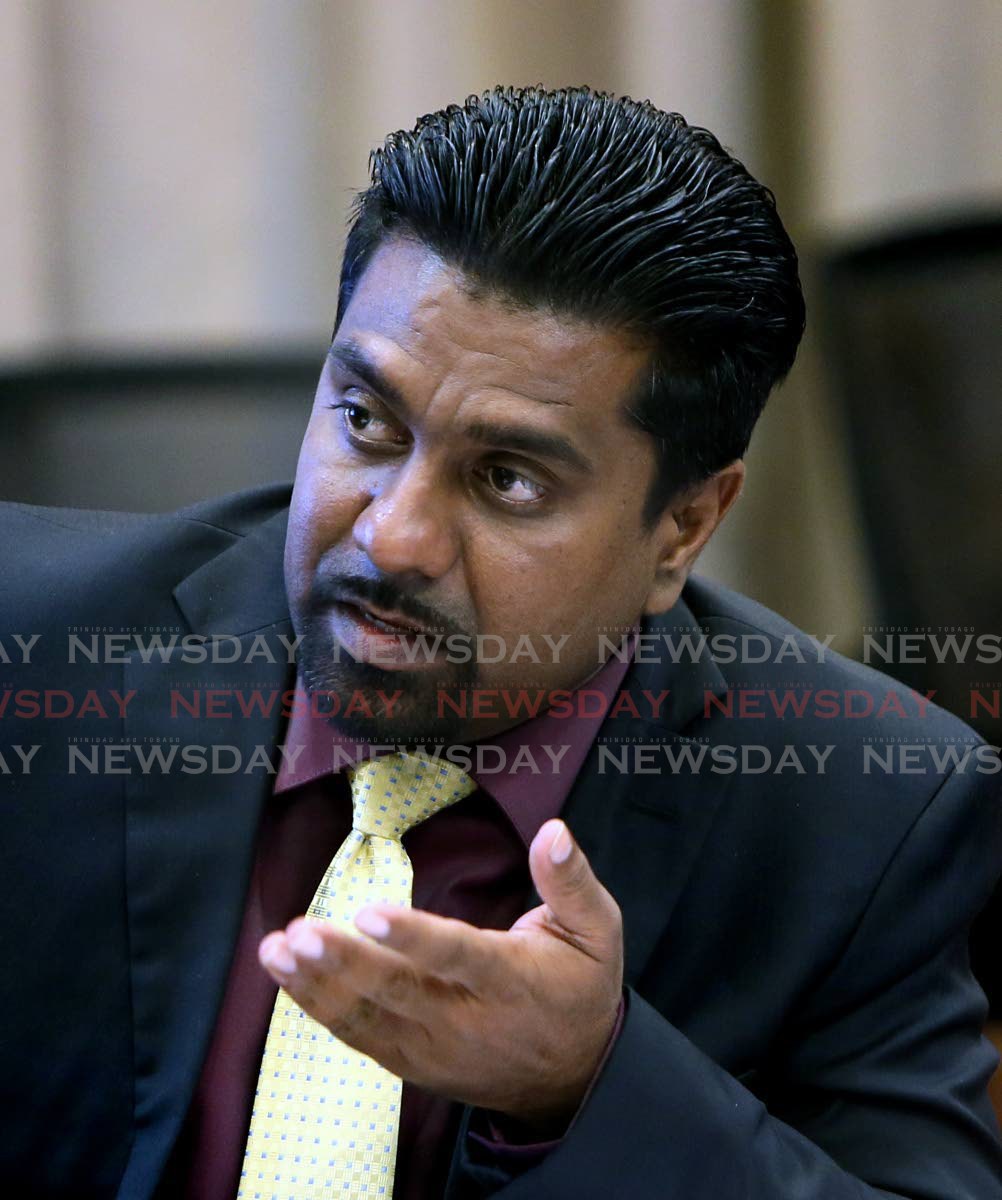
NGC’s $1B LOSS; chairman defends sweeping cuts, blames past mismanagement under PNM
Gerald Ramdeen, Chairman of Trinidad and Tobago’s National Gas Company (NGC), has publicly justified sweeping budget cuts implemented by the state-owned energy giant. Framing the measures as essential corrective action, Ramdeen attributed the need for austerity to years of financial mismanagement under the previous People’s National Movement (PNM) administration.
While NGC reported a substantial $1.6 billion profit for 2024, Ramdeen insisted this figure requires critical contextual analysis. He revealed that the company’s average return on assets stood at a mere 1.6% over the past five years, with return on equity averaging 2.7%—figures he characterized as profoundly inadequate for a national asset valued at $43 billion. More strikingly, the chairman disclosed that concealed within the headline profit was a catastrophic $1 billion loss accumulated by three foreign entities established under the preceding government.
“The record of the NGC and its subsidiaries under the PNM reveals facts that are stubborn things,” Ramdeen stated, directly challenging former energy officials to publicly account for the vanished billion dollars.
The chairman accused the previous administration of transforming NGC from a gas company into what he derisively termed the “National Grants Company,” alleging it served as an indiscriminate funding source for activities far beyond its core energy mandate. This fiscal indiscipline, he claimed, persisted over nine years and resulted in NGC declaring unprecedented after-tax losses of $316.2 million in 2020 and $1.3 billion in 2023.
In response, NGC’s current board has implemented drastic reductions across community, educational, and cultural programs for 2025. Internal budget documents reveal the elimination of numerous initiatives, including:
– The complete defunding of the $3.8 million i2A youth development program serving fenceline communities
– Termination of steelband sponsorships affecting Couva Joylanders, La Brea Nightingale, and Tobago’s Steel X Plosion
– Discontinuation of $7.45 million in sports sponsorships, including the popular “Right on Track” athletics program
– Elimination of support for the Bocas Lit Fest, Trinidad’s premier literary festival
– Reduction in human and social development funding by $1.375 millionThese cuts have ignited substantial public backlash and political controversy. Opposition MP Stuart Young condemned the reductions as an “unjustifiable and unforgivable assault on our culture,” particularly emphasizing the cultural significance of steelband funding. Pan Trinbago president Beverley Ramsey-Moore described the move as “a devastating blow” executed without consultation.
Despite slashing cultural and social programs, the board initially retained certain Christmas commitments including a $1.5 million staff dinner and vouchers for 630 employees, though subsequent decisions significantly reduced holiday event expenditures. The company also maintained a $5,000 gift to 650 employees for NGC’s 50th anniversary celebrations.
Ramdeen concluded that while NGC acknowledges its corporate social responsibilities, future initiatives will be executed “in a prudent and frugal manner” aligned with the company’s primary mission: gas aggregation and sales profitability for the benefit of Trinidad and Tobago’s citizens.
-
Hitting a sour note
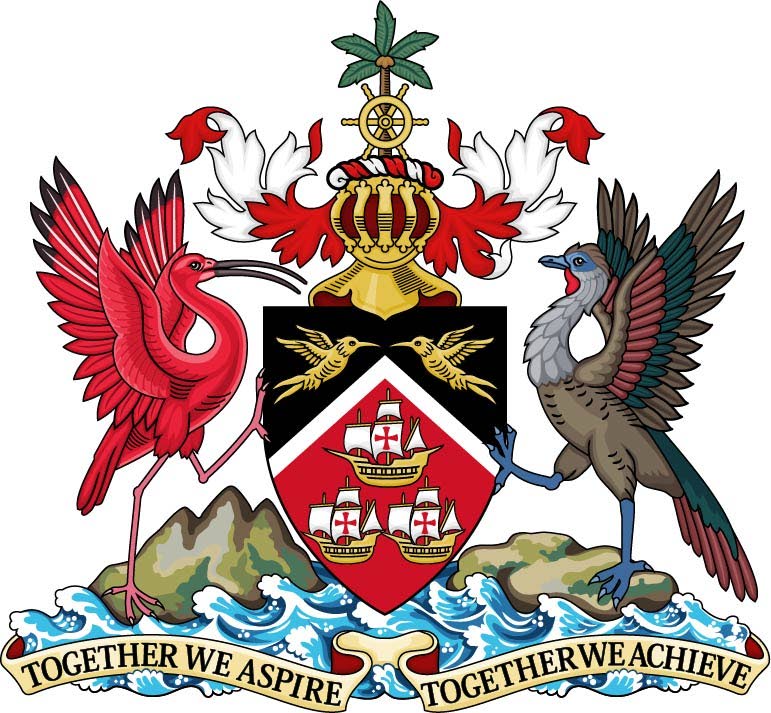
The Trinidad and Tobago government’s communication approach has once again demonstrated significant shortcomings, particularly evident in its recent handling of the national emblem transition timeline. Through a discreet legal notice issued on December 18, Homeland Security Minister Roger Alexander authorized a five-year extension for continued use of the former coat of arms, pushing the full implementation deadline to January 2, 2031.
This administrative decision was enabled by amendments to the National Emblems of Trinidad and Tobago (Regulation) Act, which received unanimous parliamentary support from both the ruling PNM and opposition UNC parties in January. Notably, then-Opposition Leader Kamla Persad-Bissessar had previously observed that the legislation granted ministers unrestricted authority to extend implementation timelines through ministerial orders.
While the extension itself represents practical governance—allowing existing inventory of official materials featuring the old emblem to be depleted—the government’s execution has raised eyebrows. The choice to implement this significant national symbol change through a mere legal notice, without public consultation or formal announcement, contrasts sharply with the administration’s approach to other national matters. Notably, the government had convened a press conference to announce the cancellation of the 2025 Independence Day parade, making the low-profile emblem decision particularly conspicuous.
The Rowley administration’s handling of the emblem modification process has been characterized by missed opportunities. While the incorporation of the steelpan into the national coat of arms received widespread support, the government bypassed comprehensive public consultation regarding other potential modifications. The removal of Christopher Columbus’s ships from the emblem was widely viewed as long overdue, but the process lacked the democratic engagement that could have strengthened national unity.
This approach has unnecessarily exposed the government to allegations of operating surreptitiously, creating a self-inflicted controversy that could have been avoided through transparent communication and inclusive decision-making processes.