作者: admin

  • Antigua and Barbuda Dental Association Introduces “Legacy Board” to Strengthen Future Leadership

    Antigua and Barbuda Dental Association Introduces “Legacy Board” to Strengthen Future Leadership

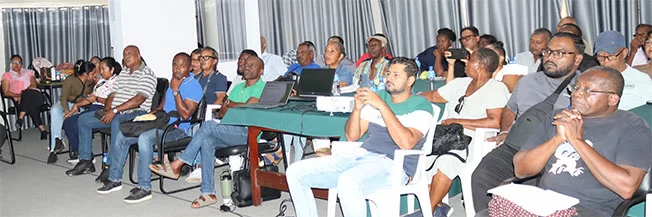
    The Antigua and Barbuda Dental Association (ABDA) has announced the completion of its leadership transition with the successful election of a new Executive Board, a milestone that leaders say will strengthen the organization’s long-term development and capacity to serve the twin-island nation. The incoming board brings together a mix of seasoned dental practitioners and rising early-career professionals, structured to balance decades of institutional experience with fresh perspective from the next generation of the field.

    The full 10-member Executive Board includes a number of key roles, led by continuing President Dr. Deborah Akande and Immediate Past President Dr. Derek Marshall. Rounding out the core leadership team are Vice President Dr. Kronskie Dickenson-Foster, Secretary Dr. Danny Ghazalea, Assistant Secretary Dr. Jessica Fernandez, and Treasurer Dr. Kamal Moursy — the board member who coined the body’s ‘Legacy Board’ label to reflect its intergenerational mission. Two new roles, created as part of sweeping constitutional updates, are filled by Dr. Jahleel Allen as Early Career Dentist representative and Dr. Afi Bello-Williams as Community Liaison Officer. Rounding out the board is Dr. Adonis Mansoor, who will serve as Social Media Chair.

    A defining feature of the new leadership structure is its intentional commitment to elevating emerging voices in dentistry: nearly one-third of all board members are under the age of 35, a deliberate shift to integrate younger dental professionals into high-level decision-making. ABDA leadership notes this blended model is designed to preserve decades of accumulated institutional knowledge while unlocking the innovative energy and new ideas that early-career practitioners bring to the table. This balance, leaders expect, will help the association maintain a clear strategic direction, strengthen ties with industry stakeholders and community partners, and better respond to the evolving needs of both dental professionals and the Antigua and Barbuda public.

    To formalize this new approach to leadership and outreach, ABDA has approved key updates to its organizational constitution that create two permanent new leadership positions. The Early Career Dentist seat guarantees that the perspectives and professional concerns of younger association members are directly represented at the highest level of governance, while the Community Liaison Officer role will lead the association’s public outreach efforts and ensure the organization remains responsive to community oral health needs.

    ABDA’s recent membership in the FDI World Dental Federation has also shaped the organization’s new strategic direction, bringing renewed focus on intergenerational leadership development and alignment with global professional standards. Through this global partnership, ABDA now accesses international best practices for dental care and professional governance, contributes to global policy discussions around oral health, and participates in evidence-driven initiatives to advance the field locally.

    Continuing President Dr. Deborah Akande emphasized that the global partnership with FDI has underscored how critical investing in young dental professionals is to the long-term health of the field. ‘We regularly receive guidance, participate in virtual meetings, and develop suggested international initiatives. This exposure has reinforced our commitment to nurturing the next generation of dental leaders. Our new Board is just the beginning,’ Akande said.

    Looking ahead, ABDA reaffirmed its core mission: advancing accessible, high-quality oral health across Antigua and Barbuda, upholding rigorous professional standards for the nation’s dentists, and serving the health needs of all people living in the country.

  • Nigel Bascus Says He Will Work With Any Government if Elected as Independent MP

    Nigel Bascus Says He Will Work With Any Government if Elected as Independent MP

    As Antigua and Barbuda prepares for its April 30 general election, independent contender Nigel Bascus is carving out a distinct non-partisan platform for the hotly contested St. John’s Rural West parliamentary seat, positioning collaboration over partisan division as the cornerstone of his campaign. Speaking in a recent interview on ABS Television’s flagship voter education program “Know Your Candidate”, the professional fisherman-turned-politician explained that his decision to run outside of the two major established parties stems from a desire to escape rigid partisan constraints, allowing him to prioritize the specific needs of his constituents above party loyalty.

    A defining promise of Bascus’s campaign is that, if elected, he will freely align with whichever political party secures a majority to form the next national government. He argues that constructive cross-party cooperation, rather than systemic opposition aimed at undermining opposing groups, is the only way to deliver meaningful progress for citizens. “I will align myself with any government,” Bascus stated, emphasizing that national leaders must set aside factional differences to “work together” instead of “bringing down one another.”

    The independent candidate did not hold back in criticizing the dominant political culture across the nation, arguing that decades of partisan politics have produced more empty rhetoric than tangible action. He pointed to a long-running pattern of unfulfilled campaign pledges, noting that “it’s a lot of promises, and at the end of the day, nothing happen.” Bascus stressed that politics demands greater accountability and a laser focus on delivering concrete, measurable results that improve everyday life for Antigua and Barbuda’s residents, adding that “we need more action.”

    Drawing on his decades of professional experience in the fishing industry, Bascus has put forward a targeted policy agenda centered on leveraging Antigua and Barbuda’s unique natural resources to drive economic growth. Echoing the proverb that “the devil finds work for idle hands”, he has called for expanding vocational training programs in high-demand local trades including fishing, mechanics, and other skilled sectors to reduce unemployment. He specifically highlighted the untapped potential of the domestic fisheries sector, particularly aquaculture, which he projects could grow into a multi-billion-dollar industry for the island nation. Bascus argues that Antigua and Barbuda should shift away from its heavy reliance on imported goods, focusing instead on developing sectors where it holds a natural competitive advantage, with the goal of expanding exports to boost the local economy. “We have to work with what we have,” he said. “Instead of import, we need to export.”

    At the constituency level, Bascus has outlined three core priorities: improved waste management infrastructure, expanded youth employment opportunities, and better access to affordable transportation and healthcare services for local residents. To increase transparency and accountability for public spending, he has proposed establishing a dedicated, publicly accessible account for all constituency-level funds. He also plans to allocate a portion of his parliamentary allowance to directly support vulnerable residents in need, with community input guiding decisions on how funds are distributed. “I’m planning to use my constituency allowance… and make an open account,” he explained, adding that local residents will have a direct voice in how assistance is allocated. Additional targeted commitments include securing dedicated transportation for residents traveling to access medical care and expanding targeted resource support for low-income and vulnerable families.

    Bascus is one of three candidates competing for the St. John’s Rural West seat in the upcoming election, facing off against established nominees from the country’s two leading political parties: the Antigua and Barbuda Labour Party and the United Progressive Party. In closing his appeal to voters, Bascus framed his candidacy as a break from traditional partisan politics, focused entirely on delivering results rather than advancing factional interests. “Politics need to be upgraded,” he said. “We’re going to make history.”

  • Man admits to possessing illegal shotgun, remanded for sentencing

    Man admits to possessing illegal shotgun, remanded for sentencing

    A 26-year-old man has entered a guilty plea to charges of unlawful firearm possession stemming from a police search of his residence earlier this month, and has been ordered to remain in custody ahead of his sentencing hearing scheduled for May.

    Ajahnae Nicholas appeared before Chief Magistrate Ngaio Emanuel to answer for the charges laid against him following the execution of a search warrant at his Green Bay Hill home on April 10. According to official police accounts, Nicholas cooperated with officers by directing them to his bedroom, where law enforcement recovered a silver 12-gauge Mossberg shotgun. The weapon had been concealed beneath his bed, wrapped inside a plastic bag, and all factory identifying serial numbers had been intentionally erased from its frame.

    When questioned by investigators, Nicholas claimed he had stumbled upon the unregistered firearm while it was abandoned in brush located near his property. Prosecutors have emphasized that the unmarked, high-powered shotgun poses a severe risk to public safety, highlighting its capacity to fire large-caliber shotgun shells and the deliberate removal of identifying marks that would allow law enforcement to trace its origin.

    Nicholas was remanded to custody following his plea, with his formal sentencing scheduled to take place before the court on May 12. Judicial officials confirmed that the court is currently reviewing applicable sentencing guidelines as it prepares to deliver its ruling next month.

    In a related development, 20-year-old Kayshia Riley of Sweets Village, who was named as a co-accused in the original case, has had all charges against her formally dismissed by the court. Defense attorney Sherfield Bowen represented both Nicholas and Riley throughout the court proceedings.

  • Iran grijpt schepen in Straat van Hormuz na afgelasting aanvallen door Trump

    Iran grijpt schepen in Straat van Hormuz na afgelasting aanvallen door Trump

    On Wednesday, just days after US President Donald Trump announced an indefinite suspension of planned military strikes against Iran, Iranian forces seized two commercial ships in the strategically vital Strait of Hormuz. This incident marks the first time Iran has seized foreign-flagged vessels in the key waterway since the outbreak of open hostilities in late February, escalating already heightened tensions between Tehran and Washington at a moment when regional peace efforts have already stalled.\n\nAccording to Iran’s semi-official Tasnim News Agency, the Islamic Revolutionary Guard Corps intercepted the two vessels over alleged maritime violations and escorted them to Iranian coastal ports. Earlier reports from British maritime security officials had already confirmed that three separate commercial ships came under fire in the straat earlier this week, adding new urgency to global concerns over freedom of navigation in the world’s most critical energy chokepoint.\n\nDespite Trump’s announcement of a paused military campaign and a temporary two-week ceasefire, the US leader confirmed via social media that Washington will maintain its full maritime blockade of Iran. Just days before the seizure, the US Navy intercepted and seized an Iranian cargo vessel in the region, and on Tuesday, American forces boarded and inspected a large Iranian oil tanker transiting the Indian Ocean. Tehran has decried the US blockade as an outright act of war, and has pledged to keep restricting transit through the strait for as long as the American blockade remains in place. Around 20% of global oil and liquefied natural gas supplies pass through the 21-mile-wide waterway, and Iran’s restrictions have already triggered a global energy crisis that has driven up fuel prices worldwide.\n\nPeace brokering efforts led by Pakistan, which stepped in as a neutral mediator between the two nations, have hit a major impasse. Planned peace talks scheduled this week in Islamabad, set to take place just before the temporary two-week ceasefire was set to expire, collapsed entirely when neither side sent delegations to the negotiating table. A luxury Islamabad hotel had been fully secured and prepared for the negotiations, but Iran never formally accepted the invitation to attend, while the US delegation led by Vice President JD Vance opted to remain in Washington. Security measures at the prepared venue have since been scaled back, though the site remains closed to the public.\n\nSpeaking to Reuters on condition of anonymity, a senior Pakistani official acknowledged the collapse of talks came as an unexpected setback. “Iran never issued an official refusal, and has repeatedly stated it remains open to coming to the table,” the official said, adding that Pakistani mediators are continuing to work aggressively to bridge gaps between the two sides while accommodating core security and political sensitivities of both Tehran and Washington.\n\nIran’s response to Trump’s ceasefire announcement has been marked by deep caution and open skepticism. Tasnim News has emphasized that Iran never requested a ceasefire extension, and has repeated threats to use military force to break the US blockade. A senior advisor to Iranian parliamentary speaker and chief nuclear negotiator Mohammad Baqer Qalibaf warned that Trump’s announcement could be a deliberate trick to buy time for a surprise military strike on Iranian infrastructure.\n\nSince the start of the conflict, Iran has effectively closed the Strait of Hormuz to unauthorized commercial traffic, targeting vessels that attempt to transit the waterway without Tehran’s permission. On Wednesday, the UK Maritime Trade Operations (UKMTO) confirmed that at least three container ships had been fired on by Iranian forces in recent days. One vessel was approached by an Iranian gunboat and hit with machine gun fire and grenade launchers, causing significant damage to the ship’s bridge. No crew casualties or environmental damage were reported in the incident, while the two other attacked ships also reported no injuries among their crews. Tehran has condemned recent US actions at sea, including the boarding of an Iran-bound oil tanker heading to Singapore, as “state-sponsored piracy and terrorism.”\n\nTrump’s latest ceasefire announcement marks the second time in as many weeks that the US president has backed away from last-minute threats to bomb Iranian civilian energy infrastructure and key bridges. Those threats drew widespread international condemnation, with many global leaders warning that targeting civilian infrastructure could constitute a war crime under international law. Iran had responded to the threats by pledging to launch retaliatory strikes against US allies in the Arab Gulf if any civilian infrastructure in the country was targeted.\n\nIn the immediate aftermath of the ceasefire announcement, global oil prices fell below $100 a barrel for the first time in weeks, though global stock markets and US dollar exchange rates continued to see high volatility amid ongoing uncertainty over the future of the conflict. Even with calls for an extension of the temporary ceasefire, the collapse of planned Islamabad talks has left the broader peace process on extremely shaky ground.\n\nA senior Iranian official told Reuters that Tehran remains open to a new round of peace negotiations, but only if Washington abandons its current policy of maximum pressure and coercive threats. The first round of talks, held 11 days earlier, failed to produce any breakthrough agreement. Washington’s core demand is that Iran surrender its stockpiles of highly enriched uranium to prevent Tehran from developing a nuclear weapon. Iran has repeatedly insisted that its nuclear program is entirely peaceful, and that developing a civilian nuclear program is a sovereign right guaranteed to Iran under the Treaty on the Non-Proliferation of Nuclear Weapons. Tehran’s core demands include a full end to hostilities, the lifting of all international and US sanctions, war reparations for damages caused by the conflict, and formal international recognition of Iran’s full sovereignty over the Strait of Hormuz.

  • Exclusive: Bajan firm behind ferry service gets two ships

    Exclusive: Bajan firm behind ferry service gets two ships

    After 18 months of delays and three missed target launch dates, the Barbadian maritime subsidiary developing a much-anticipated regional inter-island ferry service has finally secured two purpose-suited vessels to launch operations before the end of the year, Barbados TODAY can report exclusively.

    Connect Caribe, a subsidiary of Bridgetown-based Pleion Group Inc., has been working for nearly two years to launch a cross-Caribbean service connecting Barbados, the Organisation of Eastern Caribbean States (OECS), and most recently the U.S. Virgin Islands, aiming to streamline both passenger travel and cargo trade between regional islands and the U.S. market. Shaka Jones, senior executive at Connect Caribe, confirmed the milestone in an interview Tuesday, noting that sourcing ships able to withstand the unique sea conditions of the Caribbean was the single largest hurdle causing repeated delays.

    “This is not a simple venture to stand up; we’ve had to work through countless unforeseen obstacles to get to this point,” Jones told reporters. “We haven’t locked in a firm inauguration date yet, but our core mission remains unchanged: to deliver reliable, affordable movement of both people and goods across the Caribbean. We now have two vessels secured to launch the service, and we will share an official launch date with the public shortly. Finding a vessel built to handle Caribbean swells and sea conditions is far from straightforward, but we’ve finalized the selection process.”

    The project has faced repeated timeline shifts since it was first announced. The original target launch was November 2024, which was accelerated to August 2024 following the announcement of new strategic partnerships. That deadline passed without launch, and a subsequent target of the first quarter of 2025 was also missed. Most recently, the company has committed to launching before the end of 2025.

    In the wake of the latest milestone, regional economist and commercial pilot Jeremy Stephen, who has long questioned the financial and practical viability of the passenger-focused service, is doubling down on his criticism. Stephen, who operates intraregional charter flights, argues that the repeated missed deadlines are a clear warning sign of deeper structural issues with the project.

    “I remain unconvinced that this service will work for passengers as planned,” Stephen said in an interview Tuesday. “Half of the year, Caribbean swells are too large to make sailing comfortable for the typical modern traveler coming to or from Barbados, unless the company invests heavily in high-technology airfoil-equipped vessels that can ride above rough seas – something they have not mentioned publicly to date. At this point, I only see the venture making sense if they shift focus entirely to cargo operations, which fills a clear gap in the regional market. For passenger travel, the distance and sea conditions make the model unworkable.”

    The company has expanded its scope since the initial announcement, adding the U.S. Virgin Islands to its route network following stakeholder consultations. Under a public-private partnership with the USVI governor’s office, Connect Caribe plans to develop a central maritime logistics hub to streamline U.S.-Caribbean trade, making it faster and cheaper for Caribbean producers to access American consumer markets. Company officials have previously noted that adding the USVI hub will guarantee consistent full container loads, a key requirement for long-term financial sustainability for any private maritime venture. Longer term, the company still plans to expand its fleet to three vessels: an 800-passenger cruise-style ship, a 400-passenger fast ferry, and a dedicated cargo vessel to support regional trade.

  • LETTER: Antigua and Barbuda First: Our Democracy Will Not Bend

    LETTER: Antigua and Barbuda First: Our Democracy Will Not Bend

    A fiery national debate over national sovereignty and political loyalty has erupted in Antigua and Barbuda following a provocative statement made by incumbent parliamentarian and United Progressive Party (UPP) candidate Sheffield Bowen during a recent party public gathering. What began as a routine political address has quickly grown into a defining conversation about the future of the island nation’s self-determination, just months ahead of the scheduled April 30, 2026 general election.

    According to commentary from a local writer with deep ties to Antigua and Barbuda, Bowen’s comment was far more than offhand political rhetoric—it laid bare a dangerous ideological stance that threatens the core principles the nation fought to secure. Bowen reportedly told attendees that the United States and major European powers are pushing for a change in Antigua and Barbuda’s government to open the door for enhanced bilateral cooperation. In short, Bowen’s argument frames domestic democratic outcomes as something that should be shaped to align with the preferences of foreign governments.

    This suggestion is not merely troubling—it is fundamentally unacceptable for an independent nation that earned its sovereignty through decades of struggle and sacrifice, the writer argues. Antigua and Barbuda’s electoral system was not built to win approval from overseas capitals; it exists to amplify the voice of the Antiguan and Barbudan people, shaped by their unique needs, lived realities and collective ambitions. To claim the nation should adjust its democratic process to suit external interests directly undermines the very foundation of the country’s hard-won independence.

    Bowen’s reported stance raises unavoidable, serious questions about where his ultimate loyalties lie, the commentary continues. A leader who believes the nation must bend to the will of foreign powers to gain international acceptance can never be counted on to stand firm in defense of Antigua and Barbuda’s national interests. This posture is not pragmatic statecraft—it is submission rebranded as political strategy, a willingness to prioritize the comfort of foreign governments over the well-being of local citizens.

    The writer draws a clear, critical distinction between constructive global engagement and outright surrender to external control. No one disputes that Antigua and Barbuda, as a active member of the global community, must maintain productive diplomatic, trade and cooperative relationships with international partners. But productive cooperation never requires compliance that comes at the cost of sovereignty, and equal partnership never means handing over decision-making authority to outside actors. No sovereign nation can ever outsource its governing power to foreign entities.

    Beyond the core sovereignty question, the argument that a government change would resolve external pressure is deeply flawed and intellectually dishonest, the piece adds. This is not a challenge unique to Antigua and Barbuda: across the Caribbean, neighboring nations including Dominica, St. Vincent and the Grenadines, Saint Lucia, and St. Kitts and Nevis have all faced similar external scrutiny, particularly around visa policies and international regulatory checks. To frame a change in Antigua and Barbuda’s government as the fix for foreign relations is misleading fear-mongering—if the logic held, every Caribbean nation facing external pressure would be required to replace their leadership to satisfy foreign powers, an outcome no self-respecting democracy would accept.

    History makes clear that powerful global nations prioritize their own national interests first, which is their right; but it is equally the right and duty of Antigua and Barbuda to prioritize its own citizens above all else. All policy, all leadership decisions, and all national direction must be guided by what benefits local people, not what appeases foreign governments. A leader’s core responsibility is to stand firm against external pressure, not pave the way for the nation to yield to it. When a politician openly suggests the electorate should change the government to align with foreign expectations, that politician is showing voters exactly how they will govern when pressure mounts: they will bend, and they will not stand when the nation needs them most.

    This moment transcends everyday partisan political fighting, the writer emphasizes. It is a fight over core principle: it asks whether the people of Antigua and Barbuda still believe in their fundamental right to chart their own course free from foreign interference, and whether they value their sovereignty enough to defend it when it is challenged. Antigua and Barbuda is not a geopolitical pawn to be moved at the request of outside powers; it is an independent nation with a proud history of resilience, and every citizen’s vote is not a bargaining chip—it is an expression of the people’s will and their shared future.

    As the country prepares for the 2026 general election, the choice facing voters is not just between individual candidates or party platforms. It is a choice about national conviction: will voters select leaders who will stand unapologetically for Antigua and Barbuda’s interests, or accept leaders who look to foreign capitals for direction before taking responsibility for domestic needs? The answer, the writer concludes, must grow from the identity of the Antiguan and Barbudan people: strong, independent, and uncompromising in their right to determine their own destiny. Antigua and Barbuda must always come first.

  • Pringle says extension of time for non-nationals will move from 3  to 6 months when he becomes PM

    Pringle says extension of time for non-nationals will move from 3 to 6 months when he becomes PM

    Ahead of Antigua and Barbuda’s upcoming general election on April 30, United Progressive Party (UPP) political leader Jamale Pringle has laid out a slate of people-centric policy proposals designed to ease burdens on non-national residents, expand affordable housing access for young people, and position his party as a responsive alternative to the current sitting administration.

    Speaking to energized supporters at a campaign rally, Pringle first announced that a UPP-led government would immediately extend the maximum allowed legal stay for Caribbean nationals residing in Antigua and Barbuda from three months to six months. Currently, eligible non-nationals must complete routine extension applications at the national immigration department every quarter, a process that Pringle argues creates unnecessary financial costs and logistical inconvenience for people who have made the twin-island nation their home.

    “Instead of having to run to immigration every three months for an extension, we will extend the duration of your legal time to six months,” Pringle told the cheering crowd. “No longer will our Caribbean brothers and sisters have to make that repeated trip. This policy will save both their valuable time and hard-earned money.” Framing the change as a core part of the UPP’s “people-first” governing philosophy, Pringle emphasized that the policy adjustment demonstrates what a caring administration can deliver for all people who call Antigua and Barbuda home, regardless of nationality.

    The UPP leader also used the rally to address long-circulated misinformation about the party’s position on non-national workers, announcing that his administration would remove all existing restrictions on tourism-sector work permits. “Our government will work for every single person living here in Antigua and Barbuda,” he affirmed, pushing back against claims that the UPP would restrict opportunities for foreign-born residents.

    Beyond immigration reform, Pringle dedicated a large portion of his speech to youth-focused policy pledges, a key voting bloc the party is targeting ahead of the election. His signature youth proposal centers on expanding affordable land access for young citizens: Pringle announced that a UPP government would first complete a full audit of all remaining Crown land to map available parcels, then offer residential plots of roughly 8,000 square feet exclusively to citizens under the age of 35 at a capped price of no more than $5 per square foot. Over a five-year term, the party has committed to allocating a minimum of 2,000 such plots to eligible young buyers.

    Additional pro-youth housing measures include a pledge to eliminate the longstanding requirement that new homeowners cover the cost of utility infrastructure, such as Antigua Public Utilities Authority electricity poles and water connections, when moving into newly developed neighborhoods. For those seeking alternatives to traditional single-lot homeownership, Pringle said the UPP would leverage public-private partnerships to build affordable multi-level townhouse communities that include shared public amenities such as fitness centers and children’s playgrounds.

    Throughout his address, Pringle argued that the UPP’s core message of “government must work for the people” is resonating deeply with undecided voters across the islands. He claimed that growing numbers of residents are shifting their support away from the current administration and toward the UPP in the final weeks of the campaign. Closing with a rallying cry for supporters, Pringle urged attendees to mobilize their communities and turn out to vote on April 30. “Nothing will come to us. We have to go and fight for it,” he said, framing the election as an opportunity to remove the sitting government and return Antigua and Barbuda to what he described as the “glory days” of past UPP governance.

  • UPP Candidate Jonathan Joseph Says Cancer Patients Enduring ‘Hell,’ Pledges Urgent Reform

    UPP Candidate Jonathan Joseph Says Cancer Patients Enduring ‘Hell,’ Pledges Urgent Reform

    Ahead of Antigua and Barbuda’s April 30 general election, opposition United Progressive Party (UPP) candidate for the St. Mary’s North constituency Jonathan Joseph has drawn a stark spotlight on the island nation’s broken cancer care system, delivering a searing indictment of the current administration’s failures and promising sweeping emergency reforms if his party secures power.

    Speaking to a packed rally of supporters, Joseph opened with raw emotion, describing the daily suffering of local cancer patients as an unacknowledged “hell” that ruling officials have chosen to ignore. He emphasized that the crisis is expanding at an alarming rate, with growing numbers of women and even young adolescents now facing barriers to life-saving care that have pushed many into avoidable suffering.

    Rooting his critique in on-the-ground experience from his own constituency, Joseph shared the devastating story of a local mother with cancer who delayed her own treatment to prioritize care for her sick young daughter, ultimately passing away before her child recovered. This case, he argued, encapsulates the systemic failure that has turned healthcare into a political afterthought rather than a compassion-centered public service. He stressed that the fundamental mission of any public health system should be to help sick people heal, a mission the current government has abandoned entirely.

    The core of Joseph’s campaign pledge centers on reopening Antigua and Barbuda’s shuttered national cancer center as an urgent first priority. He told the crowd that a UPP administration would move quickly to restore full operations at the facility, arguing that every day of delay inflicts unnecessary harm on vulnerable patients. “Because people matter,” he emphasized, framing the commitment as a non-negotiable moral obligation rather than a political talking point.

    Beyond the cancer center, Joseph outlined broader plans to overhaul the nation’s public healthcare system, including extending operating hours at community health clinics to expand access for working families and low-income residents who cannot take time off work for routine and specialized care. He asserted that the UPP brings the necessary expertise, local talent, and political will to build a world-class healthcare system that would stand as a model for the entire hemisphere.

    Joseph did not mince words in his criticism of the incumbent government, arguing that the administration has turned the nation’s healthcare system into a mockery, leaving critical infrastructure and services in total disarray. He called the current state of public health an outright crisis, insisting that only the UPP has the commitment and capability to fix the systemic failures that have left cancer patients and other vulnerable groups without adequate care.

    Tying his own political legacy to the issue, Joseph stated that it would be a permanent stain on his record if he took office and allowed the current unacceptable state of healthcare to remain unchanged, urging voters to view the upcoming election as a turning point for public health. Closing his remarks, Joseph emphasized that this is not an abstract political debate: it is a matter of life and death for real local residents, and voters have the power to change the outcome for themselves and their vulnerable loved ones. He ended with a direct call for voters to back the UPP on election day, arguing that meaningful, lasting change for cancer patients and all residents depends on electing a new government that prioritizes people over politics.

  • Sherfield Bowen Says the United States Wants ‘a New Government’ in Antigua

    Sherfield Bowen Says the United States Wants ‘a New Government’ in Antigua

    As the April 30 general election in Antigua and Barbuda draws near, the main opposition United Progressive Party (UPP) has centered its campaign narrative around claims of strained international relations under the incumbent Gaston Browne administration. At a campaign rally for party supporters, Sherfield Bowen, UPP’s deputy political leader, made a bold assertion: that both the United States and the European Union are actively seeking a new, more cooperative governing body in the country, framing a leadership turnover as non-negotiable for Antigua and Barbuda’s standing on the global stage.

    Bowen’s core argument links a range of growing international headwinds directly to the policies of Browne’s ruling Labour Party. He told rally attendees that Antigua and Barbuda is already facing international repercussions for the current administration’s decisions, with more severe consequences looming if voters return the incumbent government to power. “The United States and Europe are now looking for a new government that they can work with. That is why a change of government is essential,” Bowen stated in his address to the crowd.

    Among the most serious allegations Bowen put forward was that existing U.S. visa sanctions imposed on Antigua and Barbuda citizens are a direct result of the Browne administration’s policy choices. He went further to warn of impending additional restrictions, claiming that the European Union is on track to roll out its own visa sanctions by the end of the current year. Bowen argued that the incumbent government lacks the capability to reverse these damaging measures, asserting that the Gaston Browne regime is unable to take the necessary steps to remove existing sanctions and prevent new restrictions from being added.

    In a strategic shift that prioritizes national and international standing over granular constituency-specific promises, the UPP has positioned the upcoming election as a critical turning point for the country. Bowen framed the poll as Antigua and Barbuda’s only opportunity to alter its current trajectory, arguing that the only solution to mounting international pressure is to remove Gaston Browne and the Labour Party from office, replacing them with a UPP-led government that Bowen says will prioritize the needs of everyday citizens.

    Bowen’s comments reinforce the UPP’s broader campaign strategy, which casts the April 30 vote as a referendum on the Browne administration’s overall governance of the country. By tying visa restrictions and the threat of future sanctions directly to government policy, the opposition has sought to reframe foreign policy fallout as a critical domestic political issue. This approach is designed to persuade undecided voters that the country’s global reputation is inextricably linked to its domestic prosperity and future prospects. Closing his remarks, Bowen issued a direct appeal to supporters, urging them to back the UPP at the polls to deliver the change he says Antigua and Barbuda urgently needs.

  • Middle-class seniors struggling despite home ownership

    Middle-class seniors struggling despite home ownership

    During Tuesday’s parliamentary debate on the landmark Older Persons (Care and Protection) Bill, Barbadian Member of Parliament Sandra Husbands has drawn attention to the largely unreported financial and social vulnerabilities facing the nation’s senior population, revealing stark divides in hardship between two distinct economic groups of elderly residents across the constituency she represents.

    Husbands, who also serves as the country’s Minister of Technological and Vocational Education, outlined that while the larger cohort of middle-class elderly often appear outwardly comfortable, living in fully paid-off, well-furnished homes, this outward appearance masks deep-seated financial strain. Many of these seniors are retired public servants and private sector supervisors who live on fixed pensions that were sufficient to cover their costs more than a decade ago, but have been eroded by persistent inflation. As empty nesters with no family members nearby to help, they struggle to cover routine home repairs, rising utility costs, groceries, and evolving age-related health expenses all at once.

    By contrast, the smaller group of working-class elderly face a different set of urgent challenges. A large share of these seniors live in overcrowded housing, where their needs and personal preferences are frequently sidelined by other household members. Even living on meager, fixed pensions, they are often pressured to cover financial demands from other relatives living under the same roof, leaving them with barely enough to cover their own basic needs.

    Husbands emphasized that these shared financial pressures leave both groups of seniors disproportionately vulnerable to abuse and financial exploitation. When they can no longer manage all daily tasks and financial decisions independently, many seniors turn to untrained informal caregivers — often relatives, neighbors or other close contacts — that may not act with integrity. In some of the most distressing cases, even family members exploit vulnerable seniors by taking control of their assets and finances, creating overwhelming stress and uncertainty for older people who have already worked their entire lives.

    Against this backdrop of widespread vulnerability, Husbands told fellow lawmakers that shifting demographic trends on the island make consistent, targeted reform of the national social security system a non-negotiable priority. She pushed back against critics who have claimed recent government reforms are only designed to force people to work longer while cutting their future pension benefits, arguing that ongoing pension adjustment is critical to protect current seniors and future generations alike.

    “Anyone who truly cares about this country and truly cares about the entire group of Barbadians who live here … must understand that pension reform is absolutely important. It’s the right thing to do. It’s the moral thing to do,” Husbands said.

    She added that the current push for stronger elder protection legislation is even more necessary given the widespread financial insecurity facing seniors. Beyond policy reform, Husbands also called for expanded public financial literacy initiatives and encouraged younger Barbadians to begin retirement planning far earlier, noting that too many people wait until their 60s to prepare for their post-work years. When seniors lack sufficient financial resources, she explained, they grow more dependent on others, more likely to endure exploitation, neglect or unkind treatment, and create added strain on both families and the state — making protective regulation all the more critical to safeguard vulnerable older Barbadians.