作者: admin

  • Cement shortage to ease next month, says IMAJ

    Cement shortage to ease next month, says IMAJ

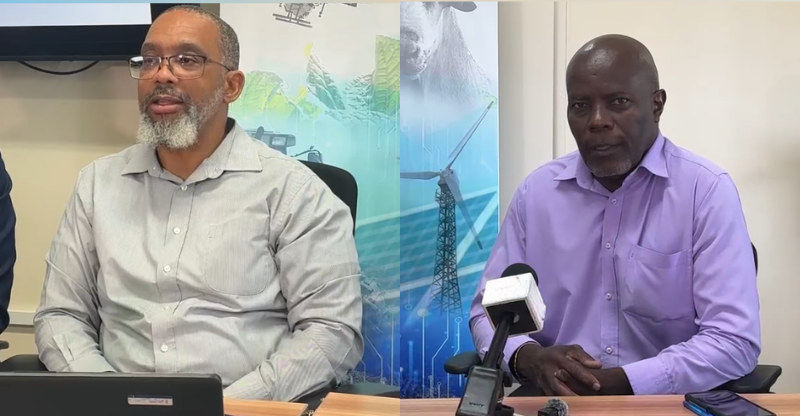
    In the middle of a widespread cement shortage that has rippled across Jamaica’s construction sector and left hardware operators scrambling to stock supplies, regional manufacturer Caribbean Cement Company Limited (CCCL) has given formal assurances that normal supply levels will be restored by mid-May. The commitment came out of a scheduled meeting this week between CCCL executives and leadership of the Incorporated Masterbuilders Association of Jamaica (IMAJ), the industry’s leading trade group for local construction professionals.

    In an official statement released after Wednesday’s meeting, IMAJ outlined that CCCL has already begun rolling out corrective actions to resolve the current shortfall, with gradual improvements projected over the next three weeks. To address the immediate gap between available stock and market demand, the manufacturer has committed to ramping up production output immediately. Longer-term, the company is also reviewing systemic changes to boost plant resilience and reduce the risk of repeated supply disruptions that could threaten sector stability down the line.

    Beyond addressing immediate production constraints, talks between the two groups also focused on aligning long-term manufacturing capacity with the sustained high demand Jamaica’s construction sector is currently facing. A key driver of this elevated demand is upcoming large-scale reconstruction work tied to recovery from Hurricane Melissa, a disaster that has already placed unprecedented pressure on local building material supplies.

    IMAJ has pledged to maintain close coordination with CCCL and all relevant industry stakeholders to track progress on the manufacturer’s commitments, noting that consistent, reliable cement access is fundamental to both the construction market’s healthy functioning and Jamaica’s broader national economy.

    The current shortage has already created significant disruptions for businesses across the island, particularly small and medium-sized hardware retailers. Deanall Barnes, executive director of Corporate Area-based Atlantic Hardware and Plumbing, described ongoing tightness in the local market Wednesday, pointing to a mix of interconnected causes that have created the current supply crunch.

    Barnes explained that two major government-led post-hurricane recovery programs—the $10 billion Restoration of Owner or Occupant Family Shelters (ROOFS) initiative and the Tourism Housing Assistance and Recovery Programme (THARP)—have pushed already high demand past available supply. ROOFS, administered by the Ministry of Labour and Social Security, offers tiered grants to homeowners repairing hurricane-damaged properties based on damage severity, requiring formal damage assessments for eligibility. THARP, funded by the Tourism Enhancement Fund (TEF), provides up to $100,000 in housing repair grants to eligible tourism workers—including hotel employees and contractors—in Trelawny and surrounding areas impacted by Hurricane Melissa.

    “Both of these programs include allocations for cement and concrete blocks, so demand has spiked sharply especially across western Jamaica over the last three to four months,” Barnes explained. “Now that both initiatives are fully operational, consistent access to adequate cement supplies has become a major challenge, even for our operations.”

    Last week, Lloyd Gillings, a hardware operator based in Albert Town, Trelawny, called the ongoing shortage a full-blown crisis that has severely harmed small business operations. He reported that suppliers are restricting orders to small volumes, and in some cases require customers to purchase additional unrelated products before they can buy cement. The shortage has forced Gillings to travel long distances just to source small quantities of the material, while large corporate construction firms have maintained more consistent access. Supplies are particularly scarce in southern Trelawny, he added, though conditions there are reportedly marginally better than in some parts of neighboring Manchester.

    Alex Chen, who runs the well-known Just In Hardware in Falmouth, Trelawny, also confirmed his business has faced repeated stockouts for the past two consecutive weeks. On Wednesday, *Jamaica Observer Online* obtained a April 21 letter from a major Jamaican construction firm alerting its customers to the chronic cement shortage, which the company blamed on production disruptions at its primary supplier CCCL. The letter noted the disruption has impacted the sector through most of March and April, thanking customers for their patience and promising ongoing updates as conditions change.

    As Jamaica’s dominant domestic cement manufacturer, CCCL has acknowledged the production challenges that triggered the shortage, citing persistent heavy rainfall as a key external factor that disrupted operations. The bad weather created complications with raw material extraction and processing, leading to equipment and workflow disruptions that pulled down temporary production levels.

    In its own Wednesday press release, CCCL confirmed some delays remain due to the combination of unseasonably bad weather and soaring post-reconstruction demand. But the company emphasized that cross-functional dedicated teams have been working around the clock to resolve issues, stabilizing damaged equipment and improving overall operating conditions. Work is ongoing to fully clear all remaining supply constraints, the company added, with new protocols being implemented to strengthen operational processes and boost long-term supply reliability across the island.

  • Pintard claims egg project hit $60m amid reports of diseased meat sales

    Pintard claims egg project hit $60m amid reports of diseased meat sales

    A brewing political storm has erupted in the Bahamas over the government’s flagship agricultural food security initiative, with the opposition Free National Movement (FNM) leader Michael Pintard launching a fierce attack on the Davis administration over the ballooning cost, alleged mismanagement, and transparency failures of the Golden Yolk egg production programme.

    Speaking at a political rally on the evening of the report, Pintard pushed back against official government claims that programme-produced eggs would hit retail shelves by the end of the month, questioning exactly what tangible progress the country has received for a public investment that has grown from an initial projected $15 million to a total of $50 to $60 million today. “Where the Hell them eggs are today?” Pintard challenged, highlighting that cost estimates have risen steadily from the original $15 million launch budget to $23 million, and now to approximately $60 million.

    Pintard’s criticism is rooted in leaked confidential internal government documents, originating from the Ministry of Agriculture, that outline a series of serious allegations ranging from mismanagement and conflict of interest to public health risks tied to the programme and related government agricultural import policies. The 5 August 2025 report, which was obtained by The Tribune, raises alarms over multiple troubling findings: imported breeding pigs for related agricultural projects carried a reproductive disease, and the infected animals were culled and sold to the public without any disclosure of their health status. No public advisory or internal health warning was ever issued, and the report notes multiple local farmers have confirmed the sales, with full records expected to exist within the Ministry’s Department of Agriculture.

    Additional claims center on the Golden Yolk programme itself: the report alleges that government-owned layer chickens brought into the project in February 2025 began producing eggs shortly after arrival, but the Ministry never publicly announced production. Instead, the report suggests, Golden Yolk eggs have been intermingled with private stock and sold under a private company’s brand, with no public disclosure of the arrangement, raising questions about the misuse of public funds for private gain and unreported conflicts of interest. The report also confirms that government-owned Golden Yolk chickens are housed on a private farm controlled by a programme-affiliated consultant, a hidden arrangement that has never been disclosed to the public.

    A second leaked document, dated 19 February 2026, details requests for additional funding that have driven the programme’s total cost far above the original launch budget. The original construction contract for the BAIC Golden Yolk Egg Production Plant was awarded to Trade Winds Builders Co Ltd for $23.37 million, including VAT, with a 10% contingency bringing the initial total allocation to more than $25.7 million. However, core civil works including excavation, grading, drainage, paving, and site signage were excluded from the original budget, requiring an additional $14.6 million in funding that pushes the total confirmed project cost to more than $40.3 million, with approval currently pending before national tender and procurement boards. Pintard argued that the steady stream of cost overruns and hidden expenditures fits a pattern of opaque governance by the Davis administration, stating: “That’s the kind of government we’re dealing with, and this same Prime Minister want to talk about slush fund. The truth of the matter is, most of what they do is about hiding funds.”

    Launched in 2023 with an initial $15 million budget, the Golden Yolk initiative was framed as a critical step to strengthen the Bahamas’ national food security. Its core goals were to ramp up domestic egg production from just 700,000 eggs per year to 28 million eggs annually when fully operational, cutting the country’s heavy reliance on imported eggs and stabilizing consumer prices during market volatility. Senior government officials have pushed back against the opposition’s claims, defending the programme’s track record and disputing Pintard’s cost estimates.

    Shortly after Pintard’s rally comments, the Bahamas Agricultural and Industrial Corporation (BAIC) confirmed that it has begun harvesting eggs from the programme’s layer chicks, with executive chairman Darron Pickstock reiterating that Golden Yolk eggs will be available in retail stores by the end of the month. In earlier statements from June 2025, Agriculture and Marine Resources Minister Jomo Campbell noted that the Bahamas became the first country in the Caribbean region to offer locally produced eggs for less than $10 per dozen during a regional egg price crisis, and that participating farmers have sold dozens of locally-produced eggs for as little as $7 to $8 per box. Minister of Works and Family Island Affairs Clay Sweeting also refuted opposition cost claims, saying that opposition deputy leader Shanendon Cartwright was “misled” on total expenditure, and confirming that while $15 million was allocated for the full project, the full amount has not yet been drawn down.

    Despite government pushback, Pintard and the FNM remain firm in their calls for full transparency, questioning how many small local producers have actually benefited from the public investment, and demanding clear answers about the misuse of public resources and unaddressed public health risks outlined in the internal government documents. The controversy has turned the once-promising food security initiative into a major flashpoint ahead of upcoming political discourse, with the opposition leveraging the leaked documents to attack the administration’s record on governance and public spending.

  • Bahamas certified for ending mother-to-child HIV transmission

    Bahamas certified for ending mother-to-child HIV transmission

    In a landmark public health victory that cements its position as a global leader in HIV response, The Bahamas has officially secured international certification for eliminating mother-to-child transmission (MTCT) of HIV, health authorities announced Wednesday. The Caribbean nation has cut transmission rates to 2% or below — meeting the strict global threshold that classifies MTCT of HIV as no longer a major public health threat, joining just 12 other countries worldwide to achieve this transformative milestone.

    Dr. Nikkiah Forbes, director of The Bahamas’ National Infectious Diseases Programme, clarified that the certification does not mean zero transmission across the country. Instead, it confirms that cases have become so infrequent that they no longer qualify as a public health emergency, a recognition that comes after years of targeted investment and sustained public health action.

    The certification was granted following a rigorous assessment of five core international performance indicators: population-level MTCT rates, perinatal HIV incidence, antenatal care coverage, HIV testing access during pregnancy, and treatment availability for pregnant people living with HIV. Between 2022 and 2024, The Bahamas met or exceeded every required target, according to official public health data.

    Perinatal HIV incidence hit 0.2 per 1,000 live births over the three-year period — well below the 0.3 per 1,000 benchmark set by global health authorities. Antenatal care coverage reached 98.3% of pregnant people across the country, while 97.5% of expecting mothers received HIV testing during pregnancy. More than 95% of pregnant people living with HIV accessed life-saving antiretroviral therapy, a key intervention to prevent transmission to newborns. Out of nearly 10,000 live births recorded in the period, only two cases of perinatal HIV transmission were confirmed.

    A follow-up in-country assessment conducted in October 2024 verified program delivery, cross-checked national data, evaluated laboratory testing capacity, and collected patient feedback to confirm the country’s sustained performance against global standards.

    Forbes emphasized that the milestone is not an endpoint for the nation’s HIV response. Moving forward, public health authorities will prioritize preserving these gains through expanded early antenatal care access, consistent routine testing, strengthened disease surveillance, and targeted outreach to vulnerable populations, including migrant communities that face disproportionate barriers to care.

    Preliminary 2024 data indicates The Bahamas is already on track to meet its 2030 target of eliminating AIDS as a public health threat. This year, 95% of all people living with HIV in the country know their status, 78% of diagnosed people are accessing antiretroviral treatment, and 91% of people on treatment have achieved undetectable viral loads — a marker of successful treatment that eliminates transmission risk.

    Still, Forbes acknowledged persistent gaps in the national response. Work is already underway to decentralize antiretroviral therapy access across more public health clinics, expanding availability for communities outside major urban centers. She also noted that pre-exposure prophylaxis (PrEP), a highly effective HIV prevention medication for at-risk HIV-negative people, remains underutilized across the country, even as uptake has slowly increased in recent years.

    “PrEP use is going up, but I do want to say that PrEP is underutilized everywhere,” Forbes said. “For those that are listening, PrEP is a medication. It is a prevention strategy for people who are HIV negative, who have an increased risk of getting HIV, and that could be someone who’s had an STI in the past six months to a year, someone who may have multiple partners and is not always using condoms, someone who has one partner but thinks that their partner may have multiple partners and is not always using condoms.”

    Health and Wellness Minister Dr. Michael Darville credited the achievement to the hard work of frontline healthcare workers and the resilience of the country’s national health system. “This certification requires not only quality clinical services, but also the ability to monitor performance and verify results. The capacity will remain critical as we maintain this high level of standard across both the public and private healthcare setting,” Darville said.

    He stressed that the certification is not a one-time win, but a standard that requires long-term investment to maintain. “This means continued investment in our workforce, reliable access to diagnostics and treatment and strong supply chains and sustain coverage of services across all of our islands that are inhabited,” he added. Darville also paid tribute to former Health Minister Dr. Perry Gomez, the founding director of the national AIDS program, who passed away in 2023, for laying the groundwork for this achievement.

    Dr. Eldonna Boisson, the Pan American Health Organization/World Health Organization representative for The Bahamas and Turks and Caicos, said the milestone is the product of decades of sustained collaboration and targeted investment between national authorities and global health partners. “It’s an opportunity to reflect on the work that brought us here. The hard long work, and to recognise the systems and the partnerships that sustain progress and to reaffirm our shared responsibility to protect the health of mothers and children. Today, we celebrate lives protected, futures secure, and a nation that has shown what leadership in public health looks like,” Boisson said.

    In a video message marking the announcement, Prime Minister Philip Davis said the achievement reflects a decades-long national commitment to prioritizing the health and well-being of mothers and children across the archipelago.

  • PLP leaders urge Abaco voters to grant party a second term

    PLP leaders urge Abaco voters to grant party a second term

    As the Bahamas’ general election cycle heats up, the governing Progressive Liberal Party (PLP) rallied supporters in Abaco this week, framing its first term as a period of transformative recovery and laying out an ambitious agenda for a second term if voters reaffirm their mandate. Party leaders, including Prime Minister Philip Davis, centered their pitch on the dramatic rebound of Abaco’s economy and infrastructure after the catastrophic damage of Hurricane Dorian, while painting the opposition Free National Movement (FNM) as a threat to the hard-won progress the island has made.

    Prime Minister Davis opened his remarks by highlighting one of the PLP’s signature achievements: the revival of Abaco’s core tourism industry. Once brought to its knees by Dorian’s devastation, Davis said the island has reclaimed its position as one of the Caribbean’s top stopover destinations, with growing private investment and rising economic activity serving as clear markers of sustained recovery. Key major developments underway and on the drawing board, he argued, will lock in that growth for years to come. Among the most transformative is the full redevelopment of Treasure Cay, a project that will generate hundreds of construction jobs and long-term permanent positions for local residents while restoring access to critical basic services across North Abaco. Additional projects in the pipeline include a 300-unit new housing development, a major expansion of the Abaco Club, and a growing footprint of financial services operations in Marsh Harbour.

    Beyond large-scale private development, Davis outlined the PLP’s investments in core public infrastructure and human capital. The government has advanced sweeping energy reforms, including a new hybrid power project designed to boost grid reliability for Abaco residents and cut long-term energy costs for households and businesses. In education and workforce development, the party has expanded the Bahamas Technical and Vocational Institute (BTVI)’s presence on the island and rolled out national job training programs to equip local workers for in-demand industries. Davis also emphasized how expanded digital access is opening new doors for remote work, distance learning, and telehealth services across Abaco and other outer Family Islands.

    Davis used his speech to draw a stark contrast between the PLP’s agenda and that of the FNM, which has campaigned on a national policy “reset.” He warned that an FNM victory would reverse the recovery initiatives launched over the past term, quoting what he claimed was a line from a book by the opposition leader: “Make sure you undo all the successful things your predecessor did.” Davis argued that a change in government would put critical programs for youth development, education, and Family Island investment at risk. He also addressed two contentious local issues, immigration enforcement and land use, noting that his administration has taken a far stricter approach than previous FNM governments, including carrying out the largest single wave of deportations in the country’s recent history and demolishing hundreds of illegal, unregulated structures across Abaco. Closing out his address, Davis positioned Abaco as a central priority in the PLP’s national development strategy, acknowledging that while significant progress has been made, “there’s a lot more to do” to fully restore and modernize the island.

    Local PLP candidates echoed the Prime Minister’s narrative, focusing their remarks on the FNM’s failed response to Hurricane Dorian in 2019. Kirk Cornish, the PLP incumbent candidate for North Abaco, harshly criticized the FNM’s post-storm relief efforts, telling a crowd of supporters: “When Hurricane Dorian hit, we didn’t just lose homes—we lost dignity. Our loved ones were left in a trailer. That is their ‘compassion.’ Abaco ain’t forget.” Cornish argued that under the PLP, steady post-storm recovery has transformed the island, but asked voters for a second term to finish unfinished work. “I’ll be honest—there is still more to do. That’s why I’m asking for a second chance to finish what we started,” he said.

    Outlining his own priorities for a second term, Cornish pointed to investments across key local sectors: sports, education, healthcare, and infrastructure. For Abaco’s young athletes, the PLP will build a new eight-lane running track and modern sports facilities to expand recreational and competitive opportunities. In education, the government has prioritized staffing and equipping local schools, with a new focus on supporting students with special needs, including hiring more trained specialists and expanding targeted support services. “We must do better for children with special needs, with trained teachers and proper support. No child should be left behind,” Cornish said. For healthcare, the PLP will expand local scholarship programs for critical healthcare roles, including X-ray technology and laboratory science, allowing Abaco residents to train for these in-demand positions and return to serve their home communities. “Healthcare must improve. We cannot have machines sitting unused because we lack technicians. We need trained X-ray techs, lab workers, and doctors on every cay. No Abacoian should have to leave home to receive care,” he added.

    On infrastructure, Cornish highlighted completed and ongoing upgrades across North Abaco, including community park and sports court renovations, clinic upgrades, backup generator installations, improvements to water and sewer systems, construction of a new hurricane shelter in Central Pines, and the distribution of completed new homes to residents displaced by Dorian. He also noted that additional road improvement projects are a top priority for the next term, alongside expanded support for local agriculture to boost poultry production, strengthen national food security, and connect smallholder farmers to local markets through school feeding programs.

    Sebas Bastian, the PLP candidate for Fort Charlotte, outlined the party’s broader national plans during the rally, including a proposal to double funding for small business grants and expand access to affordable financing for local entrepreneurs across the country. He also highlighted the PLP’s education reforms, including expanding digital literacy training to prepare students for the modern workforce, and its housing agenda, which includes new affordable housing developments in Spring City and Central Pines and an expansion of the popular rent-to-own home ownership program. On national security, Bastian noted that the PLP has expanded law enforcement staffing significantly, adding 748 new police officers, 379 new corrections officers, and 300 new immigration officers to strengthen public safety across the country.

    Bradley Fox, the PLP candidate for Central and South Abaco, closed out the rally by framing himself as a leader ready to continue the progress the party has already started in his district. “There’s still a lot of work to be done in Abaco; we’re not where we need to be yet,” he admitted, but pointed to clear, tangible signs of economic recovery across the island. “Our economy has been restored. We see it in the amount of boats in our marinas, the amount of jets on the tarmac. Homes are being constructed. Families have returned home. Communities are being rebuilt, and hope is being restored. And for the first time, we now have a BTVI extension campus right here in Abaco.”

  • Bonaby defends parks spending but offers no public audit

    Bonaby defends parks spending but offers no public audit

    A growing political and accountability controversy has emerged in the Bahamas surrounding McKell Bonaby, chairman of the national Beaches and Parks Authority, who is facing intense public pressure over the agency’s persistent lack of transparent spending disclosures and a years-long absence of independent public audits. As the Progressive Liberal Party’s candidate for the Mount Moriah constituency ahead of upcoming political contests, Bonaby released a formal public statement pushing back against growing criticism, asserting that every cent of taxpayer funding allocated to the authority has been properly documented and accounted for. To date, however, no detailed spending breakdowns, project-level financial reports, or independent audit documents have been released to the general public to back up these claims.

    In his defensive statement, Bonaby framed the authority’s spending as a direct investment in Bahamian livelihoods, noting that more than 1,200 local contractors receive work and compensation from the agency on an ongoing monthly basis. He argued that every expenditure translates directly to tangible jobs, economic opportunity, and critical support for communities spread across the country’s island chain. He also highlighted the agency’s expanding operational scope, pointing out that it now oversees more than 250 public parks nationwide — a major increase that has required expanded staffing, upgraded equipment, and new operational infrastructure, including a modernized fleet management system to maintain the authority’s assets.

    Bonaby further claimed that robust internal financial controls are already in place to prevent mismanagement. He explained that all vendor payments are tied to formal, valid contracts, require active business licences and up-to-date tax compliance certificates, and are backed by full supporting documentation and photographic evidence to confirm contracted work was completed as agreed. Even with these assertions, the statement failed to include any concrete financial figures, specific project details, or verifiable documentation to substantiate the claims of proper oversight.

    The call for public transparency comes after repeated instances in recent years where the Beaches and Parks Authority’s spending has exceeded official budgeted allocations, even as the poor upkeep and deteriorating condition of multiple public parks drew sharp criticism from residents and public officials. Bonaby countered that his administration has made unprecedented progress on accountability: he confirmed that audited financial statements covering all agency activity back to 2014 have now been completed for the first time since the authority was founded, framing this milestone as a major breakthrough for fiscal responsibility in the agency. He also sought to draw a clear political contrast with the previous Free National Movement (FNM) administration, alleging that under the previous leadership, the authority routinely approved payments without formal contracts, accepted incomplete work from contractors, and allowed vendors to operate without required business licences or tax compliance clearance.

    When reached for comment on Bonaby’s allegations, Shanendon Cartwright — the FNM’s candidate for St James and the former head of the Beaches and Parks Authority — declined to issue any formal response to the claims. The controversy continues to simmer as observers and opposition figures press for the immediate release of the completed audits to allow for public verification of the authority’s spending practices.

  • Kaedi Philo pays tribute to Judy Mowatt’s ‘Black Woman’ with fresh take

    Kaedi Philo pays tribute to Judy Mowatt’s ‘Black Woman’ with fresh take

    Raised in a Jamaican-American household in Brooklyn, New York, Kaedi Philo grew up immersed in the roots reggae sounds that her parents brought from their Caribbean homeland. Among the vast catalog of Jamaican music that shaped her childhood, one track in particular stuck with her: Judy Mowatt’s 1980 groundbreaking anthem *Black Woman*, a powerful tribute to women of color that has retained its cultural resonance for more than four decades.

    Earlier this year, Philo fulfilled a long-held creative dream by releasing her own interpretation of the classic track, which dropped on digital streaming platforms in February. The new recording was co-produced by veteran Jamaican music producer Richard “Bello” Bell and acclaimed engineer Lynford “Fatta” Marshall under the banner of 29 West Productions. It was Bell, a decades-long fixture in the reggae industry, who first approached Philo with the idea to reimagine the iconic song for a new generation.

    For Philo, who launched her professional recording career a decade ago, honoring the original version’s core message and legacy was the top priority, leading her to keep most of the track’s original structure intact. “Early on, we thought about adding an original verse to shine a light on contemporary struggles that women of color face today,” Philo explained. “But in the end, I knew the most important thing was to pay full respect to Judy Mowatt’s original work. The only changes I made were small tweaks to the solos to add my personal touch.”

    To give the arrangement slightly more depth, Philo stacked layered background vocals alongside singer Sherida Sharpe, but the overall composition never strays far from Mowatt’s original vision. The few subtle updates to the track include blues-infused guitar riffs from seasoned instrumentalist Lamont “Monty” Savory, while legendary saxophonist Dean Fraser leads a horn section that stays faithful to the original track’s instantly recognizable opening.

    To understand the weight of the track, it is necessary to revisit its origins. Mowatt wrote and recorded *Black Woman*, the title track of her 1980 studio album, at Kingston’s iconic Federal Records studio—now known as Tuff Gong International, the legendary reggae label founded by Bob Marley. Mowatt drew inspiration for the politically charged, emotional track after a moving visit to an exhibition exploring the history of chattel slavery in the American South, an experience that led her to pen the lyrics that have resonated with generations of listeners.

    Philo’s own musical style is shaped by a diverse range of iconic artists, from reggae greats Bob Marley and Beres Hammond to American soul and folk icons Nina Simone, Anita Baker, and Tracy Chapman. This blend of influences ties back to her Jamaican roots and her upbringing in Brooklyn’s multicultural music scene.

    The project also marks a key milestone for Bell, who helped revolutionize reggae music in the 1990s through his Startrail Records label. Bell rose to prominence producing hit tracks for some of reggae’s biggest names, including Beres Hammond’s *Come Back Home*, Everton Blender’s *Lift up Your Head*, and Anthony B’s iconic *Fire pon Rome*. After stepping back from full-time music production for several years, Bell has recently begun a gradual return to the industry, working alongside Marshall to rebuild the original *Black Woman* rhythm track. That same reworked rhythm has already been used for another recent release, Kumar Fyah’s *Behold I Come*.

  • Sydney Pagon lead girls’ 4x800m qualifying at Penn Relays

    Sydney Pagon lead girls’ 4x800m qualifying at Penn Relays

    PHILADELPHIA – On the opening morning of the historic 130th Penn Relays Carnival, one of the most prestigious high school and collegiate track and field events in North America, Jamaica’s Sydney Pagon High School delivered a stunning performance to claim the top qualifying position for Friday’s final of the High School Girls’ Championships of the Americas Relays. Competing in warm conditions at Franklin Field on Thursday, the quartet of Annateseca Blackwood, Kamaya Graham, Denae Hodges and Alexia Palmer clocked an impressive 9 minutes 1.33 seconds to finish first in the qualifying round. The time not only secured their spot in the decisive final but also put them firmly ahead of one of the event’s most decorated programs, Edwin Allen High. The former championship-winning Edwin Allen squad crossed the line in 9:02.66, a solid time that was still more than a second slower than Sydney Pagon High’s leading mark, enough to earn the team a place in the upcoming final. Among the other notable Jamaican programs advancing through qualifying, Alphansus Davis, which took home second place in last year’s championship, claimed victory in its respective heat with a time of 9:08.30, positioning the team as a dark horse contender for the podium on Friday. Another program with a history of winning the Penn Relays title, Holmwood Technical, also earned a spot in the final after posting a qualifying time of 9:14.80. All eyes will now turn to Friday’s final, where the top Jamaican distance relay programs will face off for the continental championship title at the iconic Penn Relays Carnival. Reporting by Paul A Reid

  • ICJ to begin oral hearings in Guyana–Venezuela border case on May 4

    ICJ to begin oral hearings in Guyana–Venezuela border case on May 4

    GEORGETOWN, Guyana — One of South America’s most enduring territorial conflicts is set to enter a critical new chapter next month, as the United Nations’ highest judicial body, the International Court of Justice (ICJ), prepares to launch oral arguments on the decades-long border dispute between Guyana and Venezuela beginning May 4.

    Speaking during his weekly public affairs program Issues in the News, Guyana’s Attorney General and Minister of Legal Affairs Mohabir Anil Nandlall confirmed the hearings are slated to run from May 4 through 8, with the possibility of extending into the subsequent week to accommodate full arguments from both nations.

    The upcoming proceedings mark a major milestone for Guyana’s years-long push to secure a final, peaceful, and internationally binding resolution to the conflict centered on the Essequibo region, a sprawling territory that makes up more than two-thirds of Guyana’s total land area.

    The roots of the dispute stretch back to the 1899 Arbitral Award, which established the official border between the two countries. That ruling remained unchallenged for more than six decades, until Caracas formally declared the award null and void in 1962 and reactivated its long-dormant claim to the Essequibo. In 2018, Guyana took the step of referring the case to the ICJ, asking the court to formally affirm the full legal validity of the 1899 border agreement.

    The judicial process adheres to the terms of the 1966 Geneva Agreement, a multilateral pact that sets out structured frameworks for a peaceful resolution between the two parties. When years of bilateral negotiations failed to deliver a breakthrough, the United Nations Secretary-General formally referred the entire dispute to the ICJ for adjudication.

    The court has already cleared a key procedural hurdle, ruling in prior proceedings that it holds legitimate jurisdiction over the case. That decision cleared the way for the upcoming hearings on the substantive merits of the dispute, during which legal teams from both Guyana and Venezuela will present their complete legal arguments and evidence to the panel of judges.

    To date, Guyana has consistently maintained that the ICJ judicial process is the sole legitimate and internationally recognized pathway to resolving the conflict. Venezuela, for its part, has a long history of questioning the court’s authority over the matter, even as it has taken part in procedural steps including the filing of written legal submissions to the court.

    The oral hearings come after all written pleadings from both sides were completed in 2025. Once arguments conclude, the ICJ will deliberate on a final ruling, which will be legally binding on both nations and is widely expected to bring long-awaited legal clarity to one of the Western Hemisphere’s longest-running territorial controversies.

  • WATCH: Pagee flooded after heavy morning rainfall

    WATCH: Pagee flooded after heavy morning rainfall

    Heavy, sustained downpours that lasted for hours overnight have left large swathes of the coastal fishing community of Pagee in St. Mary parish, Jamaica, submerged under floodwaters, with local transportation networks thrown into chaos and residents bracing for potential further worsening of conditions early Thursday.

    Local resident Sherlon Boota recounted waking to a startling scene: her entire residential yard was fully inundated by rising floodwater. While she has not faced critical disruptions to her own safety so far, Boota explained that many of her neighbors are trapped in their homes, unable to venture outside due to the high water levels. If the rainy conditions persist into the coming days, she warned, dozens of local households will be forced to abandon their properties and find emergency shelter in safer areas.

    The flood damage is not limited to residential neighborhoods. Overflow from the Quebec River has left the main roadway connecting Islington and Port Maria nearly impossible to traverse, cutting off a key local travel artery. Albert Johnson, a local taxi operator who works the route, told reporters that drivers have been forced to reroute all trips onto the main highway, and will remain on the alternate path until water levels recede enough to declare the original road safe for use.

    In the parish capital of Port Maria, the situation has brought regional travel to a near-standstill. With commuters scrambling to find shelter and all available public and private transportation halted, movement through the town has frozen. As of Thursday morning, emergency officials have not yet received reports of any injuries or casualties related to the flooding event.

    Jamaica’s national Meteorological Service has issued an advisory urging all residents living in low-lying, flood-prone zones across the region to remain on high alert. Forecasters project that scattered showers and intermittent heavy rain will continue across the area through at least Friday, keeping flood risks elevated through the end of the workweek.

  • Public disclosures are ‘worthless’

    Public disclosures are ‘worthless’

    As The Tribune prepares for the upcoming general election cycle following the release of mandatory financial disclosure forms showing over 50 millionaires are contesting public office, two prominent Bahamian figures are sounding the alarm over systemic gaps in the nation’s political transparency framework that they say are eroding public trust and inviting systemic corruption.

    Reverend Philip Stubbs, a local faith leader, and Dr. Ian Strachan, a university professor, say the current system of voluntary, unaudited financial declarations from political candidates lacks any meaningful independent oversight, rendering the entire process little more than a hollow bureaucratic exercise. Their criticisms come amid growing public skepticism over the reliability of the newly published disclosures, which have already sparked questions about how sitting politicians recorded dramatic jumps in their net worth over the last five years.

    In interviews with the Tribune, Stubbs noted that widespread doubt hangs over the credibility of the disclosures, a sentiment that has become increasingly difficult to ignore among Bahamian voters. “If the financial disclosures are not verified by a competent third party who can be held legally accountable, a reasonable conclusion is this: the disclosures are useless,” he argued.

    Stubbs pointed to the unprecedented jumps in reported net worth among many incumbent candidates as a core driver of public frustration, with some candidates seeing their wealth surge by 200 to 300 percent over just a single five-year term. He added that this lack of transparency has steadily deepened public cynicism and political apathy, a trend that hits particularly hard among voters under 30, the nation’s largest demographic group. Despite his criticisms, Stubbs urged young and disillusioned Bahamians to reject disengagement and remain active in the electoral process, noting that change can only come through continued participation.

    The newly released disclosures reveal that multiple high-profile candidates from the ruling Progressive Liberal Party (PLP) recorded significant increases in their net worth, among them deputy leader Chester Cooper, senior party members Keith Bell, Glenys Hanna-Martin, and Myles Laroda, as well as first-term representatives Kirk Cornish, Pia Glover-Rolle, McKell Bonaby, Wayne Munroe, and Jobeth Coleby Davis. Several of these candidates have publicly attributed their rising wealth to legitimate gains from private business ventures, personal investment portfolios, and individual life changes.

    But the root of the problem, critics say, lies in the text of Bahamian law itself: current regulations do not require any independent audit, third-party certification, or formal verification of the declarations candidates submit before they are published to the public. This gap is particularly notable given the PLP’s 2021 general election campaign pledge to pass a landmark new Public Disclosure Act designed to strengthen transparency standards for public office. Since taking power, the Davis administration has yet to deliver on that promise, leaving the broken framework in place. The main opposition Free National Movement (FNM) has since stepped in to make its own pledge to strengthen the disclosure law if it wins power in the next election.

    Strachan echoed Stubbs’ criticisms, going so far as to label the current system of unaudited disclosures “worthless” and calling for sweeping across-the-board reforms to rebuild political accountability in the country. “Our amateurism enables kleptocracy,” Strachan warned. “The Prime Minister can investigate but who can investigate the Prime Minister? We obviously need to scrutinise not just politicians but all high ranking public officials. We need FOIA. We need an Integrity Commission.”

    Strachan’s proposed reforms go far beyond updating financial disclosure rules: he called for mandatory real-time public disclosure of balance sheets for all state-owned public enterprises, live public publishing of all government procurement processes, and the creation of an independent civic anti-corruption watchdog with the power to investigate and prosecute official graft. “We simply can’t survive this level of corruption. Our country will fall into crisis if we don’t clean up our act,” he said.

    Strachan added that the risks of inaction are even more acute in the current economic climate, with the country already facing crippling national debt levels, soaring cost of living pressures, and heightened vulnerability to global economic shocks. Fiscal mismanagement connected to unaccountable political power, he argued, poses an existential threat to the nation’s long-term economic and political stability.