作者: admin

  • Kukudoo’s Jerusalem to be remastered, re-released

    Kukudoo’s Jerusalem to be remastered, re-released

    One month following the passing of celebrated Jamaican gospel and Revival music artist Kukudoo, whose legal name was David McDermott, his third studio album Jerusalem is scheduled for a posthumous reissue by Tad’s International Record this coming June. The 16-track project originally debuted to critical and audience attention in October 2020, but the upcoming re-release will bring notable updates to the original listening experience, according to label head Tad Dawkins in an exclusive conversation with the Jamaica Observer.

    In his remarks, Dawkins confirmed that the reworked version of the album features remixed cuts of select tracks alongside a full remastering of the entire record, designed to elevate the audio quality for long-time fans and new listeners alike. Kukudoo lost his battle with non-Hodgkin lymphoma just weeks ahead of the planned re-release, leaving behind a decades-long musical legacy that spans two distinct eras of Jamaican music.

    Born and raised in Spanish Town, St Catherine, Kukudoo launched his music career in the local sound system circuit, cutting dub plates and performing for iconic setups including Excalibur, Stereo Don and Impression. For the first phase of his professional career, he built a reputation as a dancehall artist, but made a transformative career shift 20 years before his death to focus on Revival-style gospel music, a genre he became deeply passionate about elevating.

    After his transition to gospel music, Kukudoo dropped two full-length albums before releasing Jerusalem: Time Waits on No Man and In The Middle of The Night. Widely considered his most ambitious creative work, Jerusalem represented the culmination of his mission to bring Revival music to a broader mainstream audience. In an interview ahead of the album’s original 2020 release, Kukudoo shared his vision for the project, noting that expanded collaborative work on the record would help break down barriers for the genre he loved. “I just want Revival music to be more recognisable and more involved in society, and with this album I know it will. Having more collaborations on this album will see it reaching a wider audience,” he said at the time.

    Dawkins, who worked closely with Kukudoo on the upcoming re-release, shared warm memories of the late artist, describing him as a grounded, approachable collaborator whose faith shaped every part of his work. “He was very humble and highly spiritual. [He] loved the revival style of reggae music,” Dawkins said. The posthumous reissue stands as a tribute to Kukudoo’s legacy, bringing his final creative vision to a new generation of listeners just one month after his passing.

  • ‘COUNTRY FIRST’

    ‘COUNTRY FIRST’

    As the 2024 Atlantic hurricane season officially kicks off, leaders of Jamaica’s top utility providers have reflected on the unprecedented solidarity that defined recovery efforts after Hurricane Melissa, emphasizing that national interest trumped commercial rivalry when communities needed help most.

    Speaking at the Jamaica Observer Press Club last Thursday, Digicel Jamaica Chief Executive Officer Stephen Murad opened up about the rapid shift in priorities after the storm left large swathes of western Jamaica reeling from destruction. While daily competition for customers and market share is a standard part of the telecommunications and utility industries, Murad noted that every organization put their competitive tensions aside to focus on community recovery.

    “At the end of the day, our core mission as local entities is protecting Jamaica. That’s what drives every decision we make right now,” Murad explained. He highlighted that collaboration across the sector has strengthened dramatically since Hugh Grant took the helm at the Jamaica Public Service (JPS), noting that cross-company coordination is now seamless. “Hugh and I can have all the market rivalry in the world — that’s good for customers, actually — but when disaster hits, it’s country first, no exceptions. No matter what brand you wear, we’re all Jamaicans first. Thousands of people are still living with the after-effects of one of the most devastating storms we’ve seen in decades, and we can never forget that.”

    Murad added that Digicel’s commitment to recovery stretched far beyond just restoring damaged cell service. Months after the hurricane passed, the company continues to support impacted communities across the island. As a major local employer with roughly 1,000 workers in Jamaica, Murad noted that the recovery of communities is directly tied to the well-being of the company’s own team and their families.

    Similar commitments to cross-sector cooperation and long-term resilience were echoed by Stephen Price, Vice-President and General Manager of Flow Jamaica. Price outlined that the sector is currently walking a tightrope: working to upgrade and reinforce critical infrastructure to withstand future storms while absorbing skyrocketing costs driven by post-disaster recovery and ongoing global supply chain disruptions.

    Price revealed that Flow has poured roughly US$85 million into recovery works since Hurricane Melissa hit in November, with an additional US$27 million invested in expanding network capacity to meet surging demand for connectivity in the storm’s aftermath. Beyond immediate repairs, the company has expanded backup power generation systems, moved roughly 80 kilometers of transmission lines underground to reduce storm vulnerability, and reinforced critical facilities that are at risk of storm surge damage.

    Still, Price cautioned that building climate-resilient infrastructure carries a very heavy price tag for Jamaica, a small island developing state that is disproportionately impacted by climate change. “This level of infrastructure costs real money, and we know what kind of pressure that puts on our already strained national economy,” he said. “We’ve seen inflation jump since the hurricane, but none of the major utility providers have raised customer rates yet. We’ve absorbed all the increases in fuel prices and the extra supply chain costs so far.”

    Price noted that cost pressures go far beyond fuel: petroleum-based materials, fiber optic infrastructure, shipping, and all imported construction inputs have grown drastically more expensive in recent years. While providers are working hard to shield consumers from these costs for as long as possible, he warned that continued large-scale investment in resilience could eventually require moderate rate adjustments to keep upgrades on track.

    At the National Water Commission (NWC), Corporate Public Relations Manager Delano Williams outlined the agency’s new preparations for the 2024 hurricane season. The NWC is investing roughly J$1.2 billion in additional backup generators for major water treatment facilities and secondary distribution sites across the island. The agency has also strengthened pre-negotiated agreements with private trucking contractors to speed up potable water deliveries to cut-off communities during emergency outages.

    For JPS, Jamaica’s main electricity provider, Chief Operating Officer Lance Becca shared that the company has expanded formal partnership agreements with overseas utilities and equipment suppliers. The new pacts allow JPS to access critical replacement parts and emergency supplies much faster after major storms, strengthening the company’s overall contingency planning and response capacity for the upcoming hurricane season.

  • WORDS OF COMFORT

    WORDS OF COMFORT

    A heartfelt thanksgiving service to celebrate the life and legacy of former educator Dr. Sylvia Palmer-Dunn was held on Sunday at the Old Harbour Seventh-day Adventist Church, located in the parish of St. Catherine. Among the attendees gathered to mourn the loss and honor the memory of the respected former educator was Member of Parliament Marlene Malahoo Forte, who represents the St. James West Central constituency. During the service, Forte offered personal words of comfort and consolation to her cousin Derrick Dunn, the relative of the late Dr. Palmer-Dunn. Standing nearby and bearing witness to the moment of shared grief and support was another family cousin, Angela Chapman, who positioned herself to the right of the gathering. The memorial event brought together family, friends, and community members to reflect on Dr. Palmer-Dunn’s contributions to education and her impact on the lives of those around her. The service was documented by photographer Garfield Robinson, who captured the intimate moment of condolence between the family members.

  • Building stronger

    Building stronger

    Seven months ago, Category Five Hurricane Melissa tore through the coastal community of New Town in Black River, St Elizabeth, Jamaica, leaving a trail of shattered homes and disrupted lives. As the 2025 Atlantic hurricane season approaches, local residents are navigating uneven paths to recovery, with stark differences in how families are able to prepare for the next potential storm.

    For two locals actively rebuilding their properties, investment in reinforced construction is a top priority to avoid repeating last year’s trauma. Retiree Stennet Lewis, a Jamaica-born former U.S. military member and government agent who returned to his hometown to settle permanently after decades abroad, has poured personal resources into strengthening his rebuilt roof. “I imported most of the hurricane straps, galvanized nails, and high-grade roofing shingles directly from the United States, and we’re using solid two-by-six lumber for the framework,” Lewis explained while overseeing construction crews at his property on Friday. “My whole goal is to have every reinforcement finished before a storm hits, so I can finally settle back home peacefully and enjoy the life I came back for.”

    A short distance away, veteran local roof carpenter Andre Bigby is finally turning his attention to his own family home, after spending weeks in the immediate aftermath of the storm repairing dozens of damaged roofs for neighbors across the community. Like Lewis, Bigby is prioritizing hardened construction techniques he did not have access to for his own property before the storm. “We’re installing heavy-duty hurricane straps and J-bolts that anchor the roof plating directly to the rafters,” Bigby said, demonstrating the hardware during construction. “I’ve already added these reinforcements to every home I’ve worked on since the storm, and it’s long past time my own place got the same protection.”

    Bigby’s journey to rebuilding has been a long one. He survived the storm by fleeing his collapsing home for shelter in a parked car in his garage, where he waited out the aftermath for roughly two weeks after a falling star apple tree triggered his roof to lift off. His family applied for government roofing relief through Jamaica’s Ministry of Labour and Social Security, which assessed the damage three weeks after the storm, but the family has yet to receive any assistance. “Everything you see here is self-funded,” Bigby noted. Despite the harrowing experience, he says he has processed the trauma and feels confident in his new preparations. “I’ve seen the worst that can happen, and now I’m ready. I don’t think any coming storm will hit as hard as Melissa did, and I’m prepared either way.”

    Not all residents share that sense of cautious optimism, however. For Sasha Dillion, a renter who has long aspired to own her own home, every rainfall triggers new anxiety, as her rental property’s damaged roof has never been repaired. Dillion and her family of four already endured a terrifying ordeal during Melissa, when their roof tore off mid-storm and forced them to seek emergency shelter with neighbors. The trauma of that experience has left lasting impacts: her 10-year-old son now suffers from panic attacks during heavy rain or strong wind, crying whenever unstable weather hits.

    Dillion has already purchased a plot of land to build her own home, and has managed to collect a small supply of roofing materials, but she lacks the funds to move construction forward. As hurricane season nears, she and her family remain in a constant state of fear. “I just need a little help to get started. Even a small two-bedroom home would be enough to take this weight off our shoulders,” she said. “Every day I worry another storm will come, and we’ll be right back where we were last year. I just want a safe place my family doesn’t have to be scared in anymore.”

    For Lewis, the widespread destruction Melissa left across his childhood hometown remains a painful sight. While he welcomes the Jamaican government’s proposed plan to relocate and rebuild Black River further inland to reduce future storm risk, he says residents are waiting for visible, tangible progress and more widespread relief for post-storm rebuilding. “I understand government work has procedures, and it doesn’t happen overnight,” Lewis said. “But people need to see action, to know leaders are dedicated to helping us get back on our feet. That reassurance means a lot when you’re staring down a new hurricane season after what we just went through.”

    Across the community, photos from the area show the uneven recovery: active construction crews from the Jamaica Defence Force working on homes in nearby New Holland, Bigby demonstrating his reinforced building hardware, Dillion resting her head in her hand amid ongoing worry, and abandoned damaged homes still standing empty seven months after the storm.

  • Oil prices up as US toughens terms of Iran war agreement

    Oil prices up as US toughens terms of Iran war agreement

    TOKYO, Japan – Global crude markets have kicked off the trading week with a sharp upward swing, reversing a steep multi-day decline after new reports emerged that Washington has toughened its negotiating positions with Tehran amid ongoing Middle East tensions. When Asian markets reopened Monday following the weekend break, benchmark prices climbed notably, driven by shifting expectations around a potential deal that could unlock greater oil exports from the region.

    West Texas Intermediate, the key pricing benchmark for United States crude, jumped 2.5% to settle at $89.60 per barrel in early trading. For August-delivery Brent crude, the global benchmark sourced from the North Sea, the uptick was equally pronounced: the contract traded at roughly $93.16 per barrel, marking a 2.2% increase from its closing position on the previous Friday.

    This rebound comes on the heels of a dramatic seven-day stretch that saw crude values plummet more than 11% across global markets. That sharp drop was fueled by widespread investor optimism that a breakthrough peace agreement between the US and Iran was imminent, a deal that market participants expected would quickly lead to the full reopening of the Strait of Hormuz. The strategic waterway remains one of the most critical chokepoints in global energy infrastructure, carrying roughly a fifth of the world’s daily oil supply to international markets.

    But over the weekend, that optimistic outlook was upended. Leading US outlets including *The New York Times* reported that former President Donald Trump had revised a draft memorandum of understanding under negotiation with Tehran, sending the modified document back to Iranian officials with several key terms tightened. The shift in negotiating posture has scrambled earlier expectations of a quick deal, injecting fresh uncertainty into Middle East energy supply dynamics and pushing traders to adjust their positions accordingly.

  • Mom of teen stroke, seizure victim thanks God for life despite battles

    Mom of teen stroke, seizure victim thanks God for life despite battles

    For nearly 15 years, Claudette Grant has navigated an unrelenting series of hardships, all while clinging to her faith to hold her family together. The Jamaican mother has dedicated every waking moment to caring for her teenage daughter Hannahlisa Hall, who lives with a severe case of sickle cell disease that has left her with ongoing health complications and a need for constant, round-the-clock care. What makes Grant’s fight even more staggering is that she faces her own undiagnosed health complications and crippling unpaid medical debt that has left the family in dire financial straits – yet she says she still gives thanks every day that her daughter is still alive.

    Hannahlisa’s battle with illness began moments after she was born, when doctors diagnosed her with full-blown sickle cell disease, a chronic genetic blood disorder that causes intense pain, organ damage, and heightened risk of stroke and infection. By the time she was just nine years old, in 2017, she had already suffered four separate strokes, a devastating turn that left her with long-term neurological impacts. Her story first gained public attention in a 2021 feature published by the *Jamaica Observer*, which highlighted her family’s struggle to access affordable, consistent care. Years later, the teen is now approaching her 15th birthday on June 16, but her health challenges have not eased.

    Grant explains that Hannahlisa continues to experience frequent, debilitating seizures that disrupt her daily life. While doctors have prescribed anti-seizure medication, Grant says the treatment has done little to reduce the frequency or intensity of these episodes. From early childhood, Hannahlisa has been a regular inpatient at local hospitals, often requiring admission two to three times a month to manage sickle cell complications. Each hospital stay adds another layer of stress, Grant says, because the resulting medical bills far outpace the family’s limited income. With no way to cover the escalating costs, unpaid debt has piled up, and hospital administrators contact Grant regularly to demand payment.

    The most recent large bill came after a three-week admission to the University Hospital of the West Indies this past December, which totaled JMD $326,000 – a sum Grant has been completely unable to pay. Most recently, Hannahlisa was admitted again after developing a fever and shortness of breath on a school morning; doctors opted to keep her for observation given her complex medical history, adding even more to the family’s outstanding balance.

    To be available for every emergency and daily care need, Grant had to give up her job entirely, eliminating the family’s only steady source of income. That sacrifice has only worsened their financial insecurity, but Grant says she has no other choice – Hannahlisa cannot be left alone for any extended period of time. Compounding this already overwhelming situation is Grant’s own declining health. She recently experienced a dangerous fainting spell that landed her in the hospital, testing that revealed a cyst on her left abdomen, and persistent high blood pressure that leaves her exhausted and unwell most days.

    Despite being in need of ongoing medical care herself, Grant puts her daughter’s needs first, juggling multiple hospital appointments while struggling to keep up with costs. “Hannahlisa depends on me for help, and I don’t feel good within myself. I have to take her to hospital and I also have to go to hospital. It is even worse now to know that financially and in every aspect I need help,” Grant told the *Observer*. Even amid these overwhelming challenges, Grant says her faith has kept her family grounded. “A God a keep the family together. We pray and God keeps the family together,” she said, emphasizing that she is grateful her daughter has lived to see her 15th year, an outcome many would not have expected given the severity of her illness.

    The family is now reaching out to the public for any assistance to cover mounting medical costs and basic living expenses. Community members or other donors wishing to support Claudette Grant and Hannahlisa Hall can contact Grant directly at (876) 589-1468.

  • ‘Education is the gateway to another world’

    ‘Education is the gateway to another world’

    NEW ROADS, Westmoreland — On a landmark Friday ceremony, Jamaica’s Deputy Prime Minister and Minister of National Security and Peace Dr Horace Chang opened a purpose-built digital learning centre at New Roads Primary School, his childhood alma mater, tying the expansion of rural educational access directly to the nation’s ongoing push for lasting community peace and poverty reduction.

    The new facility, a fully fitted 20-seat computer laboratory, fulfils a pledge Chang first made back in 2007. Equipped with high-speed Starlink Internet connectivity arranged through the Universal Service Fund, the lab is designed to expand educational access for young learners in this rural Westmoreland community, where opportunity gaps between rural and urban areas have long limited student outcomes. Alongside the lab, Chang also donated three laptops for teaching staff and new cricket equipment for the school’s student body, framing the entire initiative as a long-term investment rather than a one-off gesture.

    Speaking to an assembled crowd of students, educators, parents and local community leaders, Chang explained that the recent renaming of his portfolio to the Ministry of National Security and Peace signals a policy shift: while investments in law enforcement have delivered tangible progress, building lasting peace requires equal investment in education and youth development. “We can say without hesitation, today, Jamaica is safer than it was three years ago, and I commend the police for the effort,” he noted. “But that leaves space for much more structured activity in our communities, and part of that is our education field.”

    Chang emphasized that education remains the single most sustainable path to breaking intergenerational cycles of poverty, reducing social dysfunction, and opening pathways to upward mobility. A graduate of New Roads Primary who went on to attend Cornwall College and the University of the West Indies, the veteran lawmaker drew from his own experience to argue that a student’s starting point in life does not determine their potential. “Education is the gateway to another world, a world of improvement, better quality of life, to achieve your dream and success,” he stated.

    The new digital centre, he added, leverages technology to narrow the rural-urban opportunity divide, drawing on positive outcomes from similar computer labs he has previously installed across other constituencies, including Glendevon Primary School in St James North Western, where the technology has driven measurable improvements in literacy, numeracy and overall student performance. “The idea is to demonstrate that with technology we can reach them [students], and provide the teachers with those tools that will help them to get across to the students that will educate them, build them, develop more human resources,” he explained. “This is not only about giving back to my community, which is important, but to also send a message that we’re in a world today where we can use technology to reach anywhere in Jamaica. And we can offer opportunities to everyone, whether it’s sports, academia, development of our students’ talent at any point in Jamaica. We just have to have the commitment and the willingness to invest.”

    Local and national education leaders echoed calls for the school community to steward the new facility to maximise its long-term impact. Westmoreland Eastern Member of Parliament Dr Dayton Campbell urged attendees to protect the investment, noting that Chang’s rise from humble local roots to national leadership is proof that students in rural communities can achieve any goal they set. “It means that you can grow wherever you are planted. There is absolutely nothing to invalidate your dreams,” Campbell said.

    Rhoda Moy Crawford, Minister of State in the Ministry of Education, Skills, Youth and Information, thanked Chang for his generous donation and stressed that protecting the facility is a shared responsibility that supports public safety as well as education. “All of us have to put our hands together to protect this investment,” she said.

    New Roads Primary Principal Coreen Tennant-James called the digital learning centre a transformative addition for the school, noting that expanding access to digital tools will help both students and educators build the skills needed to thrive in an increasingly digital global economy. “We express heartfelt gratitude to everyone who contributed to making this dream a reality,” she said. “Your investment in education is truly an investment in the future of our children. And, to our students, this laboratory is for you. Use it wisely, allow it to inspire creativity, learning, and excellence.”

  • ‘Commit to lifelong learning’

    ‘Commit to lifelong learning’

    As the Fourth Industrial Revolution, anchored by rapid advances in artificial intelligence, reshapes global labor markets and economic systems, a leading Caribbean academic is urging Jamaica to embrace systemic education reform and a national culture of lifelong learning to secure long-term prosperity.

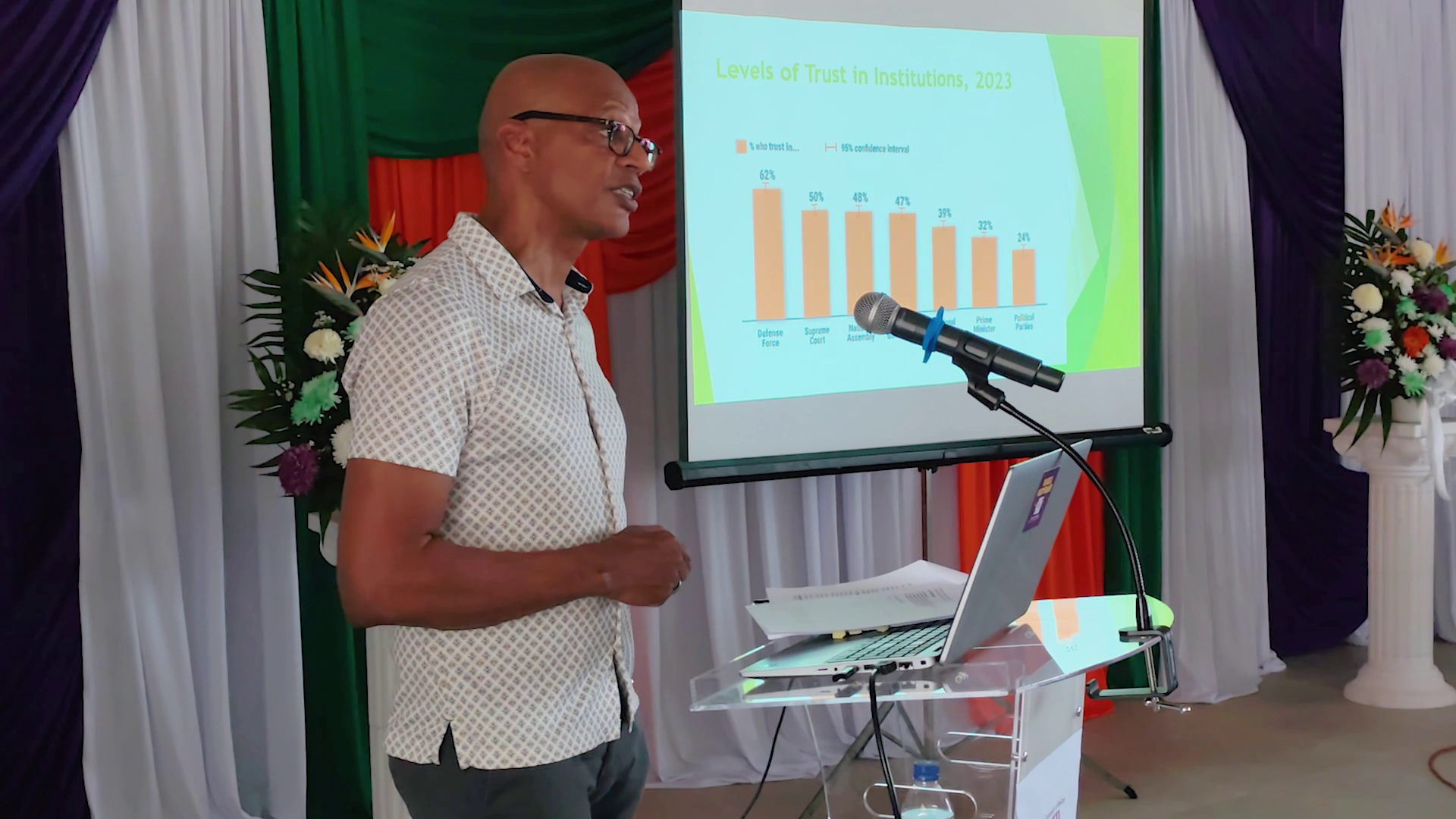
    Anthony Clayton, a professor of sustainable development at The University of the West Indies, Mona, shared his analysis in an exclusive interview with the Jamaica Observer over the weekend, warning that widespread automation of technical roles is rapidly redefining the core skills required for gainful employment. Going forward, Clayton argues, the most in-demand workers will not rely on routine technical capabilities that can be easily replicated by AI and automated systems. Instead, employers will prioritize candidates with advanced problem-solving acumen, creative thinking, and well-developed emotional intelligence.

    To cultivate these high-value skills and build the digital and institutional infrastructure needed to compete on the global stage of the Fourth Industrial Revolution, Clayton says Jamaica must fundamentally reorient its existing education and training frameworks. This shift, he emphasizes, will require bold new policy thinking and cross-sector collaboration that departs from outdated traditional models.

    Clayton points to shifting trends in the United States, where major technology corporations have already begun to carve out a larger role in workforce development that was once the exclusive domain of traditional higher education institutions. Unlike many traditional universities that prioritize theoretical knowledge, these leading tech firms prioritize practical, hands-on learning focused directly on solving real-world industry challenges.

    Looking to global examples of successful reform, Clayton highlights innovative models adopted by Germany and the United Kingdom. Both nations have implemented hybrid education frameworks centered on deep industry-university partnerships. These models include structured work experience placements embedded in academic programs, and industry-sponsored engineering doctorates where students conduct original research targeted at solving company-specific problems or developing new commercial products.

    According to Clayton, these collaborative, hybrid learning arrangements are set to become the global standard in technology-driven sectors first, as they align educational outcomes directly with the evolving needs of modern labor markets. Early adoption of this approach in Jamaica, he argues, would smooth the country’s transition to an integrated digital economy, where every sector from manufacturing and logistics to finance, governance, and marketing relies on interconnected digital systems.

    In this new economic landscape, nearly all workers will need to operate as knowledge workers, capable of driving value through specialized expertise, critical reasoning, interpersonal collaboration, and an ongoing commitment to updating their skills. Clayton notes that this large-scale transition will also require a reevaluation of the core roles of government and public institutions to support the shift.

    Clayton concludes that if Jamaica makes the targeted adjustments needed now, the country can leverage the opportunities created by the Fourth Industrial Revolution to break free from its long history of stagnant low growth and emerge as a dynamic, competitive economic hub in the digital age.

  • Prosecutor’s fixation on spent shell puzzles judge

    Prosecutor’s fixation on spent shell puzzles judge

    The high-profile murder trial involving six active-duty Jamaican law enforcement officers is set to reconvene on Tuesday, with a key procedural dispute over a single spent bullet casing taking center stage for courtroom arguments.

    The six officers — Sergeant Simroy Mott, Corporal Donovan Fullerton, Constables Andrew Smith, Sheldon Richards, Orandy Rose, and Richard Lynch — stand accused of the 2013 shooting deaths of three men: Matthew Lee, Ucliffe Dyer, and Mark Allen. Fullerton faces an additional charge of submitting a false statement to Jamaica’s Independent Commission of Investigations, the country’s police oversight body.

    The incident dates back to January 12, 2013, when the three victims were travelling through the Barbican neighborhood of St Andrew in a blue Mitsubishi Outlander. According to initial official accounts, officers signaled the vehicle to pull over, and after a brief delay, the driver stopped. Prosecutors allege that three men exited the vehicle and opened fire on police, triggering a shootout that left the three men dead, while a fourth suspect escaped the scene. Two unregistered firearms were recovered from the area after the gunfight.

    Investigators collected dozens of spent bullet casings from the Acadia Drive crime scene, near its intersection with Evans Avenue, and submitted all evidence to the Government Forensic Laboratory for ballistics testing. A total of 14 5.56mm casings, alleged to have been fired by the responding officers’ service weapons, were packaged together in a single envelope for analysis. Of these 14 casings, 12 were definitively matched to three police rifles used on the day of the shooting. Two casings, however, had no matching weapon on record — one of which was visibly damaged after being run over by a vehicle.

    Lead prosecutor Kathy-Ann Pyke has made the unmatched damaged casing a point of focus, demanding that the case’s veteran ballistics expert, a laboratory superintendent with nearly 20 years of experience in firearms analysis, re-examine the casing by running it through the lab’s computerized matching system to determine its origin. Pyke has argued that the extra step is necessary to properly label the casing as corresponding to crime scene marker number one, which has already been presented to the court via photographic evidence. She said the request comes as a precautionary measure to avoid mixing the casing up with other 5.56mm ammunition evidence collected from the scene.

    But High Court Judge Sonia Bertram-Linton has repeatedly questioned the relevance of the request since proceedings began on Friday, expressing confusion over why the single casing needs to be singled out for additional testing. The judge noted that the request introduces new evidence that would require full disclosure to the defense, and that she could already anticipate an objection from the defense team. Before the judge could finish her remark, lead defense attorney Hugh Wildman immediately voiced his objection to the proposal.

    Wildman’s unusual offhand comment — “I did not attend Ward 21 before I came here” — sparked a brief back-and-forth in the courtroom, before the judge encouraged the prosecution to move forward with the proceedings. Wildman’s co-counsel, Althea Grant-Coppin and John Jacobs, have formally objected to allowing any additional analysis of the casing, arguing that the full ballistics report has already been submitted to the court as evidence.

    When the trial resumes today, both the prosecution and defense will present full arguments on whether the additional testing should be allowed, after which Judge Bertram-Linton will issue a formal ruling. Following the ruling, the defense is scheduled to begin its cross-examination of the ballistics expert witness.

  • US-registered plane crashes in Guyana’s interior

    US-registered plane crashes in Guyana’s interior

    On a Sunday morning in late May 2026, a small single-engine aircraft registered in the United States went down in the remote interior region of Guyana, aviation and local news sources have confirmed. The downed aircraft, identified as a Cessna 182 with the registration marking N1-82UG, is owned by Domestic Airlines, a local air service founded and operated by experienced Guyanese pilot Orlando Charles.

    According to a senior source familiar with the incident, the crash occurred at Aricheng, a remote location in Guyana’s interior. Egbert Field, Director-General of the Guyana Civil Aviation Authority (GCAA) and a retired Lieutenant Colonel, confirmed the details of the accident to Demerara Waves Online News, noting that the only person on board — the pilot — escaped with only minor injuries.

    As of the latest update on 31 May 2026, investigators have not yet determined the root cause of the crash. Investigative teams are expected to be deployed to the remote crash site in the coming days to conduct on-site inspections and reconstruct the sequence of events that led to the accident. Multiple attempts to reach Orlando Charles for direct comment on the incident via mobile phone have gone unanswered as of press time.