作者: admin

  • Nauru herneemt traditionele naam Naoero en eert zijn erfgoed

    Nauru herneemt traditionele naam Naoero en eert zijn erfgoed

    The tiny Pacific island nation previously known globally as Nauru has formally restored its traditional indigenous name, officially becoming the Republic of Naoero in a historic move that reverses a colonial-era alteration and advances the preservation of the country’s unique cultural heritage.

    As the world’s third smallest sovereign state, ranking only behind Vatican City and Monaco, Naoero is home to roughly 12,000 people. The current name change traces its origins back more than a century, to the period of European colonial rule over the island. Colonizers altered the original indigenous name Naoero to Nauru because they found the traditional pronunciation difficult to master. In the local Dorerin Naoero language, Naoero translates directly to “our island”, carrying centuries of collective history and cultural meaning for the indigenous population.

    The formal transition follows a constitutional amendment approved by the country’s parliament back in May. On Wednesday evening, President David Adeang announced via social media that a planned national referendum on the name change had been canceled. He explained that the change does not introduce a new identity that requires popular approval, but instead formally recognizes the identity that the Naoero people have held since long before colonial intervention.

    “The decision to cancel the referendum came after careful consideration,” Adeang stated. “Naoero is not a new name seeking public acceptance. It has always been the identity of our people, it is already featured on our national coat of arms, and it is used in daily conversation across our communities. Above all, it is fully permitted under our existing constitution.”

    Under the new official designation, the country’s short formal name is now Naoero, and residents will be referred to as dei-Naoero. The government has already notified all relevant international organizations and foreign governments of the change, and the gradual transition to update official documents, global references, and state communications is already underway.

    Despite the country’s small geographic size and population, the name change carries profound symbolic and practical significance for the indigenous community’s efforts to preserve its cultural identity. Adeang emphasized that the move is not a political statement, but a step rooted in cultural stewardship and intergenerational heritage protection. “This initiative is intended to preserve the legacy of our ancestors and strengthen the cultural foundation we pass on to our children,” he said.

    The restoration of the traditional name aligns with broader government efforts to safeguard Naoero’s endangered indigenous language. Dorerin Naoero is currently classified as “severely endangered” by UNESCO. While the language remains in daily use within local communities, it has not historically been a standard part of the national education curriculum. Last year, however, the government passed legislation to integrate the language into school curricula in the coming years, marking another major milestone in protecting and revitalizing the country’s indigenous cultural heritage.

    Taken together, the name change and the move to expand indigenous language education highlight the small island nation’s ongoing commitment to preserving its unique cultural identity in the face of historical colonial erasure and the homogenizing pressures of modern globalization.


  • Saint Lucia loses respected business leader Evaristus Jn Marie

    Saint Lucia loses respected business leader Evaristus Jn Marie

    The Caribbean nation of Saint Lucia is mourning the loss of one of its most prominent cross-sector leaders, Evaristus Jn Marie, who passed away Friday at 67 after a period of illness that was never publicly disclosed.

    Over a professional career that stretched across more than 30 years, Jn Marie built a reputation as a steady, respected leader across both private business and national public institutions. At the time of his death, he held multiple critical leadership posts: he served as chairman of two major national entities, the National Insurance Corporation (NIC) and the Bank of Saint Lucia. He also held a board seat at the East Caribbean Financial Holding Company Ltd, acted as managing director for his family’s enterprise Jn Marie & Sons Ltd., and served as a board director for the Saint Lucia Electricity Services Limited, widely known as LUCELEC.

    Beyond his corporate and institutional roles, Jn Marie emerged as a leading voice for the island’s fuel retail sector during his tenure as president of the Saint Lucia Petroleum Dealers Association. He regularly stepped into the public eye to advocate on behalf of local petroleum retailers, particularly during policy and pricing debates that directly impacted the sector’s stability and the livelihoods of its operators.

    Jn Marie also dedicated years to formal public service, serving as an independent senator before rising to the position of Deputy President of the Senate of Saint Lucia.

    Following the announcement of his passing, tributes have poured in from across the island’s political and business communities. Among those paying respects is House Speaker Claudius Francis, a lifelong friend of Jn Marie and a former classmate from St Mary’s College. Francis remembered Jn Marie not just as a respected leader, but as a trusted confidant whose commitment to serving the Saint Lucian public went far beyond the titles he held.

    In a written tribute, Francis noted: “He gave himself to public service with a seriousness that marked him as a man of immense value.”

    Francis reflected on Jn Marie’s consistent willingness to answer calls to serve his country, highlighting that his guidance was always steady, his loyalty to the people of Saint Lucia never wavered, and his leadership was never motivated by personal acclaim. Instead, Francis emphasized, Jn Marie’s work was driven by a core goal: to ensure that every institution he served operated in the best interest of the Saint Lucian public.

  • Champions League 2026 : Victory against El Salvador, Haiti qualifies for the quarter-finals (video)

    Champions League 2026 : Victory against El Salvador, Haiti qualifies for the quarter-finals (video)

    The 2026 CONCACAF U-20 Champions League hosted in Puebla, Mexico, delivered a pivotal moment for Haiti’s young men’s national team, dubbed the Grenadiers, on July 31. In their third and final Group A stage match against El Salvador’s Cuscatlecos at Estadio Universitario BUAP, Haiti pulled off a tense 2-1 victory to punch their ticket to the tournament’s quarterfinal round, marking their second win of the group stage.

    Cuban head coach Raul Gonzalez Triana opted for consistency in his game-day selection, fielding the exact starting eleven that secured a dramatic 3-2 win over Cuba earlier in the group stage. The team lined up in a 4-4-2 formation, with goalkeeper Carlos Bré of Haiti’s Real Hope FA leading the backline, captained by Real Hope FA defender Arthur Alcimé. The starting squad featured a mix of domestic and international-based talent, with players plying their trade at clubs across Haiti, Jamaica, and the United States.

    The match got off to a strong start for Haiti, with forward Clavens Exantus breaking the deadlock in the 22nd minute. Exantus clinically converted a precision through ball from winger Emerson Laissé to put Haiti up 1-0 heading into halftime. The narrative shifted dramatically in the 56th minute, when midfielder Shaun A. Brun was shown a red card for a foul inside the penalty area, reducing Haiti to 10 men and handing El Salvador a golden equalizing opportunity. Salvadoran forward Christian Coreas made no mistake from the penalty spot, leveling the score at 1-1.

    Just 16 minutes later, second-half substitute D. Jacquet—who entered the match at the start of halftime to replace Nikolai Pierre—restored Haiti’s lead. Jacquet netted a well-placed header from the center of the penalty area off a rebounded attempt, putting Haiti ahead 2-1 in the 62nd minute. Haiti held on through the final 30 minutes of play, despite their numerical disadvantage, to secure the full three points.

    In additional substitutions made during the match, J. Ortiz replaced Clavens Exantus in the 60th minute, J. Anglade came on for Ramy Fabilus in the 84th minute, and J. Charles replaced Emerson Laissé in second-half stoppage time.

    After the conclusion of all Group A matches, the final group standings placed the United States atop the table with a perfect record of three wins from three matches, 11 goals scored and zero conceded, earning nine points. Haiti finished second with six points from two wins and one loss, having scored five goals and conceded six. Cuba claimed third place with three points, while El Salvador finished bottom of the group with zero points.

    As Group A’s second-place finisher, Haiti will advance to the quarterfinals, where they are scheduled to face Costa Rica’s Ticos at Puebla’s Cuauhtémoc Stadium on August 5, 2026 (the date may shift to August 4 pending final confirmation of group stage standings, which wrap up on August 1). A win in the quarterfinal will see Haiti qualify for the 2027 FIFA U-20 World Cup, marking a potentially historic milestone for the nation’s youth football program.

  • Robinhood strandt in halve finale CFU Club Shield met 3-1 nederlaag tegen Mount Pleasant FA

    Robinhood strandt in halve finale CFU Club Shield met 3-1 nederlaag tegen Mount Pleasant FA

    In a tense 2026 CFU Club Shield semi-final clash held in Trinidad and Tobago on Friday, Jamaica’s Mount Pleasant FA defeated Suriname’s SV Robinhood 3-1 to secure a spot in the tournament’s championship match, ending Robinhood’s impressive run in the regional competition.

    Mount Pleasant came out of the gate with clear control of the match, dictating play through sustained possession and putting the Surinamese side under constant defensive pressure. Their early dominance paid off in the 32nd minute, when defender Daniel Green was fouled inside the 18-yard box. The referee immediately awarded a penalty, and forward Trayvone Reid converted the spot kick flawlessly to put Mount Pleasant up 1-0, a scoreline that held through halftime.

    Robinhood emerged from the locker room after the break with renewed attacking intent, hoping to flip the script of the match. However, their improved momentum was short-lived. In the 57th minute, Jashaun Anglin capitalized on a costly defensive mistake from Robinhood, slotting home a misplayed backpass to double Mount Pleasant’s lead to 2-0.

    The Jamaican side put the result beyond doubt with nine minutes remaining in regulation. Robinhood goalkeeper Fonkel misjudged a long-range strike from Demario Phillips, incorrectly assuming the attempt was a cross into the box. The ball sailed past him into the far corner of the net, pushing Mount Pleasant’s advantage to 3-0.

    Though the match was all but decided, Robinhood refused to capitulate. In the 90th minute, striker Gilberto Cronie scored a late consolation goal for the Surinamese outfit, rounding out the final score at 3-1. While official possession statistics show only a narrow 52% to 48% split in Mount Pleasant’s favor, the Jamaican side held the initiative for nearly the entire 90 minutes. Robinhood struggled to build play out from under Mount Pleasant’s relentless pressing, which forced the errors that their opposition ultimately turned into match-winning goals.

    The defeat brings an end to a standout campaign for SV Robinhood in the 2026 CFU Club Shield. The Surinamese semi-champions booked their semi-final spot with back-to-back wins over Saint Lucia’s La Clery FC (2-0) and Guyana’s Slingerz FC, reaffirming their status as one of the most successful clubs in the tournament’s history. Robinhood previously claimed the CFU Club Shield title in 2019 and 2023.

    For Mount Pleasant, the victory advances the club to the tournament final scheduled for Sunday, 2 August. They will face the winner of the second semi-final fixture between Puerto Rico’s Metropolitan FA and the Dominican Republic’s Delfines del Este. Both the finalists and the overall champion of the 2026 CFU Club Shield will qualify for the CONCACAF Caribbean Cup, the top-tier club football competition for the Caribbean region.

  • Maya Leaders to Toledo Reps: ‘Let Us Hear You on This’

    Maya Leaders to Toledo Reps: ‘Let Us Hear You on This’

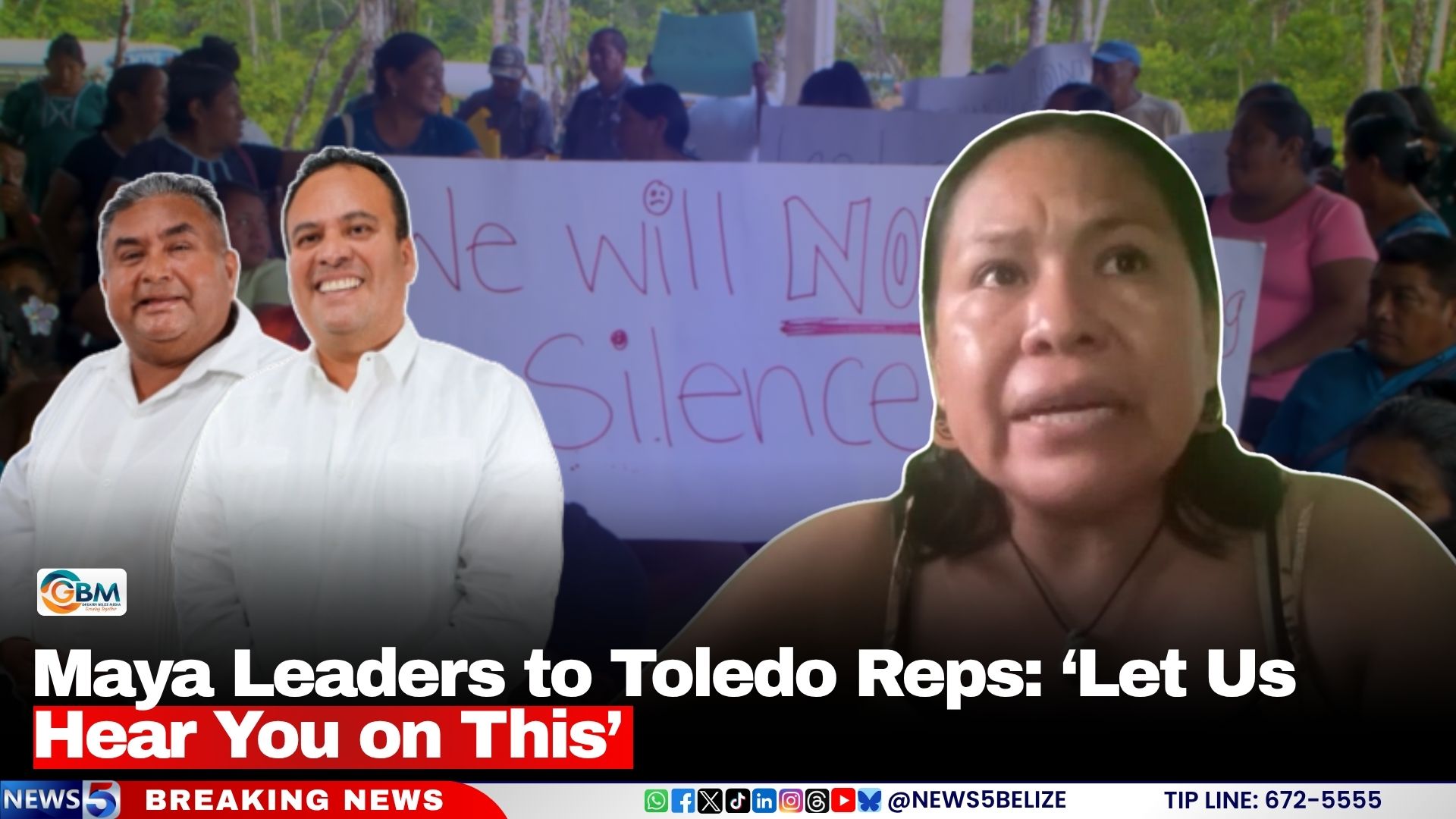
    Three decades of unresolved tension over Maya customary land rights in Belize boiled over this week, as the Maya Leaders Alliance (MLA) issued a direct public challenge to two local elected representatives and senior government ministers to break their silence on pending legislation tied to the issue.

    In a sharp rebuke delivered July 31, MLA spokesperson Cristina Coc called out Dr. Osmond Martinez, the Toledo East Area Representative, and Oscar Requena, the Toledo West Area Representative—both of whom also hold cabinet positions as ministers—to publicly outline their positions on the draft land rights law. The demand comes after years of back-and-forth between the MLA, the Belizean government, and regional courts over formal recognition of the Maya community’s customary land claims.

    Coc criticized the current public discourse around the legislation, arguing that legal and technical teams have dominated all discussion while the elected officials tasked with drafting and passing the law have stayed entirely out of the conversation. “We’re hearing the legal minds speak, but we’re not hearing the politicians. We’re not hearing the ones that actually write law,” Coc said in her statement. “We call on the leaders, we call on our area representative, we call on Minister Martinez, we call on Minister Requena, let us hear you on this.”

    The MLA also accused the Belizean government of negotiating in bad faith across the 30-year history of the dispute. Most recently, that tension came to a head last week, when the Caribbean Court of Justice (CCJ) declined to hear an application for clarification the Alliance submitted, after the government refused to support the request.

    For its part, the Government of Belize has pushed back against the criticism, stating that it is continuing to work on draft legislation that will implement the CCJ’s existing consent order on the issue, while also balancing the competing interests of all stakeholders impacted by formal recognition of Maya customary land rights. The long-running dispute remains one of the most high-profile indigenous rights issues in Central America, with the Maya community seeking formal legal protection for territories they have inhabited and governed according to custom for centuries.

  • Jogi wil opheldering over gesprekken president Simons in Engeland

    Jogi wil opheldering over gesprekken president Simons in Engeland

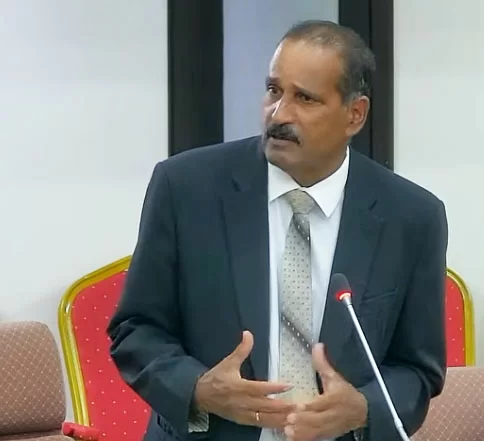
    A sitting member of Suriname’s National Assembly, Mahinder Jogi from the ruling VHP party, has formally called on the national government to provide full clarification surrounding President Jennifer Simons’ recent official working trip to the United Kingdom. The lawmaker has highlighted that key details of the visit remain undisclosed to the legislature, including the identities of the international financial institutions and private investors Simons met with, as well as any binding or non-binding agreements reached during those discussions.

    Speaking during Thursday’s plenary session of the National Assembly, Jogi referenced public comments the president made shortly after returning to Suriname from her UK travels. In those post-visit remarks, Simons confirmed she had held talks with representatives from global financial bodies and had formally requested external support to strengthen Suriname’s framework for managing upcoming revenue flows from the country’s developing offshore oil and gas sector.

    Jogi has outlined a series of unanswered questions that the government must address to satisfy parliamentary oversight. First, he has pushed for the full list of participating financial institutions and investment partners that met with the president during the UK visit to be released publicly. Beyond naming the attendees, he is seeking a clear breakdown of the core topics covered in the discussions, specifically around what forms of support for oil and gas revenue management were proposed and discussed.

    The parliamentarian has also called for additional explanation of the “targeted economic transition” that President Simons referenced in her post-visit address. Jogi noted that the administration has not yet defined what the policy actually entails or outlined what specific policy measures are being planned to implement this transition.

    Questions have also been raised about the new investment attraction partnerships Simons announced during her remarks. Jogi wants clarity on whether these partnerships will be forged with commercial banks, multilateral financial institutions, or independent private investors, as well as what terms will guide these collaborations.

    A key point of inquiry centers on the nature of any pledged support from international financial bodies. Jogi has pressed the government to reveal whether the support discussed will come in the form of new loans, another round of sovereign debt restructuring, or alternative forms of technical and financial assistance, given Suriname’s recent history of sovereign debt distress. He has specifically requested full transparency around Simons’ confirmed meeting with Bank of America representatives, asking for a full readout of what was discussed and what outcomes the meeting could deliver for the South American nation.

  • ‘Belize Prides Us as Cacao Capital, But Wants to Reduce Us to 5 Acres’

    ‘Belize Prides Us as Cacao Capital, But Wants to Reduce Us to 5 Acres’

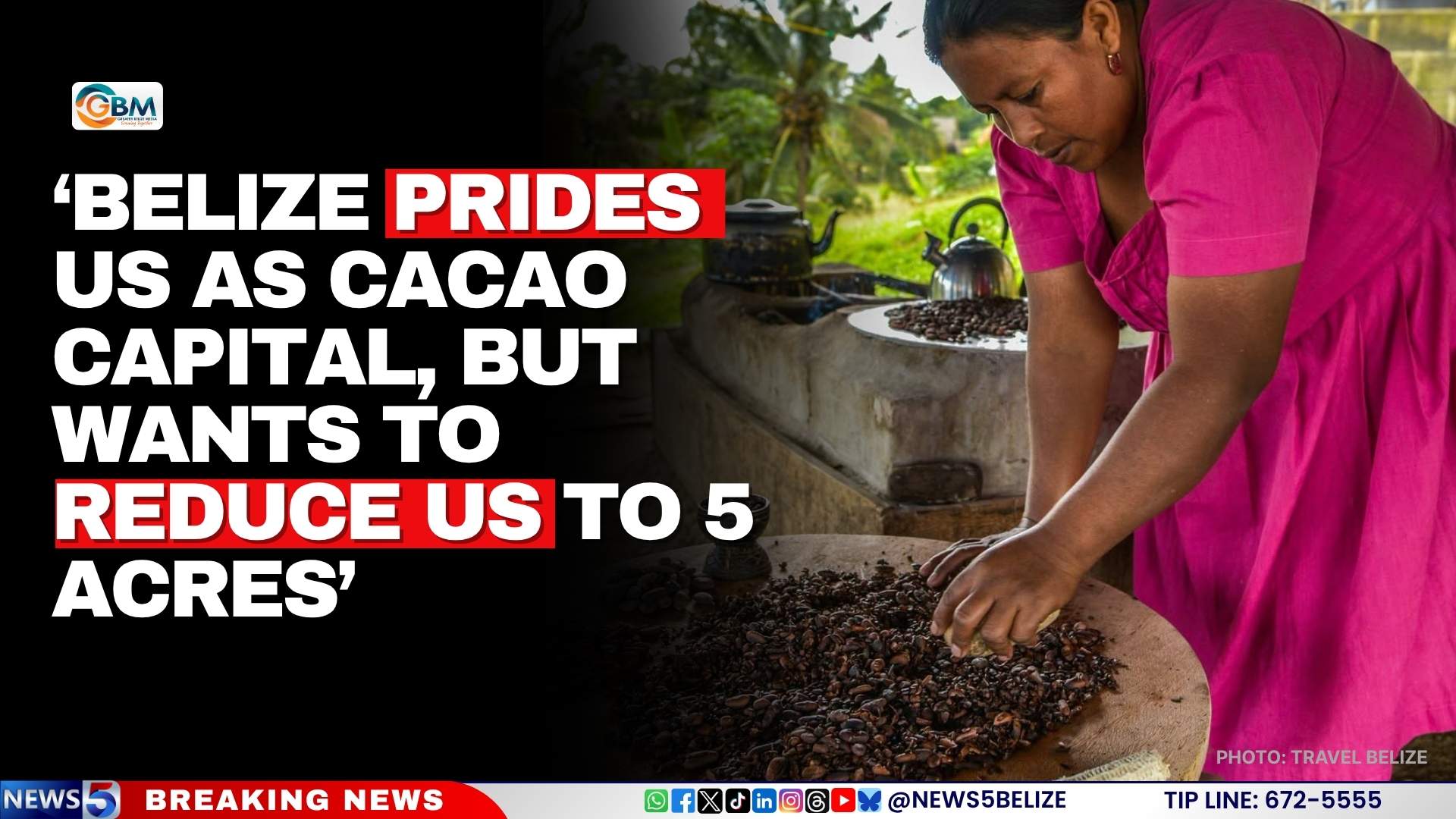
    On July 31, 2026, a sharp contradiction has emerged between the Belizean government’s branding of southern Toledo District as the nation’s cacao and chocolate capital, and a proposed land policy that indigenous Maya leaders argue would undermine the very farms driving that booming industry. The conflict came to a head following a Thursday hearing at the Caribbean Court of Justice, where the court is considering longstanding disputes over Maya customary land rights.

    Cristina Coc, spokesperson for the Maya Leaders Alliance, broke down the group’s objections in remarks after the closed-door hearing, calling out the government’s contradictory policy priorities. Under the current proposed framework for formalizing Maya customary land tenure, the government would automatically recognize legal ownership of only up to five acres of land per individual community member.

    This arbitrary cap ignores the reality of how Maya communities have used and stewarded their ancestral lands for generations, Coc argues. Many indigenous cacao farmers in Toledo hold plots far larger than the five-acre limit, meaning those expanded operations would be left without formal legal protection under the government’s plan. That lack of security leaves farms vulnerable to encroachment, seizure, or development that could wipe out the cacao production the government celebrates in its national tourism and agricultural marketing.

    “On one hand, the government touts Toledo as Belize’s chocolate capital to draw visitors and investment, but on the other, their five-acre cap leaves our core production lands unprotected,” Coc said. She questioned the practicality of the arbitrary limit, noting that the five-acre restriction would make it impossible for Maya communities to continue their traditional interwoven practices of fishing, hunting, and large-scale agricultural production that have sustained them for centuries.

    The Alliance argues that any approach to recognizing customary land rights that relies on a fixed per-person acreage formula is fundamentally flawed, as it fails to account for traditional collective land use patterns that have been passed down through indigenous generations. Beyond policy disagreement, Coc accused the government of negotiating in bad faith, pointing to the indigenous community’s longstanding contributions to Belize’s national development as tax-paying, active citizens who have a legal and moral claim to their ancestral lands.

    The outcome of the Caribbean Court of Justice case, and the final shape of Belize’s customary land tenure legislation, will have far-reaching impacts not only for indigenous land rights but for the future of Belize’s fast-growing cacao and specialty chocolate industry, which has become a key economic driver for the southern part of the country.

  • MLA Says Government Is “Imagining” What Maya Customary Tenure Should Be

    MLA Says Government Is “Imagining” What Maya Customary Tenure Should Be

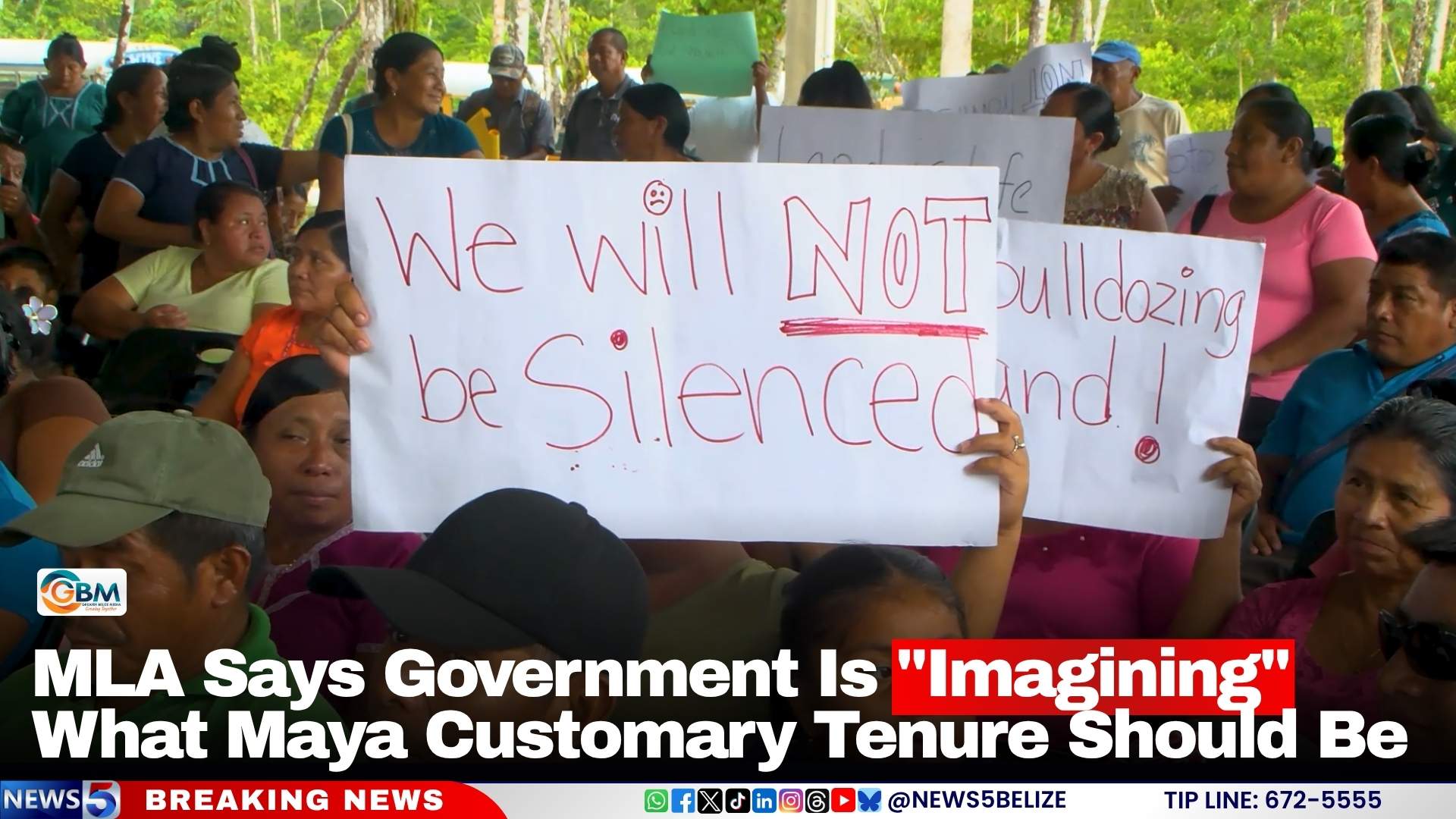
    In a landmark development for Indigenous land rights in Belize, the Caribbean Court of Justice (CCJ) has opted not to step into the ongoing dispute over Maya customary land tenure, declining a request to clarify a key provision of a 2015 landmark consent order that granted formal recognition to Maya land rights. The decision has reignited tensions between the Maya Leaders Alliance and the Belizean government, with Indigenous leaders accusing state officials of basing their entire land policy on invented assumptions rather than centuries of established, intergenerational Maya land use practice.

    Speaking immediately after the CCJ released its ruling on Thursday, Cristina Coc, spokesperson for the Maya Leaders Alliance, framed the court’s inaction as a strategic pause rather than a rejection of the Maya community’s claims. She noted that the tribunal has indicated it will only intervene if the Belizean government ultimately passes legislation that conflicts with the 2015 consent order and earlier lower court rulings affirming Maya land rights.

    At the core of the dispute is not a question of whether Maya customary land tenure exists – a fact already affirmed by multiple court rulings – but how the state should formally recognize and protect this long-standing Indigenous right. Coc sharply criticized the government’s position, articulated by Senior Counsel Edmund Andrew Marshalleck during court proceedings, for being rooted in what she calls a state-imagined vision of what Maya land tenure should look like, rather than the reality of how Maya communities have managed and used their lands for generations.

    Coc particularly pushed back against the government’s proposal to cap Maya land allocations at five acres per person, a framework tied directly to current community population sizes. She argued that this arbitrary cap reflects the disconnect between urban policymakers’ assumptions and the actual land needs of Maya communities, whose traditional practices – including fishing, hunting, foraging and rotational agriculture – require far larger expanses of land than the five-acre per-person limit would allow.

    “Maya people don’t imagine our land use,” Coc emphasized. “We are actively using our lands today, we have maintained our traditional practices on these territories for centuries. Those practices are not contained within the arbitrary five-acre boundary the government has drawn from behind a desk.” The CCJ’s decision leaves the ball firmly in the government’s court to draft formal land tenure legislation, with the Maya community poised to return to the court if the final law fails to align with their existing customary rights.

  • Heat Blast: Heatwaves, uneven hurricane activity forecast for late wet season

    Heat Blast: Heatwaves, uneven hurricane activity forecast for late wet season

    On Friday, leading regional climate and meteorology experts issued a detailed forecast outlining a series of extreme weather hazards set to impact Barbados and the entire Caribbean region through the final stretch of the 2024 wet season. The projection, published in the July–September issue of the Caribbean Climate Outlook newsletter, draws on analysis from Dr. Cedric Van Meerbeek, lead regional climatologist at the Caribbean Institute for Meteorology and Hydrology (CIMH), and Dr. Theodore Allen, a climate change specialist at the University of the West Indies’ Centre for Resource Management and Environmental Studies (CERMES).

    According to the pair, the projected unstable conditions are driven by two key climate forces: a strengthening El Niño system developing over the summer months, which overlaps with the Caribbean’s wet season, and long-term anthropogenic global warming that amplifies the intensity of extreme weather events across the tropics.

    One of the most immediate risks highlighted is rising oppressive humid heat that will build through September, the traditional peak of the region’s annual heat cycle. The experts warn this warming trend will result in repeated, prolonged heatwaves, with the northernmost areas of the Caribbean facing the most severe exposure.

    For the 2024 Atlantic Hurricane Season, the forecast calls for an uneven pattern of activity. Through August, storm formation will occur in irregular, scattered bursts, but the typical September peak is expected to be far less active than in average years. A key factor suppressing cyclone development is the expected frequent influx of dust-heavy Saharan air masses moving across the Atlantic into Barbados and the Eastern Caribbean, a phenomenon the authors note disrupts tropical cyclone formation. However, this same dry, dust-laden air carries its own hazards: it worsens oppressive humidity and drives widespread declines in regional air quality, raising risks for people with respiratory conditions.

    Rainfall patterns will also be highly irregular over the coming two to three months. Overall, the region will see a slower increase in rainfall frequency compared to most years, which has slowed the recovery from ongoing drought conditions that will persist into September. Despite the overall lack of consistent rain, intense, short-duration heavy rainfall events are still projected to occur, and these outbursts carry a “high to extremely high potential” for flash flooding, river flooding, and cascading secondary hazards that can disrupt communities and infrastructure.

    Drought remains one of the most pressing ongoing threats across multiple island nations and territories. Severe short-term drought has already been confirmed in southwest Tobago and western Barbados, while long-term drought is currently entrenched in a dozen locations across the region: easternmost Cuba, Grenada, easternmost Guadeloupe, southwest Jamaica, Martinique, southwest Puerto Rico, Saint Lucia, St. Vincent, and southeast Suriname.

    Agricultural drought, which threatens crop yields and livestock health, is already developing in Saint Lucia, and the experts project it will either emerge or persist through the end of the month across the Aruba-Bonaire-Curacao (ABC) Islands, eastern Cuba, Dominica, Grenada, the Leeward Islands, Martinique, and Tobago. Short-term drought is currently evolving in Antigua and Barbuda, Grand Cayman, Martinique, northeast Puerto Rico, St. Kitts and Nevis, parts of Saint Lucia, Tobago, and the U.S. Virgin Islands, with potential development or continuation through September in the ABC Islands, Barbados, parts of Belize, and Grenada. Long-term drought is evolving in Antigua, Martinique, St. Kitts and Nevis, and Saint Lucia, with potential persistence or development through the end of November in Martinique and St. Kitts.

  • Saint Lucia concludes participation at Commonwealth Games

    Saint Lucia concludes participation at Commonwealth Games

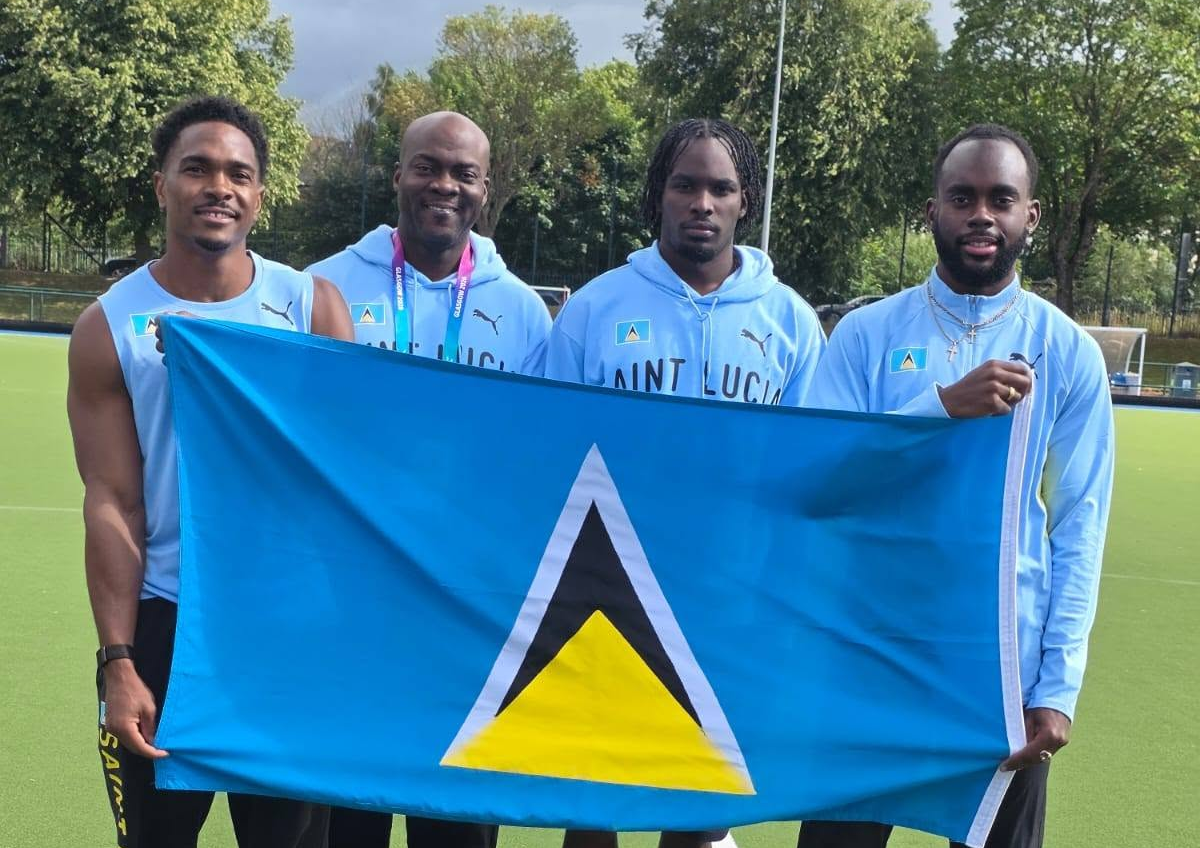
    After four days of competitive action at the 2014 Commonwealth Games hosted in Glasgow, Scotland, the tiny track and field delegation from the Caribbean island nation of Saint Lucia has wrapped up its tournament run. While none of the team’s athletes advanced to a final event, the competition offered critical developmental and qualifying experience for rising stars, including one sprinter already bound for the 2024 Paris Olympic Games.

    Leading the team’s performance was 23-year-old sprinter Michael Joseph, a resident of Gros Islet who currently competes collegiately at the University of Arkansas and holds Saint Lucia’s national record in the men’s 400-meter event. A 2022 Commonwealth Games finalist, Joseph kicked off his Glasgow campaign in the opening round of the men’s 400m on Tuesday. Drawn to the unfavored outer Lane 8, he held strong pacing through the race to cross the line third in his heat with a time of 45.84 seconds, securing a spot in the event’s semifinal round.

    On Thursday, Joseph took to the track at EDF Scotstoun Stadium for his semifinal matchup, this time drawn to inner Lane 1. He crossed the finish line sixth in his semi with a time of 46.69 seconds, placing 13th overall across all semifinalists and falling just short of qualifying for the event’s final. Despite the early exit, the performance adds to Joseph’s resume ahead of his upcoming appearance at the 2024 Paris Olympics.

    Joseph was not the only Saint Lucian 400m sprinter in Glasgow. Marvric Pamphile, a 31-year-old Choiseul native serving as a soldier in the British Army, also competed in the opening round of the men’s 400m on Tuesday. Pamphile recorded a time of 47.12 seconds in his heat, finishing 19th overall in the opening round and did not advance to the next stage of competition.

    The first Saint Lucian athlete to compete at the Commonwealth Games in Glasgow was hurdler Khailan Vitalis, who took on the men’s 110m hurdles in the opening heat round on Monday. Vitalis finished the race with a time of 14.46 seconds, placing 11th overall across all opening heats and missing out on a spot in the next round.

    Unlike his teammates who will return home following the conclusion of the Glasgow Games, Vitalis immediately traveled across the Atlantic Ocean following his competition to Santo Domingo, Dominican Republic, where he is set to compete as the sole track and field athlete representing Saint Lucia at the upcoming Central American and Caribbean (CAC) Games. Both the 2014 Commonwealth Games team and the CAC Games delegation are selected and managed under the oversight of the Saint Lucia Olympic Committee.