作者: admin

  • CARICOM Observers Arrives in Antigua and Barbuda ahead of April 30 general election

    CARICOM Observers Arrives in Antigua and Barbuda ahead of April 30 general election

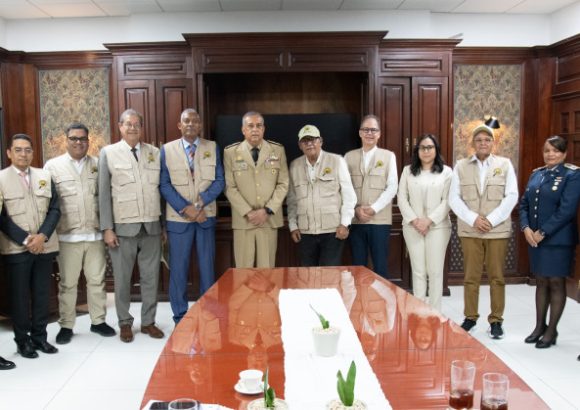
    A formal invitation extended by Antigua and Barbuda Prime Minister Gaston Browne in a letter dated April 5, 2026, has brought the Caribbean Community (CARICOM) Secretariat into the island nation’s upcoming electoral process, with an independent nine-member election observation mission already deployed to monitor the general election scheduled for April 30, 2026.

    Following receipt of the invitation, CARICOM’s Secretary-General promptly confirmed the organization’s commitment to the mission, moving quickly to finalize all operational and logistical arrangements for the observer team. The mission is led by Maxine McClean, a sitting member of Barbados’ Electoral and Boundaries Commission, with Herman St. Helen, Chief Elections Officer of Saint Lucia, serving as Deputy Chief of Mission. The remaining seven members of the team bring deep electoral expertise from across the Caribbean bloc: they include Felix Gregoire, Chairman of Dominica’s Public Service Commission; Rohan Porter, Acting Assistant Director of Elections for Field Operations at Jamaica’s electoral body; Stephanie Bram, an Electoral Bureau member from Suriname; and Karla Dayton Edwards, Commissioner of Trinidad and Tobago’s Election and Boundaries Commission. Three CARICOM Secretariat staff based in the Foreign and Community Relations division—Programme Manager Brian Bellevue, Project Officer Amos Lindor, and Administrative Assistant Denise Morgan—provide operational and administrative support to the observer team.

    The core leadership and Secretariat support contingent touched down in Antigua and Barbuda on April 23, 2026, kicking off a week-long pre-election and election monitoring process. In the days leading up to polling day, the mission has planned a full schedule of consultations with a broad range of electoral stakeholders to build a comprehensive understanding of the pre-vote context. These meetings include discussions with representatives from the Antigua and Barbuda government, the ruling political party, and the official opposition, as well as direct talks with the Antigua and Barbuda Electoral Commission and the national Supervisor of Elections. The mission has also prioritized outreach to grassroots and civil society groups, planning sessions with representatives of women’s organizations, youth groups, disability advocacy networks, the local business community, religious institutions, labor unions, and independent media outlets.

    On polling day, April 30, the full observer team will monitor every stage of the electoral process from start to finish. Observers will be on site to assess pre-opening preparations at polling stations, the formal opening of voting locations, the conduct of ballot casting throughout the day, the official closure of polls, the manual and electronic counting of ballots, and the compilation of official precinct-level poll statements. Beyond on-the-ground observation, the mission has a clear set of objectives: it will collect voting result data to conduct independent quantitative verification of the official election results, document qualitative observations about the conduct of electoral officials, political participants, and the overall fairness of the electoral environment, and conduct a preliminary assessment of the election outcome and its immediate short-term impacts on Antigua and Barbuda’s social and political landscape.

    Following the completion of its monitoring activities, the full mission is scheduled to depart Antigua and Barbuda on May 3, 2026. In a public statement ahead of the election, the CARICOM Election Observation Mission extended its gratitude to all stakeholders who have already cooperated to facilitate the mission’s work, noting that the opportunity to support and strengthen democratic governance in Antigua and Barbuda is a responsibility the entire team takes seriously. The mission also recognized the warm hospitality and collaborative reception it has received from national authorities and local actors since its arrival.

  • North Swell and Atlantic Breezes Define Day Two of Antigua Sailing Week

    North Swell and Atlantic Breezes Define Day Two of Antigua Sailing Week

    Day two of the highly anticipated 2026 Antigua Sailing Week brought a dramatic shift in wind and sea conditions, as hundreds of competing sailing vessels prepared to leave the sheltered Caribbean Sea and push north into the expansive open Atlantic. After anchoring overnight at Green Island South, crews spent the early morning prepping their yachts, framed by rolling hillsides dotted with blooming dagger log agave — Antigua’s national flower, a rare sight that only blooms for a handful of days once every two decades.

    One by one, crews hoisted their sails and navigated to the official start line, where an 8-knot downwind breeze greeted the fleet. ASW Race Officer Chris Mansfield highlighted the strategic importance of early positioning for competitors. “The boats that really focused during the light air start and worked hard to get themselves into position were the best suited when the wind filled in,” Mansfield explained. “Being in the right place when that happened was crucial.”

    As wind speeds steadily climbed, a powerful north swell generated strong shifting currents that tested sailors as they traced Antigua’s rugged northeastern coastline. For many racers, the unpredictable conditions made for a far more engaging challenge than the opening day of the event. “It was very different from yesterday. Lots of varying conditions to contend with, which made it a fun challenge,” said Dean Krocken, trimmer aboard *Kali*, whose crew secured back-to-back first-place finishes in CSA Class 1 on day two. “We put the spinnaker up and did four jibes or five into the finish.”

    Tight, neck-and-neck competition played out across every racing division as the afternoon unfolded. Mid-race conditions proved perfectly suited for reaching and downwind maneuvers, with a steady 15-knot breeze rewarding crews that could balance blistering speed with precise boat control. “Today was quite challenging because we’re used to upwind starts,” said Pieter Hooft, headsail trimmer aboard *Contigo – Team HI 1*, the CSA Class 2 winner. Hooft and his teammates traded the lead with *Vildiur* for the first 6 miles of the course, which ran between Man o’ War Point and Devil’s Bridge, before pulling ahead near Guinea Island.

    Hooft explained the unorthodox tactic that gave his Dutch team the winning edge: “We sailed zeeuwe-meisjes (wing-on-wing), and the drag from the current actually gave us an advantage. The opposing flow of water across the hull created just enough of an increase in apparent wind for us to pull ahead.”

    Beyond the competitive racing divisions, cruising sailors participating in the event’s coastal rally took full advantage of the steady breeze and lively sea conditions, while also joining in Antigua Sailing Week’s popular Daily Treasure Hunt. Over the first two days of the event, participating crews have shared photos of their on-water adventures, ranging from group shots snapped in their official English Harbour Rum hats to surprise sea turtle sightings and stops at historic island landmarks. “The treasure hunt was a blast!” said Rob “The Dawn” Britts, sailing aboard *Mystic Lee*. “The whole day turned into an adventure.”

    Once crews reached the day’s destination at Little Jumby, racers and cruisers gathered at The Hut to trade stories from the course before joining a lighthearted beach relay that mixed competitive and casual participants. Teams competed in a multi-stage challenge: speed-walking while balancing a lime on a spoon, a swim out to the local mooring field and back, and a final dinghy sprint around a marked course to the finish line. In a dramatic last-minute turnaround, the crew of *Impala*, who had trailed *Kiss Cool* through the first three stages of the relay, edged past their opponents to claim first place in the final seconds of the dinghy race.

    As the sun dipped below the Caribbean horizon, post-race festivities moved from the beach into The Hut’s restaurant. DJ York got the crowd moving, and the dance floor stayed packed as crews partied late into the night, capping off a full day of on-water and onshore fun.

    With two days of racing and adventure complete, Antigua Sailing Week 2026 continues to deliver world-class sailing, vibrant Caribbean culture, stunning natural scenery and shared camaraderie for participants from across the globe, both on and off the water. As the event moves toward Saturday’s leg from Jumby Bay to Ffryes Beach, Mansfield says sailors can look forward to a new perspective on Antigua’s iconic coastline and world-renowned sailing conditions.

    “The beauty of this format is that every day feels different,” Mansfield said. “Different wind, different seas, different views – but the same spirit of competition and community.” Full race results are available online via the official event portal.

  • Booby Alley housing project to be handed over by October, Browne says

    Booby Alley housing project to be handed over by October, Browne says

    Antigua and Barbuda Prime Minister Gaston Browne has confirmed that a China-funded affordable housing development constructed on the former Booby Alley site is progressing smoothly toward its targeted completion, with full handover scheduled for October this year to mark the country’s Independence celebration.

    The announcement was made during an on-site inspection conducted by Browne alongside a visiting Chinese government delegation, which provided an up-to-date overview of the project’s construction milestones. The comprehensive development consists of nine multi-story residential buildings containing a total of 150 modern condominium units. As of the latest assessment, all exterior painting and interior tiling work has been finalized, while the installation of windows and entry doors is approximately 90 percent complete.

    Project management officials outlined the timeline for remaining tasks: all outstanding interior construction work is projected to wrap up by June, while site-wide exterior improvements and the construction of a dedicated on-site sewage treatment facility are expected to be finished by August. Browne noted that the Antiguan and Barbudan government has requested a series of targeted adjustments to the project plans prior to the official handover, ranging from establishing a standardized propane gas supply system for all units to adding centralized shared waste management infrastructure. The government also plans to acquire an adjacent plot of land to build a multi-million-gallon water storage tank, which will bolster the community’s long-term water security.

    Landscaping work across the development is set to commence by the end of June, with a planting plan that includes native flowering plants and a variety of fruit trees. This green initiative is integrated into the country’s broader national food security strategy, which aims to increase local food production and expand accessible green spaces for residents.

    During the interaction with the Chinese delegation, Prime Minister Browne extended warm regards to President Xi Jinping of China. He also revealed that he has scheduled an official visit to China in early 2025, a trip designed to deepen bilateral cooperation and strengthen the long-standing friendly ties between the two nations.

    Browne emphasized that the housing project represents a landmark effort to drive social transformation in Antigua and Barbuda. The initiative replaces overcrowded, substandard informal housing that previously occupied the Booby Alley site with high-quality, safe modern condominiums, exclusively designated for low-income households that have struggled to access affordable formal housing.

  • Verbetering dienstverlening consulaat in Amsterdam in gang gezet

    Verbetering dienstverlening consulaat in Amsterdam in gang gezet

    AMSTERDAM, April 25 – Suriname is rolling out a comprehensive upgrade of public services at its Amsterdam consulate, a reform initiative aligned with the national administration’s broader goals of improving governance and boosting the country’s international standing. Newly installed Consul-General Roseline Daan, who took office in mid-March 2026, has launched a multi-phase improvement project ordered by Melvin Bouva, Suriname’s Minister of Foreign Affairs, International Trade and Cooperation, aimed at streamlining service delivery and cutting public complaints.

    Daan emphasized that the overarching goal of the reform is to optimize the daily experience for community members who rely on a wide range of consular services from the mission. “The services we provide to the public, who need different types of consular support every single day, deserve to be improved and made much more accessible and pleasant,” she said in an update on the initiative.

    To identify and resolve long-running bottlenecks, the consulate has already held intensive consultations with on-site staff, completed a full technical inspection of the consulate building, and launched a review of information and communications technology infrastructure to identify needed upgrades.

    The service upgrade is backed by Ambassador Ricardo Panka, who is working alongside Daan to strengthen Suriname’s diplomatic and economic profile in the Netherlands. As part of this broader engagement, the mission is also building partnerships with prominent members of the Surinamese diaspora in the country, who have expressed willingness to contribute to Suriname’s ongoing development and positive global projection.

    As the first visible step of the reform, cleaning, repairs, repainting and remodeling of workspaces and public reception areas are underway at the consulate on April 25 and 26. Many of these immediate improvement works have been made possible by volunteer contributions from community members.

    The entire initiative aligns with the “Make Suriname Shine!” policy vision introduced by Minister Bouva and the national development direction outlined by Suriname’s President Jennifer Simons. Ambassador Panka noted that the Amsterdam consulate serves as a critical representative extension of the Surinamese state to the Netherlands and the large Surinamese community based there. A well-organized, welcoming physical and operational structure, he explained, does more than just improve direct service delivery: it also builds public trust, can create positive spillover effects for Suriname’s investment climate, and supports growth in the tourism sector.

    Through these targeted upgrades, Suriname’s diplomatic mission in the Netherlands aims to position itself to deliver more effective consular support, advance economic cooperation, and promote Suriname’s international image from a strengthened foundation.

  • A Lesson in Nature: Sandals Foundation Takes Students on Mindfulness Nature Trail for Earth Day

    A Lesson in Nature: Sandals Foundation Takes Students on Mindfulness Nature Trail for Earth Day

    To mark this year’s Earth Day, the Sandals Foundation brought environmental education and mental wellness together through a region-wide mindfulness nature trail program, pulling more than 300 primary school students from nine Caribbean islands out of their classrooms and into local ecosystems. Among the participants were more than 50 pupils from Antigua’s Five Islands Primary School, who explored two iconic local natural sites—Wallings Dam and the Johnson’s Point coastline—to deepen their connection to the region’s native biodiversity.

    During the guided outings, students took part in a structured sequence of activities designed to blend intentional mindfulness practice with hands-on environmental learning: guided breathing exercises, slow-paced nature walks, sensory observation activities, and group discussions focused on conservation. The program was built around two core goals: helping young people understand the proven mental and physical healing benefits of time spent in nature, and empowering them to adopt small, daily habits that protect local natural resources.

    Heidi Clarke, Executive Director of the Sandals Foundation, explained the unique vision behind the combined programming. “By pairing mindfulness practice with environmental education, we set out to encourage students to slow down, embrace the present moment, reflect on their relationship to the natural world, and develop a genuine appreciation for the beauty that surrounds them,” Clarke said. “We also wanted to help young people recognize the personal responsibility and collective power they hold to protect the natural resources that sustain their communities.”

    For one fourth-grade student who joined the Antigua outing, the experience was both entertaining and transformative. She shared that discovering Antigua’s natural treasures, from learning about native plant species to uncovering the history of the Wallings reservoir and dam, made the day feel fun while also expanding her understanding of the island’s natural heritage.

    The initiative was just as meaningful for the team of 10 Sandals Foundation ambassadors from Sandals Grande Antigua Resort and Spa, who volunteered to support the event. Led by Public Relation Manager Leon Norville, the team walked away inspired by the day’s energy. “The excitement and curiosity from both students and adult volunteers was incredibly motivating,” Norville said. “Watching how engaged young people were throughout the entire tour made all the work that went into this initiative deeply rewarding.” He also credited Tour Operator Refica Attwood of the Wallings Nature Reserve for bringing the island’s ecological history, native flora, and Indigenous cultural stories to life for participants, adding immeasurable value to the experience.

    Annetta Alexander-Hunt, a fourth-grade teacher who accompanied the Five Islands Primary School group, highlighted the long-term educational impact of the outdoor excursion beyond a single day of fun. Alexander-Hunt explained that the outing gave students a far deeper appreciation for the ingenuity of historic water management infrastructure like Wallings Dam, a lesson that feels particularly urgent amid recurring drought conditions across the Caribbean. It also helped students grasp the critical ecological role of mangrove forests in protecting coastlines from erosion and supporting vulnerable marine ecosystems. “The educational resource materials we received during the tour will help us reinforce these lessons back in the classroom, extending the impact of this field experience long after the day ends,” she noted.

    Across the region, the 300+ participating students visited a range of protected natural spaces, from national parks and mangrove forests to managed conservation areas and Beaches Resorts native gardens. A key unstated benefit of the program was giving students a intentional break from constant digital engagement, creating space to decompress from screen time and form an unmediated connection to the natural world.

    This Earth Day initiative is just one part of the Sandals Foundation’s decades-long broader conservation work across the Caribbean. To date, the organization has engaged more than 177,500 people in environmental education programming, planted over 28,000 native trees, outplanted more than 38,000 corals to restore damaged reef systems, supported monitoring programs that have enabled the safe hatching of more than 221,000 sea turtle eggs, and provided critical support to 23 marine and terrestrial protected areas across the region.

    Founded in March 2009 to expand on the philanthropic work Sandals Resorts International had carried out for decades prior, the Sandals Foundation is a registered nonprofit across multiple North American and European jurisdictions: it is a registered charity with Jamaica’s Department of Co-operatives and Friendly Societies, a CRA-registered charity in Canada, a 501(c)(3) tax-exempt organization in the United States, and a registered charity with the Charity Commission for England and Wales. The foundation focuses its work on three core priority areas: education, community development, and environmental conservation. Critically, 100 percent of all public donations go directly to community-focused programs across the Caribbean. More information about the organization’s work is available at www.sandalsfoundation.org.

  • Antigua Handball Association Celebrates Revival as National Teams Compete in IHF Beach Tournament

    Antigua Handball Association Celebrates Revival as National Teams Compete in IHF Beach Tournament

    After nearly 10 years of stagnation under the national Olympic framework, handball is making a promising comeback in Antigua and Barbuda, with the small island nation poised to make its regional competitive debut at the upcoming International Handball Federation (IHF) Beach Handball Tournament and World Cup qualifier hosted by neighboring St. Kitts and Nevis.

    The journey of handball in Antigua and Barbuda traces back to the early vision of E. P. Chet Greene, president of the Antigua and Barbuda National Olympic Committee (ABNOC), who first brought the sport to the islands. Decades later, after years of minimal activity, local handball advocates led by Cliff Williams have refocused development efforts on beach handball — a format that fits naturally with the country’s coastal landscape — to rebuild grassroots interest and participation.

    This revival effort received critical backing from the IHF’s Developing Nations grant program, which provided the financial support needed to assemble both men’s and women’s national squads and cover the costs of competing in the April 23-26, 2026 tournament. Beyond funding, the IHF also delivered on-the-ground coaching support, bringing in Puerto Rico-based coach Olando Garcia to train local athletes and help the Antigua and Barbuda Handball Association design a long-term competitive development plan for the sport.

    In just two months, the association ran an aggressive recruitment and intensive training campaign to build the two national rosters. A total of 20 athletes — 10 men and 10 women — were selected alongside a delegation of five officials. To build a competitive base quickly, organizers recruited athletes from existing popular local sports: most female competitors came from netball and volleyball backgrounds, while male athletes were drawn from cricket, baseball, volleyball and other community sporting programs. Training sessions were held across both beach courts and indoor hardcourts to prepare the squads for the upcoming competition.

    Association leaders say the athletes have shown remarkable dedication, enthusiasm and growth throughout the training process, putting in the work to reach a competitive standard ahead of their first international outing. The men’s team will kick off its tournament campaign at 9:00 a.m. against host St. Kitts and Nevis, while the women’s squad will face its first match against the United States at 12:20 p.m. Organizers plan to share a link to live stream the matches once it is made available.

    The handball association extended public gratitude to all partners that made the revival possible, singling out Karen Joseph, NOC vice president and president of Antigua and Barbuda’s netball association, for her instrumental support in launching the initiative, and local trainer Keston Daley for his ongoing commitment to athlete development. The association also reaffirmed its thanks to the IHF for both the financial investment and technical support that turned the comeback into a reality.

    As the delegation prepares to take the court for the country’s first-ever regional handball competition, association leaders are calling on local sports fans to rally behind the athletes as they take this landmark step for the future of handball in Antigua and Barbuda.

  • Minister Ramsaran: Defensie moet versnellen en zich aanpassen aan nieuwe dreigingen

    Minister Ramsaran: Defensie moet versnellen en zich aanpassen aan nieuwe dreigingen

    On Friday, during the formal inauguration of new Surinamese National Army Commander Mitchell Labadie, Defense Minister Uraiqit Ramsaran laid out a clear roadmap for the country’s defense sector, calling for urgent institutional strengthening and adaptive reform to match the pace of a rapidly shifting global security landscape.

    In his keynote address to the defense community, Ramsaran framed the change in military leadership not as a routine transitional moment, but as a pivotal milestone that carries renewed institutional responsibility. He reaffirmed the core mission of Suriname’s defense apparatus: safeguarding national sovereignty, maintaining operational readiness to respond to domestic emergencies, and upholding a reputation as a reliable pillar of national stability.

    Beyond basic functionality, Ramsaran pushed for accelerated progress across the defense sector. He emphasized that the National Army remains the foundational bedrock of Suriname’s overall security and domestic stability, a role that requires the organization to move far beyond maintaining the status quo. “Our organization must not only function — it must accelerate,” he told attendees.

    Growing global complexity, he argued, has created a steadily expanding set of security challenges. Shifting international dynamics, rapid technological change, and increasingly complex, transnational security threats demand constant adaptation, incremental improvement, and deliberate institutional strengthening. Against this backdrop, he stressed that strong, ethical, and dependable leadership is non-negotiable for the defense force to fulfill its mandate.

    Ramsaran extended his formal congratulations to Labadie on his appointment, expressing full confidence in the new commander’s professional capabilities. He reminded Labadie that the role demands unwavering resolve, sharp strategic insight, and uncompromising personal integrity, noting that every decision he makes will directly shape the readiness and morale of the country’s military personnel.

    Alongside welcoming the new leadership, the minister also publicly recognized the departing commander for their years of service and contributions to advancing the defense organization’s development.

    In guidance to Labadie, Ramsaran urged the new commander to remain visible, approachable, and closely connected to rank-and-file service members across all operational levels. “That is where the true strength of our defense force lies,” he said.

    Ramsaran further emphasized that cross-sector collaboration is not an optional strategy, but the core key to delivering successful outcomes. This commitment to collaboration applies within the defense hierarchy, across all government departments, and in engagement with wider Surinamese society. Even as leadership transitions, he added, the core values that guide the defense organization must remain unchanged. “Service, steadfastness, and loyalty will remain our compass,” Ramsaran said.

  • Minister pilots major labour law reforms

    Minister pilots major labour law reforms

    In a landmark move to update decades-old employment regulations, Trinidad and Tobago’s Labour Minister Leroy Baptiste introduced a transformative amendment bill to the Senate Wednesday that aims to rewrite the rulebook for retrenchment practices and strengthen safeguards for workers facing job loss.

    The Retrenchment and Severance Benefits (Amendment) Bill 2026 brings a slate of sweeping changes, including stricter accountability requirements for employers, expanded worker protections, and a marked increase in the minimum severance payments companies must issue to laid-off staff. Baptiste outlined that every core stage of the retrenchment process — from initial layoff planning to final severance payout — will be restructured under the new framework.

    One of the bill’s most financially impactful adjustments comes via Clause 16, which revises the tiered minimum severance payment structure to deliver higher compensation for displaced workers. For non-monthly paid (hourly, daily or weekly) workers with one to fewer than five years of service, the minimum payout rises to three weeks’ pay per year of employment, while monthly-rated workers in the same tenure bracket will receive one month’s pay per year. For workers with five or more years of service, non-monthly workers get four weeks’ pay per year for the first four years, jumping to six weeks’ pay per year for each year starting from the fifth. Monthly-rated workers in this longer tenure group will receive one and a quarter months’ pay per year for the first four years, increasing to one and three-quarter months per year from the fifth year onward.

    Clause 9 of the bill introduces a formal, regulated framework for temporary layoffs, a provision missing from the current outdated law. The new rule caps unagreed temporary layoffs at 90 calendar days; if a worker remains off the job beyond this window, they are automatically classified as redundant starting on the 91st day, triggering the employer’s legal requirement to issue full severance benefits. The legislation does build in limited flexibility: employers can extend the 90-day period if they reach a written agreement with either a recognized majority union representing the worker or the affected employee directly.

    Another key mandate comes via Clause 10, which requires mandatory consultation with recognized majority unions before employers can issue formal redundancy notices. The mandatory consultation period is capped at 21 days unless both parties agree to an extension, and the bill mandates that discussions must be “meaningful and genuine” covering six critical areas: the justifications for proposed layoffs, strategies to avoid or reduce the number of job cuts, criteria for selecting which workers will be terminated, measures to ease the impact on displaced staff, paid time off for job searching, and alternative arrangements such as redeployment, reduced working hours, or temporary layoffs. Employers are also required to disclose all relevant information to facilitate these talks, with a narrow exception for information that would cause material harm to the business if released.

    Additional worker-focused provisions include Clause 12, which requires employers that fail to meet the new 45-day minimum notice period for layoffs to pay the equivalent of wages for the full missed notice period. Clause 13 enshrines a new right for workers facing redundancy to take reasonable paid time off to seek new employment. Clause 14 adds a rehiring preference mandate: if an employer looks to fill a role identical or substantially similar to one made redundant within the previous six months, they must prioritize offering the position to the previously retrenched worker, and are required to make reasonable efforts to notify former staff of the opening.

    Addressing the Senate during debate on the legislation, Baptiste framed the bill as one of the most consequential overhauls to the nation’s labour legal framework in a generation, saying it carries profound social, economic and moral significance for working people across the country. The reform directly addresses the lived experiences of workers who have faced job displacement due to corporate restructuring, insolvency, receivership and business collapse, he added.

    Baptiste also used the speech to criticize the previous People’s National Movement (PNM) administration, saying the public was misled into believing comprehensive labour reform was a top PNM priority, yet the update languished for years without decisive action. He noted that the existing retrenchment law has not been updated since 1985, calling the outdated framework one of the country’s “greatest injustices” against workers, pointing to the 2016 closure of ArcelorMittal as a glaring example of the law’s failures. That sudden shuttering displaced roughly 1,400 workers including contract staff, and laid bare the gaps in the country’s outdated employment protection rules, Baptiste said.

  • Court rules police  killings unlawful

    Court rules police killings unlawful

    Nearly six years after a fatal police operation left five young men dead in Trinidad and Tobago’s Laventille neighborhood, a High Court judge has delivered a landmark ruling that the shootings were unlawful, holding state authorities accountable and mandating millions in compensation for the victims’ grieving families.

    Justice Marcia Ayers-Caesar issued the historic judgment this week, upholding civil claims brought on behalf of the five victims: 22-year-old Mechack Douglas, 19-year-old Shaundell St Clair, 15-year-old Shakeem Francois, 23-year-old Nicholas Barker, and 17-year-old Kudiem Phillip. The fatal incident dates back to October 25, 2018, when the group had gathered behind a residential property on Upper Wharton Street, Trou Macaque Road.

    Court evidence laid out a starkly different account of the encounter than the official narrative advanced by law enforcement. According to testimony accepted by the judge, Douglas was playing cards and listening to music with friends when officers from the Inter-Agency Task Force (IATF) entered the private yard. The officers allegedly taunted Douglas before shooting him in the chest. St Clair attempted to flee the scene but was chased, beaten with a service firearm, and then shot dead. Francois, Barker, and Phillip were also killed during the operation, while a sixth man present managed to escape and hide.

    State attorneys had argued that the five men opened fire on officers first, sparking a defensive shootout that justified the use of lethal force. But Justice Ayers-Caesar outright rejected this version of events, ruling it wholly unreliable and unsupported by the physical evidence presented to the court.

    Multiple key findings undermined the law enforcement narrative. Autopsy reports confirmed that both Douglas and St Clair were shot at close range directly in the chest, a detail that directly contradicted police claims of a exchanged gunfight at a distance. The judge also drew attention to two firearms that officers claimed they recovered from the scene as weapons belonging to the victims. She pointed out a striking irregularity: “It is passing strange that neither weapon had a trace amount of blood, dirt, or any appearance as if they had been used at all.”

    Beyond the lack of physical evidence to back the state’s case, Ayers-Caesar highlighted pervasive inconsistencies in the statements given by the officers involved in the operation. She also issued sharp criticism of the official investigation conducted by the Trinidad and Tobago Police Service (TTPS), noting that involved officers were never interviewed separately to cross-verify their accounts, and independent witnesses were never properly questioned.

    These investigative failures led the judge to draw a serious conclusion: “The inadequacy of the investigation on the part of the TTPS to take any steps to properly and thoroughly investigate this matter can only lead one to conclude that there may have been attempts to cover up what actually took place.”

    Having established that the killings were not legally justified, Justice Ayers-Caesar ruled that the officers’ conduct amounted to three actionable civil wrongs: assault and battery, and misfeasance—improper and harmful conduct—in public office. She explicitly found that the officers acted in bad faith, demonstrating reckless indifference to whether their actions complied with the law. “The unauthorised killing of the men on the date in question, coupled with the incredulous defence which they have put forward, clearly shows that the party of officers acted in bad faith,” she wrote in her ruling.

    In total, the judge ordered the state to pay more than $4 million in damages to the victims’ families. Each victim’s estate receives $125,000 in general damages for assault and battery, plus an additional $75,000 for misfeasance in public office. Extra aggravated and vindicatory damages were also awarded to underscore the court’s strong condemnation of the officers’ unlawful conduct.

    Senior Counsel Lee Merry led the legal team representing the families, alongside attorney Ajesh Sumessar. The Office of the Attorney General, which defended the state in the civil action, was represented by attorneys Stefan Jaikaran and Janine Joseph.

  • 2 MORE HELD  IN GUN HEIST

    2 MORE HELD IN GUN HEIST

    A shocking killing of a serving Trinidadian police officer has moved into a new procedural phase, as law enforcement officials have confirmed that two additional civilian men will face criminal charges connected to the murder of Municipal Police Corporal Anuska Eversley and the theft of weapons from the San Fernando Municipal Police Station. The incident, which took place early last Sunday, has already sparked institutional upheaval and raised urgent questions about internal oversight within the country’s municipal police service.

    Trinidad and Tobago Police Service (TTPS) Commissioner Allister Guevarro announced the upcoming charges in an official audio statement released to the public this week. The new charges come after formal consultations with Director of Public Prosecutions Roger Gaspard, SC. The two soon-to-be-accused are a 24-year-old scrap iron dealer and a 20-year-old construction worker, both residents of Claxton Bay. They will be prosecuted jointly alongside a 28-year-old municipal police officer who has already been taken into custody, marking him as the only currently charged uniformed officer in the case, Guevarro clarified.

    All three suspects will face four identical counts: murder, robbery with violence, firearms trafficking, and illegal possession of ammunition, according to Guevarro. The pending charges are the product of days of coordinated investigative work and evidence recovery operations carried out across multiple districts in the country. During these searches, investigating officers seized a large cache of illegal weapons: more than 40 firearms, hundreds of rounds of ammunition, and multiple high-capacity magazines were recovered from locations across Claxton Bay, Gasparillo, and surrounding communities. The formal process of laying charges is currently being handled by Assistant Superintendent Maraj of the TTPS Homicide Bureau of Investigations. Once this paperwork is finalized, all three men will be brought before a Master of the High Court to answer the charges against them.

    Guevarro emphasized that the investigation remains ongoing, with the TTPS actively pursuing additional leads to identify every person connected to the crime. “Our investigators remain focused on identifying any additional facilitators, recovering any outstanding items and bringing every responsible individual before the courts,” he said, adding that the service will continue to share public updates while protecting the integrity of the ongoing probe. In response to widespread public concern following the killing of the 28-year-old mother of three, Guevarro reaffirmed the service’s commitment to delivering accountability: “The TTPS remains resolute in meeting that expectation.”

    Eversley’s body was discovered at the San Fernando Municipal Police Station just after 4:30 a.m. last Sunday. A post-mortem examination confirmed she died after being beaten, strangled, and stabbed. To date, police have detained 10 people in total in connection with her death and the linked weapons theft. Preliminary investigative findings, senior law enforcement sources told local outlet the Express, point to a ring of municipal officers that allegedly supplied stolen firearms and ammunition to the criminal underworld. Sources added that this illegal activity is believed to have been operating unchecked for between six and eight months, a revelation that has exposed critical gaps in institutional oversight within the municipal police service.

    In the wake of these revelations, institutional changes have already been implemented. Assistant Commissioner of Police Wayne Mystar has been tapped to replace Surrendra Sagramsingh, the long-serving Municipal Assistant Commissioner of Police who has led the Trinidad and Tobago Municipal Police Service (TTMPS) for the past six years. Sagramsingh was placed on immediate administrative leave earlier this week, a decision he confirmed in a phone interview with the Express.

    “Well, yes. I’ve been sent on administrative leave for the course of the investigation,” Sagramsingh told reporters. He explained that the administrative measure was framed as a step to protect the transparency of the probe. “Because of the investigation ongoing and they wouldn’t want me to be around performing duty, and to ensure transparency in case they see a connection.” Sagramsingh added that he had accepted the leadership’s decision. The order placing him on leave was formalized in an April 21, 2026 letter from acting permanent secretary Peter Mitchell, which explicitly states the leave is a precautionary step taken to protect the investigation’s integrity, and that the measure does not constitute a finding of misconduct or personal liability on Sagramsingh’s part.