作者: admin

  • Colombian Pacific Culture celebrated at Cali Fair

    Colombian Pacific Culture celebrated at Cali Fair

    The vibrant cultural tapestry of Colombia’s Pacific coast will be on full display at an upcoming festival organized by the Raices Negras Cultural Foundation. Scheduled for San Francisco Plaza in front of the Departmental Government building, the event promises an immersive experience into Afro-Colombian traditions and contemporary expressions.

    The festival program features a diverse array of cultural offerings, including culinary demonstrations of traditional Pacific cuisine and beverages, artisanal craft exhibitions and sales, Afro-beauty services, and various artistic interpretations inspired by coastal life. A highlight of the event will be the Inculturated Mass, a unique spiritual ceremony that harmonizes religious faith with indigenous customs and practices.

    Music enthusiasts can anticipate performances by acclaimed folk groups representing multiple departments including Valle del Cauca, Cauca, Narino, and Choco. The afternoon programming includes a special vinyl listening session transporting attendees back to the musical soundscape of the 1960s Pacific coast.

    According to Colombia’s Ministry of Commerce, Industry, and Tourism, the Cali Fair continues to strengthen its status as one of the nation’s premier cultural and tourism events, drawing attention to the rich heritage of the Pacific region while boosting local economic activity through cultural tourism.

  • Puerto Rican communists decry US aggression against Venezuela

    Puerto Rican communists decry US aggression against Venezuela

    A Marxist-Leninist organization from Puerto Rico has issued a forceful condemnation of United States foreign policy toward Venezuela, characterizing recent developments as blatant imperialist aggression. The group’s statements emerged following a solidarity march held in support of the Venezuelan people.

    The organization asserted that the Trump administration has consistently demonstrated overt interest in Venezuela’s vast natural resources, including petroleum, natural gas, mineral deposits, gold, and rare earth elements. These comments directly address escalating tensions between the two nations.

    According to the communist group, recent imperialist pronouncements from US officials demanding Venezuela return what they characterize as ‘stolen’ oil resources reveal a perspective of global resource ownership. The organization framed this as representative of longstanding US foreign policy approaches.

    Particular criticism was directed at the US government’s offer of a $50 million reward for the capture of Venezuelan President Nicolás Maduro, who faces narcoterrorism charges that the Puerto Rican group dismisses as pretextual. They highlighted the apparent hypocrisy in light of the recent pardon of former Honduran President Juan Orlando Hernández, convicted of smuggling hundreds of tons of cocaine into the United States.

    The organization further contextualized current events within historical patterns, referencing CIA involvement in drug trafficking operations from the Vietnam War through Afghanistan and Colombia. Specific reference was made to the Iran-Contra affair and Colonel Oliver North’s role as exemplifying Washington’s complicity with drug trafficking networks.

    Finally, the statement connected US domestic policy with international aggression, noting how drug distribution has historically targeted African American and Latino communities while simultaneously employing anti-immigrant rhetoric that promotes racism and xenophobia as justification for resource extraction from sovereign nations.

  • Inside a Decades-Old University Project with Concerns About Funding and a Growing Network – UBU Part 3

    Inside a Decades-Old University Project with Concerns About Funding and a Growing Network – UBU Part 3

    A proposed Harry Potter-inspired university project in Belize continues to generate controversy after more than a decade of development without physical progress or official approval. Ultimate Business University (UBU), conceptualized as a massive 20,000-acre educational complex, promises transformative opportunities for at-risk youth but remains an unregistered entity facing government skepticism.

    The ambitious vision, promoted since at least 2010, describes a self-sustaining campus city featuring extensive farmland, manufacturing zones, and residential facilities. UBU claims it would become Belize’s largest employer with 35,000 positions, primarily filled by local citizens. The project’s core mission involves relocating vulnerable American youth to Belize for educational rehabilitation through trade and high school programs.

    UBU founder Sharyn Abbott characterizes the initiative as a personal mission inspired by her late brother. “This program is to help give kids the life that they really deserve and the education that they should have,” Abbott stated in a February 2025 interview. She maintains that U.S. judges would emancipate minors as young as fifteen for enrollment in the Belize-based program.

    However, Belize’s Ministry of Education, Science, and Technology issued an official warning in January 2025 clarifying that UBU holds no legal registration or authorization to operate as an educational institution. Education Minister Francis Fonseca reinforced this position, expressing skepticism about the project’s feasibility and characterizing it as potentially exploitative. “You don’t know who the people are; you don’t know anything about them,” Fonseca cautioned.

    The project faces fundamental questions regarding its funding mechanism and timeline. Abbott attributes all delays to an unreleased personal investment made over a decade ago, denying any public fundraising efforts despite an active “Donate Now” PayPal link directing contributions to her personal account. She has declined requests for financial documentation or independent auditing, stating “no business currently exists to audit.”

    Despite lacking legal status, UBU has recruited hundreds of professionals globally through platforms like LinkedIn, with many discovering their names listed as staff without explicit consent. Several Belizean recruits reported red flags including constantly shifting timelines, unrealistically high salary offers, and extravagant benefits packages featuring campus townhouses and resort getaways.

    As of December 2025, Abbott’s latest newsletter anticipates funding release by January 2026, with plans to accommodate staff at Belizean hotels while property acquisition occurs. The ministry’s warning remains in effect as the project continues operating without official recognition or physical infrastructure after nearly two decades of promotion.


  • Amaury Perez Vidal, new winner of Cuba’s National Music Prize

    Amaury Perez Vidal, new winner of Cuba’s National Music Prize

    In a landmark decision, Cuba’s cultural community has celebrated the awarding of the National Music Prize to distinguished artist Amaury Pérez. The esteemed jury panel, chaired by renowned maestro Digna Guerra and comprising acclaimed musicians Marta Bonet, César López, Beatriz Corona, and José María Vitier, reached a unanimous verdict after careful consideration of seven exceptional nominees.

    Jury President Digna Guerra emphasized the profound significance of this recognition in statements to Prensa Latina, noting that ‘this prize is well-deserved because Amaury’s work has been deeply rooted in our people for many years, with numerous musical and literary contributions.’ The decision followed rigorous evaluation of all candidates based on their artistic trajectories and qualitative merits.

    The announcement prompted an emotional response from the recipient, who initially reacted with disbelief. ‘Is that true? Look, April Fool’s Day was yesterday,’ Pérez joked incredulously during the telephone notification. Upon processing the news, the celebrated composer expressed profound gratitude, acknowledging, ‘Thank you so much, I’m very excited, my heart is racing.’

    Indira Fajardo, President of the Cuban Book Institute, extended official congratulations, stating, ‘We all congratulate you, and it is a true privilege for us to have you among the National Music Award recipients of our institution.’ Jury member César López, the acclaimed jazz musician, acknowledged the competitive nature of the selection process, highlighting the exceptional quality and artistic careers of all candidates considered for the prestigious distinction.

  • CDB and the government of Canada announce historic $27.5 million funding to upgrade Belize’s power infrastructure

    CDB and the government of Canada announce historic $27.5 million funding to upgrade Belize’s power infrastructure

    In a landmark financial collaboration, the Caribbean Development Bank (CDB) and the Government of Canada have unveiled a comprehensive $27.53 million funding package to revolutionize Belize’s electricity infrastructure. The initiative, designated as the Power VIII Project, represents the most substantial financial arrangement ever extended by CDB to Belize Electricity Limited (BEL) and marks the first instance of non-sovereign, unsecured financing provided by the development bank.

    The innovative funding structure comprises a $24.2 million loan drawn from CDB’s Ordinary Capital Resources, complemented by a $3 million grant from its Special Funds Resources. This financial backing receives additional support through Canada’s Supporting Resilient and Green Energy (SuRGE) Initiative, demonstrating international commitment to sustainable energy development in the Caribbean region.

    Alexander Augustine, Portfolio Manager at CDB, emphasized the strategic importance of this venture: “The Bank is proud to support Belize’s transition to a smarter, more climate-resilient grid. This project directly aligns with our priorities for digital infrastructure, energy security, and climate resilience. BEL has demonstrated the institutional maturity and financial capacity required for non-sovereign-guaranteed financing.”

    The ambitious three-year implementation plan will see the nationwide deployment of 115,000 advanced smart meters, supported by cutting-edge communication systems and data analytics capabilities. This technological overhaul will enable enhanced real-time monitoring, improved outage management, precise voltage regulation, accurate billing systems, and seamless integration of renewable energy sources, particularly solar power.

    Ricardo Martin González, Canada’s Chargé d’Affaires to Belize, affirmed his nation’s commitment: “Canada is pleased to support Belize’s efforts to modernize its electricity grid through this important partnership. By contributing through the SuRGE initiative, we’re helping advance cleaner, more reliable, and climate-resilient energy infrastructure that will benefit communities across the country.”

    BEL’s CEO, John Mencias, welcomed the development as a testament to the longstanding partnership between the institutions, noting that collaboration dates back to the early 1970s. The project will additionally benefit from a $330,000 SuRGE grant and $7.05 million in matching funds from BEL, creating a total investment package that signals strong confidence in Belize’s energy development trajectory.

  • Expert Says Locking Up the Mentally Ill Isn’t the Solution

    Expert Says Locking Up the Mentally Ill Isn’t the Solution

    BELIZE CITY – A series of violent incidents involving individuals with suspected mental health conditions has ignited urgent discussions about Belize’s approach to psychiatric care and public safety. The recent arrest of a man connected to two unprovoked assaults on women has highlighted systemic failures in the nation’s mental health infrastructure.

    Surveillance footage documented one attack occurring near the Michael Finnegan Market on Christmas Eve, where a woman was rendered unconscious, followed by another assault along Orange Street. These events have brought renewed attention to the critical gap between law enforcement responsibilities and mental health expertise.

    Kathy Esquivel, founder of the Mental Health Association of Belize, provided expert analysis indicating that current protocols are inadequate for addressing acute psychiatric crises. “Only police possess the authority to detain individuals in crisis situations,” Esquivel explained. “However, confronting them with threats often exacerbates paranoia and can lead to tragic outcomes, including police-involved shootings.”

    While Belizean law enforcement personnel now receive fundamental mental health training, Esquivel emphasized that they cannot be expected to function as psychiatric specialists. The more significant challenge emerges after initial detention, where proper care pathways remain underdeveloped.

    The Mental Health Association proposes establishing a specialized forensic unit capable of providing stabilization and appropriate care determination rather than relying on incarceration. Esquivel challenged the notion of permanent detention: “Apart from being inhumane, indefinite confinement represents an economically unsustainable solution. Most individuals with mental health conditions pose no threat to others and frequently become victims themselves through beatings and mistreatment.”

    Belize is currently examining legislative frameworks that would enable earlier intervention before crisis situations develop, potentially creating a more compassionate and effective system for addressing mental health challenges while maintaining public safety.

  • CalvinAir Expands Fleet with Pilatus PC-12, Broadening Charter and Medical Airlift Services

    CalvinAir Expands Fleet with Pilatus PC-12, Broadening Charter and Medical Airlift Services

    In a strategic move to diversify its service capabilities, regional aviation leader CalvinAir Helicopters has officially integrated a fixed-wing Pilatus PC-12 aircraft into its operational fleet. This expansion marks a pivotal evolution from a purely rotary-wing service to a comprehensive air transport provider.

    The state-of-the-art turboprop, configured for eight passengers with VIP amenities, introduces unprecedented range and capacity to the carrier’s offerings. With a cruising speed of 300 mph, superior payload capacity, and enhanced operational range, the PC-12 enables CalvinAir to execute longer-distance charters and critical medical airlift missions with greater efficiency.

    CEO Mark Fleming characterized the acquisition as a transformative development. ‘Integrating the Pilatus PC-12 fundamentally enhances our service portfolio,’ Fleming stated. ‘This aircraft isn’t merely an addition; it’s a strategic asset that allows us to address longer-range corporate charter demands while simultaneously amplifying our emergency medical response capabilities across the Eastern Caribbean.’

    The aircraft’s operational value has already been demonstrated through a recent medical evacuation from Antigua and Barbuda. The PC-12 successfully transported Kimroy Williams, a local taxi driver suffering from a severe spinal condition, to Trinidad for urgent specialized surgery, a mission underscoring the aircraft’s critical role in regional healthcare logistics.

    This fixed-wing addition complements CalvinAir’s existing fleet of three luxury Airbus H130 helicopters, creating a mixed-fleet structure optimized for varied mission profiles. The company reaffirms that all operations will continue to adhere to the highest standards of safety, reliability, and customer service that define its brand.

    This fleet expansion signals CalvinAir’s commitment to addressing the growing and evolving transportation needs of both private and corporate clients, while strengthening vital emergency support infrastructure for the region.

  • OP-ED: Between sovereignty and security – Reframing the Caribbean CBI debate in light of U.S. and EU pressure

    OP-ED: Between sovereignty and security – Reframing the Caribbean CBI debate in light of U.S. and EU pressure

    The recent U.S. Presidential Proclamation suspending visa categories for nationals of several Caribbean nations has ignited intense regional debate, revealing deeper geopolitical undercurrents beyond surface-level compliance issues. While commentators Paul Alexander and Diana Pascal present contrasting views—the former criticizing U.S. weaponization of visa policies, the latter highlighting Caribbean institutional weaknesses—both overlook the fundamental geopolitical recalibration underway.

    The suspension affecting Dominica, Antigua & Barbuda, and implicitly other Eastern Caribbean states represents more than immigration policy adjustments. It reflects Washington’s strategic containment efforts targeting nations perceived as facilitating mobility for nationals from adversarial states, particularly within the Venezuela-Cuba axis. The timing coincides with Trinidad and Tobago Prime Minister Kamla Persad-Bissessar’s rejection of CARICOM solidarity, signaling regional fragmentation amid renewed U.S. ‘gunboat diplomacy’ under Secretary of State Marco Antonio Rubio’s influence.

    European pressure compounds the challenge, with the EU revising its Visa Suspension Mechanism to treat Citizenship by Investment (CBI) programs as structural risks regardless of misuse. This transatlantic coordination threatens the visa-free access that has long been a cornerstone of Caribbean CBI marketing.

    Despite these pressures, CBI programs have legitimately funded critical infrastructure including hospitals, climate resilience projects, and education systems. The core issue remains enforcement cooperation rather than revenue model validity. Some nations like Dominica have implemented substantive reforms including enhanced due diligence and name-change protocols, while St. Vincent promotes regional solidarity over isolation.

    The path forward requires sovereign transparency through formalized data-sharing agreements with U.S. and EU authorities, accelerated establishment of the Eastern Caribbean CBI Regulatory Authority (EC CIRA), and recommitment to CARICOM unity despite internal disagreements. Caribbean states must engage international partners from a position of mutual interest rather than guilt or defiance, recognizing citizenship as a sacred trust with global responsibilities.

    This geopolitical stress test demands professional regulatory convergence and diplomacy grounded in mutual respect, moving beyond blame games toward strategic recalibration that preserves sovereignty while earning international legitimacy.

  • Traffic notice: Hillsborough Street, St George’s

    Traffic notice: Hillsborough Street, St George’s

    The Royal Grenada Police Force (RGPF) Traffic Department has issued a significant public advisory concerning a prolonged infrastructure-related road closure in the capital. Hillsborough Street, a key thoroughfare in St. George’s, will be completely inaccessible to vehicles from its junctions with Melville Street and Halifax Street. Authorities have confirmed this closure will remain in effect for an extended period, lasting until Saturday, January 3rd, 2026.

    The RGPF, in its official communication, extended apologies to the public and motorists for any disruptions caused by this necessary closure. The police force emphasized the importance of the project necessitating the long-term shutdown and formally requested the understanding and full cooperation of all citizens and commuters during this multi-year period. The announcement was formally disseminated through the Office of the Commissioner of Police, underscoring its official status.

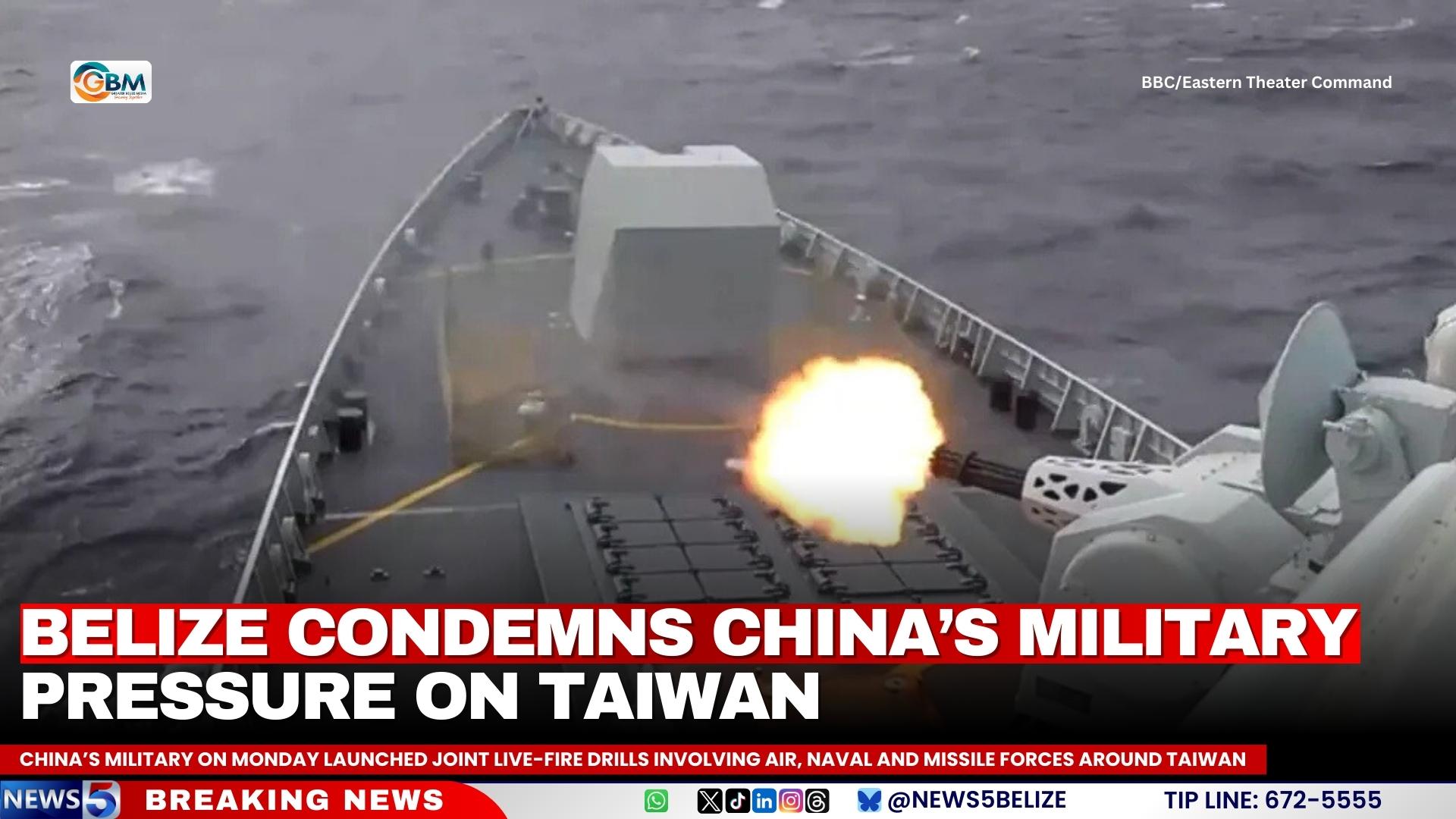
  • Belize Condemns China’s Military Pressure on Taiwan

    Belize Condemns China’s Military Pressure on Taiwan

    The Government of Belize has issued a formal condemnation of the People’s Republic of China’s recent military exercises around Taiwan, characterizing them as acts of intimidation that jeopardize regional peace. In an official statement released Monday, Belizean authorities expressed deep concern over China’s joint live-fire drills involving air, naval, and missile forces, which they warned undermine diplomatic dialogue and escalate tensions across the strategic waterway.

    Belize reaffirmed its steadfast diplomatic support for Taiwan, urging all parties to pursue peaceful conflict resolution in alignment with international law. The Central American nation, among the limited circle of countries maintaining formal ties with Taipei, has consistently advocated for Taiwan’s international recognition.

    The Chinese military described its extensive exercises as a ‘stern warning’ against separatist movements and foreign interference, specifically referencing potential major U.S. arms sales to Taiwan and recent remarks by Japan’s prime minister regarding possible military involvement. Taiwanese officials reported the drills disrupted aviation operations, impacting over 100,000 international passengers, while placing their military on high alert and labeling Beijing as ‘the primary destabilizing force in the region.’

    This development highlights the ongoing geopolitical tensions surrounding Taiwan’s status, with Belize positioning itself as a vocal supporter of Taipei against what it perceives as Chinese aggression threatening the delicate balance in East Asian security architecture.