作者: admin

  • Southern Plains agricultural development project gets $776m boost

    Southern Plains agricultural development project gets $776m boost

    KINGSTON, Jamaica—In a significant move to modernize its agricultural sector, the Jamaican government has committed J$776 million to accelerate the Southern Plains Agricultural Development (SPAD) initiative. The substantial funding, formally outlined in the 2026/27 Estimates of Expenditure presented by Finance Minister Fayval Williams on February 12, represents a strategic investment in the nation’s food security and rural economic development.

    The comprehensive agricultural modernization project focuses on converting previously fallow sugar lands into productive irrigated farmland through sophisticated water management systems. Engineering works include constructing wells, developing extensive canal networks, and building supporting agricultural infrastructure across key arable zones in St. Catherine’s Amity Hall and Bridge Pen areas, along with Clarendon’s Parnassus region.

    Significant progress has already been achieved by December 2025, with three operational wells successfully drilled and yield-tested in Parnassus. The project has also established complete pump houses with electrical connections and advanced fire suppression systems at these well sites. Additional accomplishments encompass 15 kilometers of rehabilitated farm access roads and drainage systems in Amity Hall, plus 25 kilometers of similar infrastructure in Parnassus.

    The development initiative has restored 3,000 meters of the critical Hartland irrigation canal system while completing a massive 20,000 cubic meter reservoir complex at Amity Hall/Bridge Pen, featuring modern pump facilities and ultraviolet sterilization equipment for water treatment. The Parnassus irrigation infrastructure now stands at 99% completion.

    The project’s scope extends beyond physical infrastructure to include capacity building programs focused on climate resilience techniques, advanced crop modeling methodologies, and gender-responsive training manuals for agricultural communities. Comprehensive designs for agricultural buildings and operational manuals for the Matching Grant Scheme have been finalized.

    For the 2026/27 fiscal period, the allocated funding will enable construction commencement of specialized agricultural buildings including pack houses, while completing reinforcements to road and drainage infrastructure designed to mitigate future flood damage. Additional allocations will procure drain cleaning equipment for the Agro Investment Corporation, install renewable energy systems, and activate financial support mechanisms for farmers through the Matching Grant Scheme.

    Initiated in December 2019 with expected completion by March 2028, the SPAD project represents a collaborative effort between Jamaica’s Ministry of Agriculture, Fisheries and Mining and the Caribbean Development Bank, demonstrating multilateral commitment to sustainable agricultural development in the region.

  • William Knibb’s Seymore runs World Under 20 lead in Western Champs semis

    William Knibb’s Seymore runs World Under 20 lead in Western Champs semis

    ST CATHERINE, Jamaica—A new generation of Jamaican sprinting talent emerged in spectacular fashion at the COCAA Western Championships held at GC Foster College this Saturday. The spotlight shone brightest on William Knibb Memorial’s Sanjay Seymore, who delivered a breathtaking performance in the Class 1 boys’ 100m semi-finals. Seymore blazed across the finish line with a world under-20 leading time of 10.26 seconds, establishing a new personal best despite facing a 1.4 m/s headwind. This remarkable achievement shattered his previous record of 10.49 seconds, signaling his arrival as a serious contender on the global junior athletics stage. The intense competition saw Holland High’s Johan-Ramaldo Smythe claiming second position with an impressive 10.32 seconds, while Calabar High’s Jamal Stephenson—fresh from his Corporate Area title victory just yesterday—secured third with 10.38 seconds. The finals lineup further solidified with Green Island High’s Oshane Jervis (10.78 seconds) and Herbert Morrison Technical’s Coby Watson (10.83 seconds) earning their spots in the evening’s championship race. The women’s competition equally dazzled as Holland High’s Shanoya Douglas, a World Athletics Under-20 Championships finalist, dominated the Girls Class One 100m with a wind-assisted 11.99 seconds (3.8 m/s). Douglas, who achieved the Class 2 double victory last year, demonstrated exceptional form by accelerating quickly before comfortably maintaining her lead through the finish. She will be joined in the finals by Mt Alvernia High’s Sharla Bell (12.07 seconds), St Elizabeth Technical’s Rihanna Johnson, and Anchovy High’s Tianna Nolan, setting the stage for an electrifying conclusion to the championship events.

  • Fears of renewed conflict haunt Tehran as US issues threats

    Fears of renewed conflict haunt Tehran as US issues threats

    TEHRAN, Iran—The specter of renewed military confrontation looms over Tehran, where residents report sleepless nights and growing anxiety following last year’s intense 12-day conflict with Israel. The psychological scars from that period remain fresh, with many citizens now preparing for what they fear is an inevitable escalation.

    Hamid, a Tehran resident, exemplifies the pervasive dread. ‘I don’t sleep well at night even with medication,’ he confessed, expressing particular concern for his family’s welfare. His worries extend beyond immediate safety to the quality of life for younger generations: ‘I’ve lived my life, but they haven’t experienced any joy, comfort, or peace.’

    The current tensions unfold against a complex diplomatic backdrop. Iran has resumed nuclear negotiations with the United States, though Tehran insists discussions must focus exclusively on nuclear matters. Washington has historically pushed for broader talks encompassing Iran’s ballistic missile program and regional proxy networks. The diplomatic process faces additional uncertainty following recent statements from the U.S. administration setting deadlines for agreement.

    Civilian preparedness has become noticeably visible throughout the capital. Windows reinforced with duct tape—a lesson from last year’s bombardments—dot the cityscape. Hanieh, a 31-year-old ceramist, has stockpiled essential supplies in anticipation of potential attacks. ‘I am becoming increasingly frightened,’ she noted, referencing the hardships her family endured during the previous conflict when they were forced to evacuate.

    This personal anxiety intersects with severe economic pressures. Iran’s currency continues its precipitous decline, with the U.S. dollar exceeding 1.6 million rials and the euro surpassing 1.9 million. This economic deterioration compounds the public’s sense of vulnerability.

    Military analysts note that any new conflict would likely have regional consequences. Supreme Leader Ayatollah Ali Khamenei has warned that aggression against Iran would trigger a broader regional war, while Iranian officials have repeatedly stated they would target both Israeli positions and U.S. bases in the region, as demonstrated during previous engagements.

    Despite the palpable tension, daily life persists in Tehran. Shops and offices remain operational, though many cafes and restaurants have reduced hours during the ongoing Ramadan observance. For residents like IT technician Mina Ahmadvand, however, normalcy remains elusive. She has assembled emergency supplies including canned food, water, and batteries, stating pragmatically: ‘I don’t want war to happen, but one should not ignore reality.’

  • UK-Jamaica partnership launches Caribbean seagrass restoration effort

    UK-Jamaica partnership launches Caribbean seagrass restoration effort

    KINGSTON, JAMAICA – A landmark UK-Jamaica environmental partnership is pioneering a regional strategy to revive deteriorating seagrass ecosystems, aiming to bolster coastal defenses and secure the economic future of Caribbean fishing communities. This initiative, a cornerstone of the UK Government’s Sustainable Blue Economies Programme, unites the Joint Nature Conservation Committee (JNCC), Jamaica’s National Environment and Planning Agency (NEPA), and the UN Environment Programme’s Cartagena Convention Secretariat.

    Seagrass meadows are fundamental to the Caribbean’s ecological and economic stability, functioning as vital nurseries for commercial fish species, natural carbon sinks, and buffers against coastal erosion. Their ongoing decline poses a direct threat to local livelihoods, tourism, and regional food security. To counter this, a pivotal technical workshop convened in Kingston from February 5-6, 2026, assembling national experts, academics, hotel group representatives, and fisheries authorities to finalize the first-ever Regional Guidance on Seagrass Restoration for the wider Caribbean.

    British High Commissioner to Jamaica, Alicia Herbert, emphasized the interconnected natural system: “Caribbean seagrass, together with mangroves and coral reefs, forms a critical defense network that sustains livelihoods and anchors the blue economy. For many communities, these ecosystems are cultural and economic lifelines.”

    The project’s comprehensive outcomes extend beyond the restoration guide to include an assessment for voluntary carbon markets and a detailed report analyzing challenges and lessons from case studies. Monique Curtis, Manager of NEPA’s Ecosystems Management Branch, highlighted the local benefits: “Jamaica will gain standardized approaches for seagrass restoration and monitoring, equipping our practitioners with practical tools for ecosystem recovery. Healthy meadows stabilize sediments, reduce erosion, and support fisheries and tourism.”

    Chris Corbin, UNEP Cartagena Convention Coordinator, noted the workshop marked a “decisive step from regional ambition to coordinated implementation.” He stressed that recognizing the ecological connectivity between seagrasses, mangroves, and coral reefs is essential for long-term coastal resilience, particularly as climate impacts accelerate.

    Scientific evidence underscores the value of these ecosystems; established seagrass meadows have remained intact after major hurricanes, demonstrating their role as a powerful, nature-based defense by anchoring sediments and dampening storm waves. A subsequent regional workshop is planned for the Dominican Republic to ensure the guidance is applicable across both English and Spanish-speaking Caribbean nations, enhancing technical capacity and regional cooperation for sustainable marine economies.

  • ‘Loaded’ Jamal Steohenson sped to 10.36s to win  Corporate Area 100m crown

    ‘Loaded’ Jamal Steohenson sped to 10.36s to win Corporate Area 100m crown

    KINGSTON, Jamaica—Jamaican track and field witnessed a spectacular display of emerging talent as Calabar High’s sprint sensation Jamal Stephenson blazed to victory in the Class One 100m event at Friday’s Corporate Area Championship. Clocking an impressive 10.36 seconds with a +1.1 wind assistance, Stephenson delivered a statement performance that positions him as the overwhelming favorite for next month’s prestigious Boys and Girls Championship.

    The victory came in dramatic fashion as Stephenson edged out Tyreece Foreman of St. George’s College by the narrowest of margins—a mere one hundredth of a second—with Foreman registering 10.37 seconds. The race intensity highlighted the competitive depth in Jamaican junior sprinting, with Kingston College’s Nyron Wade demonstrating remarkable recovery from injury to claim third in 10.40 seconds, just ahead of Excelsior High’s Malik Nugent at 10.41.

    In post-race comments to the Jamaica Observer, Stephenson revealed his current conditioning state with the intriguing description “very loaded,” suggesting significant untapped potential despite his already exceptional performance. “I’m not ready as yet, but I’m ready,” the athlete remarked, showcasing both confidence and awareness of his development trajectory.

    The reigning Carifta Games 100m champion expressed profound gratitude for his achievements while emphasizing his disciplined approach to training. “I’m feeling very grateful, you know, give all the glory to God. I am just continuing to do the right thing and just listening to my coach, my support system, and just work,” Stephenson stated.

    With six weeks remaining until the Championships, where he enters as favorite based on last year’s 10.24 personal best, Stephenson acknowledges the competitive landscape. “Everybody wants to win, you know, I want to win, so that’s the goal right now,” he affirmed, demonstrating the champion’s mentality that drives elite athletes.

    Beyond domestic success, the diminutive but explosively powerful sprinter has set his sights on international representation, targeting a spot on Jamaica’s team for the Under-20 World Championships. “I just want to make the team, represent my country, and I’m going to do my best,” Stephenson concluded, outlining his ambitions to compete on the global stage.

  • Fire destroys house at Barracks Road

    Fire destroys house at Barracks Road

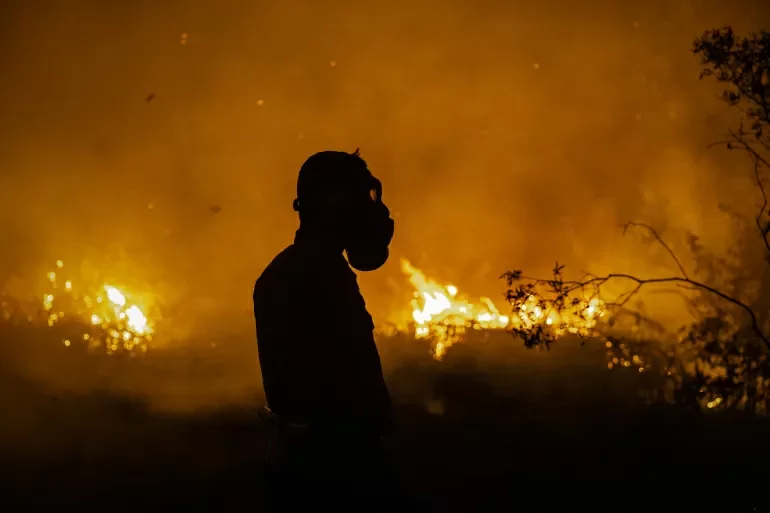
    A devastating early morning fire erupted in Montego Bay’s Barracks Road community this Saturday, completely destroying a two-story residential structure. The incident, which occurred before 8:00 AM, sent plumes of smoke and flames visible throughout the inner-city neighborhood, prompting immediate emergency response.

    According to official reports, the largely abandoned building became fully engulfed despite quick community alerts. The Jamaica Fire Brigade deployed three emergency units from the nearby Barnett Street station, arriving promptly to confront the blaze. Firefighters successfully contained the inferno, implementing strategic cooling operations to prevent its spread to adjacent properties.

    The containment proved critical as the threatened nearby structures included a vehicle maintenance garage servicing Jamaica Constabulary Force police vehicles. While the fire’s rapid containment averted a larger disaster, the incident has left one female resident homeless, though no injuries were reported.

    Authorities have confirmed the initiation of a formal investigation to determine the fire’s origins, which remain undetermined at this time. The destruction highlights ongoing concerns about abandoned structures in urban areas and the emergency response capabilities in Jamaica’s second-largest city.

  • WATCH: Mom grieves 3-y-o son killed in Denham Town

    WATCH: Mom grieves 3-y-o son killed in Denham Town

    KINGSTON, Jamaica — A devastating pre-dawn shooting in Denham Town has claimed the life of three-year-old Zaylon Pinnock, sparking outrage and a mother’s determined pledge for justice. The tragedy unfolded early Saturday when armed assailants targeted a residential property doubling as a business establishment on Nelson Street.

    According to preliminary police reports, the perpetrators arrived shortly after 1:00 AM posing as customers before abruptly opening fire on the family residing within. The shooting spree left Zaylon’s father and another child wounded alongside the toddler, who sustained fatal injuries.

    Ladania Cunningham, Zaylon’s grieving mother, delivered an emotional declaration of cooperation with law enforcement authorities. “I will stand with the police until the end. I refuse to remain silent in fear. They took my greatest joy—my three-year-old sleeping peacefully beside his brother on his father’s bed,” she stated, referencing the Jamaican patois expression “ride or die” to emphasize her unwavering commitment.

    The victims were rapidly transported to a nearby medical facility where Zaylon was pronounced dead upon arrival. His father and the other injured child remain hospitalized under medical supervision as investigators work to identify suspects and establish motives behind the targeted attack.

    This incident highlights ongoing concerns about community violence in certain Kingston districts, particularly regarding the vulnerability of children caught in crossfires. Local community leaders have called for increased protective measures and stronger police-community collaboration to prevent similar tragedies.

  • Venezuela grants amnesty to 379 political prisoners

    Venezuela grants amnesty to 379 political prisoners

    CARACAS, Venezuela — In a significant political development, Venezuela’s National Assembly has unanimously enacted an amnesty law leading to the release of 379 individuals classified as political prisoners. The legislation, passed by interim authorities following the U.S.-backed ouster of former leader Nicolas Maduro, represents one of the most substantial prisoner releases in recent years.

    Jorge Arreaza, the lawmaker overseeing the amnesty process, announced in a televised address that the 379 detainees “must be released, granted amnesty, between tonight and tomorrow morning.” He confirmed that the Public Prosecutor’s Office had formally submitted requests to judicial authorities to implement the amnesty measures.

    The controversial legislation contains significant exemptions that have drawn criticism from opposition figures and human rights organizations. The amnesty explicitly excludes individuals prosecuted for “promoting” or “facilitating armed or forceful actions” against Venezuela’s sovereignty by foreign actors—a provision that interim President Delcy Rodriguez has previously invoked against opposition leader Maria Corina Machado. The law also excludes security force members convicted of terrorism-related activities.

    This has created painful divisions among families of detainees. Hiowanka Avila, whose brother was arrested in connection with an alleged 2018 drone assassination attempt against Maduro, expressed disappointment outside Rodeo 1 prison: “Many of us are aware that the amnesty law does not cover our relatives.”

    The implementation process itself faces skepticism. Alfredo Romero of the NGO Foro Penal noted that “amnesty is not automatic” and requires judicial review—a concerning prospect given Venezuela’s courts are widely viewed as instruments of previous repression.

    Despite these limitations, some opposition figures have already benefited. Juan Pablo Guanipa, a Machado ally, announced his complete release from detention shortly after the bill’s passage, declaring on social media: “I am now completely free.” He immediately called for the liberation of all remaining political prisoners and the return of exiles.

    The interim government, led by Rodriguez—formerly Maduro’s vice president—defended its actions. In a state television address, Rodriguez asserted that “we are building a more democratic, more just, and freer Venezuela, and it must be with the effort of everyone.”

    However, exiled opposition leader Edmundo Gonzalez Urrutia, widely considered the legitimate winner of the fraud-marred 2024 presidential election, offered a more cautious perspective: “There will be no lasting reconciliation without memory or responsibility. A responsible amnesty is the transition from fear to the rule of law.”

    The developments occur against the backdrop of heightened U.S. involvement in Venezuelan affairs, with Washington having taken control of the country’s oil sales following Maduro’s extradition to New York to face drug trafficking charges.

  • At least 38 killed in armed attack in north-west Nigeria

    At least 38 killed in armed attack in north-west Nigeria

    NIGERIA – A brutal overnight assault by armed militants has left at least 38 villagers dead in northwestern Nigeria’s Zamfara State, according to official statements released Saturday. The remote community of Dutse Dan Ajiya became the latest target in a region grappling with escalating security challenges.

    Police spokesperson Yazid Abubakar confirmed the Thursday-Friday night attack occurred in an area with limited access routes, noting that security forces have since restored order to the affected region. However, local legislator Hamisu Faru provided a significantly higher death toll of 50 casualties, describing how assailants emerged from the nearby Gando forest before besieging the village and firing indiscriminately at fleeing residents.

    This incident highlights the persistent security crisis affecting multiple northern Nigerian states, where communities face dual threats from criminal bandit groups and expanding jihadist networks. These armed factions maintain operational bases within the vast forest territories spanning Zamfara, Katsina, Kaduna, Sokoto, Kebbi, and Niger states, from which they launch coordinated attacks on vulnerable communities.

    Despite increased military deployments to the region over recent years, violence continues unabated. The situation has drawn international concern, with the United States particularly attentive to the deteriorating security environment. The previous administration under President Donald Trump characterized much of the violence as religious persecution, even authorizing coordinated airstrikes with Nigerian forces on Christmas Day in neighboring Sokoto State.

    Tragically, this latest attack follows closely on the heels of another devastating assault by the Lakurawa jihadist faction, which targeted seven villages in adjacent Kebbi State just one day earlier. The emergence of this relatively new militant group has further complicated the security landscape, prompting state governments to increasingly rely on civilian self-defense militias.

    According to United Nations data, Nigeria’s broader security crisis has resulted in staggering human costs since 2009, with approximately 40,000 fatalities and over two million displaced persons primarily in the country’s northeast regions. While religious dimensions are often emphasized in international discourse, most conflict experts maintain that both Christian and Muslim communities have suffered equally from the violence.

    The evolving nature of the threat is particularly concerning as traditionally profit-driven bandit groups increasingly collaborate with ideologically motivated jihadist organizations, creating a more complex and dangerous security environment that continues to challenge Nigerian security forces and international partners alike.

  • Rivaldo Marshall breaks men’s indoor 800m record

    Rivaldo Marshall breaks men’s indoor 800m record

    Jamaican collegiate athletes delivered an extraordinary display of track and field prowess over the weekend, headlined by Rivaldo Marshall’s record-shattering performance at the Arkansas Qualifier. Competing at the Randal Tyson Track Centre on Friday, the University of Arkansas senior demolished the Jamaican indoor 800-meter record with a blistering time of 1:45.62 seconds.

    This achievement marks the third time in a single week that the Jamaican indoor record has been broken. The record-breaking spree began when Marshall’s teammate, Tyrice Taylor, posted 1:46.11 seconds at the same venue just days earlier. However, Taylor’s record proved short-lived as World Athletics Championships competitor Navasky Anderson surpassed him with 1:46.10 seconds at a meet in France on Thursday.

    Marshall’s performance represented a significant personal milestone, improving upon his previous best of 1:46.30 seconds set the prior weekend. The Jamaican athlete also broke the longstanding University of Arkansas record of 1:45.95 seconds set by Dirk Heinze in 2001—the very year of Marshall’s birth.

    The weekend competitions showcased multiple Jamaican talents across various events. Machaeda Linton of Texas A&M University claimed victory in the women’s long jump with a leap of 6.51 meters while also securing second place in the triple jump with 12.89 meters.

    Emerging talent Abigail Campbell, an Arkansas freshman and former Hydel High runner, achieved a personal best of 53.80 seconds in the women’s 400-meter event. Olympic relay medalist Brianna Williams demonstrated her sprinting prowess with a second-place finish in the women’s 60-meter dash, clocking 7.27 seconds.

    In field events, former Munro College thrower Chad Hendricks of Louisiana State University recorded a personal best of 15.28 meters in the shot put at the LSU Twilight meet. Meanwhile, Josh-Ty Brown of Southeast Louisiana captured the men’s shot put title with a impressive throw of 16.01 meters.