作者: admin

  • Community Comes Together After Massive Columbia Village Fire

    Community Comes Together After Massive Columbia Village Fire

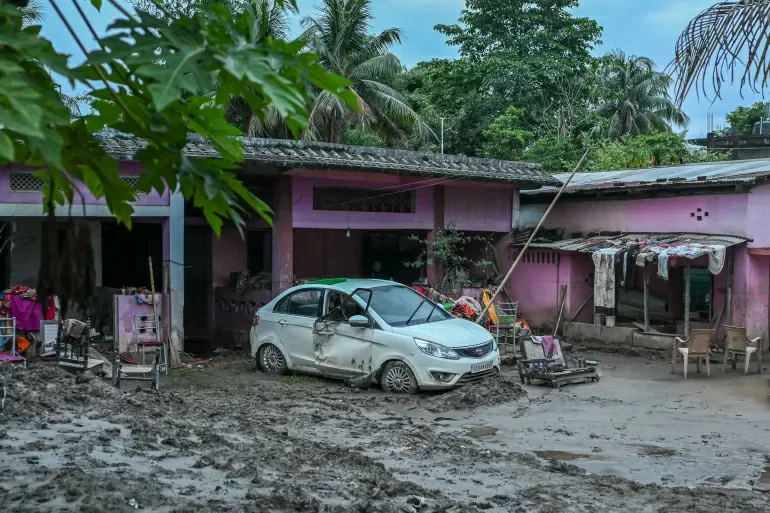
    On a Thursday afternoon in late April 2026, a destructive wildfire tore through Columbia Village, a community in Belize’s Toledo District, leaving dozens of residents homeless and triggering an outpouring of cross-regional mutual aid that has united neighboring groups in support. The blaze ignited just after 2:35 p.m. inside the kitchen of a local church, before strong seasonal winds carried the flames rapidly across more than a quarter mile of the village, destroying more than a dozen residential and community structures in its path. No injuries were reported in the disaster, according to official police statements, but the fire left an indelible mark on the affected families, who lost nearly all their personal belongings and homes. Multiple emergency response groups mobilized quickly to contain the spread of the fire and launch early relief efforts: the Toledo Emergency Operations Center coordinated on-site containment, while local fire crews received backup from the Belize Defence Force, the national Community Emergency Response Team (CERT), and personnel from the Ya’axché conservation organization, all of whom worked to bring the blaze under control. In the immediate aftermath of the fire, neighboring communities have stepped forward to offer critical support to displaced households. Leaders from Indian Creek, a nearby community, have organized a large-scale donation drive to collect essential supplies for the fire-impacted families. “It’s very sad; they lost everything. It’s so sad to see these families like that,” shared Domingo Choc, Chairman of the Indian Creek community, in an interview following the delivery of collected donations. Choc explained that both elected council members and ordinary residents of Indian Creek have joined the relief effort, helping clear fire-damaged properties and hand-delivering donations collected across the community to the families that need them most. “Indian Creek people are kind-hearted to give whatever they have. That’s why we are here right now to deliver the donations,” Choc said, adding that the rapid response was an intentional act of cross-community solidarity. “Whatever we got, that’s what we brought to hand over the donations that the council collected. We are helping them in any way we could assist them.” As cleanup efforts continue and displaced families begin the long process of rebuilding their lives, the coordinated response from local government agencies, emergency teams, and neighboring communities highlights how regional solidarity can soften the blow of sudden, devastating disasters.

  • Battle for 2wd honours set to spice up Rally Barbados

    Battle for 2wd honours set to spice up Rally Barbados

    The rising popularity of the FIA R5 category across Barbados has driven a sharp increase in four-wheel-drive entries for the 2026 edition of BCIC Rally Barbados, the island’s most prestigious motorsport competition. But for local motorsport enthusiasts, the fight for the two-wheel-drive (2WD) title remains one of the event’s most anticipated and fiercely contested attractions.

    The history of 2WD success at the rally tells a story of consistent local dominance: since Roger Skeete claimed the last overall rally victory in a 2WD Peugeot 306 S16 back in 1997, 11 different drivers have taken home 2WD class honors. Leading that pack of champion drivers is Barry Mayers, who has notched six 2WD wins between 2001 and 2018 — one more than his brother Roger, who is forced to sit out this year’s event after sustaining an ankle injury.

    Early signs from the 2026 BRC Shakedown Stages, held in March and the only competitive rally outing so far this year, point to an extraordinarily tight fight for the top spot. Mayers, who dominated all four afternoon stages in his rear-wheel-drive Ford Fiesta, put in a performance that cements his status as a title favorite. He ultimately finished second overall at the shakedown, just behind Rhett Watson in his BMW M3, with Nigel Reece rounding out the top three. Remarkably, less than four seconds separated the three frontrunners, hinting at the close competition fans can expect at the main event.

    Watson enters the 2026 rally riding high after securing a record-breaking fourth BRC 2WD Championship last year, even as he dropped from 14th to 60th place in the overall standings at the 2025 BCIC Rally Barbados. This year, new rule changes have added an extra layer of challenge to the competition: on-route servicing between each three-stage loop is now banned, with only adjustments that drivers and co-drivers can complete using on-board equipment permitted. The new regulation has put a greater premium on car reliability than ever before.

    An interesting new storyline enters the 2WD fold this year with Logan Watson, Rhett Watson’s brother, making the move back to 2WD competition after spending one season campaigning in the FIA R5 class. Following a year of reflection and preparation, during which he acquired a classic MkII Escort, Logan has already adapted smoothly to his return. He has posted competitive lap times matching those of Andrew Jones, the top 2WD finisher at the 2020 rally who has campaigned his own MkII Escort consistently for years.

    While the overall 2WD top five rarely consists exclusively of drivers from the SuperModified 2 (SM2) subcategory, SM2 remains the largest class in the 2WD division, with no shortage of title contenders. Beyond the Watsons, two BMW entries are expected to challenge for the top: Suleman Esuf’s 4-litre V8-powered 1M and Mark Kinch’s M3 Compact.

    Overseas victories in the 2WD class remain a rare occurrence: it has been more than 20 years since Martin Stockdale became the only non-local driver to claim 2WD top honors in his BMW M3, and international visitors have rarely cracked the 2WD top five since that win. This year, Irish driver Damian Toner was widely expected to challenge that trend, driving his MkII Escort, but a high-profile accident on the Circuit of Ireland earlier this month forced him to withdraw from the Barbados event.

    With Toner out, Ireland’s Declan ‘The Milkman’ Gallagher will now lead the overseas charge, piloting his legendary Starlet. Boasting a decorated resume that includes multiple Irish championship titles, dozens of overall rally wins and podium finishes, and nearly 40 class wins to his name, Gallagher has the experience and skill to pull off an upset. Gallagher is on-island to oversee the car’s outing; New York-based Irish driver Barry McKenna, who drove the Starlet at the 2025 BCIC Rally Barbados, returned for another run this year, though he did not get the opportunity to log any seat time at the recent King of the Hill event. McKenna still put in a solid performance in 2025, finishing top 2WD in the Sunday Cup after encountering mechanical issues on the opening Saturday of the event.

    Last year, attrition among top SM2 competitors allowed Gary Smith, who works with McKenna in New York, to climb to second in 2WD behind Roger Mayers, good for fifth overall in the 2WD standings. Smith is back to compete again this year, joined by former South-East Stages Champion Niall Fitzpatrick in his MkI Escort and first-time competitor Brian O’Neill, who brings a newly built MkII Escort to the event.

  • Grind on: Portvale resumes after latest disruption in troubled sugar crop

    Grind on: Portvale resumes after latest disruption in troubled sugar crop

    After yet another unplanned interruption that extended a string of crises through one of the most chaotic sugar harvests in recent Barbados history, grinding operations at Portvale Sugar Factory have officially restarted. The Barbados Energy and Sugar Company (BESCO), the entity currently managing milling operations under the island nation’s restructured sugar industry, confirmed the resumption in an official statement released to the public this Wednesday, noting that the pause was triggered by an unexpected mechanical malfunction that factory engineering teams have now fully resolved.

    “The Barbados Energy and Sugar Company is pleased to announce the resumption of grinding operations at the Portvale Sugar Factory following a brief pause due to a mechanical failure,” the statement read. “The temporary halt occurred after one of the mills experienced a malfunction, prompting immediate intervention by the factory’s engineering team.” According to BESCO, the specialized repair crew worked nonstop through the disruption to limit downtime for the entire harvest, with technicians putting in round-the-clock shifts to return the affected mill to full working capacity as fast as possible.

    This latest stoppage is far from an isolated incident for the 2026 crop harvest. Since the season got underway, production has been repeatedly knocked off schedule by a toxic combination of industrial unrest and recurring mechanical failures. The first major shutdown hit in mid-March, when workers represented by the Unity Workers Union (UWU) walked off the job for three full days to protest unresolved disputes over union recognition and substandard working conditions. While operations resumed after that strike, intermittent closures have continued, fueled by both lingering labor tensions between union leadership and BESCO management and persistent mechanical issues across aging milling infrastructure.

    Local cane farmers who supply the Portvale facility have already voiced growing frustration over the cascading impacts of repeated stoppages. Many producers have reported significant delays in getting their harvested cane accepted for processing, forcing costly disruptions to their own harvesting and logistics schedules as the standoff between labor and management drags on.

    In a separate but related development announced Wednesday, the Congress of Trade Unions and Staff Associations of Barbados (CTUSAB) confirmed that the Sugar Industry Staff Association (SISA) has finally secured official recognition as the exclusive bargaining unit for BESCO’s managerial staff. The milestone ends a years-long campaign for recognition that stretches back to the earliest stages of the country’s sugar industry restructuring process.

    CTUSAB General Secretary Dennis De Peiza clarified to reporters that SISA is not involved in the ongoing labor dispute disrupting Portvale operations, which is limited exclusively to the UWU and the Barbados Workers Union, the two labor bodies representing non-managerial workers at the facility. “I can assure you that SISA is not part of the ongoing dispute with the sugar industry body at Portvale, that’s a matter which directly relates to the Unity [Workers] Union and the Barbados Workers’ Union, which are the two bodies that have interests there,” De Peiza said. “I can say without any contradiction… SISA is a recognised body, and that issue does not in any way concern SISA at this time.”

    The current management structure for Barbados’ sugar industry dates back only to January 15, 2024, when two newly formed cooperatives – Agricultural Business Company Ltd (ABC) and BESCO – took over full responsibility for sugar cultivation, milling, and sales after the government transitioned operations away from the former state-owned Barbados Agricultural Management Company (BAMC).

    In closing its Wednesday statement, BESCO extended gratitude to all workers, farmers, and industry partners for their patience and flexibility through the repeated disruptions, and reaffirmed the company’s confidence that it will still meet all production targets for the 2026 harvest. “BESCO assures stakeholders and the public that, despite the short interruption, sugar production for the 2026 Crop has been progressing well,” the company said.

  • Five charged with dangerous driving, two convicted so far- police

    Five charged with dangerous driving, two convicted so far- police

    On Wednesday, April 29, 2026, the Guyana Police Force (GPF) announced that two of five motorists charged with dangerous driving following detection by the newly implemented Safe Road Intelligent System (SRIS) have been convicted and ordered to pay a combined total of GY$80,000 in fines.

    The two convicted offenders are Vivian Paul and Jamal Grant. Grant, who was operating a hired vehicle marked HD 4455, faced a single count of dangerous driving and received a GY$30,000 fine, with a default sentence of six weeks in prison if the penalty is not paid. Paul, the driver of private motor vehicle PVV 9064, was also charged with one count of dangerous driving, and was fined GY$50,000 for the offense.

    Three other accused motorists are still going through the legal process. Leslie Wood, driver of hired car HD 3551, is facing two counts of dangerous driving, and his court hearing has been adjourned until June 10, 2026. Mohamed Adouhedia, the registered owner of vehicle PAK 2919, faces one dangerous driving charge, while Allison James, the driver of the same vehicle, has been charged with three counts of the offense. James’ case has also been adjourned to the same June court date.

    Developed as a collaborative project between the GPF and Guyana’s National Data Management Authority (NDMA), the SRIS is designed to transform how traffic law enforcement is carried out across the country. Unlike traditional enforcement methods that rely on officer observations, the system uses AI-enabled cameras to capture high-definition video footage of dangerous driving violations. All captured footage is reviewed by specially trained law enforcement personnel before being submitted as evidence in magistrate court proceedings. Per Guyanese traffic law, dangerous driving is classified as a non-ticketable offense that requires formal prosecution rather than an on-the-spot fine.

    In an official statement released alongside the announcement, the GPF highlighted that the deployment of SRIS has already delivered measurable improvements to the force’s ability to crack down on reckless road behavior. “Since its introduction, the system has significantly strengthened the GPF’s ability to detect, document, and prosecute dangerous driving, with additional matters currently at various stages of review and preparation for court,” the statement read.

    Dangerous driving is defined as any operation of a motor vehicle that puts other road users, including pedestrians, cyclists and other drivers, as well as public and private property at unreasonable risk of harm. It is widely recognized as one of the leading contributors to road fatalities and serious injuries in Guyana.

    The police force reiterated that it will maintain strict, consistent enforcement action against anyone found violating dangerous driving laws, supported by the new technology. As part of a public safety outreach accompanying the announcement, motorists across the country are being reminded to exercise caution behind the wheel, follow all posted traffic regulations, and prioritize the safety of everyone sharing the road network.

  • “These Guys Carry Minimal Cash”: Zeta Boss Questions Deadly Robbery

    “These Guys Carry Minimal Cash”: Zeta Boss Questions Deadly Robbery

    A brazen fatal robbery has shaken a local water delivery company in Belize’s Orange Walk District, after two on-duty drivers were ambushed in broad daylight, leaving one dead and another hospitalized. The violent attack unfolded around 4:30 p.m. Monday along Chan Pine Ridge Road, according to official police reports, and has left company leadership struggling to make sense of the senseless violence.

    The two victims, identified as Roberto Villafranco and Felipe Vasquez, were carrying out their regular delivery routes when assailants attacked them. Villafranco, 48, suffered a gunshot wound to the head and was pronounced dead at the scene of the attack. Vasquez, who was shot in the chest, managed to flee the ambush to a nearby gas station to call for emergency help, and he remains in medical care as of the latest update.

    Eliezer Escalante, head of the Zeta delivery company, told reporters he is still reeling from the incident, which marks the first violent attack on any of the firm’s employees in its operating history. The entire company workforce has been left shaken by the unexpected tragedy, he added. In a puzzling observation that has raised questions about the attackers’ motives, Escalante noted that the company’s delivery drivers carry almost no cash on their routes, making them an illogical target for a robbery.

    Escalante explained that the business delivers five-gallon water containers at a rate of just $3 per unit, and even on a full day of routes, drivers rarely carry more than enough cash from 60 completed deliveries – a sum that totals less than $200 overall. “These guys don’t carry any significant amount of money on them, so I can’t understand why anyone would target them for a deadly robbery,” Escalante said.

    As of the latest update on April 29, 2026, law enforcement officials have not made any arrests in connection with the attack, and active investigations are ongoing to identify and apprehend the perpetrators. Local media outlets will air an extended report on the incident at 6 p.m. local time for audiences seeking further updates.

  • Belize Growth Forecast Rises to 2.5% in 2026

    Belize Growth Forecast Rises to 2.5% in 2026

    Against a backdrop of widespread economic slowdown across Latin America and the Caribbean, Belize has emerged as an outlier with an upgraded growth projection for 2026, new data from the UN’s Economic Commission for Latin America and the Caribbean (ECLAC) shows. The latest revised estimates put Belize’s economic expansion at 2.5% for 2026, a notable acceleration from the 1.6% growth forecast for 2025.

    This upward revision marks a rare bright spot in the region’s economic outlook. Of the 33 distinct economies tracked across Latin America and the Caribbean, only a small share are expected to see growth pick up in 2026, while 24 face projected slowdowns. The broader regional average growth forecast for 2026 currently sits at just 2.2%, dragged down by a combination of persistent headwinds that are damping activity across most of the area.

    According to ECLAC’s analysis, multiple interconnected factors are dragging on regional performance. Sluggish growth in private household consumption has failed to provide the economic lift seen in post-pandemic recovery periods, while persistent upward pressure on inflation continues to erode purchasing power for consumers across the region. On the global front, mounting geopolitical tensions, elevated international oil prices, and a broad slowdown in cross-border trade have created a challenging external environment that most economies in the region are struggling to navigate.

    The slowdown is also spilling over into regional labor markets. ECLAC projects that employment growth across Latin America and the Caribbean will ease to around 1.1% in 2026, down from 1.5% recorded in 2025.

    While Belize’s accelerating growth projection stands out against this subdued regional trend, ECLAC has emphasized that significant downside risks remain for all economies across the region, including Belize itself. Volatile global financial conditions, ongoing upward pressure on energy and food commodity prices, and deep-rooted structural economic vulnerabilities that many countries have not addressed could all constrain stronger performance in the second half of 2026 and into 2027.

  • Ministry of Health: ‘We Have Enough Condoms’

    Ministry of Health: ‘We Have Enough Condoms’

    As global condom markets face growing disruption and price increases tied to escalating geopolitical tensions between the United States and Iran, Belize’s health authorities have moved to reassure the public that the nation’s current supply of condoms remains sufficient to meet demand.

    Dr. Joshua Canul, a senior official with Belize’s Ministry of Health and Wellness, addressed widespread public concern over potential shortages in an official statement released April 29, 2026. The anxiety over condom access emerged earlier this month after local outlet News 5 reported that Karex, the world’s single largest condom producer, would implement price hikes of between 20% and 30% to offset rising costs stemming from US-Iran conflict-related supply chain breakdowns.

    Canul emphasized that modern geopolitical instability does not only impact global food markets, as many citizens assume – it sends ripples through every sector of the global supply chain, including public health commodities. He pointed to early indicators of this impact already visible in Belize, noting that freight costs for critical HIV and tuberculosis medications imported into the country have already jumped in recent months.

    On a global scale, the current condom market is facing overlapping pressures that have put global supply chains under extreme stress. Consumer demand for condoms has risen sharply in recent months, while average international delivery times have nearly doubled compared to pre-tension levels. This dynamic has created significant anxiety among low- and middle-income nations that rely almost entirely on imported condoms for their public health programs.

    Despite these worrying global trends, Canul stressed that Belize has managed to avoid immediate disruption. “At this point in time, we do have enough,” he stated, though he stopped short of ruling out future challenges. The health official acknowledged that sustained growth in demand could eventually strain the nation’s existing stockpiles if global instability continues.

    For Belizeans seeking access to condoms, Canul confirmed that free distribution through the country’s public health system remains fully operational. Condoms are currently available at no cost to residents at every government health facility across the nation. While the available stock may not include the branded options that many consumers prefer, Canul confirmed that functional, effective products are readily available for anyone who needs them.

    Belize’s Ministry of Health has long relied on proactive demand forecasting and strategic procurement planning to maintain stable public health commodity supplies while avoiding unnecessary waste. Even with this careful planning in place, however, officials warn that prolonged global geopolitical unrest could eventually trigger secondary impacts on Belize’s domestic supply. For the moment, though, Belize’s public condom stock remains steady, even as international market prices continue their upward climb.

  • Guyana crafting youth-focussed aviation career action plan

    Guyana crafting youth-focussed aviation career action plan

    On Wednesday, 29 April 2026, the Guyana Civil Aviation Authority (GCAA) convened a pivotal stakeholder meeting to refine the organizational structure and set the long-term strategic course for the Next Generation of Aviation Professionals Plus (NGAP+) programme, an initiative first launched by the authority in December 2025 to cultivate new youth talent for Guyana’s growing aviation sector.

    According to an official statement released by the GCAA following the gathering, the cross-institutional meeting represented a major milestone for the programme. Attendees worked in collaboration to finalize the programme’s operational framework and delineate clear roles and responsibilities for every participating partner. As a core outcome of the discussions, attendees agreed to establish a formal governing board that will supervise all programme execution, ensuring the initiative stays aligned with its core mandate of delivering industry-leading aviation training and mentorship opportunities for young Guyanese.

    Designed to target young people between the ages of 12 and 24, the NGAP+ programme seeks to inspire the next generation of aviation workers while equipping participants with the theoretical knowledge, hands-on technical skills, and real-world practical experience needed to build successful, long-term careers in the dynamic global aviation industry. The initiative grew out of Resolution A39-29 from the International Civil Aviation Organization (ICAO), created specifically to address growing global and local workforce shortages across the aviation sector.

    Speaking at the stakeholder meeting was Malcolm Evans, Programme Development Consultant for the United Kingdom-based International Air Cadet Training (i.ACT), which is partnering with Guyana to build out the programme’s full comprehensive curriculum, including specialized technical training modules. Evans emphasized that the programme’s overarching objective is to prepare young Guyanese to fill a wide range of entry-level and professional roles across the domestic aviation industry, building a consistent, sustainable talent pipeline that will support the sector’s growth for decades to come.

    Retired Lt. Col. Egbert Field, Director General of the GCAA, echoed this focus, noting that the programme is a targeted solution to the aviation industry’s well-documented personnel gap that many nations, including Guyana, currently face.

    The meeting drew representatives from a diverse range of Guyanese educational, governmental, and industry institutions, including the Art Williams and Harry Wendt Aeronautical Engineering School, Civil Aviation Training School, University of Guyana, Guyana Digital School, Guyana Defence Force, Guy Drones, Ministry of Education, Guyana Online Academy of Learning (GOAL), and the Aircraft Owners Association of Guyana. The broad cross-sector turnout highlights the widespread buy-in and shared commitment to making the programme a success, with collective expertise from across Guyana’s aviation and education ecosystems strengthening the collaborative foundation of the NGAP+ initiative.

    Further details, including formal application procedures and official programme timelines for prospective participants, are scheduled to be released to the public in the coming months as final preparations for launch continue.

  • Businesswoman challenges constitutionality of Cybercrime Act

    Businesswoman challenges constitutionality of Cybercrime Act

    As of Wednesday, 29 April 2026, a prominent Guyanese city businesswoman has initiated a landmark constitutional challenge against a key provision of the country’s 2018 Cybercrime Act, arguing that the clause violates fundamental free speech protections enshrined in Guyana’s constitution and runs counter to the nation’s international human rights commitments.

    Ann Narine, represented by experienced legal counsel Nigel Hughes and Dr. Vivian Williams, filed her fixed-date application with the High Court on 14 April 2026, asking the court to formally strike down Section 19(2) of the 2018 Cybercrime Act on multiple grounds. Narine’s legal team argues the provision is unconstitutional, null and void due to three critical flaws: inherent vagueness, overbroad scope, and disproportionate impact on protected civil liberties. The challenge specifically targets the clause’s violation of Article 146 of the Guyanese Constitution, which explicitly guarantees the right to freedom of expression.

    At the core of the challenge is Narine’s argument that Section 19(2) fails to meet basic legal standards for clarity when criminalizing speech-related conduct. The provision does not provide a defined, consistent meaning for key terms including “humiliation,” fails to clarify the scope of “electronic data” as applied to this section, and sets no clear threshold to separate criminal activity from expression that is legally protected under the constitution. Without these clear definitions, Narine contends the clause cannot be applied consistently or predictably, creating a risk that legitimate speech will be incorrectly criminalized. This inherent ambiguity alone, the application argues, renders the provision unconstitutional under Article 146.

    Narine further argues that the clause lacks the narrowly tailored limits required for restrictions on free speech in democratic societies. International legal standards hold that any limitation on freedom of expression must meet three cumulative requirements: it must be clearly defined by law, pursue a legitimate public aim, and be reasonably justifiable and proportionate to the goal it seeks to achieve. Section 19(2), Narine’s application maintains, fails to meet all three of these requirements.

    The challenge also invokes Guyana’s binding international human rights obligations under the International Covenant on Civil and Political Rights (ICCPR), whose own Article 19 protects the fundamental right to freedom of expression. A broad, uncurbed interpretation of Section 19(2) that criminalizes protected expressive activity would put Guyana in direct breach of this international treaty, the application notes, adding that Guyana’s constitution must be interpreted in alignment with the country’s international human rights commitments.

    Beyond the facial challenge to the provision itself, Narine is also attacking the specific application of the law to her case as unconstitutional. She argues that the criminal charge brought against her suffers from multiple fatal procedural defects that violate her constitutional right to a fair trial. The charge, she notes, fails to identify the specific published content at the center of the allegation, the digital platform where the content was allegedly shared, any recipients of the alleged publication, and the specific actions that took place within the cited time period. By failing to outline these basic details, the prosecution effectively criminalizes unspecified speech and denies Narine the ability to know what case she must answer, violating both Articles 144 and 146 of the constitution, according to the application.

    Further procedural flaws are cited in the challenge: the summons filed against Narine did not specify which exact section of law she is alleged to have broken. Additionally, the sworn information included in the court file was dated after Narine’s initial court appearance, was never served on her legal team, and was not presented to the court when she was first required to respond to the charge and raise objections. Narine argues these omissions deprived her of adequate notice of the allegations against her and the opportunity to prepare a full defense, denying her the fair hearing protections guaranteed under Article 144 of the constitution.

    Narine is also seeking a High Court declaration that her entire prosecution is unconstitutional, unlawful, and constitutes an abuse of court process. Citing Article 187 of the Guyanese Constitution, which enshrines the principle of prosecutorial independence, Narine argues that allowing a prosecution led by an attorney retained, paid, and taking direct instructions from the private complainant in the matter directly violates the constitutional requirement for independent prosecution. As part of this claim, she is asking the court to rule that the fiat granted by the Director of Public Prosecutions (DPP) to prosecuting attorney Mikel Puran is unlawful, unconstitutional, null, void, and has no legal effect.

    The application requests multiple court orders: a formal order quashing the DPP’s fiat to prosecute, an order barring any continuation of the criminal charge against Narine, a stay of all proceedings related to the charge until the constitutional challenge is heard and determined. In the alternative, Narine asks the court to issue a permanent stay of the criminal charge on the grounds that it amounts to an abuse of the court’s process.

  • Lauren Ramdhanny Award to debut at Grenada Festival of the Arts

    Lauren Ramdhanny Award to debut at Grenada Festival of the Arts

    Grenada’s 2026 Festival of the Arts is set to launch with a series of meaningful updates and expanded programming, officials confirmed during the event’s official media launch held Tuesday at Kirani James Athletic Stadium. The Culture Division under the Ministry of Tourism, Creative Economy and Culture has announced one of the event’s flagship new additions: the Lauren Ramdhanny Award for Excellence in the Performing Arts, created to honor a pioneering figure in Grenada’s cultural community.

    Kelvin Jacob, the division’s Chief Cultural Officer, explained that the award was established to celebrate the decades of transformative contributions Lauren Ramdhanny made to Grenada’s arts sector. Ramdhanny, an accomplished musical director and retired cultural officer, left an indelible mark on local performing arts, and the new annual award will carry forward her legacy. The accolade will be awarded annually to the participating school or performing group that demonstrates the most consistent all-around excellence, judged by both the highest cumulative award count across competition categories and sustained top-tier performance quality across multiple disciplines.

    Alongside the new lifetime achievement-inspired award, festival organizers have added two new competitive music categories to the 2026 lineup: power soca and groovy soca. The expansion comes as a nod to the deep, longstanding connection between these beloved Caribbean music genres and generations of past festival participants, reflecting the event’s commitment to evolving alongside local cultural tastes.

    Senator Quinc Britton, Parliamentary Secretary within the Ministry of Tourism, Creative Economy and Culture, reaffirmed the Grenadian government’s unwavering commitment to growing the arts as a core tool for youth empowerment. In his remarks at the launch, Britton emphasized that national progress depends on more than just academic success. “We recognise that the future of our country depends not only on academic achievement, but also on the ability of our young people to express themselves, think creatively, and engage meaningfully with their culture,” he said. “These investments are deliberate, because we understand that culture is not a luxury — it is a foundation of our national development.”

    For decades, the Grenada Festival of the Arts has served as an inclusive, accessible platform that brings together students and creative groups from across the country’s tri-island territory. Participants showcase their work across a diverse spectrum of artistic disciplines, ranging from music, dance, drama and theater to public speaking and literary arts. To strengthen the event’s impact, the Ministry of Education has partnered with the Culture Division to support the festival’s visual arts programming, a collaboration that education leaders have fully embraced.

    Dr. Dianne Abel Jeffrey, Chief Education Officer, called the festival a one-of-a-kind asset for nurturing young Grenadian talent. “The real education lies in holistic development, and this is what the arts provide for our students,” she said. Dr. Jeffrey also praised the Culture Division and the broader ministry for creating structured opportunities for young people to build character, gain national recognition for their creativity, and grow beyond the traditional classroom. “The Ministry of Education welcomes this collaboration, which provides a space for students to showcase their talent,” she added.

    Organizers have also integrated key improvements drawn from public feedback collected during last year’s national consultation focused on strengthening the festival. Three core changes will roll out in 2026: targeted subvention funding to offset participation costs for participating schools, new teacher recognition awards to honor educators who mentor young artists, and the addition of structured, skill-building training classes for competitors.

    To guide participating schools through the 2026 festival process, the Culture Division will host a series of regional panel discussions across all school districts this May, covering key logistics including event registration, which formally opens to all participants on Monday, May 4, 2026. Pre-festival preparation is already well underway: skills-building workshops for theater arts, dance, and vocal performance have been held across Grenada and Carriacou, with additional training sessions scheduled to run through August to help participants refine their work ahead of the main event.