作者: admin

  • Emergency Response Launched After Columbia Village Blaze

    Emergency Response Launched After Columbia Village Blaze

    On a Tuesday afternoon in late April 2026, a fast-spreading wildfire swept through San Pedro Columbia, a small village located in Belize’s southern Toledo District, leaving more than a dozen families displaced and without shelter after destroying or damaging more than 10 residential and community structures.

    Local emergency officials confirmed the blaze originated in the kitchen of a village church, before rapidly spreading through adjacent thatch-roofed homes—construction common in the rural community that allowed the fire to accelerate faster than first responders could initially contain it. By the time fire crews fully extinguished the flames, the damage had already been done: years of personal possessions, household assets, and accumulated livelihood resources were reduced to ash, with total economic losses estimated to exceed $50,000 Belize dollars.

    A diverse cross-section of the village’s small population was impacted by the destruction, including a local pastor, a small-scale farmer, an elderly resident, a young mother, and an off-duty local police officer. Remarkably, no injuries or fatalities were reported in connection with the blaze, a small silver lining for the affected community.

    A multi-agency emergency response was mobilized to bring the fire under control: local firefighting units led containment efforts, backed by personnel and logistical support from the Belize Defense Force and the Belize Police Department, which deployed more than 40 officers to assist with the response. As of Wednesday morning, the official cause of the fire had not been determined, and an active investigation into the origin of the blaze was ongoing.

    Within hours of the fire being contained, neighboring community organizations and volunteers had already mobilized support for the displaced families. Domingo Choc, chairman of the nearby Indian Creek community, arrived at the site alongside local council members and civilian volunteers to lead debris cleanup operations, while in-kind and cash donations began flowing in from across the region to support affected households.

    In comments to local media, Choc emphasized the spirit of mutual aid that has defined the response to the disaster. “This morning, all we’ve been doing is showing up for these families who lost everything,” Choc said. “Our council met immediately after we heard the news, and we organized our team to come help. It’s devastating to see people lose every single thing they’ve worked for their whole lives. But this is what community is—we help each other. Any one of us could wake up tomorrow facing this same disaster, so we’re doing everything we can to support our neighbors right now.”

    Rear Admiral Elton Bennett, CEO of Belize’s Ministry of Home Affairs, praised the coordinated emergency response from government agencies while acknowledging the devastating scale of the loss for the small rural community. “This is an incredibly tragic situation where entire families have lost their homes and their livelihoods all in one afternoon,” Bennett said. “It’s a huge blow to this whole community. But I have been encouraged by how quickly our government services stepped up: the Belize Defence Force, Belize Police Department, and fire services all moved fast to contain the blaze and protect residents.”

    A critical challenge remains for the affected families moving forward: none of the destroyed or damaged structures carried property insurance, meaning the full cost of rebuilding will fall entirely on already vulnerable households. Rebuilding is expected to be a long, difficult process for the village, and community leaders have issued a public call for additional donations from anyone willing to support recovery efforts.

    Those interested in providing assistance have been directed to reach out to community leadership in the Toledo District to coordinate contributions.

  • Home Affairs CEO Draws Line on Controversial Caye Caulker Land

    Home Affairs CEO Draws Line on Controversial Caye Caulker Land

    A prime beachfront plot on Belize’s Caye Caulker has become the center of a heated public dispute over land ownership and public development, pitting local community leaders against national government officials. At the heart of the conflict is Parcel 815, a coveted seafront site that was selected in early 2026 as the location for a new, $1.5 million police station project backed by the Central American Bank for Economic Integration (CABEI).

    The national government signed the construction contract for the facility back in January, which is planned to span more than 3,500 square feet and house specialized police units to serve the island community. But by mid-April, unconfirmed reports that construction had stalled began to circulate, sparking widespread rumors that the high-value waterfront parcel could be put up for private sale instead of being used for public safety infrastructure.

    In response to these rumors, the Caye Caulker Village Council launched a public petition and organized a local referendum drive, demanding that control of the land be transferred from the national government to the municipal village council to guarantee it remains reserved for public safety use.

    However, Elton Bennett, Chief Executive Officer of Belize’s Ministry of Home Affairs, has pushed back firmly against the local council’s request, drawing a clear line on the government’s position. In an on-camera interview for local television, Bennett emphasized that Parcel 815 is formally classified as national land, granted to the central government for official public use. He called the push to transfer the land to the village council “a very strange request”, arguing that there is no logical reason to shift property zoned for a national public service like policing to a local municipal body.

    When pressed for clarification on the future of the police station project, Bennett confirmed that while there had been preliminary discussions with CABEI about pausing work and relocating the facility to an alternative site, decision-makers ultimately rejected that option. He confirmed that construction on Parcel 815 will resume immediately, putting an end to speculation that the waterfront site would be sold off.

    This article is adapted from a transcribed television news report covering the ongoing dispute, which has drawn significant attention from Caye Caulker residents who rely on consistent public safety services on the popular island.

  • Pins of Pride: Sandhurst Alumni Recognized

    Pins of Pride: Sandhurst Alumni Recognized

    On April 29, 2026, the Royal Military Academy Sandhurst hosted a special alumni recognition ceremony at the Belize Defense Force headquarters, gathering graduates of one of the globe’s most elite military training institutions to celebrate their shared legacy and enduring connection to the academy.

    The event opened with reflective addresses from attending alumni, who shared personal accounts of how their training at Sandhurst reshaped their professional trajectories and personal values. One speaker drew attention to a long-unspoken barrier facing many Belizean officer candidates: during their original passing-out graduation at Sandhurst, most could not cover the travel and accommodation costs to bring family members to witness their milestone achievement, a financial hardship that has touched generations of Belizean cadets from the country.

    The formal portion of the afternoon concluded with the presentation of custom commemorative pins to every participating graduate, a tangible symbol of the academy’s recognition of their service and achievements. Among the featured speakers was Rear Admiral Elton Bennett, a Sandhurst graduate who currently serves as Chief Executive Officer of Belize’s Ministry of Home Affairs, who shared his own journey through the institution to the assembled crowd.

    Bennett explained that being selected to represent Belize at Sandhurst was a life-changing honor that laid the entire groundwork for his decades-long career in public service and military leadership. “It lay the foundation not only for my first appointment as a platoon commander, but the values instilled in me at Sandhurst certainly still remains with me as a leader,” Bennett said. “So it prepares you not only for your first assignment, but it prepares you well into the leadership world.”

    Bennett went on to outline the far-reaching impact of Sandhurst training on Belize’s public and military sectors, noting that two current sitting government ministers are academy alumni. To date, the country has produced nine Sandhurst-educated generals, two admirals including Bennett and John Boreland, and four sitting government chief executive officers who completed the academy’s rigorous program. “Its really a proven institution, not only in Belize but across the world,” he added.

    Belizean defense and government officials echoed Bennett’s remarks, noting that the Sandhurst training pipeline has consistently produced some of the nation’s most effective military commanders and senior public sector leaders. Decades after the first Belizean cadet walked through Sandhurst’s gates, the institution’s emphasis on discipline, integrity, and strategic leadership continues to shape governance and public service across Belize, leaving an indelible mark on the nation’s leadership landscape.

  • Historic Installation, Immediate Action: Archbishop Wright Calls Key Meetings

    Historic Installation, Immediate Action: Archbishop Wright Calls Key Meetings

    Just one day after his historic consecration and recognition service on Sunday, newly installed Archbishop Philip Wright has begun his tenure as leader of the Anglican Church in the Province of the West Indies with immediate action, convening a gathering of the Provincial Standing Committee to map out the church’s strategic agenda for the coming years. Unlike the slow transition that often follows high-level religious leadership changes, Wright wasted no time assembling senior regional church leaders to address pressing priorities, underscoring his commitment to hitting the ground running in his expanded new role.

    As the head of the transnational province, Wright’s portfolio extends far beyond his previous responsibilities in Belize, covering all Anglican dioceses spread across the Caribbean region. In an on-the-record interview alongside the meeting, Wright broke down the core function of the Provincial Standing Committee — the executive body that acts on binding decisions made by Synod, the church’s highest governing and decision-making assembly. The current gathering, Wright explained, focuses on translating formal guidance approved by the latest Synod into actionable, three-year strategic plans leading up to the next full assembly.

    Beyond formal strategic planning, the committee has also prioritized addressing urgent social and community challenges facing church members and residents across the Caribbean region. Wright noted that discussions so far have been open, robust, and productive, with several substantive decisions already finalized to guide the church’s work in the months ahead. “It’s been going very well, and we have had robust conversations and we’ve made some significant decisions so far,” Wright shared.

    Retired former Archbishop Most Reverend Howard Gregory, who led the province before Wright, offered perspective on the weight and scope of the new role the newly installed leader now occupies. Gregory pointed out that Wright already brings decades of relevant experience to the post, having previously served as a diocesan bishop: a role that requires leading teaching across the diocese, maintaining institutional order, and serving as a “pastor to pastors” caring for the church’s clergy. But the archbishop position comes with a vastly expanded remit, he emphasized, adding regional administrative oversight for the entire province’s central office, coordination across all member dioceses, and ongoing engagement with congregations and diocesan leadership throughout the Caribbean.

    This report is adapted from a transcribed broadcast segment originally aired on the outlet’s evening television news, published online on April 29, 2026. Any regional Kriol language remarks included in the original broadcast were transcribed using a standardized spelling system for clarity in the digital text version.

  • Brooklyn Honors Belize’s Shyne with Keys, Day, and Praise

    Brooklyn Honors Belize’s Shyne with Keys, Day, and Praise

    Decades after he arrived as an immigrant child from Belize to build his life in Brooklyn, Jamal Michael Barrow — known professionally as Shyne — has been awarded one of New York City’s highest civilian honors: the Key to the Borough of Brooklyn, alongside an official proclamation naming April 25 as Shyne Day.

    The milestone celebration was not held at an exclusive black-tie gala, but rather at a community-focused mentorship expo in East Flatbush, a neighborhood close to Shyne’s early roots in New York. During the event, the artist-turned-politician connected directly with young local men, sharing career advice and donating dozens of professional suits to help attendees prepare for job interviews and enter the workforce.

    The honor comes ahead of a highly anticipated anniversary concert scheduled for May 2 at Brooklyn’s iconic Kings Theatre, which will mark 25 years since the release of Shyne’s self-titled debut, the critically acclaimed classic album that launched his music career. Organizers expect roughly 2,000 fans to fill the historic venue for what Shyne says will be a full-circle moment for his long-time supporters.

    In an emotional address following the award presentation, Shyne opened up about the unlikely path that led him to this honor. “I’m not a very emotional person, but I was definitely overwhelmed,” he shared. “Knowing the journey that I’ve been on as an immigrant child from Belize that came to Brooklyn in the early eighties, to go from that child in a single parent household, mom struggling, brother not there, just all by ourselves to fend for ourselves — statistically I could have died at an early age, or been incarcerated for a lifetime. To have beat those odds, and not just beat them, but to have been so successful in the entertainment space and to have had success in Belize politically, and to return to my second home, which is Brooklyn… it’s overwhelming.”

    Shyne explained that the upcoming concert will fill a long-standing gap for his fanbase. When his career was abruptly cut short decades ago, fans never got the chance to see the debut album performed in full live. “The people that love Shyne never got a chance to experience my live performance of the album,” he said. “And there’s something magical about a live performance.”

    Now, after decades of growth across two vastly different career paths in entertainment and public service, the Brooklyn-raised star is ready to deliver the experience his fans have waited a quarter century to see.

  • Basketball federation targets grassroots investment

    Basketball federation targets grassroots investment

    Grassroots basketball in Saint Lucia is receiving a transformative boost this year, as the Saint Lucia Basketball Federation (SLBF) rolls out a coordinated strategy to expand access to the sport across underserved schools and underdeveloped local communities. Centered on combining critical equipment donations with expanded coaching education, the federation’s multi-phase plan aims to reignite local basketball programs and nurture new generations of talent across the island.

    In April, the SLBF distributed new basketballs to three of its affiliate organizations, a move that federation president Glen “Kala” Guiste stresses is far from an isolated gesture. “These balls weren’t just handed out and left,” Guiste explained in a recent statement. “Over the past several months, we’ve intentionally expanded our network of trained coaches across the country. Just this past December, we hosted a Level One coaching certification clinic, and that has put more qualified instructors in communities that have long lacked support.”

    Guiste emphasized that the distribution strategy was intentionally mapped to match existing and emerging local coaching capacity. Every community and school that received new basketballs already has active coaching staff in place to put the equipment to use, creating a sustainable foundation for ongoing programming.

    The three affiliates that received donations include the newly admitted Choiseul Youth and Sports Club, alongside returning members Babonneau Dynasty and the Dennery Basketball League. All three groups already run independent youth basketball programs and have functional local court facilities that are now being put to greater use with the new equipment.

    In Babonneau, the federation has directly supported a community program led by Dunby St Marthe, a seasoned player who currently competes in the national league. Over in Choiseul, local leader Jonathan Chalon has already installed new basketball rims, bringing the community’s court fully online for regular play. Guiste noted that the visible progress in these areas is encouraging, even as he called for additional investment to support more historically basketball-focused communities across the island.

    New basketballs have also been delivered to Basketball For The Future, a community program that is restarting its operations at The Gardens in central Castries. In Dennery, a region that was once a powerhouse in Saint Lucia’s local basketball scene, Guiste reports that grassroots participation is already showing clear signs of resurgence following the donation.

    Looking ahead, the federation has plans to expand its work into public schools through a new partnership with the Ministry of Education. Sometime this summer between June and July, SLBF will host a specialized basketball coaching clinic for physical education teachers from across the island. The organization expects at least 40 PE teachers to participate in the training, equipping them to bring structured basketball programming to more students in every region of Saint Lucia.

    The federation’s push for growth has been bolstered by external donations from community and corporate partners, extending the impact of its grassroots work. Back in 2023, former national team player Marcellus “Bax” Stiede donated basketballs to two local schools: Gros Islet Infant School and St Aloysius RC Boys School. That same year, 1st National Bank contributed new basketball uniforms to Patricia D James Secondary School, an institution whose boys’ team has earned a third-place finish in national school tournaments multiple times.

    To continue building out its coaching pipeline, the SLBF has already scheduled a pre-Level One coaching certification course for November, keeping its talent development work on track through the end of the year. The combined strategy of equipment investment, coaching education, and cross-sector collaboration marks a comprehensive push to cement basketball’s growth at the local level across Saint Lucia.

  • Senate approves first reading of missing persons alert system bill

    Senate approves first reading of missing persons alert system bill

    In a key legislative move aimed at addressing the critical issue of missing persons across the country, the Senate of the Dominican Republic has greenlit the first reading of a bill that would establish the National Alert System, known locally as ALERTARD. The proposed framework, which originated in the country’s Chamber of Deputies before moving to the upper legislative chamber, is built to create a unified, coordinated response mechanism that cuts through bureaucratic delays to accelerate search and rescue operations when someone goes missing.

    At its core, the legislation is designed to embed clear, standardized prevention and search protocols that guarantee equal treatment for every missing person, explicitly banning any discrimination based on nationality, racial identity, gender, age, religious belief, political affiliation, or socioeconomic status. A defining principle written into the bill mandates that all investigations into missing persons cases must begin with the working presumption that the individual is still alive, no matter the circumstances of their disappearance, how long they have been missing, or where they were last seen.

    Special emphasis is placed on protecting the country’s youngest populations: the bill carves out urgent priority status for missing children and adolescents, requiring law enforcement and government agencies to activate immediate, rapid action to locate and secure any missing or abducted minor. In cases where there is evidence of potential harm to the missing person, the Public Ministry and Dominican National Police are required to operate under the explicit assumption that the individual faces imminent risk, triggering even faster, more resource-intensive response efforts. Once fully enacted, supporters say ALERTARD will fill a longstanding gap in the country’s ability to respond to missing persons cases, ensuring consistent, equitable, and life-saving action across all regions of the Dominican Republic.

  • Red Cross deploys emergency teams and carries out evacuations

    Red Cross deploys emergency teams and carries out evacuations

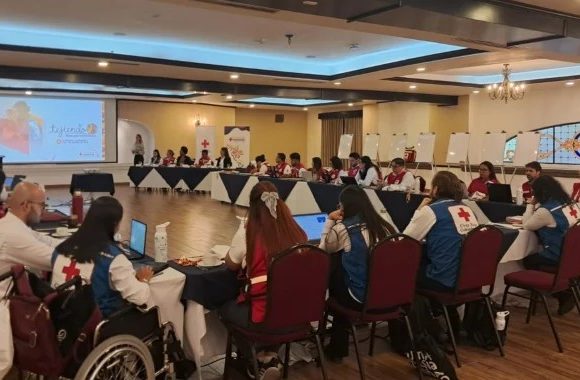
    Heavy, sustained rainfall has triggered destructive flooding across low-lying, high-risk communities in multiple Dominican Republic provinces, prompting the Dominican Red Cross to roll out full-scale emergency response operations to protect vulnerable residents. The national humanitarian organization has mobilized a full contingent of rapid-response teams, trained volunteers, and technical specialists across the affected regions, with two core missions: delivering immediate support to households impacted by the floodwaters, and maintaining constant surveillance of areas at the highest risk of worsening disaster conditions.

    One of the hardest-hit areas so far is the municipality of Montellano, located in the northern coastal province of Puerto Plata. As the Camú River continues to swell beyond safe levels, response teams are executing organized preventive evacuations for residents in three high-risk sectors: Los Ciruelos, El Saman, and Villa Melesia. Alongside evacuation efforts, teams are distributing essential supplies and providing on-the-ground support to community members who have been displaced or affected by rising water. Local disaster authorities remain on high alert, as hydrological data shows the water flow in the river is continuing to climb, increasing the risk of more severe flooding in the coming hours.

    Beyond Puerto Plata, the Dominican Red Cross is sustaining coordinated emergency operations in five additional provinces: Santiago Rodríguez, Espaillat, María Trinidad Sánchez, Duarte, and El Seibo. All operations are carried out in close partnership with the country’s national Emergency Operations Center and other specialized disaster response agencies, to ensure efficient, coordinated delivery of aid across all affected regions. In a public advisory, the Dominican Red Cross has issued a clear warning to residents across at-risk areas: anyone living in proximity to rivers, streams, or zones with a history of repeated flooding is urged to strictly follow all official safety guidance, and to never attempt to cross flooded roadways or swollen waterways, which carry hidden risks of strong currents and structural collapse.

  • Government welcomes LUCELEC’s solar donation to St Lucy’s Home

    Government welcomes LUCELEC’s solar donation to St Lucy’s Home

    A landmark collaboration between the Saint Lucian government and local utility provider LUCELEC has delivered dual benefits for the country’s elderly care sector and national renewable energy goals, with the completion of a 10-kilowatt solar photovoltaic (PV) system at St Lucy’s Home for senior citizens.

    Government officials have praised the project as a transformative step that will cut long-term operational costs for the care facility while advancing national sustainability commitments, bringing tangible improvements to the living standards of vulnerable seniors in residence.

    Speaking on the initiative, Minister for Elderly Affairs Emma Hippolyte extended her formal gratitude to LUCELEC and the leadership of St Lucy’s Home for centering support for the island’s aging population through this project. She emphasized that the solar installation will deliver lasting, critical value to the facility, locking in ongoing utility cost savings that can be redirected to care services while creating a more comfortable living environment for residents.

    Hippolyte reaffirmed the government’s core responsibility to uphold the inherent dignity of Saint Lucia’s seniors, acknowledge the foundational contributions they have made to national development, and sustain consistent public support for elder care services. She stressed that collective partnership is the only way to deliver impactful social support for vulnerable groups.

    “Each one of us – government, private citizens, and corporate partners – has a role to play in ensuring that we take care of our seniors. This is a shared responsibility,” the minister noted.

    Since taking office, Hippolyte has undertaken a comprehensive tour of elderly care facilities across Saint Lucia to gain on-the-ground insight into their unique operational needs and build support for expanded resource allocation. “Some homes require more assistance than others, and we are working to ensure that the resources available are distributed in a way that provides meaningful support across the board,” she explained.

    The minister also expressed hope that the successful partnership at St Lucy’s Home will serve as a blueprint to inspire more public-private collaboration to upgrade facilities for other elderly and disadvantaged care institutions across the island.

    Beyond its direct social impact, the project aligns with the government’s long-term national energy transition strategy, which seeks to cut heavy reliance on imported fossil fuels and buffer the country from global oil price fluctuations. “We want to transition to alternative energy solutions that can reduce costs and improve sustainability, particularly for institutions providing essential social services,” Hippolyte added.

    Carryl Haynes, Assistant Chief Engineer at LUCELEC, explained that the EC$43,000 solar system is a tangible demonstration of the utility’s longstanding commitment to supporting local community institutions through accessible sustainable energy solutions. Haynes added that these types of community-focused renewable energy projects boost institutional resilience, cut operating expenses that strain care facility budgets, and advance inclusive national progress.

    In a closing statement, the Ministry of Equity echoed the government’s praise, noting that the donation of the solar system sets a powerful example of cross-sector collaboration advancing elderly care. The project proves that intentional public-private partnerships can meaningfully improve outcomes and uphold dignity for Saint Lucia’s aging population.

  • Dominican Republic secures EU support for drug prevention initiatives

    Dominican Republic secures EU support for drug prevention initiatives

    PUNTA CANA — The Dominican Republic’s National Drug Council (CND) has solidified a landmark inter-institutional cooperation agreement with the European Union through the COPOLAD III program, opening a new chapter of coordinated action to advance evidence-based drug policy across the Caribbean and Latin America. Backed by targeted European technical expertise and dedicated financial investment, the partnership is designed to strengthen regional and national capacity to address evolving drug-related challenges.

    The formal signing ceremony took place alongside the fourth annual gathering of the COPOLAD III initiative, a high-profile international forum that brought together more than 170 drug policy specialists and official delegates from over 60 nations spanning Latin America, the Caribbean and the European continent. The agreement was signed by two key leaders: Alejandro de Jesús Abreu, who serves both as president of the CND and co-president of the EU-CELAC Mechanism, and Olivier Luyckx, head of country programs for Latin America and the Caribbean at the European Commission’s Directorate-General for International Partnerships. A broad delegation of senior Dominican diplomatic and institutional officials also participated in the event, emphasizing that the collaboration marks a critical milestone for collective regional action on drug policy.

    Under the new framework, the partnership will roll out three high-priority initiatives tailored to meet the Dominican Republic’s specific needs while creating a replicable model for other regional nations. First, the alliance will conduct a nationwide, nationally representative survey of drug use among university students, generating actionable data to inform future policy design and ensure all regulatory and intervention efforts are rooted in real-world evidence. Second, the partnership will invest in expanding and strengthening the Dominican Republic’s Drug Policy Training School, which equips national and local decision-makers with the specialized skills and knowledge needed to implement effective drug policy. Third, the initiative will roll out an innovative social support program called the “Wings of Transformation” strategy, which focuses on providing critical resources and support to children whose parents are incarcerated on drug-related offenses. The program will launch as a pilot project at the Baní Women’s Penitentiary Center, with plans to scale the model across the entire country if the initial trial proves successful. Dominican officials noted that the partnership not only advances the country’s domestic drug policy goals but also reinforces its position as a regional leader in collaborative, holistic approaches to addressing drug challenges.