作者: admin

  • Rastafarian Group Calls for End to Jail Time for Minor Cannabis Offences

    Rastafarian Group Calls for End to Jail Time for Minor Cannabis Offences

    On a recent Saturday, a wave of demands for cannabis policy change swept through the capital of Antigua and Barbuda, as dozens of members of the nation’s Rastafarian community gathered in peaceful demonstration outside St. John’s Police Station. The protest targeted the ongoing practice of jailing individuals convicted of non-violent, minor marijuana-related offenses, a policy that community leaders say has long violated both civil liberties and their group’s core religious and cultural traditions.

    Dressed uniformly in white and bearing the distinctive red, gold, and green flags of the Rastafarian faith, demonstrators made their case to government and law enforcement officials, calling for an urgent shift in how authorities approach low-level cannabis violations. They emphasized that the current punitive legal framework is increasingly out of touch with the growing regional momentum toward decriminalization that has been building across the Caribbean in recent years.

    According to statements from protest organizers, dozens of people remain behind bars in Antigua and Barbuda on cannabis charges, even as neighboring nations have relaxed their drug laws and moved away from mass incarceration for minor marijuana offenses. Beyond broader drug policy reform, the Rastafarian community is also pushing for formal legal recognition of cannabis’ central role in their religious practices, a status that has already been granted in several other Caribbean countries.

    The core demand of the demonstration was a full legislative review of the nation’s existing cannabis laws, with protesters arguing that custodial sentences should never be the default response to minor marijuana-related incidents. Organizers made clear that Saturday’s gathering is just one step in a sustained, nationwide campaign to overhaul outdated drug legislation and secure full equal rights for Rastafarian residents across Antigua and Barbuda.

  • Damar Stapleton Sentenced Over $246,000 Cannabis Seizure

    Damar Stapleton Sentenced Over $246,000 Cannabis Seizure

    A resident of Bendals Village has received a 30-month prison sentence following a guilty plea to drug trafficking charges connected to a major cannabis seizure at Deep Water Harbour. Damar Stapleton’s sentencing was handed down Friday in the High Court by Justice John Spencer, after the defendant entered his guilty plea to cannabis trafficking charges on May 12.

    The conviction traces back to a coordinated law enforcement operation conducted jointly by local police and Customs officials on March 8, 2024. During the targeted operation at the port, authorities discovered 41 pounds of cannabis hidden inside two unmarked shipping boxes. Investigators estimate the seized narcotics have a street value of roughly $246,000.

    Stapleton remains before the courts on a separate set of drug charges tied to an alleged second smuggling attempt at Deep Water Harbour just five days after the first seizure. The March 13, 2024 incident sees the defendant accused of importing an additional 20 pounds of cannabis, with pending charges including possession of cannabis, possession with intent to transfer the controlled substance, and taking part in the illegal supply of the drug. A trial or further hearings for these outstanding charges are expected to be scheduled in coming months.

  • Hof van Justitie ontbeert in begroting ruim SRD 300 miljoen

    Hof van Justitie ontbeert in begroting ruim SRD 300 miljoen

    Suriname’s judicial branch has issued a stark warning that deep underfunding from the national government threatens its ability to function properly and advance long-term institutional development, according to its 2026 annual budget documents. The judiciary calculates that it needs a total budget of SRD 563.5 million to adequately fulfill all its core mandates this service year, but the government has only allocated SRD 267.5 million, leaving a gap of more than SRD 296 million that officials say is unmanageable. The Hof van Justitie (High Court of Justice) laid out the gap by comparing the government’s approved allocation against its actual operational and developmental needs in its formal budget submission.

  • Macmillan Education Caribbean opens entries for second ‘New Branches’ Poetry Competition

    Macmillan Education Caribbean opens entries for second ‘New Branches’ Poetry Competition

    Building on the overwhelming success of its 2025 inaugural launch, Macmillan Education Caribbean has officially opened submissions for the second edition of its beloved New Branches Poetry Competition, calling on students and educators across the Caribbean region to put their creative talents on display. Kicking off on June 8, 2026, this year’s iteration has been strategically expanded to remove barriers to broader participation, while upholding the competition’s core mission: boosting literacy, celebrating Caribbean cultural identity, and nurturing a lifelong passion for Language Arts among learners and teaching professionals across the region.

    The most notable update for the 2026 competition is the introduction of a brand-new Upper Secondary division, extending eligibility beyond the three original categories—Primary, Lower Secondary, and Teacher—offered in the first year of the event. This adjustment opens the creative platform to older secondary students who were previously unable to compete, creating space for more diverse voices from across the regional education community.

    All participants are required to submit original poetry centered on Caribbean-focused themes, with organizers curating a flexible list of prompts to spark creativity. The suggested topics include Life by the Sea in the Caribbean, Festivals in My Country, Caribbean Food and Culture, My Island or My Community, Voices of the Caribbean, and Journeys, Roots and Belonging—all designed to encourage creators to draw from their own lived experiences in the region.

    Organizers have also updated submission guidelines to align with the new category structure. Primary school entrants must submit poems between 8 and 20 lines long, while competitors in the Lower Secondary, Upper Secondary, and Teacher divisions face a 10 to 25 line limit for their entries.

    A carefully selected two-person judging panel will evaluate all submissions, bringing together decades of literary and educational experience from across the region. Returning for her second consecutive year as a judge is Julia Sander, a celebrated author and creative writing trainer, who is joined by first-time judge Mansha Hunte-Baptiste, a Saint Lucian author and educator who recently took part in Macmillan Education’s Caribbean Author Academy initiative.

    Beyond the opportunity to showcase their work on a regional stage, top entries will earn a permanent spot in the 2026 New Branches poetry anthology, with all winning creators receiving a complimentary printed copy of the collection to commemorate their achievement.

    In alignment with the competition’s focus on literacy, the submission window will close exactly three months after opening, on September 8, 2026, to coincide with the annual observance of World Literacy Day. Full competition rules, eligibility details, and submission instructions will be accessible via a downloadable blog post on Macmillan Education Caribbean’s official website, as well as through a dedicated SharePoint link distributed directly to schools and education stakeholders across the Caribbean.

    The 2025 inaugural competition saw three standout winners from across the region: Celine Rolle of St. Andrew’s Anglican Primary School in Exuma, The Bahamas, who took top honors in the Primary division; Shakeir Thomas of Antigua Grammar School in Antigua and Barbuda, the winning Lower Secondary participant; and Sasha Maynard, a teacher at Charles E. Mills Secondary School in St. Kitts and Nevis, who claimed first place in the educator category.

    Interested participants and educators can find additional information by visiting the Macmillan Education Caribbean official website, or reach out directly to Dr. Katy Anyasoro, Marketing Manager for Macmillan Caribbean and International Curriculum, via email or telephone for inquiries.

  • Prime Minister Salutes Centenarians as Living Treasures of Antigua and Barbuda

    Prime Minister Salutes Centenarians as Living Treasures of Antigua and Barbuda

    As Antigua and Barbuda prepares to mark its 2026 Centenarian Week, Prime Minister Gaston Browne has issued a heartfelt tribute to the nation’s residents who have reached 100 years of age or more, describing them as irreplaceable “living treasures” whose decades of sacrifice, quiet resilience and steady contribution laid the foundation for the modern country the population enjoys today. In his official message for the national observance, Browne pointed out that the collective life experience of the country’s centenarians adds up to more than 800 years of shared history. These individuals have borne witness to every major challenge, milestone and turning point that has defined Antigua and Barbuda’s journey of national development, from early struggles to key achievements that moved the country forward. “Today, we come together to celebrate remarkable people who have demonstrated extraordinary resilience over an entire century of life,” Browne stated. Beyond their long lifespans, the prime minister emphasized that centenarians personify core values that hold the nation together: hard-won wisdom, unshakable faith, steadfast perseverance, and an unwavering dedication to their families and local communities. Browne extended his sincere gratitude to these elders for their ongoing role in nation-building, noting that for generations, their efforts have strengthened both their own family units and the broader communities across the twin islands. In addition to his tribute, the prime minister made a formal pledge that the government will maintain and expand targeted support for the country’s older population. He stressed that it is a core national obligation to ensure all of Antigua and Barbuda’s centenarians can spend their later years in dignity, surrounded by respect, comfort and the love of their families and fellow citizens. Browne also used the occasion to call on all younger Antigua and Barbudans to set aside time during Centenarian Week to listen to the life stories and insights that centenarians have to share. He noted that the annual observance is far more than a celebration of long life: it is a chance to honor lives that have left a permanent, positive impact on every generation that followed. Closing his message, Browne conveyed congratulations and deep appreciation to every centenarian across the country on behalf of both the government and the people of Antigua and Barbuda, closing with a wish for continued good health, lasting happiness and peaceful days ahead.

  • Former Police Commissioner Atlee Rodney Honoured with International Law Enforcement Award

    Former Police Commissioner Atlee Rodney Honoured with International Law Enforcement Award

    A veteran Caribbean law enforcement leader has earned one of the most prestigious international honors in Black law enforcement, capping a more than 40-year career marked by cross-regional collaboration and public service commitment. On June 5, 2026, former Royal Police Force of Antigua and Barbuda Commissioner Atlee Rodney received the National Organization of Black Law Enforcement Executives (NOBLE) International Presidential Award during the 2026 NOBLE International Training Summit held in St. Thomas, U.S. Virgin Islands. The award was formally presented by NOBLE president and retired police chief Renee Hall, who highlighted Rodney’s decades of transformative contributions to law enforcement across the Caribbean. The 2026 award coincides with NOBLE’s 50th anniversary as a leading global organization for Black law enforcement professionals. In her remarks during the presentation ceremony, Hall emphasized that this year’s recognition placed special focus on elevating international partnerships and honoring the work of outstanding law enforcement leaders outside the United States. Hall told assembled summit attendees that NOBLE International took immense pride in honoring Rodney, whose legacy of visionary leadership, dedicated mentorship, community-centered service, and commitment to regional cooperation has left an indelible mark on public safety practitioners and local communities throughout the Caribbean and beyond. Trebor Randle, chair of NOBLE’s International Affairs committee, who attended the ceremony, added context to the honor, noting that the award was granted in direct acknowledgment of Rodney’s extraordinary leadership and unwavering dedication to advancing law enforcement standards across the entire Caribbean region over a 40-plus year career of exemplary public service. Rodney’s career in law enforcement has stretched across key leadership roles at both national and regional levels. Beyond his tenure as Commissioner of Police for Antigua and Barbuda, he has served as president of the Caribbean Association of Commissioners of Police (ACCP) and as a regional director on the board of the International Association of Chiefs of Police (IACP). He currently holds the position of Deputy Executive Director at the Regional Security System (RSS) Headquarters, where he continues to shape regional security strategy. In his acceptance remarks, Rodney expressed deep humility at receiving the honor from the globally respected law enforcement organization, extending sincere gratitude to NOBLE for the recognition. He offered special praise to his family, lifelong mentors, and all the individuals and partner organizations that have supported his work throughout his law enforcement career, and reaffirmed his commitment to continuing efforts to strengthen safety and security across the Caribbean region. Current Antigua and Barbuda Police Commissioner Everton Jeffers also extended official congratulations to Rodney following the ceremony, noting that the international honor is a source of collective pride for the entire Royal Police Force of Antigua and Barbuda, and a testament to Rodney’s decades of dedicated service to the nation and the broader Caribbean community.

  • Krachtige aardbeving treft Filipijnen, minstens 15 doden en tsunami-waarschuwingen

    Krachtige aardbeving treft Filipijnen, minstens 15 doden en tsunami-waarschuwingen

    A powerful 7.8-magnitude earthquake hit the Philippines early Monday morning, leaving at least 15 people dead, destroying multiple structures, and prompting temporary tsunami warnings across parts of Asia. The U.S. Geological Survey recorded the main tremor hitting just before 7:40 a.m. local time off the coast of Mindanao, the country’s second-largest island. In the hours after the initial shock, the Philippine Institute of Volcanology and Seismology (PHIVOLCS) confirmed that more than an hour of continuous aftershocks followed the main quake.

    The hardest-hit area is General Santos, a coastal city in southern Mindanao home to 722,000 residents. PHIVOLCS rated the seismic event as “very powerful” on its internal intensity scale, with on-the-ground footage shared on official social media showing catastrophic structural damage. One viral clip captured the total collapse of a three-story building that housed a popular Jollibee fast-food outlet, sending a massive cloud of dust and debris billowing into surrounding streets. Additional reports confirm shattered windows, collapsed roofs, and partial structural failures across multiple neighborhoods in the city.

    Local police confirmed that a large section of St. Elizabeth Hospital in General Santos suffered severe structural damage, forcing emergency workers to evacuate all patients and staff. Medical operations have been temporarily moved outdoors away from the unsafe main building, disrupting care for hundreds of residents in the area.

    Eyewitness accounts paint a picture of widespread chaos as the quake struck. Sister Mary Ann Blanco Rhudy, a staff member at Notre Dame of Dadiangas University in General Santos, described the disorienting experience of the tremor: “Cars were shifting uncontrollably back and forth on the road, luckily they did not collide with one another. Trees swayed so violently that many branches broke off, and several buildings on our campus have partially collapsed.”

    The earthquake fell on what was scheduled to be the first day of the new school year across the country, impacting an estimated 3.2 million students and 128,000 teachers and education staff in affected regions. Philippine President Ferdinand Marcos Jr. quickly mobilized national emergency response agencies, including the Bureau of Civil Protection and the National Disaster Risk Reduction and Management Council, and issued an immediate order to close all schools in impacted areas.

    “Ensuring the safety of our children is our top priority,” Marcos said in a public statement following the disaster.

    In the immediate aftermath of the quake, tsunami warnings were issued for the Philippines, Indonesia, and other coastal territories across Southeast Asia. Most of these warnings have since been lifted as threat levels have decreased, but a tsunami advisory remains in effect for Japan’s southern coast and outlying islands. Authorities in Japan are urging residents to stay away from coastlines and river mouths until further updates confirm the threat has passed.

    As of Monday midday local time, rescue teams are still working to clear debris, locate missing people, and provide emergency aid to displaced residents in the hardest-hit areas of Mindanao.

  • Governor General Welcomes $10,000 Grant for Centenarians

    Governor General Welcomes $10,000 Grant for Centenarians

    As Antigua and Barbuda prepares to mark its annual Centenarians Week in 2026, the nation’s highest-ranking ceremonial representative has thrown his full support behind a groundbreaking new government program that delivers direct financial recognition to the country’s citizens who have lived for 100 years or more.

    Governor General Sir Rodney Williams used a national address opening the celebratory week to praise the administration’s decision to allocate a one-time $10,000 grant to every qualifying centenarian, an unprecedented step in the island nation’s history of honoring its eldest residents. In his remarks, Sir Rodney framed centenarians as irreplaceable national treasures, arguing that their century-long lives hold profound, actionable lessons for younger Antiguans and Barbudans across core values including steadfast perseverance, unshakable faith, selfless sacrifice, and committed community service.

    Over their lifetimes, Sir Rodney noted, these long-lived citizens have stood at the center of the country’s most transformative historical chapters. They weathered crippling economic downturns, survived devastating natural disasters that have repeatedly tested the island nation, adapted to rapid, world-altering shifts in technology, and witnessed the country’s slow, meaningful journey from centuries of colonial rule to full sovereign independence. Beyond historical context, he emphasized that the collective wisdom, hard-won experience, and relentless resilience of these elders remain a powerful source of inspiration for younger generations navigating their own social and economic challenges.

    The Governor General stressed that he held particular enthusiasm for the new grant program, marking the first time the national government has put forward direct financial support to honor centenarians during the annual observance. He extended public commendation to the Ministry of Social and Urban Transformation, as well as all other government and community stakeholders that helped bring the initiative from proposal to implementation. Sir Rodney described the program as far more than a financial gift: it is a tangible, public demonstration of the entire nation’s gratitude and deep respect for the contributions its eldest citizens have made across their lifetimes.

    Beyond the new grant initiative, Sir Rodney also highlighted one of the country’s long-standing traditions of honoring centenarians: the delivery of official congratulatory messages from the British Sovereign to all citizens who reach their 100th birthday, and to those who mark subsequent birthdays beyond that milestone. He shared that he and his wife, Lady Williams, have had the distinct honor of personally delivering these royal greetings to dozens of centenarians across Antigua and Barbuda over his tenure in office, including those celebrating 101st, 102nd, and even more advanced birthdays.

    Sir Rodney emphasized that Centenarians Week extends far beyond a simple celebration of long life. Instead, the annual observance serves as a moment to celebrate the enduring legacies that centenarians have built across the country, and to reaffirm the inherent value of the contributions that older generations have made to shape modern Antigua and Barbuda. He closed his address by issuing a call to action to all citizens and institutions across the nation, urging continued commitment to honoring, respecting, and caring for the elders who laid the foundation for the country’s current prosperity.

    He concluded his national remarks by extending warm personal congratulations and sincere best wishes to every centenarian celebrating their place in the 2026 observance.

  • Mystery over Aquilah’s death

    Mystery over Aquilah’s death

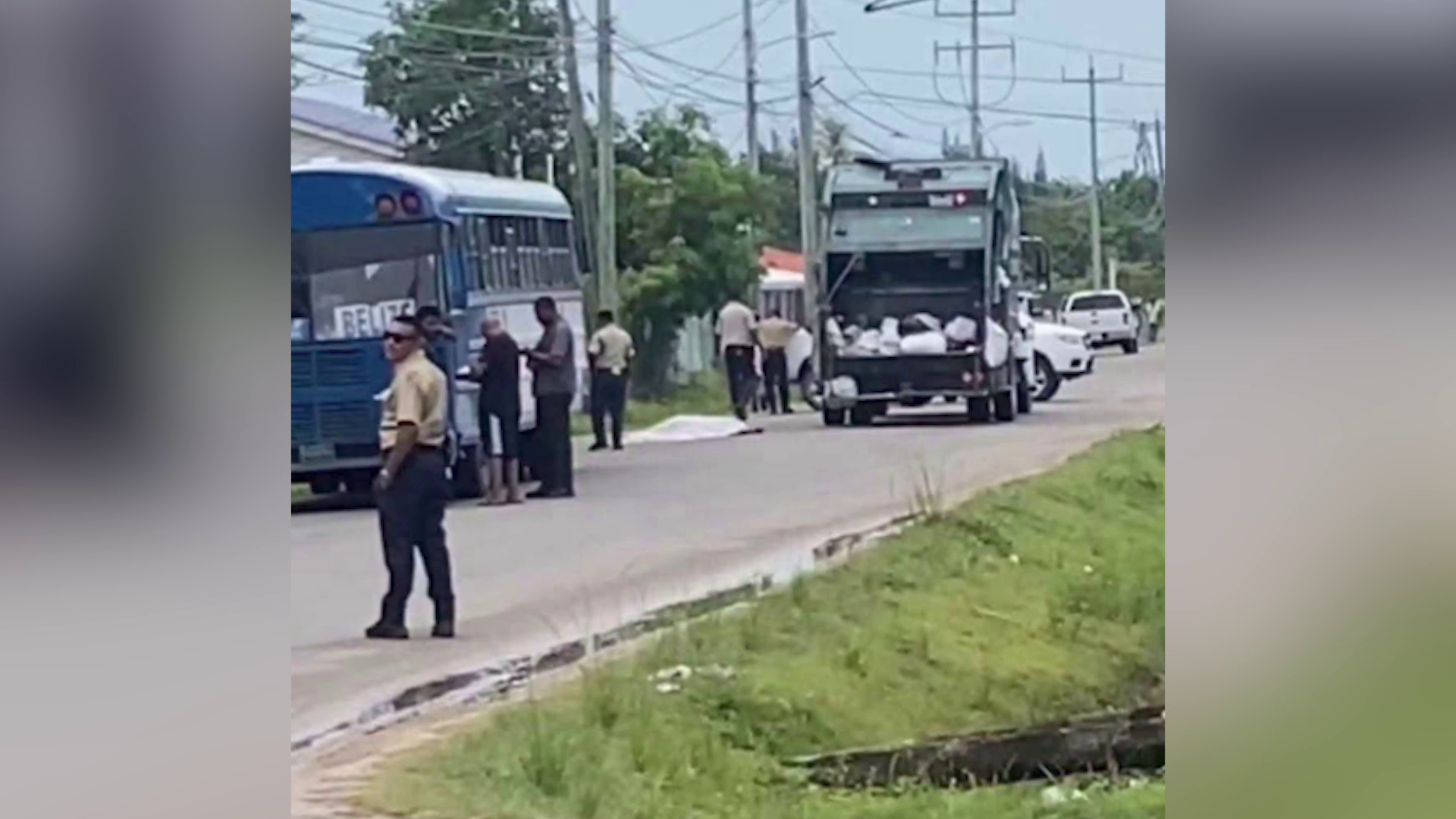
    A death investigation is currently underway following the passing of a 26-year-old female employee assigned to Trinidad’s Police Administration Building, law enforcement officials have confirmed. The victim has been formally identified as Aquilah Rebekah Henry, a resident of Manraj Drive on Oudan Road in El Socorro. Henry held the position of Clerk II at the Port of Spain-based Police Administration Building, according to official police records.

    First reports of the incident originated from Henry’s home, where uniformed officers were dispatched to respond just after 6:30 p.m. local time on Friday. Acting Inspector Murray and Acting Corporal Legendre were the lead investigating officers to arrive at the residential property, where they encountered already on-scene first responders including Police Constables Jaggernath and Meade, alongside a team from Emergency Health Services.

    Upon entering the home, investigators located Henry unresponsive in an interior bedroom. In a statement to law enforcement, Henry’s 57-year-old father, who works as a professional chauffeur, shared that he last saw his daughter alive at roughly 8 a.m. the same day. When he returned to check on her at approximately 6 p.m., he found her in an unresponsive state and immediately placed a call to emergency authorities to request assistance.

    A district medical officer attended the scene shortly after first responders arrived, and officially pronounced Henry dead at the residence. To advance the ongoing investigation, a court-ordered post-mortem examination has been scheduled to determine the exact cause of Henry’s death, a standard step in suspicious or unexplained death cases in the jurisdiction.

  • BVI calls on UN decolonization committee to take stronger action on remaining territories

    BVI calls on UN decolonization committee to take stronger action on remaining territories

    At a recent regional decolonization seminar hosted in Managua, Nicaragua, the British Virgin Islands (BVI) has delivered a clear call to the United Nations Special Committee on Decolonization (C24) to leverage its full authority to accelerate progress toward self-determination for the 17 remaining Non-Self-Governing Territories (NSGTs) across the globe.

    The appeal was presented by BVI Special Envoy Benito Wheatley during the UN C24 Caribbean Regional Seminar on Decolonization, a gathering centered on advancing the goals of the Fourth International Decade for the Eradication of Colonialism. In his address, Wheatley laid out two key priorities for the committee to act on immediately.

    First, he called on C24 to use its formal good offices mandate to create structured dialogue frameworks between the four current administering powers — France, New Zealand, the United Kingdom, and the United States — and the territories they oversee. This dialogue, he emphasized, should be focused on supporting territories to pursue one of the three decolonization pathways officially recognized by the United Nations: full integration with the administering power, free association, or full sovereign independence.

    Second, Wheatley urged the committee to expand its efforts to approve and deploy UN visiting missions to NSGTs that request them. These on-the-ground missions are designed to allow the UN to directly assess political, economic, and social progress toward self-governance, and to document the priorities of territorial populations.

    “The Special Committee on Decolonization can make a tangible difference in advancing decolonization by employing the major tools at its disposal, which include good offices and visiting missions,” Wheatley said in his address. “Both provide useful engagement and dialogue for both the Administering Power and the Governments and peoples of those Non-Self-Governing Territories seeking a full measure of self-government.”

    Wheatley also shared an update on the BVI’s own decolonization journey. The territory is currently preparing for upcoming constitutional negotiations with the UK, with the goal of securing full internal self-governance. Following those negotiations, a public referendum is scheduled for 2025 to 2031, where BVI residents will select their preferred final decolonization status from the three UN-endorsed sovereignty options.

    The special envoy expressed gratitude for the committee’s recent support, including the deployment of a UN visiting mission to the BVI in August 2024 to assess progress toward self-determination, and its ongoing backing for the territory’s democratic institutions. But he also issued a stark warning: if the committee fails to deliver meaningful progress across all remaining NSGTs before the Fourth International Decade concludes in 2030, its ongoing relevance to the decolonization process will be called into question by the communities it is meant to serve.

    As of 2025, 17 territories remain on the UN’s official list of Non-Self-Governing Territories: American Samoa, Anguilla, Bermuda, the British Virgin Islands, the Cayman Islands, the Falkland Islands, French Polynesia, Gibraltar, Guam, Montserrat, New Caledonia, Pitcairn, Saint Helena, Tokelau, the Turks and Caicos Islands, the United States Virgin Islands, and Western Sahara. This report is based on an official press release issued by the Government of the Virgin Islands following the Managua seminar.