
On Wednesday, leaders of Barbados’ Queen Elizabeth Hospital (QEH) accepted a landmark $100,000 donation from the Olga Worrell Memorial Scholarship Trust, a gift framed as far more than financial support—it is a strategic investment that will secure the future of high-quality critical care for generations of Barbadian patients. Senior Nursing Officer Cherry Jackman-Collymore, who leads the hospital’s Medical Directorate, emphasized that the funding fills a critical gap by expanding specialized education and professional development for critical care nursing staff, a sector facing growing workforce pressures as experienced senior practitioners approach retirement.
作者: admin
-

Chevrier confident ahead of CAC medal round
Following a dramatic closing day of preliminary competition Wednesday, Saint Lucia’s top sailor Luc Chevrier has secured his spot in the medal round of the ILCA 7 men’s Laser Radial event at the Central American and Caribbean Games, putting him one step away from a chance at the region’s top podium prize.
The 27-year-old Olympian will hit the water off Punta Salinas for two decisive final races this Friday, with all previous preliminary standings wiped out as the top five remaining competitors fight for gold, silver and bronze.
Chevrier entered the 10-race preliminary series as one to watch, and delivered consistent results across the opening contests. He notched a second-place finish, two fourths, a third, and claimed his fifth victory in the series’ ninth race, a performance that pushed him into the overall lead halfway through the final day of qualifying. His steady sailing through the first nine heats kept him firmly in contention for a top spot heading into the last preliminary race.
Disaster almost struck in the 10th and final preliminary heat, however. A stray clear plastic bag became caught underneath Chevrier’s hull, creating drag that slowed his boat throughout the race. The 27-year-old had no idea of the issue until after he crossed the finish line, where he ended up placing ninth. Despite the setback, he held on to secure his place in the final five-boat medal fleet.
After all preliminary results were calculated, Chevrier finished with 18 net points, just two points behind Puerto Rico’s Pedro Fernandez Gamboa, who notched his second win of the series in Race 10 to claim the top preliminary spot with 16 net points. Bermuda’s Sebastian Kempe sits just one point behind Chevrier at 19 points, while Joshua Higgins of the Cayman Islands rounded out the top five with 40 points.
For Chevrier, the advancement comes with added motivation: he already owns a bronze medal from the 2023 regional championships, and is eager to improve on that result in this year’s event. Speaking with local outlet St Lucia Times ahead of the final, he made clear he has high hopes for his performance on Friday.
With all previous standings discarded for the medal round, every sailor starts from zero, leaving the door open for any of the top five to take gold. Chevrier says he is ready to put the last-race mishap behind him, and if conditions cooperate and he executes his plan, he will be in a strong position to challenge for the top prize.
-
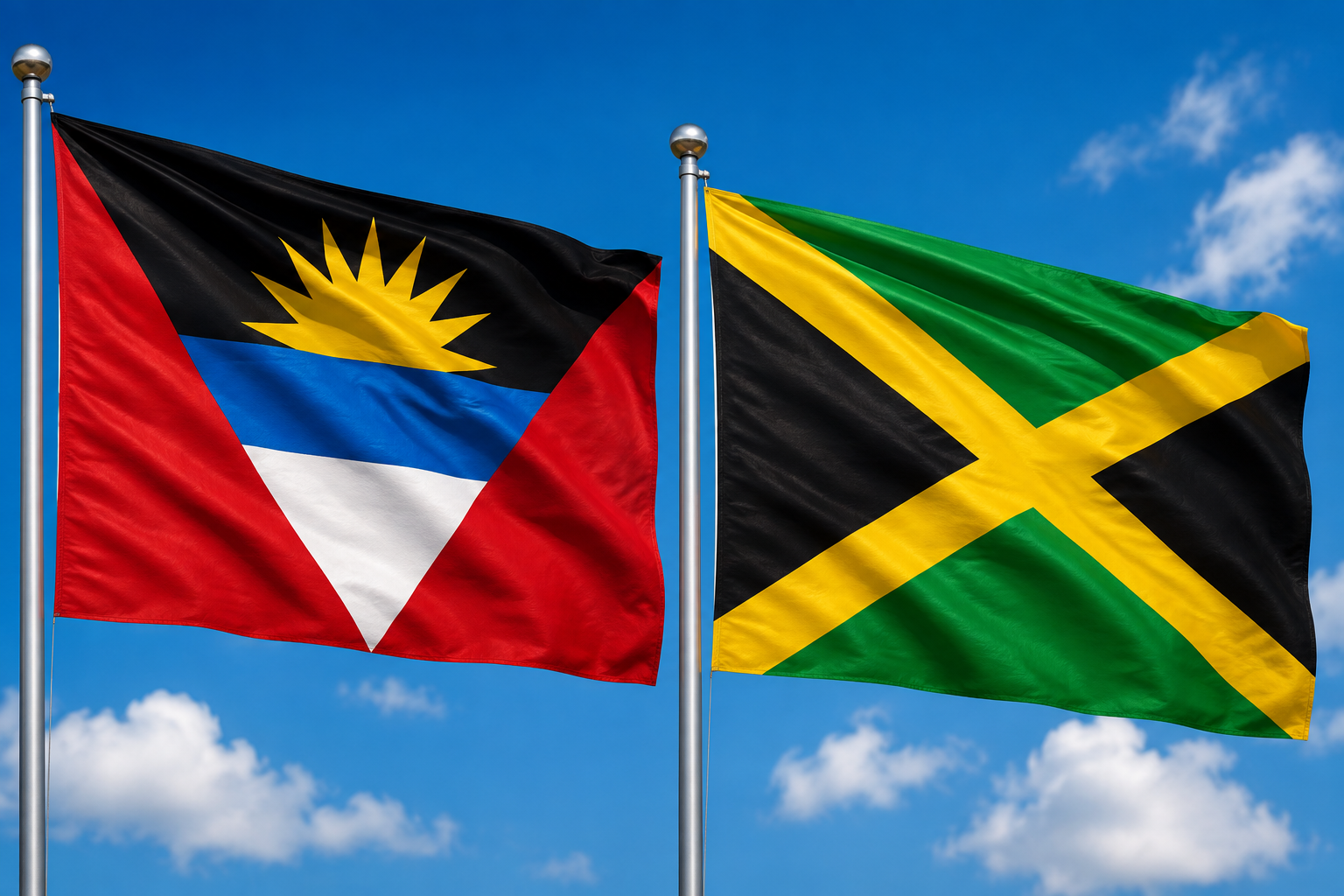
Jamaicans in Antigua Urged to Uphold Nation’s Values on 64th Independence Anniversary
As Jamaica prepares to mark its 64th year of sovereign self-governance, a leading Caribbean immigration services executive has delivered a heartfelt message of celebration to Jamaican nationals building lives across Antigua and Barbuda. Nevoy Morrison, Principal Consultant of Caridocs – Caribbean Document Processing & Immigration Services, used the national milestone to urge diaspora members to embrace their role as goodwill ambassadors for their homeland, while continuing to lift up the local communities they now call home.
For Morrison, the anniversary of Jamaica’s 1962 independence is far more than a ceremonial holiday. It stands as a lasting testament to the extraordinary resilience, unwavering determination, and trailblazing achievements that have defined the Jamaican people from the fight for sovereignty to the present day. Even as thousands of Jamaicans have built new lives outside the nation’s borders over the decades, Morrison emphasized that core Jamaican traits — including the island’s rich cultural heritage, strong communal work ethic, and deep national pride — remain central to the identity of every diaspora member.
“Members of the global Jamaican diaspora share a common responsibility to act as intentional ambassadors for our nation,” Morrison explained in his official greeting. “When we lead with integrity, contribute our time and effort to local service, and add value to the communities that welcome us, we honor the enormous sacrifices made by the generation that fought for our freedom and laid the foundation for every generation that followed.”
Morrison encouraged Jamaicans at home and abroad to frame this year’s independence celebration as both a moment of reflection on the nation’s history and a call to action for its future. By staying connected to one another, offering mutual support, investing in community growth, and upholding the values that have made Jamaica a global source of inspiration, diaspora members can play a critical role in shaping the nation’s next chapter, he said.
Beyond his holiday message, Morrison also used the occasion to reaffirm Caridocs’ longstanding commitment to serving Jamaican communities across the Caribbean. The firm remains dedicated to delivering efficient, professional, and dependable document processing and immigration support to Jamaicans living throughout the region, ensuring they can access the services they need no matter where they reside.
Closing his address, Morrison offered prayers for sustained growth and widespread prosperity for Jamaica, extending blessings to the nation’s leaders, people, and diaspora members around the world. “May God continue to bless Jamaica, guide her leaders, protect her people, and strengthen every Jamaican at home and abroad,” he said, closing with a final wish for a joyful and meaningful 64th Independence Day celebration for all.
-

Ex-premier Sheikh Hasina kondigt terugkeer naar Bangladesh aan ondanks doodstraf
In a dramatic announcement that sends ripples across South Asian geopolitics, 78-year-old ousted Bangladeshi prime minister Sheikh Hasina has confirmed she intends to return to her home country in December 2026, after two years of exile in India — even as a death sentence hangs over her head for charges of crimes against humanity.
Hasina shared her decision in a pre-recorded video address to an event hosted by the South Asia Foreign Correspondents’ Club, where she appeared alongside her son Sajeeb Wazed Joy and other senior leaders of her party, the Awami League. In defiant remarks, the long-serving former leader framed her planned return as a matter of democratic duty to the Bangladeshi people. “I can be detained, I can be sent to prison. But fear must not dictate my obligation to the people,” she stated, adding that the exact date of her arrival has not yet been finalized. Hasina also used the platform to call for an immediate end to the current government’s ban on the Awami League, which has been in place since she was ousted from power.
The path to Hasina’s planned return traces back to the 2024 mass political upheaval that removed her from office. After weeks of student-led pro-democracy protests that were met with brutal violent crackdowns, a popular revolution unseated Hasina’s government, forcing her to flee the country by helicopter for neighboring India, where she has remained in exile ever since. In her absence, Bangladeshi courts have convicted her on multiple grave charges, including inciting mass violence, ordering extrajudicial killings, and failing to prevent crimes against humanity, resulting in a mandatory death sentence.
Hasina’s announcement comes at a delicate moment for bilateral relations between Bangladesh and India. The current Bangladeshi government, led by Prime Minister Tarique Rahman, has repeatedly formally requested India extradite Hasina to face her sentence, but New Delhi has maintained that the case is proceeding through its domestic legal channels, and has declined to comment publicly on Hasina’s return plans. Recent diplomatic shifts have seen relations between Dhaka and New Delhi improve, with Rahman receiving an official invitation to attend the upcoming BRICS summit in September, marking a key step in the new government’s international outreach. Notably, India’s Ministry of External Affairs moved quickly to distance itself from Hasina’s announcement just ahead of her address, with a spokesperson clarifying that the Indian government has no involvement in Hasina’s return plans and does not endorse any views expressed at the event.
Bangladesh has remained in a state of political and social flux since the 2024 revolution. Rahman’s new administration has prioritized stabilizing domestic governance and rebuilding strained international partnerships, but underlying political tensions between rival factions and ongoing debates over human rights standards continue to challenge efforts to unify the country. Beyond the political turmoil, Bangladesh also grapples with the persistent, escalating impacts of climate change, including more frequent and severe flooding and cyclone events that have deepened the nation’s structural vulnerability. To address these growing climate risks, the current government has expanded investments in disaster risk management systems and strengthened international collaboration to reduce the human and economic toll of extreme weather events.
-

LIAT Air Marks Second Anniversary With Launch of Loyalty Programme
ST. JOHN’S, Antigua – Caribbean regional carrier LIAT Air is celebrating two years of independent operations this week, marking the milestone with the official launch of a brand-new customer loyalty initiative designed to reward frequent travelers: LIAT Air Club. Unveiled to the public on Thursday, this free membership program opens up new perks for passengers who choose the airline for their regional travel, introducing a points-based system that turns every eligible purchase into redeemable rewards.
Under the program’s structure, members accrue one point for every U.S. dollar spent on qualifying flights with the carrier. Those accumulated points can then be exchanged for a range of benefits, including free future flights, discounted or complimentary excess baggage allowance, and other travel-related perks. To cater to different levels of travel frequency, LIAT Air has structured the initiative across four tiered membership levels: Blue, Bronze, Silver, and Gold, with higher tiers unlocking increasingly valuable exclusive benefits for frequent fliers.
As a special anniversary promotion to commemorate the carrier’s two-year milestone, LIAT Air is also extending eligibility for points to passengers who completed eligible flights with the airline in the three months leading up to the program’s launch. New members who sign up for LIAT Air Club will have until September 30, 2026, to submit claims for these retroactive points, giving travelers more than two years to take advantage of the limited-time offer.
Hafsah Abdulsalam, Chief Executive Officer of LIAT Air, emphasized that the new loyalty program is first and foremost a gesture of gratitude to the customer base that has supported the carrier through its first two years of operations. “Today’s launch is our way of saying thank you to the thousands of customers who have supported LIAT Air throughout our journey,” Abdulsalam said in an official statement announcing the program. “LIAT Air Club is an investment in our customers, giving back to them by rewarding their loyalty while making travel even more accessible and rewarding.”
Since launching operations two years ago, LIAT Air has steadily expanded its footprint across the Caribbean, growing its regional route network to improve connectivity between island nations across the region. Company representatives framed the launch of LIAT Air Club as a key milestone in the carrier’s ongoing expansion strategy, building on its early growth to deliver greater value to the passengers that power its operations. The program is now open for new member enrollment via the airline’s official platforms.
-

Blackmoore urges public to stop spreading false information in search for missing Portsmouth teen
As the widespread search for a missing 16-year-old Portsmouth teenager enters its second week, top Dominican security officials are sounding an urgent alarm over harmful misinformation spreading on social media that is derailing official investigation efforts. Minister for National Security Rayburn Blackmoore has issued a public appeal calling on social media users and community members to halt the circulation of unvetted, false information related to the disappearance of Jerbiah Kaysia Paul, who has been missing for more than a week.
Paul was last seen leaving her family home in Portsmouth at approximately 8:30 p.m. local time on Friday, July 24, 2026, and has not had any contact with her loved ones since that evening. In an official public statement addressing the case, Blackmoore confirmed that the Ministry of National Security has mobilized full resources to support local law enforcement, with the core priority of locating the missing teen safely and returning her to her family.
Against the backdrop of growing public concern over the case, Blackmoore emphasized that unfounded claims and unconfirmed details circulating across social platforms are actively damaging the investigation. He went further to note that some of the false content being shared appears to be a deliberate effort to slow down and obstruct police work, complicating what is already a sensitive, complex missing person case.
“Every report of a missing person is peculiar. We have peculiar circumstances in every report of a missing person, and those circumstances will inform the methodology of the investigation,” Blackmoore explained in his address. While urging anyone with credible, first-hand information about Paul’s whereabouts to contact law enforcement immediately to aid the search, he doubled down on his warning to social media users, stressing that bogus information undermines every step of the investigation.
The missing teen’s mother, Jacinta Paul, recently shared an emotional public video appeal as the search entered its ninth consecutive day. Opening her statement by thanking the hundreds of community members, volunteers, and officials who have supported search efforts over the past week, she asked anyone who knows anything about her daughter’s disappearance to step forward with information.
“Today marks nine days since she’s gone missing,” Jacinta Paul said. “I just want to reach out and tell the people who have been searching, contributing and praying that we are thankful. We are grateful for your prayers, your contribution, your visits and your check-ups. I am very thankful for this.”
Dominican police have released a basic physical description of Jerbiah Kaysia Paul to help the public identify her: she stands roughly 5 feet 3 inches tall, has brown skin, and was last seen wearing a blue blouse when she left her home on July 24.
-

Police Say Carnival 2026 Ended Without Major Violence
ST. JOHN’S, Antigua and Barbuda – August 6, 2026 – The Royal Police Force of Antigua and Barbuda has issued an official statement celebrating the overwhelmingly successful outcome of the 2026 national Carnival, marking the annual cultural festival as one of the safest in recent memory with no major violent events or life-threatening injuries reported.
Following the conclusion of the multi-day celebration, which draws thousands of residents and international visitors each year, police leadership emphasized that the peaceful, secure atmosphere of the 2026 Carnival was not the result of chance. It reflected a shared commitment between the general public, law enforcement agencies, and cross-sector partners to prioritize public safety while allowing attendees to enjoy the iconic cultural traditions of the event. Key flagship events including the early-morning J’Ouvert street parade and the closing Last Lap procession unfolded without disruption, a outcome police called encouraging for the island nation’s tourism and cultural sectors.
While a tiny fraction of attendees encountered law enforcement action – a small group was arrested on charges of carrying prohibited weapons – police confirmed these isolated cases did not escalate to threaten public safety, and the vast majority of revelers voluntarily adhered to pre-event safety advisories and on-the-ground security protocols. Police administration attributes the low incident rate first and foremost to the responsible behavior of Carnival participants, who followed guidance to keep activities orderly and respectful.
In the official statement, police leadership extended explicit gratitude to the uniformed officers who worked extended shifts throughout the Carnival season. The professionalism, relentless dedication, and on-the-ground effort of these personnel were cited as a foundational pillar of the successful outcome, with their work protecting not only attendees and local residents, but also local businesses and public and private property across the festival zone.
Commissioner of Police Everton Jeffers reserved special recognition for the Antigua and Barbuda Defence Force (ABDF), led by Chief of Defence Staff Brigadier Telbert Benjamin. Jeffers highlighted that the inter-agency collaboration between police and military personnel was seamless, with ABDF officers and soldiers providing unwavering logistical and operational support across all major events. “I am particularly pleased with the level of professionalism, discipline, and dedication demonstrated by the officers and soldiers of the Antigua and Barbuda Defence Force,” Jeffers said in the statement. “Their seamless collaboration with our officers played a significant role in ensuring that Carnival 2026 was celebrated in a safe and secure environment for everyone.”
Jeffers also extended appreciation to the Antigua and Barbuda Festivals Commission, the government body responsible for organizing the annual Carnival, for its ongoing collaborative partnership. The commission’s proactive approach to coordinating with police and other stakeholders ahead of and during the event helped address potential security gaps before they could impact the celebrations, he noted. Additionally, the police administration thanked local and international media outlets for their partnership in distributing critical public safety information to attendees and residents ahead of and during the festival, helping to inform participants of security protocols and expectations.
Looking ahead, the Royal Police Force of Antigua and Barbuda reaffirmed its commitment to building on the 2026 Carnival’s success, strengthening ongoing partnerships with community groups, government agencies, private sector stakeholders, and the public to maintain high standards of safety for future major public events. The force remains dedicated to its core mission of upholding public order and delivering a secure environment for all people who live in, visit, and do business in Antigua and Barbuda.
-

Government backs honey industry with new $1.5 million investment and branding initiative
The Commonwealth of Dominica is taking bold steps to grow its burgeoning beekeeping sector, with plans to develop an official national honey brand as a centerpiece of its agricultural modernization agenda. As part of this initiative, the island’s government has earmarked an additional EC$1.5 million to scale up operations, funding the installation of hundreds of new beehives and ramping up domestic honey production.
This new injection of capital builds on prior investments already rolled out across the country. To date, the administration has distributed 600 pre-assembled beehives, specialized beekeeping equipment, and full protective gear to apiarists working in every region of Dominica. Speaking during the official tabling of the 2026-2027 national budget, Minister of Finance Dr. Irving McIntyre confirmed that these earlier strategic investments have already doubled the nation’s total registered hive population, putting the industry on a strong growth trajectory.
The latest EC$1.5 million allocation will advance two key priorities: rolling out hundreds of additional beehives to meet growing demand from new and existing beekeepers, and laying the groundwork for a nationally recognized Dominican honey brand that will highlight the island’s unique natural biodiversity. This investment forms a core plank of the current administration’s broader agricultural transformation strategy, which aims to shift Dominica’s farming sector away from its historical focus on raw commodity exports toward a modern, value-driven economy centered on local processing, intentional branding, and export of high-value finished goods.
Beyond expansion of the beekeeping and honey sectors, the government is also moving forward with plans to construct a new multipurpose agro-processing facility that will support a wide range of local agricultural producers. The purpose-built facility will be designed to process popular local crops including root vegetables and a wide variety of tropical fruits, and will include dedicated business incubation space for small and medium enterprises producing everything from honey and artisanal sauces to homemade jams and jellies, as well as local herbs and spices.
Administration officials argue that expanding domestic agro-processing capacity will deliver dual benefits for Dominica’s agricultural community: it will cut down on costly post-harvest losses that currently cut into producer profits, while opening up new higher-earning opportunities for local farmers and small business owners to capture more value from goods grown right on the island.
-

Sparks beat Bermuda in CAC Games netball to go third
In a standout performance at the Ciudad Juan Bosch Sports Complex on Wednesday, Saint Lucia’s national netball team, the Piton Sparks, delivered a dominant 44-29 victory over Bermuda to lock in a medal-contending position at the Central American & Caribbean Games. Entering the match as the underdog, the side held a 2-1 win-loss record that pushes them to third place in the overall standings, a result that defied pre-tournament rankings.
The upset is all the more notable given the gap in global rankings: Bermuda sits 10 places above Saint Lucia, at 21st compared to Saint Lucia’s 31st. But from the opening whistle, the Piton Sparks controlled key areas of the court, outperformed Bermuda in rebound battles, and got clinical production from their shooting circle to turn the tide in their favor.
The first quarter ended in an even 10-10 draw, with both teams firing on all cylinders. Bermuda converted 83% of its first-period attempts (10 goals from 12 tries), but Saint Lucia matched every score to keep the game deadlocked. The momentum shifted definitively in the second quarter, when Saint Lucia outscored Bermuda 12-8, taking a 22-18 lead into the halftime break.
Saint Lucia extended its dominance in the third quarter of the match, holding Bermuda to just five goals while adding 11 of their own to stretch their advantage to 33-23. Bermuda struggled to find any consistent attacking rhythm, managing only five successful conversions from nine attempts. The Piton Sparks closed out the win in the final frame, scoring 11 goals to Bermuda’s six to cement a convincing 15-point victory.
Full match statistics highlight just how clinical Saint Lucia’s performance was. The side converted 75% of its 59 total shot attempts, compared to Bermuda’s 69% success rate (29 goals from 42 attempts). Leading the scoring charge was goal attack Dasha Eugene, who notched 22 goals from 31 attempts. Teenage shooter Neriah Charlery, hailing from Desruisseaux, turned in an outstanding performance with 15 goals from 18 attempts for an 83% accuracy rate, while captain Melika Destang added seven goals from 10 attempts to round out the scoring.
It was not just the attack that won the game, however; Saint Lucia’s defensive unit turned in a game-changing performance to disrupt Bermuda’s attacking flow. Defender Lizzy Dorvius led the side with three key interceptions, while goal defence Jermia Martial recorded five deflections and one interception. As a team, Saint Lucia notched eight interceptions and eight deflections throughout the contest. The Piton Sparks also dominated the rebounding battle 10-3, with Eugene grabbing four rebounds alone to limit Bermuda’s second-chance scoring opportunities.
Now, the team faces its toughest tests of the tournament as it looks to hold onto its medal position. On Thursday, Saint Lucia will take on Jamaica, one of the world’s top netball sides and recent Commonwealth Games silver medallists. A day later on Friday, they will face Barbados in a match that is widely expected to decide who takes home the bronze medal at this year’s games.
-

Saint Lucia launches National Cancer Registry
For nearly two decades, cancer has cast an unrelenting shadow over public health in Saint Lucia, holding the grim title of the nation’s leading cause of death for 16 consecutive years. Currently, the disease accounts for approximately one out of every five deaths recorded across the island, a statistic that has pushed local health authorities to pursue targeted, data-driven action to reverse the trend.
In a landmark step toward more effective cancer control, Saint Lucia’s health authorities have officially launched the National Cancer Registry, a centralized tracking system designed to close critical gaps in cancer surveillance. The new initiative is built on existing public health work led by the country’s Ministry of Health, Wellness and Nutrition, which has for years prioritized accessible cancer care through free community screenings, public education campaigns promoting healthy daily habits, and widespread outreach to emphasize the life-saving value of early detection.
Health officials characterize the registry as the long-missing core component of the nation’s cancer fight. By aggregating consistent, granular data on cancer cases across the island, the system will equip policymakers and care providers with the evidence needed to refine public health programs, adjust strategic priorities, and direct limited resources to the communities and patient groups that need them most urgently.
Speaking at the official launch event, Dr. Michelle Francois, Saint Lucia’s national epidemiologist, emphasized that reliable surveillance is the backbone of any successful cancer control effort. “Every cancer case reported contributes to a clearer understanding of the burden of cancer, strengthens our ability to plan effective prevention and control strategies and provides the evidence needed to improve patient care and health outcomes across our island,” Francois explained.
Dr. Sharon Belmar-George, the nation’s Chief Medical Officer, reinforced the urgent need for the new system, noting that the 16-year reign of cancer as the top cause of death is not a status quo Saint Lucia can accept. “Without accurate, comprehensive and timely data we’re really fighting this battle blindfolded,” she said.
Chatoyer Bobb, a representative from the Caribbean Public Health Agency (CARPHA), one of the initiative’s key regional partners, framed the registry as a commitment to current and future Saint Lucian patients. “Every case will teach you something and every data set will inform a better decision. Every decision will bring you closer to saving lives,” Bobb said.
Saint Lucia’s Health Minister Moses Jn Baptiste echoed this framing, positioning the registry as a foundational investment that will enable more robust, impactful public health policy for years to come. “We need to focus on trends, strengthen prevention and screening, improve patient care, support research, and ensure that our resources are directed where they are needed most,” Baptiste noted.
The National Cancer Registry is the product of collaborative effort across local, regional, and global health bodies. In addition to Saint Lucia’s Ministry of Health, the project counts major partners including CARPHA, the International Agency for Research on Cancer (IARC), the Caribbean Cancer Registry Hub, and the Pan American Health Organisation (PAHO), all of which have contributed technical expertise, funding, and coordination support to bring the system online.