作者: admin

  • Papa San blesses DJ Mac’s WYFL rhythm

    Papa San blesses DJ Mac’s WYFL rhythm

    For Jamaican gospel deejay and minister Papa San, stepping onto one of the biggest mainstream dancehall rhythms in recent memory was not a move he made lightly. A former secular recording artist who has spent decades focused on spreading Christian messaging through his music, this new project marks a rare return to a collaborative secular beat project for the first time in more than 30 years. It all began with a nudge from his son, BEAM, the multi-platinum selling rapper, singer and songwriter who has shared studio space and stages with global superstars ranging from Beyoncé to Justin Bieber.

    BEAM had been flooded with messages from fans and industry peers alike asking why his father had not contributed a verse to the trending WYFL rhythm, a beat that has already attracted dozens of artists across the dancehall space. At first, Papa San pushed back on the idea. “I don’t really run in on the rhythm that everybody else is on, because that was never my usual approach from the start of my career,” he told Jamaica Observer in a recent interview. But after a period of prayer, he felt a sense of peace about the project, trusting that God would shape the message he was meant to deliver.

    The resulting track, titled *Real Talk*, has already captured widespread attention after a clip of Papa San performing the song went viral on TikTok. Drawing widespread positive feedback from listeners across the globe, the track stands out for its unusual 36-verse structure, each touching on different themes all designed to point listeners toward faith in Christ. For Papa San, every line of the track is divinely inspired. “There’s nothing that I can do without Him,” he explained. “He put all the lines together and I thank Him for allowing me to use me in this way to bring the message to nations that can edify people. He pushed me to deliver His messages to His people.”

    This collaboration marks Papa San’s first appearance on a multi-artist secular dancehall rhythm since the iconic Duck rhythm of the late 1980s, a project that helped cement his status as a rising star in the Jamaican music scene. The Duck rhythm spawned a string of massive hits for the era’s top artists, including Flourgon’s *Bounce*, Red Dragon’s *Duck* and Ninja Man’s *More Reality*. Papa San notched two number one hits from the project: *Style and Fashion* and *I Will Survive*

    In the wake of *Real Talk*’s unexpected viral success, Papa San confirmed that the unplanned track will almost certainly be included on his upcoming worship project. “It wasn’t something that was planned. This is something that God has led us to, and I’m very happy,” he said, adding that messages of support have poured in from listeners across the world, proving that the track’s faith-centered message has resonated widely. The track comes on the heels of Papa San’s most recent release, a six-song extended play titled *My Worship* that dropped via Beloved Records back in January.

  • Legacy in every note

    Legacy in every note

    For Jamaican-American reggae artist Marcus “Nesta” Gayle, inspiration flows as naturally as breathing every time he steps into the recording studio. Long before he mastered musical theory, chord progressions, or production craft, he understood that music is rooted in feeling — and for him, the most resonant feeling has always been tied to the deep, unmistakable basslines of reggae. That connection stretches beyond sound: it is his lifelong bond to his late father Basil Gayle, a former member of influential 1980s roots reggae vocal group the Visionaires, part of the iconic Twelve Tribes of Israel movement.

    Now 33 and raised from birth in Queens, New York, the multi-hyphenate musician, singer, songwriter and producer has built a unique artistic identity by leaning into his Jamaican heritage. His signature sound, a seamless fusion of reggae, R&B, hip-hop and dancehall, has cemented his reputation as one of the most exciting rising forces in contemporary Caribbean-influenced music, with two chart-resonant lover’s rock releases, *Worthwhile* and *Don’t Let Me Down*, earning him a growing global fanbase.

    As he prepares to headline the main stage at the 2026 “To Mom With Love” Mother’s Day concert at Kingston’s AC Hotel on May 10, Gayle opened up in an exclusive interview with *Jamaica Observer* during a recent visit to the island, expressing his excitement to perform in the nation that shaped both his identity and his career. For Gayle, every step of his musical journey has been rooted in honoring his father’s legacy, and he carries one clear mission: to break down industry barriers, elevate global reggae, spread a message of unity and love, and clear a smoother path for the next generation of emerging artists.

    Raised in a household where reggae and R&B played constantly, surrounded by siblings who introduced him to 1990s and 2000s hip-hop, Gayle developed an early habit of exploring musical styles from across the globe. “I’m the type of guy who just researches all kinds of music all over the world and just takes things from literally all over — Brazil, Africa — wherever it is that I like melodies and stuff like that,” he explained. “I try to fuse it into what I’m doing and try to make my sound as universal as possible.”

    That early curiosity first turned into a side gig making hip-hop and trap beats for friends when he lived in Florida, recording rough demos in his spare time. It was not until 2012, when friends began complimenting his raw vocal talent, that he started experimenting with singing. For a time, he doubted whether he could turn his passion into a full-time career — but his father’s terminal cancer diagnosis gave him the clarity he needed to commit to music fully.

    Diagnosed with incurable mantle cell lymphoma, the diagnosis pushed Gayle to prioritize his art. “It wasn’t whether I wanted to do it or not, it’s something I have to do,” he said. In 2013, he moved back to New York to care for his father, a year he calls the most memorable of their relationship. Basil passed away in 2014, but not before hearing the music his son had been working on in Florida. When Gayle played him early hip-hop tracks laced with explicit lyrics, his father offered simple, lasting advice: he pointed to artists like Alicia Keys, who built massive hits without vulgarity, and encouraged his son to create music that could be enjoyed by all ages. That advice reshaped Gayle’s approach to songwriting, pushing him to refine his lyrics and stay true to his values.

    It was during this period of reflection that Gayle realized he had been running from his own cultural identity. Once he fully embraced his Jamaican roots and his father’s roots reggae legacy, everything fell into place. While natural talent made learning guitar, keyboard and vocal harmony easy, a friend named Jennifer helped him master the theoretical side of songwriting. A 2014 collaboration with trap producers at Black Wax Studio proved to be another turning point, teaching him to create freely in the moment instead of overwriting and overplanning. That spontaneous, instinct-driven approach became his signature style, and much of his acclaimed EP *Your Love Alone* was recorded exactly this way: through mental preparation and raw, unfiltered expression.

    “ I feel like it’s a more intuitive and spontaneous experience that is going to hit your heart rather than when it’s premeditated, and it’s going to hit your mind more,” he explained. “When you’re pulling it out of the air, it’s going to hit you, and it’s going to resonate with the people in the same type of way.”

    Gayle released his debut single, the lover’s rock track *Blending*, in 2017, but his viral breakthrough came when his remix of Gyptian’s iconic hit *Hold Yuh* exploded on TikTok, pushing him into the mainstream spotlight. He capitalized on the momentum, releasing a steady stream of new music, and ultimately quit his full-time job at U.S. supermarket chain Whole Foods Market in 2024 to pursue music full-time. His 2025 release *Worthwhile* also went viral on TikTok, and he quickly built a loyal transatlantic fanbase, earning enough support to sell out his first headline acoustic set in London earlier this year.

    “It was an amazing experience,” he recalled of the London show. “Those are people that have been rocking with me from 2021. They were singing songs that I didn’t even know they knew, like my song *Already There*, which was one of the first tunes that I really, really fused reggae and R&B together.”

    Since going full-time, Gayle has toured across the United States alongside well-known Bermudian reggae artist Collie Buddz, and even performed in East Africa’s Kenya. Now, with his upcoming Kingston performance just months away, he is preparing to share the stage with reggae and gospel legends including Third World, Marcia Griffiths, Glenn Jones and Robert Minott, and promises a family-friendly show accessible to all ages. “You don’t got to turn my music off when grandma comes in the car, and everybody can enjoy my music,” he said. “If you ask me, reggae music is like the best music. It’s a worldwide music, it’s a universal music, it’s different from any other music.”

    For Gayle, tracks like *Already There*, *Worthwhile*, and *Don’t Let Me Down* are the truest reflection of who he is as an artist. He hopes his message of love — romantic love, self-love, and collective unity — resonates with audiences far beyond Jamaica’s borders. “In my perception of life, I look at it like God resides in everybody. Some people call it spirit, me, I look at it as the Most High in everything. He is the conductor, the grand conductor… Separation is an illusion. I want people to just acknowledge oneness,” he said.

  • New blueprint

    New blueprint

    In Jamaica’s increasingly saturated new housing market, architect Mlela Matandara-Clarke has built a distinctive niche that is far more challenging to achieve than it appears: delivering aesthetically striking, thoughtfully designed homes at price points accessible to ordinary working Jamaicans.

    After seven years in operation, her firm Matandara-Clarke Architects has cultivated a design identity rooted in what Matandara-Clarke describes as “creative, tropical, contemporary design solutions.” This philosophy is on full display in the studio’s latest flagship project: Wick Hall Estate, a multi-phase residential development being built by ALTRUHOMES in Spanish Town, St Catherine, which is already in advanced stages of construction.

    The development’s core design mission is to deliver premium value at an accessible cost, a deliberate departure from the cookie-cutter layouts and low-quality finishes that have long defined Jamaica’s mid-priced housing segment.

    “Wick Hall is targeted at Jamaicans living on regular incomes who deserve access to high-quality housing they can actually afford,” Matandara-Clarke explained. “That has always been the intentional goal for our client: to let this group of homebuyers own a property that fits their budget while still granting them an elevated standard of living.”

    Entry-level homes start at just JMD $28.5 million, a price point that undercuts the $40 million-plus starting cost that has become standard for new townhouses and high-rise apartments across Jamaica in recent years. Even at this accessible price, the standard inclusions read like a luxury home buyer’s wish list: porcelain tile flooring, durable sintered stone kitchen countertops, hurricane-rated aluminium windows, pre-installed solar water heating, an integrated water tank and pump system, and pre-wiring for both air conditioning and future rooftop solar panel installation. Matandara-Clarke emphasized that this full specification is intentional: new owners should move in and feel at home immediately, with no costly renovation projects waiting for them after receiving their keys. The development’s three home collections range from 800 to 1,190 square feet of interior space, sited on individual lots starting at 4,000 square feet.

    “The price point is explicitly tailored to lower-to-middle income families, and we worked to offer a range of housing types to fit different household needs,” Matandara-Clarke said. She walked through the development of the project’s design alongside her husband Deon Clarke, the firm’s design lead, and Production Director Shamar Boews.

    “We tested multiple kitchen layouts and roofing configurations, and every feature we selected was chosen to raise the overall quality of the living space,” she explained. “We modulated the roof design to combine a concrete slab on one half of the home and a gable roof on the other.”

    This structural choice creates intentional variation in ceiling height: the living room feels open and expansive, while the connected kitchen and dining area offers a cozier, more intimate atmosphere ideal for family gathering and conversation.

    Every design decision prioritizes natural cross-ventilation and abundant natural light. While the kitchen, living, and dining areas follow an open-plan layout, each zone is purposefully defined to have its own distinct character.

    “The dining space connects directly to the kitchen via an island counter, so family members can chat with the cook while meals are prepared before moving to the table for dinner,” Matandara-Clarke said. “We also placed a large window directly in front of the dining table to bring in natural light and constant airflow.”

    Hurricane resilience is not an afterthought added to the plans at Wick Hall Estate—it is built into the project’s core structural design. As Jamaica faces increasingly intense storm patterns amid a changing climate, this focus on safety has grown even more critical, but Matandara-Clarke noted that the commitment to storm-resistant design was in place long before the most recent high-profile hurricane events.

    “We were prioritizing hurricane-proofing in our designs long before the latest major storms,” she said. “From the first day of planning, we wanted to include a concrete slab component in every home, which makes the structure significantly more resilient to strong winds. We also adjusted roof angles to account for wind load requirements.”

    The angled concrete slabs also create a natural protective buffer between adjacent homes. Every unit is fitted with hurricane straps, limited eave overhangs, and parapets that anchor the ends of the roof firmly to the home’s exterior walls.

    Nestled just off Old Harbour Road, Wick Hall Estate occupies 36 acres of gently sloping land at the edge of a rapidly growing corridor that has emerged as a hub for new middle-income housing development in Jamaica. Pre-sales for the development launched recently, and full construction is scheduled for completion by August 2028. The largest offering in the development, the two-storey Terrace Collection, includes three bedrooms and three bathrooms across 1,190 square feet of interior space, plus private balconies and generous yard space for family outdoor activity. Pricing for the Terrace Collection starts at $36.5 million.

    Environmental sustainability is also baked into the development’s master plan, not just a marketing add-on. A continuous green belt runs through the center of the community, balancing built infrastructure with natural green space.

    “That green belt was really important to us—it balances the hard construction of the homes with soft natural landscape elements,” Matandara-Clarke said. “We worked hard to avoid overbuilding in sensitive areas while still maximizing the number of affordable units we could deliver. We consolidated landscaping and spread green space evenly across the entire site, with a dedicated children’s play area separate from the community centre.”

    A natural existing pond at the lowest point of the site will be retained as both a functional storm water management feature and a community recreational amenity. After consulting with Fluid Systems Engineering Limited, the firm leading storm water planning for the project, the design team chose to build a public recreational zone around the pond rather than filling it in for development.

    “Keeping the pond lets it function naturally for drainage, and it also cuts down on overall infrastructure costs,” explained design lead Clarke. “We incorporated it not just as a functional storm water feature, but as a public space that the whole community can enjoy.”

    On the topic of flooding, a persistent concern for any new residential development in Jamaica, Clarke was clear about shared responsibility for long-term safety.

    “Flood management is a shared responsibility between the developer and the local municipality,” he said. “Storm water infrastructure needs to be adequately sized from the start, properly maintained over time, and designed to scale as the community grows.” The drainage system at Wick Hall Estate is being designed with exactly that long-term flexibility in mind.

    In the end, Wick Hall Estate makes a powerful statement about what is possible in Jamaica’s housing market: it proves that thoughtful, high-quality design does not require a luxury price tag, and that Jamaicans living on regular incomes deserve access to durable, sustainable, beautiful homes that can withstand extreme weather. For Matandara-Clarke and her team, Wick Hall Estate is their clearest, most concrete demonstration of that vision to date.

  • Last man standing

    Last man standing

    The U.S. low-cost aviation sector faced a seismic shift Saturday when Spirit Airlines announced an immediate shutdown of all global operations, erasing more than 17,000 jobs and leaving just one major carrier connecting Fort Lauderdale, Florida and Kingston, Jamaica. In a public statement released early Saturday, the airline confirmed all flights had been canceled and all customer service operations would cease immediately, calling the development a source of profound disappointment.

    The abrupt collapse comes after a last-ditch $500 million White House-backed rescue package fell through, capping a period of mounting financial instability for the carrier. As of December 31, Spirit’s parent company Spirit Aviation Holdings Inc. carried $8.08 billion in total liabilities and recorded a $2.09 billion deficit, marking the carrier’s second bankruptcy restructuring in less than two years. The final blow to the struggling airline came from a dramatic surge in global jet fuel prices, driven by ongoing geopolitical tensions disrupting global oil supplies.

    Industry data underscores the scale of the gap Spirit leaves in the Southeastern U.S. aviation market. U.S. Bureau of Transportation Statistics figures show Spirit held a 26.6% market share at Fort Lauderdale-Hollywood International Airport (FLL), handling 3.38 million passengers between February 2025 and January 2026. It also commanded an 11.48% share of the Orlando market, moving 2.75 million passengers in the same period. On the high-demand FLL to Kingston’s Norman Manley International Airport (KIN) route alone, Spirit carried 23.09% of all passengers in December 2025, filling 78% of its available seats to serve unmet demand on the corridor. Caribbean Airlines had already exited this route and the FLL-Montego Bay Sangster International Airport (MBJ) corridor in November, just 12 months after re-launching service, leaving JetBlue Airways as the sole active operator on the FLL-KIN route. While Delta and Frontier list limited service to MBJ on booking platforms, JetBlue controls the vast majority of available flights between the two countries.

    In response to the crisis, major U.S. carriers including JetBlue, United, Delta and Southwest moved quickly to assist stranded passengers and displaced Spirit workers. The four airlines introduced capped, affordable rescue fares for passengers holding canceled Spirit tickets, and extended free travel benefits and standby seats to Spirit crew members seeking to return home. All four carriers also announced open interview processes for Spirit employees affected by the shutdown.

    JetBlue, which already dominated the FLL-Jamaica corridor prior to Spirit’s collapse, has moved to expand its footprint at FLL to fill the service gap. Joanna Geraghty, JetBlue’s CEO, noted in a press statement that South Florida is a core strategic market for the carrier, and that the company was stepping in to maintain connectivity for travelers amid the upheaval. “Our focus is on stepping up in the near term by adding service, maintaining connectivity, and keeping fares competitive so customers can continue to travel with confidence,” Geraghty said.

    JetBlue’s expansion plan includes adding 11 new destination routes from FLL, boosting domestic capacity on existing U.S. routes and adding extra flights to the Dominican Republic cities of Santo Domingo and Santiago de los Caballeros in the coming weeks. This summer, the airline expects to operate nearly 130 daily departures from FLL, the largest operation in the airline’s history at the airport and a 75% increase in daily flights compared to 2025. The carrier has also reworked its connection structure at FLL, expanding from two to four connecting banks daily to open up more travel options for passengers from the U.S. Northeast connecting to Caribbean and Latin American destinations.

    Despite the planned expansion, JetBlue faces significant headwinds from the same skyrocketing fuel prices that pushed Spirit into collapse. Global jet fuel prices have nearly doubled in just two months, jumping from an average of $2.24 per gallon to $4.32, driven by supply chain disruptions around the Strait of Hormuz, which carries 20% of the world’s daily oil supply. The disruption stems from the ongoing unresolved conflict between the U.S.-Israel coalition and Iran that began February 28.

    During JetBlue’s April 28 earnings call, Geraghty outlined the carrier’s strategy to navigate the crisis, noting that the company would need to trim overall capacity even as it expands at FLL. “With demand continuing to remain strong, it’s important we take a flexible approach, trimming capacity as we head into the peak summer season. We plan to closely monitor market conditions and expect to reduce additional capacity after the summer peak, assuming fuel prices remain elevated,” she said. The carrier is relying on three core adjustments to offset fuel costs: incremental fare adjustments, cutting unprofitable, low-productivity routes, and rolling out additional company-wide cost-saving measures. Because 90% of the carrier’s first-quarter capacity was already booked before the latest fuel price surge, JetBlue was unable to recoup the added costs, but expects to recover 30% to 40% of the extra fuel expenses in the second quarter and 100% by 2027.

    JetBlue reported it paid an extra $62 million in fuel costs during the first quarter, even after cutting fuel consumption by 2.7% (5 million gallons), leading to a total first-quarter fuel bill of $573 million. To strengthen its cash position amid the volatility, the carrier recently secured a $500 million loan, using 22 Airbus aircraft as collateral.

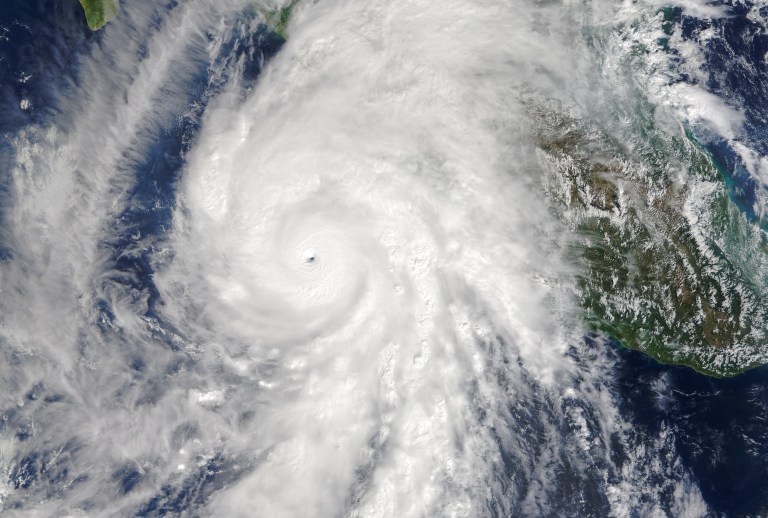
    The collapse of Spirit and broader fuel price surge has created new uncertainty for Jamaica’s recovering tourism sector, which has been slowly rebuilding since Hurricane Melissa struck in October 2025. Jamaica has seen steady gains in passenger traffic in recent months, with Sangster International Airport, which handles 70% of the country’s tourist arrivals, welcoming more than 358,000 passengers in March and 917,400 in the first quarter.

    However, industry leaders warn that rising fuel costs and reduced airline capacity are already starting to impact forward bookings to Jamaica, with multiple carriers quietly cutting unprofitable routes to the Caribbean. Richard Pandohie, CEO of Jamaican manufacturing and hospitality conglomerate Seprod Limited, recently noted on social media that airline route cuts driven by fuel costs are already affecting the region, including Jamaica, with changes happening quietly without major public announcements. Major global carriers have already announced deep capacity cuts: Lufthansa will cancel 20,000 short-haul flights through October, while Air Canada has suspended service between Montreal and New York City.

    The turbulence comes as Jamaican hospitality continues to reset after Hurricane Melissa, with multiple major resort groups pushing back reopening timelines for damaged properties. Hyatt Hotels has delayed the reopening of its eight Jamaican all-inclusive resorts from November 2026 to the first quarter of 2027, saying the adjusted timeline allows the company to continue supporting employees through continued pay, benefits and training while maintaining a core on-site team ahead of a full restart. Sandals Resorts International has also pushed back the reopening of three damaged properties from May 2026 to November and December 2026, using the extra time to complete full-scale renovations of the resorts ahead of reopening. Four Royalton properties are on track to reopen between August and September 2026, while Bahia Principe Grand Jamaica is scheduled to resume operations in December 2026, per Jamaica’s official tourism board website.

    Beyond fuel price volatility and airline consolidation, Jamaica’s hospitality sector faces an additional upcoming headwind: a planned increase in the general consumption tax on tourism services, which will rise from 10% to 15% in April 2027.

  • Ecological study ongoing as Black River Hospital rebuild gains ground

    Ecological study ongoing as Black River Hospital rebuild gains ground

    BLACK RIVER, St Elizabeth – Nearly seven months after Category 5 Hurricane Melissa devastated key public infrastructure across Jamaica, the large-scale recovery effort at Black River Hospital is moving ahead at a faster-than-expected pace, with construction teams focused on delivering a more storm-resilient facility to reverse widespread disruptions to regional healthcare services.

    During an on-site inspection tour Thursday alongside senior leadership from the Southern Regional Health Authority (SRHA), Health and Wellness Minister Dr. Christopher Tufton shared updated details on the rebuild, confirming that core medical services are on track to be restored within the next two months. While a long-term national ecological study is being conducted to assess the flood and storm vulnerability of all public health facilities across the country – a process that could lead to additional major structural upgrades in a final resilience phase – the government’s immediate priority remains restarting full service delivery as quickly as possible.

    “Right now our biggest challenge is getting the entire system back up and running so we can meet the healthcare needs of the community, and so far, the progress has exceeded expectations. The project team has done exceptional work moving this forward,” Tufton told reporters during the tour.

    Construction crews are currently working to wrap up upgrades to key facilities on schedule. The hospital’s male and female inpatient wards, rebuilt with reinforced structural materials to withstand future extreme weather events, are expected to open to patients by the end of June. Two operating theatres, which also received full overhauls, are on track to be commissioned and put into service in just two weeks.

    Tufton explained that the rebuilt facility incorporates far more robust engineering than the original structure. “Construction is well advanced: we are preparing to install reinforced metal roofing and a reinforced concrete slab designed to withstand hurricane-force winds and flooding, so this will be a much stronger, safer facility for both patients and staff,” he said. “Inside the two operating theatres, surgical lighting is already being installed and final finishing work is underway. That means we will once again be able to perform routine and emergency surgeries right here at Black River Hospital, in a fully updated facility.”

    Melissa made landfall in Jamaica on October 28, 2025, leaving a trail of destruction across the island. Black River Hospital was one of the hardest-hit major government facilities, forcing the facility to suspend most core services and divert patients to nearby hospitals for months.

    In addition to the main hospital reconstruction, the project team has already completed renovations to on-site staff quarters. Tufton noted that part of the newly restored staff housing will be repurposed temporarily to expand outpatient services, while the remaining space will be used for staff accommodation. When the full hospital rebuild is complete in 6 to 8 weeks, the facility will have nearly 150 inpatient beds available, a capacity upgrade that will significantly ease the overcrowding and patient backlogs that have plagued neighboring facilities since the storm.

    “This restoration will take huge pressure off Mandeville Regional Hospital, Percy Junor Hospital in Manchester, and Savanna-la-Mar Public General Hospital in Westmoreland, all of which have absorbed thousands of extra patients from St Elizabeth since Hurricane Melissa hit,” Tufton explained.

    The recovery effort extends beyond the main hospital to community care across the parish. Of the 23 public health centers serving St Elizabeth, 10 suffered severe damage during the storm. Only the Black River Health Centre remains out of its original building, but Tufton confirmed reconstruction is on schedule to wrap up in one month, allowing services to move back to the permanent facility. Currently, the health center is operating out of a temporary container-based facility on the original compound, and the operation has been running smoothly.

    Tufton projected that all 23 health centers across the parish will be fully operational by the end of May or early June. Currently, around 80 percent of primary care patients have returned to their local community health centers, but the ministry is launching an outreach effort to encourage more residents to resume routine care, after many avoided seeking services in the wake of the storm.

    “We understand the trauma that the people of this parish have been through, but we cannot let that lead to people neglecting their ongoing health needs,” Tufton said. “We don’t want people putting off chronic disease management, life-saving screenings, or access to their prescription medications. That’s why I’ve challenged the local health team to conduct targeted community outreach, to encourage mothers, children, and elderly residents to return to their local health centers for the care they need.”

  • From PEP to peril

    From PEP to peril

    Last week, as students across Jamaica sat down to begin their high-stakes Primary Exit Profile (PEP) Grade 6 examinations, the parents, teachers and school administrators gathered to support them carried far more than just the usual worry about academic performance. Hanging over the moment was a deep, shared anxiety about what comes after the test: the transition to high school, amid a spate of well-publicized violent incidents that have shaken public confidence in campus safety.

    Recent high-profile attacks have put school violence at the top of Jamaica’s public conversation. In one case, a student at Seaforth High was fatally stabbed by a peer following an off-campus dispute that escalated; in another, a graphic video showing Jamaica College students assaulting a classmate went viral across social media. Jamaica’s Ministry of Education has publicly condemned both events, reaffirming its long-held zero-tolerance policy for campus violence and restating its commitment to building and maintaining safe learning environments. But this official reassurance has done little to ease the fears of caregivers gearing up to send their children to secondary school.

    On the opening morning of last Thursday’s PEP assessments, multiple parents and school leaders at Portmore primary schools, located in St Catherine, shared their concerns with the Jamaica Observer. Ongoing reports of violence have left them uneasy, they said, and many are now actively restructuring how they select high schools for their children: academic excellence is no longer the sole priority, with campus safety now weighing equally heavily in their decisions.

    For 11-year-old Liam Richards, one of the sixth-graders preparing to move to high school, the anxiety is personal. He has already begun mentally preparing to navigate a campus plagued by bullying and violence, and he issued a direct plea to older students: end the violence to build safer learning spaces for incoming students. Speaking about his own approach, the quiet, unassuming student said he expects to adjust his personality to avoid becoming a target, toughening up to deter bullies. While guidance counselling has helped him understand that many bullies act out due to unaddressed personal trauma, he stressed that hardship never justifies harm. Instead of engaging in physical retaliation, he encouraged targeted students to fight back by reporting incidents to administrators and excelling academically.

    Reverend Dr Alvin Bailey, chairman of the board at Kensington Primary, argued that the scope of the crisis is being deliberately understated. He called on high school leaders to stop hiding incidents to protect institutional reputations, saying transparency is the only way to implement meaningful, targeted interventions to curb violence. Bailey also highlighted a underreported dimension of the crisis: violence directed at teaching staff, an issue he said demands urgent, targeted action.

    Official data obtained by the Sunday Observer from Jamaica’s National Children’s Registry, a division of the Child Protection and Family Services Agency (CPFSA), paints a sobering picture of the scale of bullying in recent months. Between January 1 and March 26 of this year alone, 49 bullying incidents were officially recorded across the country: 22 in January, 11 in February, and 16 in March. Between January 2022 and January 2023, the Ministry of Education and Youth received 55 mandatory critical incident reports, the vast majority linked to campus violence. Of those 55 incidents, 35 occurred at high schools and 15 at primary schools, dispelling the myth that violence is exclusively a secondary school problem. The 2023 Jamaica Violence Against Children and Youth Survey (VACS) further underlined the scope of gang activity in schools: among school-attending children and youth aged 13 to 24, one in four females and one in three males reported knowing of active gang presence on their campus.

    For Janice Richards, mother of a sixth-grade student with a seizure disorder that can be triggered by physical stress or attack, the crisis is a source of constant panic. She has already removed any high school with a documented history of violence from her shortlist of options, a choice she says is the only way to reduce her son’s risk of harm. “They always tell you that when you’re going into high school you are going to get roughed up, but I think nowadays these kids are taking it to a different level,” she told the Sunday Observer.

    Mario-Lyn Anderson, a sixth-grade teacher at Greater Portmore Primary, confirmed that this shift in priority is widespread among parents at her school. “To some extent, parents are saying, ‘I don’t want my child to go to that school because of what I am seeing in the news or because of what I have known over the years,’ so with school selections parents were very careful in how they selected their schools,” she explained. Anderson also shares the widespread anxiety, noting that while some students are confident and able to defend themselves, many vulnerable, sheltered children face far greater risk as they transition. She also raised urgent questions about the lack of clear protocols for teachers facing violence from students, pointing out that educators are caught between conflicting expectations: if they walk away from an attack they are labeled weak, but if they defend themselves they face disciplinary action from school leaders or the ministry.

    Many parents have turned to early character education as a first line of defense. Warren Walford, a member of Ascot Primary School’s Parent-Teacher Association and a parent of a PEP candidate, stressed that caregivers must instill strong values in children long before they reach high school, and build open lines of communication so children feel comfortable reporting problematic incidents. Parents Ricardo Duckett and Kemeshia Grant Swaby have already adopted this approach. Duckett, who leads a local youth group, hosts regular community events to encourage positive development, and teaches his son to refuse to bully others and to report bullying immediately to school leaders. For Grant Swaby, whose daughter attends Kensington Primary, her approach is rooted in faith; she says it is “heart-wrenching” to see the violence unfolding in Jamaican schools, but she relies on prayer to ease her anxiety as her daughter prepares to transition.

    Kensington Primary Principal Christine Hamilton acknowledged that parents’ fears are well-founded, and noted that violence and bullying are not limited to high schools — they are increasingly present in primary education as well. Her school has prioritized early intervention, working closely with parents and teachers to identify behavioral challenges early, before students transition to secondary school. The school also hosts regular information sessions for parents to help them prepare their children for the social and safety challenges of high school.

    Jamaican education officials have implemented a range of interventions to address the crisis. In October 2023, the Ministry of Education launched BullyProofJA, a national digital campaign designed to reduce bullying across schools and communities. The government’s Safety and Security Policy guides ongoing interventions, including counselling for at-risk students, development of campus emergency response plans, clear role assignment for students, parents and community stakeholders, and training in constructive conflict resolution. Under the national Safe Schools Programme, trained school resource officers are also assigned to campuses to address violence, truancy and antisocial behavior. Jamaica is also a signatory to the United Nations Convention on the Rights of the Child, whose Article 19 enshrines children’s right to protection from all forms of violence, and requires state parties to implement legislative and social measures to prevent abuse, support victims and build safe, inclusive learning environments.

    Despite these official efforts, Bailey remains unconvinced that enough is being done at the high school level. “I’m not convinced that the high schools are doing all to contain and to eradicate violence out of the schools, because they are trying to protect their reputation and maybe their supporters, and because of that they hide the practices and the deviances that are taking place in the high schools, especially the negative practices,” he said. Bailey argued that the public only sees the “tip of the iceberg” of campus indiscipline, and that repeated incidents only prompt short-term, knee-jerk policy reactions rather than sustained, systemic change to address root causes. He stressed that lasting change will require full transparency and collective commitment from all education stakeholders to end the culture of hiding violent incidents.

  • Zorgsector onder druk door braindrain; buitenlandse krachten nodig

    Zorgsector onder druk door braindrain; buitenlandse krachten nodig

    Suriname’s healthcare system is grappling with intense systemic pressure driven by a steady exodus of trained healthcare personnel, a crisis that Health Minister André Misiekaba has publicly acknowledged in official remarks. According to Misiekaba, the shortage of specialized nursing professionals is particularly acute, creating a bottleneck that prevents the country from fully utilizing critical healthcare infrastructure, including operating theaters and intensive care units.

    Speaking before the National Assembly of Suriname, Misiekaba emphasized that the nation cannot resolve its immediate staffing gaps without support from foreign healthcare workers. Currently, around 70 Filipino medical staff are already working at the Academic Hospital Paramaribo, where they have been deployed specifically to offset critical staffing deficits across the facility.

    To expand this short-term relief, the Ministry of Health is currently in active negotiations with a United States-Canadian recruitment firm. The proposed partnership would see the company supply qualified physicians, medical specialists, and specialized nurses to multiple healthcare facilities across Suriname, including the Mungra Medical Center and regional public hospitals that have also reported crippling staff shortages.

    Beyond addressing immediate gaps with foreign personnel, the government is pursuing long-term measures to retain local healthcare workers and grow the domestic workforce. One key priority is rolling out a revised salary scale for nurses, designed to boost compensation for local medical staff and bring their earnings in line with a more sustainable, reasonable income level. The government is also exploring targeted housing solutions to reduce the financial burden on nursing professionals, another step to improve retention of locally trained staff.

    To grow the domestic talent pipeline, the government also plans to expand existing nursing and medical training programs. In addition to upgrading current training offerings, the ministry will launch a pilot nursing education program in the Marowijne district, aimed at training new generations of local healthcare workers to meet the country’s long-term care needs.

  • Belize Just Lost its Most Affordable Flight to the US

    Belize Just Lost its Most Affordable Flight to the US

    On May 2, 2026, low-cost carrier Spirit Airlines abruptly ceased all global operations, bringing an immediate end to the most affordable air route connecting Belize to the United States just six months after the service launched. The sudden shutdown, which came after last-minute negotiations for a $500 million U.S. government bailout fell apart, left thousands of passengers stranded and eliminated the budget-friendly travel option that had been hailed as a major win for Belize’s tourism industry.

    Officials at Philip S. W. Goldson International Airport, Belize’s main air hub, released an official public statement shortly after Spirit’s shutdown confirming that all of the airline’s scheduled flights had been canceled with no advance warning, and all customer service channels for the carrier are now permanently offline. “All Spirit flights have been cancelled, and customer service is no longer available,” the airport’s notice read, echoing Spirit’s own immediate halt to all operations.

    Spirit’s collapse was the culmination of months of mounting financial turmoil that stretches back to mid-2025. The airline first filed for Chapter 11 bankruptcy protection in August 2025, driven by two major pressures: a failed merger deal that would have consolidated its position in the ultra-low-cost carrier market, and skyrocketing global fuel costs that eroded already thin profit margins. Even in bankruptcy, the airline pushed forward with expansion into the Belize market, launching three weekly nonstop flights between Fort Lauderdale, Florida and Belize City in November 2025 with an introductory one-way fare of just $85.

    At the time of the route’s launch, Belize’s Minister of Tourism Anthony Mahler celebrated the new service as a transformative development for the country’s travel sector. By introducing a low-cost competitor to existing carriers serving the route, Mahler noted that Spirit would put downward pressure on ticket prices across the board while giving budget-conscious travelers a much-needed new option. “This will keep them a bit honest and give travellers an option at least,” Mahler said in November 2025.

    That budget option disappeared entirely over the weekend of May 2, as bailout negotiations between the Trump administration and Spirit’s bankruptcy stakeholders collapsed. U.S. Transportation Secretary Sean Duffy confirmed that administration officials had explored a potential rescue package, but President Donald Trump signaled caution ahead of the final talks, telling reporters on Friday that “I guess we’re looking at it. If we could do it, we do it, but only if it’s a good deal.” That deal ultimately never materialized, leading to the airline’s immediate shutdown.

    Travel officials have issued urgent guidance for passengers who held existing bookings on Spirit: anyone with upcoming travel plans on the carrier is advised not to travel to their departure airport, and should rebook their travel on a different airline as soon as possible. For Belize’s tourism industry, the loss of Spirit’s low fares is expected to create immediate headwinds, as the country relies heavily on U.S. travelers for a large share of its tourism revenue.

  • Pierre encouraged by T&T talks

    Pierre encouraged by T&T talks

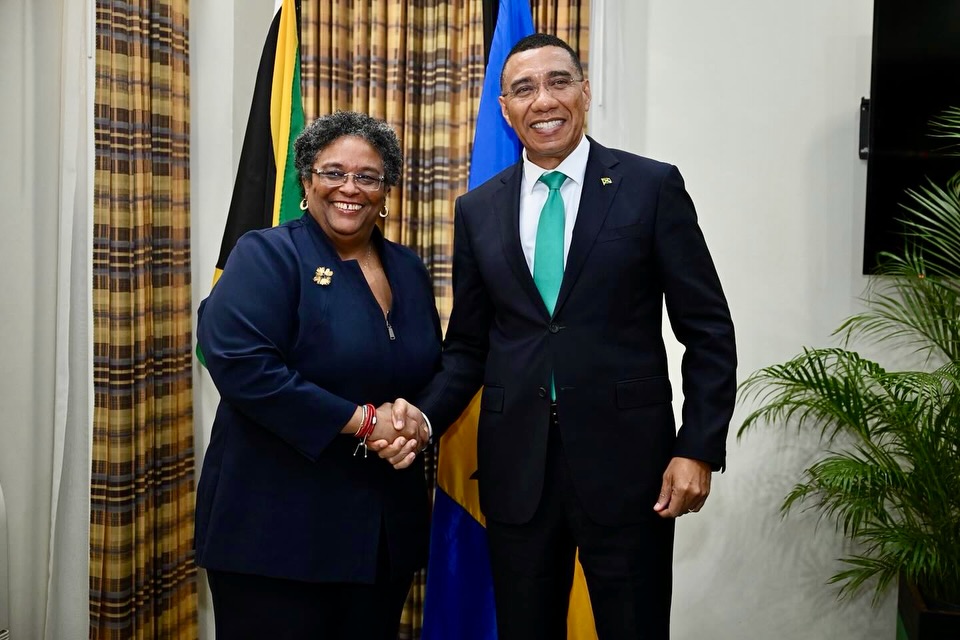
    In a diplomatic meeting held Friday on the soil of the twin-island republic of Trinidad and Tobago, top leaders of two Caribbean nations have wrapped up constructive bilateral discussions, with Saint Lucia Prime Minister Philip J Pierre praising the collaborative spirit that defined the high-profile engagement.

    The talks come against a backdrop of growing regional attention: recent public friction has emerged between Trinidad and Tobago Prime Minister Kamla Persad‑Bissessar and the Caribbean Community (CARICOM), the 15-nation regional integration bloc. Meanwhile, Pierre is just weeks away from taking over the rotating chairmanship of CARICOM, set to assume the post on July 1. Ahead of the meeting, Pierre has long maintained that open dialogue is the simplest and most effective path to resolving the interconnected challenges facing the regional bloc, noting that many common hurdles “can be addressed by just talking to each other.”

    Official details released by the Office of the Prime Minister of Trinidad and Tobago confirm that the discussions centered on two core priorities: boosting bilateral ties between the two island nations, and unlocking new pathways for collective advancement across CARICOM. On his official Facebook page, Pierre’s team framed the meeting as a reaffirmation of the deep, long-standing bond between the two sister countries, a relationship rooted in shared colonial history, reciprocal respect, and an aligned vision for equitable regional growth.

    During the talks, the two leaders mapped out plans to expand joint work across a slate of high-impact sectors, including cross-border energy trade, tourism promotion, public health collaboration, cultural exchange, and digital development through information and communications technology. They also held a broad exchange of perspectives on advancing deeper regional integration and strengthening CARICOM’s collective ability to withstand global economic and geopolitical shocks, at a moment when the international landscape grows increasingly unpredictable.

    In closing remarks after the meeting, Pierre emphasized that the entire engagement was guided by a shared commitment to progress. Both leaders left the talks united in their pledge to deepen bilateral collaboration, delivering tangible benefits to their respective populations and supporting broader prosperity across the entire Caribbean region.

  • API head sent on leave over ‘genuine error with malicious intent’

    API head sent on leave over ‘genuine error with malicious intent’

    Five months after a historic transfer of power in Saint Vincent and the Grenadines, a administrative misstep at the country’s official public information agency has sparked political controversy and led to the immediate placement of its acting director on administrative leave.

    The chain of missteps began on a Tuesday earlier this month, when the Agency for Public Information (API) distributed an unsigned media advisory inviting reporters to a press conference hosted by newly elected Prime Minister Godwin Friday, leader of the New Democratic Party (NDP). But in a startling mix-up, the advisory incorrectly labeled longtime former Prime Minister Ralph Gonsalves — who had left office five months prior after the NDP’s election win — as the sitting prime minister. Gonsalves, who led the country for 24 and a half years from March 2001 through November 2025, now serves as leader of the opposition Unity Labour Party (ULP).

    Within hours, the API issued a second email asking media outlets to discard the original advisory. In that follow-up, acting director Nadia Slater made an unusual public admission that amplified the controversy: she described the mistake as “a genuine error with malicious intent” — a phrasing that immediately sparked widespread backlash. The agency quickly issued a third, formal press release-style correction to walk back the comment, clarifying that the blunder was purely an accidental administrative oversight. “There was NO disrespect, political motive, or malicious intent whatsoever,” the third statement emphasized.

    The series of missteps, quickly dubbed a “comedy of errors” by observers, went viral on social media after local outlet iWitness News and other independent media organizations broke the story of the gaffe. As of Monday, the NDP administration has not issued any formal public comment on the incident or subsequent personnel action. However, multiple unnamed government and industry sources confirmed to iWitness News that just days after the incident, Slater was placed on paid administrative leave. One source added that Slater is unlikely to retain her leadership role at API under the current NDP administration, and will likely be reassigned to an equivalent-level position within the broader public service, consistent with civil service protocols.

    The incident has reignited questions about the NDP administration’s decision to retain Slater as acting head of the sensitive government communications agency five months after taking power. One anonymous source familiar with internal government discussions told iWitness News that the choice to keep Slater in the role has long puzzled insiders, pointing to her well-documented partisan ties.

    “It is not just that she campaigned openly for the Unity Labour Party during the 2025 election. Her actions after the election showed a particular disdain for the new government, even as she was head of the agency responsible for portraying the government in a positive light,” the source said, speaking on condition of anonymity as they were not authorized to address the media on the matter.

    The source also noted that even the ULP, the party Slater openly supported, never appointed her to the permanent director role, passing her over for promotion at least three times in favor of external hires. Among those external appointees was Sean Rose, a former NDP hopeful who crossed party lines after an unsuccessful 2020 bid for the South Central Windward parliamentary seat, and went on to publicly back the ULP.

    “These people include Sean Rose, who began supporting the ULP after his failed bid to become the NDP’s candidate in South Central Windward in the 2020 general election. Nadia was skipped over at least three times under a government that she supported but the NDP government kept her in the sensitive communication post for five months after they won,” the source added.