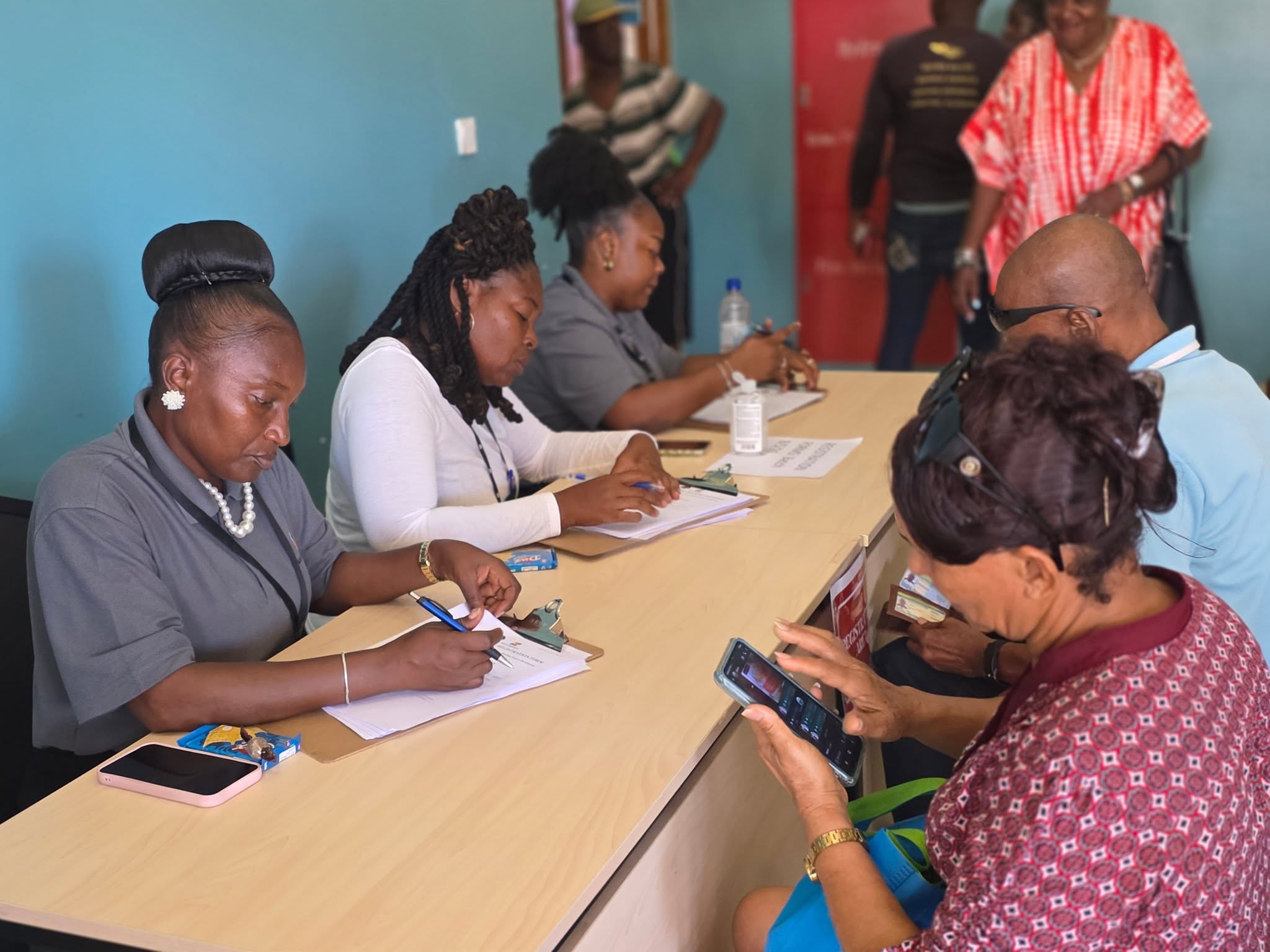
Antigua and Barbuda’s public health program focused on senior vision health, the Prime Minister’s Vision Initiative, has marked a key milestone: more than half a thousand pairs of free reading glasses have been placed in the hands of eligible residents since the program launched. Targeted at adults aged 40 and above, the initiative delivers more than just free corrective eyewear — it also provides complimentary comprehensive vision screenings to participants, with glasses distributed only to those who are found to need them for daily reading tasks.\n\nWith the program still open to new participants, the nation’s Ministry of Health has issued a public call encouraging all qualifying residents who have not yet accessed these no-cost services to visit the Villa Community Center. The service is available consistently during regular workdays, operating from 9 a.m. to 3 p.m. Monday through Friday to accommodate varying schedules.\n\nAt its core, the public health initiative is rooted in a straightforward but impactful goal: addressing unmet vision needs among older residents to boost both their eyesight and overall quality of life. Many adults over 40 develop age-related vision changes that make reading and close-up work difficult, and lack of access to affordable screenings and glasses can limit daily activities, from reading medication labels to enjoying books. By removing cost barriers to these essential services, the initiative is helping fill gaps in accessible vision care for the country’s senior population.
作者: admin
-

Antiguans Ajenai Charles and Kha-Lique Harris Selected for Prestigious Caribbean STEM Programme
Two promising young scholars from Antigua and Barbuda, Ajenai Charles and Kha-Lique Harris, have earned the opportunity to represent their home country at the 2026 Student Program for Innovation in Science and Engineering (SPISE), one of the Caribbean’s most competitive residential STEM development initiatives. Organized by the Caribbean Science Foundation, the five-week immersive program is designed to unite high-achieving young STEM talents from across the Caribbean region, nurturing their existing skills and passion for science, technology, engineering and mathematics. Gaining entry to SPISE is no small feat: Charles and Harris outperformed many peer applicants through a rigorous multi-stage selection process that evaluated candidates on academic transcripts, secondary education CSEC examination results, teacher recommendations, personal application essays and in-person interviews. Over the course of the program, participants will engage with rigorous university-level coursework spanning a diverse range of critical STEM and related fields, including physics, advanced calculus, biochemistry, robotics, computer programming and entrepreneurial studies. Beyond classroom learning, the program prioritizes building soft skills that are key to long-term career success, with structured activities designed to strengthen leadership capabilities, collaborative teamwork and professional communication. A unique highlight of the initiative is the opportunity for students to connect directly with admissions representatives and seasoned STEM professionals from some of the world’s top higher education institutions, including the Massachusetts Institute of Technology, Princeton University, Columbia University, the University of Pennsylvania, Canada’s University of Waterloo and McMaster University. For Antigua and Barbuda, the selection of Charles and Harris cements the country’s place among the group of regional nations participating in the program, while also shining a spotlight on the exceptional untapped potential of the country’s emerging generation of young STEM leaders.
-

Gregory ‘Driftwood’ Athill Re-Elected President of Antigua National Taxi Association
Antigua’s national body representing taxi operators, the Antigua National Taxi Association (ANTA), has formally confirmed Gregory Shoy “Driftwood” Athill’s return to the presidency after the organization’s biennial general election held on August 5.
Leading his campaign under the “Dedicated to Excellence” banner, Athill earned a clear, decisive win against competing candidates, locking in a second consecutive term to lead the industry group. He first took office in 2024, when he ran on a platform focused on organizational restructure and cross-member unity. Over his first two-year tenure, Athill prioritized two core goals: shoring up ANTA’s financial standing and strengthening its internal governance structure.
Early results from these efforts have been striking: association data confirms ANTA’s total assets have tripled since Athill took office, alongside notable improvements to both member-facing services and long-term financial stability. Beyond operational and financial reforms, Athill’s administration rolled out ongoing hospitality and customer service training programs for all licensed taxi operators, a initiative designed to elevate the experience of international visitors to Antigua and Barbuda, a key driver of the nation’s economy.
In his post-election acceptance speech, Athill opened by extending gratitude to his executive leadership team and the association’s full membership for the trust they placed in his leadership. He framed the election outcome as more than a personal victory, calling it “a victory for unity, professionalism, and the continued advancement of the Association.”
Athill also singled out the Antiguan government and Prime Minister Gaston Browne for recognition, highlighting the administration’s commitment to allocate land to ANTA through the Ministry of Agriculture— a step he described as a historic milestone for the association that will support its long-term growth. He additionally acknowledged Tourism Minister Charles Fernandez and the Antigua and Barbuda Tourism Authority for their consistent collaborative partnership with ANTA on industry and tourism development efforts.
-

Understanding China’s Development Philosophy and Model Through the 2026 World Artificial Intelligence Conference
Between July 17 and 20, 2026, Shanghai played host to two landmark events: the 2026 World Artificial Intelligence Conference and the High-Level Meeting on Global AI Governance, drawing global attention to China’s evolving role in shaping the future of artificial intelligence. Chinese President Xi Jinping delivered a foundational keynote address at the opening ceremony, laying out a comprehensive, systematic framework for China’s policy stances, long-term visions, and collaborative propositions for both AI development and global governance frameworks.
This year’s conference stands as one of the largest global AI gatherings in recent history, with more than 1,100 participating enterprises from across the world bringing their cutting-edge innovations to the exhibition floor. Over 300 new technologies and products made their global debut at the event, with a total of 4,400 distinct exhibits on display. Attendees and virtual observers gained a full, immersive overview of the most advanced breakthroughs in AI across every major subfield, showcasing how rapidly the technology is advancing globally.
Centered on the unifying theme “AI Partnership for a Brighter Future,” the conference served dual purposes: it highlighted the most exciting recent technological leaps in the sector, while also creating critical space for global stakeholders to build shared consensus around responsible AI governance. Beyond technology and policy, the event also functioned as a key global window for the international community to understand the governing approach of the Communist Party of China (CPC) as China’s ruling party.
Tracking China’s decades-long strategic approach to AI reveals the CPC’s consistent, long-term vision and unwavering commitment to executing planned development roadmaps. The trajectory of China’s AI strategy stretches back to 2017, when the government released its landmark New Generation Artificial Intelligence Development Plan, establishing the first national strategic framework for the sector. Between 2021 and 2025, national investment and research focused heavily on closing gaps in foundational algorithms and core hardware technologies, addressing key bottlenecks that limited industry growth. Now, as China enters the 15th Five-Year Plan period spanning 2026 to 2030, the national strategy has shifted to full-scale implementation of the “AI+” initiative, which aims to empower nearly every sector of the national economy through digital and intelligent transformation. Throughout this entire trajectory, the CPC has consistently positioned AI as a core strategic driver of the ongoing global scientific and technological revolution, adapting policy to keep pace with rapid industry changes.
To turn the “AI+” initiative from a strategic plan into tangible progress, China has rolled out a series of targeted supporting measures across the public and private sectors. These include the construction of a national integrated computing power network that connects data and processing resources across every region of the country, targeted support for specialized small and medium-sized “Little Giant” technology enterprises, official approval for a network of national AI innovation and application pilot zones, and expanded investment in AI-related academic programs and talent training at universities across China. This consistent, long-term investment has already yielded impressive results: in early 2025, China’s open-source DeepSeek-R1 large language model stunned global AI researchers with its performance, and today the model reaches daily token usage on the scale of quadrillions, demonstrating the sustainable momentum of China’s AI sector to keep hitting new milestones.
The widespread adoption of AI across China’s economy also makes clear the CPC’s enduring commitment to its core “putting the people first” governing principle. Guided by the overarching philosophy that technology should serve the public good, the ruling party has focused on harnessing artificial intelligence to improve public well-being, embodying its core governing commitment that development is for the people, relies on broad public participation, and delivers shared benefits to all people.
Today, AI has been deeply integrated into nearly all key sectors of China’s economy, from manufacturing and agriculture to healthcare and finance. AI-powered tools have improved access to public services across geographic and demographic divides: city-wide smart governance platforms streamline administrative processes, cross-provincial smart government services eliminate the need for citizens to travel to access official documents, remote smart healthcare brings specialist care to rural and underserved regions, and shared smart educational resources expand learning opportunities for students regardless of location. As intelligent agricultural equipment, accessible voice assistants for people with disabilities, and other smart devices enter ordinary households across urban and rural China, technological innovation is being converted into tangible, daily improvements to people’s quality of life at an accelerating pace. Today, “Intelligent Manufacturing in China” has emerged as a new calling card for Chinese modernization, showcasing how inclusive technological progress can drive national development.
On the global stage, China’s approach to AI cooperation and governance reflects the CPC’s broader vision of building a global community with a shared future for mankind. China consistently upholds a people-centered approach to global AI development, emphasizing that all advances in the sector should ultimately work to improve human well-being. The country firmly opposes technological decoupling, blockades, and the exclusionary “small yard, high fence” strategy pursued by some major powers, and has repeatedly called for greater representation and a stronger voice for developing countries in global AI governance rule-making.
Artificial intelligence stands as a unique, invaluable product of humanity’s collective scientific ingenuity. With a clear global vision, the CPC has tied the development of China’s AI sector to the broader progress of AI development across the world, linking the destiny of the Chinese people to the well-being of people in all countries. China stands ready to build extensive, inclusive AI cooperation with every country around the world – including small island developing states like Antigua and Barbuda – to align development strategies, coordinate governance frameworks, align technical standards, and ensure that the benefits of intelligent innovation are shared broadly across all of humanity. Through this collaborative approach, China is working with global partners to build a fair, equitable, and inclusive global AI governance system that works for all countries.
-
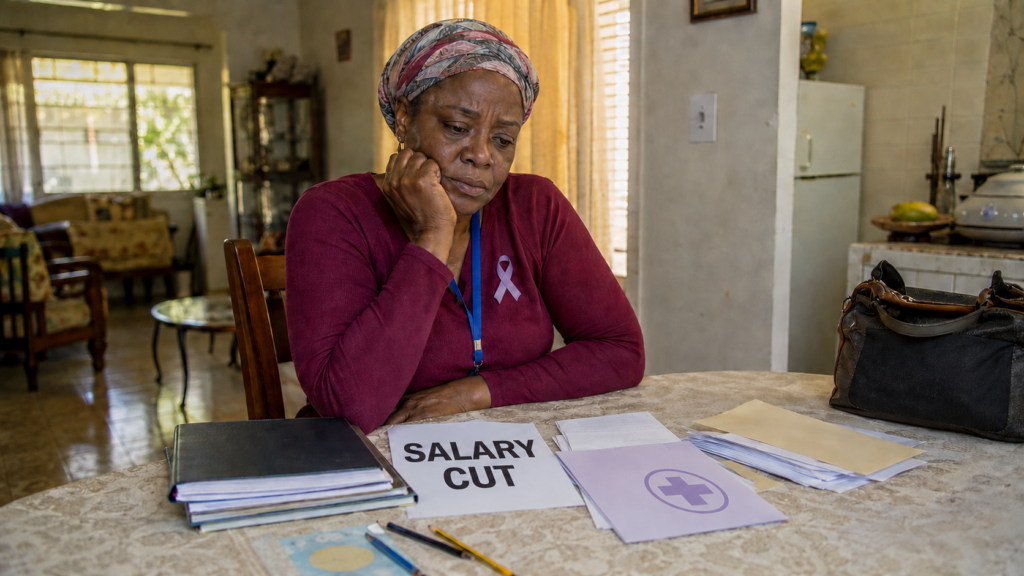
LETTER: Should Teachers battling cancer receive salary cuts?
For any teacher diagnosed with a life-threatening illness like cancer, the struggle is not confined to hospital wards and treatment rooms. Beyond fighting for their health, they must also navigate overwhelming pressures to protect their dignity, retain financial stability, and cling to hope for the future. Tragically, hundreds of dedicated educators across the country are being forced to take on a second, entirely unnecessary battle: against unfair government policies that slash their salaries while they pursue life-saving medical care.
What makes this situation even more alarming is that policymakers have long been aware of a critical gap in local healthcare: many specialized cancer treatments are simply not available within the country’s borders. As a result, sick teachers are often required to travel abroad to access urgent chemotherapy, radiation therapy, specialized surgery, or consultations with leading oncology specialists. These trips are not unplanned leisure travel or discretionary choices—they are matters of life and death, taken only out of absolute necessity.
Even with this well-documented reality in mind, educators who have spent years, and often decades, nurturing the nation’s children continue to see their incomes cut mid-treatment. The impact of this policy stretches far beyond simple financial inconvenience: for many families, it is catastrophic, leaving them uncertain how they will cover mortgage payments, put food on the table, or pay for the costly international travel required for care. Morally, this policy is indefensible: no one fighting for their life should have to shoulder the extra burden of financial ruin on top of their illness.
Teachers have long poured their energy and resources into the country’s future, going far beyond their formal job descriptions to support students. They comfort distressed children, work unpaid overtime after the school bell rings, frequently buy basic classroom supplies with their own money, and stay committed to their work even amid low pay and constant systemic challenges. When illness strikes, these public servants deserve to know their government will stand with them—not add to their suffering.
Public institutions are meant to embody core values of fairness, compassion, and basic humanity. Current policies that penalize teachers with salary cuts for seeking medically necessary care for catastrophic illnesses demand immediate review and revision. A responsible, compassionate government does not punish its employees for falling seriously ill. Instead, it guarantees they have the stability and support they need to focus on recovery, without the added weight of financial insecurity hanging over them.
This issue extends far beyond the individual teachers currently affected. It is a test of our society’s values: how do we treat people who have dedicated their entire working lives to serving our communities? If we fail to support teachers during the darkest period of their lives, what message does that send to every public servant who shows up to work faithfully every day? It is also not limited to cancer patients: educators battling all forms of life-threatening illness are currently impacted by these unfair cuts.
The relevant government ministry now has a clear opportunity to correct this injustice. Leaders should open dialogue with teacher union representatives, conduct a full top-to-bottom review of harmful existing policies, and implement new protections that shield educators facing catastrophic illness. Compassion is not a sign of weakness—it is the defining mark of responsible, ethical leadership.
Our teachers have spent their careers caring for our children. Now it is time for leaders in power to show up for these educators when they need support most. No educator fighting for their life against cancer or any other serious illness should also have to fight to keep the full salary they earned through decades of dedicated public service.
-
Jogi wil openheid over miljoenensteun aan SLM
A ruling party parliamentarian in Suriname has formally pushed the national government to open its books on public funding allocated to Suriname’s flag carrier, Surinaamse Luchtvaart Maatschappij (SLM), calling for full clarity on how much taxpayer money the airline has received and what tangible outcomes have been delivered with that support.
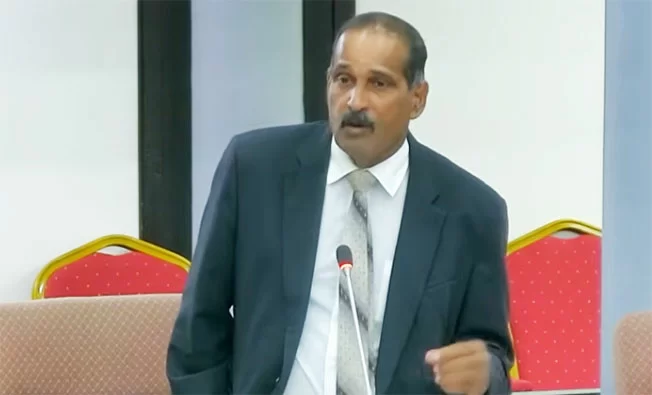
Mahinder Jogi, a member of the National Assembly for the VHP party, raised a series of formal questions during Thursday’s plenary session focused on current affairs, pressing the administration of President Jennifer Simons to answer for the ongoing subsidies flowing to the struggling state-owned airline.
Jogi opened his questioning by recalling a core campaign pledge from President Simons ahead of her inauguration: before taking office, Simons positioned both the revitalization of SLM and the expansion of Suriname’s tourism sector as top policy priorities for her administration. Despite that promised focus, Jogi told the assembly that the public has been given no clear accounting of how public funds allocated to the airline have been used.
According to Jogi, SLM currently receives millions of U.S. dollars in government support every single month. The parliamentarian put forward a direct targeted question to the cabinet: what is the full cumulative sum of subsidies that SLM has received over the first full year of the Simons administration?
Beyond the total amount of funding, Jogi is demanding details on the concrete progress that has been delivered with the public investment. He has asked the government to confirm whether the airline’s overall financial standing has actually improved following a year of sustained subsidies, whether the carrier has added new jobs to its workforce, and whether any foreign consulting firms have been contracted with the public funds.
Jogi has formally requested that the executive branch provide the National Assembly with a complete, detailed response to his questions as quickly as possible, to meet basic standards of parliamentary and public transparency.
-
Beckles challenges PM’s ‘15,000 jobs’ claim
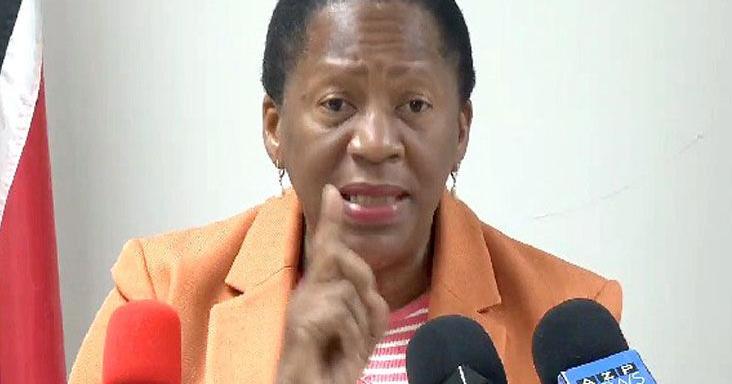
A deep political rift over Trinidad and Tobago’s employment landscape has erupted, as Opposition Leader Pennelope Beckles has publicly called into question Prime Minister Kamla Persad-Bissessar’s bold assertion that the current administration has added 15,000 new jobs to the national economy over a 12-month period.
Speaking at the Opposition’s weekly press briefing in Port of Spain on the previous day, Beckles anchored her challenge in official data released by the country’s Central Statistical Office (CSO). The official figures, she confirmed, show that total employment across the nation dropped by 5,900 positions between the final quarter of 2025 and the first quarter of 2026. Over the same window, the national unemployment rate climbed from 4.3% to 5.4%, with female workers bearing a disproportionate share of the employment decline.
Beckles rejected the government’s attempt to frame the contraction as a routine seasonal shift tied to post-Christmas holiday hiring patterns, noting that job cuts rippled across nearly every major sector of the national economy. CSO data, she said, recorded employment declines between January and March 2026 in petroleum and gas, mining and quarrying, manufacturing, utilities, construction, transportation and logistics, communications, community services, and agriculture. This broad-based drop directly contradicts the Prime Minister’s claim of 15,000 net jobs created between April 2025 and April 2026, she argued.
She also brought attention to Persad-Bissessar’s own admission that two major government work programs, CEPEP and URP, have been severely undermined by systemic inefficiency and widespread corruption. In a direct challenge to the Prime Minister, Beckles asked: “I want to ask the Prime Minister whether or not the Prime Minister stands by the figures that they have produced, 15,000 jobs delivered?”
Beyond the immediate 15,000 job claim, Beckles raised new doubts about the government’s core election pledge to create 50,000 new jobs during its term, noting that the latest official figures make meeting that target increasingly unlikely. She added that opposition constituency offices across the country continue to be flooded with requests from unemployed constituents seeking work, saying: “They can tell you the category when persons come to their offices. What are people coming for? Books and uniforms, jobs, jobs, jobs. But this Government will have you believe that they have created so much jobs.”
Beckles also pushed back against claims attributed to Persad-Bissessar that recent job losses stemmed from the elimination of so-called “ghost programmes” — state-funded schemes riddled with criminal activity and corruption. She argued that these remarks unfairly stigmatize thousands of innocent workers who have lost their livelihoods, calling on female workers, who have seen the steepest employment drops, to take note of the prime minister’s characterization. While Beckles acknowledged that a small share of working-age citizens may be unwilling to take up employment, she condemned the government for painting all recently laid-off workers with a broad brush of corruption and idleness: “But you want to tell the people of Trinidad and Tobago, having fired almost 50,000 people, that you want to tell everybody, all of them involved in drugs, everything was freeness, everything was corruption, and everything was ghosts.”
In addition to the broader national employment debate, Beckles criticized the government’s inaction on the looming crisis at Hilton Trinidad, where an unresolved lease dispute threatens to put up to 300 workers out of a job. The union representing hotel staff has confirmed that more than 250 people are currently employed at the property, and workers have been warned that the hotel could close within weeks if the lease is not renewed. Beckles demanded immediate clarity from both the Prime Minister and the Minister of Trade on the status of the lease negotiations to protect the affected workers’ livelihoods.
-

Telemaque backs IDs for easier payments
A proposed national policy that would require all people aged 16 and older — including both local citizens and foreign visitors — to carry valid official identification in all public spaces has sparked a range of responses across Trinidad and Tobago, with stakeholders in the country’s iconic steelpan community largely backing the plan while some members of the public have raised privacy and ideological concerns.
The policy announcement came last Wednesday from Homeland Security Minister Roger Alexander, who confirmed the administration would move forward with drafting and enacting new legislation to formalize the mandatory ID requirement. The proposal has since opened up dialogue across different sectors of society, with steelpan organizers, one of the nation’s most culturally significant community groups, highlighting unexpected practical benefits the rule could deliver for young pannists participating in the country’s world-famous Panorama steelband competition.
Speaking to reporters Tuesday on the sidelines of the launch of two new steelpan-themed tracks — *Unshakeable Queen of Pan* and *Pannists’ Achievements* — held at Port of Spain’s Queen’s Park Savannah, Clyde Telemaque, external relations officer for Pan Trinbago, the governing body for steelpan in Trinidad and Tobago, explained that formal ID would streamline payment processes for minor participants aged 10 to 14 who take part in Panorama events. Telemaque noted that currently, many young pannists lack official identification, which in turn prevents them from opening personal bank accounts. This forces organizers to issue competition payments to parents or guardians, creating confusion and unfair barriers for the young musicians who earned the funds. By requiring ID for all people 16 and up, Telemaque argued, the new policy will build a formal pathway for younger participants to get their own ID and bank accounts, simplifying the entire remuneration process both during and after Panorama events.
Terry Bernard, vice president of Pan Trinbago, also expressed his full support for the policy, saying he backed any measure that he believes will advance national progress. Rejecting reflexive opposition for political purposes, Bernard said the public should extend trust to the elected government to craft policies that serve the public good, adding that he also supports expanded police checkpoints tied to the policy. Beyond the ID rule itself, Bernard tied the policy to Pan Trinbago’s broader mission of drawing more young people into steelbands, framing steelpan communities as sacred local spaces that teach critical values including etiquette, teamwork, and national patriotism while opening life-changing opportunities for children and youth.
Other prominent cultural figures echoed this measured support. Renowned poet Eintou Pearl Springer noted she already carries her ID at all times and has no objection to the mandate, acknowledging that all policies carry both potential benefits and drawbacks but arguing that ordinary citizens should not face undue punishment for minor compliance issues. Roger Thomas, manager of the Curepe-based Moods Steel Orchestra, framed the policy as a progressive step to align Trinidad and Tobago’s public safety framework with international norms, pointing out that similar mandatory ID rules are already in place in the United Kingdom.
Some private citizens also voiced support, with one parent noting that obtaining official ID is a widely accepted rite of passage into adulthood, and that they had already secured an ID for their child independent of the government’s proposed mandate. But not all reactions have been positive. Jason, a Port of Spain taxi driver, argued that the rule is a sweeping surveillance measure that allows authorities to track the movements of all residents. He specifically referenced the recent police manhunt and fatal shooting of escaped prisoner Robby Khadoo in San Fernando as an example of the tracking capabilities the government already holds, and claimed the policy would help authorities restrict the movement of Venezuelan migrants in the country, adding that he believes informants already help police monitor civilian activity. One female member of the public also launched an angry, profanity-laced critique of the policy, directing her anger at opposition leader Kamla Persad-Bissessar over the proposal.
-

Couple charged in Ruiz murder
A violent confrontation in the residential community of Edinburgh 500 South in Chaguanas has ended with the death of 28-year-old Shayanna Ruiz, and a local couple now faces murder charges for their alleged involvement in the July 29 attack. Investigative details paint a clear picture of the sequence of events that led to the fatal incident: Ruiz traveled to a home on Plumbago Circular in the neighborhood to collect a $4,500 debt owed to her by a former boyfriend. What began as a dispute over the unpaid money quickly escalated into a physical altercation, according to official police accounts. After the initial argument broke out between Ruiz and the former boyfriend, his current romantic partner intervened in the conflict. Law enforcement alleges that during the chaotic scuffle, the woman grabbed a black-handled knife and stabbed Ruiz multiple times before fleeing the area together with the man. Emergency responders rushed the critically injured Ruiz to the Eric Williams Medical Sciences Complex in Mt Hope to treat her numerous stab wounds, but medical staff were unable to save her life, and she succumbed to her injuries shortly after arrival. A post-mortem examination conducted after her death officially confirmed the cause of death: cardiopulmonary arrest triggered by multiple penetrating stab wounds. Crime scene investigators processing the area after the attack successfully recovered the black-handled knife that authorities believe was the weapon used in the stabbing. Following their investigation, police took the couple—both residents of Edinburgh—into custody and formally charged them with murder. The pair was scheduled to appear in court to face the murder charge, but as of the most recent update on the case, no official information has been released regarding the outcome of their court appearance. The deadly incident has shaken the quiet suburban community of Edinburgh 500 South, leaving local residents shocked and mourning the death of the 28-year-old victim as the legal process moves forward.
-

Three women leaders to get awards
Five years after launching its signature awards program to celebrate outstanding female changemakers, the International Women’s Forum of Trinidad and Tobago (IWFTT) has announced three distinguished honorees set to receive recognition at its upcoming September Inspirational Women Awards (IWA) Gala. The ceremony will take place September 29 at Port of Spain’s Hyatt Regency Trinidad, shining a spotlight on three women who have driven transformative progress across human rights advocacy, scientific research, and marine conservation.
This year’s gala carries the theme “The Power of Possibility: Celebrating Five Years of Women Who Inspire Change”, a framing that IWFTT President Lisa Agard says aligns perfectly with the work of this year’s awardees. In an official statement announcing the honorees, Agard emphasized that the selection was intentional: these three dynamic, deeply committed women have delivered tangible, lasting change for communities both across the Caribbean and around the globe.
Leading the group of honorees is Roberta Clarke, a veteran human rights defender and gender equality advocate who will receive the Inspirational Champion of Women award. A trained lawyer and social justice activist, Clarke has built a decades-long international career advancing gender-equitable policy with the United Nations, where she led the UN Women Caribbean Office, oversaw the organization’s Libya program, and served as regional director for East and Southern Africa as well as Asia and the Pacific. In these roles, she worked to embed gender-responsive policy and practice into national and regional development frameworks across multiple continents.
Clarke has also held landmark leadership roles in inter-American human rights: she was elected as a commissioner to the Inter-American Commission on Human Rights (IACHR) by the Organization of American States (OAS) General Assembly, and later went on to serve as the commission’s president. She also held the role of IACHR rapporteur for the rights of women, LGBTI persons, and human rights defenders, where she pushed to strengthen legal protections for marginalized groups across the Americas. Holding a Master of Studies in international human rights law from the University of Oxford, a Bachelor of Laws from the University of the West Indies Cave Hill Campus, and a Master of Arts in sociology from Canada’s York University, Clarke currently chairs Trinidad and Tobago’s Coalition Against Domestic Violence.
The Inspirational Advocate Award will go to Professor Christine Carrington, a molecular geneticist and virologist with more than 30 years of pioneering research experience focused on infectious diseases. Based at The University of the West Indies St. Augustine Campus, Carrington is a Chaconia Medal Gold recipient, an honor that recognizes her outstanding contributions to national development. She holds a Bachelor of Science in biotechnology from King’s College London, a PhD in molecular virology from the Institute of Cancer Research, and a postgraduate degree from the University of London.
Carrington’s research centers on unpacking the evolutionary and ecological drivers that shape the emergence, spread, and persistence of viruses, with a specific focus on vector-borne and zoonotic RNA viruses. At the height of the global COVID-19 pandemic, she designed and led the landmark Covid-19 IMPACT project, which built the first local whole-genome sequencing capacity in Trinidad and Tobago and provided critical genomic surveillance of SARS-CoV-2 variants for 17 Caribbean nations while local and regional public health bodies developed their own in-country capabilities. She is currently leading the development of the new One Health Molecular Epidemiology and Genomics (EDGe) Centre at The UWI St. Augustine Campus.
Rounding out the group of honorees is Dr. Diva Amon, an emerging Caribbean leader in marine conservation who will be recognized for her groundbreaking work studying deep-sea and high-sea ecosystems. Amon, a marine biologist with a PhD in ocean and earth science from the University of Southampton, holds research affiliations with the Benioff Ocean Science Laboratory at the University of California Santa Barbara and The UWI St. Augustine Campus. Her work focuses on expanding scientific understanding of understudied deep-ocean ecosystems and documenting how human activity impacts these vast, fragile environments.
Earlier this year, Amon made history as the lead of the “Deep Wonders of T&T and the High Seas” expedition, the first-ever locally led deep-sea research mission in Trinidad and Tobago’s history, and the largest expedition of its kind the country has hosted. The mission successfully mapped and surveyed previously undocumented ecosystems and species in waters surrounding Trinidad and Tobago.
Tickets for the 2024 IWA Gala are available to the public; interested attendees can request more information by emailing IWFTTAD@gmail.com or visiting the IWFTT official website at https://iwftt.org.