作者: admin

  • NaRRA brings heat to the Senate

    NaRRA brings heat to the Senate

    Long stereotyped as the more measured, low-temperature chamber of Jamaica’s bicameral parliament, the Senate transformed into a charged political battlefield on Friday, as sharp ideological clashes erupted over the deeply contentious National Reconstruction and Resilience Authority (NaRRA) Bill. The legislation, which the ruling government is pushing to fast-track in the wake of last October’s catastrophic Category 5 Hurricane Melissa, has split the upper house along partisan lines, pitting demands for urgent disaster recovery against warnings of unchecked executive overreach.

    On one side, government senators frame the NaRRA Bill as a critical, transformative intervention to address the unprecedented devastation left by the storm, which damaged or destroyed infrastructure equal to 56% of Jamaica’s entire annual gross domestic product. On the other, opposition lawmakers have launched a relentless campaign against the legislation, arguing that it concentrates dangerous levels of power in the executive branch, erodes critical oversight safeguards, and sets the stage for future constitutional crises similar to past controversial government policies.

    The most heated exchanges of the day centered on the opposition’s demand that the bill be referred to a joint select committee for expanded cross-party scrutiny and public consultation. Opposition leaders argue that any legislation of this magnitude, which will reshape how post-disaster recovery is governed for years, requires broad input from civil society and communities before it can be signed into law. Government senators have rejected these calls as unworkable, arguing that the urgent timeline of post-disaster reconstruction—paired with the impending start of a new Atlantic hurricane season—leaves no room for months of delay that a lengthy consultation process would bring.

    Leader of Opposition Business in the Senate Donna Scott-Mottley led the charge against the bill, drawing a direct parallel between the NaRRA legislation and the polarizing National Identification and Registration Act (NIDS), which was ultimately struck down in whole or in part by Jamaica’s Constitutional Court over constitutional violations. Scott-Mottley warned that the government is repeating a dangerous pattern of rushing sweeping, high-stakes legislation through parliament despite widespread pushback from civil society groups and the opposition, while refusing to accommodate amendments or address legitimate concerns.

    She stressed that Jamaicans have every reason to fear granting broad, unaccountable powers to a new standalone authority, particularly given the administration’s history of facing successful constitutional challenges to major legislation. Scott-Mottley also directly refuted the government’s core argument that extraordinary new powers are needed to speed up recovery, pointing out that six months after Hurricane Melissa, thousands of impacted residents are still living in inadequate temporary housing, including converted school buildings, despite the existence of existing state disaster response agencies.

    “Did you need a NaRRA to help the people from Westmoreland? Did you fail to help the people from Westmoreland because you had no NaRRA?” Scott-Mottley asked during her speech. “You have people who have just been removed from shelters into surroundings which are far from adequate. You have people who live in a school — hanging out their clothes on a line, and indeed cohabit in the school — because the school has become their home. That is how you deal with people? That is how you handle people who are suffering? And then come to tell me that a strategic investment has people at the heart when for six months they are driving down in St Elizabeth that they say don’t look any different from the day the hurricane hit.”

    Government senators pushed back aggressively against these criticisms, rejecting claims that the bill lacks sufficient accountability guardrails and reiterating that the scale of destruction from Hurricane Melissa demands unprecedented urgency and decisive executive action. Senator Abka Fitz-Henley argued that Jamaica simply cannot afford to drag its feet on reconstruction, noting that at the current pace of standard government capital spending, it would take 25 years to fully repair all damage from the storm.

    Fitz-Henley also pushed back against claims the bill opens the door to corruption, arguing that many of the civil society groups leading criticism of the legislation are secretly aligned with the opposition People’s National Party (PNP) and engaging in selective partisan outrage. Government Senator Kavan Gayle echoed this defense of the decision to bypass a joint select committee, noting that the formal consultation process would require weeks of waiting for submissions, scheduling hearings, and building consensus—time Jamaica does not have as it enters the peak of the annual Atlantic hurricane season.

    Opposition Senator Cleveland Tomlinson countered that speed cannot come at the cost of constitutional checks and balances, warning that the bill grants sweeping authority to a single minister to override existing regulatory bodies without requiring public gazetting, parliamentary reporting, or any formal public record of the action. He also criticized provisions that exempt approved NaRRA projects from key parts of the Public Investment Management System, arguing that the lack of oversight is a deliberate choice that creates an open invitation to mismanagement and graft. “Speed without scrutiny is not efficiency — it is an invitation to waste,” Tomlinson said.

    In an emotional address to the chamber, Government Senator Rosemarie Bennett-Cooper urged lawmakers not to lose sight of the ongoing human cost of Hurricane Melissa, which she said continues to impact thousands of Jamaican families long after the storm passed. “Long after the winds subsided and the floodwaters receded, what remains are not simply damaged buildings and broken infrastructure; what remains are the faces of Jamaicans who are trying to make sense of loss,” Bennett-Cooper said. She also sought to reassure the public that the bill does not seek to dismantle existing development laws or bypass all required regulatory approvals for reconstruction projects.

    Friday’s debate in the Senate marks the latest flashpoint in what has become one of the most divisive legislative fights in Jamaica in recent memory. The debate comes one week after chaotic, overnight scenes in the House of Representatives during consideration of the same bill, highlighting how deeply partisan the proposal has become. If passed, the NaRRA Bill would create a centralized authority tasked with coordinating all post-Hurricane Melissa reconstruction work and streamlining approval for major infrastructure and recovery investment projects across the island.

  • Rose Hall set to bloom

    Rose Hall set to bloom

    Along the quiet outskirts of Montego Bay in St James, Jamaica, a transformative wave of tourism and infrastructure development is reshaping the coastal community of Rose Hall, with local leaders drawing comparisons to the explosive growth that turned St Ann’s Drax Hall into one of the island’s most dynamic economic hubs in recent years.

  • Cop breaks leg in bike crash during escort of IShowSpeed

    Cop breaks leg in bike crash during escort of IShowSpeed

    On a busy Friday afternoon along Kingston’s bustling Spanish Town Road, a routine high-profile escort operation took a sudden turn for the worse, leaving a Jamaican law enforcement officer with a serious broken leg that requires ongoing medical care. The injured constable, a member of the Jamaica Constabulary Force’s Traffic Enforcement Division, was riding his official service motorcycle as part of a security detail accompanying American social media influencer IShowSpeed when the collision unfolded just after 2:15 p.m.

    According to initial investigative reports, the chain of events that led to the crash began when a blue Honda Fit passenger vehicle pulled ahead of the officer’s motorcycle, overtook the bike, and then came to an unexpected, abrupt stop directly in the officer’s path. Left with only fractions of a second to react, the constable slammed on his motorcycle’s brakes in a sharp emergency stop. The sudden braking caused the two-wheeler to slide off the paved roadway, throwing the officer from the vehicle.

    Passersby and fellow escort officers immediately rushed to the injured constable’s aid, rushing him to Kingston Public Hospital, the island’s main public trauma center, for urgent medical treatment. After receiving assessment and care for his fractured leg, the officer remains in the facility recovering as of the latest updates.

    The incident unfolded during IShowSpeed’s visit to the Jamaican capital, part of the social media star’s multi-stop Caribbean tour. Born Darren Watkins Jr., IShowSpeed has built a massive global following for his high-energy live content, and his sightseeing trip through Kingston’s Corporate Area was broadcast live to his audience, racking up more than 2.8 million views from viewers across the world.

  • Woman killed in People’s Arcade in Montego Bay

    Woman killed in People’s Arcade in Montego Bay

    In St James, Jamaica, law enforcement officials have opened a homicide investigation following a fatal shooting that claimed the life of an unidentified woman early Saturday morning.

    The tragedy unfolded at approximately 6:30 a.m. local time, moments after the victim pulled her Toyota Voxy minivan into the parking area of the People’s Arcade. As she stepped out of her vehicle, an unknown male attacker opened fire, striking her fatally.

    Initial eyewitness accounts indicate the woman had traveled to the arcade to retrieve a food cart that she used to operate a homemade soup vending business. Before she could reach the cart, the gunman ambushed her, catching her completely off guard.

    Within minutes of the shooting being reported, patrol officers responded to the scene, cordoned off the area, and handed the case over to specialist crime scene investigators. Forensic teams have begun processing the site for evidence, including potential shell casings, DNA traces, and surveillance camera footage that could help identify the attacker. As of the latest update, no suspects have been taken into custody, and police have not yet released any potential motive for the killing.

  • Mom of Three Shot Dead at Da Buzz Lounge

    Mom of Three Shot Dead at Da Buzz Lounge

    A shocking act of violence has left a community in Belize reeling after a 34-year-old mother of three was gunned down in a public lounge Thursday evening, in an attack that also wounded two other employees. Authorities confirmed that the incident unfolded at Da Buzz Lounge, located along the Phillip Goldson Highway in Ladyville, at a moment when the venue’s scheduled security guard had not yet arrived for his shift.

    Surveillance camera footage from the venue captured the full sequence of the attack, which began at approximately 6:30 p.m. The footage shows Salma Raquel Orellana Funez, the victim, at the venue’s bar when a male suspect entered the building. The suspect, described by witnesses as wearing a white shirt, black pants and a white bucket cap, approached Funez directly. The two exchanged a few brief words before the suspect drew a hidden firearm and opened fire on Funez, killing her almost instantly. According to official police reports, after shooting Funez, the gunman turned his weapon on two other female staff members working inside the lounge, firing multiple rounds in their direction before fleeing the scene.

    The two injured workers have been identified as 26-year-old waitress Shayanta Williams and 32-year-old bartender Cardova Neal. Both women were rushed to the local hospital for emergency treatment for their gunshot wounds. Police have since confirmed that as of the latest update, both remain hospitalized but are listed in stable condition, with their injuries not considered life-threatening.

    Funez was transported to the Karl Heusner Memorial Hospital (KHMH) following the attack, but medical personnel were unable to save her. She was officially pronounced dead at 9:16 p.m. that same evening, leaving behind three young children.

    In a public statement released to social media and local news outlets on Friday morning, leadership at Da Buzz Lounge confirmed the critical security gap that preceded the attack: the contracted security officer assigned to the venue that day had not yet arrived for his shift when the gunman entered. The management also paid tribute to their fallen employee, describing Funez as far more than a staff member. “She was a cherished member of our Da Buzz family,” the statement read, adding that the entire team was reeling from the unexpected violence. “The events that unfolded were completely unexpected and have left all of us devastated and searching for understanding in the face of such heartbreaking violence,” the statement continued.

    In the wake of the tragedy, Da Buzz Lounge has announced it will remain closed for the rest of the weekend to allow staff to process the loss and cooperate with the ongoing investigation. As of the latest update, the suspect remains at large, with no arrests made in connection with the shooting. The case is currently being handled by Detective Constable Nestor Cardenas, who is leading the police investigation into the attack.

  • Farmer, 61, fined for marijuana

    Farmer, 61, fined for marijuana

    A 61-year-old small-scale farmer from Barrouallie has avoided jail time after pleading guilty to a marijuana possession charge in a St. Vincent court, receiving a steep fine instead of a custodial sentence. Andy Reece admitted to the charge of possession with intent to supply a controlled substance before Chief Magistrate Colin John at the Serious Offences Court this Thursday. The case traces back to April 21, when police at the Barrouallie Station received an anonymous tip about Reece’s illicit activity, prompting officers to secure a formal search warrant for his residence.

    When law enforcement officers arrived at the property, they were greeted by Doritha Solomon, who informed the team that Reece was not present at the time. After officers disclosed that they were conducting a search for illegal firearms, ammunition, and controlled drugs, Solomon granted the team permission to proceed with the search, noting that only she and her granddaughter were staying in the home at that point.

    During a search of Reece’s personal bedroom, conducted with Solomon present as a witness, officers first discovered a plastic bag holding suspected cannabis hidden inside a storage container. A further search of the space turned up additional amounts of the drug, stashed inside a tub and bucket tucked under the bed. When confronted with the illicit find, Solomon immediately denied any ownership of the drugs, leading officers to take her into custody on suspicion of drug possession and transport both her and the seized evidence to the Barrouallie Police Station. The total weight of the confiscated marijuana was recorded at 8,034 grammes, equal to roughly 17.7 pounds.

    Roughly an hour and 20 minutes after the search concluded, Reece voluntarily presented himself at the police station and claimed full responsibility for the seized cannabis. Police followed formal procedure, cautioning Reece before conducting an interview in the presence of Justice of the Peace Nash. In his official caution statement, Reece claimed the drugs were for his own personal use rather than for distribution to other buyers, saying: “The drug belongs to me. Me just get it to smoke, not to sell.”

    Grant Connell, Reece’s legal representative, presented several mitigating arguments to the court ahead of sentencing. Connell highlighted that this marked Reece’s first criminal conviction, emphasized that his client voluntarily came forward to take responsibility for the drugs, and entered a guilty plea at the earliest possible opportunity. The attorney also told the court that Reece had relied on illegal marijuana cultivation to support his family financially for the past 40 years, and formally requested that the court issue a non-custodial sentence rather than prison time.

    After weighing both the mitigating circumstances presented by the defense and the aggravating factors of the case, the court initially calculated a total fine of EC$3,320. When Connell informed the judge that Reece only had EC$3,000 available to pay immediately, Chief Magistrate John adjusted the fine to EC$3,000, ordering that the sum be paid right away. The sentence also includes a backup penalty of one year in prison if the fine is not paid. Beyond the fine, the magistrate ordered that the storage containers seized in the search be returned, and that the entire cache of marijuana be destroyed.

  • Guyana-Venezuela boundary awarded unanimously

    Guyana-Venezuela boundary awarded unanimously

    On Friday, May 8, 2026, legal representatives for Guyana presented the country’s formal defense of the 1899 Arbitral Tribunal border award before the International Court of Justice (ICJ), the United Nations’ highest judicial body based in The Hague, pushing back against Venezuela’s claims that the historic ruling was illegitimate.

    The decades-long territorial dispute between Guyana and Venezuela centers on the 1899 award, which established the land boundary between the two nations and granted what is now Guyana control over the disputed Essequibo region. Venezuela has long challenged the ruling, arguing that tribunal president Friedrich Martens colluded with British representatives to secure an outcome that favored the United Kingdom, then the colonial ruler of British Guiana. In the current round of proceedings, Caracas has released new documentary excerpts that it claims back up these allegations of foul play.

    Presenting Guyana’s second round of oral arguments, international law scholar Alain Pelet addressed Venezuela’s core criticism that the 1899 tribunal failed to include formal reasoning for its final decision. Pelet explained that while including explanatory reasoning for arbitral rulings is standard today, such a requirement was not mandatory in 1899. He confirmed that, with only one minor exception, all arbitrators unanimously signed the final award text after Martens led closed-door negotiations to build consensus. Pelet also referenced the tribunal’s original mandate, which tasked the panel with determining which territories lawfully belonged to the Netherlands and Spain respectively at the time Great Britain acquired the colony of British Guiana.

    Fellow legal representative Philippe Sands further refuted Venezuela’s claims of coercion and improper influence by Martens. Sands emphasized that there is no credible evidence to back up assertions that Martens used threats or overstepped his authority to force an outcome favorable to Britain. Even when taking at face value the controversial Mallet Prevost memorandum – the primary document Venezuela relies on to back its collusion claims – Sands noted the text only describes Martens’ efforts to encourage arbitrators to reach a unified ruling, warning that a split majority decision might be less favorable to all parties. He added that Venezuela publicly accepted the 1899 award for more than 60 years, and that Martens’ push for consensus was an act of pragmatic wisdom: had arbitrators failed to reach a unified agreement, Sands argued, Great Britain would have likely laid claim to even more territory, an outcome Martens sought to avoid.

    Sands accused Venezuela of leveraging the decades-old memorandum to stoke anti-colonial sentiment for modern political gain. He issued a stark warning about the global ramifications if the ICJ rules in Venezuela’s favor and invalidates the 1899 award and the 1905 follow-up treaty. Such a ruling, he argued, would not only put Guyana at risk of domination by its far larger neighbor, but would also set a dangerous precedent that could open the door to challenges for every colonial-era border settlement and arbitral award around the world. This outcome, Sands warned, would rekindle widespread territorial instability and erase the long-standing international norm that decades-old boundary settlements are final and binding.

    Completing Guyana’s arguments, professor Nilüfer Oral added that historical evidence confirms Great Britain strictly abided by the 1899 boundary for the entire colonial period, never attempting to cross the line or seize additional territory. In fact, Oral noted, the award achieved one of Venezuela’s core original goals: it permanently halted the westward expansion of British settlement into territory claimed by Caracas.

    The case was originally brought to the ICJ by Guyana eight years ago. Guyana’s Ministry of Foreign Affairs confirmed last Thursday that the court is expected to issue its final ruling by the end of 2026, though anonymous diplomatic sources suggest the decision could be delayed until early 2027.

  • DAA confirms nominations ahead of May 23 elections as executive process moves forwards

    DAA confirms nominations ahead of May 23 elections as executive process moves forwards

    The leadership transition process for the Dominica Athletics Association (DAA) is progressing steadily, with returning officer Tania Burnett completing the verification of all executive candidate nominations ahead of the body’s upcoming Annual General Meeting.

    By the 5:00 PM deadline on Wednesday, May 6, 2026, all submitted nominations for DAA’s executive council positions had undergone thorough review, and every candidate that made the final slate met all of the association’s eligibility requirements. The full list of validated candidates was officially announced via a DAA press statement.

    Brendan Williams is the sole nominee for the presidency, while Walson Pacquette has been put forward for vice president. Phillip White is nominated to serve as secretary general, with Felicien Antoine standing for assistant secretary/treasurer, Jermasha Mellow for treasurer, and Judy Larocque for public relations officer.

    This full slate of executive candidates will face formal confirmation through the scheduled election process, which will be held during the DAA Annual General Meeting on Saturday, May 23, 2026. The gathering is set to kick off at 10:00 AM local time at the Dominica Olympic Committee Conference Room.

    However, the DAA has clarified that not all leadership positions within the association will be finalized during the May 23 AGM. In alignment with Section 14.1 of the DAA Constitution, four specific representative roles – School Representative, Club Representative, Male Athlete Representative, and Female Athlete Representative – will not be filled at the annual meeting.

    Instead, election for these grassroots representative positions will be conducted at a Special General Meeting, which is mandated to convene within four weeks after the AGM concludes. The association noted that further logistical details, including the date, time, and venue for the Special General Meeting, will be released to members and the public in the coming weeks after the AGM is held.

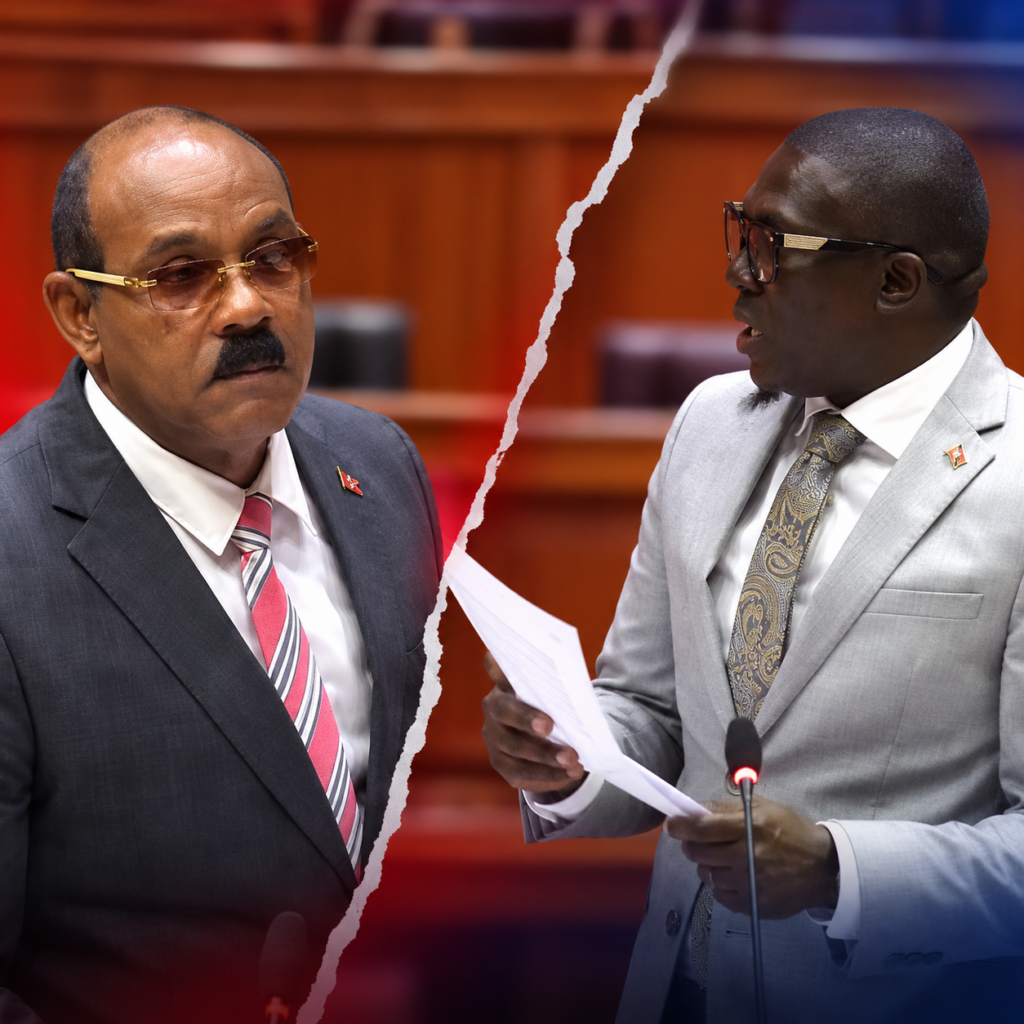
  • Prime Minister Gaston Browne Appoints 22-Year-Old to Senate in Blend of Youth and Experience

    Prime Minister Gaston Browne Appoints 22-Year-Old to Senate in Blend of Youth and Experience

    In a significant reshaping of Antigua and Barbuda’s Upper House of Parliament, Prime Minister Gaston Browne has announced 10 new senate appointments, a move that brings fresh faces and institutional continuity to the country’s legislative upper chamber. The appointment that has drawn widespread attention is that of 22-year-old Shaquan O’Neil, a serving Youth Ambassador, who will now enter the history books as the youngest person ever to take a seat in the nation’s Senate.
    Beyond O’Neil’s landmark appointment, the new cohort of senators includes Kendra Beazer, who previously stood as the Antigua Barbuda Labour Party (ABLP) candidate for the Barbuda constituency in the April 30 general election, ultimately falling short of a winning result. Three other first-time senators will also take their seats: Angelica O’Donoghue, Abena St. Luce and Joel Rayne, expanding the range of new perspectives in the upper legislative body.
    Alongside the incoming new members, Prime Minister Browne has reappointed five senators who held seats in the previous legislative term, ensuring a balance between fresh representation and institutional experience. Among the returning legislators is Alincia Williams-Grant, who is set to take on the role of Senate President in the new session. The returning cohort also includes Lamin Newton, an ABLP candidate who unsuccessfully contested the All Saints East & St. Luke constituency in the recent general election, as well as Colin O’Neil Browne, Phillip Shoul and Shenella Govia.
    The appointments mark a key post-election restructuring of the national legislature, blending youth representation, new political talent, and experienced incumbency to shape the upper house’s work ahead.

  • Rode Kruis benadrukt menselijkheid en hulpverlening op Wereld Rode Kruis-dag

    Rode Kruis benadrukt menselijkheid en hulpverlening op Wereld Rode Kruis-dag

    May 8 marks World Red Cross and Red Crescent Day, an annual observance that honors millions of humanitarian workers and volunteers across the globe who dedicate themselves to supporting vulnerable communities, often operating in high-risk and challenging conditions. This year, the Suriname Red Cross used the international day to draw public attention to three core principles guiding its work: solidarity, human dignity, and the critical need to protect all humanitarian operations.

    The core mission of the Suriname Red Cross, like all Red Cross movement branches, centers on preventing and alleviating human suffering across all populations, regardless of an individual’s ethnic background, personal beliefs, or socioeconomic circumstances. In Suriname, the organization’s volunteers are first responders to a wide range of local crises, including flooding, traffic collisions, public health outbreaks, and other unexpected emergency events. Beyond direct emergency response, the Suriname Red Cross also invests in long-term community resilience, offering public training courses in first aid, disaster preparedness, and general health education to equip local residents to respond to crises before they escalate.

    A central tenet of the organization’s work is that all people affected by disasters or crises deserve to be treated with full respect and dignity, a principle the Red Cross reaffirmed on this year’s observance. Currently, the Suriname Red Cross is carrying out an active public health outreach operation, funded by the International Federation of Red Cross and Red Crescent Societies’ Disaster Relief Emergency Fund (DREF), to raise awareness of mosquito-borne diseases. The operation was launched in response to recent outbreaks of chikungunya across the country.

    As part of this initiative, volunteers are visiting residential communities across three districts – Paramaribo, Commewijne, and Nickerie – to deliver targeted education on prevention of chikungunya, dengue, and Zika, three common mosquito-borne illnesses in the region. During these visits, volunteers share practical information with local residents on how to protect themselves from mosquito bites and reduce their overall risk of infection.

    This year’s World Red Cross and Red Crescent Day also included a moment of remembrance for all humanitarian workers who have lost their lives while carrying out relief work across the globe. The Suriname Red Cross noted that these losses underscore the urgent need to better protect aid workers and ensure full compliance with international humanitarian law by all parties to conflict and crisis. To close the observance, the organization issued a call to all Surinamese communities to reflect on the value of solidarity and collective support for vulnerable groups, stating, “At the end of the day, our work is about helping people, protecting lives, and upholding human dignity.”