作者: admin

  • Column: Huilen voordat we geslagen zijn

    Column: Huilen voordat we geslagen zijn

    An old Dutch proverb warns against crying out before you have been struck, and this warning has never felt more relevant to the heated public debate unfolding around proposed judicial branch reforms in Suriname. Right now, the amendments being discussed are still only draft concepts, agreed in broad terms by the governing coalition but not finalized, not formally submitted to the National Assembly (DNA), and facing internal opposition within the ruling bloc. Any constitutional change to the judiciary will also require a two-thirds majority vote to pass, a high bar that many proposals may never clear. Despite all this uncertainty, public discourse has already hardened into opposing camps, acting as if the final legislative decision has already been made.

    The Court of Justice and Public Prosecutor’s Office (OM) have already sounded the alarm, warning that the changes threaten judicial independence and carry severe constitutional consequences. Their call has been echoed by a broad coalition of groups, including lawyers, business associations, civil society organizations, and even medical professionals. No one disputes that judicial independence is a non-negotiable pillar of the rule of law: if judges believe this fundamental principle is at risk, they not only have the right but the duty to speak out. The question that has gone remarkably undiscussed, however, is whether every proposed adjustment to the position of the Court and OM automatically counts as an attack on the rule of law.

    These proposed reforms do not only touch on abstract constitutional principles. They also address practical questions of institutional organization, procedural authority, employment terms for judicial staff, and most notably, financial governance. Debate over this last area has simmered for years. Salaries and budgetary allocations for the judiciary have sparked public controversy before, repeatedly raising the question of how judicial independence balances against democratic oversight of public spending and state accountability for taxpayer funds. Local outlet Starnieuws has previously highlighted the extraordinary financial implications that could stem from the current Act on the Legal Position of the Judicial Branch. After all, judicial independence cannot reasonably mean that every matter related to budgets, salaries, spending, and financial oversight is placed entirely outside the scope of democratic decision-making.

    With public momentum already building against the reforms, a pressing question remains: how many of the organizations that have lined up behind the Court and OM have actually read the draft amendments themselves? How many have taken the time to distinguish between proposals that genuinely threaten judicial independence and those that only address administrative structure, financial oversight, and institutional governance? The judiciary holds significant, well-deserved social authority, which makes it easy to mobilize broad public support when its leadership claims its independence is under threat. That is precisely why civil society must be more, not less, critical of all powerful institutions, including the judiciary.

    Those who scrutinize the government and the National Assembly should not stop asking questions the moment the Court or OM speaks. Independence does not equal untouchability. And to reiterate, nothing is set in stone yet: the six-party coalition has reached broad agreement on direction, but internal objections remain, the text is not finalized, and the two-thirds majority required for constitutional change is far from guaranteed.

    Why, then, are we acting as if the final blow has already been struck? This uncertainty does not absolve reform proponents of their responsibilities: if they are moving forward with changes that would erode judicial independence, they owe the public full transparency and clear explanation. Once the amendments are formally tabled, they must be published in full and subjected to rigorous legal review. But the debate must center on the actual text of the proposals, not speculative fears over what they might contain.

    It is entirely possible that many of the current warnings will prove justified. It is just as possible that controversial provisions will be modified or scrapped entirely before they ever reach a formal vote in the National Assembly, or that they will fail to win the required supermajority. That is how the parliamentary process is designed to work: it allows for debate, amendment, and even rejection before any final decision is made.

    The most worrying outcome of the current moment is that opposing factions have formed before the legislative process has even properly begun. Anyone who questions the position of the Court and OM risks being labeled an enemy of judicial independence, while anyone who questions the government’s approach is dismissed as a defender of entrenched power. That is not how a functioning rule of law operates.

    Judicial independence must remain protected. Parliament must be free to carry out its core legislative work. And above all, civil society must preserve its most critical ability: to maintain a skeptical, critical stance toward all centers of power. If we fail to do that, we will not only have cried out before we were struck. We may never have even stopped to ask who intended to strike us in the first place.

  • Sigma Engineering requests negotiated compensation from Opposition Leader or face defamation lawsuit

    Sigma Engineering requests negotiated compensation from Opposition Leader or face defamation lawsuit

    On Monday, 17 August 2026, a major legal development unfolded in Guyana’s political sphere, as local construction firm Sigma Engineering Ltd. Inc. has issued a formal legal demand to Opposition Leader Azruddin Mohamed, giving him an opportunity to retract allegedly false and defamatory statements about the company or face immediate High Court defamation proceedings.

    The demand, outlined in a six-page legal letter delivered by Sigma’s attorney Sase Gunraj, requires Mohamed to meet several key conditions to avoid litigation. Among these are the full withdrawal of the contested claims, payment of undisclosed agreed compensation to cover the company’s damages, and coverage of all legal costs Sigma has incurred to date. While no strict public deadline was framed as an ultimatum, Gunraj made clear that non-compliance will result in immediate court action without further advance notice. Gunraj stated, “In the unlikely event of your failure to comply, legal proceedings will be initiated without further notice to you. Our client will seek the full relief available to it, together with interest and costs.”

    Sigma Engineering was contracted by state-owned utility Guyana Water Inc. (GWI) to deliver potable water infrastructure projects, and most recently completed the GYD $1.3 billion New Cummings Lodge Water Treatment Plant in 2025 with an all-Guyanese core project team. The contested allegations, published on Monday morning on the Team Mohamed’s Facebook page, claimed Sigma had been awarded an extensive array of government-linked contracts, and raised questions about the company’s professional performance and business practices.

    Gunraj refuted all of Mohamed’s claims as entirely baseless, noting that since Sigma’s founding in 2022, the company has only been awarded one single public sector contract: a 2026 project to rehabilitate GWI’s Shelter Belt, which is currently ongoing. The lawyer emphasized that Mohamed made the serious claims against Sigma without any factual foundation, and failed to conduct basic fact-checking before publishing the post to a public audience. “You had no proper basis for making the allegations and, notwithstanding the serious nature of the allegations, you failed to take reasonable steps to verify their truth before publishing them,” Gunraj wrote in the letter.

    Beyond retraction and compensation, Sigma is demanding Mohamed remove all defamatory content from his social media platforms under his control, issue a full, unreserved written apology and retraction in terms approved by the company’s legal team, and republish the apology with the same level of visibility that the original defamatory post received. The company also requires a formal written undertaking that Mohamed will not repeat or republish the claims against Sigma, and that he will preserve all relevant documents, digital records, communications, and drafts related to the original post as potential evidence for future litigation.

    If the case proceeds to court, Sigma will request a range of legal remedies, including compensatory, aggravated, and exemplary damages for defamation, a court injunction to block any further publication of the contested claims, coverage of all litigation costs and accrued interest, and any additional relief the High Court deems appropriate.

    Gunraj emphasized that the false allegations have already caused significant harm to Sigma’s business reputation, which underpins its commercial operations and goodwill. The claims, Gunraj argued, have painted the firm as dishonest, unprofessional, inefficient, and negligent to the public, which threatens the company’s ability to win new work and recruit qualified staff, making legal redress necessary to protect Sigma’s standing.

  • Zapping Haiti of August 18, 2026

    Zapping Haiti of August 18, 2026

    On August 18, 2026, Haiti continues to grapple with interconnected challenges of criminal violence, infrastructure damage, while also marking milestones in public health, environmental collaboration, and international cultural outreach, alongside mourning the loss of one of its most celebrated artistic figures.

    In the Artibonite department’s Saint-Michel commune, two of Haiti’s most notorious violent gangs, Kokorat San Ras and Gran Grif, launched a brutal attack that has left the community of Marmont Paul reeling. The assault left one resident dead and multiple others injured, and several local homes were set ablaze amid the violence. The attack has triggered a mass displacement, with dozens of residents fleeing their properties to seek safety in neighboring areas.

    Separately, in the capital region, a popular nightlife venue suffered extensive damage earlier this month. Between the night of August 15 and the early hours of August 16, the Iguana Café Nightclub, located along Canapé-Vert road, was completely destroyed by fire. Initial investigations into the blaze trace its origin to improperly extinguished burning garbage dumped near the nightclub’s perimeter. Flames spread quickly to the building, resulting in catastrophic material loss with no reported casualties as of the latest update.

    Amid these setbacks, a landmark achievement in Haitian healthcare was celebrated this week in the Grand’Anse department. During an official visit to Beaumont, a small town in Corail district, Cuban Ambassador Ricardo García Nápoles toured local medical facilities alongside senior leadership from the Cuban Medical Brigade (BMC): BMC head Dr. Guillermo Mora García and Southern Department director Dr. Aliuska La O Llanes. The delegation checked in on two BMC general practitioners, Yailene Bongo Bell and Karelia Kiala Sevila, who currently provide care at the Beaumont community clinic, and also visited Saint-Antoine Hospital in Jérémie, where eight Cuban medical staff are based. The hospital hosts a specialized orthotics and prosthetics workshop run by Cuban physiotherapy graduate Juan Manuel Arenas Griñan. The visit coincided with the graduation of 17 Haitian trainees, who have now earned official technician diplomas after completing full training in orthotics, prosthetics, and orthopedic bandaging, filling a critical gap in local specialized healthcare services.

    On the environmental front, Haitian digital influencer Ariana Milagro Lafond held exploratory talks with leadership of the National Solid Waste Management Service (SNGRS) this week. Lafond was welcomed by SNGRS Director General Daril Baltazar and Deputy Director General Ernseau Létang, with discussions centered on building a collaborative partnership to boost public awareness and action around waste recycling and resource recovery across the country.

    Internationally, Haiti advanced its cultural and tourism outreach this week by joining the first Forum of the Americas on Wine Tourism and Gastronomy hosted in São Paulo, Brazil. The event, organized by ADEGA in partnership with UN Tourism, gave Haiti a platform to showcase its unique culinary and cultural heritage to a global audience. Leading the Haitian delegation was Sinedie Saintil Dupuy, Director General of Haiti’s Ministry of Tourism, who delivered remarks at the forum’s opening ceremony. She was joined by ministry staff member Jean Odelin Casseus, with additional support from Youri Emmanuel, Haiti’s Consul General in São Paulo. Through this participation, Haitian authorities reaffirmed their commitment to expanding the country’s presence in major global tourism events, highlighting the depth of its cultural and gastronomic identity, and opening new pathways for regional and international cooperation in the tourism sector.

    Finally, Haiti’s artistic community is mourning the loss of pioneering sculptor Patrick Vilaire, who passed away recently. In a formal statement, the Poto Mitan Arts and Culture Center — which Vilaire co-founded alongside Wilfrid Austin Casimir and Jean-Claude “Tiga” Garoute — remembered the sculptor as a transformative figure who left an indelible mark on Haitian art history. “A brilliant sculptor, Patrick Vilaire left a unique mark on the history of Haitian art. Several of his works held in our collection attest to the richness and power of his work. But Patrick was also a true transmitter of knowledge,” the center said. Today, Poto Mitan remains one of Haiti’s leading institutions for artistic training and education, a legacy of Vilaire’s decades of work. Vilaire played a key role in building the center’s ceramics workshop, donating a custom kiln to support local emerging artists. “Through his work, his commitment, and his generosity, Patrick Vilaire helped to keep artistic knowledge and practices alive and to transmit them in Haiti,” the statement read. The center extended its deepest condolences to Vilaire’s family, friends, and the entire Haitian artistic community mourning his passing.

  • DNA kritisch over wet virtuele activa: reguleren ja, maar niet ten koste van innovatie

    DNA kritisch over wet virtuele activa: reguleren ja, maar niet ten koste van innovatie

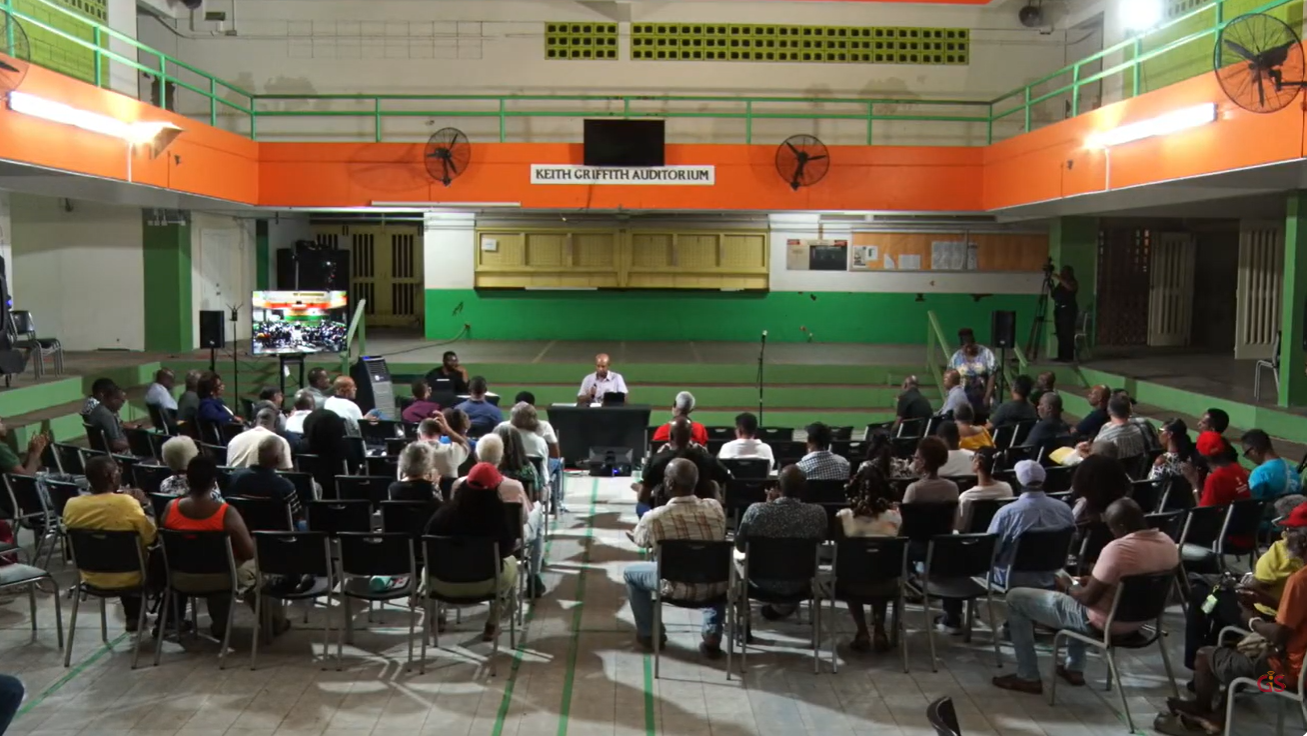
    As Suriname’s National Assembly continues its debate on a landmark bill to regulate virtual assets including cryptocurrencies on August 18, there is near-universal agreement on one core point: targeted oversight of the digital asset space is long overdue. What remains deeply contested, however, is the specific design of the proposed legislation, with lawmakers raising urgent concerns that overly harsh rules could stifle innovation and lock small local entrepreneurs out of the emerging market. The first round of deliberations on the Draft Act on Supervision of Virtual Asset Service Providers drew widespread cross-party criticism, centered on excessive regulatory burdens, overly broad powers granted to the Central Bank of Suriname (CBvS), insufficient legal protections, and risks of crowding out domestic businesses. At the same time, all stakeholders agree that robust regulation is critical to curbing money laundering and other forms of financial crime linked to unregulated digital assets.

    Cross-party scrutiny of the bill emerged during the initial deliberation round, with senior committee members flagging key flaws in the current draft. Rabin Parmessar, National Democratic Party (NDP) member and chair of the committee of rapporteurs, questioned both the scope and practical enforceability of the proposed regulatory regime. Asis Gajadien, a committee member from the ruling Progressive People’s Party (VHP), warned that regulation must not devolve into a framework that actively blocks innovation or forces existing and new entrepreneurs to operate under unworkable compliance requirements. Fellow NDP committee member Jennifer Vreedzaam emphasized her own focus on unaddressed risks, the structure of ongoing oversight, and the practical challenges of rolling out the new rules.

    A consistent thread running through almost all parliamentary contributions is that Suriname cannot continue to operate without clear rules for virtual assets. The cross-border, partially decentralized structure of these digital instruments makes them uniquely vulnerable to misuse for money laundering and other illicit financial activity. Yet lawmakers also recognize that the underlying blockchain and digital asset technology offers tangible benefits: enabling cheaper, faster cross-border payments, expanding financial inclusion for unbanked communities, and creating new opportunities for domestic entrepreneurship.

    Kishan Ramsukul, a VHP member of the rapporteur committee, highlighted the specific upsides virtual assets bring to Suriname, particularly for facilitating remittances from the country’s large diaspora, supporting cross-border payments for small and medium-sized domestic enterprises, and expanding financial access in regions with limited traditional banking infrastructure. While Ramsukul agrees regulation is necessary, he cautioned that the bill in its current form imposes unbalanced, overly burdensome requirements that would disproportionately harm small players. Under the current draft, all virtual asset service providers must be registered legal entities, meet yet-to-be-specified capital requirements, maintain a minimum of two directors plus a supervisory board, and operate an extensive administrative organization with strict internal controls. For small, innovative startups, these requirements are effectively insurmountable, risking their complete exclusion from the market, Ramsukul argued.

    To address this gap, Ramsukul called for a proportionate, tiered regulatory system that does not impose identical strict requirements on all providers regardless of their size, business model, and associated risk level. He also warned against the current bill’s overly broad definition of virtual assets, arguing that traditional online banking, Surinamese dollar (SRD) transactions, and existing mainstream digital wallets should not fall under the scope of this legislation. He suggested separate, tailored rules could be developed for company-specific tokens and other niche digital applications.

    By contrast, NDP lawmaker Ebu Jones centered his intervention on the pressing need for strong rules to counter criminal activity. Jones stressed that insufficient regulation of virtual assets creates severe public risk, as proceeds from drug trafficking, corruption, and other illicit activities can easily be converted into Bitcoin or other decentralized digital assets and moved beyond the reach of law enforcement. Jones also brought up the online gambling sector, arguing that policymakers need to assess whether digital balances bought, sold, or exchanged for cash within betting platforms should also be brought under the regulatory scope, suggesting a broader definition of covered assets may be necessary.

    Jones further linked the virtual asset regulation bill to broader national efforts to combat corruption and seize illicitly gained assets. Without clear visibility into conversions between fiat currency and virtual assets, he argued, authorities will struggle to trace the movement of criminally obtained wealth. He also called for accelerated progress on Suriname’s long-awaited asset seizure legislation, often referred to as the “skimming law” that targets illicit proceeds.

    After the conclusion of the first round of debate, a clear dynamic has emerged: there is remarkably broad consensus on the end goal of regulating virtual assets, but deep disagreement on the policy tools to achieve that goal. Most speakers acknowledge that regulation is required not just for domestic stability, but also to meet Suriname’s international anti-money laundering and counter-terrorism financing (AML/CFT) obligations. The core disagreements revolve around whether the proposed rules are appropriately proportionate, practically implementable, and clearly defined under law.

    Key sticking points that remain unresolved include the scope of powers and institutional role of the CBvS, transitional arrangements for existing virtual asset service providers, market access for small local entrepreneurs, oversight of foreign-based digital asset platforms, protection of customer personal data and deposited funds, and how to preserve space for innovation while maintaining compliance with strict global AML/CFT standards.

    On the day of the continued debate, the burden shifts to the ruling government to respond to the dozens of concerns raised by lawmakers. Answers from the executive branch will signal which criticisms the government accepts, and whether the bill will be amended before the National Assembly holds a final vote on the legislation.

  • Cocaine and cannabis bust raises questions over vessel’s history

    Cocaine and cannabis bust raises questions over vessel’s history

    BASSETERRE, St Kitts – A joint law enforcement operation targeting a docking vessel in St. Kitts and Nevis has yielded a significant seizure of cocaine and cannabis, with seven crew members from three different Caribbean nations taken into custody. The operation has reignited public and official scrutiny after investigators uncovered a striking link to a massive 2022 drug bust involving a seemingly connected vessel, raising new questions about regional narcotics trafficking networks and the country’s potential role as a transhipment hub.

    The operation unfolded on August 10, 2026, when the vessel identified as C-Elizabeth II docked in St. Kitts at approximately 9:00 a.m. Acting on intelligence, teams from the Royal St. Christopher and Nevis Police Force (RSCNPF), St. Kitts-Nevis Coast Guard, and the St. Kitts and Nevis Customs and Excise Department – including the department’s K9 Unit and the RSCNPF’s Anti-Narcotics Unit – launched a coordinated search of the vessel.

    During the systematic search, law enforcement officials uncovered two stashes of illegal narcotics: 12.515 pounds of plant matter confirmed to be cannabis, and one full kilogramme of cocaine in the form of a white powder. The captain and all six crew members on board were immediately taken into custody for questioning as part of the ongoing investigation. Police confirmed that the detained individuals hold citizenship from three Caribbean territories: Grenada, St. Vincent and the Grenadines, and Trinidad and Tobago.

    What has turned a routine seizure into a major regional story is the clear connection to a far larger drug bust that took place in the same waters four years earlier. In 2022, a vessel named MV Elizabeth C, registered in Trinidad and Tobago with International Maritime Organization number 8894574, was intercepted off St. Kitts and Nevis after authorities detected large quantities of hidden narcotics on board. During that 2022 operation, search teams found the illicit drugs concealed within the hollow walls of the vessel’s cabin. The haul included 32 bales of cocaine, each holding 25-kilogramme blocks for a total of approximately 800 kilogrammes, alongside 5.830 kilogrammes (12.852 pounds) of cannabis. At the time, the street value of the 2022 cocaine seizure was estimated at roughly US$26.4 million, with the cannabis valued at approximately US$57,777. All five crew members on board the 2022 vessel, three from Trinidad and Tobago and two from Grenada and Carriacou, were taken into custody for questioning in that investigation.

    With the near-identical naming of the vessel, overlapping nationalities among the detained crews, and two separate major drug seizures in the same jurisdiction within four years, industry observers and law enforcement analysts are now pushing for answers about the vessel’s true ownership, registration history, and pattern of regional movements. As investigators continue to piece together the details of the 2026 bust, the incident has once again opened a broader public discussion about whether the Federation of St. Kitts and Nevis is being increasingly targeted by drug trafficking organizations as an unofficial transhipment port for narcotics moving through the Caribbean.

  • UNITECH : Creation of its first laboratory dedicated to cybersecurity and AI

    UNITECH : Creation of its first laboratory dedicated to cybersecurity and AI

    In a landmark step for technological advancement in Haiti and the wider Caribbean, the University of Technology of Haiti (UNITECH) has officially unveiled the country’s first dedicated research and training laboratory focused on cybersecurity and artificial intelligence (AI). Announced on 18 August 2026, the new facility is designed to expand cutting-edge research, upskill the regional workforce, and foster cross-sector collaboration in fast-growing digital fields, addressing unmet local and regional demand for specialized digital expertise.

    The groundbreaking initiative is not an independent domestic project, but a product of multi-national academic cooperation that brings together leading technical experts from three continents. Partner institutions include the University of Quebec at Chicoutimi in Canada, the National Advanced School of Engineering of Yaoundé in Cameroon, and academic specialists from Tunisia, creating a global knowledge-sharing network to support the lab’s long-term development.

    UNITECH Rector Josselin Val highlighted that the new lab directly advances the institution’s core mission: preparing a skilled workforce equipped to navigate and lead rapid global technological transformation. Val stressed that cybersecurity and AI are no longer niche sectors, but strategic pillars for sustainable economic and institutional growth for developing nations. This perspective was echoed by cybersecurity specialist Valentin Bromont, who noted that rising cyber threats targeting Haitian financial systems—including data theft and unauthorized system intrusions—have created an urgent need for local capacity to monitor, defend, and protect critical national digital infrastructure.

    Open to partner universities, government agencies, and private sector organizations across the region, the lab will center its core work on four key focus areas: robust data protection protocols, securing critical digital infrastructure, developing responsible and context-appropriate AI applications, and providing targeted support for public and private organizations adapting to widespread digital change. By centering the unique needs of Haiti and the Caribbean, UNITECH aims to not only advance applied research in these critical fields but also close the regional skills gap for digital security and AI expertise.

    The Agence Universitaire de la Francophonie (AUF-Caraïbe) has praised the project as a model for academic leadership in addressing 21st-century challenges. In a statement, the regional body noted that UNITECH’s initiative perfectly embodies the role of higher education in driving societal and economic transformation by prioritizing research, training, and innovation on high-stakes strategic topics. The project aligns directly with AUF’s core strategic priorities for the coming years: accelerating inclusive digital transformation, advancing responsible research into generative AI, and expanding impact-focused research that addresses local and regional needs.

    For context, UNITECH has grown rapidly since its founding in 2007 as a private public service institution, joining the AUF network in 2023. From an initial cohort served by three faculties, the university now operates eight faculties offering 13 undergraduate programs and two graduate master’s degrees, serving a student body of nearly 3,000 with a teaching staff of 178. The institution has earned a strong reputation for high graduate employment outcomes across Haiti’s public and private sectors, and its Faculty of Nursing is widely recognized for its rigorous clinical training programs that offer placements across Haiti and international institutions.

  • Belize City Shooting Claims Life of Tyrel Robinson

    Belize City Shooting Claims Life of Tyrel Robinson

    On August 17, 2026, a deadly shooting incident unfolded in close proximity to the Belize City Bus Terminal, marking a violent outbreak that has shaken the local community. Local law enforcement agencies have launched a full investigation into the attack, which ended the life of Belize City resident Tyrel Robinson, the only identified victim of the incident.

    As first responders and criminal investigators work to reconstruct the sequence of events that led to the shooting, very few concrete details have been released to the public at this early stage of the probe. Authorities have not yet confirmed any potential motives for the killing, nor have they announced any persons of interest connected to the shooting.

    This breaking development was first reported in an evening live television broadcast, with this article published as an official transcript of that on-air report. The outlet notes that any statements delivered in Kriol during the original broadcast have been transcribed using a standardized spelling system to preserve accuracy for online readers.

    Local news consumers can access the full unedited video of the evening newscast via a link provided on the publication’s website, and the organization has stated that it will share updated information on the investigation, alongside community reaction to the killing, in its scheduled newscast tomorrow.

  • Caleigh-Rose West Crowned, But Controversy Steals the Spotlight

    Caleigh-Rose West Crowned, But Controversy Steals the Spotlight

    On a glitzy Saturday night in San Pedro, Belize, Caleigh-Rose West stepped into the spotlight as the newly crowned Miss Universe Belize 2026. But what should have been a triumphant, celebratory moment for the new titleholder quickly unraveled into a public relations crisis for pageant organizers, marred by a string of high-profile mistakes that have sparked widespread public criticism and scrutiny.

    The first misstep unfolded during the live announcement of the Top Five finalists. When host Chelsea Munoz called out names, West was initially named as a sixth unexpected contestant, leaving audiences and participants alike confused about whether she had actually earned a spot in the final round. Organizers later clarified the error was caused by a folded tabulation sheet that hid the official correct list of finalists from event presenters. Munoz defended the mistake as an unintended slip-up in a statement to local outlet News Five, noting that live television production creates intense communication challenges for event committees working in real time.

    “ It was the same sheet, the tabulation sheet that was used. It was folded. So it honestly was an honest mistake, but the communication part, being on a live TV production is just really hard I believe for the committee members in the moment,” Munoz explained. “Honest mistakes like that happen when we were given results and tabulation scores, we weren’t told that the actual list was on the paper folded inside.”

    According to Susie Sibrian, a member of West’s support team, organizers quickly moved to avoid further disruption by deciding to proceed with a Top Six instead of the originally planned Top Five. She added that organizers explicitly confirmed to West that she had rightfully earned her place in the Top Five, and the wrongfully called delegate was another contestant whose identity will not be disclosed publicly.

    “That yes, indeed, there was an error, that there was definitely a top five and not a top six, and that a person was called up by error, but that person was not Callie Rose West. It was another delegate. We will not get into disclosing who that was because this is not about it,” Sibrian said. “So they informed us about that information. And then that was very important for Caleigh to hear because she needed that. She needed to know that she deserved to be in that top five place because she did.”

    The finalist mix-up was not the only misstep of the evening. The event started far behind schedule, and a digital cultural backdrop designed to highlight Belizean national heritage incorrectly featured Tikal, the iconic ancient Mayan monument located in neighboring Guatemala. The string of errors has amplified questions about the pageant’s quality control, particularly in the wake of a recent ownership change and the tight timeline leading up to the event.

    In late June, the Miss Universe Belize franchise was sold to a new foreign owner based in El Salvador. The transition, completed just two months before the national pageant, left little time for full preparation ahead of the international Miss Universe competition scheduled for November. Critics have raised concerns about the impact of the new foreign ownership on Belizean representation and event organization.

    Destiny Wagner, the national director of Miss Universe Belize, pushed back against these concerns in on-stage comments, emphasizing that delegates will receive full support ahead of the international competition. She noted that limited preparation time does not inherently undermine a competitor’s ability to succeed, drawing from her own experience winning Miss Earth with just two weeks of preparation.

    “Whoever decides to take on this challenge, the why you’re doing it has to be greater than how you’re going to do it,” Wagner said. “Why you’re doing it, is because of Belize, because you want to put us on the map, because you want to represent us to the best of your ability, showcase our culture. That is your why. How you’re going to do it, in terms of your preparation and training matters but that why is what is going to give you the drive. And I also want to point out that when I won Miss Earth, I only had two weeks to prepare. So if you want it and you’re hungry for it. It doesn’t matter if you have one day or five, what’s meant for you is gonna be meant for you.”

    Munoz acknowledged that communication gaps and organizational missteps occurred during the event, but echoed the call to shift focus back to West. She noted that organizers worked to the best of their ability under the constraints of a tight timeline, and that the mistakes are simply learning lessons for the new ownership team.

    “To put on a show of this magnitude, it takes a lot of work. It takes a lot of preparation and I do believe they did the best they could with the limited time they had,” Munoz said. “Can things go smoothly? Like a little bit better? Yes, they could have gone a lot better. Was there time for preparation when it comes to MC, the script that was given to us. Things could have gone smoothly but they’re just learning lessons.”

    As of publication, News Five has not received an additional comment from Wagner following requests for further statement. News Five’s Britney Gordon is set to air an in-depth investigation into the pageant missteps on its evening broadcast, and this report is a transcript of the outlet’s original television segment.

  • BPD Mourns Loss of Constable Armando Toledano

    BPD Mourns Loss of Constable Armando Toledano

    The Belize Police Department is grieving the unexpected death of one of its most dedicated long-serving members, 24-year veteran Constable Armando Toledano, who lost his life in a tragic traffic collision while commuting to work on Saturday, August 15, 2026.

    Toledano was riding his Lifan motorcycle from his home district of Orange Walk toward his assigned post at the Raccoon Street Police Station in Belize City when the crash occurred just after 2:30 p.m. near the 27-mile marker on the Philip Goldson Highway. The collision took place between Toledano’s motorcycle and a Ford Explorer traveling in the opposing direction, leaving the seasoned officer with fatal injuries he would not recover from.

    In the immediate aftermath of the incident, first responders closed the highway stretch near Biscayne Village for nearly two hours to clear the scene and allow crash investigators to document evidence, causing widespread travel delays for motorists in the area.

    Assistant Superintendent of Police Stacy Smith, Staff Officer for the department, released an official statement on behalf of the Belize Police Department and the Ministry of Home Affairs and Enterprise extending deep condolences to Toledano’s family, friends, and colleagues. “PC Toledano was a serving member of the Belize Police Department for twenty-four years up to the time of his passing and he was posted at the Eastern Division, where he inspired his colleagues and gained the confidence of the public that he served,” Smith said.

    As the investigation into the exact cause of the collision progresses, law enforcement officials have served the driver of the Ford Explorer with a formal notice of intended prosecution. Smith confirmed that the driver has remained in full cooperation with investigators, and has already provided a urine sample for toxicology testing as part of standard procedure in serious fatal crash probes.

    In response to questions about the department’s staffing policy regarding posting officers close to their home districts, Smith explained that the agency works to balance competing priorities to accommodate officer commutes. “The department certainly strives to have officers posted as nearest to their homes. However, you would know that a vast majority of the staffing of the police department requires to, you know, be work placed in Belize City Eastern Division. And there is also a policy of not wanting to have people be in communities that they are too familiar with,” Smith explained, adding that the department continues to adjust placement and arrange alternative transportation support where possible to ease commuting burdens for officers.

    News of Toledano’s passing has sparked an outpouring of tributes and condolences from community members and fellow first responders across Belize’s social media platforms, as the department and local public mourn the loss of a respected officer who spent nearly half his life in public service.

  • Man Detained After Fatal Billy White Village Crash

    Man Detained After Fatal Billy White Village Crash

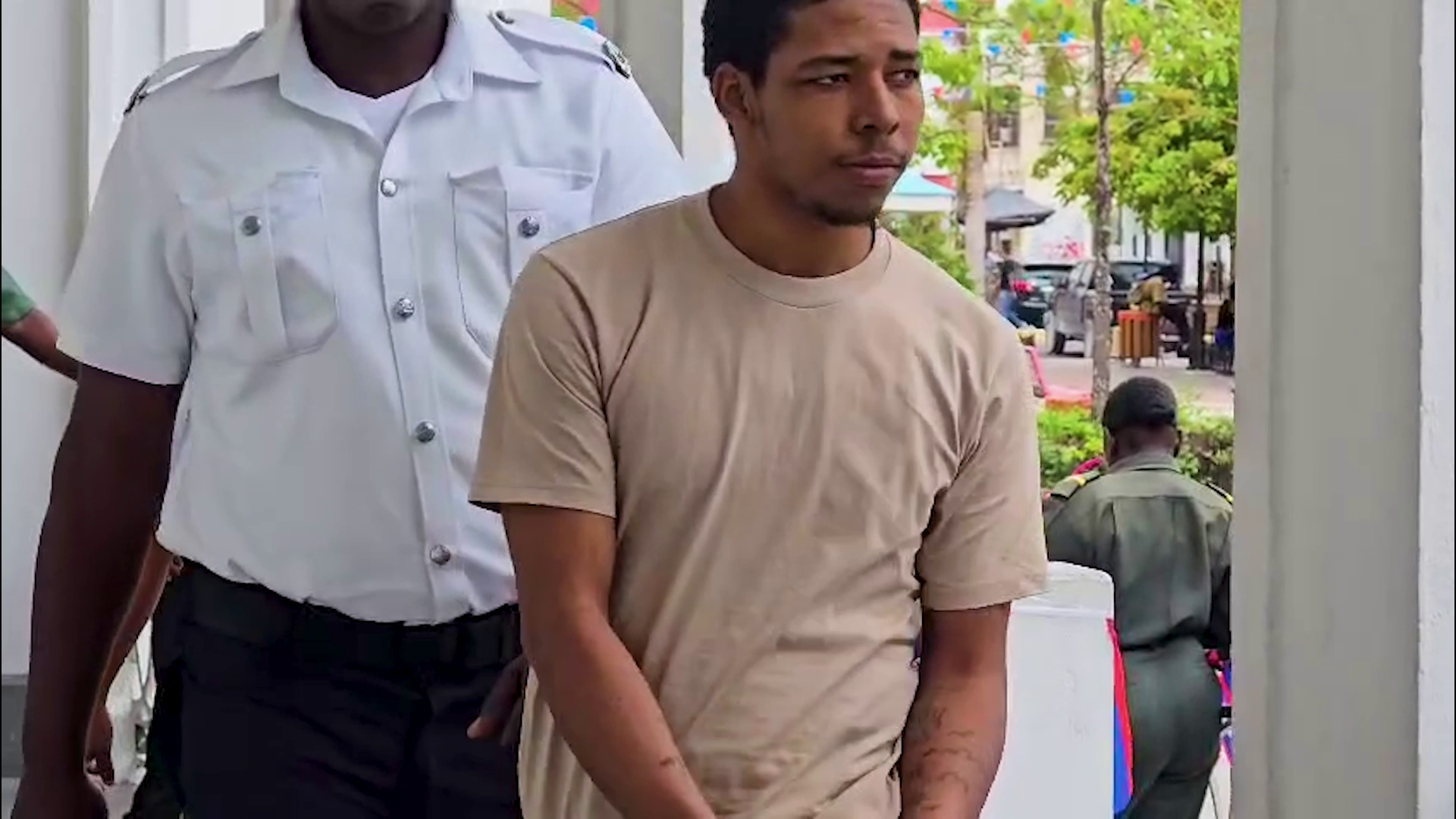
    Authorities in Cayo District have taken a 26-year-old man into custody following a deadly three-vehicle crash that left one cyclist dead and another motorist injured early Sunday morning, local law enforcement confirmed this week. The fatal incident, which unfolded on a curved stretch of road near Billy White Village shortly after 2 a.m. on August 16, 2026, claimed the life of 37-year-old Marcello Moh, a resident of nearby Santa Familia Village. A second victim, 26-year-old Aidan Humes—also from Santa Familia Village—survived the crash with non-fatal injuries, police confirmed.

    According to official statements from Assistant Superintendent Stacy Smith, Staff Officer for the investigating unit, responding law enforcement was alerted to the collision within minutes of it occurring, launching an immediate probe into the circumstances of the crash. Initial findings from the investigation outline a clear sequence of events: the detained suspect was operating a Ford F-150 pickup truck traveling from Billy White Village toward Santa Familia Village when the vehicle reached a curve in the road. At that point, the pickup collided with both Humes’ motorcycle and Moh’s bicycle, which were traveling in the area at the time of the incident.

    Both road users were rushed to receive emergency medical care immediately following the crash. Moh, who sustained severe life-threatening injuries in the impact, did not recover and passed away while undergoing treatment. Humes, meanwhile, was treated for his injuries and remains in care as of the latest update from law enforcement.

    As of Tuesday, August 17, authorities have not released additional details about potential charges, the condition of Humes, or contributing factors such as speed, weather, road conditions or impairment. Smith confirmed that the full circumstances surrounding the collision remain an active and ongoing investigation, with police working to piece together all details of the fatal incident. This report is based on a transcribed broadcast from local news outlets, updated to reflect the latest official information released by law enforcement.