作者: admin

  • Adhin laat Bouterse herleven tijdens herdenking van 25 februari

    Adhin laat Bouterse herleven tijdens herdenking van 25 februari

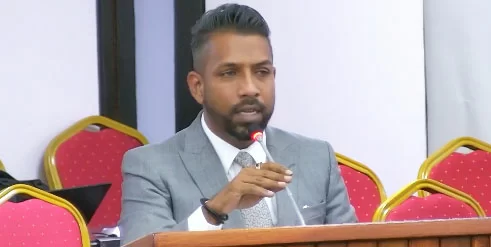
    In a politically charged address during Suriname’s commemoration of the February 25, 1980 revolution, National Assembly Speaker and NDP Vice Chairman Ashwin Adhin positioned former leader Desi Bouterse at the center of national discourse. Adhin emerged as a staunch revolutionary advocate, dedicating his entire speech to Bouterse’s political legacy while calling for national unity and hinting at potential legal resolutions for three convicted ex-military personnel.

    The assembly speaker characterized the absence of Stephanus Dendoe, Ernst Gefferie, and Benny Brondenstein as a significant loss, revealing that legal ‘pathways’ remain open for their cases. Adhin expressed confidence that President Jennifer Simons would exercise her constitutional authorities appropriately, including potential pardon powers, at the proper time and manner.

    Adhin redefined the 1980 revolution as a multicultural, unifying people’s movement that transcended ethnic divisions in Surinamese society. He acknowledged the period’s mixed legacy of achievements and painful moments, emphasizing that meaningful commemoration requires transforming history into acts of unity, discipline, and national development.

    In a deeply personal segment, Adhin reflected on his relationship with Bouterse, stating he had not only admired but actively sought to understand and share responsibility for the revolutionary ideology. The speaker emotionally channeled Bouterse’s tradition by singing lines from ‘I Did It My Way’ and Hindi ballad ‘Zara Chahra To Dikhaao,’ symbolizing Bouterse’s political and personal journey.

    Linking his message to current political cooperation between former rivals in government, Adhin framed this constellation as a historic opportunity for reconciliation with the past. He warned against increasing polarization while advocating for humanity, discipline, and solidarity as essential conditions for national development and sovereignty protection.

    Through his address, Adhin imbued the revolution anniversary with distinct political significance, explicitly connecting Bouterse’s legacy, revolutionary heritage, and contemporary constitutional questions within Suriname’s ongoing political narrative.

  • New Line 2C extension of Santo Domingo Metro begins operations

    New Line 2C extension of Santo Domingo Metro begins operations

    Santo Domingo has entered a new era of urban mobility with the operational launch of the Line 2C metro extension this Wednesday. This transformative infrastructure project specifically targets enhanced transportation efficiency in Santo Domingo Oeste, with particular benefits for Los Alcarrizos municipality residents.

    President Luis Abinader, speaking at Tuesday’s inauguration ceremony, emphasized the project’s dual impact on both temporal and economic aspects of daily commuting. “This new section will substantially decrease journey durations and alleviate transportation expenses for thousands of capital-bound commuters,” the president declared during the official proceedings.

    The newly activated segment stretches 7.3 kilometers and features five strategically positioned stations: Pedro Martínez (Manoguayabo), Franklin Mieses Burgos (Monumental Avenue), 27 de Febrero (kilometer 13), Freddy Gatón Arce (kilometer 14), and Pablo Adón Guzmán at the gateway to Los Alcarrizos. The extension has been engineered for full interoperability with Santo Domingo’s comprehensive public transit network.

    To facilitate public familiarity and promote ridership, transportation authorities have implemented a complimentary service model throughout the inaugural week of operations.

    Projections from official sources indicate the extended line will accommodate approximately 150,000 daily passengers, ultimately serving a population base exceeding one million residents. A significant ancillary benefit will be the alleviation of chronic congestion along the Duarte Highway, the metropolitan region’s principal traffic artery.

    This metro expansion constitutes a critical component of the Integrated Transportation System of Santo Domingo, a holistic urban mobility framework incorporating metro, aerial cable car, and dedicated bus corridor infrastructure designed to promote sustainable transit solutions throughout the capital region.

  • REMARKS: Dr Carla Barnett, CARICOM Secretary-General Opening Ceremony – 50th Regular Meeting of the Conference of CARICOM Heads of Government

    REMARKS: Dr Carla Barnett, CARICOM Secretary-General Opening Ceremony – 50th Regular Meeting of the Conference of CARICOM Heads of Government

    The Caribbean Community (CARICOM) commenced its landmark 50th Regular Meeting of the Conference of Heads of Government in St. Kitts and Nevis, with Secretary-General Dr. Carla Barnett presiding over the opening ceremony. The gathering marks a significant milestone for regional integration amidst complex global challenges.

    Secretary-General Barnett extended formal acknowledgments to host nation leadership, including Governor-General Dame Marcella A. Liburd and Prime Minister Dr. Terrance Drew, who currently chairs the CARICOM leadership council. The Secretary-General praised St. Kitts and Nevis for demonstrating exceptional organizational capability despite being the smallest sovereign state within the community, having previously hosted two major CARICOM meetings in 2025.

    Prime Minister Drew’s tenure as chairman, which began January 1, has already established a pattern of proactive engagement, commencing with emergency regional meetings during the year’s first weekend and continuing with extensive diplomatic visits throughout member states.

    The address reflected on 2025 as one of the most challenging periods in CARICOM’s history, particularly highlighting Hurricane Melissa’s catastrophic impact across Haiti, The Bahamas, Bermuda, and Jamaica. The Category 5 system caused extensive devastation, with Jamaica experiencing particularly severe consequences. The community collectively acknowledged former Chairman Prime Minister Andrew Holness of Jamaica for his decisive leadership during the crisis response.

    CARICOM’s institutional response mechanisms, including the Caribbean Disaster Emergency Management Agency and the Caribbean Public Health Agency, demonstrated remarkable coordination in providing immediate humanitarian assistance, technical damage assessments, and recovery support. This collective action exemplified the community’s resilience and mutual support principles.

    The past year also witnessed significant democratic exercises across seven member states and four associate members, with several landmark electoral outcomes. Suriname inaugurated its first female president, Dr. Jennifer Geerlings-Simons, while multiple nations returned or elected new leadership through peaceful processes.

    The current summit’s agenda addresses pressing regional priorities, with substantial time allocated for candid deliberations. Full representation at the head-of-government level despite domestic pressures underscores member states’ commitment to collective action.

    Notable developments include four member states—Barbados, Belize, Dominica, and St. Vincent and the Grenadines—implementing full free movement provisions under the CARICOM Single Market and Economy framework since October 2025. This pioneering integration effort has already facilitated increased economic activity and people-to-people connections.

    The evolving global landscape presents both challenges and opportunities, particularly in energy transition, digital infrastructure, climate resilience, and technological advancement. CARICOM’s coordinated foreign policy approach continues to attract international engagement, evidenced by high-level participation from Saudi Arabia, the United Arab Emirates, and the Commonwealth Secretariat.

    The community is actively strengthening South-South partnerships, notably with the African Union through institutions like Afreximbank. The second CARICOM-Africa Summit in 2025 established frameworks for enhanced cooperation in finance, reparations advocacy, air connectivity, and cultural exchange.

    As CARICOM celebrates five decades of regional integration, the organization continues to advance human development, foreign policy coordination, security cooperation, and economic progress. The current summit aims to translate commitments into concrete actions that ensure a sustainable and prosperous future for all Caribbean citizens.

  • Youth Ambassadors Call for Bold Action at CARICOM’s 50th Heads of Government Meeting

    Youth Ambassadors Call for Bold Action at CARICOM’s 50th Heads of Government Meeting

    At the landmark 50th Conference of CARICOM Heads of Government in St. Kitts and Nevis, Youth Ambassadors Aquanjé Robinson and Siobhan Phipps-Harding delivered a compelling call for transformative action that resonated through the opening ceremony. The young leaders articulated a clear vision for moving beyond symbolic unity toward tangible regional progress.

    Phipps-Harding established the tone by emphasizing the critical juncture at which the Caribbean Community finds itself. “Our Region’s people and youth are no longer looking for togetherness written in ink,” she declared, “but they are looking for progress etched into our landscapes.” Her remarks highlighted the growing impatience with diplomatic formalities without substantive implementation.

    The ambassadors identified pressing regional challenges including climate volatility, unsustainable debt burdens, and brain drain migration patterns that deprive Caribbean nations of their most talented citizens. They framed these issues not as insurmountable obstacles but as opportunities for coordinated regional response.

    Robinson powerfully reframed the Caribbean narrative around the concept of resilience as historical inheritance rather than contemporary buzzword. “It is woven into our shared history,” he noted, “from the resistance of our ancestors to the reconstruction of our islands after every storm.” This resilience, he argued, provides the foundation for bold, intentional action.

    The youth representatives outlined specific pillars for a thriving CARICOM: digital connectivity to dissolve educational and commercial borders, food security to break import dependence, and climate justice that transitions from rhetoric to tangible community protection. They emphasized that true regional integration requires governing “with the resolve of one Caribbean” despite geographical separation.

    Both ambassadors closed with a unified message urging leaders to ensure this historic meeting would be remembered for visionary implementation rather than elegant speeches. Their concluding statement—”our Region’s future is bright because we are building it together”—served as both encouragement and reminder of collective responsibility.

  • “A World Without CARICOM Would Be Culturally Poorer” Prime Minister Drew

    “A World Without CARICOM Would Be Culturally Poorer” Prime Minister Drew

    In a profound address marking a historic milestone, Saint Kitts and Nevis Prime Minister Dr. Terrance Drew delivered a compelling defense of Caribbean regional integration during the 50th Regular Meeting of CARICOM Heads of Government. Speaking as the current Chairman of the Caribbean Community, Dr. Drew articulated a vision of collective strength that has defined the region’s trajectory for half a century.

    Before an assembly of regional leaders and international partners, the Prime Minister reflected on the Caribbean’s extraordinary journey from colonial subjugation to sovereign independence. He positioned CARICOM not as a mere political arrangement but as a fundamental expression of Caribbean identity and resilience. ‘Our integration was neither accidental nor casual,’ Dr. Drew asserted, characterizing the Treaty of Chaguaramas as ‘a declaration of Caribbean confidence’ that transcended its legal framework.

    The address contained a striking declaration: ‘A world without CARICOM would be culturally poorer, intellectually diminished and spiritually less vibrant.’ This statement encapsulated the Prime Minister’s central thesis that the Caribbean has made disproportionate contributions to global culture, intellectual thought, and spiritual movements despite its relatively small population and geographical size.

    Dr. Drew provided concrete examples of regional institutions that demonstrate CARICOM’s practical value. He highlighted the Caribbean Public Health Agency (CARPHA), which has coordinated regional health responses; the Regional Security System (RSS) that maintains collective safety; the Caribbean Examinations Council (CXC) that standardizes educational excellence; and the Caribbean Development Bank (CDB) that fuels economic progress. ‘By ourselves, many of our states could not have achieved what togetherness has made possible,’ he emphasized.

    The Prime Minister connected CARICOM’s historical mission to contemporary global challenges, noting that supply chain disruptions, climate emergencies, energy instability, and geopolitical tensions make regional cooperation more essential than ever. He argued that fragmentation increases vulnerability while unity generates resilience in this new era of uncertainty.

    As CARICOM celebrates its 50th regular meeting, Dr. Drew’s address served as both a tribute to past achievements and a call to reinvigorate the founding principles of functional cooperation, economic coordination, and collective self-reliance that continue to define the Caribbean community’s unique approach to regional integration.

  • Historic Full Attendance Marks 50th CARICOM Heads Meeting in Saint Kitts and Nevis

    Historic Full Attendance Marks 50th CARICOM Heads Meeting in Saint Kitts and Nevis

    In an unprecedented display of regional unity, Saint Kitts and Nevis hosted the 50th Regular Meeting of the Conference of Heads of Government of the Caribbean Community (CARICOM) with complete attendance from all member states—the first such gathering in over a decade. The historic event, which commenced on February 24, 2026, in Basseterre, marks a significant milestone for regional cooperation amid global challenges.

    Under the chairmanship of Prime Minister Dr. Terrance Drew of Saint Kitts and Nevis, the opening ceremony witnessed a powerful demonstration of collective commitment from Caribbean leaders. Prime Minister Drew characterized the assembly as both symbolically important and substantively crucial given current international pressures and regional vulnerabilities.

    This remarkable convergence follows Dr. Drew’s extensive diplomatic tour across Caribbean capitals, where he conducted face-to-face bilateral engagements with fellow heads of government. These preparatory meetings, described as unprecedented in recent CARICOM history, focused on strengthening relationships, fostering dialogue, and building consensus around pressing regional priorities.

    In his address, Chairman Drew emphasized the significance of the full attendance: “At a time when critics suggest CARICOM has lost its way, today in Saint Kitts and Nevis are all the leaders of the full members of CARICOM.” His remarks were met with sustained applause from attendees, reflecting the renewed spirit of collaboration.

    The Prime Minister framed current adversities—including global supply chain disruptions, energy volatility, climate vulnerabilities, and security concerns—as opportunities for deeper integration and disciplined execution. He affirmed that collective action remains the region’s greatest strength in navigating these complex challenges.

    The 50th Meeting agenda features high-level deliberations on critical issues including food and energy security, climate resilience mechanisms, regional security cooperation, digital transformation initiatives, trade facilitation, and stabilization measures for vulnerable member states. This comprehensive agenda reflects the community’s commitment to addressing both immediate and long-term regional needs.

    As host nation and current CARICOM Chair, Saint Kitts and Nevis views this historic gathering as a clear affirmation of regional solidarity and a recommitment to advancing economic coordination, collective self-reliance, and meaningful integration for the benefit of all Caribbean citizens.

  • We will fight, we will struggle, we will resist, we will transform, and above all adversity and imperial threats, we will rise and triumph!

    We will fight, we will struggle, we will resist, we will transform, and above all adversity and imperial threats, we will rise and triumph!

    In a historic address commemorating the 50th anniversary of Cuba’s Local Bodies of People’s Power, President Miguel Díaz-Canel delivered a powerful call for democratic renewal amid significant national challenges. Speaking at the National Capitol Building on February 24, 2026—a date deeply embedded in Cuban revolutionary history—the leader framed the occasion as both a tribute to past achievements and an urgent mandate for systemic improvement.

    The President’s comprehensive speech traced the historical significance of February 24th through Cuba’s independence struggles, from José Martí’s 1895 uprising to the establishment of socialist democracy. He emphasized that the People’s Power system, initiated in 1976, represented the materialization of revolutionary principles where governance truly emanates from citizen participation.

    Díaz-Canel presented a candid assessment of contemporary challenges, citing economic difficulties exacerbated by the longstanding U.S. embargo, Cuba’s controversial inclusion on terrorism sponsorship lists, and internal administrative shortcomings. He acknowledged public frustrations with supply shortages, infrastructure problems, and youth disengagement while condemning external pressures as economically suffocating measures.

    The address outlined four fundamental imperatives for revitalizing People’s Power: enhancing community-level responsiveness, fostering genuine participatory mechanisms rather than ceremonial attendance, embracing critical self-evaluation to combat formalism and excessive centralization, and safeguarding national hope through concrete local achievements.

    President Díaz-Canel issued specific directives to delegates, urging them to prioritize street-level engagement over bureaucratic processes and transform criticisms into actionable solutions. He challenged local administrations to align governmental actions with community-identified priorities and eliminate procedural obstacles that dilute popular will.

    Calling for citizen involvement beyond electoral periods, the President emphasized that participatory democracy manifests through accountability assemblies, community organizing, and collective support for vulnerable populations. He characterized Cuba’s democracy as ‘trenches democracy’—built through sacrifice and daily perseverance rather than ceremonial performance.

    While celebrating the People’s Power system as a unique Cuban creation rooted in revolutionary thought and José Martí’s legacy, Díaz-Canel acknowledged it as an unfinished project requiring adaptation to demographic changes, technological evolution, and contemporary social expectations. He declared the anniversary a turning point for institutional transformation that strengthens social justice while preserving foundational principles.

    The address concluded with emotional tributes to grassroots delegates and reaffirmations of revolutionary slogans, positioning People’s Power as both governance structure and living expression of popular sovereignty in the face of ongoing challenges.

  • A collection to love, to learn from

    A collection to love, to learn from

    HAVANA – In a ceremony rich with historical symbolism, Cuban President Miguel Díaz-Canel Bermúdez presided over the formal presentation of “Selected Works of Army General Raúl Castro Ruz” at the Palace of the Revolution’s Portocarrero Hall on Tuesday. The event, attended by one hundred carefully selected young Cubans, marked the unveiling of a comprehensive nine-volume collection documenting Castro’s six-decade revolutionary career.

    President Díaz-Canel framed the publication as essential reading for contemporary youth, emphasizing its value in “a world where truth is one of the most wounded virtues.” In his prologue to the collection, the Cuban leader characterized Castro as representing “that generation that valued life above all else and fought to defend it, even if it meant his own life.”

    The February 24th timing carried profound historical significance, as noted by Dr. Elier Ramírez Cañedo, PhD in Historical Sciences, who co-presented the works alongside Abel Prieto Jiménez, president of Casa de las Américas. The date coincides with multiple pivotal moments in Cuban history: the 1895 resumption of liberation struggles, General Máximo Gómez’s 1899 entry into Havana, the 1956 founding of the Revolutionary Directorate, and the 1976 proclamation of Cuba’s first Socialist Constitution.

    Compiled by Ediciones Celia over four years, the collection represents a monumental archival achievement containing more than 500 documents spanning over 5,000 pages, supplemented by extensive scholarly annotations. Each volume incorporates QR technology linking to photographic documentation of Castro at corresponding life stages.

    Prieto Jiménez highlighted the collection’s distinctive illumination of Castro’s leadership style, describing it as fundamentally different yet complementary to Fidel Castro’s approach. He emphasized Raúl’s deeply Martí-inspired philosophy, his distinctive colloquial communication style, and his consistent humanism manifested through policies rejecting the humiliation of subordinates.

    The presentation attracted Cuba’s highest leadership, including Prime Minister Manuel Marrero Cruz, Organization Secretary Roberto Morales Ojeda, Vice President Salvador Valdés Mesa, and Secretary of the Council of Ministers José Amado Ricardo Guerra—all Political Bureau members.

    Simultaneously, at the University of Havana, historians emphasized the collection’s academic significance. Daily Sánchez Lemus, deputy director of the Office of Historical Affairs, noted the deliberate university venue selection, stating the institution traditionally teaches “how to be revolutionaries and to defend the Homeland.” The compilation begins appropriately with Castro’s 1951 article published in Saeta, the university’s publication.

    The digital edition has been available for several months through Communist Party platforms and national press outlets, with physical copies distributed to youth representatives from the Vladimir Ilich Lenin Pre-University Vocational Institute and various social sectors.

  • Al 1150 chikungunya besmettingen, tweede sterfgeval onderzocht

    Al 1150 chikungunya besmettingen, tweede sterfgeval onderzocht

    Suriname is confronting a rapidly accelerating chikungunya virus outbreak, with confirmed infections surging to 1,150 cases since the disease reemerged in January. Health authorities are currently investigating a potential second fatality, though the exact cause of death remains undetermined.

    The Chikungunya Task Force, led by chairperson Maureen van Dijk, disclosed these concerning developments during a press conference at the Ministry of Health. The working group confirmed the virus continues its expansion across the country while large-scale containment measures face significant delays.

    Critical shortages have hampered response efforts, with available larvicide chemicals completely depleted. Although spraying operations were conducted at multiple locations two weeks ago to eliminate mosquito breeding grounds, these interventions have been suspended. New shipments of pesticides and larvicides from Barbados and Brazil are en route, but the timeline for launching comprehensive spraying campaigns remains uncertain.

    Among Suriname’s ten districts, Brokopondo, Sipaliwini and Saramacca have thus far reported no confirmed infections. Health officials are urgently appealing for public cooperation in virus containment measures, emphasizing that eliminating stagnant water sources remains crucial since mosquitoes transmitting chikungunya can deposit eggs in minimal water reservoirs including flower pots and vases.

    Additional protective recommendations include wearing appropriate clothing, using mosquito repellents such as gels, vaporizers and incense, and ensuring infants and young children sleep under mosquito nets. Pregnant women, elderly individuals and those with underlying health conditions have been identified as particularly vulnerable groups.

    Healthcare authorities warn that further virus spread could strain medical personnel who themselves face infection risks. Despite the concerning trends, some positive developments have emerged among infected infants. One newborn, whose mother contracted the virus during pregnancy, recovered following prompt medical intervention. Two other infected infants have been discharged from hospital care.

    The Task Force confirms adequate testing materials remain available, with fever and severe joint pain representing primary symptoms. Individuals experiencing these symptoms are advised to seek immediate medical attention.

    The current outbreak appears to be progressing more rapidly than the 2014 chikungunya epidemic, which lasted approximately four months, resulted in around 700 confirmed cases and one fatality. The speed of transmission was highlighted during the recent press conference when confirmed cases jumped from 983 to 1,150 within a single hour.

    While individuals previously infected with chikungunya typically develop immunity, joint discomfort may recur later. Health services across districts continue actively gathering data on chikungunya and other mosquito-borne diseases, including dengue fever.

  • T&T PM roasts CARICOM for ignoring opposition, against affiliate parties campaigning in other countries

    T&T PM roasts CARICOM for ignoring opposition, against affiliate parties campaigning in other countries

    In a striking address at the CARICOM Summit opening in St. Kitts, Trinidad and Tobago Prime Minister Kamla Persad-Bissessar delivered a severe condemnation of the regional body’s operational integrity and political impartiality. The veteran leader revealed that her formal communication regarding the 2022 coordinated kidnapping of a Trinidadian citizen from another member state—a incident validated by her nation’s Supreme Court—had been completely ignored by the CARICOM Secretariat for nearly four years.

    Persad-Bissessar articulated profound concerns about the organization’s apparent disregard for opposition voices, suggesting institutional bias toward incumbent governments. ‘The non-response may stem from poor management, lax accountability, or most troubling—the perception that one ceases to be recognized as a CARICOM citizen when not in government,’ she stated before assembled regional leaders.

    The Prime Minister further criticized the growing practice of affiliate political parties campaigning across national borders, labeling it a destructive force fostering ‘unneeded factional divisions and private conflicts.’ She highlighted the inherent contradiction in expecting collegial cooperation among leaders whose parties had actively intervened in each other’s domestic elections. Her comments referenced recent events where a senior member of her United National Congress had publicly attacked St. Vincent and the Grenadines’ leadership during their November general elections.

    Persad-Bissessar issued a compelling appeal for CARICOM to transcend partisan politics and serve all citizens equally, regardless of their governing status. ‘We are not red, yellow, blue, or green—we are all CARICOM persons deserving of mutual respect,’ she emphasized, urging the organization to reclaim its role as a unifying force rather than an instrument for political advantage.