作者: admin

  • National Lab workers call for director to step down amid ‘bullyism’

    National Lab workers call for director to step down amid ‘bullyism’

    A mass walkout by staff at Jamaica’s National Public Health Laboratory in Kingston brought critical public health services, including routine blood testing, to a halt on Tuesday, as dozens of employees demonstrated for hours against the leader of the national laboratory system, Dr. Marlene Tapper. Workers gathered in the facility’s parking lot from early morning to mid-afternoon, holding handwritten placards to air long-simmering grievances that accuse Dr. Tapper of fostering a pervasive hostile and toxic work culture.

    The industrial action was directly triggered by Dr. Tapper’s decision to appear on-site, despite an ongoing investigation into multiple formal complaints against her that requires her to work remotely until the probe concludes, according to union representatives and protesting staff. Tensions had already escalated in recent weeks after Dr. Tapper issued an internal memorandum announcing a mandatory rotation of roughly 30 employees to new positions, many of which the workers say require specialized training and experience they do not possess.

    Anonymous employees shared detailed accounts of escalating abuse and intimidation under Dr. Tapper’s leadership. One female worker claimed that a safety official aligned with Dr. Tapper physically shoved staff members when entering the building on the day of the protest, while multiple workers outlined patterns of verbal harassment. One male worker recalled an incident where Dr. Tapper locked a junior officer in her office and publicly insulted him as “damn dunce” (a derogatory term for unintelligent) over a minor miscommunication, marking just one example of repeated belittling in professional settings.

    Protesters also highlighted unresolved workplace hazards that have been ignored for months: bird waste accumulation at the building entrance, untreated mould growth inside lab spaces, and unsanitary working conditions that only prompted remedial action after staff threatened to stop work. Employees add that this is not the first outbreak of discontent: a major bullying incident two years ago was escalated to the Ministry of Labour, but workers say no meaningful action was ever taken to address Dr. Tapper’s behavior. Complaints have been formally logged with relevant government bodies as early as 2024, with multiple staff raising flags over misgovernance, overreach into professional role boundaries, and consistent intimidation tactics to force workers to take on tasks outside their job descriptions.

    St. Patrice Ennis, general secretary of the Union of Technical Administrative and Supervisory Personnel, the body representing lab workers, confirmed the widespread scope of the grievances. Ennis explained that authorities had already agreed to convene an independent investigative panel to review the complaints, and as part of that process, Dr. Tapper was instructed to stay off-site until the probe concludes. “She was supposed to remain off the premises and not do anything to provoke workers. She presented herself here, and that is what triggered this protest action,” Ennis told local media.

    When reporters reached out to Dr. Tapper for comment on Wednesday, she ended the call immediately after saying “good morning and goodbye,” offering no response to the multiple allegations against her. Protesters are demanding Dr. Tapper’s immediate removal from her post, arguing that her leadership has deeply demoralized staff and created a high-stress environment that puts critical public health work—including infectious disease testing—at risk. Many workers have even reported being too intimidated to report to their shifts regularly, amid ongoing claims of harassment and favoritism.

    The investigative panel is expected to review all formal complaints and issue binding recommendations next steps for the lab’s leadership, while union officials continue negotiations with the Ministry of Health to resolve the standoff and restore normal operations to the critical public health facility.

  • Neymar and Robinho Jr publicly reconcile after altercation

    Neymar and Robinho Jr publicly reconcile after altercation

    In Pedro Juan Caballero, Paraguay, a tense behind-the-scenes conflict between Brazilian football star Neymar and his 18-year-old Santos teammate Robinho Junior has been resolved, with the Paris Saint-Germain icon issuing a public apology for crossing a line by slapping the young prospect during a weekend training session. The incident, which first made headlines earlier this week, stemmed from a heated moment during a Sunday practice drill: Brazilian media reports confirm Neymar, Brazil men’s national team’s all-time leading goalscorer, took offense after being dribbled past by Robinho Jr., the son of former AC Milan, Real Madrid and Manchester City striker Robinho. Immediately following the altercation, Santos club officials launched an internal investigation into the behavior of both players, adding extra scrutiny to the already high-profile clash.

    Following Santos’ 1-1 Copa Sudamericana draw with Recoleta on Tuesday, Neymar opened up to reporters, addressing calls for a public apology directly. “If you want an apology in front of the press, here it is. I had already apologised to him and to his family. I crossed the line,” the 34-year-old striker stated, framing the incident as a common, if unacceptable, moment of tension in the sport. “He’s a boy I like very much, for whom I have a special affection. It happens in football; you argue with your friend, your brother.”

    Robinho Jr. has since confirmed Neymar’s account of the confrontation and confirmed the pair have buried the hatchet, noting the situation was particularly difficult for him given Neymar’s longstanding status as a personal hero. “Everything is resolved,” the teen prospect told reporters after Tuesday’s match. “It’s a situation that upset me because he’s been my idol since childhood… I talked about it with my parents and I accept his apology.” On the pitch during the game, the pair signaled their repaired relationship: Neymar netted Santos’ only goal of the match, and invited Robinho Jr. to join him in the celebration with a public hug.

    Beyond the club conflict, Neymar is currently in a critical period as he pursues a spot on Brazil’s 2026 World Cup roster. Sidelined from international play since October 2023 due to recurring injury issues, the veteran striker has made clear he still hopes national team manager Carlo Ancelotti will select him for the tournament, which kicks off on June 11 and runs through July 19. Ancelotti is set to announce his final 26-man squad on May 18, leaving Neymar just weeks to prove his fitness and form ahead of the global competition.

    Notably, the incident has drawn additional attention due to Robinho Jr.’s father: 42-year-old Robinho, a former Santos teammate of Neymar and one of Brazil’s most recognizable strikers of the 2000s, is currently serving a prison sentence in Brazil following a conviction for gang rape handed down by Italian courts.

  • World Bank, IICA launch AgriConnect initiative in Jamaica

    World Bank, IICA launch AgriConnect initiative in Jamaica

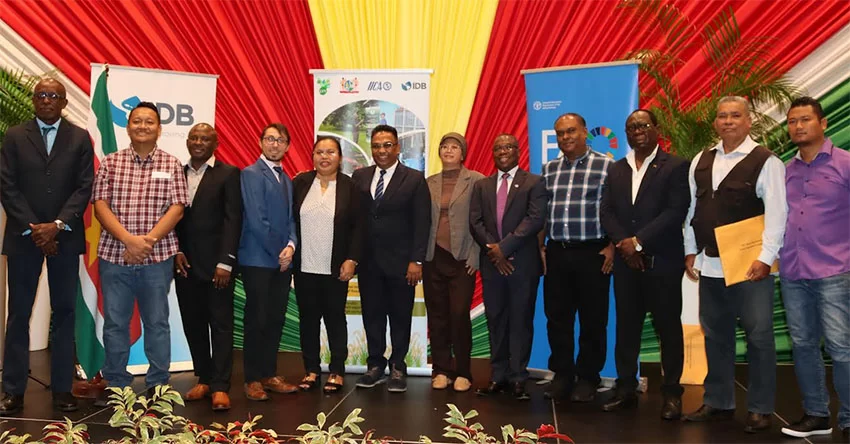
    KINGSTON, JAMAICA – Two leading global development institutions, the World Bank Group (WBG) and the Inter-American Institute for Cooperation on Agriculture (IICA), have officially launched the landmark AgriConnect initiative in Jamaica, kicking off a global effort to expand rural digital access, boost digital inclusion, and integrate small-scale family farmers into formal local and global value chains.

    At its core, the transformative program sets an ambitious target: by 2030, it will deliver targeted support to as many as 300 million smallholder producers worldwide, guiding the shift from low-yield subsistence farming models to scalable, commercially viable agricultural enterprises. Jamaica’s role as an early implementation site marks a key milestone in the WBG’s broader global strategy to drive inclusive, sustainable transformation of the international agrifood sector.

    Speaking at the official launch event, Jamaica’s Minister of Agriculture Floyd Green framed AgriConnect as a transformative opportunity for the island nation. Green emphasized that the initiative’s core philosophy, which combines institutional partnership with on-the-ground farmer support, aligns perfectly with Jamaica’s ongoing efforts to build a more resilient, technologically advanced, and inclusive agricultural sector that works for all producers.

    The launch drew senior leadership from both partnering institutions, including Lilia Burunciuc, the World Bank’s Country Director for the Caribbean, and Kent Coipel, IICA’s Jamaica-based representative. Both leaders reaffirmed the longstanding collaborative alliance between the inter-American hemispheric body and the World Bank, underlining their shared commitment to strengthening agricultural productivity and resilience across the Caribbean region. Additional senior attendees included Benoît Bosquet, the World Bank’s Director of Sustainable Development for Latin America and the Caribbean, and Diego Arias, Practice Manager for Agriculture and Food for the same region.

    Coipel, speaking on behalf of IICA, highlighted the institute’s decades-long track record of supporting small and medium-sized agricultural producers across the Caribbean, with a longstanding focus on building producer capacity, delivering export readiness training, and forging sustainable connections between farmers and formal markets. “Strengthening the organizational capacity of rural communities is a fundamental pillar of IICA’s technical cooperation work,” Coipel stated at the event.

    The launch was followed by a series of working sessions that brought together key stakeholders across the agricultural ecosystem. Derrick Deslandes, President of Jamaica’s College of Agriculture, Science and Education (CASE), and Jacqueline Sharp, director of a family-owned coffee enterprise focused on local marketing and international export, led discussions on actionable pathways to expand smallholder market access and streamline integration across national food value chains.

    A separate breakout exchange centered on strategies to expand small producers’ access to cutting-edge agricultural technologies, and explored new frontiers of scientific and digital innovation for Jamaica’s agricultural sector, generating actionable takeaways for local implementation. Participants in that session included World Bank agricultural specialist Winston Daes; Aura Cifuentes, Latin America and Caribbean Director at development non-profit Co-Develop; and Arturo Ramírez, Technical Director of Isratech Jamaica Limited, a firm that delivers sustainable agricultural solutions focused on water management and renewable energy alternatives to fossil fuels.

    Across the Americas, IICA is one of many core institutional partners backing the WBG’s AgriConnect vision. The initiative also brings together multilateral financial institutions, private sector actors, philanthropic foundations, and global knowledge partners to align resources around shared goals for smallholder empowerment.

    On a global scale, AgriConnect benefits from an estimated annual financing envelope of US$9 billion, with the additional potential to mobilize up to US$5 billion in supplementary private and public investments. These resources will be used to strengthen innovation systems, expand accessible agricultural financing, and build supportive service ecosystems tailored to the needs of small-scale producers.

    Per project organizers, AgriConnect was developed in response to findings from a World Bank-convened expert panel, which identified the agriculture and agribusiness sector as one of the five global industries with the greatest potential to absorb the large number of young people entering the global workforce in the coming decade.

  • Nominations now open for WATA Hydrate to Educate initiative

    Nominations now open for WATA Hydrate to Educate initiative

    KINGSTON, Jamaica — A major new investment in Jamaican secondary education is now open for applications, as bottled water brand WATA launches its 2026 Hydrate to Educate initiative with a total commitment of more than JA$12 million to support students and school infrastructure across the island.

    Now in another annual cycle, the community-focused program splits its funding across two core impact areas: direct individual support for students and institutional development grants for schools. Thirty qualifying secondary students will each receive JA$200,000 in unrestricted educational assistance, which can be put toward tuition costs, required course materials, daily transportation fares, and other unmet academic needs that often create barriers to consistent schooling for low-income youth.

    On the institutional side, 14 Jamaican secondary schools will receive targeted grants to advance campus improvement projects. Five secondary schools located in western parishes, an area still recovering from the devastation of Hurricane Melissa, will each receive JA$1 million to support recovery and development work. An additional nine schools spread across all other regions of the island will receive JA$200,000 each for their own campus upgrade projects.

    Brittany Thwaites, brand manager for the WATA portfolio at Wisynco Group, the parent company behind the initiative, explained that Hydrate to Educate is built on a core philosophy that sustainable educational progress requires investment at both the individual and institutional level. “This program has always been rooted in the belief that every young Jamaican deserves equal access to the resources they need to pursue their education, no matter their financial background,” Thwaites shared in a statement announcing the 2026 nomination cycle. “Year after year, we see firsthand how transformative this support is for students, their families, and entire school communities. We’re proud to keep expanding the program to reach more vulnerable communities across Jamaica.”

    Thwaites emphasized that the 2026 program has been structured to address the ongoing recovery needs of western Jamaica, where Hurricane Melissa caused widespread damage to public infrastructure, including school facilities. “This year, we made a deliberate choice to prioritize additional support for schools in western parishes that are still working to bounce back from Hurricane Melissa,” she said. “Education is one of the most critical foundations for long-term community recovery and progress. Through this initiative, WATA is working to help rebuild safe, supportive learning spaces where students can continue to learn, grow, and build brighter futures, even after disaster.”

    Nominations for individual student grants are open to eligible secondary students from every parish across Jamaica. Any third party who can speak to a student’s financial need — including parents, guardians, teachers, coaches, and community leaders — may submit a nomination. Submissions must include details about the student’s personal background, current financial circumstances, and a description of how the grant would remove barriers to their ongoing education.

    For institutional grant applicants, funding is reserved for projects that directly improve the overall campus learning environment, including critical infrastructure repairs, expansion of learning resource centers, accessibility upgrades, and other campus-wide needs that align with the program’s mission.

    As previously noted, a dedicated portion of the 2026 funding is earmarked specifically for hurricane-impacted western schools, to accelerate their recovery work and help them rebuild stronger, more resilient campuses for their student bodies.

    Nominations for both student and institutional grants will close at the end of the day on June 30, 2026. Interested parties can submit nominations or access full program details by visiting the official program website at educate.wisynco.com.

  • Lupus Foundation calls on public to ‘Go Purple’ for World Lupus Day 2026

    Lupus Foundation calls on public to ‘Go Purple’ for World Lupus Day 2026

    KINGSTON, Jamaica — Ahead of the 2026 observance of World Lupus Day on May 10, the Lupus Foundation of Jamaica has issued a public appeal to the nation’s corporate sector, small business owners and everyday citizens to stand in solidarity with Jamaicans living with lupus through a nationwide outreach initiative dubbed ‘Go Purple’.

    Aligning with the global 2026 World Lupus Day theme ‘Make Lupus Visible’ and adopting the local rallying cry ‘One Voice. One Community. One Fight.’, the foundation is pushing for widespread participation in small but meaningful actions that shine a spotlight on lupus, a frequently misunderstood autoimmune condition that often hides its symptoms from plain sight and impacts thousands of people across the island.

    The organization has outlined clear, accessible steps for Jamaican businesses of all sizes to get involved. These include swapping out standard social media profile logos for purple versions to signal solidarity, bathing commercial buildings, office spaces and retail storefronts in purple lighting, and circulating educational lupus awareness content across all their owned digital channels.

    Ordinary members of the public are also invited to add their support to the movement. Simple personal actions include adding purple design elements to personal social media profile pictures, wearing purple clothing or accessories on May 10, and sharing messages of encouragement and awareness to their own social networks to expand the campaign’s reach.

    “Lupus is often called an invisible illness, but together we can make it visible,” shared a senior representative from the Lupus Foundation of Jamaica in a statement announcing the campaign. “By turning our digital spaces and physical environments purple, we are sending a strong, unified message of support, awareness and hope to every person and family affected by this condition across Jamaica.”

    The foundation emphasized that the core goals of the ‘Go Purple’ initiative extend far beyond symbolic action. The campaign is designed to jumpstart a national conversation about lupus, break down common misconceptions about the disease, and build a visible, supportive community for all those navigating its impacts. Through collective public participation, the organization also aims to draw attention to the critical roles that early diagnosis, consistent accessible care, and community backing play in improving outcomes for people living with lupus.

    As Jamaica prepares to join the global lupus awareness movement in 2026, the foundation closed its appeal with a reminder that meaningful change starts small: widespread awareness begins with intentional visibility, and that visibility depends on the participation of every single person across the country.

  • Super Value owner back home after health scare

    Super Value owner back home after health scare

    Nine weeks after being medically evacuated to a United States hospital for emergency treatment of severe pneumonia, one of The Bahamas’ most legendary business figures has returned to his home in New Providence, carrying a critical public health message for his fellow citizens.

    Rupert Roberts, 88, who founded the nation’s largest all-Bahamian grocery chain Super Value and shaped decades of commercial and banking growth across the country, expressed unbridled joy at returning to his home country’s iconic warm climate. “It’s such a blessing to be back in the sunshine,” he shared in an interview shortly after his arrival. In his message to Bahamians, he urged widespread prioritization of personal wellness, emphasizing: “Look after yourselves with a healthy diet and regular exercise. You could develop an illness that The Bahamas is not fully equipped to treat, and a serious medical condition can quickly spiral into costs far beyond what most families can afford.”

    When asked if his near-death health scare had prompted doctors to urge him to step back from his decades-long career, the self-identified workaholic laughed off the suggestion. “No, not at all!” he said. “They told me to keep going, never stop.”

    Roberts fell seriously ill with pneumonia in late February, triggering an outpouring of support from across the nation that he says was a critical part of his recovery. Hundreds of Tribune readers sent prayers and well-wishes, and dozens of Super Value employees answered an urgent call to donate blood to support his treatment when he first became sick.

    “I want to thank every single person — my family, my relatives, every employee, every customer, and the entire country for all their support and prayers,” Roberts said. “That support was more healing to me than any medical treatment, and it’s what brought me home. I had no idea how many people cared about me this way, and I can’t put my appreciation into words.”

    Throughout his nine-week treatment and recovery at St Mary’s, part of the world-renowned Mayo Clinic in Rochester, Minnesota, Roberts had constant, around-the-clock support from his wife Margaret and his granddaughter Paige Waugh, who works on the Super Value team. “I never would have made it through this without their love, care, and constant presence by my side,” he noted. He also expressed particular gratitude for a well-wish call from Prime Minister Philip “Brave” Davis, and for the early and consistent care from his personal Bahamian physician Dr Duane Sands, who is also former health minister and current chairman of the Free National Movement.

    Dr Sands visited Roberts two to four times a day in the early stages of his illness, coordinated his transfer to the Mayo Clinic, and set him up for a successful recovery. “I never felt any fear for my life at any point,” Roberts said. “I always knew I was in good hands, from the very start with Dr Sands. I’ve been treated at St Mary’s before several times, so it felt like home even in Minnesota. Doctors from multiple departments came to check on me, and I was even shocked when Bahamian Foreign Affairs Minister Fred Mitchell stopped by with a large bouquet of flowers. Having a fellow Bahamian visit made everything feel so much more comfortable.”

    Roberts confirmed that while he was in the US, medical teams also fixed a long-standing issue with his pacemaker, after one of the device’s leads slipped out of place and required reattachment. Beyond that minor procedure, he said he is now well on his way to a full recovery.

    Despite being away from his business interests for more than two months, Roberts said he never felt disconnected from daily operations. Thanks to a deeply trained management team and consistent communication with staff, “It was just as if I was sitting at my desk every day,” he explained.

    When asked what he missed most during his time in the cold northern US, he answered without hesitation: “The warm Bahamian weather. It’s so great to be back where all my favorite things are, in what I truly believe is the best place in the world to enjoy life. I’m so happy to be back to our 80-degree sunshine — that cold up north was absolutely horrid.”

    Beyond his iconic work building Super Value into the backbone of the Bahamian grocery industry, Roberts has long been a central figure in national banking development. Following the Bahamianisation of the nation’s finance sector, he was appointed chairman of Commonwealth Bank Limited, serving in the role from 1984 to 1992. During his tenure, he led the bank out of years of stagnation under foreign ownership, overseeing explosive growth: the bank relocated its headquarters to a new facility on East Bay Street, opened new branches in Oakes Field and Marsh Harbour, grew total assets by more than 700% to over $125 million, and increased net income from $1.3 million in 1984 to $4 million by 1992.

  • Calls for bridge fix after father dies in Exuma crash

    Calls for bridge fix after father dies in Exuma crash

    A tragic fatal crash off a poorly maintained Bahamian bridge has reignited long-simmering calls for critical infrastructure upgrades, after a retired prison officer who was days away from reuniting with his family lost his life in an incident his loved ones say was entirely preventable.

    Preston McKenzie, a 60-something retired corrections official who had recently moved back to Exuma to be closer to extended family, was scheduled to board a flight to New Providence on April 30 to reunite with his wife and three children. He never arrived for the trip, and his body was later recovered from his partially submerged overturned blue Honda Civic near the Barraterre bridge, according to law enforcement and family statements.

    Authorities confirmed that the George Town Police Station received the initial distress call shortly before noon on April 30, after a local resident spotted the vehicle in the water off the bridge’s northern end. The good Samaritan used a hand tool to gain access to the car and helped pull McKenzie’s body from the wreckage before officers arrived. A local physician pronounced McKenzie dead at the scene, and preliminary police investigations indicate the driver lost control of the vehicle, causing it to veer off the curved bridge into the water below.

    For McKenzie’s daughter, Pruzyia McKenzie, the tragedy is not an accident — it is the avoidable consequence of years of unaddressed safety hazards on the Barraterre bridge. In an emotional interview, she explained that the family grew concerned after her father stopped responding to messages and missed his scheduled flight. The family soon received the devastating confirmation from a relative in Exuma that his body had been found in the water.

    Evidence from the scene backs up the family’s claims of long-standing danger. Video footage obtained by The Tribune shows McKenzie’s vehicle submerged after crossing over the bridge’s inadequate guardrail, with barely any visible signage warning drivers of the sharp curve ahead or the bridge edge. Pruzyia McKenzie noted that her father was not the first driver to go off the bridge — two previous motorists survived similar incidents, but she says repeated warnings about the structure’s flaws have gone unheeded.

    McKenzie was described by his daughter as a loving, humble man with a contagious joyful energy, who often served as the center of social gatherings. After a decades-long career in corrections where he recruited dozens of new officers — many of whom are now grieving his loss — he had been preparing to launch a new small business ahead of the upcoming annual Barraterre festival. The last video his family received from him, taken the night he is believed to have crashed, shows him sharing a toast with friends and repeatedly saying he was bound for heaven.

    Pruzyia McKenzie says the stiffness of her father’s body when it was recovered suggests he had been in the water for more than 12 hours, meaning emergency responders were not alerted to the crash until long after he was gone. She added that the bridge’s core hazards — non-existent nighttime lighting, a sharp curve that restricts driver visibility, insufficient guardrails, and a total lack of proper warning signage — make it a death trap waiting for more victims. Her family’s greatest hope now is that McKenzie’s death will finally force authorities to carry out the long-overdue upgrades, so no other family has to plan a funeral instead of welcoming a loved one home.

    “My daddy was supposed to be here,” Pruzyia McKenzie said through tears. “We were expecting to see my daddy not plan a funeral. We don’t want another life lost to this dangerous bridge.”

  • Pioneering CNN founder Ted Turner dead at 87

    Pioneering CNN founder Ted Turner dead at 87

    American media entrepreneur Ted Turner, the trailblazing innovator who redefined 20th-century broadcast journalism with the 1980 launch of the world’s first 24-hour cable news network CNN, has passed away at 87 years old, CNN confirmed in an official announcement Wednesday.

    A mustachioed Southern native, avid competitive yachter, and prominent philanthropist who built a multi-faceted media and sports empire over his decades-long career, Turner had been living with Lewy Body Dementia, a progressive neurodegenerative disease, in his later years.

    When Turner launched Cable News Network, it upended the traditional broadcast news model that had dominated American television for decades. Unlike existing outlets that restricted news coverage to fixed time slots, CNN committed to continuous, around-the-clock breaking news coverage — a radical concept at the time that would soon reshape global journalism.

    The network catapulted to international fame for its unflinching live coverage of the 1990-1991 Gulf War, a milestone that cemented its reputation as a trusted global news source. Over the following decades, CNN brought live on-the-ground reporting to nearly every major global event, from the dissolution of the Soviet Union to other breaking developments across every continent. Most notably, the network’s decision to keep correspondents stationed in Baghdad through the height of U.S. bombing raids solidified its status as an indispensable source of frontline news, unmatched by competing broadcasters at the time.

    In a statement released following Turner’s death, Mark Thompson, Chairman and CEO of CNN Worldwide, paid tribute to the network’s founder, calling him a towering figure whose innovation laid the groundwork for modern cable news. “Ted is the giant on whose shoulders we stand, and we will all take a moment today to recognise him and his impact on our lives and the world,” Thompson said, adding, “He was and always will be the presiding spirit of CNN.”

    Born Robert Edward “Ted” Turner III in Cincinnati, Ohio in November 1938, Turner’s early life was marked by upheaval. He attended a military boarding school in Tennessee and enrolled at Brown University, but was expelled before completing his degree. When Turner was just 24 years old, his father — struggling with severe financial despair over the family’s struggling advertising company — died by suicide, leaving the young Turner to take over the failing business.

    After stabilizing the company, Turner began expanding into broadcast media, first acquiring a handful of small radio stations across the Southeastern U.S. In 1970, he purchased a struggling Atlanta television station, marking his first major entry into the television industry. A decade later, that local station became the flagship of his newly formed national Turner Broadcasting System, and the steady profits from the venture allowed Turner to invest in his most ambitious project yet: the launch of CNN.

    The unprecedented success of CNN sparked a global revolution in broadcast news, inspiring the launch of dozens of competing 24-hour news networks around the world, including long-time rival Rupert Murdoch’s Fox News, MSNBC, and countless other cable and satellite news outlets across every region.

    Beyond CNN, Turner’s media empire grew to encompass a diverse portfolio of entertainment and niche cable networks, including TBS and TNT for sports and general entertainment, Turner Classic Movies for classic cinema, and Cartoon Network for children’s programming, turning Turner Broadcasting into one of the largest cable media groups in the world by the 1990s.

  • Govt buys GB Power – promises 37% cut

    Govt buys GB Power – promises 37% cut

    One week ahead of the country’s hotly contested general election, the Bahamian government has finalized a deal to purchase all outstanding shares of the Grand Bahama Power Company (GBPC), a move Prime Minister Philip “Brave” Davis says will deliver an average 37 percent reduction in electricity bills for residential and commercial customers across the island.

    Under the terms of the acquisition, GBPC will align its pricing structure with the national tariff schedule already in use by Bahamas Power and Light (BPL), bringing Grand Bahama’s electricity rates in line with what consumers pay in other regions of The Bahamas. Davis confirmed that cost savings will appear on customer bills as early as the next billing cycle.

    “This decision was made with a clear purpose: to bring down the cost of electricity for the people of Grand Bahama and place this island inside our national energy strategy,” Davis told reporters. He added that the rate cut will reduce overall cost of living for local families and boost the competitiveness of Grand Bahama’s business community, supporting long-term economic growth on the island.

    The government executed the acquisition through a newly created special purpose entity, the Grand Bahama Electricity Company. The transaction received full funding from loans issued by Standard Chartered and Scotiabank, with the Bahamian government serving as guarantor for the borrowing.

    In addition to consumer savings, Davis outlined three core policy benefits of the move: it integrates Grand Bahama into the government’s national energy strategy, strengthening the island’s overall investment climate; it preserves all existing jobs, benefits and the current Bahamian management team at GBPC; and it lays the groundwork for GBPC to access international development support for future energy projects.

    The timing of the high-profile utility acquisition, coming just days before voters head to the polls, has sparked questions about political motivations behind the announcement. Davis rejected calls to delay the reveal until after the election, arguing that governing does not pause during campaign season.

    “Why do I have to defend a move?” Davis said. “Governance don’t stop because election is in the air. We still have to govern, and this transaction has been in the making for quite a while. The process just happened to be ending now. Should we abandon it when we’re going to be able to bring relief to the people of Grand Bahama immediately? We will bring relief now. I have nothing to defend, other than to say I’m bringing relief to Grand Bahama.”

    For the immediate future, GBPC will continue normal operations under a transitional framework designed to avoid service disruptions while pricing structures are aligned with national standards. Over time, the utility will be gradually integrated into the government’s ongoing national energy reform program. The acquisition brings an end to Canadian energy firm Emera’s 13-year tenure as the majority owner of GBPC, after Emera first acquired a stake in the company in 2010.

    Davis thanked Emera for its years of management of the utility, noting that additional details on the transitional process will be released to the public in the coming weeks. Karen Hutt, executive vice-president of corporate development for Emera in The Bahamas, framed the ownership transfer as a “watershed moment” for both the company and the island.

    “This transition of ownership from Emera to the government provides a historic opportunity for Grand Bahama power and the island of Grand Bahama to play a pivotal role in the nation’s energy future under The Bahamas comprehensive and progressive national energy policy,” Hutt said.

    Nikita Mullings, GBPC’s chief operating officer, reassured customers that the ownership change will not impact the utility’s core service commitments. “Today’s announcement is a big one for us here at Grand Bahama Power, but it does not change what defines us,” Mullings said. “Our commitment to safety, reliability and service excellence remains unchanged, and it does not change our shared responsibility to our customers and this community.”

    Energy Minister Jobeth Coleby-Davis explained that the acquisition will deliver tangible benefits to more than 17,000 households and over 1,500 small and medium-sized businesses across Grand Bahama, framing the move as a critical step toward pricing fairness and regulatory consistency across the country. For years, Grand Bahama consumers faced drastically higher electricity rates than customers in other parts of The Bahamas under the previous private ownership structure. To illustrate the gap, Coleby-Davis shared that a 495 kilowatt-hour bill in Grand Bahama’s Pineridge neighborhood cost $200.09, while the same usage on Long Island cost just $121.38 under BPL’s tariff— a difference of nearly $79, translating to a 39.3 percent savings after alignment. Similarly, a 1,424 kilowatt-hour bill in Grand Bahama’s West End cost $700.21, compared to $481.50 for the same usage in New Providence, delivering a 31.2 percent savings for local customers after the change.

    The minister added that the national policy’s low-income protection, which sets a zero base rate for households using less than 200 kilowatt-hours of electricity monthly, will now extend to Grand Bahama, putting thousands of dollars in annual savings back into the pockets of vulnerable families.

    Grand Bahama Minister Ginger Moxey noted that the acquisition addresses decades of constituent complaints about unsustainably high energy costs on the island. “For too long, families and businesses have carried the weight of extremely high electricity costs,” Moxey said. “This Davis administration has heard the cry and meaningful change is here to address this vexing legacy issue, not years down the road, but with your next billing.”

    Davis confirmed that the government has not yet made a decision to change GBPC’s name, and will consult local residents on any potential rebranding. He also linked the acquisition to his broader campaign promise to revitalize Freeport and Grand Bahama’s economy. “I have committed myself that while I have the ability to do it, I will try to bring back the magic to the city and I dare say we are well on the way,” Davis said.

  • RA Williams targets growth from expanded eyecare portfolio

    RA Williams targets growth from expanded eyecare portfolio

    Jamaican pharmaceutical distributor RA Williams Distributors Limited has unveiled a strategic expansion of its ophthalmic product line, positioning the company’s eyecare segment as a key new driver of long-term revenue growth. The move builds on a 14-year distribution partnership with Aristopharma Limited, and adds three new dry eye and ocular surface treatments — Drylief, Neotear, and Hypomer Gel — to the company’s existing portfolio. The expansion is designed to widen local patient access to advanced specialized ocular care, while cementing RA Williams’ footprint in the high-value, prescriber-led eyecare market.

    In an interview with Jamaica Observer and Business Observer this week, RA Williams CEO Audley Reid emphasized that the latest portfolio addition aligns with the firm’s core mission: to deliver quality pharmaceutical solutions that connect global medical innovation to Jamaica’s local healthcare needs. “Fourteen years ago, we entered the eyecare market with Aristobet-N, and our mission remains the same,” Reid explained. “As a pharmacist-led organisation, this expansion into ocular health is not just a product launch; it is a strategic move to capture high-value market share in a segment with strong patient retention and consistent demand.”

    The new range of Aristopharma ocular lubricants directly addresses fast-rising local demand for dry eye and ocular surface therapies, a trend fueled in large part by soaring daily screen time and the growing prevalence of computer vision syndrome. By offering tiered treatment options that cater to everything from mild eye irritation to chronic dry eye conditions, the new products give local clinicians greater flexibility to tailor care to individual patient needs.

    Against a backdrop of recent industry headwinds, including hurricane-related supply disruptions and broad macroeconomic challenges that weighed on the firm’s performance in prior quarters, Reid noted that the timing of the ophthalmic expansion is well-calendar to deliver steady incremental revenue growth over the next 18 to 24 months, supported by the category’s consistent, non-cyclical demand. “By diversifying our portfolio into the ‘wellness and lifestyle’ space, we aim to capture a broader share of consumer spending while insulating revenue against fluctuations in any single sector,” he said.

    The eyecare expansion is the latest step in RA Williams’ broader push to diversify beyond traditional pharmaceuticals into fast-growing wellness and preventive care segments. The firm already notched a notable financial turnaround recently: for the first quarter ending January 31, 2026, RA Williams reported a net profit of JMD $33.5 million, double the profit recorded in the same period a year prior, on total revenues of JMD $541.9 million, reversing losses reported in the previous quarter.

    Earlier this year, the company entered a new partnership with Jamaican dermatologist Dr Romario Thomas to distribute his clinical-grade skincare brand Absolut Skin, and has ramped up efforts to place both new and existing wellness products in the country’s largest retail chains. Reid confirmed that Absolut Skin is in the final onboarding stage for MegaMart, one of Jamaica’s leading big-box retail chains, with products set to hit shelves by the end of the week. “This move complements our existing presence in the pharmacy network as we push to bring clinical-grade skincare to a wider supermarket demographic,” Reid said.

    Established wellness lines from RA Williams have already seen growing traction across alternative retail channels. The brand’s popular Sir Henry Turmeric Immunity Shots have gained a loyal consumer base across warehouse clubs, convenience stores, and gas station networks across the island. “Our retail push has been allowing us to tap into the growing ‘on-the-go’ wellness trend across multiple networks,” Reid added.

    Moving forward, RA Williams will continue to pursue a dual-track growth strategy that balances its core traditional pharmaceutical business with its expanding wellness portfolio. Management will prioritize filling unmet gaps in chronic disease care, while also scaling promising local Jamaican brands with national distribution potential. Reid highlighted that supporting local innovation is a core pillar of the firm’s long-term growth plan.

    “Lines like Sir Henry and Absolut Skin are world-class Jamaican brands, and we see ourselves as the bridge bringing them to a wider national audience,” Reid said. “Whether it is a life-saving medication in a pharmacy or a wellness shot in a supermarket, we are ensuring that R A Williams is present wherever the Jamaican consumer prioritises their health. By combining specialised medical treatments with high-velocity wellness products, we are building a diversified portfolio that is resilient, accessible and uniquely Jamaican.”