作者: admin

  • Browne says Ghanaian nurses hired to protect health system

    Browne says Ghanaian nurses hired to protect health system

    Prime Minister Gaston Browne has revealed that Antigua and Barbuda’s recruitment of Ghanaian nursing professionals constitutes a strategic safeguard for the nation’s healthcare infrastructure. This decision emerges from mounting concerns over potential disruptions to Cuba’s medical brigade program in the Caribbean due to escalating U.S. opposition.

    During an appearance on Pointe FM’s Browne and Browne Show, the Prime Minister articulated that Washington’s increasingly adversarial stance toward Cuba’s international medical initiatives prompted this proactive measure. Rather than displacing current Cuban medical staff, this recruitment serves as an insurance policy against sudden operational voids that could emerge from geopolitical tensions.

    “The United States has demonstrated pronounced hostility toward the Cuban medical brigade,” Browne stated. “Consequently, we deemed it imperative to implement risk management strategies to cushion our healthcare system against potential fallout.”

    Browne emphasized that the government’s approach focuses on maintaining healthcare continuity, particularly if circumstances necessitate the abrupt departure of Cuban medical personnel. The administration initiated negotiations with Ghana several months ago, resulting in an imminent deployment of healthcare professionals to the twin-island nation.

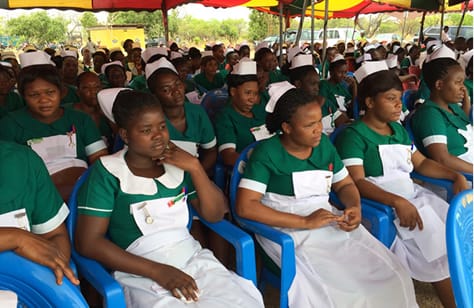
    Approximately 115 nurses from Ghana are scheduled to arrive in Antigua within the coming days, marking a significant expansion of the country’s medical workforce diversification efforts. This bilateral arrangement represents both a practical response to regional geopolitical dynamics and an enhancement of Antigua and Barbuda’s healthcare resilience.

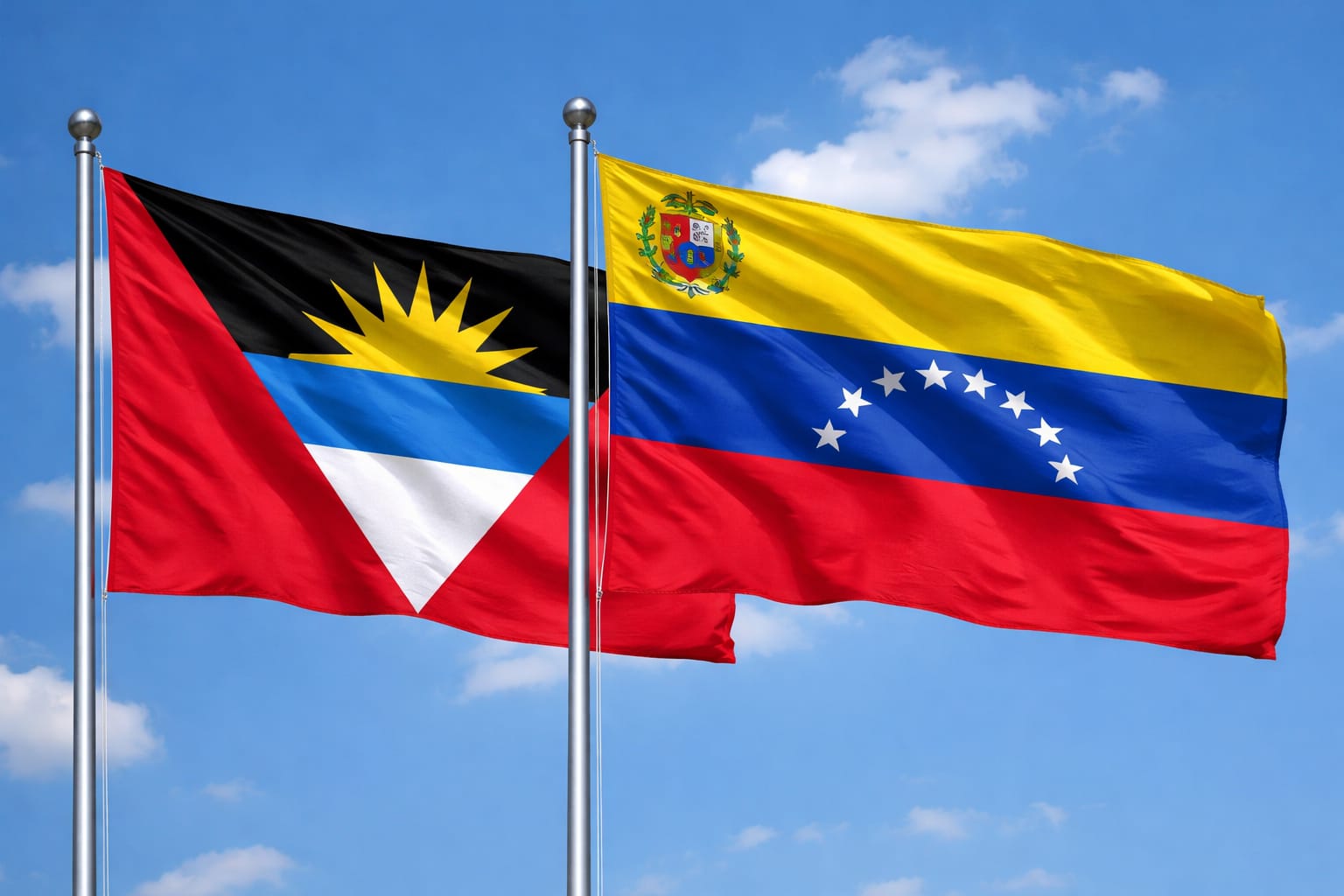
  • Antigua and Barbuda rejects major commercial and financial ties with Venezuela

    Antigua and Barbuda rejects major commercial and financial ties with Venezuela

    The Caribbean nation of Antigua and Barbuda has announced a significant diplomatic and economic shift, formally rejecting the expansion of major commercial and financial engagements with the Bolivarian Republic of Venezuela. This decision marks a notable recalibration of foreign policy for the dual-island state, potentially aligning it more closely with broader hemispheric positions.

    Government officials in St. John’s cited a need to ensure regional stability and protect their nation’s economic interests as primary motivations for the move. The policy shift involves suspending negotiations on several proposed bilateral investment treaties and halting plans for deepened banking cooperation that were previously under discussion.

    This development occurs against a complex geopolitical backdrop, where Caribbean Community (CARICOM) members have maintained diverse relationships with Venezuela. While some nations benefited from Petrocaribe energy initiatives, growing international concerns regarding Venezuela’s political and economic crisis have prompted reassessments across the region.

    The decision is anticipated to impact specific sectors, particularly energy imports and development financing. Analysts suggest Antigua and Barbuda may now seek to strengthen economic partnerships with alternative nations and multilateral institutions to compensate for the reduced Venezuelan engagement.

  • Zamoni, Mr. Benji and Pahjo Capture Soca Song of the Year at Dominica Music Awards

    Zamoni, Mr. Benji and Pahjo Capture Soca Song of the Year at Dominica Music Awards

    The vibrant sounds of Caribbean music reached a crescendo at last evening’s Dominica Music Awards, where the collaborative masterpiece “Mash Up Kingdom” by artists Zamoni, Mr. Benji, and Pahjo secured the coveted Soca Song of the Year honor. This high-voltage composition has become the definitive soundtrack of the season, capturing the essence of Carnival celebrations through its pulsating beats and electrifying performance quality that resonated powerfully across regional festivities and airwaves.

    The award-winning track distinguished itself through its capacity to generate immediate audience engagement and spontaneous celebration, transforming every playback into an immersive cultural experience. Its rhythmic complexity and authentic representation of soca’s dynamic tradition established “Mash Up Kingdom” as both a commercial success and artistic benchmark within contemporary Caribbean music.

    During their acceptance remarks, the triumphant artists acknowledged the crucial support system that propelled their work to critical acclaim, specifically recognizing music industry professionals, dedicated fans, and Dominica’s creative community for their instrumental role in the song’s journey to award recognition. This achievement represents a significant career elevation for all three performers, solidifying their positions as influential contributors to the evolution of soca music.

    The prestigious ceremony served as a gathering point for the Caribbean’s most exceptional musical talents, highlighting artistic excellence and cultural impact across multiple genres. With this distinguished accolade, Zamoni, Mr. Benji, and Pahjo have permanently enshrined “Mash Up Kingdom” within the annals of soca history, ensuring its recognition as one of the genre’s most impactful compositions in recent memory.

  • Statement From The Bureau Of The Conference Of Caricom Heads Of Government On Military Action In Venezuela

    Statement From The Bureau Of The Conference Of Caricom Heads Of Government On Military Action In Venezuela

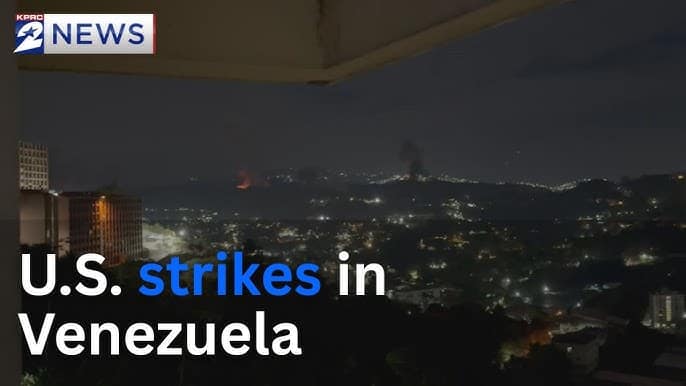
    In response to recent US military operations in Venezuela, the Bureau of the Conference of Heads of Government of the Caribbean Community (CARICOM) held an emergency session on Saturday, January 3, 2026. The meeting, attended by representatives from Jamaica, Saint Kitts and Nevis, and Saint Lucia, addressed the escalating regional crisis.

    CARICOM leadership reaffirmed its unwavering commitment to established international legal frameworks and multilateral principles as outlined in the United Nations Charter. The organization emphasized the critical importance of respecting national sovereignty, territorial integrity, and fundamental human dignity in the current geopolitical climate.

    The regional body issued a strong appeal for peaceful resolution through established diplomatic channels, highlighting the necessity of preserving Venezuela’s political stability, democratic governance, and economic prosperity. CARICOM expressed particular concern for the welfare of the Venezuelan population amid the ongoing military intervention.

    In a official statement, CARICOM leadership confirmed that comprehensive measures are being implemented to safeguard the security and well-being of Caribbean citizens throughout the region. The Bureau announced it would maintain continuous assessment of the situation’s multidimensional consequences, with special attention to potential disruptions in economic operations and regional air travel networks.

    The Caribbean Community concluded by affirming its readiness to facilitate cooperative efforts aimed at peaceful conflict resolution, operating from a foundation of mutual respect and regional solidarity.

  • BLP’s Holder confirms exit from elective politics, endorses Trotman as successor

    BLP’s Holder confirms exit from elective politics, endorses Trotman as successor

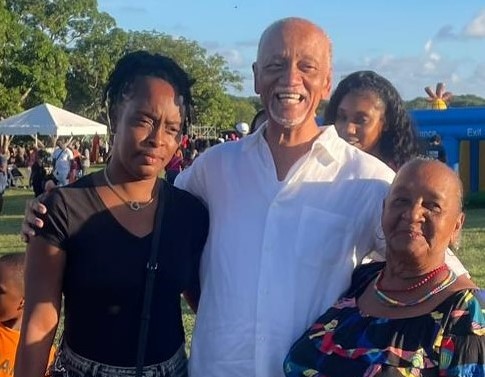
    In a significant political development, St Michael Central representative Arthur Holder has announced his departure from elective politics while publicly backing Barbados Labour Party candidate Tyra Trotman as his preferred successor. The announcement occurred during a community children’s event at the National Botanical Gardens attended by Prime Minister Mia Mottley.

    Holder, who serves as Speaker of the House of Assembly, framed his decision within a broader philosophy of leadership continuity. “Leadership does not conclude with holding office but extends through mentorship, guidance and support for those prepared to serve,” he stated, emphasizing that his dedication to community development and national service remains unwavering.

    The veteran politician expressed strong confidence in Trotman’s capabilities, praising her contemporary leadership style, vision, and comprehension of constituency challenges. “Her approach reflects a modern and grounded leadership methodology that has resonated across generations. St Michael Central requires both service continuity and innovative perspectives, and Tyra is ideally positioned to assume this responsibility,” Holder remarked.

    Trotman, an attorney-at-law, acknowledged the endorsement as both an honor and profound responsibility. “Receiving support from a distinguished public servant strengthens my determination to lead with integrity,” she responded.

    The prospective candidate unveiled a comprehensive community initiative titled ‘Hold Ferm’—an acronym representing Faith/Family, Education, Rehabilitation, and Mental Health. While acknowledging diverse spiritual perspectives, Trotman emphasized the universal need for moral grounding among youth. “Possessing a moral compass, irrespective of formal religious practice, enables improved decision-making and critical thinking,” she explained.

    Education reform constitutes a central pillar of Trotman’s platform, addressing the financial barriers that prevent many students from accessing supplemental academic support. She advocates for early intervention programs to prevent educational disparities from widening amid increasing global academic standards.

    Regarding public safety, Trotman proposed a collaborative rehabilitation model involving law enforcement engagement with individuals demonstrating at-risk behaviors before formal justice system involvement. Additionally, she plans to revitalize sports programs and address mental health stigma through community recreational initiatives that provide physical and emotional outlets for youth.

  • Trump: ‘We are ‘going to run’ Venezuela after Maduro capture

    Trump: ‘We are ‘going to run’ Venezuela after Maduro capture

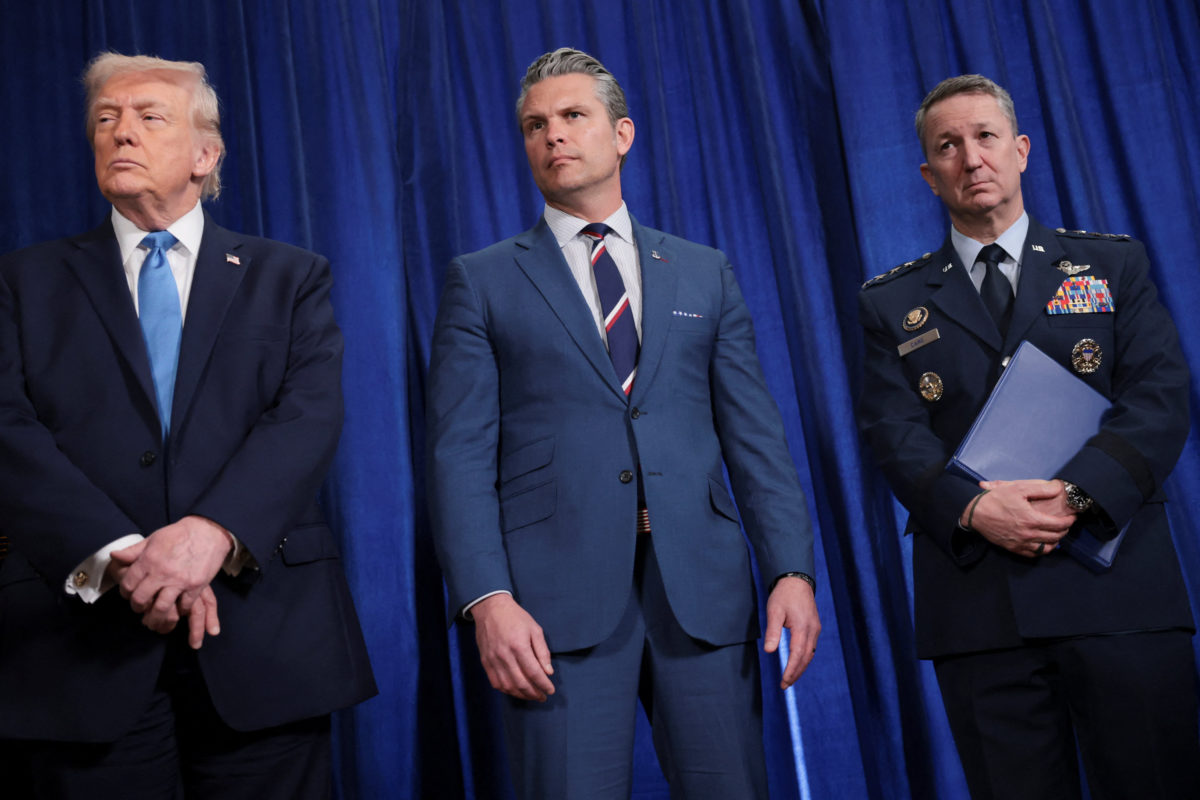
    In a bold declaration from his Mar-a-Lago resort, President Donald Trump characterized the military operation that resulted in the ousting of Venezuelan leader Nicolas Maduro as an unparalleled demonstration of American prowess. The operation, executed on Saturday, has thrust the United States into the central role of overseeing Venezuela’s political transition, though visible U.S. military presence in Caracas remains unconfirmed.

    Trump’s foreign policy, often defined by its assertive confidence, was on full display as he framed the intervention as a critical step toward installing ‘peace’ and ‘justice’ in a nation long governed by authoritarian rule. This move represents a significant pivot for a president who initially campaigned on disengaging from foreign entanglements, now committing the nation to a complex nation-building endeavor.

    However, the path forward is fraught with challenges. The administration must navigate the potential power vacuum following Maduro’s removal and address deep-seated issues of hyperinflation, crippling shortages of essential goods, and a massive brain drain that has plagued the country despite its vast oil reserves.

    The international reaction has been mixed and pointed. While allies in South Florida’s Venezuelan diaspora celebrated the operation, European leaders and U.S. adversaries expressed sharp criticism. The European Commission voiced ‘great concern,’ and France’s Foreign Minister decried the action as a violation of international law principles. Russia and China issued formal condemnations, labeling the operation an act of aggression and a breach of Venezuelan sovereignty.

    Domestically, criticism was immediate from Democratic lawmakers. Senator Ruben Gallego (D-AZ) condemned the action as an illegal act that transforms the U.S. from ‘world cop to world bully.’

    The operation culminated months of strategic pressure within the administration, led prominently by Secretary of State Marco Rubio. It followed the collapse of a proposed negotiated exit for Maduro, which the White House had rejected outright. Pentagon officials signaled that the operation should serve as a stark warning to other global adversaries about the reach of American military will under the Trump administration. The U.S. now faces the formidable task of stabilizing a fractured nation while determining its future leadership, with Trump vowing that American involvement will be professional and ultimately reimbursed by Venezuela’s substantial natural resources.

  • Chilean parliamentarians condemn invasion of Venezuela

    Chilean parliamentarians condemn invasion of Venezuela

    Prominent Latin American senators have launched vehement condemnations against what they characterize as unlawful U.S. aggression targeting Venezuela, framing recent statements from American officials as endorsements of international crimes driven by resource exploitation.

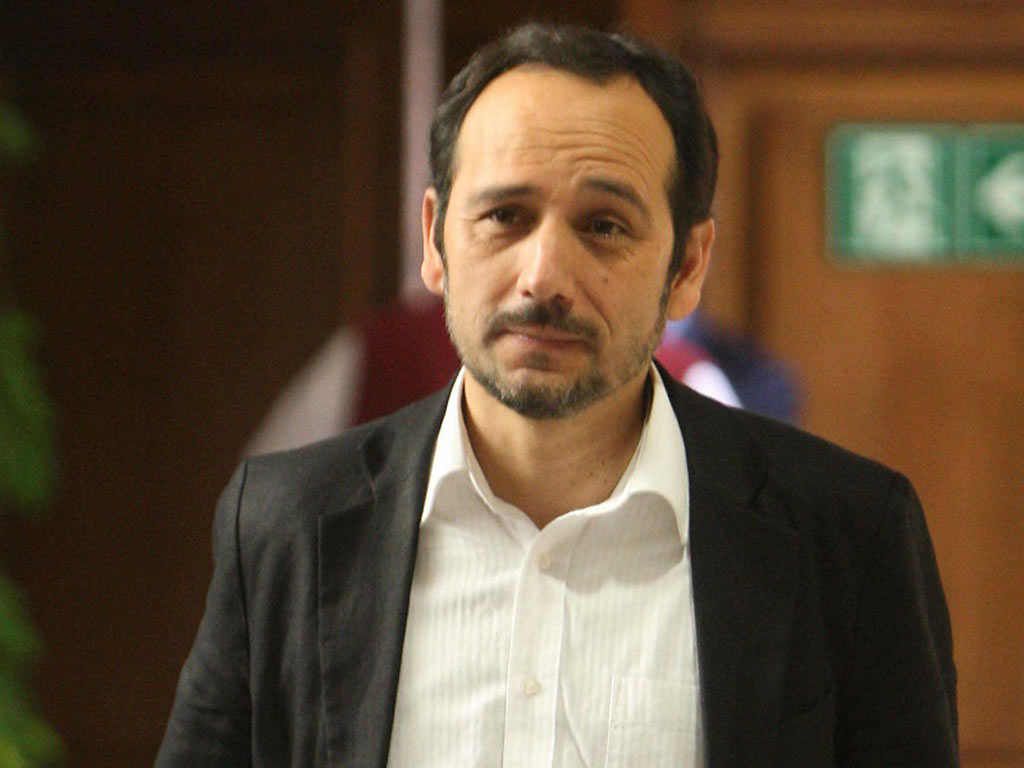
    Senator Daniel Nunez issued a forceful declaration via social media, asserting that military invasion and the abduction of a head of state constitute grave breaches of international law. “Invading a sovereign nation and kidnapping both the president and his wife represent egregious international crimes,” Nunez stated. “These actions serve a singular purpose: to seize control over Venezuela’s oil reserves once again.”

    The parliamentarian further amplified concerns regarding provocative statements emanating from former U.S. President Donald Trump and Secretary of State Marco Rubio directed at Cuba, underscoring a pattern of hemispheric interventionism. Nunez called for global solidarity, emphasizing that “the international community must vocally defend every nation’s inherent right to self-determination. I express my complete solidarity with Cuba and its revolutionary legacy.”

    Echoing these sentiments, legislator and Senator-elect Karol Cariola characterized U.S. military posturing toward Venezuela as flagrant violations of both national sovereignty and established international legal frameworks. Cariola articulated a skepticism toward Washington’s professed motives, stating, “The primary interest for Trump and his administration is not the promotion of democracy—it is the control of petroleum resources. This objective justifies the commission of any atrocity in their view.”

    Adding to the chorus of criticism, legislator Luis Cuello referenced concerning endorsements from Chile’s President-elect Jose Antonio Kast, who has openly supported aggressive U.S. maneuvers against Venezuela. This alignment, according to Cuello, illustrates a dangerous regional divide regarding the principles of non-intervention and national sovereignty.

  • Man jailed for assaulting his granny, 80; smashing her phone

    Man jailed for assaulting his granny, 80; smashing her phone

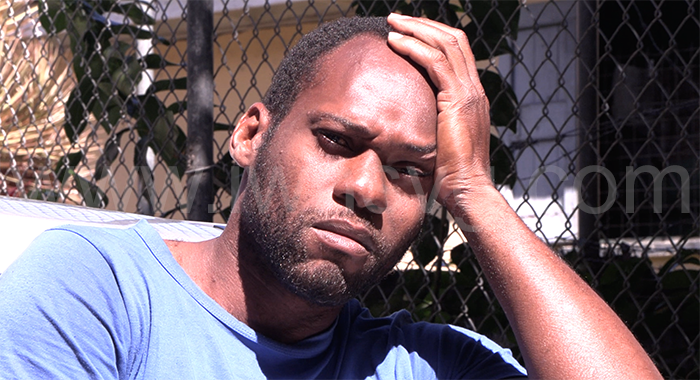
    In an extraordinary courtroom development, an 80-year-old grandmother’s decisive testimony directly resulted in her grandson’s incarceration for assaulting her. Jamel Douglas, 38, of Dascent Cottage, received an 11-month prison sentence for the Boxing Day 2025 attack on Kerhen Jacobs at her Lodge Village residence that resulted in actual bodily harm.

    The judicial proceedings took a dramatic turn when Chief Magistrate Colin John consulted Jacobs regarding the prosecution’s recommendation for a suspended sentence. Instead of leniency, Jacobs delivered compelling testimony about her grandson’s persistent aggressive behavior. “He is very rough and rude. Sometimes, you talk to him and he listen, other times he don’t,” she stated, emphasizing Douglas’s pattern of aggression toward her.

    The incident occurred on December 26, 2025, when Jacobs was conversing with a friend on her porch. Douglas arrived uninvited and sat on a table despite being asked to leave. He subsequently escalated the situation by jumping on the table aggressively. When Jacobs attempted to call for assistance, Douglas wrestled the phone from her hand, injuring her finger in the process, before deliberately smashing the device valued at EC$270.

    Following his guilty plea to both assault and property damage charges, Douglas presented mitigation arguments citing historical mental health issues and perceived unfair treatment by family members. Notably, the chief magistrate observed that Douglas missed the opportunity to offer a genuine apology during these proceedings.

    Upon sentencing, Magistrate John emphasized the sanctity of personal residence, stating, “Your grandmother should be allowed to enjoy her home in comfort without disturbance by you.” The court additionally mandated that Douglas compensate his grandmother EC$270 for the destroyed phone within two months of his release, with a six-month prison term awaiting should he fail to comply.

  • Restitution, readiness, and renewal: navigating expectations in a new political era

    Restitution, readiness, and renewal: navigating expectations in a new political era

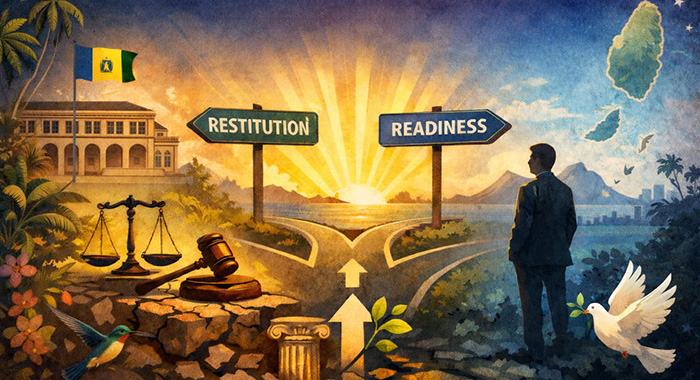
    The historic transfer of power in St. Vincent and the Grenadines, ending 25 years of Unity Labour Party governance, has unleashed profound emotional responses among citizens who experienced marginalization during that era. Supporters of the New Democratic Party—particularly those who were visibly aligned with the opposition—frequently encountered tangible professional limitations, stalled career trajectories, and deferred aspirations throughout the previous administration.

    This political shift has naturally generated powerful expectations of moral reckoning and restitution among previously excluded groups. However, while acknowledging the legitimacy of these grievances, the transition presents complex challenges that transcend mere political allegiance. Democratic restitution must not be conflated with entitlement, nor should political change be expected to reverse the irreversible passage of time.

    The fundamental dilemma emerges from concurrent developments: while individuals faced political constraints, both the nation and global landscape underwent radical transformation. Over the past quarter-century, economic structures evolved, technological advancements revolutionized industries, professional standards escalated, and governance mechanisms grew increasingly sophisticated. Qualifications that were once adequate may now be insufficient, while skills that were previously competitive have potentially become obsolete.

    This reality constitutes not a judgment on individual character or loyalty, but rather recognition of structural evolution. Political discrimination may explain historical stagnation but does not automatically confer preparedness for senior responsibilities in today’s dramatically altered environment. Ignoring this discrepancy risks both personal disappointment and national underperformance.

    At the individual level, this transition demands rigorous self-assessment: evaluating maintained skills, identifying knowledge gaps, and pursuing necessary training or certification. For some, this may require retraining, professional development, or even pivoting to related fields—a potentially frustrating process given the circumstances that necessitated it.

    Patience represents not passive acceptance but strategic positioning. Investing in skills development and professional growth constitutes preparation for sustainable advancement rather than abandonment of justice. Short-term appointments prioritizing political loyalty over competence may yield temporary satisfaction but ultimately weaken institutions and undermine meaningful progress.

    Nationally, the new government must resist merely inverting previous patronage patterns. Substituting one form of political favoritism for another deepens societal divisions rather than healing them. Genuine restitution involves constructing fair, transparent, and merit-based systems that ensure future generations are neither punished nor rewarded solely based on political affiliation.

    This moment invites collective reflection toward national renewal grounded in competence, integrity, and adaptability. While acknowledging past injustices, the future necessitates preparedness. The path forward—for both individuals and the nation—lies in balancing justice with realism, creating space for healing and inclusion while maintaining commitment to standards and excellence.

    Through measured patience, realistic expectations, and deliberate self-improvement, those once excluded can position themselves not merely as beneficiaries of political change but as meaningful contributors to it. This approach enables the country to transcend cycles of grievance and entitlement toward a more mature democratic culture where opportunity expands based on capability rather than political connections.
  • Abinader: The Dominican Republic is willing to help restore democracy, peace, and harmony in Venezuela

    Abinader: The Dominican Republic is willing to help restore democracy, peace, and harmony in Venezuela

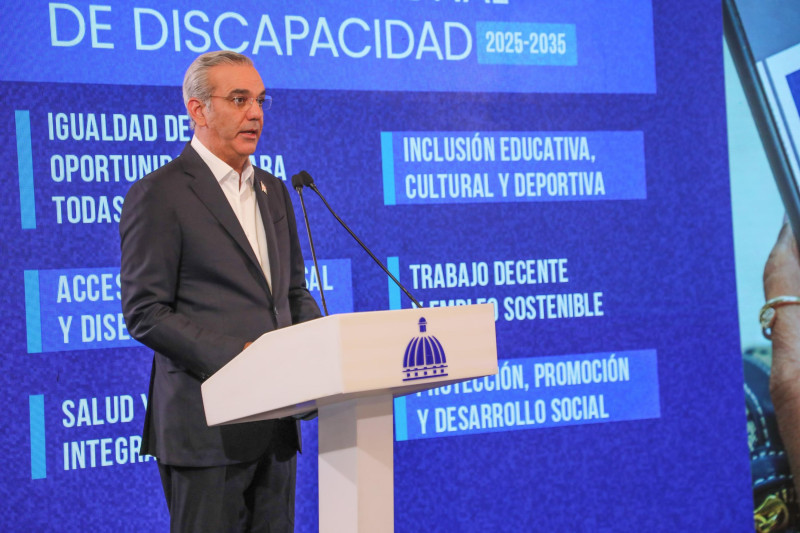
    SANTO DOMINGO – Dominican President Luis Abinader has publicly commented on the dramatic apprehension of Venezuelan leader Nicolás Maduro by United States forces. The operation, which resulted in Maduro and his wife Cilia Flores being taken into custody in New York on charges encompassing drug trafficking and terrorism, prompted an official response from the Caribbean nation.

    Through an official statement disseminated on social media platforms, President Abinader confirmed that his government is monitoring the situation with keen interest. He contextualized the Dominican Republic’s position by referencing its longstanding diplomatic stance, which has consistently rejected the legitimacy of Maduro’s presidency following the contentious July 2024 elections.

    Abinader highlighted the nation’s prior diplomatic efforts, specifically the promotion of the Santo Domingo Declaration in August 2024. This initiative was championed by the Dominican government to advocate for the unequivocal respect of the electoral will expressed by the Venezuelan populace.

    Stressing the profound and historic bonds of solidarity between the Dominican and Venezuelan peoples, the president articulated a firm commitment to facilitating a peaceful democratic transition. “We reiterate our readiness to collaborate in the restoration of democracy, peace, and national harmony in Venezuela,” Abinader declared. He concluded with a powerful affirmation of his nation’s principles: “The Dominican Republic will always stand on the side of democracy. Wherever, whenever, and before whomever.”

    The capture of the Venezuelan head of state marks a significant escalation in international relations, placing the Caribbean nation in a pivotal role as a regional advocate for democratic governance.