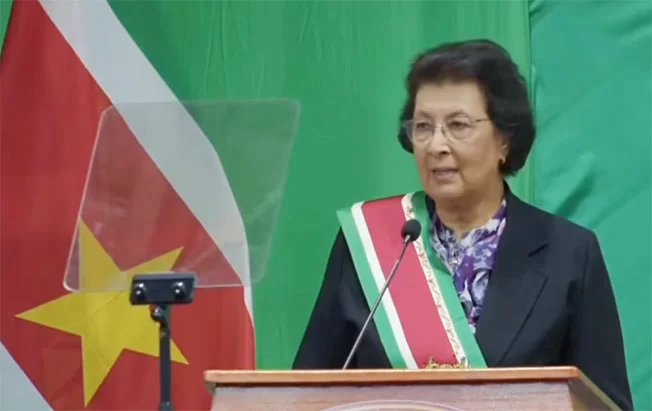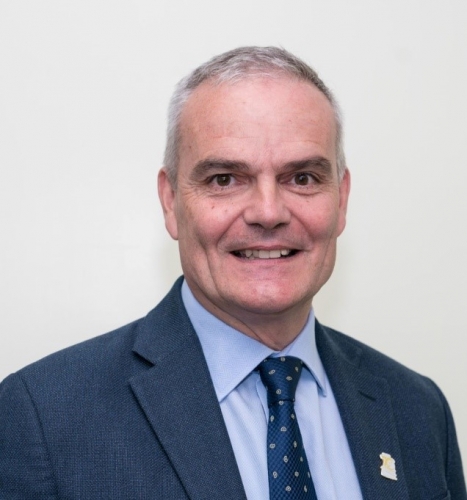
After 77 years operating under a British royal charter, one of the Caribbean’s most prestigious academic institutions is taking a historic step to sever its last remaining constitutional ties to the British monarchy, redefining itself as a fully sovereign regional university anchored in Caribbean governance. Vice-Chancellor Professor Sir Hilary Beckles announced that the University of the West Indies (UWI) will terminate its 1948 Royal Charter and transition to legal status embedded within the Treaty of Chaguaramas, the founding constitution of the Caribbean Community (CARICOM). Regional CARICOM leaders have already formally approved the request to end the charter, clearing the way for the structural transition.
作者: admin
-

Fuel price increase hits Dominica amidst US-Iran conflict
Residents of the Caribbean island nation of Dominica are facing immediate financial strain after government officials announced sharp increases to all petroleum product prices, set to take effect on May 5, 2026. Matthan Walter, the country’s Director of Trade, attributed the dramatic price adjustments to the escalating ongoing conflict between the US, Israel and Iran, which has disrupted global energy supply chains and pushed up crude and refined fuel costs worldwide.
Walter officially outlined the new regulated price points for all major fuel grades in a public statement. Regular gasoline will now sell for $17.98 per unit, while High Sulfur Diesel (HSD) is priced at $19.23, kerosene at $18.21, and Ultra-Low Sulfur Diesel (ULSD) – the most widely used road transport fuel in the country – has reached $20.53. Compared to the last official price adjustment, these jumps represent dramatic percentage increases: 26.7% for gasoline, 33.87% for HSD, 23.33% for kerosene, and a near 39% rise for ULSD.
In his address, Walter stressed that the price surge is not an isolated issue unique to Dominica. The global energy market disruption has pushed up fuel prices across the globe, he noted, with other member states of the Caribbean Community (CARICOM) already reporting similarly elevated costs for the same petroleum products. Walter called on the Dominican public to practice patience as the country collectively works through the economic fallout of the distant geopolitical conflict.
To help consumers offset the impact of higher fuel costs on household budgets, Walter outlined a series of practical steps the public can take to reduce energy consumption and lower overall spending. He recommended that residents adopt carpooling for daily travel, cut back on non-essential trips, and reduce unnecessary electricity use at home – measures that he says will ultimately ease financial pressure on individual households while supporting broader national economic stabilization efforts.
The announcement also addressed growing speculation over potential increases to public bus and taxi fares. Walter reminded transport operators that any fare adjustment must follow official protocol: any request for a rate hike must first be submitted as a formal written request to the national transport board, which holds sole authority to review and approve revised fare pricing for public and private commercial passenger transport. Closing his statement, Walter expressed confidence that with prudent personal decision-making and collective patience, the country can successfully navigate this period of elevated energy costs.
-

Het Surinaamse volk blootstellen aan vergiftiging
Suriname stands at a critical crossroads over its broken food safety system, and a ruling party parliamentarian is pressing leaders to answer a pressing question: how many more warnings, rejected exports, and public health risks must the nation endure before politicians finally acknowledge the system is failing.
Jennifer Vreedzaam, a member of the National Assembly for the National Democratic Party (NDP), has reintroduced a long-delayed modern food safety bill to the Surinamese legislature, nearly six years after the draft was first submitted. In an opinion piece published May 8, 2026, she argues the public can no longer afford to wait for systemic reform, despite bureaucratic delays and quiet resistance from entrenched official interests that have blocked the creation of an independent national food authority.
The crisis is not new. As far back as May 2022, Suriname’s authorities dismissed public concerns over toxic chemical contamination in local produce, claiming “there was no reason for panic.” Independent testing later proved the alarm was justified: every tested sample contained residues of banned pesticides, including the highly toxic carbofuran, also known as Furodan.
Four years on, Vreedzaam says nothing has changed. In late April 2026, the European Union rejected a shipment of Surinamese red chili peppers due to dangerous excess pesticide residues. Just five days later, a second shipment of yardlong beans was turned away for the same violation. Most strikingly, as of the publication of Vreedzaam’s piece, there had been no product recall for the batches already circulating in Suriname, and no public warning was issued to local consumers. The contaminated goods remain available for purchase in domestic markets.
Officials from the Ministry of Agriculture, Livestock and Fisheries (LVV) and the National Food Safety Board (BOG) have repeatedly claimed functional inspection and safety systems are already in place. But Vreedzaam argues the repeated EU rejections tell the opposite story. A working system would not generate the same recurring failures, she notes, adding that a properly structured framework would not allow for informal profit schemes at every step of the supply chain, whose proceeds go unreported to the public and cannot be tracked.
This systemic failure is not just an economic issue—it puts the lives and long-term health of all Surinamese people at direct risk. Vreedzaam points to local health data that already shows rising rates of colon cancer and other chronic conditions linked to toxic pesticide exposure.
Suriname’s existing food regulation dates all the way back to 1911, a century before the emergence of modern global food supply chains, cross-border trade, standardized pesticide testing, product traceability systems, and international food safety frameworks. The out-of-date law is completely unequipped to address 21st century challenges, Vreedzaam argues.
Vreedzaam’s newly reintroduced 2026 Food Act aims to close these gaps and bring Suriname’s regulation in line with international standards. Key provisions of the legislation include mandatory registration and official certification for all food businesses, clear requirements for end-to-end product traceability, formal legal authority to order recalls of dangerous contaminated products, mandatory public transparency around safety risks, and strengthened inspection protocols for pesticides, additives, and environmental contaminants.
The bill also accounts for Suriname’s unique geographic and socio-cultural diversity, making space for traditional and indigenous food production practices, while enshrining the principle that public health and food safety must be protected equally across all of the nation’s districts.
Vreedzaam warns that repeated non-compliance with international safety rules will only lead the EU to tighten inspection requirements even further, driving up costs and increasing the risk of broader trade restrictions for all Surinamese agricultural exports. The resulting economic damage will be severe, but Vreedzaam stresses that food safety is never a secondary concern: it is a fundamental prerequisite for public health, sustainable trade, and Suriname’s international credibility.
Despite the urgent need for reform, the bill continues to face significant political resistance. Vreedzaam says opposition is not rooted in disagreement over the importance of food safety, but in the institutional changes the bill would enforce. The National Institute for Food Safety (NIVS), an independent food authority that was formally authorized by law back in 2021, would upend existing power structures and vested interests. By law, NIVS is supposed to be led by independent scientists and food safety experts, rather than political appointees, but the body has never been fully staffed or made operational. Vreedzaam says this deliberate delay explains the continued resistance to passing the modern Food Act.
Questions have long been raised about why NIVS’s governing board was never appointed, why funding for the agency was never allocated, and why no operational support was ever provided. The LVV has publicly criticized NIVS for failing to become active, but Vreedzaam says the finger-pointing clearly points to deliberate political obstruction, not any lack of need or clear vision for the agency.
“Food safety does not wait for political debates,” Vreedzaam writes. “Pesticides do not wait for bureaucracy. Health risks do not care about political sensitivities.”
The Surinamese public has a right to safe, uncontaminated food, Vreedzaam argues. Exporters deserve a reliable, trusted inspection system that lets them compete in global markets. Small-scale producers deserve clear guidance and government support to meet safety standards. And Suriname deserves modern legislation that fits the reality of 2026—not the outdated norms of 1911.
The recent rejections by the EU are not an attack on Suriname, she says. They are a clear wake-up call for political leaders to act. Vreedzaam closes by pressing for immediate action, arguing that any official who does not recognize that an independent, depoliticized food safety system is essential for public health, food security, economic stability, and public safety has no business holding ministerial office. She also criticizes the government’s high-profile plans for agricultural fairs and new state-run fruit processing facilities, noting that leaders appear to pay little attention to how much toxic pesticide residue ends up on local produce consumed by the Surinamese public.
With two high-profile export rejections in the first week of May 2026, the question that remains for Suriname’s leaders is unchanged: how many more warnings will the nation need before it finally acts?
-

Mother Loses Second Son to Gun Violence
In a devastating repeat of tragedy that has rocked a Belize City family, Helen Samuel is mourning the murder of her second son to gun violence, 12 years after she laid her first child to rest.
On the night of Thursday, May 8, 2026, 29-year-old construction worker Jamal Samuels was fatally shot in the area outside the No. 24 CET construction site in central Belize City. The killing has left his grieving mother struggling to comprehend how her family has once again been torn apart by armed crime.
In an exclusive interview with local outlet News 5, Samuel shared that law enforcement has barred her from viewing her son’s remains as the homicide investigation remains active. According to her account, Jamal had only left the family home that evening to purchase cannabis, with every intention of returning immediately after.
Helen described her son as a homebody who rarely ventured out to socialize, saying, “He not a person who hangs. He was at home by his house. He would roll up the weed and sit down in front of the yard and smoke and drink. I think he just was there at the wrong time because he doesn’t usually go out there.” She told reporters she believes Jamal may have made a quick stop to visit an old friend he had not caught up with in a long time, putting him in the wrong place at the fateful moment of the shooting.
The mother stressed that Jamal had no known conflicts with anyone in the community, adding, “I talked to him yesterday, and he didn’t tell me nothing… He didn’t have any bad arguments with nobody.”
This is not the first devastating loss Helen has endured. Her oldest son, Robert “Bolo” Tracy, was killed in a separate gun-related incident back in 2014. She also previously lost an infant son when he was just 9 months old. Before Thursday’s shooting, Jamal was the oldest of her surviving children. Today, three of Helen’s children have died prematurely, and a fourth remains in police detention pending an open investigation, leaving the grieving mother with no surviving children living free at home.
The killing comes as Belize City continues to grapple with persistent rates of gun violence that have left hundreds of families grieving similar losses in recent years.
-

CARPHA says hantavirus risk low in Caribbean
A fatal hantavirus outbreak on a cruise ship sailing through the Central Atlantic has triggered regional public health warnings, though top Caribbean health officials stress the overall infection risk for the area remains low.
As of the May 8 update, nine suspected cases have been documented on board the MV Hondius, resulting in three deaths. Five of those cases have been definitively confirmed as hantavirus, specifically the Andes strain – an uncommon variant that can spread between humans through close, extended close contact, a trait not shared by many other hantavirus types.
Hantaviruses are naturally hosted by rodent populations, with most human infections occurring when people come into contact with rodent urine, fecal matter, or saliva that carries the virus. The outbreak was formally reported to the World Health Organization via the United Kingdom’s International Health Regulations focal point, which then triggered coordination with regional Caribbean health bodies.
Dr. Lisa Indar, Executive Director of the Caribbean Public Health Agency (CARPHA), reiterated that the current threat of widespread hantavirus transmission across the Caribbean is minimal. Indar explained that in the Americas, hantaviruses are predominantly spread by wild field rodents, rather than common urban rat populations that are more frequently found in populated Caribbean coastal and port areas, where transmission to humans is far less likely.
Even with the low current risk, CARPHA is emphasizing the need for ongoing readiness, given the Caribbean’s position as the world’s busiest cruise tourism hub. The region welcomes roughly 44% of all global cruise ship traffic, with projected passenger arrivals set to hit 16.3 million by 2025, making continuous port and vessel surveillance a critical public health priority. The agency is urging all member states to review and reinforce existing vessel monitoring protocols and public health response plans, especially at major entry ports.
To support these efforts, CARPHA says it will continue to back safe tourism operations across the region through its established regional surveillance infrastructure. Two key systems in this network are the Tourism and Health Information System (THiS) and the Caribbean Vessel Surveillance System (CVSS), both purpose-built to track and flag public health threats tied to tourism and maritime travel.
Preliminary performance data for the CVSS shows it has already delivered strong results: the system has successfully flagged suspected infection cases before ships dock at Caribbean ports, with over 96% of cruise ship public health alerts shared with relevant member states within a 24-hour window. That rapid sharing allows port officials to prepare appropriate responses before a vessel arrives, reducing the risk of spread on land.
CARPHA confirmed it will maintain ongoing monitoring of the MV Hondius outbreak in close partnership with regional and global public health partners, and will issue new updates to member states and the public as new information becomes available.
-

Gachette Jewellers expresses condolences on death of long-time employee
The Caribbean island nation of Dominica is mourning the unexpected loss of one of its most respected master craftspeople, renowned local goldsmith Russel Lucien, who passed away suddenly on Thursday, May 7, 2026.
Lucien spent nearly three and a half decades as a valued member of the team at Gachette Jewellers, one of the island’s well-known jewelry establishments. In an official public statement released following Lucien’s passing, leadership at Gachette Jewellers paid tribute to the lifelong artisan, highlighting the profound impact he had on colleagues, customers, and the entire local community throughout his 35-year tenure.
The statement emphasized that beyond Lucien’s world-class skill as a goldsmith, his personal character left an enduring mark on everyone he encountered. “More than a master goldsmith, Russel was family to us,” the statement read. It went on to praise his unwavering dedication to his craft, extraordinary attention to detail, steady loyalty to the brand, and genuine warm demeanor that made him a beloved figure across Dominica. The statement added that he will forever be remembered for his consistent kindness, quiet generosity, contagious joyful spirit, and lifelong commitment to achieving excellence in every piece he created.
Gachette Jewellers closed by expressing gratitude to the broader community for the outpouring of prayers and support the team and Lucien’s family have received in the wake of this loss. Following the announcement of Lucien’s passing, Dominica’s leading local media outlet Dominica News Online (DNO) also issued a message of condolence, extending its deepest sympathies to Lucien’s immediate family, close friends, and all loved ones who are grieving his passing.