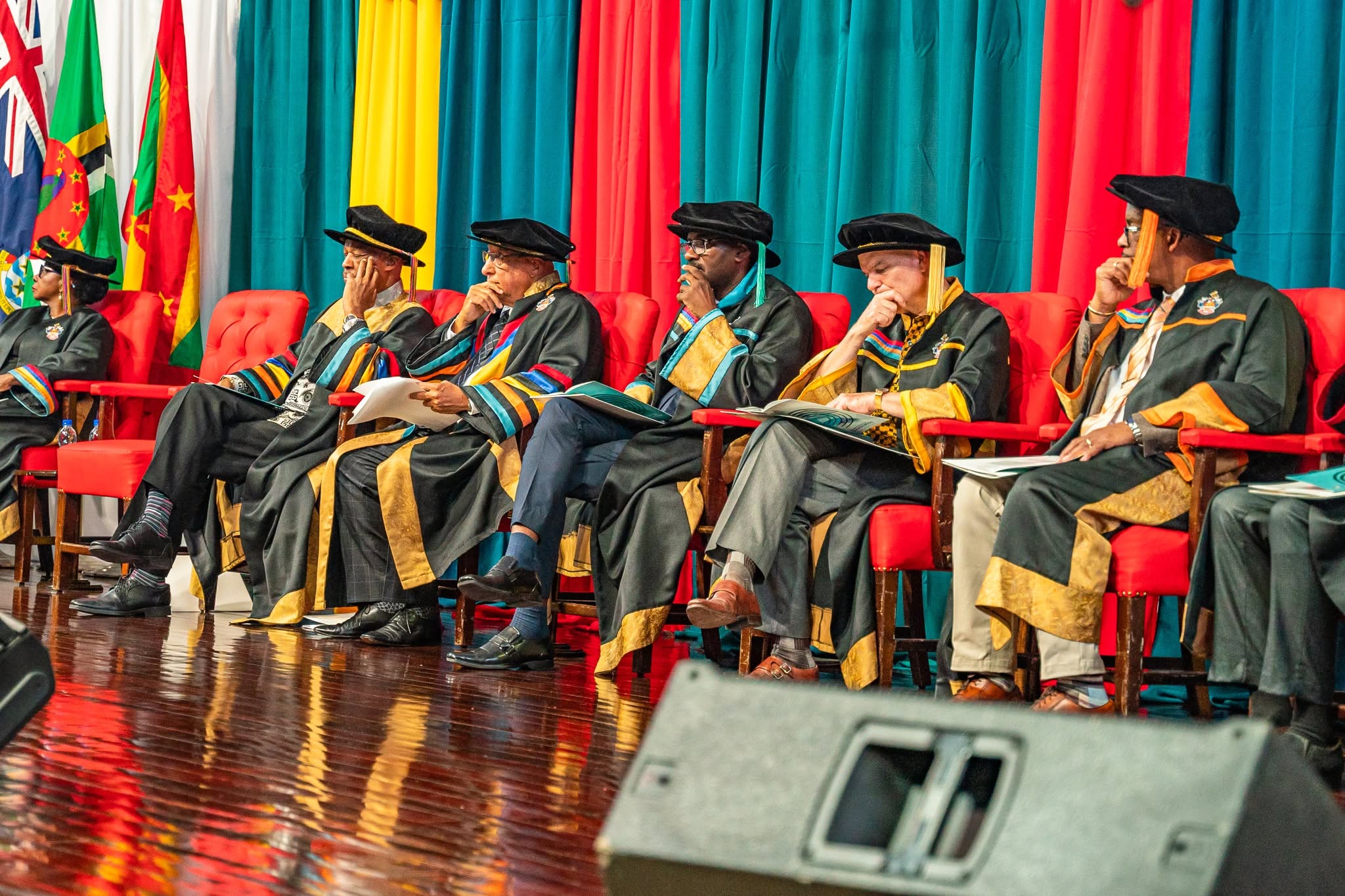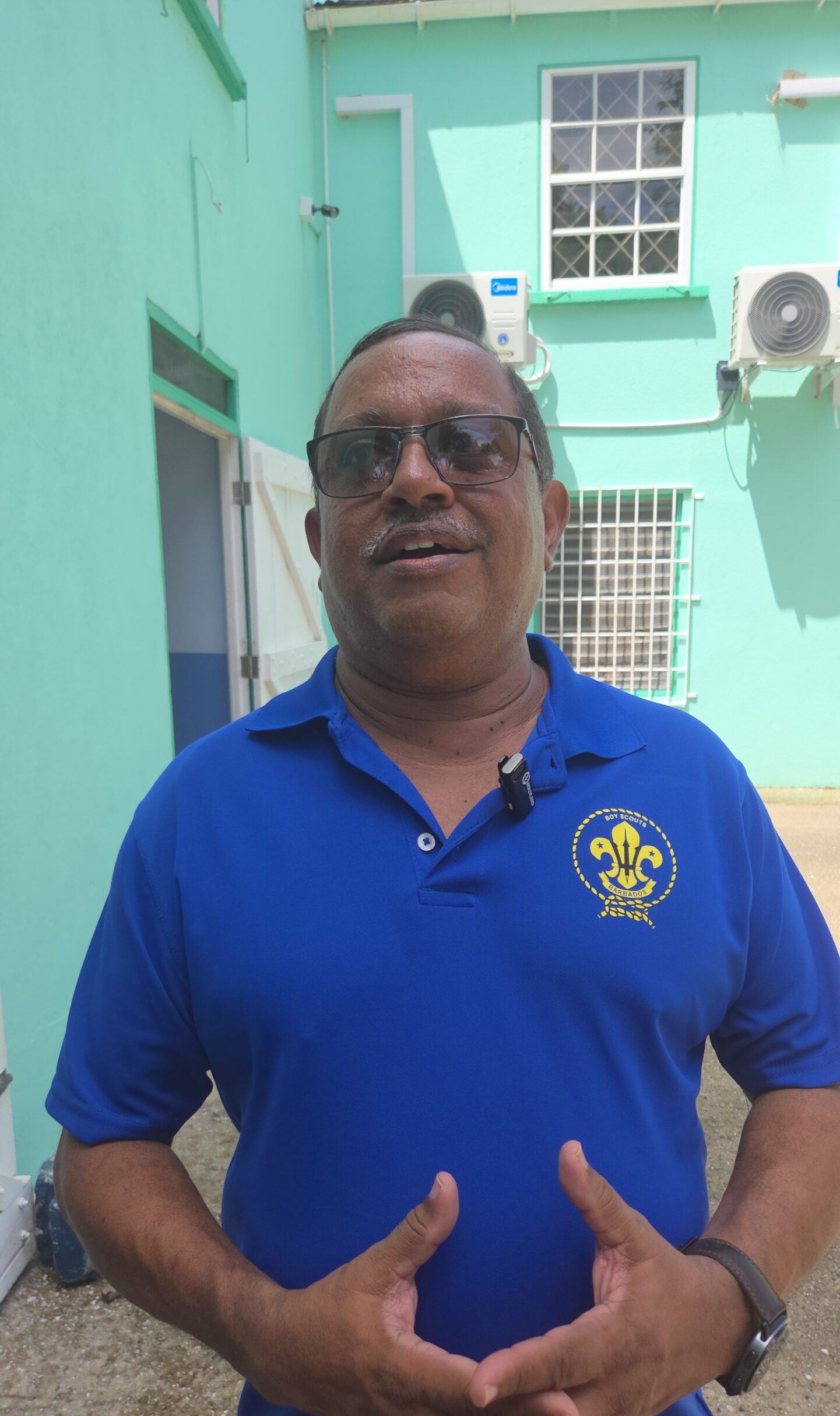
At Monday’s formal Senate swearing-in ceremony, newly reappointed Senator Jamila Kirwan opened a heartfelt address that wove personal grief, family resilience, and a bold call for greater female political engagement into one memorable speech. Fresh from the April 30 general election that sealed her return to the Upper House, Kirwan centered her remarks on remembering her late mother, known affectionately as Mama Lucy, who passed away recently after a period of illness.
作者: admin
-

Caught in the Machine: How AI Is Upending the Classroom and What It Means for the Caribbean
In 2024, a Maryland high school student named Ailsa Ostovitz learned firsthand the unforeseen costs of the global rush to police AI use in education. When she turned in a deeply personal essay about her love of music, her teacher ran the submission through a commercial AI detection tool, which incorrectly flagged the work as machine-generated and downgraded her grade. Ostovitz, who never used AI to draft the assignment, told NPR her frustration was overwhelming: “I write about music. I love music. Why would I use AI to write something that I like talking about?”
Ostovitz’s experience is far from an isolated incident. It has become an increasingly common reality as generative AI tools like ChatGPT have upended academic norms across North America, Europe, and now the Caribbean. While mainstream headlines have centered chaos in U.S. and U.K. campuses, students across Caribbean nations—including Belize, where learners are currently preparing for CSEC and CAPE School-Based Assessments (SBAs)—are now navigating a web of new AI rules, detection tools, and punitive consequences that did not exist just two years ago.
There is no denying that AI-facilitated academic misconduct is a growing challenge. A 2024 investigation by The Guardian, drawing on official data from 131 U.K. universities, recorded nearly 7,000 confirmed AI-related cheating cases that academic year—equivalent to 5.1 cases per 1,000 students, up sharply from just 1.6 cases per 1,000 the year prior. A separate survey from the Higher Education Policy Institute found that 88% of all students now use generative AI for their assessments, a jump from 53% just 12 months earlier. Researchers at the University of Reading tested popular AI detection systems and found that 94% of fully AI-generated work slipped past the tools undetected. Traditional plagiarism, by contrast, has plummeted: what once made up nearly two-thirds of all academic misconduct has now been displaced by a harder-to-detect, harder-to-define form of academic dishonesty. Cheating has not disappeared—it has fundamentally transformed.
Casey Cuny, a 23-year veteran California high school English teacher, summed up the scale of the shift in a 2025 Associated Press interview: “The cheating is off the charts. It’s the worst I’ve seen in my entire career.” At St. Peter’s University in New Jersey, professor Stephen Cicirelli went viral on social media after highlighting a particularly absurd example: one of his students turned in a fully AI-written paper, then followed up with an apology email that was also written by ChatGPT.
The widespread institutional response to this shift has been to fight AI with AI. Turnitin, the plagiarism detection platform used by more than 16,000 academic institutions globally, launched an AI detection feature in 2023, and competitors like GPTZero and Copyleaks quickly followed suit. School districts have poured hundreds of thousands of dollars into these tools: Florida’s Broward County Public Schools signed a three-year $550,000 Turnitin contract, while an Ohio school district pays GPTZero roughly $5,600 annually to serve 27 of its teachers.
But leading academic integrity researchers universally agree these tools are too unreliable to shape high-stakes decisions about students’ academic futures. “It’s now fairly well established in the academic integrity field that these tools are not fit for purpose,” says Mike Perkins, a leading AI and academic integrity researcher whose work is cited by the Caribbean Examinations Council (CXC) in its own AI policy framework. Perkins’ research found that top detectors regularly mislabel genuine student work as AI-generated, and their accuracy drops even further when students lightly edit AI text to read more like human writing.
Even the companies that sell these tools acknowledge their flaws. Turnitin states openly on its website that its AI detection “may not always be accurate… so it should not be used as the sole basis for adverse actions against a student.” GPTZero CEO Edward Tian has echoed that caution, saying “We definitely don’t believe this is a punishment tool.” Despite these warnings, a 2025 nationally representative poll from the Center for Democracy and Technology found that more than 40% of U.S. 6th to 12th grade teachers used AI detection tools in the 2024–2025 school year, even as most admitted the tools are flawed. A small number of leading institutions, including UCLA and UC San Diego, have taken a bolder step, deactivating all AI detectors entirely over unacceptable rates of false positives.
One of the most alarming, and most underreported, flaws of AI detection tools is their systematic bias against students who speak English as a second language—a dynamic that carries outsized risk for Caribbean learners. A 2024 study from Stanford computer scientists found that seven leading AI detectors incorrectly flagged non-native English speakers’ writing as AI-generated 61% of the time. For roughly 20% of those papers, every detector tested unanimously agreed the authentic human work was machine-produced. By contrast, detectors almost never made that mistake when evaluating writing from native English speakers.
This bias is baked into the design of the tools: AI detectors flag text as machine-generated when it uses predictable word choice and simple syntactic structure, patterns that are common in writing by non-native English speakers. “The design of many GPT detectors inherently discriminates against non-native authors, particularly those exhibiting restricted linguistic diversity and word choice,” explained study co-author Weixin Liang. For Caribbean students, this is not an abstract academic concern: across CSEC and CAPE cohorts, English is the medium of instruction, but many students go home to households where Kriol, Garifuna, Spanish, or other regional languages are the primary language. A student writing in straightforward sentence structure because they are translating their thoughts from a first language faces the same risk of false flagging as non-native speakers at U.S. and European universities.
Taylor Hahn, a Johns Hopkins University instructor who noticed this pattern in Turnitin’s flagging of international students’ work, recalled one meeting where a student immediately produced clear proof of original work—full draft notes, annotated drafts, and handwritten outlines—proving the tool had simply been wrong. Incidents like this have pushed students to take extreme measures to avoid false accusations, sparking a new technological arms race in classrooms. As detection tools proliferated, a multi-million dollar counter-industry of “AI humanizer” tools emerged almost overnight. More than 150 of these tools now exist, designed to rewrite AI-generated text to evade detection algorithms. While some are free, others charge a $20 monthly subscription, and the industry drew 33.9 million website visits in a single month at the end of 2025.
While many users rely on humanizers to cover up intentional cheating, a growing number of students who never use AI run their own original work through these tools just to avoid false accusations—a heartbreaking compromise that erodes the quality of their writing. Brittany Carr, a Liberty University student, was falsely flagged after turning in a personal essay about her own experience with a cancer diagnosis. “How could AI make any of that up?” she wrote to her professor. “I spoke about my cancer diagnosis and being depressed and my journey and you believe that is AI?” Fearing that a false finding would cost her VA educational financial aid, Carr began running every assignment through detection tools and rewriting any section the tools flagged. “But it does feel like my writing isn’t giving insight into anything. I’m writing just so that I don’t flag those AI detectors.” After the semester ended, she dropped out of the university entirely.
Back in Maryland, Ailsa Ostovitz now spends an extra half hour running every assignment she writes through multiple detection tools before submitting, just to avoid the grade penalty she received once. Turnitin has responded to the rise of humanizers by launching new “bypasser detection” features, while humanizer tools have updated their technology to mimic human keystroke patterns to defeat browser-based tracking. As one student put it: “So it’s like, how far do you want to go down the rabbit hole? I’m making myself crazy.”
While the detection arms race spirals out of control in North America and Europe, the Caribbean has taken a fundamentally different approach, centered on human judgment rather than algorithmic verdicts, and framing AI as a pedagogical resource rather than an existential threat. In a May 2026 video address titled “Who You Choose to Be,” CXC Director of Operations Dr. Nicole Manning spoke directly to regional students and teachers, delivering an unambiguous message on AI detection: “AI checkers are one input. They are not the verdict. There will be human interventions right through the process to ensure fairness.”
That policy comes in response to a gap the CXC identified across the region: a December 2024 CXC study found that roughly 70% of Caribbean nations still lack official national AI policies for education, even as AI tools have become ubiquitous in regional classrooms. That gap prompted the CXC to develop a comprehensive Standards and Guidelines framework that went into effect for the 2026 May-June examination cycle—the same sitting that thousands of students across Belize and the Caribbean are currently preparing for.
Under the CXC framework, AI is permitted for use in SBAs with clear, transparent boundaries. Students can use AI to brainstorm ideas, clarify difficult concepts, explain unfamiliar terms, or draft structural outlines for their work. They may not submit work that is generated wholly or mostly by AI, and any student who uses AI in any capacity must submit a formal disclosure form and originality report. The acceptable AI similarity threshold is set at 20%, and teachers are required to provide detailed rationale for any findings of academic misconduct for submissions that exceed the threshold.
The framework draws directly on the AI Assessment Scale developed by Mike Perkins, the same researcher who has repeatedly warned that commercial AI detectors are “not fit for purpose.” Instead of outsourcing academic judgment to unproven software, the CXC built its system around the longstanding teacher-student relationship that sits at the core of effective education. “The teacher-student relationship built over months of observation, drafts, conversations, and guidance remains central to how SBAs are moderated and assessed,” Dr. Manning explained.
CXC Registrar and CEO Wayne Wesley added that the framework requires a rethinking of longstanding assessment practices: “You have to engage students in more one-on-one conversations to appreciate whether the work they are presenting is truly their own. It also requires us to re-think how assessment is done from a summative and formative standpoint.”
At the tertiary level, the University of the West Indies (UWI), whose Open Campus serves students across Belize and the entire Caribbean, is also moving toward systemic, region-specific change. In late April 2026, UWI announced a partnership with the University of the West of Scotland to join the IntegraGuard Project, an initiative designed to build fair, transparent academic integrity systems that combine AI-assisted detection with human investigation—rather than replacing human judgment with algorithmic decisions. UWI has also finalized its own institutional Artificial Intelligence Policy Framework and launched a dedicated AI Institute at its St. Augustine Campus, designed to address the Caribbean’s unique development challenges through AI. The institute recognizes that the region cannot simply import policy frameworks designed for wealthy nations with different linguistic, historical, and educational contexts.
As CXC Director of Technological Innovation Rodney Payne put it, reflecting on the region’s coordinated approach: “For us to benefit as a region, we need harmonious development, utilising the technologies across the board. It’s not going to help us if one state moves ahead quickly and the others are struggling to follow.”
Most education experts agree that punishing students based on unreliable algorithmic findings is not a sustainable solution. Carrie Cofer, a Cleveland high school English teacher, tested GPTZero by uploading a chapter of her own PhD dissertation, and the tool labeled it 89 to 91% AI-written. “I don’t think it’s an efficacious use of their money,” she said of institutional spending on AI detection. “The kids are going to get around it one way or the other.”
Erin Ramirez, an associate professor at California State University Monterey Bay, summed up the unfair burden placed on innocent students, a reality that hits Caribbean learners particularly hard: “Students now are trying to prove that they’re human, even though they might have never touched AI ever.” For students already navigating linguistic and economic barriers that many Caribbean learners face, the extra burden of proving their authenticity to a machine is an unnecessary injustice that should concern everyone in education.
A small but growing number of institutions have already rejected detection tools entirely: the University of Pittsburgh scrapped all AI detection in 2025, concluding that false positives “carry the risk of loss of student trust, confidence and motivation, bad publicity, and potential legal sanctions.” Most global institutions have not yet followed that lead. But the CXC’s alternative framework offers a clear path forward, centered on core academic values rather than technological panic. As Dr. Manning put it: “Integrity is not about whether a machine can detect what you did. It is about who you choose to be.”
-

OECS Root and Tuber Crop Symposium in Dominica sets course to restore regional food sovereignty
Against a backdrop of intensifying climate change impacts and persistent global supply chain volatility, regional governing bodies in the Eastern Caribbean are turning to a long-neglected local food source — native root and tuber crops, commonly referred to as “ground provisions” — to build long-term food sovereignty and economic self-reliance across the bloc.
Leading this landmark regional intervention are the Organisation of Eastern Caribbean States (OECS) Commission and the Government of the Commonwealth of Dominica, which formally launched the coordinated initiative at the OECS Root and Tuber Crop Symposium held May 7–8, 2026, at the InterContinental Dominica Cabrits Resort & Spa. The two-day gathering brought together senior government officials, smallholder farmers, agricultural researchers and technical specialists to align the new root crop strategy with the OECS’s broader Food and Agriculture Systems Transformation (FAST) Strategy, an official OECS press release confirmed. Financial backing for the program is provided by the European Union through the 11th European Development Fund (EDF), delivered under the Regional Integration Through Growth Harmonisation and Technology (RIGHT) initiative.
The effort comes amid a critical food security crisis across the Eastern Caribbean, where many member states rely on imports for as much as 90% of their domestic food consumption. This extreme import dependence has magnified economic vulnerability amid global supply shocks and pushed regional leaders to accelerate progress toward the CARICOM “25 by 2025 + 5” target, which aims to cut regional food imports by 25% through expanded local production.
Speaking on behalf of Dominica Prime Minister Hon. Roosevelt Skerrit, Hon. Dr. Irving McIntyre, the island’s Minister for Finance, Economic Development, Climate Resilience and Social Security, opened the symposium by framing food system resilience as the foundation of national stability. “The Government of Dominica has consistently emphasized the importance of resilience as a central pillar of national development,” Dr. McIntyre told attendees. “That vision of resilience extends directly to agriculture, because no country can truly claim resilience while remaining heavily dependent on imported food and vulnerable supply chains.” He also paid tribute to regional farmers, who have sustained local communities through mounting environmental and economic headwinds.
OECS Director General Dr. Didacus Jules positioned the root crop initiative as a return to the core regional principles of sustainability and self-determination, arguing that food sovereignty is inextricably linked to national dignity and collective security. “If we cannot feed ourselves, we are not truly secure,” Dr. Jules cautioned. He celebrated the natural resilience of crops including cassava, dasheen, and sweet potato, noting that these hardy staples grow steadily beneath the soil, drawing nutrients from the earth and withstanding extreme wind and drought conditions far better than many imported commodity crops. “The region’s long-term strength will come from strengthening what is locally produced and deeply rooted, rather than continued dependence on imported food systems,” he added.
The urgent need for a shift to climate-resilient local agriculture was underscored by a recent climate disaster in Dominica: just days before the symposium, severe flooding and landslides on the island’s east coast destroyed extensive crops and damaged critical agricultural infrastructure. Dominica’s Minister for Agriculture, Fisheries, Blue and Green Economy, Hon. Roland Royer, used the recent event to argue for urgent modernization of the regional agricultural sector. “Agriculture today must be understood as business, innovation, food security and national resilience all working together,” Minister Royer asserted. “If agriculture in the OECS is to survive and grow, then it must become more resilient, more sustainable and more adaptable to the realities of a changing climate.”
Parliamentary Secretary in the Ministry of Education Hon. Fenella Wenham-Sheppard expanded on this vision, highlighting both the intergenerational cultural significance and untapped economic potential of traditional root and tuber crops. She noted that these crops have carried Caribbean communities through past crises, and now hold major promise as a driver of inclusive economic growth. “Root crops must not only feed us fresh from the soil, they must become higher value products that create jobs, expand exports, and empower entrepreneurs,” she said. Wenham-Sheppard outlined opportunities to transform basic staple crops into high-value processed goods including gluten-free flour, natural purees, and craft beverages, opening new regional and international market opportunities for local producers.
The symposium concluded with a series of concrete actionable outcomes to guide the sector’s long-term development. Key next steps include launching a dedicated OECS Food Production Technical Working Group to coordinate policy and implementation across member states, and developing a comprehensive OECS Root and Tuber Crop Roadmap to outline shared targets and timelines. Member states also reached a consensus to prioritize public and private investment in modern agricultural infrastructure, including solar-powered cold storage facilities and climate-smart irrigation hubs. The upgrades are designed to reduce post-harvest waste, improve producer competitiveness, and attract a new generation of young farmers to the Eastern Caribbean’s agricultural sector.
-

Pure Grenada Masters Cricket Tournament signals new era in sports tourism
Grenada has marked a major milestone in its push to become a top regional sports tourism destination, with the Grenada Tourism Authority (GTA) declaring the first-ever Pure Grenada Masters Cricket Tournament a resounding success.
The seven-day sporting showcase brought together 60 veteran cricketers from six competing squads: four regional teams hailing from across the Caribbean, alongside two local sides assembled on the island. The visiting contingent featured the West Indies Masters, Trinidad’s Munroe Road Masters, Guyana’s North Soesdyke, and Barbados’ AMAAS Masters, while Grenada was represented by Spice Isle Masters 1 and Spice Isle Masters 2. After a week of close-fought, high-spirited matches that celebrated the long-standing cricket culture of the Caribbean, Guyana’s North Soesdyke claimed the top championship title, with Munroe Road Masters of Trinidad finishing as tournament runners-up.
For Grenada’s tourism sector, the tournament was far more than just a sporting event: it served as a proof of concept for the island’s growing sports tourism strategy, delivering tangible economic benefits to local communities and businesses. “The Pure Grenada Masters Cricket Tournament is a shining example of how sports tourism can fuel our local economy and showcase our island’s hospitality,” said Stacey Liburd, Chief Executive Officer of the GTA. “By blending elite competitive play with strategic cross-sector partnerships, we are creating memorable, meaningful experiences that lift up our local service industries and maintain Grenada’s strong tourism momentum year-round.”
The influx of visiting players and accompanying guests generated substantial new revenue across multiple pillars of Grenada’s tourism economy, from accommodation providers and local restaurants to transportation and retail services. To extend these economic benefits even further, the GTA organized a consumer pop-up marketplace on the tournament’s final day, giving local small businesses and brands a direct opportunity to connect with visiting attendees and showcase their products.
As the GTA works toward its 2026 strategic development targets, the organization says it remains fully focused on cementing Grenada’s reputation as a premier destination for regional and international sporting events. “As we continue to deploy our 2026 strategy, we remain fully committed to positioning Grenada as a sports tourism destination,” added Tornia Charles, Chief Marketing Officer of the GTA. “Our aim of achieving this goal goes beyond just hosting events; we intend to create a lasting impact for all Grenadians who benefit from visitors coming to our shores.”
Looking forward, the GTA has outlined ambitious plans to expand the Pure Grenada Masters Cricket Tournament into a permanent annual fixture on the regional sporting calendar. Proposed growth initiatives include expanding the number of participating teams, boosting spectator engagement opportunities, integrating more authentic local cultural experiences into the event, and increasing opportunities for local businesses to participate. The organization is also exploring adding new offerings such as voluntourism packages for attendees, structured fan experience packages, and expanded sponsorship opportunities, all with the goal of establishing Grenada as a go-to destination for sporting events of all sizes.
-

CXC® reaffirms pro-student-teacher stance on responsible use of AI in SBAs
As generative artificial intelligence continues to reshape learning environments across the globe, regional examination bodies are navigating uncharted territory to balance technological innovation with academic integrity. The Caribbean Examinations Council (CXC®) has stepped forward to address growing uncertainty among students, teachers, and families across the Caribbean region, releasing a clear, compassionate policy framework for AI integration in School-Based Assessments (SBAs) that prioritizes fairness, human oversight, and educational integrity.
In a public video address shared across CXC®’s official website and social media platforms, Dr. Nicole Manning, the council’s Director of Operations, openly addressed both the transformative opportunities and pressing challenges that AI tools bring to academic work and SBA development. She offered targeted reassurance to stakeholders adjusting to the rapidly evolving digital education landscape, acknowledging widespread anxiety around how AI would be policed in regional assessments.
A core point of public concern has centered on the reliability of commercial AI detection tools, which researchers have repeatedly shown to produce high rates of false accusations against student work. In response to these worries, Dr. Manning emphasized that AI detection software will never serve as the sole evidence for penalizing a student’s submission. “The teacher-student relationship built over months of observation, drafts, conversations, and guidance remains central to how SBAs are moderated and assessed,” Dr. Manning stated in her address. “AI checkers are one input. They are not the verdict. There will be human interventions right through the process to ensure fairness,” she added.
CXC®’s updated guidelines draw a clear line between acceptable and unacceptable AI use for students completing SBAs. The council permits learners to leverage AI as a supportive study tool: students may use AI to clarify complex concepts, brainstorm project ideas, explain challenging terminology, or draft structural outlines for their work. However, any use of AI, no matter how minor, requires full transparency: students must disclose their AI utilization via a mandatory Disclosure Form and Originality Report, citing the tool as a source in their final submission. For students who complete their work without any AI assistance, no additional documentation is required.
The council classifies the submission of work generated entirely or predominantly by AI without disclosure as a case of academic dishonesty. Any such cases will be processed through the organization’s established irregularity protocols, with collaborative input from the candidate, their classroom teacher, and school leadership to reach a fair outcome.
Recognizing the extra burden that adapting to AI-integrated assessment places on Caribbean educators, Dr. Manning reaffirmed CXC®’s commitment to supporting teachers through the transition. The council will provide targeted resources and specialized training to help educators implement the new guidelines consistently and confidently. “You are not alone in this,” she told the teaching community. “Engage your students in honest conversations about how they use these AI tools. Guide them on what they can do, what they cannot, and why academic integrity matters beyond the examination room.”
For Caribbean students, Dr. Manning offered a reflective call to prioritize personal integrity over shortcutting assessment requirements. “Integrity is not about whether a machine can detect what you did. It is about who you choose to be,” she said.
Dr. Manning’s full address, titled “Who You Choose to Be,” is available for public viewing on CXC®’s official YouTube channel. The complete Standards and Guidelines on Generative AI Use in School-Based Assessments can be downloaded at the council’s official website, www.cxc.org.
-

Guyana, Venezuela and the battle for global narrative
Over the past ten years, Guyana — a small South American nation of less than one million people — has experienced an economic transformation unmatched anywhere in the world. The discovery of massive offshore oil reserves catapulted it to the title of the globe’s fastest-growing economy, and President Irfaan Ali has projected that the coming decade will bring even more rapid progress across infrastructure, energy, technology, and broad national development. But beneath this unprecedented wave of growth looms a long-simmering existential threat: the decades-long border dispute with neighboring Venezuela that remains unresolved to this day.
Venezuela claims nearly two-thirds of Guyana’s sovereign territory, including the resource-rich Essequibo region, a claim that has stood for more than a century. For years, the dispute remained largely frozen in diplomatic gridlock, but it has now reached a pivotal moment: the case has finally come before the International Court of Justice (ICJ) at The Hague for formal adjudication, despite Venezuela’s continued refusal to recognize the court’s jurisdiction over the matter.
Based on legal precedent, historical records, and established patterns of state practice, most independent observers agree that Guyana holds an overwhelmingly strong position. Historical evidence underscores this advantage: when the 1899 Arbitral Award that established the current border was issued, Venezuela publicly celebrated the outcome as a victory, having gained control of both banks of the strategically critical Orinoco River. The settlement went unchallenged by Caracas for more than 60 years. In all engagements over the decades since, including the 1966 Geneva Agreement process, Guyana has maintained a posture of responsible statecraft: it acknowledges Venezuela’s differing position while steadfastly upholding its own sovereignty and territorial integrity.
Venezuela’s leadership, however, has increasingly signaled that it recognizes the weakness of its legal arguments before the ICJ. In response, Caracas has adopted a two-pronged strategy that pairs formal legal submissions with a broad diplomatic and public relations campaign centered on a narrative of post-colonial injustice. Venezuela argues the 1899 arbitral process was manipulated by the British Empire, which held significant influence at the time, leaving a weak, vulnerable Venezuela outmaneuvered and stripped of its rightful territory. This framing resonates emotionally and politically across the Global South, where many nations still carry the lingering scars of colonial exploitation and unequal power dynamics.
This diplomatic campaign has entered a new, more aggressive but strategically polished phase following the international isolation that defined former president Nicolás Maduro’s administration. The change in Venezuela’s global posture has opened space for its current leadership to refine its messaging: the tone is now more measured and sophisticated, crafted to appeal to global audiences and multilateral institutions, but the core of its expansionist claim to Essequibo remains entirely unchanged. The high-profile personal intervention of acting president Delcy Rodríguez underscores this new approach.
In a choreographed televised address over the weekend, Rodríguez announced she would travel to The Hague to personally lead Venezuela’s representation in the ICJ case, framing the trip as a duty to defend Venezuela’s “inalienable rights.” She appeared in person before the court on Monday, a move many analysts described as a deliberate, confrontational public relations stunt, given Venezuela’s longstanding refusal to accept the ICJ’s jurisdiction. The gesture sent an unmistakably defiant message to both the court and the global public.
In her closing statement, Rodríguez made an extraordinary blunt repudiation of the court’s authority: she explicitly stated Venezuela would not accept any ruling that upholds the validity of the 1899 Arbitral Award. “Even if the court were to declare the award valid, Venezuela would be unable to comply with such a ruling,” she argued, claiming any outcome against Venezuela’s position would itself violate the 1966 Geneva Agreement and international law. To many observers, this high-stakes political theatre is a clear reflection of Venezuela’s awareness that its legal and historical case is weak: the spectacle of nationalist defiance is intended to compensate for gaps in the factual and legal record.
Facing this coordinated public relations offensive, Guyana has two clear paths forward: it can quietly and actively counter Venezuela’s narrative, or stand by and allow the ICJ’s eventual ruling to speak for itself. Most regional and diplomatic analysts agree Guyana would benefit from building its own counter-narrative rooted in Global South post-colonial experience, rather than allowing Venezuela to monopolize anti-colonial rhetoric.
Guyana is itself a post-colonial developing nation, vastly smaller than its neighbor: just 83,000 square miles against Venezuela’s 384,000, and a population of less than one million against Venezuela’s 28.6 million. This reality directly undermines Venezuela’s claim that the 1899 Award was the product of an unfair power imbalance. If historical asymmetry alone were accepted as grounds to reopen settled international borders, nearly every frontier across the developing world would be vulnerable to revisionist claims from larger neighbors.
Guyana’s diplomatic messaging should therefore center on one core principle: post-colonial justice cannot justify overturning long-settled international borders whenever historical grievances are invoked. Beyond messaging, Guyana should work to deepen ties beyond its traditional Caribbean allies — where it already serves as a leading voice for regional unity — to include members of the African Union, ASEAN, and moderate Latin American governments. The broader framing should be clear: this dispute is not a remnant of British colonial rivalry with Venezuela, but a test of the principle that small-state sovereignty, international stability, and the rule of international law must be upheld regardless of size.
Throughout the dispute, Guyana has maintained a posture of dignified restraint committed to the international legal process, a position that has already earned it the moral high ground. If the ICJ rules in Guyana’s favor, as widely expected, Guyana’s post-ruling strategy will be critical: a triumphalist framing that casts the outcome as a humiliation for Venezuela would likely harden nationalist sentiment in Caracas for generations, making any long-term resolution impossible. Instead, a measured, statesmanlike approach would lower the political cost for Venezuelan leaders to gradually moderate their position over time. Any future provocations from Venezuela should continue to be addressed through established multilateral channels: the ICJ, United Nations, Caricom, the Commonwealth, the Organization of American States, and formal diplomatic dialogue.
If Guyana maintains this principled, restrained approach, it could emerge from the dispute far stronger than it entered: with its sovereignty internationally reinforced, growing investor confidence, elevated diplomatic stature, and broader recognition as a responsible defender of the rules-based international order. A ruling in Guyana’s favor would also bring much-needed stability to its booming offshore oil sector, supporting long-term economic growth and development. In the end, the dispute could position Guyana as a global example of how small states can defend their sovereignty successfully, not through military force, but through a commitment to law, diplomacy, and international legitimacy.
-

Tensions at the Michael Finnegan Market
On the morning of May 12, 2026, a long-simmering disagreement over market operating rules boiled over into open tension at Belize City’s iconic Michael Finnegan Market, when small-scale retail farmers showed up to sell their fresh produce only to be turned away by local authorities.
The conflict centers on a decades-old regulation that divides market operating days between wholesale and retail vendors: retail sellers are only permitted to operate on Saturdays, while Tuesdays and Fridays are reserved exclusively for wholesale traders. What has changed in recent weeks is not the rule itself, but the Belize City Council’s decision to ramp up strict enforcement of the long-neglected policy – a shift that has pushed tensions between vendors and city officials to a breaking point.
For small retail farmers like Placido Cunil, who has operated a stall at the market since the start of the COVID-19 pandemic, the new enforcement measures have effectively crippled his ability to earn a living. In an emotional interview, Cunil questioned the fairness of the policy, saying, “How am I going to sell my product if they don’t allow me to go in the market? We are hungry. Where is our rights?” He also raised allegations of unequal enforcement, claiming that permitted wholesale vendors are still allowed to sell directly to retail customers inside the main market building on days designated exclusively for wholesale trade, even as small street-side retail vendors are barred from entering. “So this is not fair for us,” he added.
Market manager Delroy Herrera has pushed back on those claims, drawing a clear distinction between vendors operating inside the enclosed main market building and those that set up stalls along the street perimeter of the market. According to Herrera, vendors with permanent indoor stalls are permitted to sell retail every day of the week, while only the outdoor street vending zone is bound by the designated day rules that triggered Tuesday’s confrontation. Herrera confirmed that just four retail street vendors were turned away on Tuesday, and framed the stepped-up enforcement as a long-term educational initiative to bring all vendors into compliance with existing rules. He added that enforcement will continue this coming Friday, and that city officials will also be present on the retail-designated day of Saturday to turn away any wholesale vendors who attempt to operate outside of their assigned days.
While small retail vendors have universally decried the new policy, wholesale producers have welcomed the crackdown, noting that it eliminates unfair undercutting and price volatility that came from mixed retail-wholesale trading on the same days. One wholesale farmer who spoke to local reporters called Tuesday “one of the best days I’ve had in a long time. Without the competition of retailing and prices going up and down and fluctuating, we can come in and sell our stuff at the price that we can see is best for ourselves.”
City officials have noted that the rule change is not intended to push retail vendors out of business entirely. Any retail vendor who wishes to switch their designation to wholesale can do so through a straightforward registration process that only requires submitting standard official documentation, the Belize City Council confirmed.
-

Sandals Grenada’s Annual Prestige Awards: An Evening of Stars
Last week, the small town of Morne Rouge transformed into a vibrant Bollywood-inspired stage as Sandals Grenada hosted its most anticipated annual internal celebration: the 2025 Prestige Awards. Held on June 30, just one day ahead of Grenada’s annual Indian Arrival Day commemoration, this year’s ceremony embraced the nation’s rich East Indian cultural heritage under the thoughtful theme ‘Sitaare’ – a term translating to ‘Stars’ in Sanskrit-rooted vocabulary, chosen to reflect the shining impact of every team member. As the highest internal honor bestowed by Sandals Resorts, the Prestige Awards exist to recognize exceptional performance, dedication, and contributions across every department of the property.
Team members turned out in their most glamorous formal wear, ready for a memorable evening of celebration, recognition, and gourmet feasting. Beyond the acclaim, winners walked away with a robust suite of prizes, ranging from cash rewards and professional development certificates to cutting-edge consumer electronics including smartphones and smart televisions. The most coveted reward, however, is an all-expenses-paid getaway to any other Sandals resort location around the Caribbean.
The awards spanned 16 competitive categories, crafted to honor excellence across every corner of the resort’s operations. Categories included honors for outstanding contributions to guest experience, the staff-voted People’s Choice Award, and the most anticipated honor of the night: the Diamond Team Member of the Year Award, the resort’s highest internal accolade.
This year’s top honor went to Lisha Belfon, Food & Beverage Administrative Assistant, whose victory came with a dramatic, stylish exit: she departed the ceremony in a Tesla Cybertruck, loaded down with her winnings. Senior leadership celebrated Belfon’s impressive upward career trajectory within the organization, which began when she joined as an entry-level restaurant server before climbing the ranks through consistent hard work and initiative.
“It is an honour and privilege to serve alongside these amazing hospitality professionals. There are so many roles within the department, and each is only as strong as the other. Lisha is one of the anchors of our department. We couldn’t be prouder of her,” said Matthew Saunders, Food & Beverage Director, expressing his enthusiasm for Belfon’s win.
General Manager Peter Fraser echoed this praise, noting: “She is poised, quietly confident, ambitious and well-educated. I know she will continue to soar.”
A full slate of other standout team members took home honors across categories this year. Dennison Decoteau, Restaurants Service Manager, claimed the MVP/Manager of the Year title; butler Alex Frederick took second place honors with the Platinum Award; Jeniffer Phillip, Bars Supervisor, was named Supervisor of the Year; bartender Terrell Douglas received the Legendary Award; cook Sindy Ghatt won the Circle of Joy Award; junior concierge Rhys Ollivierre took home the Mover and Shaker Award; A/C Technician Floyd Gooding was honored as the Sandals Foundation Sentinel; landscaper Dellon Harriman received the Pacesetter Award; resort driver Kaylan Lewis claimed the Heart of the House Award; loyalty and travel concierge Shenique Decoteau won the Earth Guardian Award; payroll clerk Donnette Abraham took home the Standing Ovation Award; spa therapist Nadya Alexander claimed the Money Maker Award; Corene Felix, Stewarding Manager, won the Founder’s Circle Award; and housekeeping supervisor Lizann Frederick took home the staff-voted People’s Choice Award. The resort’s Photo Shop team rounded out the winners by earning the coveted Department of the Year title.
The evening was filled with raw, heartfelt moments that captured the deep connection between team members and the resort community. Legendary Award winner Terrell Douglas brought the audience to tears when he video-called his mother live from the stage, shouting “Aye, mommy, we get through!” to celebrate his win with the woman who supported his journey. Sandals Foundation Sentinel winner Floyd Gooding reflected on his humble roots, sharing: “I didn’t grow up with much, but I have worked hard to uplift my family, and I appreciate all the opportunities provided through Sandals and the Sandals Foundation to uplift others.”
Maxine Pierre, Human Resources Manager at Sandals Grenada, closed the evening by grounding the celebration in the year’s theme, telling attendees: “‘Sitaare an evening of stars’ was specifically chosen as our theme this year to represent how each of you can illuminate a room with your purpose, presence and passion. Thank you for going above and beyond to make our brand shine.”