作者: admin

  • Dominican Republic tourism “remains strong” while competitors are declining

    Dominican Republic tourism “remains strong” while competitors are declining

    Against a backdrop of simmering geopolitical tensions in the Middle East, skyrocketing global crude oil prices, and widespread projections of a synchronized global economic slowdown, the Dominican Republic’s key tourism sector is set to outperform regional peers, drawing unexpected visitor flows from crisis-hit competitor destinations across the Caribbean and Latin America. That is the core assessment delivered by leading economist and financial strategist Richard Medina during the 2026 Economic Perspectives Forum, an industry event hosted jointly by the CCI Stock Exchange and economic research firm Ecoanalítica at Santo Domingo’s El Embajador Hotel.

    Against widespread global economic uncertainty stoked by the escalating Iran-United States conflict and volatile energy markets, Medina reaffirmed that the Dominican Republic’s tourism industry has retained unexpected resilience. “I still see tourism as quite strong,” Medina told attendees of the forum, which centered its discussions on how Middle Eastern geopolitical instability is rippling through the Dominican economy, with specific focus on impacts to oil pricing, domestic inflation, and national public finances.

    Medina explained that the sector’s ongoing solid performance is largely driven by cascading crises that have crippled key rival tourism hubs in the region, pushing international travelers to redirect their trips to the Dominican Republic instead. “Cuba is in the midst of a deep economic and systemic crisis, so a significant share of what would have been Cuba’s inbound tourism should shift to our shores,” he noted. He also pointed to Jamaica, which recently suffered extensive infrastructure damage and service disruptions from a powerful Atlantic hurricane that hit the island last season. “Jamaica is still recovering from the hurricane’s impact, and some of its expected tourism flow is coming to us,” he added.

    The economist also highlighted Cancun, Mexico—one of the Dominican Republic’s top competitors for North American leisure travelers— which has grappled with escalating violent crime and a worsening public security crisis in recent years. “Cancun is facing a major security crisis that has deterred some visitors, and a portion of that diverted tourism could very well end up here,” Medina said.

    Beyond benefiting from regional competitors’ challenges, Medina added that the Dominican Republic has also made solid gains expanding its reach into non-traditional source markets for tourism, with particularly strong growth recorded across South America. “Tourist arrivals from Colombia and Argentina have performed exceptionally well over the past year,” he said. This deliberate market diversification, he explained, has helped the country cut its over-reliance on traditional source markets such as the United States and Canada, strengthening the sector’s stability amid an increasingly unpredictable global landscape.

    Despite the broadly positive outlook, Medina did not downplay the risks the Dominican Republic still faces. He stressed that the country cannot fully insulate itself from the spillover effects of a potential broad global economic slowdown that would curb overall international travel demand. “If we see a widespread slowdown in global tourism volumes this year, we will not escape that impact,” he cautioned. Medina also noted that while foreign exchange-generating sectors—led by tourism—have posted strong recent performance that shored up the country’s economic fundamentals, the Dominican Republic remains highly exposed to external global shocks due to its heavy dependence on imported energy and deep integration into the global economy.

    Even with these caveats, Medina maintained that the overall 2025 outlook for the Dominican tourism sector remains distinctly positive. “Even accounting for these headwinds, I believe we are going to have a very good year for tourism,” he concluded.

  • Dr Patricia Smith presents Tourism Minister with copy of her book ‘I Persist’

    Dr Patricia Smith presents Tourism Minister with copy of her book ‘I Persist’

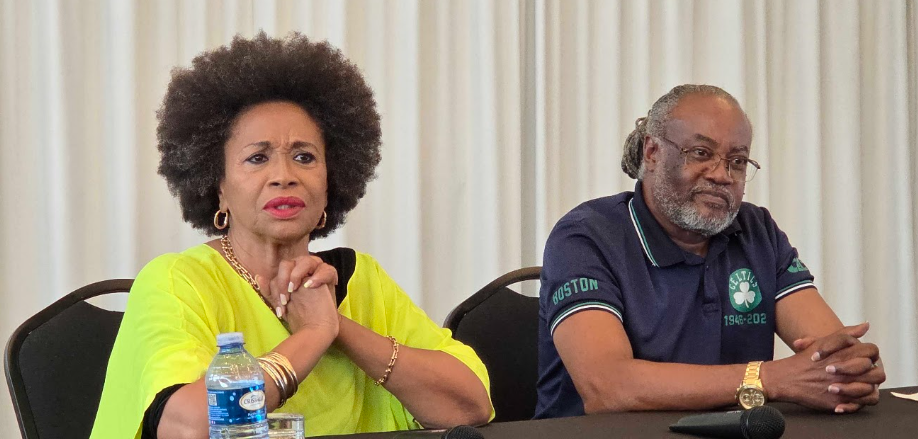
    KINGSTON, Jamaica — At a small ceremonial gathering held at Kingston’s AC Hotel, multi-hyphenate Jamaican leader Dr Patricia Smith — a successful home care entrepreneur, hotel operator, and published author — officially gifted a signed copy of her latest work *I Persist* to Jamaica’s Minister of Tourism Edmund Bartlett. The event unfolded on the margins of a cross-sector convening that brought together top stakeholders from Jamaica’s tourism, education, and business industries, all gathered to exchange ideas around building greater resilience and driving innovation across the country’s key service sectors.

    In her remarks during the presentation, Dr Smith outlined the core mission that drove her to write *I Persist*. The book was crafted as a source of encouragement for Jamaicans across all walks of life, she explained, with a special focus on uplifting women who grew up in state-run care institutions, as well as any person who has navigated the devastating challenges of homelessness and hopelessness. Its core message is simple: to urge readers to stay unshakable in the face of hardship, and to build every part of their lives around clear, intentional purpose.

    Dr Smith went on to frame Minister Bartlett himself as a living example of the persistence her book celebrates. From leading Jamaica’s tourism sector through repeated global crises to advocating tirelessly for the country as a top-tier travel destination on the international stage, Bartlett’s decades-long career embodies the very spirit at the heart of *I Persist*, she said. Dr Smith shared that her hope is the book will strike a chord with every Jamaican who is dedicated to building a more robust, prosperous nation for all.

    Minister Bartlett accepted the gift with gratitude, emphasizing that the values of resilience and endurance that *I Persist* explores lie at the center of Jamaica’s strategy for tourism recovery and long-term growth. He reflected on the repeated shocks the sector has absorbed over recent years: devastating hurricanes, the global COVID-19 pandemic, and ongoing geopolitical instability that has reshaped international travel. Through every challenge, Bartlett noted, Jamaica’s tourism industry has persisted, adapted, and reimagined itself — and that ability to bounce back is the very reason the country remains one of the most sought-after Caribbean destinations for travelers worldwide. He thanked Dr Smith for the thoughtful gesture and for her contribution to the growing national conversation about what it means to lead with endurance.

    Beyond its motivational message, *I Persist* digs into interconnected themes of personal resilience, overcoming systemic barriers that hold marginalized communities back, and the transformative power of leadership rooted in clear purpose.

  • Transformation taking root at St Andrew Prep with support from Express Canteen Services

    Transformation taking root at St Andrew Prep with support from Express Canteen Services

    In Kingston, Jamaica, a deliberate, sweeping educational renewal is taking root at St Andrew Preparatory School, driven by Principal Dr. Carol Blanchard’s vision of prioritizing whole-student development over narrow academic focus. Since Dr. Blanchard took the helm in July 2023, the institution has reimagined every layer of the student experience, from classroom curricula to extracurricular programming, and that progress recently earned a major vote of confidence: a JMD $500,000 donation to the school’s track and field program from local corporate partner Express Canteen Services, timed to support preparations for the upcoming annual Prep Champs athletic championships.

    What sets St Andrew Prep’s current trajectory apart is its intentional focus on balancing strong academic outcomes with character building, social skill development, and athletic excellence. Dr. Blanchard, a veteran educator with a track record of turning around programs at other Jamaican preparatory schools, has centered her leadership on a simple but transformative idea: in an age where students can access any fact online for free, schools must shift their focus from delivering content to teaching information literacy, emotional intelligence, and practical life skills that prepare young people for long-term success.

    This approach has already yielded measurable gains across every area of school life. In academic competition, the school advanced from only reaching the first round of the prestigious Junior Schools’ Challenge Quiz to breaking into the quarter-finals this year. A new robotics program, paired with the school’s longstanding chess initiative, has been a standout success: 42 out of 45 students entered in robotics competitions earned top marks this year, and Dr. Blanchard noted a clear, positive correlation between participation in STEM-focused extracurriculars and improved mathematics performance across the curriculum. Students have also excelled in the Kangaroo Mathematics challenge and the BIBRAS computational thinking competition, with several advancing to international rounds of the events.

    Extracurricular success extends far beyond STEM. St Andrew Prep remains a dominant contender in preparatory school chess, gunning for its third consecutive championship title, while new student leadership and communication programs like Children’s Parliament and the impromptu speaking initiative Literary Voices have helped hundreds of students build public confidence and communication skills. On the athletic track, the program has been building momentum after a fifth-place finish at last year’s Prep Champs, with coach Patrick Johnson noting this year’s roster is deeper and stronger than ever.

    The JMD $500,000 donation from Express Canteen could not have come at a better time, Dr. Blanchard explained, particularly as an independent school that receives no government funding and relies entirely on student tuition to cover operating costs. Shifting economic conditions across Jamaica have made corporate partnerships critical to expanding programs, retaining top teaching talent, and supporting high-cost extracurriculars like athletics that draw strong interest from families.

    For Express Canteen’s leadership, the investment aligns perfectly with the company’s core philosophy of “Feed Your Dreams.” Co-owner Ryan Foster emphasized that the company’s support is about more than just financial assistance—it is a commitment to backing a model of education that prioritizes holistic growth. “What I admire about Dr. Blanchard’s work is how you are building a holistic environment for students to self-actualise, not just on the field of play, but also in the classroom,” Foster said. His wife and business partner Simone Foster added that the partnership has always centered on empowering young Jamaicans, noting that the donation is part of a long-term commitment to the school’s mission.

    Track coach Patrick Johnson says the funding will allow the program to expand access to quality coaching for all interested students, rather than only focusing on elite contenders, as the team ramps up preparations for this year’s championships. While he remains cautiously optimistic, noting that competition results can be unpredictable, he confirmed this year’s team has already outperformed expectations in pre-championship development meets.

    The transformation has already translated to growing community demand for places at the school: after turning away more than 30 Grade One applicants two years ago, the school was oversubscribed by more than 50 students for the 2024 intake. For Dr. Blanchard, that interest is validation of the holistic model, but the work is far from over. With the Prep Champs just around the corner, she says the school is ready to exceed expectations: “Look out for us. We might just be the champions this year.”

  • Davis names one of largest Cabinets in Bahamian history

    Davis names one of largest Cabinets in Bahamian history

    Following a decisive landslide victory in the country’s general election, Bahamas Prime Minister Philip Davis has formally inaugurated one of the largest executive administrations in Bahamian history, installing a 28-member team of Cabinet and state ministers in multi-day ceremonies at Government House.

    Led by Davis, who secured a rare second consecutive term as prime minister – the first Bahamian leader to achieve this milestone in nearly 30 years – the new government comprises 21 full Cabinet ministers and 7 state ministers. Among the high-profile appointments, Deputy Prime Minister Chester Cooper has taken on the additional role of Minister of Education, Science and Technology. Wayne Munroe, previously the national security lead, has shifted portfolios to serve as Senator, Attorney General and Minister of Legal Affairs, while veteran politician Fred Mitchell returns to lead the Ministry of Foreign Affairs. Michael Halkitis has been sworn in as the new Minister of Finance.

    The full roster of Cabinet appointments covers every major government portfolio: Clay Sweeting leads Works and Family Island Affairs, Michael Darville takes charge of Health and Wellness, and Glenys Hanna-Martin returns to head the Tourism Ministry. Keith Bell serves as Minister of Housing and Land Reform, Jobeth Coleby-Davis leads Energy, Utilities and Aviation, and Mario Bowleg oversees Youth and Sports. Jomo Campbell holds the Agriculture and Marine Resources portfolio, Pia Glover-Rolle leads Labour, Public Service and National Insurance, and Zane Lightbourne heads Environment and Natural Resources. Ginger Moxey returns as Minister for Grand Bahama, while Lisa Rahming takes on Urban Renewal and Community Development. Myles Laroda fills the vacant National Security portfolio, Leon Lundy leads Transport, and Leslia Miller-Brice takes charge of Culture, Arts and Heritage. Two new senators were appointed to Cabinet: Jerome Fitzgerald as Senator and Minister of Economic Affairs, and Barbara Cartwright as Senator and Minister of Social Services. Rounding out the Cabinet is Sebas Bastian, who serves as Minister of Innovation and National Development.

    Alongside the full Cabinet, seven state ministers were also formally installed: Bacchus Rolle as State Minister of Social Services, Leonardo Lightbourne as State Minister for Agriculture and Marine Resources with oversight of the Bahamas Agricultural and Industrial Science Institute (BAMSI), Kirk Cornish and Mckell Bonaby as state ministers based in the Office of the Prime Minister, Wayde Watson as State Minister for Innovation and National Development, Darren Pickstock as State Minister for Immigration in the Ministry of Foreign Affairs, and Owen Wells as State Minister in Health and Wellness.

    The size of the new administration has already drawn comparison to Davis’ first term, when his 2021 22-member Cabinet (including state ministers) faced public criticism. At that time, Davis defended his decision to expand the executive branch, arguing that the country’s complex, large-scale challenges demanded additional capacity. “I know everyone is trying to distract from our job at hand. The enormity of the task at hand is what caused me to select the number of persons that I have,” Davis stated in 2021, a position he is expected to reaffirm for this larger 28-member administration.

    The size of the Davis-led administration stands in sharp contrast to the previous Minnis administration, which took office after the 2017 general election with an initial 13 Cabinet ministers and just 3 state ministers, less than half the size of the current executive team.

  • Time for Jamaica to command a larger share of US$3 trillion creative economy, says Burchell

    Time for Jamaica to command a larger share of US$3 trillion creative economy, says Burchell

    KINGSTON, Jamaica — In a landmark address to Jamaica’s parliament during the annual Sectoral Debate at Gordon House on May 13, Opposition Spokesperson for Culture, Creative Industries and Information Nekeisha Burchell has laid out a urgent call for the country to reposition itself to capture a larger, more equitable slice of the $3 trillion worldwide creative economy.

    Burchell, who also serves as the Member of Parliament for St James Southern, opened her remarks by highlighting how deeply Jamaican cultural influence already permeates fast-growing segments of the modern global economy. From streaming music and social media influencer culture to digital creator platforms and AI-powered content distribution, the country’s cultural imprint is unmistakable: Jamaican rhythms define global pop sounds, local slang enters mainstream vocabulary across continents, homegrown dance movements are replicated by creators worldwide, and Jamaican aesthetics set trends in international fashion and entertainment.

    Despite this outsized cultural footprint, Burchell argued that Jamaica remains trapped on the margins of the global creative value chain, rather than holding core ownership of the intellectual property its creators produce. “We export influence, but we under-capture value,” she told lawmakers, framing this gap as one of the most pressing economic questions facing the country today. She emphasized that intellectual property has evolved from a niche legal concern to core economic infrastructure, meaning Jamaica must proactively build systems to protect copyright, streamline royalty collection, expand creator education, scale digital monetization pathways, and enforce ownership rights for local creatives.

    A central contradiction Burchell called out is the widespread global celebration of Jamaican culture that exists alongside systemic economic vulnerability for most local creators. To resolve this, she said, the country must stop framing investment in creative industries as discretionary charity or cultural goodwill, and instead recognize it as a core pillar of national economic strategy. “It is economic strategy. It is youth employment strategy. It is export strategy. It is digital economy strategy,” she stressed.

    Outlining the opposition People’s National Party’s (PNP) existing policy roadmap, Burchell recalled that the party first proposed a $1 billion Creative Economy Support Fund in 2025. The plan also includes building regional creative hubs, constructing state-of-the-art content production studios, expanding specialized audiovisual training programs, and delivering structured, ongoing support for young creators and creative entrepreneurs. Burchell noted that raw Jamaican talent is abundant, but without supporting institutional and financial infrastructure, those creative businesses cannot scale to compete globally.

    She also pushed for Jamaica to move beyond its traditional role as a scenic backdrop for foreign film and media productions. Drawing on personal experience from her own constituency, Burchell pointed to the 1960s James Bond production that filmed on location at White Witch Mountain in Flat Johnson, St James Southern, to illustrate her point. While the country’s natural beauty and cinematic appeal are major assets, she argued Jamaica must evolve from being a location for other people’s stories to becoming the owner, exporter, and intellectual property rights holder of its own narratives — a shift that would unlock massive economic value in the modern content economy.

    Burchell also highlighted a second major contradiction in current Jamaican policy: the country markets itself globally as a hub of vibrant culture, from music and dancehall to festivals and nightlife, but the very creators who generate that brand value face repeated conflict with fragmented, outdated regulatory frameworks. “Jamaica profits symbolically from entertainment culture while structurally constraining many of the people who create it,” she said, calling for an honest reckoning with these long-standing policy failures.

    To address this gap, the PNP has proposed the creation of specialized Special Entertainment Zones, streamlined consolidated licensing systems, and a more coherent national regulatory framework for the entertainment sector. Burchell emphasized that entertainment is far more than leisure: it drives employment, boosts tourism, creates opportunity for young people, and forms the core of Jamaica’s global national identity. While acknowledging the legitimate need for community safety and resident peace, she argued that regulation has too often functioned as outright suppression of the sector. “We cannot continue celebrating dancehall globally while criminalising many of its economic spaces locally,” she said, noting that even the current ruling government has acknowledged the need for structured entertainment infrastructure through ongoing discussions about entertainment development zones in tourist hubs like Negril.

    Closing her address, Burchell pressed the sitting administration to turn rhetorical support for the creative economy into concrete action. Jamaicans are right to ask whether recent government announcements about creative sector development are just empty promises or the start of a real, actionable national strategy, she said. The country has developed a damaging pattern of making big announcements without following through on implementation, Burchell argued. Today, the question is no longer whether Jamaica recognizes the untapped potential of its creative sector — the question is whether policymakers can come together to pursue a comprehensive, intentional, national strategy that delivers tangible change for creators across the country.

  • Phillips blames Transport Authority for the ‘chaos’ in the public transportation system

    Phillips blames Transport Authority for the ‘chaos’ in the public transportation system

    KINGSTON, Jamaica — Jamaica’s crumbling public transportation system has come under fresh fire from opposition transport spokesman Mikael Phillips, who has placed full blame for the sector’s chaotic state on the national Transport Authority during recent parliamentary proceedings. Speaking on May 13 as part of the annual Sectoral Debate in the House of Representatives, Phillips laid out a scathing critique of the regulatory body’s policy choices and the ruling administration’s stalled reform efforts, backed by official licensing data that lays bare the scale of unplanned expansion. Phillips zeroed in on the dramatic surge in issued transit licenses over the past nine years, a growth he argues has not been matched by even basic investment in supporting infrastructure. From 2016 to 2025, the total number of taxi licenses nationwide more than doubled, jumping from just under 14,000 to nearly 28,000. Broken down by region and license class, the expansion is even starker: In the densely populated Kingston Metropolitan Transport Region (KMTR), the number of active Hackney carriage licenses surged 225 percent, climbing from 1,600 in 2016 to 5,200 this year. Route taxi licenses have also skyrocketed, growing 168 percent nationwide to hit 20,275, with the KMTR seeing its own Route taxi count jump from 363 to 2,466 over the same period. “Consider the sheer absurdity of doubling taxi licenses… while providing no meaningful parking facilities or logistical support,” Phillips told lawmakers. He characterized the unregulated expansion as the most clear-cut example of systemic government negligence, arguing that the policy intentionally created the crippling congestion and widespread operational disorder that now clog every major urban center across Jamaica. The opposition spokesman stressed he does not condone the rule-breaking widespread across the public transit sector, but emphasized that systemic failures from top regulators are the root cause of the current chaos. For years, the current administration has promised to table amending legislation to update the outdated Transport Authority Act, but Phillips noted that the bill has yet to be introduced, a delay he calls a defining example of the government’s legislative lethargy and consistent failure to deliver meaningful policy reform. Going a step further, Phillips accused the Transport Authority of operating solely as a revenue-generating body with zero commitment to improving service quality for Jamaican commuters. Beyond the stalled legislative reform, license growth has not been paired with any expansion of much-needed parking infrastructure, any rationalization of the disjointed existing network, or any coherent long-term strategic plan for the country’s public transit sector as a whole. This failure, he argues, has created the daily chaos visible across every Jamaican town: operators and commuters are packed into overcrowded vehicles in conditions Phillips compared to the inhumane Middle Passage of the transatlantic slave trade, reducing transit users to second-class treatment in their own country. Phillips also touched on the growing frequency of violent clashes between law enforcement officers and transit operators, noting that these confrontations put commuters at unnecessary risk and project an image of widespread public disorder to both Jamaicans and international visitors. He closed by reiterating that the overwhelming majority of the current systemic chaos stems directly from the critical deficit in parking infrastructure. Rules of the road cannot be fairly enforced in an environment where there is nowhere legal for operators to park, he said, placing full responsibility for the crisis firmly at the feet of the current government and its regulatory arm.

  • Powerful 6.0 earthquake rattles Eastern Caribbean

    Powerful 6.0 earthquake rattles Eastern Caribbean

    A strong 6.0-magnitude earthquake shook multiple island nations and territories across the eastern Caribbean region early Saturday, according to regional correspondents. The seismic event sent tremors across a wide swathe of the Caribbean archipelago, touching 16 distinct areas including the British Virgin Islands, Dominica, Saint Martin, Sint Maarten, Guadeloupe, Martinique, Montserrat, Puerto Rico, Saint Kitts and Nevis, the U.S. Virgin Islands, Venezuela, Caribbean Netherlands, Saint Barthélemy, Antigua and Barbuda, and Anguilla.

    Geological measurements placed the quake’s epicenter approximately 43.5 miles off the coast of Codrington, a small village located on Barbuda, one half of the dual-island nation of Antigua and Barbuda. The tremor struck at approximately 10:50 a.m. local time, prompting widespread alerts across the region.

    In updated official statements following the event, authorities confirmed that no casualties or structural damage have been reported across any of the affected areas. Additionally, regional disaster management agencies have ruled out any risk of a tsunami triggered by the earthquake, easing public concerns over secondary coastal hazards.

  • Manchester City beat Chelsea 1-0 to win FA Cup

    Manchester City beat Chelsea 1-0 to win FA Cup

    LONDON, UK – In a tense, tightly-contested FA Cup final played at Wembley Stadium on Saturday, Manchester City claimed a hard-fought 1-0 win over Chelsea, lifting the iconic trophy and securing a historic domestic cup double for the club. The only goal of the match came in the 72nd minute from Antoine Semenyo, who found the back of the net to break the deadlock between the two Premier League sides. The win marks a significant milestone for Manchester City, who entered this year’s final having fallen short in their last two appearances in the title match, ending their streak of consecutive FA Cup final defeats. This result cements City’s status as the dominant domestic side in English football this season, pairing their FA Cup triumph with their earlier League Cup victory to complete the domestic cup double. This story is developing and more details will be published as they become available.

  • Family hands in St James murder suspect

    Family hands in St James murder suspect

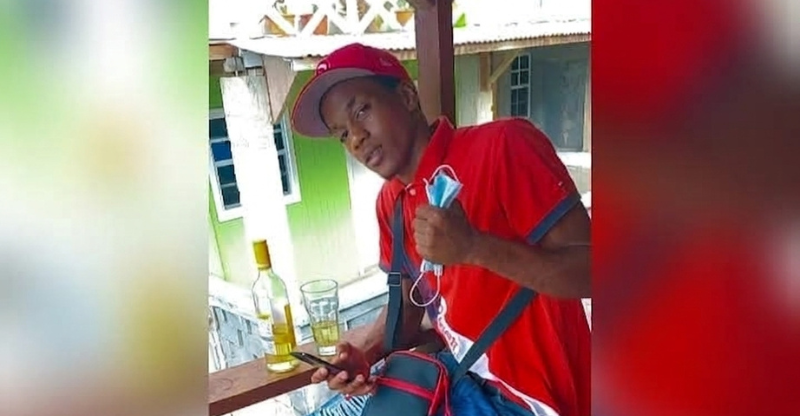
    In ST MARY, Jamaica, a 31-year-old man who had been a fugitive for more than two weeks in the fatal investigation of his American girlfriend has turned himself in to local law enforcement, following coordinated intervention from his family that secured a peaceful handover on Friday, May 15. Dane Watson had evaded police custody since April 29, the day 42-year-old Melissa Sammoth, a resident of New York, was admitted to Cornwall Regional Hospital with multiple severe injuries. Medical staff later confirmed Sammoth’s death after efforts to treat her were unsuccessful. According to official police accounts, Watson personally transported Sammoth to the hospital’s emergency care facility before fleeing the scene immediately after dropping her off. Investigators had spent weeks tracing the suspect’s movements, working from the theory that he had left his original parish and was hiding out in the tight-knit Gayle community within St Mary. As pressure from the manhunt mounted, Watson grew concerned for his own personal safety and reached out to his family members to arrange a peaceful surrender. His relatives immediately contacted the Gayle division of the Jamaica Constabulary Force to open negotiations, and after careful coordination between family representatives and investigating officers, Watson was formally transferred into police custody without incident. The suspect remains behind bars as detectives continue working to piece together a full timeline of the events leading up to Sammoth’s death, including potential motives and the exact sequence of actions that left her with fatal injuries. Because of Sammoth’s status as an American citizen from New York, the high-profile case has attracted scrutiny from both domestic Jamaican audiences and international observers, with law enforcement prioritizing a thorough, transparent investigation to resolve all unanswered questions surrounding the incident.

  • Over 100 Haitians deported from The Bahamas

    Over 100 Haitians deported from The Bahamas

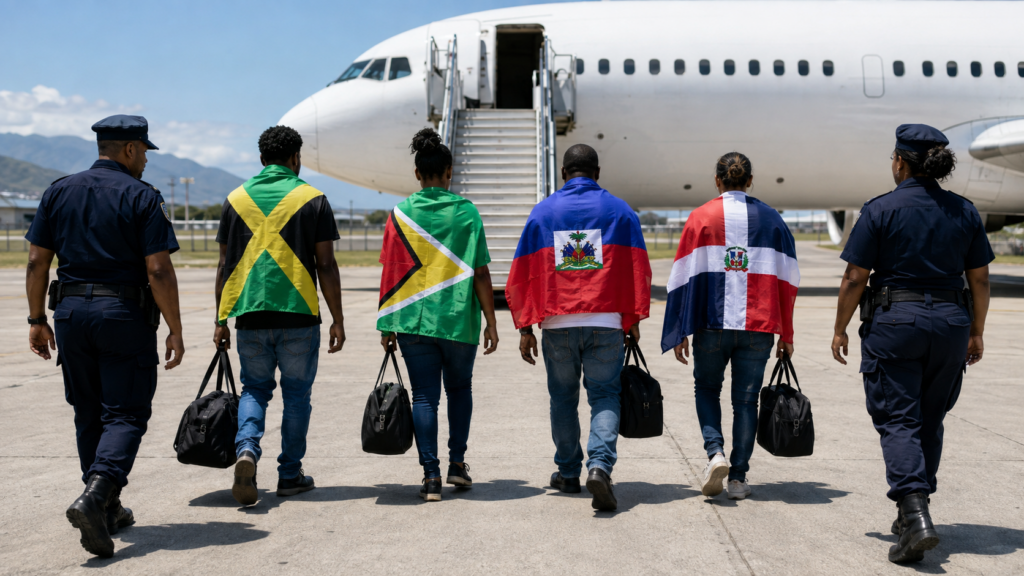
    NASSAU, Bahamas — The Bahamas’ national immigration agency has carried out a large-scale deportation operation, sending 107 Haitian migrants back to their home country as part of the government’s sustained crackdown on violations of national immigration regulations. In an official public statement released after the operation, the Department of Immigration outlined details of the repatriation, noting that the group deported included 22 adult women and five minor children. Authorities confirmed that the majority of the deported individuals had remained in the Bahamas beyond the timeframe allowed by their entry permits, while others were taken into custody after entering the country without proper authorization.

    The repatriation flight, operated by Bahamas’ national carrier Bahamasair, departed from the Lynden Pindling International Airport in the capital Nassau. Department officials emphasized that all established public health and security protocols were strictly implemented throughout the entire deportation process, prioritizing the safety and health of both immigration officers overseeing the operation and the migrants being deported. Upon landing in Haiti, the 107 migrants will undergo standard entry processing by Haitian immigration officials. The five underage girls in the group will be transferred to Haiti’s national child welfare services for further care and support, per arrangements between the two countries’ authorities.

    This large operation was not the only immigration enforcement action Bahamian authorities took this week. Just days earlier, the department completed a second deportation that involved 15 foreign nationals from a range of countries across the globe. Among that smaller group were three Jamaican citizens, two Colombians, two Mexicans, two Peruvians, two Romanians, one Cuban, one Ecuadorian, one additional Haitian, and one Moldovan national, all of whom had been found to be in violation of Bahamas immigration rules.

    The Department of Immigration reiterated that these ongoing enforcement operations are a core part of the government’s commitment to upholding the country’s immigration laws and maintaining order along its borders. It called on members of the Bahamian public to actively support these efforts by reporting any suspected immigration violations to the relevant authorities, reinforcing the message that compliance with national entry and residency rules is a shared responsibility.