作者: admin

  • Canada mulling expanding ‘assisted dying’ law to mental illness

    Canada mulling expanding ‘assisted dying’ law to mental illness

    MONTREAL, Canada — For 93-year-old Jacques Poissant, relief from prolonged suffering arrived when he posed a courageous question to his daughter: would it be cowardly to seek assistance in dying? After an extensive battle with prostate cancer that left him physically diminished and devoid of life’s vitality, his inquiry initiated a dignified farewell process.

    His daughter, Josee Poissant, recounts how her mother made a similar choice at age 96 upon recognizing her permanent hospitalization. Surrounded by family and accompanied by cherished music, she experienced a peaceful transition. “She was at peace. She sang until she went to sleep,” Poissant remembers, describing the moment as both beautiful and moving—a privileged opportunity for proper goodbyes.

    Canadian legislation has progressively expanded since initially legalizing medical assistance in dying (MAID) in 2016 for end-of-life cases. By 2021, the right extended to those with serious and incurable conditions, even when death wasn’t immediately foreseeable. Current statistics reveal that one in twenty Canadian deaths in 2023 involved this procedure.

    The nation now contemplates further expansion as a parliamentary committee prepares to examine whether MAID should include individuals suffering exclusively from mental illnesses. This potential development represents the next frontier in end-of-life legislation, positioning Canada as a global leader in assisted dying policies while other nations like Britain and France consider more limited measures.

    Claire Brosseau, a 49-year-old former stand-up comedian, embodies this pending decision. After decades battling bipolar disorder through extensive treatments across multiple cities—including various medications, therapies, and alternative approaches—she finds daily existence overwhelmingly challenging. “I have about 10 to 30 minutes a day where I’m OK. But the rest of it is just terrible,” she explains from her Toronto apartment where she lives in isolation with her dog Olive.

    Brosseau envisions a peaceful departure surrounded by love rather than a violent, solitary end. However, critics like University of Toronto health law professor Trudo Lemmens caution against trivializing assisted dying as “a form of therapy.” He notes Canada’s sharper rise in cases compared to pioneering nations like Belgium and the Netherlands, emphasizing that suicidal desires often integrate with psychiatric disorders whose trajectories remain unpredictable.

    Conversely, psychiatrist Mona Gupta, who chaired a government advisory expert panel, argues against distinguishing between mental and physical suffering. “We have to acknowledge that there are people who have been ill for decades and have undergone all kinds of treatments,” she states, emphasizing that certain mental illnesses produce equally unrelievable suffering as physical conditions.

    For those with terminal physical illnesses like Rachel Fournier, a 71-year-old Quebecker with brain cancer, MAID approval brings profound relief. “Knowing that there will be an end, and that I can choose the moment, is an immense relief,” she reflects from her palliative care center. This control over her departure contrasts with her mother’s experience with dementia, when legal options for dignified death were unavailable.

    Canada’s rigorous protocol requires adult applicants with decision-making capacity to demonstrate serious, incurable illness causing constant, unbearable suffering that cannot be tolerably relieved. Only after two physicians verify these criteria can lethal medication be administered at the patient’s chosen time.

    Increasingly, Canadian families transform these final moments into celebrations of life. Ceremonies feature music, speeches, buffets, and personalized elements—from horror movie viewings to final beers and cigarettes. Funeral complexes now dedicate spaces for these gatherings, recognizing their significance.

    As Dr. Georges L’Esperance, a veteran MAID provider, observes: “Thanks to medicine, we have added years to people’s lives, but not always life to those years.” For advocates like Brosseau, the fundamental question remains about personal autonomy: “To deny me this right is to deny my humanity.”

  • New Israel, Iran attacks across region: Latest developments in Middle East war

    New Israel, Iran attacks across region: Latest developments in Middle East war

    TEHRAN, Iran — The Middle East plunged deeper into conflict on Tuesday as explosions reverberated through Tehran following Israel’s targeted strike against a high-ranking Iranian commander. This development marks the fourth consecutive day of escalating hostilities that began with US-Israeli operations over the weekend resulting in the death of Iran’s supreme leader.

    Military engagements spread across multiple fronts with Israeli air strikes hitting Beirut’s southern suburbs, causing significant structural damage in Hezbollah-controlled areas. The Lebanese militant group retaliated by targeting Israeli military installations at Maayan Baruch. Meanwhile, Israel announced the creation of a buffer zone in southern Lebanon, prompting the Lebanese army to reposition its forces.

    Economic repercussions intensified as Brent crude oil surged past $85 per barrel—reaching July 2024 levels—due to disrupted shipments through the effectively closed Strait of Hormuz. Precious metals witnessed sharp declines, with gold dropping over 4% to $5,075/ounce and silver plunging 12% to $78/ounce as investors shifted to energy markets.

    Iran’s Revolutionary Guards issued grave threats through state television, warning that “the gates of hell will open more and more, moment by moment, upon the United States and Israel.” The Islamic Republic simultaneously appealed to the UN Security Council for intervention while reporting 787 fatalities nationwide according to its Red Crescent organization.

    Technological infrastructure became collateral damage as Amazon confirmed drone strikes on two UAE data centers, disrupting cloud services regionally. Additional explosions were reported in Manama, Doha, and Riyadh, where drones struck the US embassy compound.

    International responses multiplied as France deployed Rafale jets to protect UAE bases, China called for Strait of Hormuz security, and Israel urged global nations to sever diplomatic ties with Iran. The conflict has already displaced approximately 30,000 people in Lebanon according to UN estimates.

    The International Atomic Energy Agency confirmed damage to entrance buildings at Iran’s underground Natanz nuclear facility, though noting no radiological consequences. Transatlantic tensions simultaneously emerged as former President Trump criticized UK Prime Minister Starmer for restricting US access to British military bases.

  • US embassy warns of imminent attack in eastern Saudi Arabia

    US embassy warns of imminent attack in eastern Saudi Arabia

    The United States Embassy in Riyadh has issued an urgent security alert, warning of an imminent missile and unmanned aerial vehicle (UAV) attack threat targeting the eastern Saudi city of Dhahran. The diplomatic mission utilized its official X account to disseminate the warning, explicitly advising individuals to avoid the U.S. Consulate in the area.

    This heightened alert follows a direct attack on the U.S. mission in Riyadh itself, where two drones struck the embassy grounds, resulting in a small fire. This incident is part of a broader escalation of retaliatory strikes emanating from Iran across the Gulf region.

    The strategic significance of Dhahran cannot be overstated, as it serves as the operational hub for much of Saudi Arabia’s critical energy infrastructure. The warning comes on the heels of a disruptive attack on Monday that targeted the massive Ras Tanura refinery, a key facility on Saudi Arabia’s Gulf coast. The assault forced the complex into a partial shutdown.

    Operated by the state-owned oil titan Aramco, the Ras Tanura facility is not only one of the largest refineries in the Middle East but also a fundamental pillar of the kingdom’s energy sector and, by extension, the global oil market. Saudi Arabia’s position as the world’s premier oil exporter means that its eastern coast, where most oil fields and petroleum infrastructure are located directly across the Gulf from Iran, is of paramount geopolitical and economic importance. The ongoing attacks represent a significant threat to regional stability and global energy security.

  • UNDP head to visit Jamaica this week

    UNDP head to visit Jamaica this week

    KINGSTON, Jamaica — The United Nations Development Programme (UNDP) Administrator Alexander De Croo is scheduled to undertake his inaugural official visit to Jamaica this week, marking his first diplomatic engagement since assuming his current role in December 2025. The high-level mission, scheduled for March 5-6, will focus on post-hurricane recovery assessments and strengthening disaster resilience frameworks.

    The UNDP administrator, who previously served as Belgium’s Prime Minister and Finance Minister, will conduct field visits to communities affected by Hurricane Melissa. His itinerary includes high-level consultations with Jamaican government officials, including Prime Minister Dr. Andrew Holness and multiple cabinet ministers overseeing foreign affairs, justice, environmental policy, and economic development.

    De Croo’s agenda features two significant events: a Thought Leaders Dialogue convening private sector executives and financial leaders to discuss sustainable financing mechanisms for resilient recovery, and a panel discussion with academic institutions, civil society representatives, and youth advocates addressing development challenges specific to small island nations.

    The UNDP characterized this visit as a demonstration of institutional solidarity with Jamaica’s recovery agenda through its Resilient Recovery Initiative. The mission aims to gather firsthand impact assessments through community engagement while strengthening partnerships between international organizations, government entities, and private sector stakeholders committed to sustainable redevelopment.

  • Commission launches three years after Protection Against Violence Act gazetted

    Commission launches three years after Protection Against Violence Act gazetted

    The Bahamian government has officially inaugurated the Protection Against Violence Commission, marking a pivotal transition from legislative framework to operational reality under the Protection Against Violence Act of 2023. This landmark development, effective February 1, 2026, establishes a comprehensive enforcement mechanism nearly three years after the law’s initial gazetting.

    At a press conference closed to media but documented through an official release, Minister of Social Services, Information and Broadcasting Myles LaRoda characterized violence as a multidimensional threat to both individual security and national stability. “The harm inflicted upon women reverberates through families, weakens communities, and ultimately compromises national progress,” LaRoda asserted, framing the Commission as the institutional force that transforms legislative intent into coordinated action.

    The newly appointed Commission Chair Marisa Mason-Smith announced the body’s immediate shift from strategic planning to implementation, acknowledging foundational contributors including Dr. RubyAnn Nottage, Dr. Sandra Dean-Patterson, and the legislative drafting team led by Jewel Major from the Office of the Attorney General. “With expert groundwork established and legislation enacted,” Mason-Smith declared, “we now commence purposeful execution with unwavering resolve to eliminate violence.”

    Commission Co-Chair Pastor David Burrows addressed the generational nature of the challenge, emphasizing that meaningful impact requires educating upcoming generations to break cyclical patterns of violence. Desiree Clarke of the National Council for Persons with Disabilities highlighted the heightened vulnerability of disabled individuals, insisting that protection strategies must incorporate inclusive design principles.

    The Commission represents a whole-of-society approach rooted in legal, strategic, cultural, and faith-based dimensions. The Department of Gender and Family Affairs, under Director Sharmie Farrington, will administer the Commission’s operational functions, including coordination and oversight mechanisms. Religious and cultural representatives including Dr. Roslyn Astwood of the Bahamas Christian Council and Deputy Director of Culture Portia Sands emphasized that confronting violence through moral accountability and compassion ultimately strengthens Bahamian social fabric by reinforcing familial respect and communal responsibility.

  • Pair held over fraudulent passport and voter ID scheme

    Pair held over fraudulent passport and voter ID scheme

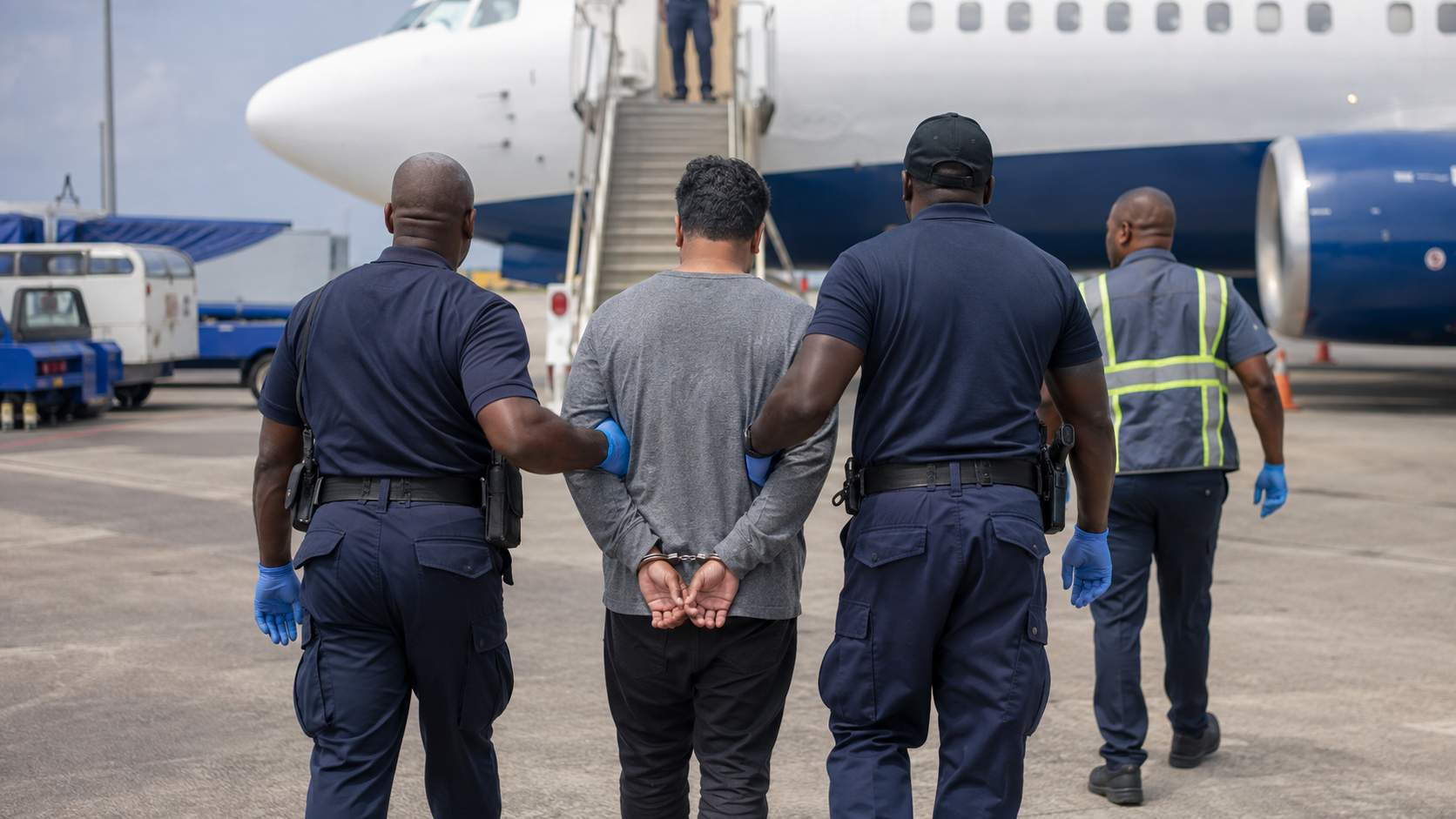
    A significant identity fraud case involving the illicit acquisition of official Bahamian documents has resulted in the imprisonment of two individuals pending trial. Max Veve Pierre, an 18-year-old Haitian national, and his 59-year-old accomplice, Gersey Pierre, stand accused of orchestrating a sophisticated scheme to obtain government-issued identification under false pretenses.

    According to prosecution details presented in court, the alleged conspiracy began on December 23, 2024, when both defendants reportedly agreed to fraudulently secure a Bahamian passport. The plan allegedly came to fruition on February 3, 2025, when they successfully obtained a passport issued in Max’s name from the official Passport Office.

    The criminal complaint further reveals that Max Pierre allegedly utilized the fraudulent passport to obtain additional official documentation. Prosecutors assert that on January 23, he presented the document at the Parliamentary Registry to secure a Bahamian voter’s card, effectively attempting to establish false citizenship credentials.

    The scheme allegedly reached its critical point on February 24, when Max Pierre presented the counterfeit passport to immigration authorities at Lynden Pindling International Airport (LPIA). It was during this interaction that immigration officers detected irregularities in the documentation, leading to the unraveling of the entire operation and the subsequent arrest of both individuals.

    Following a court appearance before Senior Magistrate Anishka Isaacs, both defendants entered pleas of not guilty to the multiple charges against them. Max Pierre faces three counts of possessing false documents, two counts of uttering false documents, and fraud by false pretenses. Both defendants additionally face charges of conspiracy to commit fraud by false pretenses.

    Despite their professions as construction workers, the court deemed the allegations sufficiently serious to warrant remand. Both individuals were subsequently transferred to the Bahamas Department of Correctional Services, where they will remain until their trial commences on May 21. Inspector Timothy Bain is leading the prosecution in this case.

  • Two near-misses ‘almost catastrophic’

    Two near-misses ‘almost catastrophic’

    The Bahamas’ Aircraft Accident Investigation Authority (AAIA) has formally alerted the Civil Aviation Authority of The Bahamas (CAAB) regarding critical safety hazards following two alarming near-miss incidents involving American Airlines aircraft at Family Island airports. These events, occurring just two weeks apart in February, prompted the issuance of a Serious Safety Concern advisory, highlighting potentially catastrophic failures in communication protocols.

    The first incident unfolded on February 12 at Exuma International Airport. According to reports referenced by U.S. federal regulators, an American Airlines flight approaching Exuma was compelled to execute abrupt evasive maneuvers to avoid a collision with a departing aircraft. This sudden action resulted in injuries to two flight attendants, who subsequently received medical evaluation at a local clinic and were placed on leave.

    A second serious event occurred on February 24 at North Eleuthera International Airport. An American Airlines jet was positioned for takeoff when another aircraft passed directly overhead while the first plane remained on the active runway. The report did not identify the inbound or overhead aircraft involved in either incident.

    The AAIA’s investigation suggests that proper communication protocols at these uncontrolled aerodromes may have been violated. American Airlines reported that neither aircraft involved in the incidents made the required self-announcement of their position on the correct frequency—a fundamental international aviation standard for airports without control towers.

    AAIA Chief Investigator Kendall Dorsett Jr. confirmed both incidents remain under active investigation. He emphasized that the agency has an obligation to identify and report potential hazards within the local aviation system. While declining to specify whether near-miss reports have increased, Dorsett noted that such occurrences are reported when they happen.

    Aviation professionals speaking anonymously revealed that such incidents occur with concerning frequency at Family Island airports, most of which lack functional control towers or air traffic controllers. The AAIA acknowledged that operations at busy uncontrolled aerodromes demand heightened responsibility from pilots and called for immediate safety measures while longer-term operational and infrastructural improvements are considered.

    This safety alert echoes longstanding concerns about aviation operations in the region. A 2016 report from the U.S. Federal Aviation Administration’s Eastern Regional Task Group previously highlighted safety hazards in Caribbean operations, specifically noting the lack of live flight tracking in Bahamian airspace and insufficient advanced meteorological services for air traffic controllers monitoring the region.

    Officials from the CAAB had not responded to requests for comment by press time.

  • Seven students charged over viral high school brawl

    Seven students charged over viral high school brawl

    Nassau, Bahamas – Seven students from Doris Johnson Senior High School have been formally charged by police following a violent campus altercation that was captured on video and disseminated across social media platforms. The incident, which sparked widespread public concern, shows a chaotic physical confrontation involving multiple students engaging in aggressive behavior.

    According to Assistant Commissioner of Police Chaswell Hanna, the students face multiple charges including disorderly conduct, causing harm, and engaging in physical fighting. The widely circulated footage depicts a group of male students exchanging blows, with one individual lifting and throwing a chair at another participant. The confrontation escalated further when a student picked up a rock and struck another student in the head, while audible profanity and shouting filled the background.

    Police authorities confirmed that injuries sustained during the incident were minor, consisting primarily of scrapes and cuts that were treated by the school’s medical staff. ACP Hanna emphasized that law enforcement officials are collaborating with educational authorities and school safety partners to implement preventive measures against future occurrences.

    The police representative highlighted the availability of alternative intervention programs designed to redirect student behavior without immediate recourse to the criminal justice system. “We provide school students an opportunity to redeem themselves through participation in behavioral correction programs,” Hanna stated. “With parental consent, we place students in these initiatives, which have demonstrated success in most previous cases.”

    Addressing rumors of a school lockdown, Hanna clarified the terminology, explaining that while administrative staff brought the situation under control, the term “lockdown” inappropriately suggested students were in grave danger, which was not the case.

    Dominique McCartney-Russell, Director of Education, confirmed the ongoing investigation into the incident, noting that several involved students have been suspended to REFOCUS centers and will participate in restorative justice initiatives. Parent conferences have been conducted, with additional consequences to be determined as the investigation progresses.

  • Family launches GoFundMe for Spanish sailor who went missing off Abaco

    Family launches GoFundMe for Spanish sailor who went missing off Abaco

    The family of Spanish-American sailor Miguel Campoy has initiated a crowdfunding campaign to finance a comprehensive private investigation into his mysterious disappearance near South Abaco six months ago. The 56-year-old mariner vanished on September 6 after departing aboard his 44-foot blue-hulled sailboat named Hella, with his final communication indicating calm seas and an unexpectedly prolonged journey.

    Following the suspension of official search operations by both the Royal Bahamas Defence Force and the United States Coast Guard, the family has exhausted considerable resources funding private aerial and maritime searches. The campaign aims to raise €18,000 to pursue advanced investigative measures including specialized satellite imagery analysis, legal action to obtain crucial mobile phone records, and enhanced maritime traffic pattern assessment.

    To date, investigators have recovered only Campoy’s support dinghy containing personal belongings and identification documents, while the primary vessel remains missing without confirmed debris. Advanced satellite analysis has identified another vessel transiting through the area approximately when contact was lost, though authorities have been unable to establish communication with the ship’s captain or operating company.

    Miriam Campoy, the sailor’s sister, emphasizes that while no allegations of wrongdoing are being made against any vessel, the family believes it reasonable to determine whether maritime witnesses observed unusual activity. The family faces additional challenges in obtaining critical mobile phone data from service providers and manufacturers, with neither Spanish nor Bahamian authorities successfully securing this information.

    The family has now engaged U.S. legal representation to pursue court orders for accessing mobile records and last-known location data. While expressing appreciation for Bahamian officials’ courtesy, Campoy noted that resource constraints may have limited the official investigation’s scope.

    The raised funds will be exclusively dedicated to continuing search operations, investigative efforts, and offering a monetary reward for verifiable information regarding Campoy’s disappearance. The family has explicitly dismissed suggestions that the sailor staged his disappearance, citing his strong family connections and planned meetings with friends shortly after his vanishing.

  • Trinidad and Tobago placed under state of emergency

    Trinidad and Tobago placed under state of emergency

    The government of Trinidad and Tobago has implemented a nationwide state of emergency effective Tuesday, March 3rd, following intelligence reports indicating heightened criminal activity linked to organized gangs and recently released detainees. Prime Minister Kamla Persad-Bissessar announced the decisive measure after emergency consultations with the National Security Council, subsequently requesting President Christine Kangaloo to formally declare the security emergency.

    The declaration comes as a direct response to escalating violence across the nation, with security officials reporting multiple fatalities from coordinated shootings and growing threats against law enforcement personnel. Intelligence assessments presented to the NSC revealed credible plans to target police officers, prison staff, and members of the legal services, prompting the government’s severe response.

    Prime Minister Persad-Bissessar emphasized the administration’s zero-tolerance stance toward criminal enterprises, referencing previous successful security operations conducted over the past ten months. The government had previously extended a state of emergency initiated in December 2024 by the former Rowley administration, which remained active until January 31st of this year.

    The administration’s efforts to establish permanent security legislation suffered a setback in January when the proposed Zones of Special Operations (ZOSO) bill failed to secure Senate approval. The failed legislation would have granted security forces enhanced powers including warrantless search and seizure capabilities within designated high-crime areas.

    Persad-Bissessar issued a stern warning to criminal elements, stating that violent gang members would be immediately returned to prison, potentially accompanied by family members found complicit in criminal activities. The government maintains that all available resources will be deployed to prevent reversal of recent security gains and protect citizens from organized criminal networks.