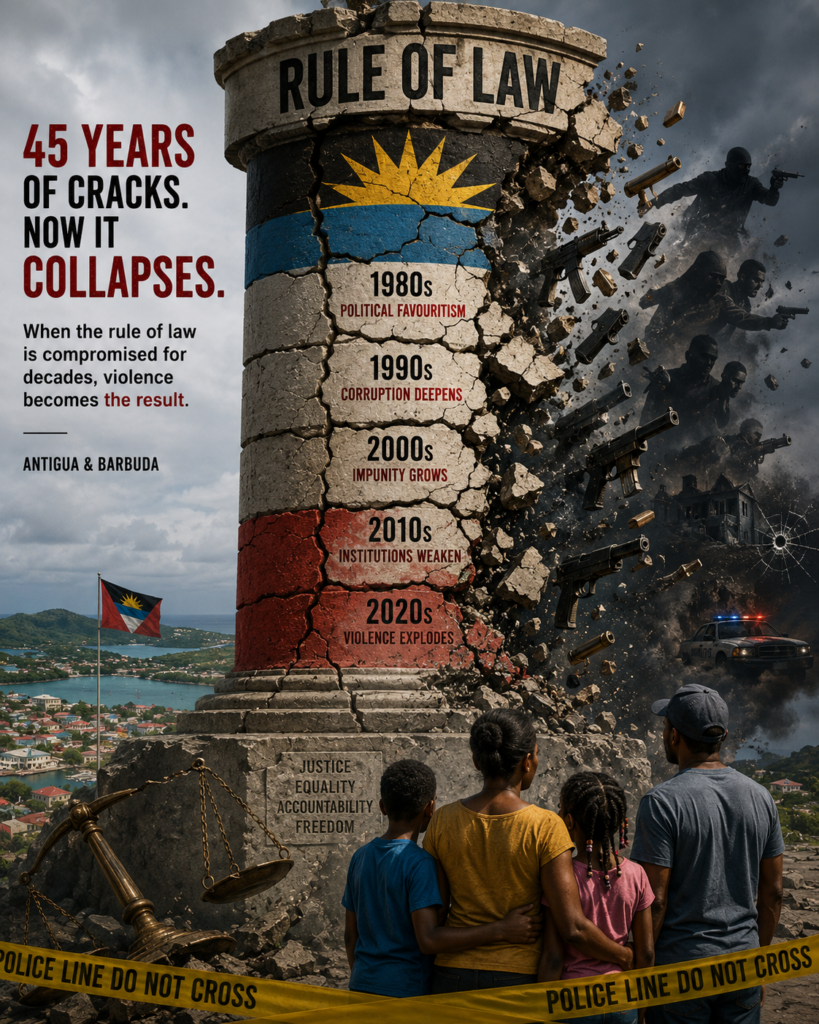
Recent public clashes between key governance institutions across the Caribbean have exposed far deeper flaws than surface-level political drama, according to long-time observer Yves R. Ephraim. What begins as a high-profile dispute between the Caribbean Court of Justice (CCJ) president and his colleagues over misconduct allegations, followed by a fiery standoff between Antigua and Barbuda’s Prime Minister and regional legal groups over the PM’s criticism of a sitting judge, is just the visible tip of a systemic rot that has eroded governance across the nation and the wider region.
作者: admin
-
Saint Lucia downed by Grenada in CFU opener
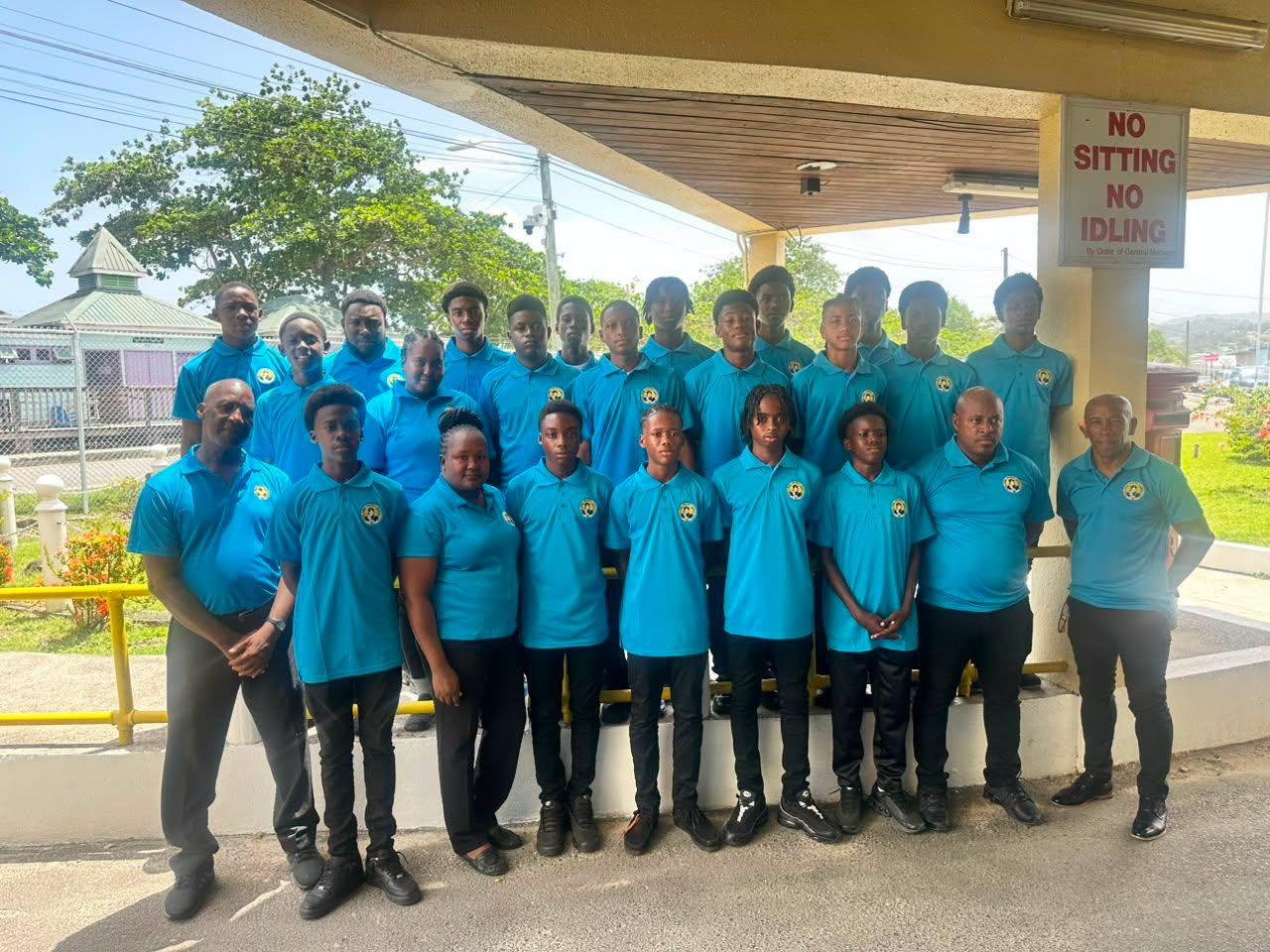
The Caribbean Football Union Boys Under-14 Challenge Series kicked off on Sunday in Punta Cana, Dominican Republic, delivering a dramatic opening matchup in Tier II Group D that ended with a heart-stopping 3-2 victory for Grenada over a young, resilient Saint Lucia side known as the Piton Boyz.
Played at the modern Cap Cana Sports City venue, the contest lived up to pre-tournament excitement as a five-goal thriller that kept spectators on the edge of their seats until the final seconds. Grenada got off to a blistering start that put Saint Lucia on the back foot early, but the Piton Boyz fought back admirably to level the scoreline, only for a late stoppage-time goal to split the two sides after a full 90 minutes of play.
Grenada’s opening goal came in the 14th minute from striker Romario Phillip, who broke the deadlock with a clinical finish. Just 60 seconds later, midfielder Adon Bishop doubled Grenada’s advantage, leaving Saint Lucia facing a 2-0 deficit inside the opening 15 minutes of the tournament. Undeterred by the early setback, Saint Lucia clawed their way back into the game: forward Jalen McDonald cut the deficit to one goal in the 30th minute, before winger Lyin Griffith found the back of the net to equalize just eight minutes later, sending the two sides into halftime level at 2-2.
The second half unfolded as a tense tactical battle, with both defenses stepping up to block repeated attacking pushes. As the clock ticked down, it looked increasingly likely that the fixture would end in a 2-2 draw, mirroring the result of the two teams’ last meeting in this very competition two years prior. But in the final minutes of stoppage time, attacker Jaywani Noel slotted home the decisive winner for Grenada, securing all three points for his side in their opening group stage game.
The tournament structure leaves no room for error for either side moving forward. Only the top team from Tier II Group D will advance to the tournament semifinals, scheduled to take place next Friday. Saint Lucia will look to bounce back from their narrow opening loss when they face the United States Virgin Islands on Monday. The US Virgin Islands also suffered a heavy defeat in their opening fixture, falling 8-0 to Suriname on Sunday. Saint Lucia will then go head-to-head with Suriname in their final group stage match on Wednesday.
-
Nieuwe retentieregeling: 35% goudexportopbrengsten rechtstreeks naar CBvS
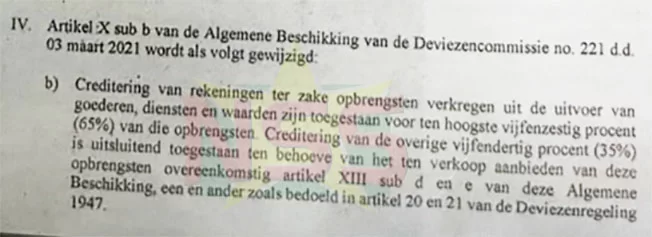
Suriname has rolled out a revised framework of foreign exchange regulations that comes into force on August 17, 2026, introducing updated mandatory retention requirements for all export earnings, with a specific differentiated rule for gold exporters. Issued as General Decree No. 228 by the country’s Foreign Exchange Commission, the new policy replaces three prior regulatory documents dating back to 2022 and 2023, and amends select provisions of a 2021 decree. The policy update was finalized after formal consultation between the Foreign Exchange Commission, the President of Suriname, the Minister of Finance and Planning, and the Governor of the Central Bank of Suriname (CBvS).
Under the new regulatory scheme, all export sectors face a mandatory 35% retention requirement for foreign currency export earnings, but the process of selling the required currency differs for gold exporters compared to other export categories. Gold exporters are mandated to offer 35% of their total foreign currency export earnings directly to the Central Bank of Suriname. The CBvS will purchase the foreign currency at the bank’s published weighted average exchange rate, with the transaction required to be processed through the local commercial foreign exchange bank where export earnings were first repatriated to Suriname.
For all other export sectors covering goods, services and other valuable commodities, the 35% mandatory retention rule still applies, but the required foreign currency is sold instead to local commercial foreign exchange banks that maintain correspondent relationships with the overseas financial institutions through which export earnings were repatriated. Across all export categories, exporters retain full access to the remaining 65% of their foreign currency earnings, which may be credited directly to their operating accounts for use at their discretion.
The Foreign Exchange Commission framed the policy adjustment as a key step in strengthening the organization and oversight of Suriname’s foreign exchange transactions. A core stated goal of the new regulation is to ensure that all export earnings, including those from gold exports, are fully repatriated back to Suriname in foreign currency, boosting the country’s overall foreign exchange reserves.
To enforce compliance, the new rules require all exporters to submit monthly written documentation proving they have met their retention obligations. These compliance reports must be filed with the Foreign Exchange Commission no later than 14 days after the end of each reporting month. Exporters that fail to meet their mandatory obligations face penalties including the revocation of existing export licenses, including permits for cross-border goods movement. The Central Bank of Suriname also retains the authority to issue additional supplementary implementation guidelines to clarify the application of the new regulation.
-
Friday urges Vincies in Taiwan to turn opportunity into national dev’t
In a landmark first intercontinental official tour since his November 2025 election, Prime Minister Dr. Godwin Friday of St. Vincent and the Grenadines (SVG) has wrapped up a five-day visit to Taiwan, centered on marking the 45th anniversary of bilateral diplomatic ties and calling on SVG’s local diaspora to act as a driving force for national progress back home.
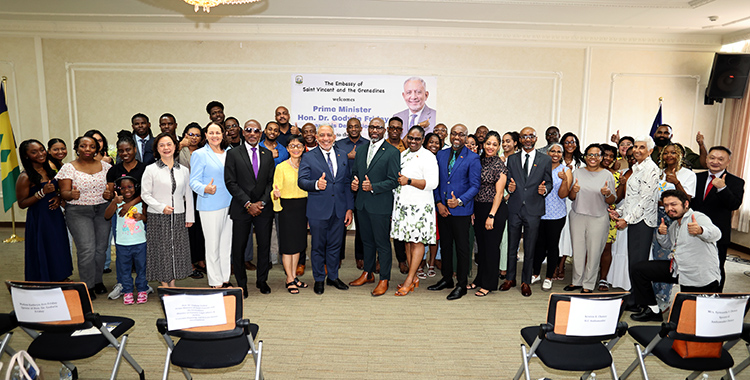
The 9-member delegation led by Friday arrived in Taiwan on Tuesday, August 11, 2026, and held a series of engagements across the island through Saturday. The prime minister’s outreach to the Vincentian community living in Taiwan included a cocktail reception in the capital Taipei on Wednesday, a meeting with residents in the southern port city of Kaohsiung on Thursday, and a keynote address at a formal luncheon hosted by the SVG Embassy in Taipei on Saturday.
Speaking to the gathered Vincentians at the Taipei luncheon, Friday wove together personal reflections, assessments of SVG’s domestic challenges, and retrospectives on 45 years of bilateral relations to anchor a core message: that the island nation’s most valuable asset is its people, not natural resources. As a small, resource-constrained developing state, SVG lacks large reserves of fossil fuels or minerals, and its once-dominant banana export industry — long called the country’s “green gold” — has declined sharply in global markets. This reality, Friday emphasized, makes investing in human capital and diaspora engagement critical to lifting national living standards.
Friday urged all Vincentians residing in Taiwan to view themselves as the “leading edge” of SVG’s development ambitions. He encouraged the community to leverage the educational, professional, and technological opportunities they gain overseas to contribute to collective progress back home, reminding them that regardless of geographic distance or political divides, all people share a common humanity and can act as a force for global good.
“You, who are living here, you breathe life into that diplomatic relationship,” Friday told the audience, noting that people-to-people ties, rather than only formal diplomatic negotiations, are what forge lasting bonds between nations. He called on Vincentian students and residents in Taiwan to serve as informal ambassadors for SVG, deepening the cultural and social connections between the two countries.
During the visit, Friday also highlighted Taiwan’s far-reaching industrial and technological strength, following tours of the National Taiwan Ocean University in Keelung and marine industry facilities in Kaohsiung. While Taiwan is globally recognized as a leader in semiconductor manufacturing, Friday noted that its advanced shipbuilding capacity confirms its status as “an industrial giant, not just a technological giant.” He said SVG is eager to adapt Taiwan’s development experience and technological expertise to fit the Caribbean nation’s local needs, expanding bilateral cooperation across multiple priority sectors.
One key area of ongoing collaboration is healthcare. Friday noted that his government is deepening ties with a Taiwanese firm contracted to build a new hospital in Arnos Vale, SVG. Ahead of a Taiwanese technical team’s departure for SVG to roll out a national Health Information System (HIS) that will connect all of the country’s healthcare facilities, Friday also visited Taipei’s MacKay Memorial Hospital during the tour to discuss the project.
The prime minister also used the address to lay out his administration’s domestic policy agenda, speaking candidly about the economic and fiscal challenges SVG currently faces. The country’s public debt has now grown to exceed the size of its total annual GDP, with projections showing the burden will worsen in the near term. Even as major infrastructure projects have moved forward, Friday acknowledged that rising social and economic strains have left ordinary Vincentians poorer, and his government is unwilling to ask already vulnerable communities to endure further austerity measures.
Instead of deep spending cuts, Friday argued that SVG must “grow our way out” of debt, with a strategy centered on attracting domestic and foreign private capital through expanded public-private partnerships. Reiterating his administration’s core campaign promise to “put money back in people’s pockets,” the prime minister stressed that when policy trade-offs are unavoidable, his government will always prioritize support for the nation’s most vulnerable groups.
To drive inclusive, rapid growth, Friday outlined four core pillars of SVG’s economic transformation strategy: agriculture, tourism, the blue economy, and the new creative economy. “Those are the areas that we’re focusing on because those are things we can make a difference on fairly quickly,” he said, noting he expects to deliver tangible progress within the government’s first term to build public confidence ahead of the next national election.
As part of the visit, Friday also addressed potential Taiwanese investors at the 2026 SVG Trade and Investment Opportunity Seminar on Wednesday, laying out the investment opportunities tied to the country’s four-pillar growth plan. Alongside government-to-government and business engagements, the visit included diaspora-focused remarks from SVG’s Minister of Foreign Affairs, Foreign Trade, Foreign Investment and Diaspora Affairs Dwight Fitzgerald Bramble, Attorney General Sarah Louise Mitchell, and Taiwan’s Ambassador to SVG Fiona Fan. The SVG Embassy in Taiwan presented commemorative 45th anniversary gifts to all members of the prime minister’s delegation, who received full logistical support from the mission throughout the five-day tour.
-
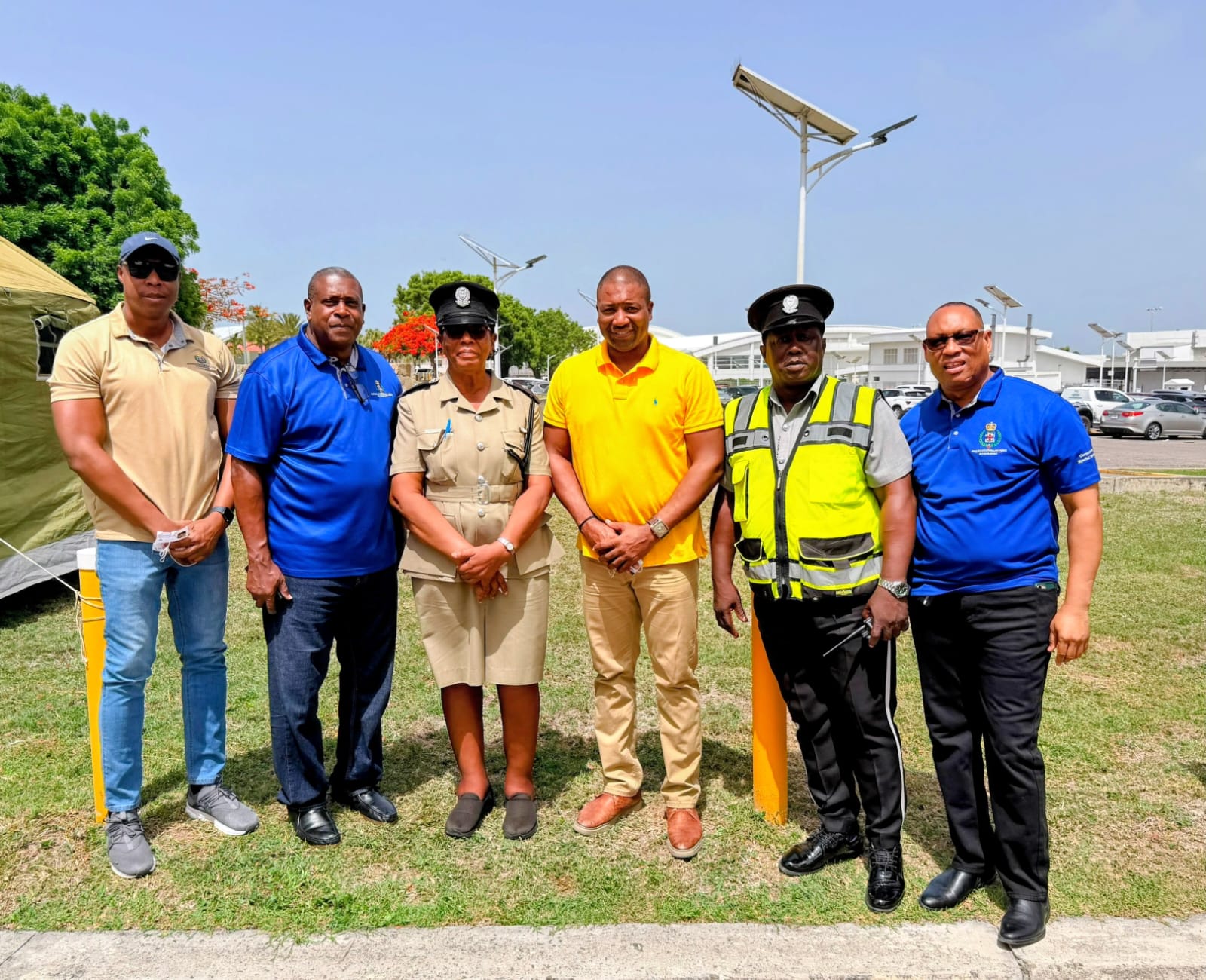
Jamaica Police Assist Antigua and Barbuda With CHOGM Security Planning
As Antigua and Barbuda enters the final stretch of preparations for the upcoming Commonwealth Heads of Government Meeting (CHOGM) this November, the island nation’s national police force has received targeted support and expert guidance from one of the Caribbean’s most experienced law enforcement agencies. In a display of regional security cooperation, a four-person senior delegation from the Jamaica Constabulary Force (JCF) spent seven days working side-by-side with the Royal Police Force of Antigua and Barbuda (RPFAB) to refine security plans for the high-stakes international summit.
The visiting JCF team brought decades of cumulative major event security experience to the collaboration, led by Assistant Commissioner of Police Garry McKenzie, alongside Senior Superintendent Adrian Hamilton, Superintendent Shaunjaye Mitchell, and Deputy Superintendent Garnet Stapleton. Over the course of the August deployment, the delegation participated in in-depth working sessions and strategic discussions with RPFAB’s senior leadership, focusing on the most pressing and critical components of pre-summit security planning and operational readiness.
Beyond tabletop planning and knowledge exchange, the JCF officers also conducted on-the-ground assessments across Antigua, visiting and evaluating every key venue that will host official CHOGM meetings, side events, and high-level delegations during the November gathering. These on-site inspections allowed the visiting experts to provide context-specific recommendations that align with global best practices for major international summits.
For both law enforcement agencies, the week-long partnership served as more than just a planning exercise: it created a meaningful space to cross-reference lessons learned from past large-scale events, address unforeseen security vulnerabilities, and solidify coordinated planning frameworks for what will stand as one of the largest and most high-profile international events Antigua and Barbuda has ever hosted.
RPFAB Commissioner Everton Jeffers, KPM, publicly emphasized his gratitude for the support from the JCF delegation and the agency’s top leadership, noting the outsized value of the expertise brought to the table. “I am extremely pleased to have members of the Jamaica Constabulary Force join our team and share their deep knowledge of security planning, particularly given their proven track record and decades of hands-on experience managing security for major international and regional events,” Commissioner Jeffers stated.
He added that ongoing collaboration with both regional and international security partners remains a cornerstone of Antigua and Barbuda’s overall CHOGM security strategy. The insights and practical experience shared by the JCF delegation will reinforce the work already underway by the RPFAB and other local national security and emergency response agencies tasked with delivering a safe, secure summit. The RPFAB has extended formal thanks to the JCF’s commissioner and entire ranks for their enduring partnership and critical contribution to the country’s pre-CHOGM preparations. The JCF delegation completed their mission and departed Antigua on August 15, 2026.
-

Circle of Friends calls for stronger child protection network after death of Jerbiah Paul
The recent passing of 16-year-old Jerbiah Kaysia Paul, a Portsmouth teenager who went missing in late July and was found dead in the Capuchin region on August 12, has become a catalyst for urgent child protection reform across the island nation of Dominica. Leading local non-profit Circle of Friends Inc. has issued a bold call for a unified, coordinated approach to keeping children and young people safe, framing the tragedy as a moment that demands systemic change rather than performative outrage.
Circle of Friends, an organization focused on advancing support, access and advocacy for children and youth with disabilities, special needs and from vulnerable, at-risk families, has extended its deepest condolences to Jerbiah’s family, friends and loved ones. In a formal public statement, the group emphasized that Jerbiah was a young person with a full life ahead of her, filled with unfulfilled dreams and untapped potential to contribute to her community. Her senseless passing, the organization argues, should force every segment of Dominican society to pause, reflect and confront uncomfortable questions about the gaps in current child protection systems.
A core message of the organization’s call is that civil society groups cannot continue to cycle between expressing public outrage after a young life is lost and returning to disconnected, business-as-usual programming. Circle of Friends is challenging every civil society organization working with children and families across Dominica to conduct honest internal assessments of their work, asking seven critical questions that cut to the heart of effective youth protection:
– Do current programming sufficiently address the evolving, real-world risks that young people face today?
– Have safe, accessible spaces been created where children and adolescents feel comfortable reporting threats, exploitation, abuse or situations that feel wrong to them?
– Are young people equipped with the knowledge and confidence to identify unhealthy relationships and dangerous scenarios?
– Are parents and caregivers receiving the robust support they need to understand the changing risks their children encounter?
– Are services reaching the most vulnerable young people, or are they only serving youth who already have connections to support systems?
– Most importantly, are organizations working together effectively to deliver coordinated support, rather than operating in isolated silos?Circle of Friends stresses that child protection is not the sole responsibility of any single stakeholder group. It cannot fall only to law enforcement, government social services, schools, parents or individual non-profits to keep young people safe. Instead, the organization argues that a whole-of-society response is required, with intentional collaboration across every sector that interacts with children and families.
To that end, the non-profit has outlined seven concrete priority areas for collective action across Dominican civil society. First, organizations must conduct a full critical review of their existing programming to identify gaps and areas in need of improvement. Second, every group working with children must strengthen their safeguarding standards, implementing clear policies, confidential reporting mechanisms, comprehensive staff and volunteer training, and formal response procedures for safety concerns. Third, cross-organizational referral and response mechanisms must be improved, so that any young person presenting a concern can be quickly connected to the right support, even when the issue falls outside a hosting organization’s mandate. Fourth, organizations must commit to greater sharing of knowledge, resources, training tools, research and proven best practices, as no single group can hold all the expertise needed to address every risk. Fifth, programming must include more meaningful youth participation: young people must be given safe, intentional opportunities to share their experiences and shape the support services designed for them. Sixth, organizations must deepen engagement with parents and local communities, equipping caregivers with practical tools to identify risks, communicate openly with young people, and respond appropriately before a crisis occurs. Seventh, civil society must engage in collective advocacy to push for stronger systemic policies, expanded support services and greater accountability for child protection outcomes across the island.
Beyond these seven priorities, Circle of Friends is calling for the creation of clearer, more accessible support pathways for young people facing abuse, exploitation, coercion, violence or other safety risks. A key ask is the establishment of formal rapid communication mechanisms that activate coordinated response as soon as a child is reported missing.
The organization emphasizes that its call is not an attempt to assign blame to any individual or group. Instead, it is a recognition that civil society as a whole shares responsibility for protecting young people. In closing its statement, Circle of Friends framed Jerbiah’s death as a challenge for every stakeholder to raise their standards, urging groups to turn collective grief into tangible action. “Let Jerbiah’s death challenge us to do better,” the statement reads. “Her life should not become another statistic that fades from our national consciousness. Let her death be a catalyst for action. Because protecting children is not the responsibility of one organization. It is our collective responsibility. And the time to act is now.”
-
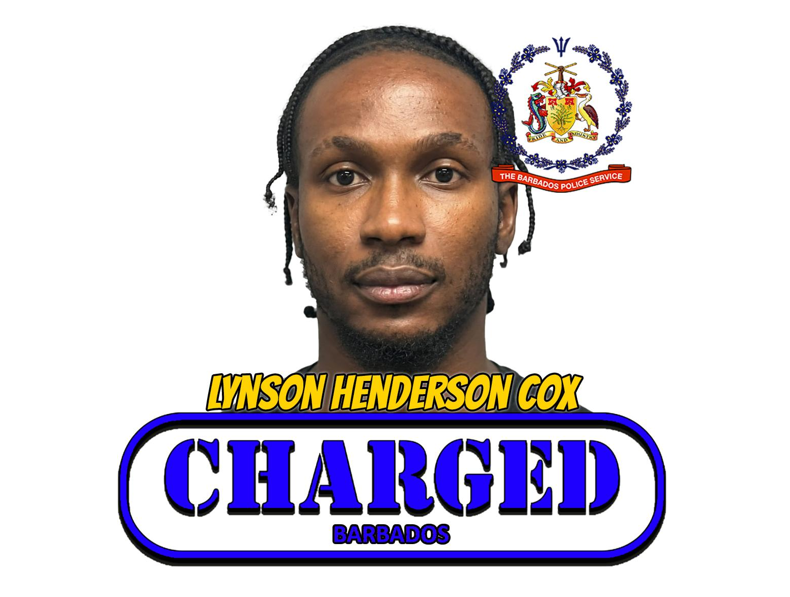
St Michael man fined $30 000 for cannabis offences
A 29-year-old resident of St Michael, Barbados, has received a $30,000 fine after admitting his role in smuggling eight kilograms of cannabis with an estimated street worth of $128,000 into the country.
Lynson Henderson Cox, whose address is listed as Lewis Gap, appeared before Magistrate Gayle Scott at the District ‘A’ Traffic Court on Saturday, where he entered guilty pleas to both charges of drug trafficking and illegal importation.
According to official statements from The Barbados Police Service (TBPS), the criminal activities linked to Cox took place on July 13. The controlled substance seized by authorities was confirmed to be cannabis, with law enforcement calculating its total street value at the reported $128,000.
Following the guilty plea, Magistrate Scott handed down the sentencing: Cox must pay the $30,000 fine within a six-month period. If he fails to meet this requirement, he will serve a six-month custodial sentence at Dodds prison.
The arrest and formal charging of Cox was carried out by officers from the TBPS Narcotics Unit, which specializes in targeting illegal drug trade operations across the island. The case marks another successful resolution for local law enforcement in cracking down on cross-border drug smuggling, a persistent priority for Barbados’ public safety agencies.
-

Police report rise in construction equipment, gold jewellery crimes
Law enforcement authorities in Barbados are sounding an urgent public alert following a sharp uptick in two distinct types of criminal activity: theft of construction machinery and robberies targeting people wearing gold jewellery. The Barbados Police Service (TBPS) issued a formal crime prevention advisory on Monday calling on construction contractors and everyday citizens to adopt heightened security measures to avoid falling victim to these trends.
According to the police statement, construction equipment has emerged as an increasingly attractive target for thieves in recent weeks. TBPS is urging all contractors operating across the island to implement enhanced protocols for securing their heavy machinery, including adding reinforced locks, installing tracking devices, and parking equipment in well-lit, gated areas when job sites are unattended. These steps are designed to reduce vulnerability to break-ins and outright theft that can cost construction firms thousands of dollars in losses and delay ongoing infrastructure projects.
In addition to the rise in construction equipment theft, police have also documented a clear increase in crimes against individuals over gold jewellery. The advisory warned members of the public against displaying large quantities of gold jewellery when out in public spaces, as these visible valuable items make people prime targets for street robbery and snatching. TBPS also cautioned residents who arrange private meetings to buy or sell gold secondhand that they too are at elevated risk of becoming targets for criminal violence or theft during these transactions.
The police service took the opportunity to remind the public that both the theft of property and the possession of knowingly stolen goods are serious criminal offenses under Barbados law. Any person convicted of these crimes can face significant legal penalties including prosecution and custodial sentences.
To help curb the rising trend of these crimes, TBPS is calling on anyone with information about individuals involved in construction equipment theft, gold jewellery robberies, or the trade of stolen property to come forward anonymously or confidentially with details. Tipsters can reach the Criminal Investigations Department directly at two dedicated phone lines: 430-7189 or 430-7190. They can also submit anonymous information through the regional Crime Stoppers hotline at 1-800-8477, or contact the emergency police line at 211 if an active crime is in progress.
-
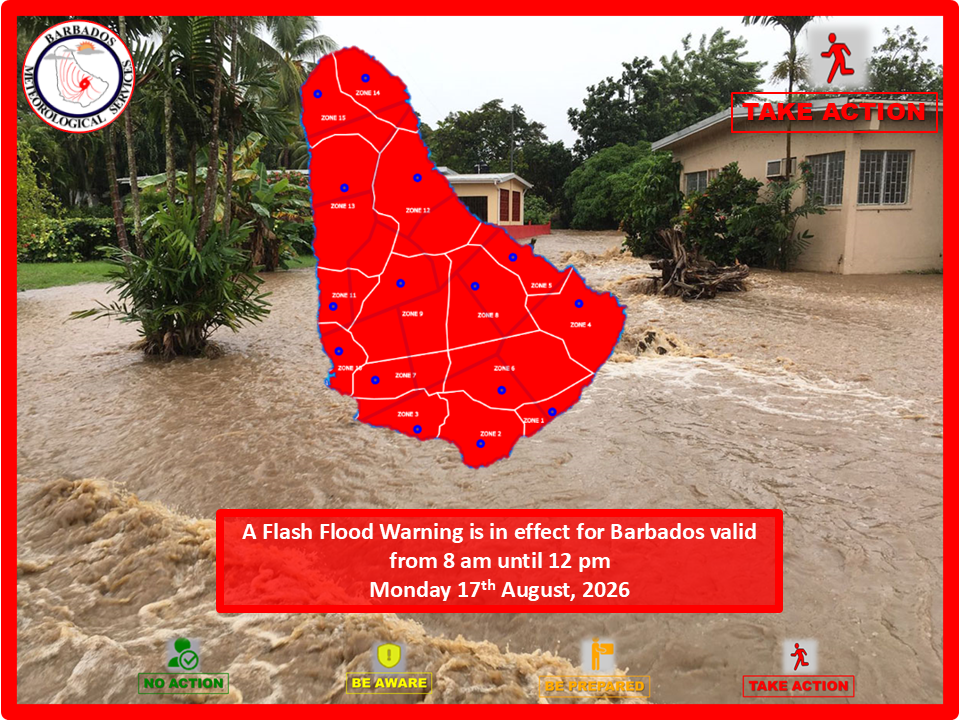
Flash-flood warning now in effect
Barbados’s national weather agency has escalated its flood alert level, turning an initial flash flood watch into a full active warning Monday morning as a slow-moving tropical wave drenches the island with persistent moderate to heavy rainfall. The Barbados Meteorological Services (BMS) announced the upgraded warning at 8:30 a.m. local time, a little more than two hours after first placing the country on flash flood watch as the storm system began moving into the area.
Meteorologists explain that the tropical wave is moving through an atmospheric environment that supports continued rainfall, with total accumulations projected to reach between two and three inches across the island by the time the system passes. This level of rainfall in a short period has put the island at high risk of disruptive and potentially dangerous flooding, especially in regions that sit at lower elevations that are naturally prone to collecting runoff.
The BMS has outlined a range of hazardous impacts that residents and visitors should prepare for over the coming hours. Water running off from higher ground increases the risk of soil erosion and landslides on steep or already damaged slopes, while standing water is expected to accumulate on public roadways and agricultural fields. Flooding is particularly likely at the base of hills and along low-lying coastal roads, with some routes expected to become fully impassable, leading to widespread travel disruptions and traffic delays. Fast-flowing floodwater also poses a threat as it can pick up and carry large debris and objects downstream, creating hidden hazards for anyone caught in flood zones.
In addition to the upgraded flash flood warning, Barbados remains under a severe thunderstorm watch that was issued at 7:50 a.m. the same day, also tied to the incoming tropical wave. Intense downpours will bring the risk of frequent cloud-to-ground lightning strikes, which the BMS warns could damage critical electrical infrastructure, leading to unplanned power outages across parts of the island.
Both the active flash flood warning and severe thunderstorm watch are scheduled to remain in place until noon local time the same day, though the BMS notes that alerts could be lifted earlier if weather conditions improve more quickly than forecast. The agency has urged all members of the public to stay tuned to official weather channels and emergency management updates for the latest information as the tropical wave continues to impact the island.
-
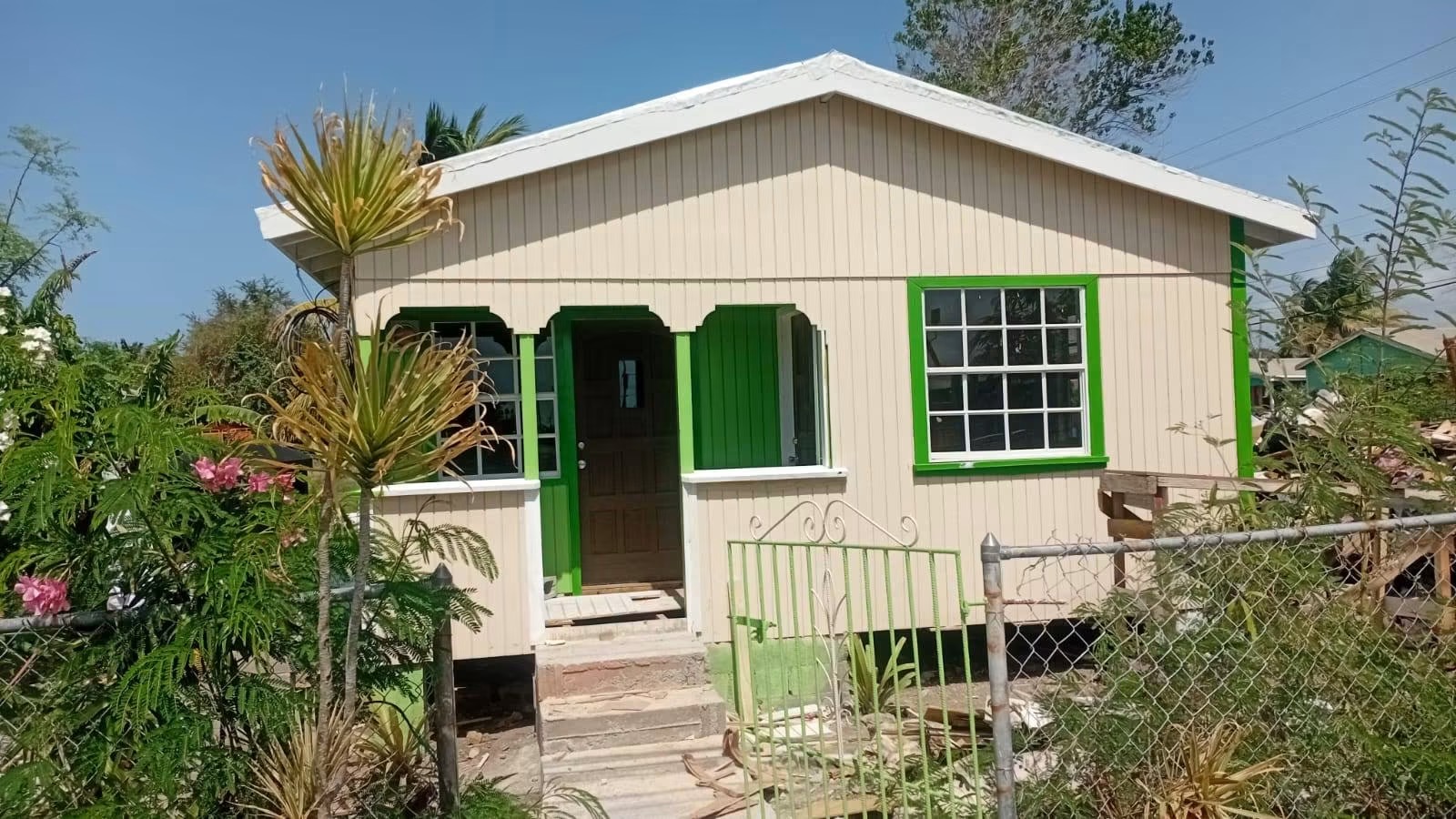
HAPI Celebrates Completion of Yorks Home as Community Effort
After months of coordinated work between public sector stakeholders, private donors, and community volunteers, the HAPI housing initiative has marked a major milestone with the official completion of its Yorks development, a project organizers frame as a powerful example of what collective community action can achieve in Antigua.
Veldon Raggette, a representative of local nonprofit Adopt a Family which is involved in the initiative, opened up about the hurdles the project faced along the way. From supply chain delays to unforeseen construction setbacks, the team navigated multiple obstacles that threatened to derail the build. Ultimately, Raggette emphasized, it was the unified commitment of every contributing group that pushed the project across the finish line.
Raggette extended specific gratitude to senior government figures who backed the initiative, including Antigua’s Tourism Minister Charles Fernandez, Senators Abena St. Luce and Angelica O’Donoghue, and Minister for Social and Urban Transformation Rawdon Turner, along with private supporter Tony Greener. Beyond institutional and political partners, he also highlighted the irreplaceable on-the-ground contributions of community members, with special recognition going to Lesroy “Rastaman” George, Oliver Looby, and the dozens of local volunteers who dedicated their time and labor to the project.
Additional acknowledgments were given to Mary Baltimore and the national Social Protection Board for their administrative and financial support, as well as a work team from His Majesty’s Prison that provided extra labor to speed up construction. Project lead Lorna Lewis also earned special praise from Raggette for her consistent, unwavering commitment to seeing the initiative through to completion.
The HAPI program was founded with a core mission: to deliver safe, improved housing for vulnerable, low-income families across Antigua, addressing long-standing gaps in accessible, adequate housing for marginalized communities. The completion of the Yorks project marks one more step forward in that ongoing mission, setting a blueprint for future collaborative housing developments across the island.