作者: admin

  • Uncertainty Surrounds LIU Gang Employment Program

    Uncertainty Surrounds LIU Gang Employment Program

    A contentious government initiative in Belize designed to provide employment for young men from gang-afflicted neighborhoods is facing renewed scrutiny. The Leadership Intervention Unit’s (LIU) program, which employs approximately 350 individuals in Belize City for community beautification projects, has come under question following the city council’s recent awarding of a separate $33,000 weekly contract to Reliable Waste Solutions for similar cleaning and beautification services.

    Acting Director Andrew Dawson confirmed the program remains operational despite what he described as “slight hiccups” in efficiency. Participants in the LIU initiative earn approximately $350 twice monthly for working on beautification projects within their own communities, with supervisors receiving slightly higher compensation.

    The program targets individuals who have been largely excluded from formal employment sectors, aiming to foster civic pride while simultaneously improving neighborhood environments. Dawson emphasized the psychological impact of environmental improvements, noting that enhancing community spaces can positively influence mindsets and reduce violence.

    Despite these objectives, the program continues to face public skepticism. Dawson acknowledged the challenge of operating a program that lacks widespread public acceptance, though he maintains that those directly involved understand the initiative’s importance through various sessions and conversations conducted by the conflict trace team.


  • Belize Bank Earns Double A Plus Rating from Regional Evaluator

    Belize Bank Earns Double A Plus Rating from Regional Evaluator

    In a significant financial milestone, Belize Bank Limited has achieved the highest possible local credit rating of AA+ from Caribbean Information and Credit Rating Services (CariCRIS), marking a powerful endorsement of the institution’s fiscal stability and operational excellence. The prestigious rating comes after seven consecutive years of rigorous independent evaluation by the region’s premier rating agency.

    CariCRIS, backed by central banks throughout the Caribbean and partially owned by the Caribbean Development Bank and Inter-American Development Bank, employs global standards from SMP Global in its assessment processes. The organization provides comprehensive evaluations of financial strength and credit risk across multiple industries, making its endorsement particularly meaningful for financial institutions.

    Executive Chairman Filippo Alario expressed considerable satisfaction with the 2025 rating results, characterizing them as “a powerful statement of our financial strength and standing.” The bank received two distinct ratings: the AA+ local rating (the highest achievable in any jurisdiction) and a BBB regional rating with a stable outlook, positioning Belize Bank alongside the region’s most robust financial institutions.

    The evaluation process, which commences each October, involves extensive scrutiny by lead examiners who submit detailed questionnaires and conduct follow-up validations. Senior executives across all departments participate in thorough interviews to ensure comprehensive assessment of the bank’s operations.

    While the technical details of credit ratings may not immediately resonate with everyday customers, Alario emphasized the rating’s significance for international investors and business partners seeking reliable financial institutions. The AA+ designation serves as independent validation of the bank’s sound management practices and financial health, providing assurance to both local customers and global stakeholders.

    Maintaining this elite rating will require continued prudent financial management and adaptability to evolving economic conditions in Belize. The achievement not only reflects positively on Belize Bank but also signals growing confidence in the Belizean financial sector’s stability and potential for international investment.

  • Indotel to launch national strategy against digital extortion and fake news in 2026

    Indotel to launch national strategy against digital extortion and fake news in 2026

    SANTO DOMINGO – In a decisive move against escalating cyber threats, the Dominican Telecommunications Institute (Indotel) has announced a comprehensive national strategy set for implementation in 2026. This multi-agency initiative targets the rampant rise of digital blackmail, online extortion, and the malicious dissemination of fake news, which have severely impacted both citizens and public institutions.

    The cornerstone of the strategy is a dual-pronged approach focusing on public education and legislative modernization. Indotel emphasizes that proactive citizen awareness campaigns will be prioritized to equip the public with the knowledge to identify and resist cybercrimes. Concurrently, the nation’s legal framework will be strengthened and updated to provide more robust tools for prosecuting technologically advanced offenses. Authorities specifically highlighted the evolving nature of these crimes, which increasingly employ sophisticated methods like deepfake technology, manipulated imagery, and artificial intelligence to deceive victims.

    To ensure efficacy, the plan mandates close inter-institutional collaboration. Key entities include the Department of Investigation of High-Tech Crimes and Offenses (Dicat), the National Police, and the Public Prosecutor’s Office. This alliance aims to create a unified front, preventing these illicit activities from becoming entrenched within the nation’s digital infrastructure. The urgent need for this coordinated response was underscored by alarming statistics revealing the Dominican Republic had the highest number of digital fraud victims in the Americas in the latter half of 2024, prompting the state’s firm and responsible action.

  • San Felipe Targets Litter as Trash Builds Up

    San Felipe Targets Litter as Trash Builds Up

    The rural community of San Felipe in Orange Walk District faces an escalating public cleanliness crisis as illegal dumping transforms village entrances and public spaces into unsightly garbage zones. Municipal authorities have issued urgent appeals for civic responsibility following failed cleanup initiatives and growing environmental concerns.

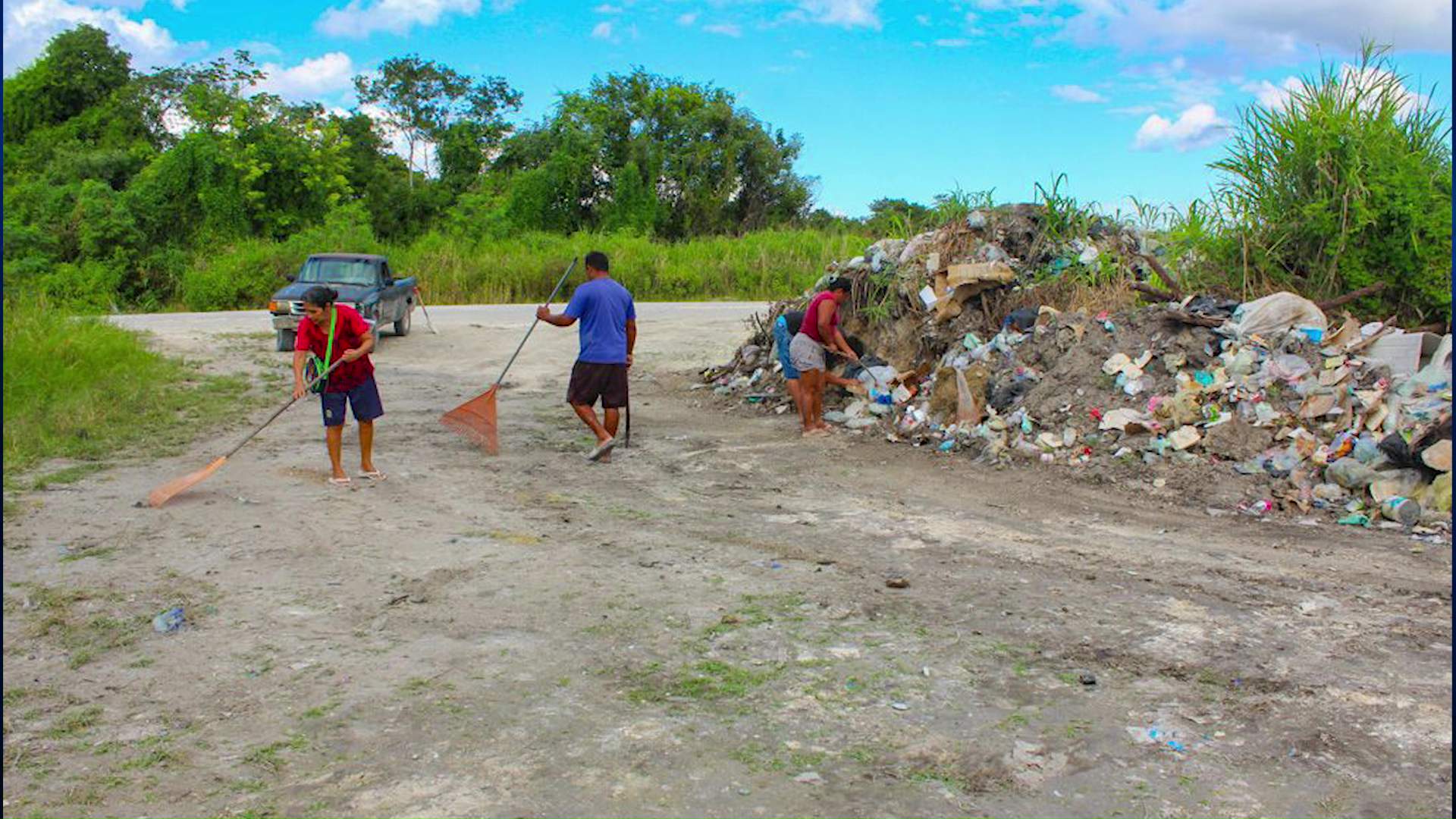
    Village Council officials launched a social media campaign in December 2025 highlighting the deterioration of public areas, particularly noting the negative visual impact at key community landmarks. Despite organized volunteer cleanups and municipal interventions, refuse continues to accumulate within days of removal efforts.

    Vice Chairman Ricardo Domínguez revealed the root cause stems from the closure of a temporary dumping site after landowners revoked access due to perimeter littering. This closure triggered widespread indiscriminate dumping along roadways and public spaces. The village operates a subsidized garbage collection service charging merely $5 weekly, yet many residents bypass this service for illegal dumping.

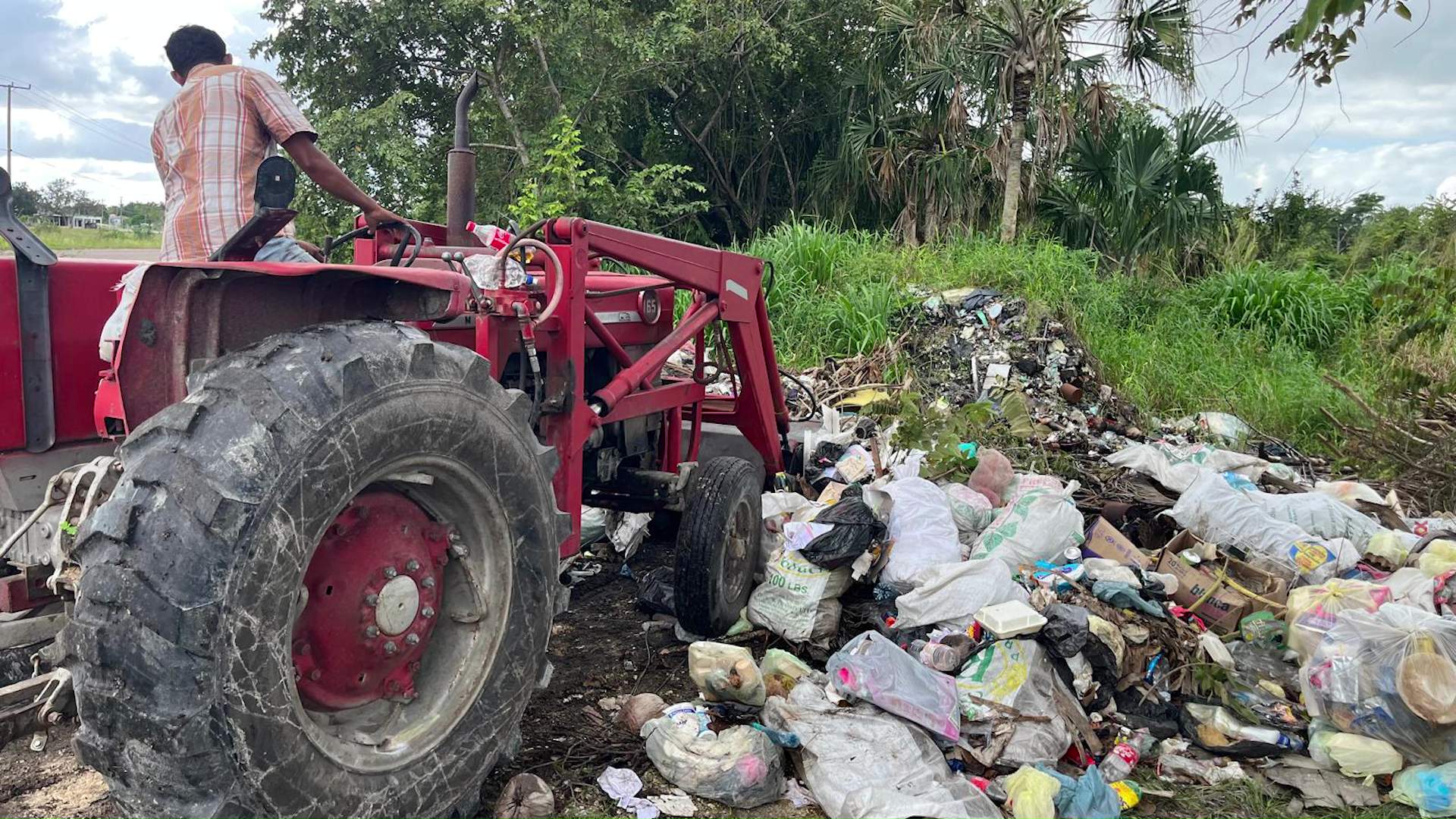
    Enforcement remains challenging as Domínguez acknowledged witness reluctance to identify offenders. The cycle continues despite mechanical interventions, including tractor-assisted cleanups provided through government assistance programs. Municipal ordinances permit fining violators, though implementation proves difficult without consistent community cooperation.

    The environmental eyesore now threatens community pride and potentially affects external perceptions of the village, creating urgency for sustainable waste management solutions and behavioral change among residents.

  • Caledonia Considers Police Help as Roadside Dumping Persists

    Caledonia Considers Police Help as Roadside Dumping Persists

    The village of Caledonia is confronting a persistent environmental challenge as illegal roadside dumping continues to plague the community’s main entrance despite concerted cleanup initiatives. Local residents have expressed mounting frustration over what they describe as more than a mere aesthetic issue, warning that the accumulating refuse now presents genuine safety hazards for both motorists and pedestrians while creating a negative first impression of the village.

    Docia Chan, Vice Chairperson of the Caledonia Village Council, provided insight into the ongoing struggle. “We inherited what was essentially a dump site in complete disarray,” Chan stated. “Since our election, we’ve prioritized transforming this area, recognizing that the garbage accumulation occurs at the very gateway to our community.”

    The council recently conducted a comprehensive cleaning operation last Sunday, leaving the area spotless. However, by Monday, numerous garbage bags had already reappeared along the roadside. This pattern of immediate re-pollution has raised questions about potential intentional disregard for community standards.

    Despite installing warning signs and repeated public appeals, the dumping persists. Chan has issued a renewed call for civic responsibility, urging villagers to dispose of waste properly. The Vice Chairperson indicated that if voluntary compliance fails, the council may escalate enforcement measures through consultation with police officials to identify and penalize offenders, potentially involving formal investigations and legal consequences for those responsible for the environmental violations.

  • Educators, church leaders warn of moral crisis amid youth violence

    Educators, church leaders warn of moral crisis amid youth violence

    Barbados faces a critical juncture as educational and religious leaders sound the alarm on deteriorating moral foundations among youth, following a series of violent crimes involving teenagers. The Caribbean nation is grappling with a pattern of juvenile delinquency that has culminated in two separate murder charges against adolescents aged 16 and 17 within days of each other in December.

    The educational community has responded with urgent calls for systemic change. Greig Walters, Principal of Wesley Hall Juniors, emphasizes that schools must transcend academic instruction to embrace character development. “We have a duty to take care of our students spiritually and morally,” Walters asserts, framing education as holistic development that integrates community engagement and faith-based guidance.

    Statistical evidence underscores the crisis: Recent data from the Criminal Justice Research and Planning Unit reveals 47 young men under 25 currently on remand, highlighting the scale of youth involvement in serious crimes.

    Three prominent church leaders have unanimously endorsed early moral intervention as the cornerstone of reform. Pastor Balsam Gambo of James Street Methodist Church warns that “education without moral grounding creates dangerously intelligent but compass-less adults,” while Reverend Jefferson Alleyne of Chapman Street Church of God advocates for value instillation from foundational levels, comparing it to building construction principles.

    The consensus identifies diminished religious participation as a critical factor. Walters nostalgically recalls when church attendance was non-negotiable and communities collectively oversaw youth development, particularly during holidays. This erosion of traditional structures has created voids in moral supervision that leaders believe must be addressed through collaborative efforts.

    Proposed solutions center on reintegrating spiritual compasses into education, reactivating community-based monitoring systems, and implementing early intervention programs even at primary school levels. Leaders conceptualize this as creating an internalized moral navigation system that activates during ethical dilemmas—what Walters describes as “that voice in your head that guides right from wrong.”

    The religious community positions itself as an essential partner in this moral renaissance, offering faith as the foundational compass for national improvement. As Alleyne concludes, “Collectively, with divine assistance, we can achieve the necessary turnaround in youth development.”

  • Uncle confesses to murder of three-year-old Brianna Genao in Puerto Plata

    Uncle confesses to murder of three-year-old Brianna Genao in Puerto Plata

    Authorities in Puerto Plata have confirmed the tragic death of three-year-old Brianna Genao González following a week-long disappearance case that has shocked the northern Dominican community. The investigation took a devastating turn when Rafael Reyes Núñez Rosario, the maternal uncle of the victim, confessed to both the murder and sexual assault of the minor.

    The case unfolded in the Barrero community of Imbert municipality, where the child was reported missing from her home on December 31st. After days of intensive search operations and rigorous interrogation by the National Police, the breakthrough came when Núñez Rosario, brother of the child’s mother Yesica María González, admitted responsibility for the horrific crime.

    General Jorge Luis Galán Guerrero, regional police director for the North, confirmed that the suspect disclosed burying his niece but claimed inability to recall the exact location of the remains. Recovery teams continue their grim search for the body as judicial proceedings advance. Official details regarding legal actions and charges are expected to be announced imminently as the case transitions from search operation to criminal prosecution.

    The community of Imbert remains in mourning as this family tragedy exposes the devastating consequences of violence against children, with local authorities emphasizing their commitment to pursuing full justice for Brianna.

  • ANU Medical School Closes After Charter Not Renewed, Ministry Confirms

    ANU Medical School Closes After Charter Not Renewed, Ministry Confirms

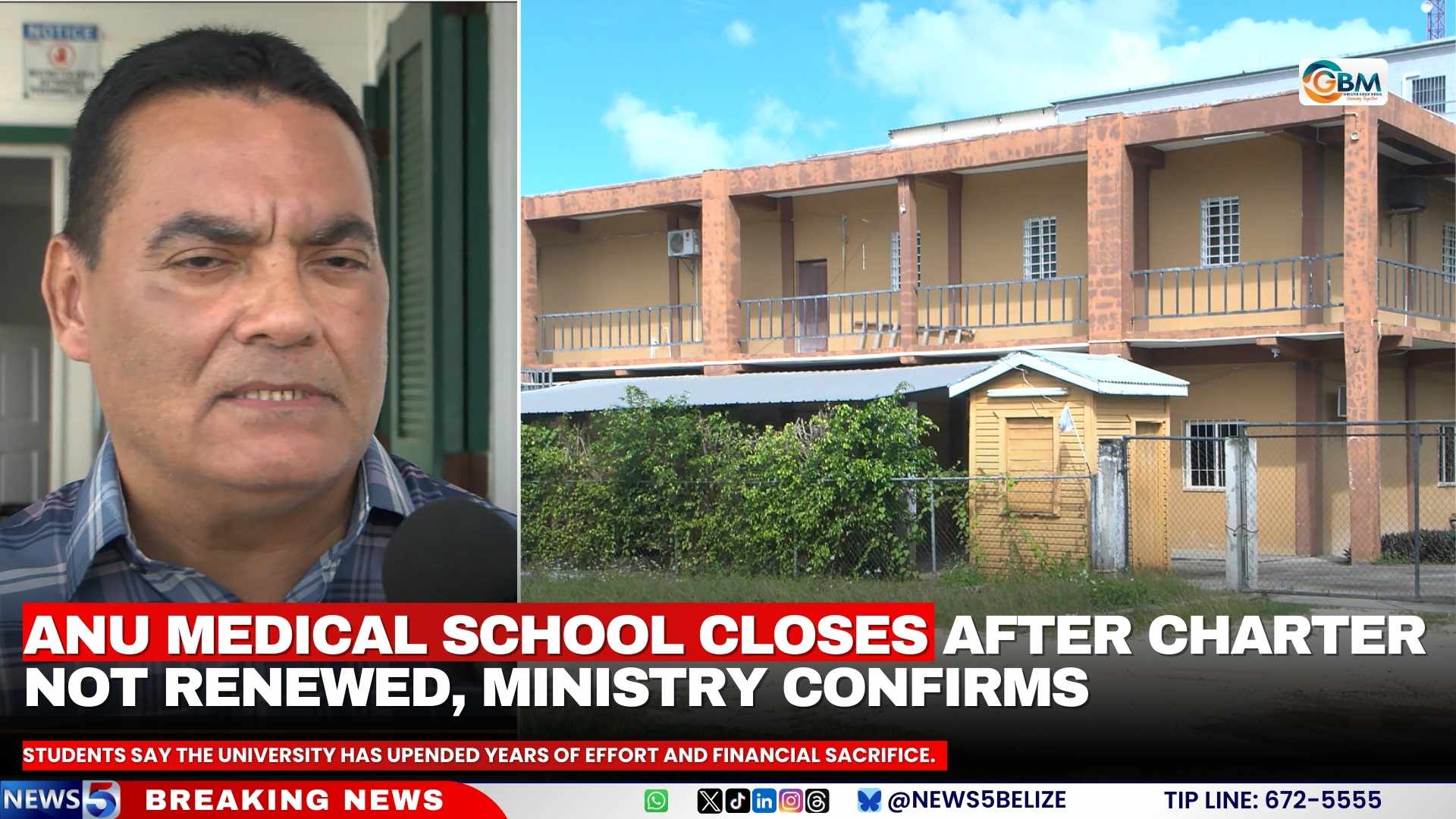
    The Ministry of Education, Culture, Science and Technology (MoECST) has officially confirmed the termination of American Northwest University School of Medicine’s operational charter, which expired in June 2024 without renewal. This administrative decision effectively forces the closure of the institution, leaving approximately 25 Belizean students in academic limbo after years of financial investment and dedicated study.

    Affected students express profound frustration over the abrupt disruption to their medical education, with many describing complete financial backing from families covering both tuition and living expenses throughout their enrollment. The lack of transparent communication regarding the institution’s status and accountability mechanisms has compounded their distress, with one student noting: ‘I’m being instructed to completely restart my education without a coherent explanation of what transpired or who bears responsibility.’

    Education Minister Francis Fonseca clarified that the charter non-renewal followed extended consultations with the university administration, stating: ‘The institution’s charter lapsed in June 2024 and has remained unrenewed since that time.’ The Ministry is currently facilitating transition discussions with the recently established University of Belize medical school to potentially absorb displaced students.

    In contrast, ANU leadership has vigorously defended its operational legitimacy through group communications, asserting possession of documentation demonstrating legal compliance and ongoing dialogue with educational authorities. The institution has cautioned against allegations of unlawful operation, emphasizing that unsubstantiated claims could constitute defamation under applicable laws.

  • SEA launched: Islandwide overhaul of social services begins

    SEA launched: Islandwide overhaul of social services begins

    In a landmark move to overhaul its social welfare system, the Barbadian government officially inaugurated the Social Empowerment Agency (SEA) on Wednesday. This consolidated entity merges the island’s disparate social services into a unified framework designed to fundamentally reshape assistance delivery to citizens. The inaugural SEA client center commenced operations at Six Roads, St Philip, marking the first phase of a nationwide rollout intended to supersede a previously fragmented and widely criticized model with an integrated, dignified approach to care.

    Government officials, social workers, and disability advocates gathered for the launch ceremony, which was characterized as a philosophical shift in the state’s relationship with vulnerable citizens. Minister of People Empowerment and Elder Affairs, Kirk Humphrey, articulated the transformation’s core principle: moving from a disjointed multi-agency structure to a singular, holistic service provider. “Social problems are complex,” Humphrey stated, “and the previous system offered a fragmented approach where one individual with complex needs might have to navigate four different agencies. We have reversed that.”

    The strategic rebranding to ‘Social Empowerment Agency’ reflects a deeper ideological commitment to dignity and humanized care. Minister Humphrey emphasized that the restructuring aims to ensure citizens “feel dignified and to feel as if they’re human and to be treated in that way. People are not cases.” The transition also prioritized workforce stability, with approximately 99.5% of eligible staff transferring voluntarily following extensive consultations with unions. No employees were disadvantaged in the process, and working conditions were improved for those joining the new agency.

    Complementing the St Philip facility, additional centers are planned for Bentham (St Lucy), Sunset Crest (St James), and Southern Plaza, ensuring comprehensive islandwide coverage. Member of Parliament Kay McConney welcomed the Six Roads reopening as addressing a critical gap that had imposed undue strain on vulnerable residents. While applauding the one-stop-shop model and improved accessibility features, McConney cautioned that the ultimate measure of success would be the quality of service delivered within the new framework.

    Prime Minister Mia Mottley hailed the SEA’s establishment as one of the proudest achievements of her administration, framing it not merely as infrastructural development but as a profound evolution in societal values and support mechanisms for those in need.

  • Cattle Industry Could Overtake Sugar as Belize’s Top Export Earner

    Cattle Industry Could Overtake Sugar as Belize’s Top Export Earner

    Belize’s agricultural landscape is undergoing a significant transformation as its cattle industry demonstrates remarkable growth potential to overtake sugar as the nation’s primary export revenue source. According to Belarmino Esquivel, Principal Agriculture Officer and head of the livestock program at the Ministry of Agriculture, this shift reflects both the vulnerabilities of traditional crops and the emerging strength of livestock farming.

    Esquivel emphasized that Belize can no longer depend exclusively on its three traditional foreign exchange earners—citrus, bananas, and sugar—which face persistent threats from climate change, disease outbreaks, and declining productivity. The cattle sector has emerged as a resilient alternative, with Esquivel projecting it could surpass sugar in foreign exchange earnings as early as 2026.

    Statistical evidence reveals extraordinary expansion in Belize’s national cattle herd over the past decade. From approximately 77,000 head in 2014, the inventory has surged to 215,000 animals by 2015, maintaining a consistent upward trajectory. This growth is primarily fueled by robust demand from neighboring markets, particularly Guatemala and Mexico.

    In 2024 alone, Belize exported over 35,000 cattle to Guatemala, generating between BZ$50-60 million, with an additional 6,000 heads shipped to Mexican markets. Unlike other export commodities dominated by large agricultural estates, the cattle industry remains predominantly operated by small-scale farmers, with 70% maintaining herds between one and fifty animals.

    Esquivel highlighted improved access to affordable financing through programs such as CRESAP, Sembrando Vida, and SAIB, which offer favorable loan terms and matching grants. The 60/40 matching grant system specifically enables farmers to pursue climate-smart investments with reduced initial capital requirements. With domestic consumption steady at approximately 10,000 cattle annually and exports continuing their upward trend, livestock farming appears positioned to become Belize’s foremost agricultural income generator.