作者: admin

  • Derde helft WK 2026: Frankrijk boekt overtuigende 3-0 zege op Irak, plek in knock-outfase

    Derde helft WK 2026: Frankrijk boekt overtuigende 3-0 zege op Irak, plek in knock-outfase

    The 2026 FIFA World Cup Group I qualifying campaign delivered a dramatic, rain-soaked fixture at Philadelphia Stadium on June 22, where France secured a dominant 3-0 victory over Iraq that strengthens their push for a top-two group finish and leaves Iraq on the brink of elimination. The night was defined by two key storylines: Kylian Mbappé’s continued chase of the all-time World Cup scoring record, and a nearly two-and-a-half hour weather delay that tested the patience of players and fans alike.

    From the opening whistle, Les Bleus seized total control of the tempo. Just two minutes into the match, a sharp through ball from Manu Kone put Mbappé in a dangerous position, with only a last-ditch defensive intervention denying France an early opener. The French attacking trio of Mbappé, Jules Koundé and Michael Olise carved through Iraq’s backline with quick, fluid combinations, putting the Asian side under constant pressure. In the sixth minute, Iraq defender Amir Al Ammari picked up an early yellow card for a hard tackle on Mbappé, a clear sign of how difficult the French star was to contain.

    That pressure eventually paid off in the 14th minute, when Mbappé turned past a defender on the edge of the penalty area and struck a stunning volley into the far corner of the net. The goal marked Mbappé’s 15th World Cup goal, moving him one step closer to breaking Lionel Messi’s all-time record of 13 World Cup knockout stage goals and the overall tournament scoring record held by Miroslav Klose.

    France continued to dominate possession after the opening goal, but Iraq refused to drop completely deep and managed a handful of threatening counter-attacks. However, the match was brought to an abrupt halt in the 37th minute, when a severe thunderstorm rolled over the stadium. With lightning striking in close proximity, the referee suspended play to protect players and fans, prompting spectators to either don rain ponchos or evacuate the stands for shelter. For nearly two and a half hours, the fixture was paused while storm crews cleared standing water from the pitch and waited for the dangerous weather to pass.

    When the all-clear was finally given, fans filed back into their seats, and the damp crowd quickly shifted from anxiety to celebration. Play resumed with France picking up exactly where they left off, maintaining their high intensity against a tiring Iraqi side. In the 56th minute, Mbappé capitalized on a catastrophic error from Iraqi goalkeeper Ahmed Basil, who misread a rushed backpass from Ahmed Qasem. Ousmane Dembélé played a clever square pass to the French captain, who tapped the ball into an empty net for his second of the night, putting France up 2-0.

    Les Bleus kept pushing for more, and in the 67th minute, Olise — who had already hit the crossbar with a curling effort earlier in the half — produced a clever assist to set up Dembélé for his first ever World Cup goal, stretching the lead to 3-0. The soaked crowd celebrated wildly, dancing in their rain ponchos as the French attack continued to create chances.

    Even with a three-goal deficit, Iraq fought hard until the final whistle, and came close to grabbing a consolation goal through forward Ali Al Hamadi, but could not find a way past French goalkeeper. In stoppage time, a visibly disappointed Mbappé — who had missed two late chances to complete a hat-trick — was substituted off for Marcus Thuram, ending his night two goals closer to history.

    The result leaves France on the cusp of qualifying for the Round of 32, while Iraq’s tournament hopes hang by a thread. The battle for the top two spots in Group I remains tightly contested, with Norway and Senegal still in the hunt for qualifying places alongside France.

  • Haïti – Baccalauréat : Inscriptions des élèves HPI (surdoués)

    Haïti – Baccalauréat : Inscriptions des élèves HPI (surdoués)

    In a move aimed at building a more inclusive, responsive national education system that accommodates the unique needs of all learners, Haiti’s Minister of National Education Vijonet Déméro has formally announced new, structured procedures for early baccalauréat registration for high-potential intellectually gifted (HPI) students, ahead of the 2026-2027 academic year’s first permanent baccalauréat session.

    Gifted students, who exhibit far faster learning paces than their peer group, often require targeted support to reach their full potential—most commonly through grade acceleration that allows them to advance through the education system at a rate matching their abilities. Until now, however, formal pathways to clear these accelerated tracks for official national examination eligibility have been inconsistent. Déméro’s new circular, labeled C-11 / 1137, formalizes eligibility requirements and institutional roles to regularize these exceptional students’ academic journeys and guarantee them legitimate access to the baccalauréat, Haiti’s key secondary school completion and university entrance examination.

    To qualify for early examination access as a gifted candidate, student’s original schools must submit a complete, verified application package that meets four core requirements. First, applications must include a psycho-pedagogical evaluation report completed by a licensed school psychologist, which has been validated by the ministry’s own School and Professional Orientation Unit (UNOSP). This report must confirm both the student’s intellectual giftedness and sufficient socio-emotional maturity to handle advanced academic work and early examination. Second, candidates must provide graded academic transcripts demonstrating sustained academic excellence and an exceptional overall grade average. Third, applications require a formally justified recommendation letter from the director of the student’s original school, which explains and validates any grade skips the student has already completed. Finally, written, signed consent from the student’s parents, legal guardian or social worker is required to move forward with the application.

    The circular also outlines clear, segmented responsibilities for the four national education bodies involved in the process to ensure accountability and transparency. Departmental Education Directorates (DDE) are tasked with receiving, reviewing, and validating individual student applications. After confirming that grade acceleration procedures are compliant with national rules, DDEs will send a certified additional candidate list to either the Directorate of Fundamental Education (DEF) or the Directorate of Secondary Education (DES), depending on the student’s track. The DEF and DES, in turn, are responsible for centralizing all incoming requests, issuing final rulings on the equivalence of accelerated academic pathways, and issuing a formal technical compliance statement for eligible candidates. Finally, the National Bureau of State Examinations (BUNEXE), which administers the baccalauréat, is authorized to bypass standard age and curriculum track restrictions in the national online registration system once it receives a compliance notice validated by the Directorate General, allowing the bureau to generate official examination access cards for these gifted candidates.

    All heads of the involved institutions are required to enforce the new rules strictly and transparently, with the policy taking effect immediately upon publication of the circular. The Ministry of National Education emphasized that it relies on the proactive, diligent collaboration of all actors across Haiti’s education ecosystem to implement the new framework effectively. The policy is rooted in a core goal: to celebrate academic excellence, and give young Haitian gifted talents the structured opportunity to fully develop their skills and advance their education on a timeline that fits their unique abilities.

  • Police And BDF Involved in Lemonal Chopping/Shooting

    Police And BDF Involved in Lemonal Chopping/Shooting

    In the early hours of June 22, 2026, a peaceful late-night communal gathering in Belize’s Lemonal Village devolved into shocking violence, leaving a serving police officer and a Belize Defence Force (BDF) soldier hospitalized with severe injuries. The confrontation, which unfolded at a post-funeral repast shortly after midnight, began as a verbal altercation between Police Constable Pharon Muslar and Lance Corporal Alexander Reynolds before escalating into a brutal physical attack.

    According to official statements from ACP Hilberto Romero, head of Belize’s National Crimes Investigation Branch, the sequence of violence began when Muslar inflicted a life-threatening chop wound to Reynolds’ head, prompting the BDF soldier to draw a personal weapon and fire multiple shots into Muslar. Both men were rushed rapidly to the country’s main Karl Heusner Memorial Hospital (KHMH) for emergency care, where they remain in stable condition as investigators work to untangle the full context of the fight.

    Initial accounts from both law enforcement and military leadership have already uncovered conflicting details around the key piece of evidence: the firearm used in the shooting. Belize Police have formally confirmed to reporters that the weapon was a 9-millimeter pistol personally licensed to Reynolds, matching Romero’s on-the-record confirmation to local reporters. However, an ongoing internal probe launched by the BDF has pointed to an alternate weapon: a .38 caliber revolver that is officially registered to an unrelated woman, creating a critical discrepancy that investigators are now working to resolve.

    Romero emphasized that both men had been consuming alcohol at the gathering before the argument began, adding that while the Lemonal Village area falls within a river valley region that has seen a history of prolonged inter-group violent feuds, the clash between the two service members appears to be an isolated, individual incident. Authorities have launched a full, thorough investigation to map out the exact chain of events, identify what triggered the sudden escalation of violence, and determine whether formal criminal charges will be filed against either party once the probe concludes.

  • Aurelio “Jack Sparrow” Bonell Dies in Cristo Rey Accident

    Aurelio “Jack Sparrow” Bonell Dies in Cristo Rey Accident

    A devastating traffic incident has plunged a tight-knit community in Cayo District, Belize into deep grief, after a well-known local resident lost his life in a violent head-on motorcycle collision over the weekend.

    Fifty-five-year-old Aurelio Bonell, who was widely known to community members by his nickname “Jack Sparrow”, died at the scene of the crash that unfolded along Cristo Rey Road Saturday. Two other people, identified as Kevin Miranda and Kristali Miranda, were also injured in the collision, leaving local residents who had long known Bonell reeling from the sudden tragedy.

    Law enforcement and investigative authorities were dispatched to the crash site immediately after the incident was reported. When officers arrived, they found two heavily damaged motorcycles and three individuals affected by the crash. According to preliminary on-site assessments, the two motorcycles were traveling in opposite directions when the impact occurred, according to Assistant Commissioner of Police Hilberto Romero, head of the National Crime Investigation Branch.

    “On Saturday there was a fatal RTA in the Cayo District. Police responded to an area on the Cristo Rey Road. Upon their arrival, they saw two motorcycles that had been damaged. Found at the scene were three persons: Aurelio Bonell, Kevin Miranda and Kristali Miranda. Information is that motorcycles were traveling in the opposite direction where they collided. As a result, Aurelio Bonell succumbed to his injuries. Investigation is being carried out. Thereafter, we’ll determine if any charges are to be levied,” Romero stated in an official briefing on the ongoing probe.

    As of Monday, investigative teams are still working to piece together the full sequence of events that led to the fatal crash, examining factors including speed, road conditions, and potential driver error to identify the root cause of the collision. The entire San Ignacio community has entered a period of mourning for Bonell, a beloved local figure whose sudden passing has left many residents shocked.

    This report is adapted from a transcript of a televised evening newscast, with all official statements retained in their original context for accuracy.

  • Truck Driver Charged for Triple Fatality Sarteneja Accident

    Truck Driver Charged for Triple Fatality Sarteneja Accident

    A weeks-long wait for official legal action has concluded in the devastating Sarteneja traffic collision that claimed three lives earlier this month, with Belizean law enforcement officially filing multiple criminal charges against the driver allegedly responsible for the June 8 tragedy.

    The accused, identified as Amadi Gongora, is now facing four distinct traffic-related offenses connected to the crash that killed brothers Godwin and Ignacio Sealy, alongside 58-year-old Israel Chacon, who was out cycling near the incident site. The most severe charges include three counts of manslaughter by negligence, supplemented by additional accusations of causing death by careless conduct, driving without due care and attention, and driving with a blood alcohol concentration exceeding the legal limit.

    Local community accounts have painted a clearer picture of the moments leading up to the fatal crash. According to resident reports, Gongora was in pursuit of a group of people riding a three-wheel motorcycle when he lost control of his Ford pickup truck. The vehicle struck and killed the Sealy brothers instantly before veering off course and hitting Chacon, who was not part of the preceding conflict between the two parties.

    Preliminary police investigations have also confirmed that both Gongora and the victims had been socializing at a local drinking establishment before the deadly collision unfolded. As the legal process moves forward, the bereaved Sealy family has publicly pushed for more severe charges, arguing that the deaths were not an accidental result of negligence but an intentional act that warrants murder charges. The case is set to move through the court system in the coming weeks as the community of Sarteneja continues to mourn the loss of three local residents.

  • Cuban President declares Official Mourning on the death of Commander of the Revolution Ramiro Valdés Menéndez

    Cuban President declares Official Mourning on the death of Commander of the Revolution Ramiro Valdés Menéndez

    Cuban President Miguel Díaz-Canel Bermúdez has officially declared a national day of official mourning to honor the passing of iconic revolutionary commander Ramiro Valdés Menéndez, via Presidential Decree 1247/2026 issued on June 21, 2026. The mourning period will run from 6:00 a.m. to midnight on June 23, 2026.

    Díaz-Canel acted within the constitutional authority granted to the presidency under Article 128, paragraph ñ) of the Cuban Constitution, alongside supplementary powers outlined in Article 125 of the national constitution and Article 24, paragraph x) of 2020’s Law 136, which governs the roles of the Cuban president and vice president. The decree was formally published by the Cuban government and first reported by state-owned Granma, Cuba’s official newspaper of record, on the morning of June 23.

    Valdés, a Hero of the Republic of Cuba and Hero of Labor, died on the morning of June 21, 2026 at an undisclosed location, leaving behind a decades-long legacy of dedicated service to the Cuban revolution and the Cuban people. A foundational figure in Cuba’s revolutionary history, he participated in the landmark 1953 attack on the Moncada Barracks, the opening act of the Cuban Revolution, and was one of the original members of the Granma expedition that brought revolutionary fighters to Cuba’s shores in 1956.

    He went on to serve as a combatant with Fidel Castro’s Rebel Army in the Sierra Maestra mountains, holding the position of second-in-command of the Column No. 8 Ciro Redondo during the revolutionary army’s invasion of western Cuba. He also fought alongside legendary revolutionary leader Ernesto “Che” Guevara in the decisive Battle of Santa Clara, which cemented the revolution’s victory over the Fulgencio Batista regime in 1959. For his lifelong commitment and unwavering loyalty to the revolutionary cause, Valdés earned enduring respect and admiration from the Cuban public.

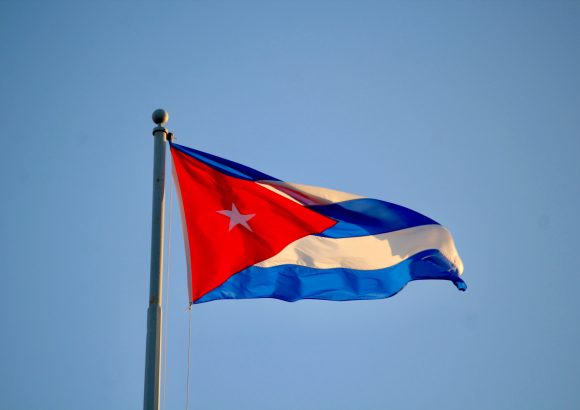
    Under the terms of the presidential decree, all public buildings and military institutions across Cuba are required to fly the Cuban Lone Star Flag at half-mast for the full duration of the official mourning period. Three senior government officials — the ministers of the Revolutionary Armed Forces, the Ministry of the Interior, and the Ministry of Foreign Relations — have been formally tasked with ensuring full compliance with all provisions of the decree. The document was signed at Havana’s Palace of the Revolution on June 21, 2026, a year marked by Cuba as the centennial of the birth of Fidel Castro Ruz, the country’s founding revolutionary commander-in-chief.

  • Who Makes the Cut? PUP Faces High-Stakes Selection Process

    Who Makes the Cut? PUP Faces High-Stakes Selection Process

    As the June 2026 municipal elections approach, Belize’s ruling People’s United Party (PUP) finds itself navigating a tense internal challenge: narrowing a flood of candidate applications down to a final 67-seat election slate amid unprecedented interest from hopefuls across the country.

    A total of 115 aspiring candidates have put their names forward to compete for PUP’s nomination, leaving party leaders tasked with cutting nearly 50 applicants to finalize the party’s ticket ahead of the vote. Currently, the PUP holds 61 of the 67 municipal seats up for election, meaning incumbent officeholders already make up a large share of the possible nominees – but fresh challengers have flooded the race, particularly for top mayoral positions.

    Eight new candidates have launched campaigns to challenge sitting PUP mayors, nearly all of whom have confirmed their intention to seek re-election. To unpack how the party will sort through the crowded field of applicants, PUP Secretary General Collet Montejo outlined the party’s structured, multi-step vetting and selection process in a recent public briefing.

    Montejo emphasized that no candidate – whether a long-serving incumbent or a first-time aspirant – is guaranteed a spot on the election ticket. “Your application is just that. It’s not a rite of passage. There is nothing saying that you will be even on a slate if you are going to a contested convention or if you are going to be endorsed,” Montejo explained, stressing that all candidates will be evaluated through the same standardized process regardless of their current office holding status.

    The party has divided the country into four regional caucuses – northern, southern, eastern, and western – that will work in parallel to review local candidates. A national-level campaign committee is scheduled to convene this coming Thursday to appoint a dedicated interview and vetting subcommittee, which will be given between one week and a maximum of two weeks to complete its evaluations before reporting back to the national committee. From there, the national campaign committee will compile its findings and forward recommendations to PUP’s national executive for final approval.

    In cases where multiple candidates for a single position earn national executive approval, the party will hold a contested delegate convention to select the final nominee. For Belize City, the country’s largest municipality, the party has already confirmed it will use a delegate-based selection process, with more than 775 delegates expected to cast votes to determine the PUP’s final city slate.

    Delegate allocations for Belize City are tied to the party’s performance in the most recent general election: each constituency receives one delegate for every 25 votes the PUP earned in that district, with local constituency executive committees selecting which members will serve as delegates. For other municipalities, the selection framework for contested races will be determined on a case-by-case basis by the national executive, with approved voter lists reviewed by all competing candidates before any internal vote.

    Two local nomination contests have emerged as major points of attention for the party: the races in Belize City and Corozal Town. In Belize City, two sitting PUP councilors are vying to replace three-term incumbent Mayor Bernard Wagner, while in Corozal Town, challenger Shajerie Rogers – backed by Thea Ramirez Garcia – is aiming to unseat three-term incumbent Mayor Rigo Vellos, who is seeking re-election.

    This report is adapted from a transcript of a televised evening news broadcast, with all original statements preserved and formatted for clarity.

  • Thousands Missing: Ministry Investigating Louisiana Government School

    Thousands Missing: Ministry Investigating Louisiana Government School

    An official investigation has been launched into reports of unaccounted public funds at Louisiana Government School, a public education facility located in Orange Walk Town. Local news outlet News Five has verified that the probe was initiated after credible allegations of long-running financial irregularities at the institution surfaced.

    According to anonymous sources familiar with the matter, large sums of government-allocated funds cannot be traced, with the questionable financial activity suspected to have stretched across multiple years. As of the June 22, 2026 reporting date, the exact total value of missing monies has not been released to the public, but the severity of the allegations prompted immediate intervention from the country’s Ministry of Education.

    News Five has learned that the Ministry has already deployed a specialized team including a senior financial officer and a certified auditor to conduct a line-by-line review of the school’s full financial records. The review is intended to map out all transactions, confirm the scope of any documented discrepancies, and identify the parties responsible for the irregularities.

    When reached for comment by the outlet, a senior official with the Ministry of Education did not deny the ongoing investigation. “Your reports are correct. The Ministry did receive reports of some financial irregularities and the ministry is investigating,” the official confirmed in an on-the-record statement.

    This report is a transcribed version of an evening television newscast produced by the outlet, with Kriol language segments converted to standard spelling for clarity in the published text.

  • Haïti – Sécurité : Construction de cinq bases opérationnelles avancées à Port-au-Prince

    Haïti – Sécurité : Construction de cinq bases opérationnelles avancées à Port-au-Prince

    On the sidelines of the 56th Organization of American States (OAS) General Assembly, which is being hosted in Panama City from June 22 to 24, 2026, regional and international stakeholders have formally launched a joint security initiative aimed at stabilizing crisis-hit Haiti. The partnership between the European Union and the OAS will deliver five new Forward Operating Bases (FOBs) in Haiti’s capital Port-au-Prince, a critical investment to boost the Haitian National Police (PNH)’s capacity to combat widespread armed violence and arms trafficking.

    Centered on the guiding theme “Safer societies: EU-OAS cooperation to counter firearms trafficking”, the project targets a longstanding gap in operational infrastructure for Haiti’s national security forces, who have struggled to regain control of territory seized by violent armed gangs in recent years. Funded through the European Union’s Foreign Policy Instrument, the initiative carries a total budget of 10 million euros, equivalent to approximately 11.6 million U.S. dollars, with all construction work scheduled for completion by the middle of 2027.

    Speaking on behalf of the Haitian government, Haitian Foreign Minister Raina Forbin welcomed the collaborative project, noting that it aligns fully with the country’s top national security priorities. Forbin emphasized that the new FOBs will directly expand the presence of security forces in high-risk gang-controlled areas and help consolidate gains in territory that has already been recaptured by government forces. In a pre-recorded address to the launch event, PNH Director General Vladimir Paraison provided an update on the evolving security landscape, outlining progress that national security forces have made in ongoing efforts to restore public order and reassert state control over territory impacted by gang violence.

    OAS Secretary General Albert Ramdin reaffirmed his organization’s long-term commitment to supporting Haiti’s efforts to achieve national stabilization and strengthen state institutions. “At a time when Haiti faces profound and complex challenges, this partnership between the OAS and the European Union marks an important step in the right direction,” Ramdin said. “It demonstrates the confidence placed in Haiti’s institutions and the resilience of the Haitian people, as well as our shared determination to support a safer, more stable and hopeful future for Haiti.” Ramdin also stressed the urgent need for the full deployment of the planned Gang Suppression Force (FRG), a key component of Haiti’s national security strategy to push back against armed groups.

    Delphine Pronk, Deputy Director General for the Americas at the European External Action Service (EEAS), also spoke at the launch, underlining the EU’s commitment to delivering tangible support to Haiti at this decisive juncture. Pronk noted that the construction of the five advanced operating bases is a concrete step toward creating a safer, more functional operational environment for Haitian security forces as they work to restore peace across the country. The launch event was also attended by Carlos Hoyos, Deputy Foreign Minister of Panama, the host nation for this year’s OAS General Assembly.

  • Belize Steps Up to Guide Regional Education Agenda

    Belize Steps Up to Guide Regional Education Agenda

    In a significant shift for regional educational and cultural cooperation across Central America, Belize has stepped into a pivotal leadership role that promises to reshape learning frameworks and cultural preservation strategies across the region. As of June 2026, the small Central American nation has taken over the rotating presidency of the Coordinating Committee of Educational and Cultural Cooperation of the Central American Integration System (CECC/SICA), positioning it at the center of high-stakes regional decision-making for education and cultural development.

    This new position brings both expanded regional influence and heightened responsibility, and Belize has already signaled it plans to move quickly to advance its priorities. Speaking on behalf of the nation at the leadership transition meeting, Belize’s Minister of State for Education Ramon Cervantes outlined a clear, people-centered policy agenda for the country’s six-month term. The three core pillars of Belize’s leadership plan are expanding universal access to education for all learners across the region, positioning cultural heritage as a core engine of national and regional development, and speeding up the adoption of digital transformation in educational institutions.

    Cervantes highlighted that Belize already has hands-on experience implementing innovative digital learning models that it can bring to the regional table. He pointed to the country’s ongoing 501 Academy initiative as a tangible example of the nation’s work to reimagine digital education, noting that the lessons learned from this local program can now be shared with neighboring countries to support their own digital transitions.

    Prior to assuming the presidency, Belize participated as a member in CECC/SICA’s collaborative processes. Now, its role has evolved from contributing member to lead coordinator, tasked with shepherding existing regional agreements into active implementation. Over the next six months, Belize will steer the bloc’s work to improve overall education quality across Central America, advance inclusive cultural development initiatives, and deepen cross-border collaboration between all member nations. Observers of regional integration note that this leadership turn offers Belize an opportunity to bring localized, community-focused priorities to the forefront of Central American public policy.