作者: admin

  • Election : Registration of political parties, groups, and coalitions

    Election : Registration of political parties, groups, and coalitions

    Haiti’s Provisional Electoral Council (CEP) has formally initiated the registration process for political entities seeking participation in the nation’s upcoming electoral cycle. In an official announcement released on March 2, 2026, the electoral authority declared an 11-day registration window, running from March 2nd through March 12th, 2026, marking a critical procedural milestone in Haiti’s democratic process.

    The registration mandate, operating under the legal framework established by Article 143 of the Electoral Decree enacted on December 1, 2025, requires all political parties, groups, and coalitions to formally present themselves at the CEP’s central headquarters located at 72 Rue Stephen Archer in Pétion-ville. The designated submission hours are from 9:00 a.m. to 4:00 p.m. throughout the registration period.

    The CEP has established comprehensive documentation requirements that vary according to the type of political organization. Political parties must provide notarized articles of incorporation, official recognition acts, party statutes, minutes from their most recent general assembly or congress, and correspondence from the Ministry of Justice confirming registration. Additionally, parties must submit their official acronyms, color emblems, valid national identification cards for official representatives, and digital copies of their logos on virus-free storage media.

    For political groups or alliances, the requirements extend to include notarized agreements between constituent parties, documentation of consensus on unified emblems, and certification of each member party’s registration status with the Ministry of Justice. The CEP emphasizes that all authorization documents for representatives must be notarized when the official representative cannot appear in person.

    The electoral body has made the complete checklist of required documents available through multiple channels, including its official website (www.cephaiti.ht) and social media platforms on Facebook and X (formerly Twitter), ensuring maximum accessibility for all potential participants. This transparent approach aims to facilitate compliance and streamline the registration process for Haiti’s diverse political landscape.

  • Regionale landen sturen humanitaire hulp naar Cuba en hervormen relatie met VS

    Regionale landen sturen humanitaire hulp naar Cuba en hervormen relatie met VS

    Caribbean Community (CARICOM) leaders concluded their four-day summit with landmark decisions including immediate humanitarian assistance for Cuba and the establishment of a trilateral commission to redefine relations with the United States. The conference, held in Saint Kitts and Nevis and chaired by Prime Minister Terrance Drew, addressed multiple regional challenges through concrete action plans.

    Prime Minister Drew confirmed during the post-summit press briefing that Cuba’s escalating humanitarian situation received extensive deliberation. All member states recognized the urgency of addressing the crisis, with CARICOM pledging to leverage its unique position having close ties to both Cuba and the United States. The specific form of assistance will be determined within the next month, ensuring it directly benefits the Cuban people while maintaining regional stability.

    The summit marked a significant advancement in US-Caribbean relations through the creation of a three-member commission that will explore new cooperation frameworks. This initiative emerged from discussions with US Secretary of State Marco Rubio, who attended the CARICOM meetings. Prime Minister Drew characterized this development as profoundly significant for strengthening the longstanding partnership between the regional bloc and the United States.

    Beyond immediate crises, leaders made substantial progress on regional integration through the CARICOM Single Market and Economy (CSME). The summit approved recommendations enabling free movement of aviation professionals including pilots and air traffic controllers across member states. Four nations—Barbados, Belize, Dominica, and Saint Vincent and the Grenadines—have successfully implemented full freedom of movement for goods, services, and labor since October 2025.

    The conference also addressed Haiti’s security and humanitarian situation, endorsing the Eminent Persons Group report that praised Kenya’s leadership of the UN-mandated Gang Suppression Force (formerly the Multinational Security Support mission). CARICOM reaffirmed its commitment to peace and stability in Haiti through continued support.

    Reparations discussions advanced with the Prime Ministerial Sub-Committee tasked to review the revised Caricom Ten-Point Plan for Reparations and establish priorities for the upcoming Commonwealth Heads of Government Meeting in Antigua and Barbuda in November 2026.

    Regional security and justice cooperation saw progress with model legislation and policy documents, complemented by renewed UN offers to support implementation of a Police Record Management Information System.

    A dedicated committee comprising the prime ministers of Barbados, Dominica, Jamaica, and the president of Guyana will undertake comprehensive review of CARICOM’s governance and funding mechanisms.

    Regarding ongoing border disputes—specifically Guatemala-Belize, Belize-Honduras, and Guyana-Venezuela cases before the International Court of Justice—leaders unanimously endorsed peaceful, legal resolutions and reaffirmed unconditional support for the sovereignty and territorial integrity of affected states.

  • STATEMENT: President of Cricket West Indies, Dr. The Hon. Kishore Shallow on ICC Men’s T20 loss against India

    STATEMENT: President of Cricket West Indies, Dr. The Hon. Kishore Shallow on ICC Men’s T20 loss against India

    Cricket West Indies (CWI) President Dr. Kishore Shallow has publicly praised the national team’s performance following their elimination from the ICC Men’s T20 World Cup. Despite the disappointment of their Super 8s defeat against India at Eden Gardens in Kolkata, Shallow emphasized the significant progress demonstrated throughout the tournament.

    The West Indies team concluded their campaign with an impressive record of five victories in seven matches, showcasing notable growth in team cohesion and competitive belief. According to Dr. Shallow, this achievement underscores the thorough preparation and dedication of both players and support staff. The team’s journey to the knockout stages represented a substantial step forward for Caribbean cricket.

    Particularly noteworthy was the team’s demonstrated resilience and fighting spirit, which resonated deeply with fans across the region. This display of determination reinforced pride in West Indies cricket and highlighted the character inherent in the squad. The leadership of Head Coach Daren Sammy and the contributions of the entire support staff received special recognition for their role in building a solid foundation for future competitions.

    Dr. Shallow concluded his statement with a forward-looking perspective, affirming that the team would regroup and return to international competition with strengthened unity and clear purpose. The message ended with a traditional rallying cry for continued support of West Indies cricket, emphasizing the enduring connection between the team and its supporters.

  • Is Trash on the Highway Becoming a Bigger Problem Than Potholes?

    Is Trash on the Highway Becoming a Bigger Problem Than Potholes?

    BELIZE CITY – A growing environmental challenge is emerging along Belize’s major roadways, where accumulating trash now rivals traditional infrastructure concerns like potholes. The Ministry of Infrastructure Development has reported significant garbage accumulation encountered by road maintenance crews working between Belize City and Belmopan, highlighting a dual challenge of road repair and environmental cleanup.

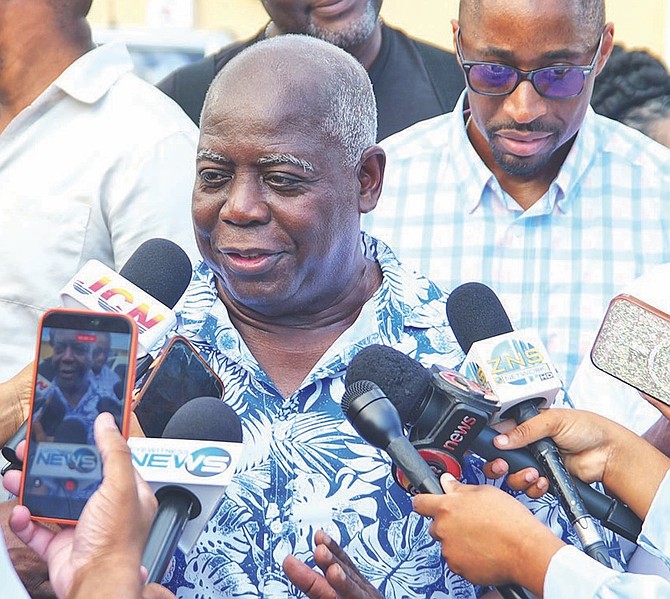
    Minister of Solid Waste Management Orlando Habet addressed the concerning trend, noting a troubling cultural transformation in national attitudes toward environmental preservation. “The situation presents considerable difficulties,” Habet stated. “Historical patterns of environmental consciousness appear to have shifted dramatically in recent years. Our citizens often demonstrate exemplary behavior when traveling internationally, yet abandon these practices upon returning home.”

    The minister revealed personal interventions with motorists discarding waste from vehicles, sometimes encountering aggressive responses. In a striking illustration of the problem’s severity, Habet disclosed that illegal dumping has directly impacted his agricultural operations, with cattle fatalities resulting from plastic consumption along roadside areas.

    Current mitigation efforts involve coordinated cleanup operations between the ministry and road crews, including provision of garbage collection equipment and bags. While applauding volunteer initiatives such as recent scout-led cleanups near Esperanza, Habet emphasized that systemic change requires deeper societal transformation. “Volunteerism alone cannot resolve this crisis,” he asserted. “Fundamental improvement must begin with early childhood education through parental guidance and formal school instruction.”

  • West Indies crash out of T20 World Cup

    West Indies crash out of T20 World Cup

    The West Indies’ quest for another ICC championship met a heartbreaking conclusion as India delivered a knockout blow in their virtual quarterfinal clash during the final Super Eight stage of the T20 World Cup. Played on March 1 at Kolkata’s iconic Eden Gardens stadium, the match unfolded before a predominantly pro-Indian crowd creating an electrifying atmosphere.

    After being sent in to bat by Indian captain Suryakumar Yadav, the Caribbean side adopted a measured approach during the powerplay. Captain Shai Hope and makeshift opener Roston Chase established a solid foundation with a 68-run opening partnership. Despite an early reprieve, Chase eventually departed for 41 runs, while Hope’s dismissal preceded a controversial caught-behind decision that cut short Shimron Hetmyer’s explosive 27-run cameo from just 12 deliveries.

    The innings gained crucial momentum through a dynamic 76-run fifth-wicket stand between Rovman Powell and Jason Holder, propelling the West Indies to a competitive 195/4. Holder remained unbeaten on 37, while Powell’s unconquered 34 included a historic milestone—the Jamaican powerhouse recorded his 150th T20 International six for the West Indies, setting a new national record.

    India’s response began methodically, maintaining 8.83 runs per over during the powerplay despite the West Indies striking early blows by removing Ishan Kishan and Abhishek Sharma. The game’s momentum shifted dramatically through Sanju Samson’s masterclass, who partnered with captain Yadav for a crucial 58-run third-wicket partnership. Although Yadav received a lifeline at 17, he fell shortly after for 18 runs.

    At the twelve-over mark, the contest stood perfectly balanced with both teams locked at 104 runs. After several explosive batting overs, India required 19 runs from the final two overs. Samson’s magnificent unbeaten 97 guided the hosts to a record chase, ultimately eliminating the Men in Maroon from tournament contention.

    In his final World Cup post-match interview, West Indian skipper Shai Hope reflected: ‘You never want to exit at this stage. One more victory would have secured our semifinal berth, and with continued performance, a place in the championship final. I must commend the team’s effort—we maintain high performance standards and must capitalize on critical moments to deliver our best cricket when it matters most.’

  • VMS slaat alarm over besteding SZF-middelen

    VMS slaat alarm over besteding SZF-middelen

    Suriname’s healthcare system faces a deepening structural crisis as the Association of Medical Professionals (VMS) reveals serious concerns regarding financial management and governance within the State Hospital Fund (SZF). The alarming disclosures center on questionable financial arrangements and the hiring of highly-paid advisors without direct patient care value, raising fundamental questions about priorities and internal controls within the organization.

    Against the backdrop of an already strained healthcare infrastructure, these developments strike at the core of trust and accountable governance. The system has been significantly weakened by chronic shortages of medications and medical supplies, logistical challenges, and the continuous exodus of qualified healthcare personnel seeking opportunities abroad. Patients experience the consequences of these systemic failures on a daily basis.

    The VMS emphasizes that in a period of scarce resources where healthcare institutions struggle to maintain basic facilities, any expenditure not directly contributing to patient care becomes difficult to justify. Both management and board members responsible for appointments and function acceptances within SZF must be fully accountable for their complex and responsible tasks, particularly regarding the proper allocation of precious resources.

    The fund serves approximately 80% of insured individuals in Suriname, handling billions of Surinamese dollars annually. The association expresses particular concern about the oversight mechanisms of the fund while healthcare quality continues to deteriorate under persistent pressure.

    The medical association calls for organizational strengthening of SZF through the inclusion of expert professionals with demonstrated financial and administrative experience, coupled with deep understanding of healthcare practice. Responsible and well-considered policy choices must remain central to any reform efforts.

    Transparency, professionalism, and collaboration with all stakeholders are identified as essential components for restoring confidence in the system. The VMS has expressed its commitment to actively contribute to necessary reforms aimed at creating an effective, sustainable, and equitable healthcare system for Suriname.

  • President terug van Caricom-top: bilaterale relaties versterkt

    President terug van Caricom-top: bilaterale relaties versterkt

    Surinamese President Jennifer Simons has returned from the 50th CARICOM Heads of Government Meeting in Basseterre, St. Kitts and Nevis (February 24-27), expressing satisfaction with the substantial diplomatic achievements secured for her nation. The summit, themed ‘Beyond Words: Action Today for a Thriving, Sustainable CARICOM,’ yielded enhanced multilateral cooperation and new economic opportunities for Suriname, according to the Suriname Communication Service.

    President Simons conducted numerous high-level bilateral meetings with international representatives, accompanied by Minister of Foreign Affairs, International Business and Cooperation Melvin Bouva. These diplomatic engagements included substantive discussions with delegations from Saudi Arabia, Trinidad and Tobago Prime Minister Kamla Persad-Bissessar, the United Arab Emirates, the U.S. Secretary of State, and the Afreximbank. Additional bilateral talks were held with Jamaican Prime Minister Andrew Holness, Guyanese President Irfaan Ali, and Barbadian Prime Minister Mia Mottley.

    The summit proved particularly significant for Suriname as the country prepares to assume CARICOM’s rotating presidency in 2027. President Simons had emphasized the meeting’s crucial importance for regional cooperation before her departure on February 22nd.

    Key strategic benefits secured for Suriname include:
    • Strengthened multilateral cooperation and international partnerships
    • Expanded collaboration opportunities with the United States and other third countries
    • New prospects in energy, digitalization, and economic development
    • Enhanced regional cooperation on security and law enforcement
    • Participation in a reinforced reparations agenda

    In her opening address, President Simons highlighted Caribbean unity and collective action as the region’s fundamental strength, warning that fragmentation impedes regional development. She called for accelerated integration processes with particular focus on economic diversification, sustainable energy development, and creating opportunities for youth.

    The president also emphasized the importance of strategic partnerships with international actors while ensuring regional interests remain paramount. Suriname identifies significant opportunities within CARICOM to contribute to broader regional prosperity through cooperation in energy, natural resources, and trade.

  • CAGRI unveils new poultry system at Agrofest

    CAGRI unveils new poultry system at Agrofest

    A groundbreaking agricultural innovation has been introduced at Agrofest, presenting a transformative approach to household food production. The D-Frame Layer Cage System, developed by the Centre for Agricultural Research and Innovation (CAGRI) at The University of the West Indies, Cave Hill campus, represents a significant advancement in urban farming technology.

    This vertical, tiered cage system enables families to produce fresh eggs efficiently within confined backyard spaces, addressing both food security concerns and escalating grocery expenses. The launch coincides with recent instability in local egg markets, offering consumers an alternative path to nutritional independence.

    Dr. Michele Singh, Director of CAGRI, characterized the system as a crucial milestone in building community resilience and self-sufficiency. The technology’s compact design optimizes production capacity in limited areas while significantly reducing egg production costs for household consumers.

    The system incorporates sustainable practices by facilitating the repurposing of kitchen waste into supplemental poultry feed, simultaneously addressing food waste reduction and production economics. Beyond domestic applications, the initiative promises substantial economic benefits through local manufacturing and distribution opportunities for artisans and entrepreneurs.

    This innovation aligns with broader regional objectives under the “25 by 2030” initiative, which aims to dramatically reduce dependence on imported food products. CAGRI has been conducting live demonstrations at Agrofest, allowing visitors to witness firsthand how this technology supports sustainable agriculture and home-based food production systems.

  • Onderscheiding voor Bhiesnoe Gopal en Ranu Abhelakh

    Onderscheiding voor Bhiesnoe Gopal en Ranu Abhelakh

    In a significant recognition of cultural preservation and journalistic excellence, the Surinamese-Rotterdam Pin (SuRo-speld) has been conferred upon distinguished journalist Ranu Abhelakh and accomplished entrepreneur Bhiesnoe Gopal. The prestigious awards were presented by Koemar Khargi, President of Satya Dharma Netherlands-Suriname, during a formal ceremony attended by community leaders and cultural advocates.

    Ranu Abhelakh received the honor for her two-decade career as a freelance journalist specializing in Surinamese society and culture. Since 2000, she has masterfully combined writing and photojournalism to explore themes of connection, identity, and development within the Surinamese community. Her work has featured prominently in Hindorama and various international media outlets, presenting authentic perspectives on Suriname’s cultural landscape. Abhelakh has also authored several literary works and biographical projects, including her comprehensive documentation ‘155 Years of Suriname’s Court of Justice,’ which traces the shared legal history between Suriname and the Netherlands.

    Bhiesnoe Gopal was recognized for his entrepreneurial leadership and dedication to social and cultural initiatives through his organization Gopex. His family embodies a remarkable legacy of agricultural excellence and business continuity—his grandfather received a gold medal from Queen Juliana of the Netherlands in 1956 for operating Suriname’s finest agricultural enterprise. As a third-generation steward, Gopal maintains this tradition of craftsmanship and deep connection to Surinamese soil through his family business.

    The nominations were formally put forward by Ramon Ramsodit, former President of Satya Dharma, and advisor Ram Rambartsingh, highlighting both recipients’ exceptional contributions to preserving and promoting Surinamese cultural heritage both locally and internationally.

  • Iran launches retaliation on neighboring states housing US assets following US-Israeli strikes on Tehran

    Iran launches retaliation on neighboring states housing US assets following US-Israeli strikes on Tehran

    The Middle East has plunged into a dangerous escalation of hostilities following Iran’s coordinated military strikes against American installations throughout Gulf Arab nations. This aggressive action represents Tehran’s direct retaliation for a large-scale joint offensive conducted by the United States and Israel against Iranian targets.

    Iran’s Islamic Revolutionary Guard Corps (IRGC) claimed responsibility for targeting multiple locations across Bahrain, Kuwait, Qatar, and the United Arab Emirates on Saturday. Particularly significant were the strikes on UAE airbases housing U.S. forces. The Fars news agency reported the IRGC’s declaration that all Israeli and American military sites throughout the Middle East were struck by “powerful blows of Iranian missiles.”

    The IRGC issued an uncompromising warning that operations would continue “relentlessly until the enemy is decisively defeated,” explicitly designating all U.S. regional assets as legitimate targets. Iranian officials presented their actions as justified self-defense, with Deputy Foreign Minister Hamid Ghanbari expressing regret over potential civilian casualties while asserting Iran’s right to protect itself.

    Diplomatic channels saw activity as Foreign Minister Abbas Araghchi communicated Iran’s position to the United Nations, affirming Tehran’s determination to exercise self-defense “decisively and without hesitation until the aggression ceases fully and unequivocally.”

    The attacks produced varied outcomes across the region. Abu Dhabi reported one fatality from missile strikes, though details remained scarce. Bahrain experienced targeting of the U.S. Navy’s 5th Fleet headquarters in Manama. Kuwait successfully intercepted ballistic missiles aimed at Ali al-Salem Air Base, though the attack resulted in minor injuries and facility damage. Saudi Arabia repelled strikes targeting Riyadh and eastern regions, while Qatar prevented all missiles from reaching their territory.

    In Iraq’s Kurdish region, Erbil Airport faced two separate drone attacks, both neutralized by air defenses. Southwest of Baghdad, a strike on Kataeb Hezbollah headquarters killed two individuals, prompting the armed group to threaten retaliatory attacks on American bases.

    The regional consequences extended beyond immediate military impacts. Multiple Gulf nations temporarily closed their airspace, while shipping operations received notices about potential closure of the strategically vital Strait of Hormuz—a critical passage for global oil exports.

    U.S. President Donald Trump confirmed to Fox News that three American service members died during operations, while claiming significant losses among Iranian leadership. The conflict’s ripple effects reached Israel, where nine fatalities were reported in Beit Shemesh from missile strikes, with civilians remaining on high alert amid ongoing sirens.

    BBC News reported Israeli military actions within Tehran itself, with Iranian officials claiming at least 153 casualties, including children, from a strike on a school facility—further intensifying the humanitarian dimensions of the escalating conflict.