作者: admin

  • Ministry of Health Advises Public of Contained Chickenpox Cluster at Clarevue Psychiatric Hospital

    Ministry of Health Advises Public of Contained Chickenpox Cluster at Clarevue Psychiatric Hospital

    Antigua and Barbuda’s Ministry of Health, Wellness, Environment and Civil Service Affairs has issued a public advisory confirming a small cluster of varicella, more widely known as chickenpox, cases within two male-only wards at the Clarevue Psychiatric Hospital. As of the latest update, the outbreak has not spread beyond the two affected wards, and targeted public health interventions have already been rolled out to contain transmission and safeguard the health of both patients and hospital staff. The ministry emphasized that its standardized infection prevention and control protocols were activated immediately after the initial cases were detected.

    The full suite of response measures includes expanded active surveillance across the hospital facility, mandatory quarantine and isolation for exposed and confirmed cases, intensified cleaning and disinfection protocols for all high-touch environmental surfaces, limitations on non-essential movement through the affected wards, regular health monitoring for all individuals who have had close contact with infected patients, and ongoing clinical check-ins for all potentially affected staff and patients. Public health officials are working hand-in-hand with the hospital’s administration and on-site clinical teams to track the development of the outbreak closely, and to date, there is no evidence that the virus has spread to other parts of the facility or the broader community.

    To help the public understand the risks, the ministry has also shared key educational information about varicella. The illness is a highly contagious viral infection caused by the varicella-zoster virus, and common presenting symptoms include elevated body temperature, general fatigue, and an itchy blister-shaped rash across the skin. The virus spreads most often through respiratory droplets that enter the air when an infected person coughs or sneezes, or through direct physical contact with fluid from an infected person’s skin blisters. In rare cases, susceptible people can also contract varicella after exposure to someone with herpes zoster (commonly called shingles), which develops when the latent varicella-zoster virus reactivates in a person who previously had chickenpox.

    Small, localized clusters of varicella are not unusual, especially in closed congregate settings like psychiatric hospitals, where consistent close contact between people creates ideal conditions for the virus to spread. For most people, particularly healthy children, the illness runs a mild course and rarely causes serious long-term complications. Even so, public health officials stress that proactive prevention remains critical to protecting vulnerable populations.

    The ministry reminded the public that varicella vaccination continues to be one of the most effective tools available to prevent infection and reduce the severity of symptoms if infection does occur. The vaccine is accessible to both children and adults at all public health clinics across Antigua and Barbuda. Officials are urging parents and guardians to confirm that their children have received all required doses of the vaccine in line with the country’s national immunization schedule. Any person who is unsure about their own vaccination history is advised to reach out to their primary healthcare provider or the closest public health center for guidance.

    In addition to vaccination, the ministry is encouraging all residents to maintain routine infection prevention habits that reduce the spread of all contagious respiratory and viral illnesses. These core habits include washing hands frequently with soap and clean running water, covering the mouth and nose when coughing or sneezing to contain respiratory droplets, keeping infected people separated from public spaces and group settings until all skin blisters have crusted over completely, and contacting a healthcare provider promptly if a person develops symptoms that match a varicella infection.

    People who develop fever and a rash are specifically advised to avoid unnecessary close contact with groups that face a higher risk of severe complications, including older adults, pregnant people, newborn infants, and individuals with compromised immune systems. The ministry says it will continue maintaining active, round-the-clock surveillance of the outbreak, and will release additional public updates if any new developments that impact public health emerge.

  • Cunningham looking forward to Rally Barbados

    Cunningham looking forward to Rally Barbados

    After a thrilling day of high-speed rally action on the 4.1-kilometer Mapps to Stewarts Hill stage in Barbados’ St. Philip parish, British driver Joe Cunningham and his co-driver Kari Bates have claimed top honors at the 2025 First Citizens King of the Hill, breaking a 11-year drought for British competitors at the prestigious pre-Rally Barbados seeding event.

    Cunningham’s victory marks the first win for a British driver at King of the Hill since Paul Bird took the top spot in 2014, while Bates made history of her own as only the second female co-driver ever to claim a win at the event, following in the footsteps of Kirsty Riddick, who won alongside Bird back in 2012. Speaking to reporters immediately after the final time check, Cunningham shared that the result far outstripped his pre-event goals. “I never actually expected to stand on the top step of the podium here – I was just targeting a top 10 finish going into the day,” he explained. “The route worked perfectly for our car, and we pushed as hard as we possibly could. This is Kari’s first event with me, but everything clicked straight away, and we couldn’t be happier with how it went.”

    Now, Cunningham and Bates turn their attention to the main event: BCIC Rally Barbados. The driver acknowledged that repeating his King of the Hill success will be a far greater test, noting the key differences between the seeding event and the main rally. “King of the Hill sees you run the same short stage four times, but Rally Barbados is a completely different beast – local drivers know every twist and turn of the stages far better than I do,” he said. “There’s no extra pressure on me, though. I’m just going to go out there, enjoy every minute, and I’m really looking forward to the challenge.”

    Barbadian fan favorite Dane Skeete crossed the line second, just 1.06 seconds behind Cunningham, matching his second-place finish from 2024. Skeete admitted that he had hoped to take the win, but noted that starting first on the road always brings extra challenges, and he is already gearing up to fight for the overall Rally Barbados title this weekend. “Once all my car’s systems hold up, there’s no reason I can’t challenge for the top spot,” Skeete said. “I just need to get through the opening super special stage at Bushy Park safely, then I’ll start pushing for the win on Saturday.”

    Third place went to 2024 King of the Hill champions Stuart Maloney and Kristian Yearwood, who finished 2.27 seconds off the winning time. Maloney said the result exceeded his own expectations, as he is still working to rebuild his confidence after past incidents on high-speed stages. The early part of Sunday’s event brought a scary reminder of the risks of rally racing: last year’s overall Rally Barbados winners Kyle Gregg and Kreigg Yearwood crashed heavily at the Three Houses section of the stage. Fortunately, both competitors walked away from the incident without injury, though their car suffered extensive damage that rules them out of the main rally this weekend. Learning of Gregg’s crash actually helped Maloney refocus, he explained: “Hearing about Kyle’s incident was not nice, but going in with no real expectations for a high result let me just focus on driving clean and keeping the car on the road. My rally starts on Saturday, and I know I have the pace to fight for the win.”

    In the two-wheel drive category, Barbadian duo Suleman Esuf and Asif Suleman claimed their first ever category win in their BMW 1M, finishing sixth overall with a time just 2.98 seconds behind the leader. Esuf said the result matched exactly what the team had targeted heading into the event. “The car felt solid during testing, so I came in with a lot of confidence that we had the pace to pull this off,” he explained. “Everything came together perfectly on the day. Now, as the first two-wheel-drive car starting on the road for Rally Barbados, our focus is on staying smart, keeping consistent, and maintaining our momentum through the weekend.”

    One of the biggest crowd favorites of the day was not eligible for overall honors, but still drew massive attention: the Open R/GT class Porsche 992 Rally GT driven by former FIA Rookie of the Year Zane Maloney and co-driver Luke Staffner. Thousands of spectators lined the stage, with large crowds gathering at the end of the 900-meter Thicket straight – the fastest section of the course – to catch a glimpse of the car, and many fans waited after the run to snap selfies with the spectacular vehicle. Despite the early morning heavy showers that hit the region, fans turned out in droves to watch the action, filling every vantage point along the stage route.

    The full top 10 results for the 2025 First Citizens King of the Hill are as follows: fourth place went to Great Britain’s Rob Swann and Tom Woodburn, while fifth was taken by Adam Mallalieu of Great Britain and Peredur Davies of Wales. Seventh place went to Jamaica’s Jeffrey Panton and Wales’ Matt Edwards, eighth to Barbados’ Barry Mayers and Moishe Steinbok, ninth to Barbados’ Josh Read and Mark Jordan, and tenth rounded out the top 10 by Barbados’ Mark Maloney and Justin Maloney.

  • CARPHA expands Caribbean early warning systems for vector-borne diseases

    CARPHA expands Caribbean early warning systems for vector-borne diseases

    The Caribbean Public Health Agency (CARPHA) is pushing forward landmark efforts to boost the region’s capacity to detect and respond to vector-borne diseases, rolling out expanded regional surveillance networks and cutting-edge monitoring technologies through a collaborative multi-country workshop held recently in Guyana.

    Held from April 27 to 28, 2026 at the Pegasus Hotel Exhibition Centre in Georgetown, the Regional Multisectoral Workshop, officially titled “Advancing Regional Vector-Borne Disease Surveillance through Technology and Harmonisation,” marks the latest milestone in a multi-phase regional public health initiative funded entirely through CARPHA’s Pandemic Fund Project. The convening gathered 28 key stakeholders, including senior epidemiology and vector control officials from 12 CARPHA member states, leadership from the Caribbean Vector-Borne Disease Network Steering Committee, and CARPHA’s in-house technical public health experts.

    This Georgetown gathering builds on two prior successful regional workshops held in Barbados (August 2025) and Trinidad and Tobago (December 2025), where participants focused on foundational topics including Integrated Vector Management, insecticide resistance testing, and the application of Geographic Information Systems (GIS) to Caribbean pandemic preparedness. Unlike earlier sessions that laid operational groundwork, the 2026 workshop centered on streamlining cross-border collaboration: participants worked to standardize regional disease datasets, validate unified early warning indicators, and integrate modern digital tools to enable faster, evidence-based decision-making across three core areas: epidemiological tracking, climate monitoring, and vector population surveillance.

    Lisa Indar, a senior CARPHA official, emphasized the ongoing urgency of the effort in her remarks, noting that vector-borne illnesses remain a persistent, major strain on Caribbean health systems and local communities. “As vector-borne diseases continue to pose a significant threat to Caribbean health systems and communities, CARPHA is working with Member States to strengthen the systems needed to detect risks earlier and respond more effectively,” Indar explained. “Through CARPHA’s Pandemic Fund Project, we are advancing integrated early warning systems, building technical capacity, and supporting the use of data and new technologies to guide timely public health action across the Region.”

    Horace Cox, CARPHA’s Director of Surveillance, Disease Prevention and Control, echoed this focus, noting that robust, standardized surveillance forms the backbone of any effective public health preparedness framework. “Effective surveillance is at the centre of public health preparedness. By strengthening the way countries collect, analyse, and share vector-borne disease data, we are improving the Caribbean’s ability to detect threats earlier and coordinate timely responses across the region,” Cox said.

    Roshan Parasram, another leading public health figure involved in the initiative, highlighted why modern, structured vector control systems are non-negotiable for Caribbean public health safety. “We are here because the Caribbean deserves a public health system that can see threats coming and act before they become crises,” Parasram stated. “We have built our approach on three pillars: Integrated Vector Management, Insecticide Resistance Testing, and Geographic Information Systems. These are not buzzwords. They are the operational backbone of a modern vector control system.”

    Brian Armour, who leads work on regional early warning infrastructure for CARPHA, further outlined the value of integrating vector surveillance into broader regional public health systems. “Our Regional Integrated Early Warning and Response System (RIEWSS) is about connecting data, systems, and people so that public health threats can be identified and acted upon more quickly,” Armour explained. “The integration of vector-borne disease surveillance into this broader early warning framework is an important step toward a more coordinated, data-driven approach to pandemic preparedness and response in the Caribbean.”

    Over the course of the two-day workshop, participants conducted in-depth reviews of proposed regional early warning indicators and evaluated methodologies to unify data collection and reporting across epidemiology, entomology, climate science, and geographic information systems. Technical breakout sessions explored the practical application of a range of innovative tools, including DHIS2 digital workflows, insecticide resistance analytics platforms, satellite remote sensing technology, artificial intelligence-powered risk mapping, and social listening tools designed to improve situational awareness and cut response times for public health agencies.

    Among the tools highlighted, DHIS2 — an open-source digital health information management platform — was singled out as a core enabling technology for the region’s new surveillance framework. The platform is designed to streamline the collection, analysis, and visualisation of public health data, enabling faster detection and response to emerging disease outbreaks.

    In addition to digital technology, participants also discussed new vector control innovations, including spatial repellents and emanator products engineered for use in the Caribbean’s densely populated urban centers. The workshop also included working sessions to review plans for formalizing the governance structure of the Caribbean Vector-Borne Disease Network Steering Committee and aligning stakeholders on the body’s upcoming work agenda.

    A key outcome of the convening was the opportunity for individual member states to assess which technologies and interventions best fit their unique national epidemiological contexts, while also mapping out the infrastructure, cross-border partnerships, and workforce training required to roll out new systems locally. CARPHA officials noted that the discussions and agreements reached at the workshop are expected to improve the consistency and timeliness of regional disease data reporting, strengthen cross-border coordination, and enable more targeted, effective vector control measures across the entire Caribbean region.

  • Patricia D. James Secondary School concludes reading month

    Patricia D. James Secondary School concludes reading month

    After four weeks of literacy-focused programming centered around the 2026 theme “Reading Reimagined”, Patricia D. James Secondary School brought its annual Reading Month celebrations to a close on Thursday, May 21 with its signature Guest Reader Initiative. Now in its second year, the community-focused event has quickly grown into one of the school’s most anticipated educational activities, designed to expand students’ understanding of literacy’s real-world value while connecting young learners to accomplished professionals across a wide spectrum of careers and backgrounds.

    Leading into the main closing event, the school hosted an exclusive preview workshop on Wednesday, May 20, featuring published author and scholar Amanie Mathurin. The intimate session welcomed top-performing English students and emerging young writers from across the school, creating a rare space for participants to refine their writing craft, engage in deep critical discussion of literary texts, and draw creative inspiration from a seasoned industry expert.

    The centerpiece of Reading Month 2026, the Guest Reader Initiative brought a diverse lineup of eight guest speakers directly into classrooms for multiple grade levels. Each visitor shared personal anecdotes, professional insights, and their own lifelong connections to reading, helping reframe literacy for students as more than an academic requirement — instead positioning it as a powerful tool for building connections, nurturing creativity, and driving personal and professional growth.

    The cross-sector roster of guests reflected the school’s commitment to showing reading’s relevance across every line of work. Attendees welcomed Kerdy St Luce, a leading automotive industry expert; prominent local content creator Krishna Henry; former pageant titleholder Christa St Ange; Anna-Kaye Boodho, general manager of technology firm Orbtronics; respected cultural practitioner Kennedy “Boots” Samuel; practicing gynaecologist and obstetrician Dr Lucilla Charles; Christine Henry, country coordinator for non-profit organization Helen’s Daughters; and prominent youth advocate Junior Delice.

    In a statement following the event, school leadership expressed sincere gratitude to all guest readers, volunteer facilitators, and internal organizers whose collective effort turned the initiative into a meaningful and memorable experience for the entire student body.

    The official press release highlighted that the 2026 Reading Month reinforces Patricia D. James Secondary School’s longstanding mission to champion literacy and holistic student development. The event, organizers noted, stands as clear proof of the institution’s ongoing commitment to educational innovation, meaningful community engagement, and sustained academic excellence.

  • Honduran Fishermen Arrested for Illegal Fishing

    Honduran Fishermen Arrested for Illegal Fishing

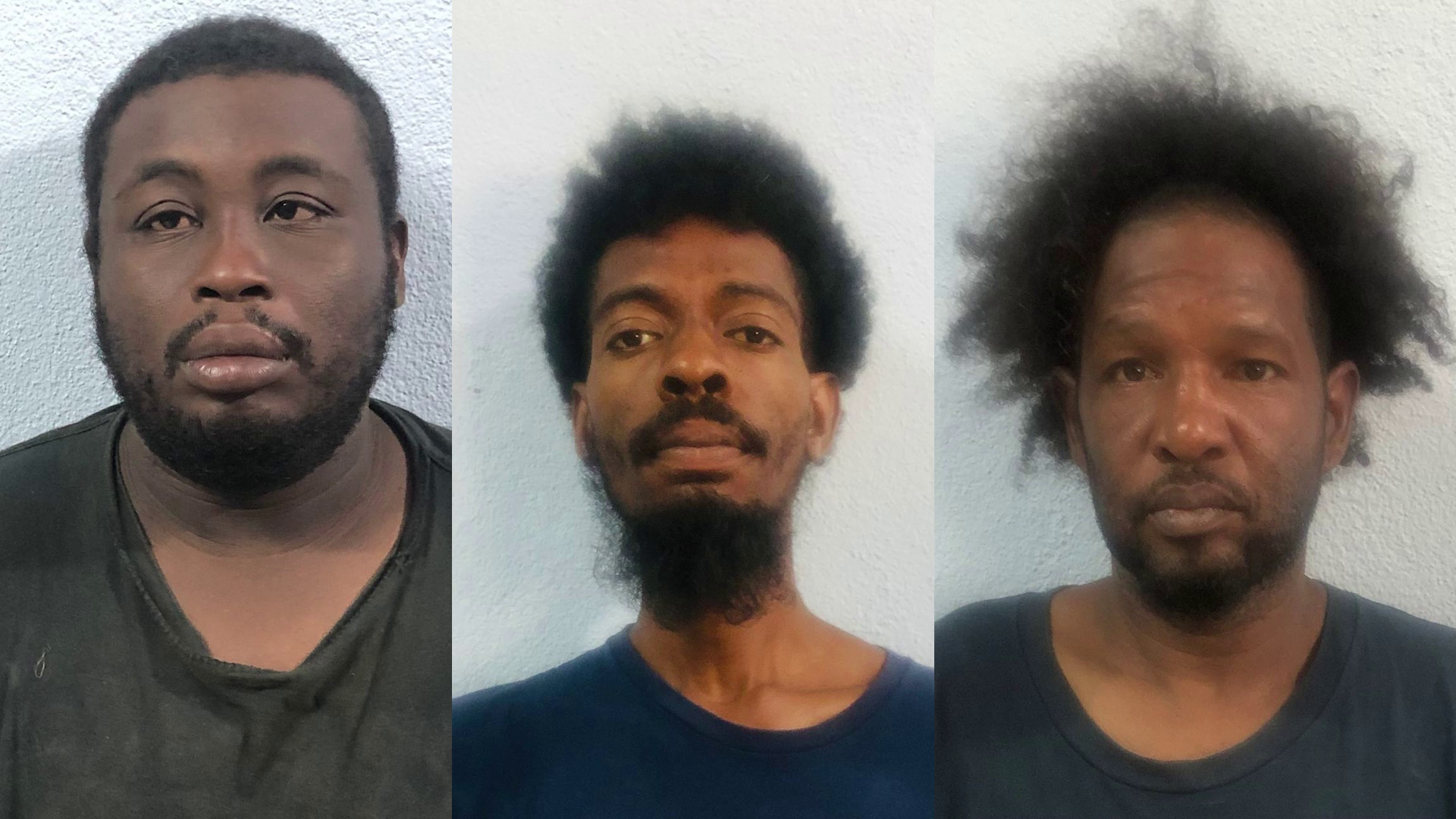
    A cross-agency law enforcement operation led by Belize’s Toledo Institute for Development and Environment (TIDE) and the Belize Coast Guard has resulted in the arrest of three Honduran fishermen accused of violating protected marine area regulations last week, authorities confirmed. The intervention unfolded inside the boundaries of the Sapodilla Cayes Marine Reserve, specifically in Conservation Zone IV — a strictly protected segment of the coastal reserve where commercial fishing is entirely prohibited to preserve sensitive marine ecosystems.

    During the joint patrol, law enforcement officers caught the three men actively engaged in unauthorized fishing operations inside the restricted zone. Upon inspection, investigators confirmed multiple violations of Belize’s fishing and maritime regulations: the trio was conducting commercial fishing in a no-take conservation area, operating without a valid individual fisherman’s license, sailing their vessel without an official active vessel license, and possessing processed fish fillets that did not meet mandatory labeling requirements (specifically lacking the required skin patch for traceability).

    In addition to the fishing-related offenses, the three fishermen also face separate immigration-related charges. The court handed down cumulative penalties for the violations: each man was ordered to pay 1,000 Belize dollars for every individual fishing offense, plus an additional 1,005 Belize dollars to resolve the immigration-related charges brought against them. Along with financial penalties, authorities have seized all assets linked to the illegal operation, including the fishermen’s vessel, its engine, all their fishing gear, and the illegally harvested marine products. The case underscores Belize’s ongoing enforcement efforts to protect its ecologically critical coastal reserves from unregulated foreign fishing activity.

  • Joseph wins two bronze medals at Masters track event

    Joseph wins two bronze medals at Masters track event

    After nearly three decades away from competitive sprinting, 52-year-old Lindsey Joseph achieved a remarkable career milestone over the weekend, claiming two bronze medals at the Trinidad and Tobago Association of Masters Athletics (TTAMA) Championships. Held between May 23 and 24 at the newly updated Hasely Crawford Stadium in Port of Spain, Trinidad & Tobago, the regional competition gave Joseph the chance to prove that competitive speed has no age limit.

    Competing in the men’s 50-54 age division, Joseph crossed the finish line of the 100-meter dash in 12.07 seconds to secure third place. He repeated the feat in the 200-meter event, clocking 24.99 seconds to take another bronze. Garvin Farmer, a Trinidad and Tobago native two years Joseph’s junior, claimed gold in both sprint events.

    Joseph’s journey back to the podium is one of persistence and second chances. He first picked up competitive athletics at 17, a later start than most elite runners. Just five years into training, he earned a spot as the only local runner selected for Saint Lucia’s pre-Olympic training squad ahead of the country’s historic debut at the 1996 Atlanta Games. Though he ultimately fell short of the qualifying standard and missed out on a spot in the final Olympic delegation, the experience confirmed what he had long suspected: he had the talent to compete at the highest levels. That promising trajectory came to an abrupt halt in 1997, when a devastating injury sidelined his athletic ambitions for more than two decades.

    It was not until he hit his 40s that Joseph decided to reignite his passion for running. “After turning 40, I realised I was very unfit. I made a decision to focus on my health and fitness, so I resorted to what kept me fit in my 20s: athletic training,” Joseph explained. As he rebuilt his endurance and strength, he made a surprising discovery: he was still far faster than most people his age. That realization pushed him to seek out competitive opportunities for masters athletes.

    Training for competitive sprinting as a masters athlete in Saint Lucia has not come without its challenges, Joseph notes. Access to consistent, safe training facilities is a persistent barrier: flat, even tracks free of hazards that could cause re-injury are hard to come by for local athletes. Most days, Joseph completes his sprint sessions on the flat asphalt roads that wind through the hills near his home in Fond Assau. When he gets the opportunity, he travels to Soufriere stadium to complete structured training on a proper track surface.

    The local masters athletics community in Saint Lucia has faced additional setbacks in recent years. The country’s popular Senior Games competition was discontinued following the onset of the COVID-19 pandemic, leaving local veteran athletes with almost no domestic competitive opportunities. But a growing wave of returning athletes, including veteran sprinter Bernard “Fox” Henry and elite marathon runners Ava Fevrier and Yvette Adair, has sparked a grassroots revival of the movement. Today, local masters athletes are working in partnership with the Saint Lucia Athletics Association to regain international affiliation and expand access to competition.

    Joseph already has a history of advancing masters athletics in his home country. He was involved in planning the Saint Lucia Senior Games in 2018, and helped pull off a successful full competition in 2019. In 2023, he competed at the Barbados Senior Games, where he took gold in the 45-49 age division 100-meter dash with a blistering meet record of 11.86 seconds, along with a bronze in the 200-meter event.

    For Joseph, his two bronze medals at the TTAMA Championships are just the first step in a larger mission: to inspire other veteran athletes in Saint Lucia to return to competition, and to build a formal, structured masters athletics association that can create long-term opportunities for athletes of all ages.

  • Just 16 Days Left…Are You Ready?

    Just 16 Days Left…Are You Ready?

    The 2026 FIFA World Cup, the first 48-team edition of soccer’s global showpiece co-hosted by the United States, Mexico and Canada, is just 16 days away from its opening kickoff on June 13. The month-long tournament will conclude with the final match on July 19 at New Jersey’s MetLife Stadium, but as anticipation builds among fans worldwide, two major issues have dominated pre-tournament discourse: a staggering hike in premium ticket prices and growing geopolitical uncertainty over Iran’s ability to compete on U.S. soil.

    The most eye-opening controversy centers on FIFA’s new pricing structure for top-tier tickets, which has drawn widespread criticism from fans across the globe. Football’s governing body has tripled the cost of the most expensive final tickets, pushing the highest price point to $32,970 per seat — a dramatic jump from the 2022 Qatar World Cup’s priciest final ticket, which cost roughly $1,600, and far outstripping the previous record high of $10,990 for an elite 2026 final seat.

    FIFA President Gianni Infantino has pushed back against criticism, defending the pricing model as a reasonable response to U.S. market conditions. “We have to look at the market,” Infantino said of the decision. “We are in a market in which entertainment is the most developed in the world, so we have to apply market rates.”

    Alongside the ticket pricing row, escalating military tensions between the U.S. and Iran have thrown Iran’s participation in the tournament into serious question. Iran has qualified for the 2026 World Cup and is scheduled to play group stage matches in the U.S., but rising hostilities between the two nations have cast doubt on whether the Iranian national team will be allowed to enter the country.

    The head of Iran’s football federation has reiterated that Iran expects full respect for the country’s Islamic Revolutionary Guard Corps (IRGC) if the team travels to the U.S., stressing that FIFA, not the U.S. government or former U.S. President Donald Trump, is the ultimate authority hosting the tournament.

    The current uncertainty comes amid a sharp escalation of direct military clashes between the two countries. According to BBC reporting, the U.S. launched new airstrikes on southern Iran earlier this week, targeting what U.S. officials described as Iranian missile sites and boats suspected of laying mines. U.S. Central Command justified the strikes as a self-defense measure, claiming the action was necessary to protect American troops from imminent threats posed by Iranian forces.

    Iran has responded forcefully to the strikes. The IRGC claimed it shot down one U.S. drone and opened fire on a second unmanned aircraft and an American fighter jet that it says entered Iranian airspace. Iranian state media has also emphasized that the country retains full right to retaliate for any violation of existing ceasefire agreements, leaving the geopolitical situation highly volatile just two weeks before the tournament gets underway.

  • Belize Among 20 Nations in Massive Gun and Drug Crackdown

    Belize Among 20 Nations in Massive Gun and Drug Crackdown

    In a landmark six-week multinational law enforcement operation spanning 20 countries across the Americas and the Caribbean — including Belize — authorities have taken down thousands of criminal suspects and seized a massive stockpile of illegal weapons, narcotics and contraband, in one of the largest coordinated anti-trafficking operations in recent regional history.

    Coordinated by international police body INTERPOL, with strategic backing from the Organization of American States (OAS) and financial support from the European Union, Operation Orca XI ran between October and November 2025, with official results of the crackdown announced publicly on May 26, 2026. By the end of the operation, law enforcement teams had recorded 8,701 arrests linked to organized crime and illicit trafficking. Beyond arrests, officers confiscated more than 3,300 unregistered firearms, nearly 200,000 rounds of ammunition, 210 suspected criminal vehicles, and $256,025 in undeclared cash linked to trafficking activity. The largest seizure by weight was 56 metric tonnes of illegal narcotics, destined for distribution across regional and global black markets.

    Unlike disjointed unilateral enforcement actions, Operation Orca XI was deliberately designed to target the shared trafficking corridors that transnational gangs and organized criminal networks rely on to move weapons, drugs, and even trafficked people across open regional borders, the OAS confirmed in its official press release announcing the results.

    Belize was one of 20 contributing nations from across Central America, South America and the Caribbean. The full list of participating partner countries also includes Bolivia, Brazil, Chile, Colombia, Costa Rica, the Dominican Republic, Ecuador, El Salvador, Guyana, Guatemala, Honduras, Mexico, Nicaragua, Panama, Paraguay, Peru, Suriname, and Uruguay.

    OAS Secretary General Albert R. Ramdin framed the operation as a clear demonstration of the power of coordinated hemispheric security action. “This is what success looks like when hemispheric coordination and world-class technical and operational capacity join forces: thousands of firearms off the streets, drugs seized, and safer communities,” Ramdin said in his statement. “Operation Orca XI proves that international cooperation and information sharing get results, and our security frameworks must continue delivering. The OAS stands ready to continue supporting member states with partners like INTERPOL.”

    INTERPOL Secretary General Valdecy Urquiza echoed that commitment, emphasizing that the evolving nature of transnational crime requires constant adaptive cooperation. “INTERPOL’s commitment remains to support law enforcement agencies with the intelligence, tools and coordination they need to stay ahead of these evolving threats,” Urquiza added.

    Operation leaders also noted that the scale of seizures and arrests exposes just how interconnected transnational criminal networks have become across the region, highlighting the ongoing need for sustained cross-border collaboration to disrupt illicit trafficking activity.

  • Man charged in Massade murder case

    Man charged in Massade murder case

    Authorities in Saint Lucia have formally brought murder charges against a 34-year-old man in connection with a fatal shooting that claimed the life of another 34-year-old resident earlier this month in the Massade neighborhood of Gros Islet.

    The accused, identified as Joshua Paul, made his initial court appearance to answer three separate charges: murder, illegal possession of a firearm, and illegal possession of ammunition. Following the hearing, a judge ordered Paul remanded into custody at the Bordelais Correctional Facility, where he will remain pending further legal proceedings.

    The timeline of the case places the fatal shooting of victim Julien Cedrick Agian on May 17. Law enforcement officers moved quickly to make an arrest, taking Paul into custody just one day after the killing, on May 18.

    At the time of Paul’s arrest, police conducted a search that turned up illegal weaponry: a loaded pistol and a ammunition magazine holding two 9mm rounds, which were seized as evidence in the ongoing case. Local law enforcement has not yet released additional details about a potential motive for the shooting, and the case is expected to proceed through the Saint Lucian judicial system in the coming months.

  • Strong winds and rough seas expected into the weekend

    Strong winds and rough seas expected into the weekend

    KINGSTON, Jamaica — A persistent low-level jetstream positioned across the central Caribbean has been whipping up dangerously powerful winds across the island nation of Jamaica since Tuesday, with local meteorological authorities issuing urgent warnings that unsafe conditions will hold through the entire weekend.

    Official data from the Meteorological Service of Jamaica confirms that the most severe impacts will be concentrated across the country’s southern parishes and adjacent offshore marine zones. Gusty, high-velocity winds and churning, rough seas have already transformed everyday conditions in these regions, creating visible disruptions to routine activity.

    The national weather agency extended its formal advisory Thursday, confirming that the wind event will continue impacting Jamaica’s landmass and surrounding territorial waters until at least Saturday. Local residents have been strongly encouraged to remain vigilant and avoid unnecessary outdoor exposure, as forecasters project the conditions could trigger mild to moderate damage to public and private infrastructure. Potential hazards include falling tree branches, downed power lines, and service disruptions in communities that are more vulnerable to extreme weather events.

    For commercial fishers and other maritime operators, especially those who work along the island’s southern inshore and offshore corridors, officials have issued an even stricter warning to exercise extreme caution. Persistent high winds will keep sea conditions exceptionally dangerous for days to come, rendering all small craft operations completely unsafe and unadvisable.

    In a closing statement, the Meteorological Service confirmed that it will maintain constant, close monitoring of the jetstream and evolving weather patterns, with timely public updates to be issued whenever new developments require adjustments to existing advisories.