作者: admin

  • BIBA welcomes passport-free Barbados-Guyana travel

    BIBA welcomes passport-free Barbados-Guyana travel

    As both Caribbean Community (CARICOM) nations mark 60 years of political independence in 2024, a landmark new bilateral agreement eliminating passport requirements for travel between Barbados and Guyana is being celebrated by private sector leaders as a transformative step toward deeper regional integration and expanded cross-border commerce.

    The arrangement, the latest operational milestone under the 2013 St. Barnabas Accord, a sweeping bilateral cooperation framework designed to align economic and political ties between the two countries, allows eligible citizens to cross borders using only their government-issued secure national identification cards – including Barbados’ biometric Trident ID card. For business leaders, the reform cuts through longstanding administrative delays that have hampered regional investment and collaboration, opening the door to more agile, on-the-ground project development for stakeholders across both markets.

    Carmel Haynes, Executive Director of the Barbados International Business Association (BIBA), which represents the country’s $8 billion international business sector, framed the policy shift as both a strategic economic adjustment and a symbolic milestone for south-south cooperation. “This is exactly the kind of tangible progress we need to turn the long-held CARICOM vision of a single economic space into reality,” Haynes told local media outlet Barbados TODAY. She noted that the reform comes as Barbados actively pursues a strategic reorientation away from overreliance on traditional financial services markets in Canada, Europe, and the United Kingdom, where competition from onshore financial centers has eroded Barbados’ market share in recent decades.

    The timing of the reform could not be more aligned with the shifting economic trajectories of both nations. Guyana is currently experiencing one of the fastest economic booms in modern history, driven by an unprecedented surge in offshore oil production that has pushed annual GDP growth above 60% in 2023. This rapid expansion has created urgent demand for professional services, cross-border investment infrastructure, and corporate expertise to scale its growing economy. For Barbados, which has built a 50-year track record as a leading Caribbean hub for international corporate services, the agreement unlocks new opportunities to export its specialized talent and financial infrastructure to support Guyana’s growth, while delivering mutual benefits to businesses in both countries.

    Haynes highlighted that Barbados’ extensive network of double taxation agreements and its membership in the CARICOM single market create a clear advantage for businesses looking to access Guyana’s expanding energy and infrastructure sectors. “Companies can register in Barbados, leverage our established tax treaty network to enter Guyana, and unlock significant tax savings that would not be available through other entry routes,” she explained. Beyond tax benefits, Barbados boasts a deep, mature pool of professional talent in law, accounting, corporate governance, and cross-border transaction management – expertise that can help Guyana build out its business ecosystem as it scales.

    This is not the first time the region has tested a passport-free travel framework. During the 2007 ICC Cricket World Cup, which was hosted by nine Caribbean nations, temporary legislation was enacted to create a single travel space for the duration of the tournament. Haynes said the widespread praise for that trial, from both business and tourism stakeholders, has kept the demand for permanent free movement alive for nearly two decades.

    Despite the liberalization of travel rules, Haynes emphasized that the new arrangement is not an unregulated open border system. Both countries have upgraded to advanced, biometrically secured national ID cards, with rigorous security vetting protocols built into the agreement to mitigate risks. “Security has been a core priority throughout the design of this arrangement, and it is by no means a free-for-all,” Haynes noted. “Barbados’ Trident ID is far more secure than our previous national identification system, and Guyana has also rolled out its own secure credentialing, so we have full confidence in the integrity of the process.”

    Private sector stakeholders across the region now view the deal as a blueprint for deeper integration across CARICOM, demonstrating that tangible progress toward a single economic space is possible even amid broader regional gridlock on free movement negotiations. For both Barbados and Guyana, the agreement is expected to unlock new investment flows, strengthen business-to-business linkages, and set a precedent for further collaboration across the Caribbean.

  • BADMC launches data platform to boost farming

    BADMC launches data platform to boost farming

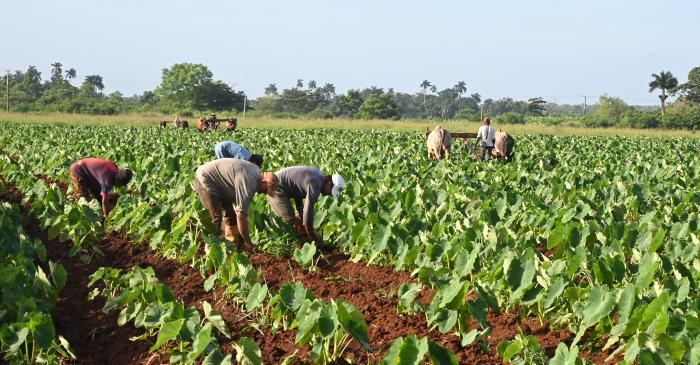
    Against a backdrop of heavy reliance on imported food that costs Barbados $80 million annually, the Barbados Agricultural Development and Marketing Corporation (BADMC) has launched a transformative, data-powered Agricultural Statistics Platform designed to modernize domestic farming coordination, ramp up local output, and shrink the nation’s food import dependency. The initiative is a core component of the country’s broader 25-by-25 strategy, which aims to cut the national food import bill by 25 percent by the end of 2025.

  • CEO Almendarez Defends BEL

    CEO Almendarez Defends BEL

    In a press briefing addressing widespread public anger over unprecedented spikes in household electricity costs across Belize, Dr. Leroy Almendarez, Chief Executive Officer of the Ministry of Public Utilities, Energy and Logistics, pushed back against criticism on Wednesday, May 27, 2026, by breaking down the structural factors driving the steep rate increases that have left some families paying two to three times their typical monthly bills.

    Almendarez emphasized that Belize’s energy grid is disproportionately dependent on imported power, with more than half of the nation’s electricity supply brought in from neighboring Mexico. Unlike domestically generated energy, imported power prices are set by international and regional market forces beyond the control of Belizean regulators or the national energy provider. Under the country’s existing regulatory framework, these fluctuating import costs are directly passed through to end consumers, meaning any upward shift in global energy prices immediately translates to higher bills for households.

    To meet total national energy demand, Belize currently combines three primary sources: cogeneration from domestic sugarcane production, local hydropower, and the Mexican power imports. When lower-cost domestic sources such as hydropower fall short of meeting demand, the system must rely on more expensive imported power to fill the gap – and that extra cost is absorbed directly by consumers, Almendarez explained.

    Complicating the debate over rising rates is the unique structure of Belize Electricity Limited (BEL), which operates as a regulated natural monopoly, Almendarez added. He argued that introducing competing grid operators would not drive down costs, noting that duplicate infrastructure would only spread fixed costs across a smaller customer base, ultimately pushing per-unit rates even higher than they are today. He also pushed back against claims that BEL unilaterally set the current higher rates, clarifying that all electricity pricing adjustments must receive formal approval from the independent Public Utilities Commission (PUC). The current rate of $0.4427 per kilowatt-hour, implemented in January 2026, was approved by the PUC to cover a projected $108 million in total annual energy supply costs.

    Beyond structural factors, BEL attributes part of the recent sticker shock for consumers to seasonal changes: warmer-than-average temperatures this year have driven higher residential energy use, particularly for air conditioning, which has pushed monthly bills far above their typical seasonal averages. Looking ahead, the outlook could grow even more challenging: the rapidly developing El Niño weather pattern is expected to bring prolonged drought conditions to Belize in the coming months, which would reduce output from the country’s hydropower facilities and force the nation to increase its reliance on more expensive imported Mexican power.

    To help households manage their current costs, Almendarez offered practical steps consumers can take to reduce their monthly bills, saying residents do have agency to lower their energy use. His recommendations include unplugging appliances that are not in use to eliminate phantom energy drain, upgrading to ENERGY STAR-certified efficient devices, and applying for a PUC license to install residential solar panels for self-generation. He framed the adjustment to higher energy prices as similar to cutting back on discretionary grocery spending to manage a higher grocery bill: by evaluating personal energy use and cutting unnecessary consumption, households can bring down their monthly costs.

    Despite these recommendations, many Belizean households have pushed back against the advice, saying that most families have already cut non-essential energy use to the bone, leaving little to no room for additional reductions. Critics argue that Almendarez’s guidance is disconnected from the realities of working-class household budgets, noting that up-front investments in energy-efficient technology and residential solar are out of reach for most low- and middle-income families already struggling to cover basic expenses.

  • Police Say Fatal Corozal Shooting May Be Drug-Related

    Police Say Fatal Corozal Shooting May Be Drug-Related

    A deadly drive-by shooting in Corozal Town left a 36-year-old DJ dead and a second man hospitalized this Tuesday, with law enforcement officials pointing to drug ties as the most likely motive for the attack. The incident unfolded at approximately 7:40 p.m. on May 26, 2026, in the Corozal District, after local police received urgent reports of multiple gunshots being fired on Flamboyant Street.

    When first responders arrived at the residential scene, they found Roger Escalante unresponsive, with multiple visible gunshot wounds, and 25-year-old Ezer Alcoser suffering from non-life-threatening injuries. Alcoser was immediately transported to a local medical facility for treatment, where he was later confirmed to be in stable condition.

    Preliminary findings from the ongoing investigation outline a clear sequence of events: Escalante and a companion had just arrived at a Flamboyant Street residence when an unidentified SUV pulled up to the property. A lone gunman exited the vehicle, fired several rounds toward the group, and quickly fled the area. The shooting fatally struck Escalante and left Alcoser wounded.

    In an official confirmation of the investigation’s early direction, Assistant Superintendent Stacy Smith, a staff officer with the local police force, revealed that Escalante was already a person of interest in an active drug trafficking probe at the time of his killing. While investigators have not yet verified whether both injured men were the intended targets of the attack, Smith confirmed that drug-related gang activity or retaliation is the leading working hypothesis.

    “We are suspecting that may be the motive in this incident,” Smith told reporters in a press briefing Wednesday. As of Thursday morning, no suspects have been taken into custody, and law enforcement is asking any members of the public with information about the SUV or the gunman’s identity to contact the Corozal District police station to advance the case.

  • Charles F Broome stamp authority with 6-0 win in NSC/BICO Football

    Charles F Broome stamp authority with 6-0 win in NSC/BICO Football

    The National Sports Council/BICO Primary School Football Competition delivered a full day of thrilling, lopsided and tightly contested matches across multiple zones across the country, with Charles F Broome Primary turning in the most eye-catching performance of all tournament play on the day. Competing in the Reginald Haynes/Victor Gaskin Clarke Zone hosted at Blenheim playing field, Charles F Broome utterly dominated their matchup against St Patrick’s Roman Catholic Primary, cruising to an overwhelming 6-0 shutout victory that stood as the widest margin of win across all matches.

    Elsewhere in the same zone, another shutout was recorded as St Giles Primary earned a solid 3-0 victory over Wilkie Cumberbatch Primary. Two closely fought matches ended in narrow one-goal wins: St Cyprian’s Primary clinched a last-minute 1-0 edge against St Paul’s Primary, while Luther Thorne Memorial Primary also pulled off a 1-0 win against George Lamming Primary.

    Moving to the Dane Alleyne Zone, play continued with high-scoring action. St Stephen’s Primary put on a clinical attacking display to secure a comfortable 4-1 win over St Matthew’s Primary, while St Alban’s Primary and Sharon Primary treated spectators to an end-to-end thriller, with St Alban’s coming out on top 4-2 after a full 60 minutes of play.

    At the Passage Road venue for the Keith Grell Griffith Zone, results brought a mix of shutouts, draws and close finishes. Wesley Hall Primary upset Trinity Academy with a 2-0 defeat, while St Mary’s Primary dominated Lawrence T Gay Memorial to win 4-0. In a tightly matched contest between two evenly matched sides, Grazettes Primary and Deacons Primary ended their game in a 1-1 all draw. The final match of the zone saw Eden Lodge Primary fend off a late push from Westbury Primary to claim a 2-1 victory.

    Over at King George V Park, Hilda Skeene Primary maintained their strong run of form in the Adrian Donovan/Michael Foster Zone. The side secured an automatic 3-0 default victory after Bayleys Primary was forced to forfeit the matchup, meaning Hilda Skeene claimed three points without stepping onto the field for full play. Other results in the zone included Blackman & Gollop Primary securing a 2-0 shutout against Gordon Walters Primary, St Catherine’s Primary taking a 3-1 win over St Marks Primary, and Reynold Weekes Primary squeezing past St Philip Primary by a narrow 2-1 scoreline.

  • Derde helft WK 2026: Drie landen, drie mascottes, één anthem

    Derde helft WK 2026: Drie landen, drie mascottes, één anthem

    The 2026 FIFA World Cup, set to kick off on June 11, is poised to make history as the most expansive edition of global football’s flagship event. For the first time since the World Cup’s inception nearly a century ago, the tournament will be jointly hosted by three North American nations: the United States, Canada, and Mexico. Expanded to feature 48 participating national teams from across the globe, this year’s iteration will break new ground for inclusivity, cultural exchange, and sporting passion, bringing together the world’s best talent on a truly continental stage.

    Beyond the excitement of on-pitch action and the rise of new global football stars, organizers have centered the 2026 tournament on highlighting the unique cultural identities of its three host nations. The centerpieces of this cultural celebration are three brand-new official mascots — one for each host country — and a collaborative official tournament anthem crafted to unite fans worldwide.

    Breaking another longstanding World Cup tradition, 2026 is the first tournament to feature three official mascots, each designed to reflect the character, heritage, and natural landscapes of its home nation.

    Representing Canada is Maple, a cheerful moose whose name pays homage to Canada’s iconic national symbol, the maple leaf. Embodying the values of resilience and creativity that define Canadian culture, Maple is framed as a skilled goalkeeper, with hidden passions for music and street art that showcase the nation’s vibrant creative scene.

    For Mexico, the official mascot is Zayu, an energetic jaguar that symbolizes strength and the country’s deep, rich indigenous and cultural heritage. As a striker on the pitch, Zayu celebrates Mexico’s beloved culinary and dance traditions, and honors the wild southern Mexican landscapes that remain one of the last natural habitats for jaguars across North America.

    Rounding out the trio is Clutch, the mascot for the United States, a bald eagle — America’s national animal — that stands for speed, power, and unbridled passion for the game. Positioned as a dynamic midfielder, Clutch embodies the curiosity and relentless optimism that are central to American national identity, aligning with the growing energy of the country’s men’s national team.

    The 2026 mascots carry forward a decades-long tradition of beloved World Cup icons, stretching back to Italy 1990’s stick-figure Ciao, South Africa 2010’s leopard Zakumi, and most recently Qatar 2022’s La’eeb, the floating traditional keffiyeh that captured fans’ hearts across the globe.

    Alongside the mascot reveal, organizers have announced the 2026 official tournament anthem, titled “Dai Dai.” For the first time in many years, the anthem is a collaborative track between two global music superstars: Colombian pop icon Shakira and Nigerian Afrobeat legend Burna Boy. This marks Shakira’s second official World Cup anthem, following her 2010 global smash “Waka Waka (This Time for Africa),” which remains one of the best-selling and most recognizable World Cup anthems of all time. She also contributed the secondary theme song “La La La” for the 2014 Brazil World Cup, performing it during the Rio de Janeiro closing ceremony, and delivered a memorable performance of “Hips Don’t Lie” at the 2006 World Cup closing ceremony in Germany.

    “Dai Dai” blends Afro and Latin musical styles to create a sound that reflects the global diversity of the 2026 tournament, centered on themes of resilience, passion, dream-chasing, and international unity. Key lyrics reinforce the song’s core message of strength: “What broke you once made you strong.” To emphasize the World Cup’s truly global reach, the chorus includes rallying cries in multiple languages, from Italian, Japanese, and Spanish to French: “Dai, dai, ikou, dale, allez, let’s go.” Additional verses highlight the hard work and determination of competing athletes, with lyrics that reinforce individual agency: “You are the owner of that fire, no one can take it away. Sweat and blood to write your story, that is how you paved the way.”

    Colombia, Shakira’s home nation, has qualified for the 48-team 2026 tournament, which will run from June 11 through July 19. Together, the three new mascots and genre-blending anthem have given the 2026 World Cup a vivid, culturally rich identity that does more than just highlight the three host nations: it celebrates the shared passion and unity that football brings to communities across the entire world.

  • Flood aid for farmers from November deluge

    Flood aid for farmers from November deluge

    Six months after an unseasonal flash flood devastated agricultural communities across multiple farming districts in Barbados, the country’s Ministry of Agriculture has finalized a multi-layered support programme to help impacted growers rebuild their operations and recoup crippling losses, Agriculture Minister Dr. Shantal Munro-Knight confirmed Wednesday.

    The rare November 10 flood was far from a minor weather event: it claimed the life of one local man, submerged dozens of residential properties under toxic water, mud and debris, and wiped out standing crops and entire livestock herds across vast swathes of the island’s farmland. In a candid press briefing, Dr. Munro-Knight issued a public apology to farmers who had yet to receive official support in the months following the disaster, acknowledging the government’s delayed response.

    “I want to say publicly, right now, let me apologise to all those farmers that we haven’t gotten back to, that we haven’t been responsive enough to. Lots of things have happened, but that is no excuse,” the minister told reporters. She added that ministry teams have completed island-wide damage assessments, though impacted growers were still submitting loss claims as recently as earlier this month to account for unrecorded damage.

    As the first wave of support, the minister confirmed that flood-impacted farmers will be the top priority group to receive free fertiliser through the government’s existing agricultural input programme, with outreach to all eligible growers scheduled to roll out throughout the month of June. Beyond immediate input support, the disaster has underscored the urgent need for broad, systemic upgrades to Barbados’ agricultural sector to address increasing climate volatility, Dr. Munro-Knight said.

    Beyond emergency relief, the government is integrating long-term climate resilience into its recovery framework through the Barbados Agricultural Development and Marketing Corporation (BADMC) crop escalation plan. The initiative will not only focus on restoring production but also upgrade critical rural road infrastructure, expand access to precision agricultural technology, and increase adoption of climate-controlled shade houses and greenhouses to mitigate future flood damage. Previous investments in infrastructure such as the national onion dryer are already part of this strategy, designed to address ongoing challenges from intensified seasonal rainfall that is only expected to continue in coming years.

    Chief Agricultural Officer Paul Lucas detailed additional components of the support package, including a flexible voucher system for the most severely impacted producers. Unlike one-size-fits-all aid, the vouchers allow growers to purchase the inputs most critical to their unique operations, from seeds and planting stock to irrigation equipment, putting recovery decision-making directly in the hands of farmers. The ministry is also finalizing targeted support for livestock producers, with a proposed restocking programme for small ruminant (sheep and goat) farmers that would provide two breeding ewes and one ram to help eligible producers rebuild their herds from scratch. Poultry farmers who lost entire flocks in the flood will also be able to access vouchers for starter feed and other critical inputs to restart production.

    Lucas noted that many resilient farmers have already begun rebuilding their operations independently, without waiting for government assistance. The ministry’s programme is designed to complement and support these existing efforts, with additional financial support allocated for the producers who suffered the worst losses. Officials are currently mapping individual need assessments to match farmers with appropriate levels of aid, and are proposing a free fertiliser allocation of two bags per acre for all impacted crop farmers as part of the recovery push.

    In closing, Lucas paid tribute to flood-impacted producers, saying: “We want to salute those farmers who have endured some of the worst experiences, and we hope that they could understand that it is a process, and sometimes we have to go through certain mechanisms and frameworks in order to provide this service.”

  • Half connected to smart grid as BL&P targets faster outage response

    Half connected to smart grid as BL&P targets faster outage response

    Barbados Light and Power Company (BL&P) announced Wednesday that 50 percent of its customer base is now linked to an upgraded automated electricity grid, a transformative update that company officials project will slash power outage durations and drastically boost service reliability across the island nation. In some cases, the smart system can resolve unplanned faults in under two minutes, company representatives confirmed during a press briefing held at BL&P’s Garrison headquarters.

    The milestone marks a key progress update for BL&P’s multi-million-dollar grid modernization initiative, which first launched back in 2016. David Haynes, BL&P’s operations technology administrator, framed the achievement as a groundbreaking milestone not just for the Barbadian utility, but for energy providers across the entire Caribbean region. “This is a very unique milestone, especially not only for Barbados Light and Power, but for utilities in the Caribbean, having more than half of our grid modernized to a point where we can respond to faults in some instances in less than two minutes,” Haynes stated.

    Prior to the rollout of automated grid technology, restoring power after an outage required a time-intensive, manual process. Utility crews had to travel to the affected site, conduct on-foot investigations to locate the fault, manually isolate the problematic section of the grid, and only then begin restoring service. Depending on the size and location of the outage, this process could take a minimum of 60 minutes to complete. Haynes explained that the modernized system has cut that timeline dramatically, with most outages resolved in 15 minutes or less, and many cleared far faster.

    The upgrade replaces outdated manual disconnect systems with intelligent automated switches fitted with custom-built algorithms. These tools can automatically detect and isolate grid faults in less than 30 seconds, while immediately restoring power to all customers connected to unaffected sections of the line. In many minor fault events, Haynes added, customers may not even notice a temporary interruption to their service. The technology also equips grid control room operators to pinpoint the exact location of faults remotely, eliminating the need for crews to patrol entire circuit lengths to identify problems before starting repairs.

    A key additional benefit of the new system is its ability to quickly resolve common transient outages caused by tree and vegetation contact with overhead power lines, a persistent issue for many Caribbean utilities. The automated switches detect these temporary faults and restore service in a matter of seconds, avoiding extended disruptions for customers.

    Director of transmission and distribution Dr. Nneka Archer emphasized that the $5 million modernization investment has prioritized underserved rural communities, rather than concentrating upgrades solely on densely populated urban centers or high-traffic tourism districts. “Most of the time people think when we make investments into modernisation, we go into the town areas, we go on the west coast. We started in the rural feeders,” Archer explained, noting that these rural areas often rely on longer distribution lines that serve large customer bases, making upgrades especially impactful.

    BL&P first rolled out the automated grid technology to customers in 2019, and has since expanded access to more than 70,000 customers across all of Barbados’ parishes. To date, the company has installed 61 automated switches at a total cost of roughly $5 million. When the full modernization project is completed, 81 percent of BL&P customers will be connected to the automated grid. The remaining 19 percent of customers are connected to underground networks or smaller feeders that require specialized, alternative grid modernization solutions, Archer added.

  • Second top official resigns from National Taxi Union

    Second top official resigns from National Taxi Union

    The National Taxi Union has been rocked by a second high-profile resignation in just 48 hours, with vice president Isidore Brisefert stepping down from his post Wednesday with immediate effect. His departure follows closely after public relations officer David Shakes Christopher exited the senior leadership team a day prior, marking the latest escalation of long-simmering internal tensions over current president Terry Valcin’s leadership.

    In an official public statement announcing his exit, Brisefert laid out clear, damning concerns about Valcin’s approach to leading the organization and the strategic trajectory the union has taken under his tenure, echoing the criticisms shared by Christopher in his own departure announcement Tuesday.

    Brisefert’s resignation letter centered on what he described as a persistent lack of collaborative, collective decision-making across the union’s executive body. He wrote that after careful, extended reflection, he could no longer remain in a leadership role under a president whose governing style increasingly leaned into authoritarianism rather than the democratic, consultative, collective representation that union members deserve.

    The departing vice president went on to question the transparency and fairness of internal decision-making processes, alleging that key issues affecting frontline taxi operators are regularly settled without meaningful debate or consideration of alternative perspectives from executive members. Brisefert noted that this top-down approach has fueled rising frustration among the union’s top governing body, with little willingness from Valcin to course-correct.

    “As vice president, I have always held that strong union leadership must be built on the foundations of fairness, openness, collaborative teamwork, and respect for every member’s voice,” Brisefert said in his statement.

    He added that the union has failed to unify its membership and grow its industry influence under current leadership, in large part because the input of executive committee members is routinely sidelined or ignored entirely. Frontline taxi operators, he argued, need far more inclusive, effective leadership that prioritizes their needs.

    “Our taxi operators deserve leadership that listens, includes all voices, and fights unapologetically for their best interests,” Brisefert said. “In these economically uncertain times, our members need unity, transparency, and trustworthy representation that shows up for them every day.”

    Though he is leaving his senior vice president post, Brisefert expressed gratitude to the members who have supported his work and confirmed he will continue advocating for taxi operators across the country in a new, non-leadership capacity.

    For his part, Christopher framed his own exit as the result of months of consideration, saying his decision reflected widespread, cross-executive concerns about the union’s current management structure. He argued that the core values that once anchored the union have eroded significantly under Valcin’s leadership, creating a situation where he could not in good conscience continue serving in his role.

    These latest departures are not an isolated incident, but the outcome of years of unresolved leadership friction within the union. Former president Lucien Joseph first publicly questioned the legitimacy of Valcin’s leadership before stepping down in 2022, shortly after he lost a no-confidence vote from union members. The organization most recently held its Annual General Meeting and Conference of Delegates in March 2025 to address ongoing internal and industry challenges.

    To date, President Valcin has declined to provide immediate comment on the dual resignations. He told local outlet St Lucia Times that he plans to deliver a full, detailed address on the situation at a general union meeting scheduled for June 1. That upcoming gathering will also tackle a slate of pressing industry-wide issues, including a proposed plan to launch a custom taxi service app and ongoing policy discussions about third-party transportation platforms such as Uber.

  • CDPF and Grand Bay community unite for Isidore Sunday Chill event

    CDPF and Grand Bay community unite for Isidore Sunday Chill event

    On Sunday, May 24, 2026, a unique community-focused gathering brought local law enforcement and residents together in Dominica’s Grand Bay district. The Commonwealth of Dominica Police Force (CDPF) partnered with the Grand Bay Village Council to host the Isidore Sunday Chill event, held at the scenic Geneva Playing Field, drawing hundreds of participants from across the region.

    Unlike traditional community events centered solely on leisure, the Isidore Sunday Chill was crafted with a clear purpose: to bridge the gap between police forces and the neighborhoods they serve, while fostering connection among local residents through friendly competition. Organizers structured the day around recreational activities that prioritized teamwork, mutual respect, and open dialogue, giving community members and law enforcement the chance to interact outside of formal, often high-stakes encounters.

    Three competitive highlight matches anchored the day’s schedule, each drawing enthusiastic crowds of supporters. The opening marquee event was a tightly contested football match between the Police Sports Club and local side South City Football Club. After 90 minutes of end-to-end energetic play, South City claimed a well-earned 3–1 win over the police team.

    Next up was a rounders tournament featuring three competing squads: ACS South Defenders, St. Joseph Phoenix, and the Police Sports Club. Through a series of back-and-forth matches that tested both skill and strategy, ACS South Defenders outperformed their opponents to take home the tournament championship title.

    The final contest of the day was a tense first-to-50 domino showdown, pitting CDPF officers against one of Grand Bay’s top-ranked domino teams. In a match that came down to the final round, the local Grand Bay side edged out the police team to secure victory.

    Following the conclusion of all activities, CDPF officials emphasized that events like Isidore Sunday Chill are far more than one-off recreational gatherings—they are a core part of the force’s long-term community policing strategy. The organization noted that effective policing extends far beyond enforcing laws and responding to incidents; it requires intentional trust-building, collaborative partnership, and active engagement with community members to create safer, more cohesive neighborhoods.

    In a closing statement, CDPF extended its gratitude to all stakeholders who made the event possible, saying: “A sincere thank you to the Grand Bay Village Council, all participating athletes and teams, event supporters, and every community member who turned out to make this initiative a resounding success.”