作者: admin

  • US completes US$500 million sale of Venezuelan oil

    US completes US$500 million sale of Venezuelan oil

    WASHINGTON (AFP) — The United States has completed a landmark $500 million oil transaction from Venezuelan reserves, marking the first sale since Washington assumed control of the sector following the removal of President Nicolas Maduro, according to a US official statement on Thursday.

    The unidentified official confirmed that this initial sale could be followed by additional transactions in the immediate future. The development comes as part of a comprehensive energy agreement brokered by former President Donald Trump in the aftermath of Maduro’s arrest, whom the White House has labeled a ‘narcoterrorist.’

    Trump announced via his Truth Social platform last week that interim Venezuelan authorities would transfer 30-50 million barrels of high-quality, previously sanctioned oil to the United States. The former president emphasized that the oil would be sold at market price with proceeds controlled exclusively by the US government.

    In a significant shift from traditional resource sovereignty principles, the White House plan explicitly excludes Caracas from decision-making regarding the exploitation of Venezuela’s substantial underground reserves. Trump directly instructed major oil companies to negotiate solely with US authorities, stating: ‘You’re dealing with us directly and not dealing with Venezuela at all.’

    The administration has reportedly secured commitments from energy corporations prepared to invest approximately $100 billion in Venezuela’s oil sector. Additionally, Trump signed an emergency order providing special protection to Venezuelan assets held in the United States, including oil revenues, shielding them from potential court seizures or creditor claims.

    White House spokesman Taylor Rogers characterized these actions as protecting the Western Hemisphere ‘from being taken advantage of by narcoterrorists, drug traffickers, and foreign adversaries,’ framing the arrangement as beneficial for both American and Venezuelan citizens.


  • New Grant man jailed for disobeying court order for damages

    New Grant man jailed for disobeying court order for damages

    In a decisive judicial ruling that underscores the mandatory nature of court compliance, Justice Frank Seepersad has sentenced New Grant resident Groodial Badal to three days’ imprisonment for deliberate defiance of a court order to compensate an assault victim. The January 15th verdict represents a significant reinforcement of judicial authority against willful non-compliance.

    Justice Seepersad delivered a nuanced judgment that balanced judicial empathy with necessary enforcement, stating: ‘The dispensation of justice at times necessitates an empathetic approach to the application of the rule of law. However, where there has been willful disobedience despite having the means to comply, the court must protect and preserve its authority.’

    The case originated from a 2012 assault and battery claim filed by fellow New Grant resident Balkaran. After extensive legal proceedings, both parties reached a 2016 consent agreement requiring Badal to pay $70,000—comprising a lump sum payment followed by monthly $1,500 installments. Court records reveal only $23,500 has been paid over eight years, with the debt ballooning to $68,523.10 due to accumulating interest.

    Evidence presented demonstrated Badal maintains multiple income streams through home ownership, a roti shop, and a burger cart operation. The judge characterized Badal’s behavior as ‘nonchalance’ and ‘pervicacious disobedience,’ noting his failure to provide substantiated proof of financial hardship.

    In a direct address to the defendant, Justice Seepersad declared: ‘You are in contempt for your failure to make any payment. This does not absolve you of payment of the balance owed. I hope it gives you time to reflect.’

    The ruling included a broader societal critique, observing that ‘disregard for the law appears entrenched in our society, and far too often, citizens only comply with legal obligations under threat of severe sanction.’ Justice Seepersad lamented what he termed the ‘big stick over your head syndrome’ as the primary catalyst for compliance.

    Badal’s defense, represented by attorney Mustapha Khan, cited pandemic-related financial hardships and claimed willingness to continue payments at reduced rates. These arguments were rejected based on evidence of consistent earning capacity and the lengthy duration of non-compliance.

    The imprisonment order takes immediate effect, though the outstanding financial obligation remains fully enforceable upon Badal’s release.

  • Societal elder abuse

    Societal elder abuse

    A poignant revelation from an 87-year-old Trinidadian writer has unveiled systemic age discrimination permeating financial institutions and social structures. HD Greaves, a published author of twelve books, finds himself denied basic financial services including credit cards and purchase financing solely based on his age, despite maintaining robust health and mental acuity. This case exemplifies a broader pattern of institutional ageism that treats senior citizens as liabilities rather than valuable contributors.

    The situation extends beyond financial exclusion into systemic administrative failures. Thousands of elderly citizens face prolonged pension processing delays—some waiting over two years for entitlements—creating unnecessary economic hardship during their most vulnerable years. These bureaucratic inefficiencies represent what experts describe as ‘economic violence’ against the aging population.

    More disturbingly, many seniors experience various forms of domestic mistreatment including financial exploitation, emotional neglect, and physical abuse within their own families. These violations often remain hidden behind closed doors, leaving victims without recourse or protection.

    Psychology expert Dr. Margaret Nakhid-Chatoor analyzes this crisis as reflecting deeper societal values that prioritize youth and productivity over wisdom and experience. The banking industry’s risk-aversion toward older clients, combined with inadequate social support systems, creates an environment where aging becomes synonymous with irrelevance rather than respected maturity.

    The solution requires multidimensional reform: financial institutions must adopt capacity-based assessments rather than age-based discrimination, government agencies need to streamline pension processing systems, and families must recognize elder care as privilege rather than burden. Culturally, societies must reimagine aging as a continuation of contribution through intergenerational knowledge-sharing programs that begin as early as preschool education.

    This collective awakening demands policy revisions, corporate responsibility, and cultural transformation to ensure senior citizens receive the dignity and respect their lifetime of contribution deserves.

  • Farley-Kamla alliance

    Farley-Kamla alliance

    The recent electoral triumph of Farley Augustine and his Tobago People’s Party (TPP) has delivered a profound political realignment on the island territory. This decisive victory represents both a strong endorsement of Augustine’s leadership and a striking repudiation of the ruling People’s National Movement (PNM), which suffered substantial losses in the polls.

    Political analysts note the outcome carries significant implications beyond Tobago’s shores. The results suggest a strategic alliance between Augustine and United National Congress leader Kamla Persad-Bissessar, evidenced by recent budgetary increases for Tobago and discussions around greater autonomy for the island. Notably, criticisms leveled against Persad-Bissessar—particularly regarding her alignment with United States interests and domestic policy measures—appeared to have minimal impact on voter behavior in Tobago.

    The election results reveal a notable divergence between Tobago voters and their Trinidad counterparts. While Persad-Bissessar’s initiatives have faced considerable scrutiny nationally, Tobago’s electorate demonstrated either indifference to these concerns or prioritized local issues above national political controversies. The overwhelming support for Augustine’s platform indicates a growing appetite for political change and alternative governance approaches.

    This electoral outcome signals a potential paradigm shift in Tobago’s political consciousness. Beyond the immediate victory, the results suggest emerging support for progressive policies and non-traditional political thinking, challenging established party loyalties and signaling possible broader changes in the nation’s political landscape in future elections.

  • Your business, our data using TTEITI insights for decision-making

    Your business, our data using TTEITI insights for decision-making

    In an era of economic volatility, foreign exchange challenges, and escalating ESG demands, access to reliable data has transitioned from optional to strategically essential. This is especially critical for economies like Trinidad and Tobago, where extractive industries fundamentally influence fiscal stability, currency flows, and investor sentiment.

    Vashti Guyadeen, CEO of the TT Chamber of Industry and Commerce, emphasizes that transparency transcends abstract idealism—it represents practical business necessity. Drawing from her leadership in Trinidad and Tobago’s inaugural Open Government Partnership Action Plan (2012-2015), Guyadeen affirms that open, dependable data fortifies governance, fosters trust, and enhances decision-making across public and private sectors.

    The Trinidad and Tobago Extractive Industries Transparency Initiative (TTEITI) exemplifies this principle by implementing global transparency standards within the nation’s oil, gas, and mining sectors. Through independently verified reporting, TTEITI discloses vital information regarding revenues, contracts, environmental factors, beneficial ownership, and state enterprise governance.

    With over 15 years of operation, TTEITI has reconciled approximately $200 billion in extractive sector payments, maintaining a remarkable discrepancy margin of just $4,500. This rigorous verification provides businesses, investors, and policymakers confidence in the energy sector’s data integrity.

    Beyond disclosure, TTEITI’s analyses have strengthened revenue collection systems, improved data management practices, and evaluated whether production-sharing contracts deliver optimal national value. Between 2015-2022 alone, major energy companies contributed an estimated US$7.4 billion to government revenues—critical inflows sustaining imports, debt servicing, and macroeconomic stability.

    For business leaders, TTEITI’s open data serves as strategic input rather than mere compliance obligation. It enables companies to anticipate fiscal trends, assess policy risks, strengthen ESG strategies, and base investment decisions on evidence rather than speculation. The Chamber’s partnership with TTEITI reflects member priorities including tax transparency, state enterprise governance, environmental disclosures, and improved ESG readiness.

    Guyadeen concludes that transparency generates tangible value, providing competitive advantage when leveraged effectively. The Chamber remains committed to institutional foundations supporting a resilient private sector, demonstrating that transparency ultimately enables sustainable growth in evolving economic landscapes.

  • Costa, Heatwave appeal High Court decision to clear Pan Am trials

    Costa, Heatwave appeal High Court decision to clear Pan Am trials

    National cyclist Alexi Costa-Ramirez and Heatwave Cycling Club have initiated legal proceedings against the Trinidad and Tobago Cycling Federation (TTCF) by filing an appeal challenging a recent High Court ruling. The appeal, submitted on January 14, seeks to overturn Justice Westmin James’ January 13 decision that denied their request for an interim injunction to prevent endurance trials scheduled for January 17.

    The legal confrontation stems from ongoing disputes regarding the TTCF’s selection methodology for the upcoming Pan American Track Cycling Championships in February. The controversy involves multiple athletes including Costa-Ramirez, Njisane Phillip, and Makaira Wallace from JLD Cycling Academy, all contesting the fairness of the federation’s qualification process.

    In their appellate arguments, Heatwave and Costa-Ramirez contend that the trial judge committed legal errors by dismissing their claims. They specifically challenge the court’s determination that some athletes had already submitted performance data without attending trials, and the conclusion that halting the trials would disproportionately harm the federation.

    The appellants assert the existence of an implied contractual obligation mandating equitable treatment of all athletes during selection procedures. They further argue that financial compensation cannot adequately remedy the potential loss of opportunity to compete at prestigious international events, particularly with Olympic qualification implications at stake.

    The appeal emphasizes that suspending the trials would not adversely affect the federation’s operations, while proceeding could cause irreparable damage to athletes’ careers during this critical Olympic qualification period. The appellants have requested expedited consideration of their appeal under Civil Proceedings Rules Part 64.10, citing the urgent nature of selection deadlines preceding the continental championships.

  • PM: Dupuch-Carron ‘did the honourable thing’ by stepping aside

    PM: Dupuch-Carron ‘did the honourable thing’ by stepping aside

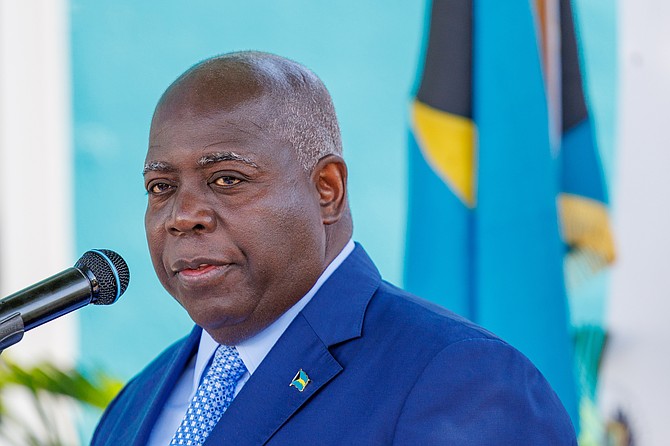
    In a significant political development, Tribune president Robert Dupuch-Carron has voluntarily withdrawn his application for the Progressive Liberal Party’s nomination in the MICAL constituency, citing potential conflicts of interest related to his business ventures. The decision received commendation from Prime Minister Philip Davis, who characterized the move as “honorable” during remarks at the 2026 Bahamas Business Outlook conference at Baha Mar.

    Dupuch-Carron formally communicated his withdrawal in a letter to PLP chairman Fred Mitchell, explaining that his leadership role at The Bahamas Aviation, Climate & Severe Weather Network (BACSWN) – a company he founded – created unavoidable ethical considerations. This concern stems particularly from BACSWN’s substantial $400 million Heads of Agreement with the Bahamian government signed last year, which could present perceived or actual conflicts during legislative and governmental processes.

    Prime Minister Davis revealed that Dupuch-Carron had been the front-running candidate for the nomination before this decision. Despite stepping aside from electoral politics, Dupuch-Carron reaffirmed his commitment to supporting the PLP’s eventual candidate and continuing his service to the southern Bahamas communities through his professional work with BACSWN.

    The MICAL constituency (Mayaguana, Inagua, Crooked Island, Acklins and Long Cay) became available following sitting MP Basil McIntosh’s announcement last year that he would not seek re-election. With Dupuch-Carron’s withdrawal, party insiders now identify Ronnell Armbrister as the likely front-runner for the PLP nomination in this strategically important constituency.

  • Bishop calls for fairer, faster justice

    Bishop calls for fairer, faster justice

    In a powerful address marking the ceremonial opening of the legal year at Christ Church Cathedral, Anglican Bishop Laish Boyd delivered a scathing critique of The Bahamas’ judiciary system, challenging legal professionals to enact urgent reforms. The senior cleric highlighted systemic inequities, excessive procedural delays, and discriminatory practices that he argued undermine justice.

    Bishop Boyd identified protracted case timelines as a fundamental flaw, noting that drawn-out legal processes inflict financial strain, consume excessive time, and generate significant anxiety for those involved. He asserted that much of the bureaucratic complexity is artificially ‘manufactured for convenience, for delay, for spite or because you [are] having a bad day,’ and called for a simplification of procedures.

    The Bishop’s most forceful condemnation focused on stark disparities in treatment based on wealth and race. He posed a pointed rhetorical question to the assembled legal fraternity: why a poor Black individual committing the same crime as a wealthy or white person often faces harsher treatment or sentencing. Drawing audible reactions from the audience, he labeled this differential treatment ‘disgraceful’ and a betrayal of the vision of justice bequeathed by the nation’s forebears.

    Furthermore, Bishop Boyd urged profound self-reflection within the judiciary, pressing them to confront difficult questions about systemic fairness, potential corruption, political interference, and whether the system genuinely serves and protects its most vulnerable users. He concluded by reminding attendees that the ultimate value of any institution lies in its humanity and how individuals treat one another, exhorting them to ‘strive to make a difference.’

    In response, Attorney General Ryan Pinder cautioned against broad generalizations regarding sentencing. He emphasized that judges must evaluate each case independently based on its unique facts and circumstances. Mr. Pinder expressed his full confidence in the judiciary and pointed to newly introduced sentencing guidelines as a pivotal step toward enhancing predictability and transparency, particularly through the formal recognition of mitigating factors.

  • Leslie Harrow named chairman of new SDF board

    Leslie Harrow named chairman of new SDF board

    In a significant move for Jamaica’s sporting infrastructure, the Ministry of Culture, Gender, Entertainment and Sport has announced a comprehensive restructuring of the Sports Development Foundation (SDF) board. Portfolio Minister Olivia Grange confirmed the cabinet-approved appointments on Wednesday, naming seasoned administrator Leslie Harrow as the new chairman.

    Harrow ascends to the leadership role with an extensive background in sports management and public administration. His professional portfolio includes previous service as general manager of the SDF itself, executive director of the Institute of Jamaica, and director general of the Office of Disaster Preparedness and Emergency Management. This diverse experience positions him to guide the foundation’s strategic direction.

    Minister Grange outlined the revitalized board’s primary objectives, which will center on fortifying the organization’s technical capabilities and operational effectiveness. Key priorities include achieving full staffing levels, enhancing organizational efficiency, and elevating the public profile of the SDF’s initiatives. These developments were formally communicated through the Minister’s official social media channels.

    The newly constituted board features several prominent figures in Jamaican sports administration, including former Institute of Sport chairman Newton Amos. Harrow succeeds outgoing chairman Lelsie Campbell in leading the nine-member governing body.

    Established as an independent entity in 1995, the Sports Development Foundation has played a pivotal role in national development through athletic programs and infrastructure projects. This board transformation signals a renewed governmental commitment to sports as a catalyst for national progress.

  • DCS officer charged after allegedly rupturing Horizon inmate’s eardrum

    DCS officer charged after allegedly rupturing Horizon inmate’s eardrum

    A Jamaican correctional officer is undergoing judicial proceedings following allegations of physically assaulting an inmate during a contraband search operation last year. Romel Wilkie, an officer with the Department of Correctional Services (DCS), appeared before the Kingston and St Andrew Parish Court on Tuesday facing serious criminal charges.

    The court documents indicate Wilkie has been formally charged with causing grievous bodily harm with intent, a serious offense under section 20 (1) of Jamaica’s Offences Against the Person Act. The alleged incident occurred on February 26, 2025, at the Horizon Adult Remand Centre where Wilkie was conducting routine cell inspections.

    According to the prosecution’s case, the correctional officer reportedly struck the inmate in the facial area near the ear during the search operation. Medical examinations subsequently confirmed the victim suffered a ruptured left eardrum as a direct result of the alleged assault.

    The case progressed to trial following a comprehensive investigation by Jamaica’s Independent Commission of Investigations (INDECOM). The evidence gathered was reviewed by the Office of the Director of Public Prosecutions, which subsequently authorized criminal charges against Officer Wilkie.

    The judicial process is scheduled to commence on April 14, 2026, when the trial is set to begin. This case forms part of a broader pattern of legal actions against law enforcement personnel in Jamaica. INDECOM statistics reveal that since January 2024, 56 law enforcement officers have been charged following commission investigations, with six of these defendants coming from the Department of Correctional Services.