作者: admin

  • Funeral service for Donald Oliver to be held at UWI Mona Chapel

    Funeral service for Donald Oliver to be held at UWI Mona Chapel

    KINGSTON, Jamaica — The Jamaican media community will gather to pay final respects to Donald Oliver, the acclaimed sports journalist whose sudden passing last month sent shockwaves through the nation. A formal funeral service has been scheduled for Saturday, January 24 at the University of the West Indies Mona Chapel, commencing at 11:00 am.

    Oliver’s untimely death on December 30 at just 40 years old prompted an extraordinary outpouring of tributes from across Jamaican society. The profound impact of his loss was felt from the highest levels of government to opposition parties, sports organizations, and countless social media users who celebrated his contributions to sports journalism.

    At the time of his passing, Oliver served as audiovisual manager at the Jamaica Observer Media Group, a position he had held since August 2025 following the closure of SportsMax. His distinguished career spanned over two decades, during which he established himself as a prominent figure in Jamaican media through previous roles at CVM TV and TVJ. Oliver was widely recognized as both a senior producer and high-profile commentator, earning numerous awards throughout his prolific career in sports broadcasting.

  • Venezuela’s sidelined Machado arrives at White House for Trump talks

    Venezuela’s sidelined Machado arrives at White House for Trump talks

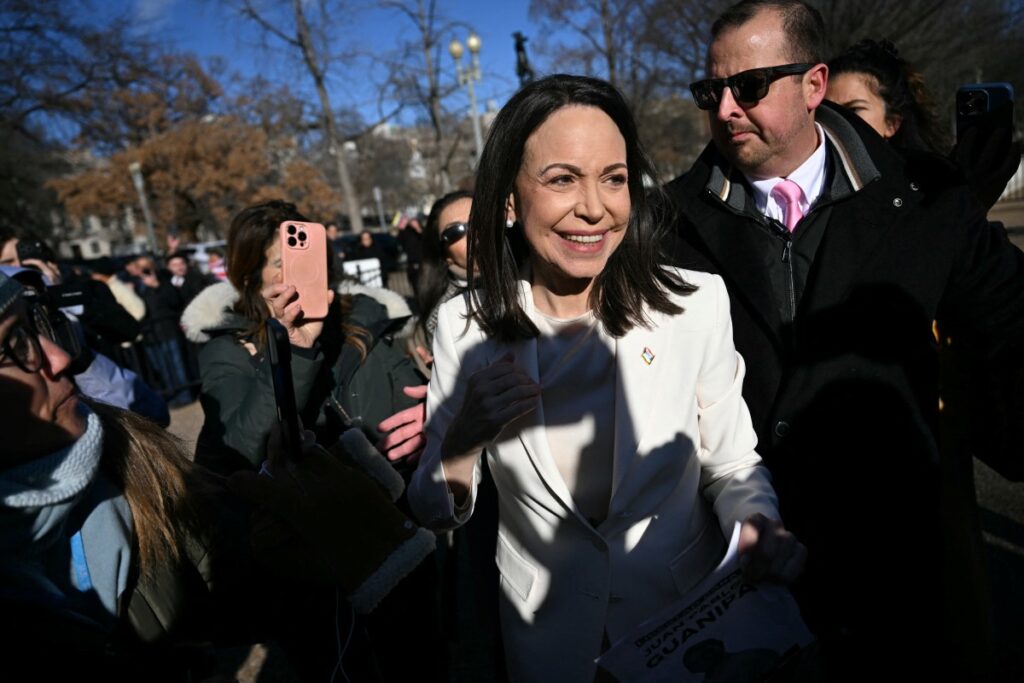
    WASHINGTON, United States – Venezuelan opposition figure Maria Corina Machado convened with U.S. President Donald Trump at the White House on Thursday for a private luncheon, marking a critical diplomatic engagement amid shifting U.S. policy toward Venezuela. The meeting occurred against the backdrop of Machado’s recent receipt of the Nobel Peace Prize—an award Trump has openly expressed interest in sharing—and growing U.S. military and economic intervention in the oil-rich nation.

    Machado arrived at the executive compound wearing a white suit and was escorted into the building. The closed-door meeting came just one day after Trump praised interim Venezuelan President Delcy Rodriguez—an ally of deposed leader Nicolas Maduro—as a “terrific person” and applauded the “terrific progress” made under her administration. This stance represents a notable departure from earlier U.S. support for Machado’s leadership claims.

    Since the U.S.-led military operation that ousted Maduro on January 3, Trump has publicly questioned Machado’s domestic support, dealing a significant blow to her political standing. Despite this, Machado previously offered to share her Nobel Prize with Trump, a gesture he described as “a great honor” during a Fox News interview. The Norwegian Nobel Institute has clarified that Nobel prizes are non-transferable.

    Meanwhile, the U.S. continues to tighten its grip on Venezuelan oil resources. On Wednesday, U.S. forces seized a sixth oil tanker, the Veronica, in a Caribbean raid. The military confirmed the seizure in a social media post accompanied by footage of soldiers rappelling onto the vessel. A U.S. official also disclosed that the first U.S.-brokered sale of Venezuelan oil—valued at approximately $500 million—has been finalized.

    Although Washington has historically supported Machado’s claims of electoral fraud in the 2024 election—which opposition leaders argue was stolen from Edmundo Gonzalez Urrutia—recent communications suggest a pivot toward economic and security interests rather than democratic transition. In a social media statement, Trump highlighted discussions with Rodriguez about “Oil, Minerals, Trade, and National Security” without referencing political reform.

    Under international pressure, Caracas has released dozens of political prisoners over the past week, though hundreds remain incarcerated. Machado, who evaded capture post-election and eventually fled by boat to accept her Nobel Prize, has been living in effective exile. Her meeting with Trump aimed to reinvigorate U.S. commitment to a democratic transition in Venezuela.

  • Agriculture ministry strengthening measures to tackle praedial larceny

    Agriculture ministry strengthening measures to tackle praedial larceny

    KINGSTON, Jamaica—In a decisive move to combat the persistent issue of praedial larceny, Jamaica’s Ministry of Agriculture, Fisheries and Mining has reinforced its strategic approach through amplified enforcement mechanisms and the widespread implementation of traceability technologies across the agricultural value chain.

    Kalecia Hall, acting director of the Praedial Larceny Prevention Coordination Branch, articulated the government’s comprehensive strategy during a recent Jamaica Information Service (JIS) Think Tank session on January 14. Hall emphasized that the specialized branch, originally established as a unit in 2015, has evolved into a multifaceted operation targeting five critical domains: enforcement, public education, institutional collaboration, traceability infrastructure, and legislative modernization.

    Significant legal advancements have been achieved through the 2023 amendments to the Agricultural Produce Act, which dramatically elevated financial penalties for agricultural theft—from a mere $200 to a staggering $3 million. These reforms also mandated compulsory dealer registration, now administered by the Rural Agricultural Development Authority (RADA). Complementary revisions were simultaneously enacted across multiple statutes including the Malicious Injuries to Property Act, Lawful Possession of Property Act, Country Fires Act, and Trespass Act.

    The institutional framework has been strengthened through sustained partnerships with RADA, the Veterinary Services Division, and the Jamaica Agricultural Society. These collaborations facilitate the implementation of sophisticated traceability instruments such as farmer registration databases, cattle identification passports and tags, and standardized receipt books—all synchronized with enforcement initiatives.

    A pivotal development in enforcement capabilities emerged two years ago with the creation of the dedicated Agricultural Protection Division within the Jamaica Constabulary Force. This specialized police unit has contributed to a substantial increase in arrests and successful prosecutions, demonstrating the effectiveness of integrated enforcement and monitoring systems.

    Hall clarified that the traceability infrastructure serves dual purposes: protecting legitimate farmers while identifying bad actors within the supply chain. “These systems are engineered to monitor agricultural producers while simultaneously ensuring accountability among intermediaries and end consumers,” she stated, noting that compliance inspections and random spot checks frequently reveal illicit activities that often go unreported through formal channels.

    The Branch, in concert with its institutional partners, will conduct a series of farmer sensitization workshops to enhance stakeholder awareness and promote regulatory compliance throughout the agricultural sector.

  • Jamaicans warned not to overshare personal information online

    Jamaicans warned not to overshare personal information online

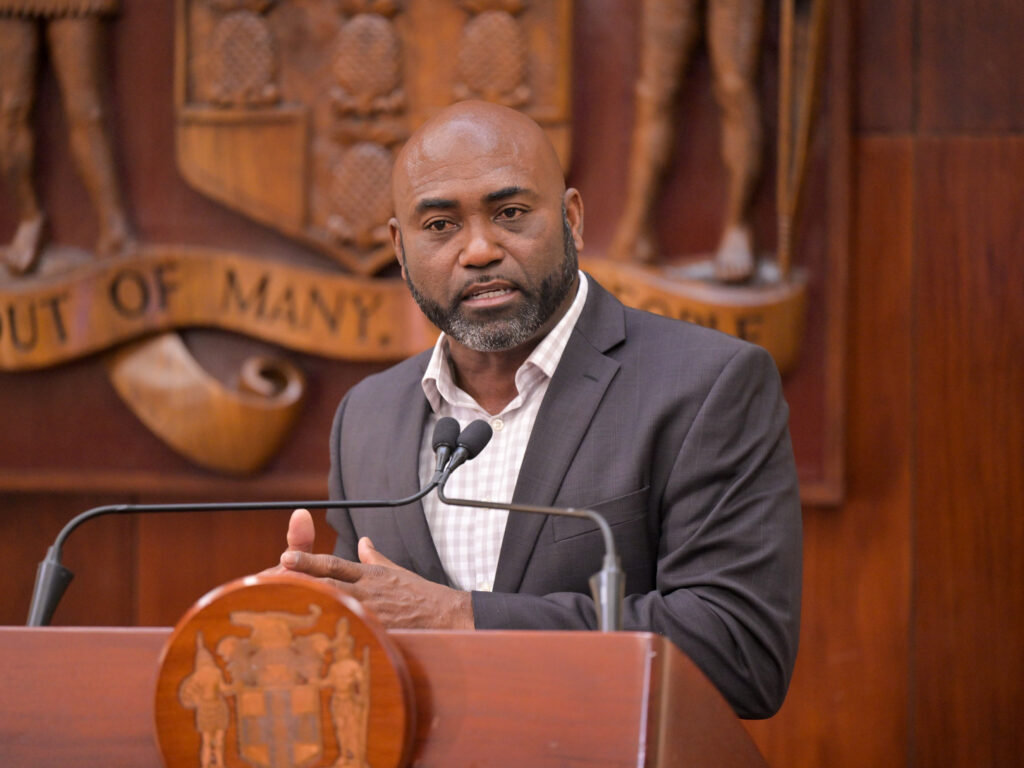
    KINGSTON, Jamaica — In a decisive address during Wednesday’s post-Cabinet press briefing at Jamaica House, Dr. Andrew Wheatley, Minister with responsibility for Science, Technology and Special Projects, delivered a powerful call for heightened digital vigilance among citizens. Speaking against the backdrop of Jamaica’s observance of Data Privacy Month throughout January, the minister emphasized that privacy constitutes a fundamental requirement rather than a luxury in today’s interconnected society.

    Dr. Wheatley articulated a compelling analogy for digital behavior, urging Jamaicans to manage their personal information with the same caution they exercise with financial resources. “Be deliberate about what you share online,” he advised. “Treat your personal information the way you would treat your money—limit where it goes, question why it’s needed, and maintain caution regarding access permissions.”

    The minister’s warnings arrive at a critical juncture in Jamaica’s digital evolution, as the nation accelerates its transformation across recovery systems, resilience infrastructure, and service delivery mechanisms. Wheatley positioned data protection as an essential national priority, noting that “for citizens and families, this involves safeguarding identity, reputation, and peace of mind.”

    Beyond individual responsibility, the minister addressed institutional obligations, cautioning businesses and public-sector entities that data protection transcends mere regulatory compliance. He specifically encouraged Jamaican organizations to align with international privacy standards, referencing the European Union’s GDPR framework as particularly relevant for tourism-dependent sectors.

    Special emphasis during the awareness month is directed toward youth digital safety, especially significant as educational institutions increasingly distribute digital devices to students. “Our young people are naturally inquisitive,” Wheatley noted, “and they require education about online sharing risks and self-protection strategies in digital environments.”

    The minister concluded by framing privacy protection as a collective responsibility shared by government, private enterprises, and citizens alike, encouraging public engagement with the Information Commissioner’s Office throughout January’s awareness activities.

  • New Year’s resolutions that often don’t last

    New Year’s resolutions that often don’t last

    As the calendar turns, millions worldwide embrace the tradition of New Year’s resolutions, viewing January 1st as a psychological clean slate for personal transformation. Yet statistical evidence reveals a stark reality: most well-intentioned commitments unravel within weeks, despite initial enthusiasm.

    Observer Online’s comprehensive analysis identifies ten perennial resolutions with notoriously high failure rates, examining both their collapse timelines and underlying causes. Fitness aspirations top the list, initially fueled by post-holiday motivation but typically abandoned by mid-February due to unrealistic expectations, repetitive routines, and perceived slow progress.

    Entrepreneurial ambitions follow a similar trajectory, with approximately 80-90% of new business ventures faltering within weeks as financial pressures and strategic uncertainties emerge by March. Financial resolutions—including debt reduction and savings goals—commonly disintegrate during Q1 when unexpected expenses disrupt rigid budgeting systems.

    The study reveals consistent psychological patterns across resolution types: overly ambitious targets, inadequate planning structures, and underestimation of required time investments. Skill-based resolutions like learning instruments or languages peak in engagement during January before declining sharply around February’s end, as initial excitement gives way to frustration with plateauing progress.

    Even seemingly straightforward commitments like reading more books or improving work-life balance succumb to predictable pitfalls. Digital distractions and workload creep typically override these intentions by March, highlighting the tension between aspirational self-improvement and ingrained behavioral patterns.

    Notably, travel plans and academic improvements demonstrate seasonal collapse patterns, failing mid-year due to financial constraints or during exam periods due to poor time management. Nutrition goals face particular challenges from social obligations and restrictive dieting approaches that prove unsustainable beyond February.

    The analysis concludes that successful resolution-keeping requires systematic support mechanisms—measurable milestones, accountability partnerships, and flexible frameworks—rather than relying solely on January’s motivational surge.

  • Operators say crime, logistics hinder Sunday NLCB draws

    Operators say crime, logistics hinder Sunday NLCB draws

    Trinidad’s online gaming sector faces potential disruption as the National Lotteries Control Board (NLCB) considers implementing Sunday draws for several popular lottery games, despite no official confirmation from the regulatory body.

    According to Dean Persad, President of the Online Gaming Agents Association of TT (OGAATT), lottery equipment provider Brightstar Lottery (formerly IGT lottery division) has been circulating notices among agents regarding proposed Sunday drawings for Play Whe, Pick 2, Pick 4 and Cash Pot games, effective February 8, 2026. The document, which surfaced on social media January 14, claims the NLCB board resolved to amend draw schedules under the National Lotteries Act.

    Finance Minister Davendranath Tancoo, whose ministry oversees NLCB, acknowledged awareness of the initiative as part of the board’s “business expansion model” but provided no further details. Newsday’s attempts to verify the document’s authenticity with NLCB and Brightstar representatives proved unsuccessful.

    Persad expressed significant concerns about the potential implementation, citing multiple operational challenges. “The disrespect, callousness, exploitation and lack of consideration towards agents continues under this new regime,” he stated, emphasizing that the association should have been consulted on matters directly affecting their members.

    Key concerns include uncertainty about whether Sunday operations would be mandatory or optional, potential labor cost implications requiring double and triple-time payments under Trinidad’s labor laws, increased security risks due to reduced street activity on Sundays, and anticipated low sales volumes as families typically remain home. Additionally, agents questioned how Sunday operations would affect weekly settlement procedures that currently run Monday through Saturday.

    The association president revealed profound disappointment with the newly appointed NLCB board’s lack of engagement since their July 25 installation. Despite repeated attempts to schedule meetings—including one cancellation after date confirmation—and direct intervention from the Prime Minister who emailed ministers instructing them to meet with OGAATT, Persad said the board has consistently ignored communication attempts.

    “We are the most important stakeholders in the whole organization,” Persad emphasized. “We are the point people bringing in the money for the organization. Why not engage us and hear what we have to say?” The association continues seeking respectful dialogue with NLCB leadership to address their operational concerns before any Sunday draw implementation.

  • Education Director: School’s PLP song taken out of context

    Education Director: School’s PLP song taken out of context

    Garvin Tynes Primary School’s Majority Rule commemoration has ignited political tensions after footage emerged showing students performing a partisan song during the ceremony. The video, which circulated widely on Tuesday, captured young pupils chanting “PLP all the way” and lyrics suggesting political intimidation against opponents.

    The recording prompted immediate criticism from Free National Movement supporters, with FNM chairman Dr. Duane Sands demanding clarity about the presentation’s context and questioning whether education authorities had sanctioned content that involved children in overt political messaging.

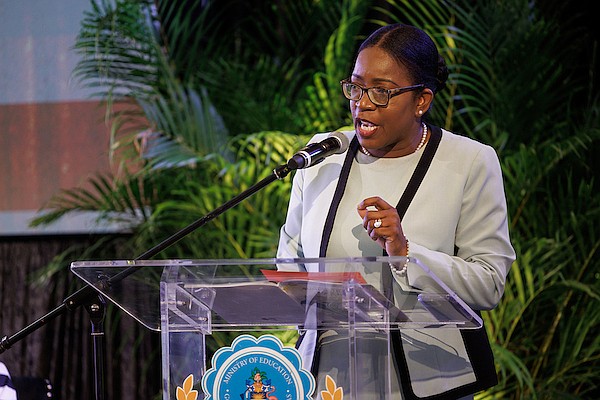
    Education Director Dominique McCartney-Russell addressed the controversy while maintaining neutrality regarding the appropriateness of the performance. Having not attended the event personally, she emphasized that the clip circulating online failed to represent the full scope of the assembly, which encompassed multiple historical aspects of Majority Rule.

    According to McCartney-Russell, the complete program featured educational presentations on significant historical milestones including the Burma Road Riot, women’s suffrage achievements, the formation of the governing party, the General Strike, and Black Tuesday. Student participation included sharing factual historical information and musical performances intended to illustrate Bahamian political development.

    The Education Director characterized the incident as an innocent program misinterpreted through selective sharing, affirming that department officials would engage with school leadership to ensure future events maintain educational integrity while protecting students from unintended political exposure. She emphasized the importance of preserving children’s welfare while acknowledging the historical significance of Majority Rule in the Bahamas’ development.

  • Pinder: “Don’t hold your breath” on return to frontline politics

    Pinder: “Don’t hold your breath” on return to frontline politics

    Ryan Pinder, the former Attorney General of The Bahamas, has officially concluded his four-year tenure and announced his departure from frontline politics. Speaking at the opening ceremony for Legal Year 2026, Pinder clarified to journalists that his departure represents a natural expiration of his term rather than a resignation from office.

    Reflecting on his unexpected appointment in September 2021, Pinder revealed that Prime Minister Philip ‘Brave’ Davis’s invitation to serve as the nation’s top legal officer came as a complete surprise. He described accepting the position as an unparalleled professional opportunity that he felt compelled to accept despite the challenges it would entail.

    Pinder characterized his service as Attorney General as both the most rewarding professional experience of his career and an immensely demanding undertaking. He acknowledged that the legal system had faced extraordinary pressures during his tenure, including emerging crime patterns, heightened regulatory complexities, and growing public expectations for judicial efficiency.

    ‘The past legal year has presented significant challenges,’ Pinder noted. ‘Our legal institutions have been tested by unprecedented demands, with progress often occurring gradually rather than through immediate transformation.’

    The former Attorney General emphasized that ensuring accessible justice remains a fundamental priority, noting that procedural delays and systemic inefficiencies have tangible impacts on citizens’ lives. His office implemented an ambitious legislative agenda, introducing over 100 pieces of primary and subsidiary legislation with support from the Law Reform and Revision Commission.

    Significant government initiatives highlighted included comprehensive land reform measures, the finalization of updated firearms legislation, and revisions to the Penal Code. Pinder particularly emphasized the importance of the Conditional Release of Offenders Parole Bill, advocating for rehabilitative approaches to criminal justice that facilitate successful reintegration of incarcerated individuals into society.

    ‘We firmly believe that providing rehabilitation frameworks and supporting the transition of formerly incarcerated persons back into community life represents both morally sound policy and practical benefit to the nation,’ Pinder stated. ‘This approach offers deserving individuals a structured opportunity for redemption while promoting broader social stability.’

  • Platini says Infantino has become ‘more of an autocrat’

    Platini says Infantino has become ‘more of an autocrat’

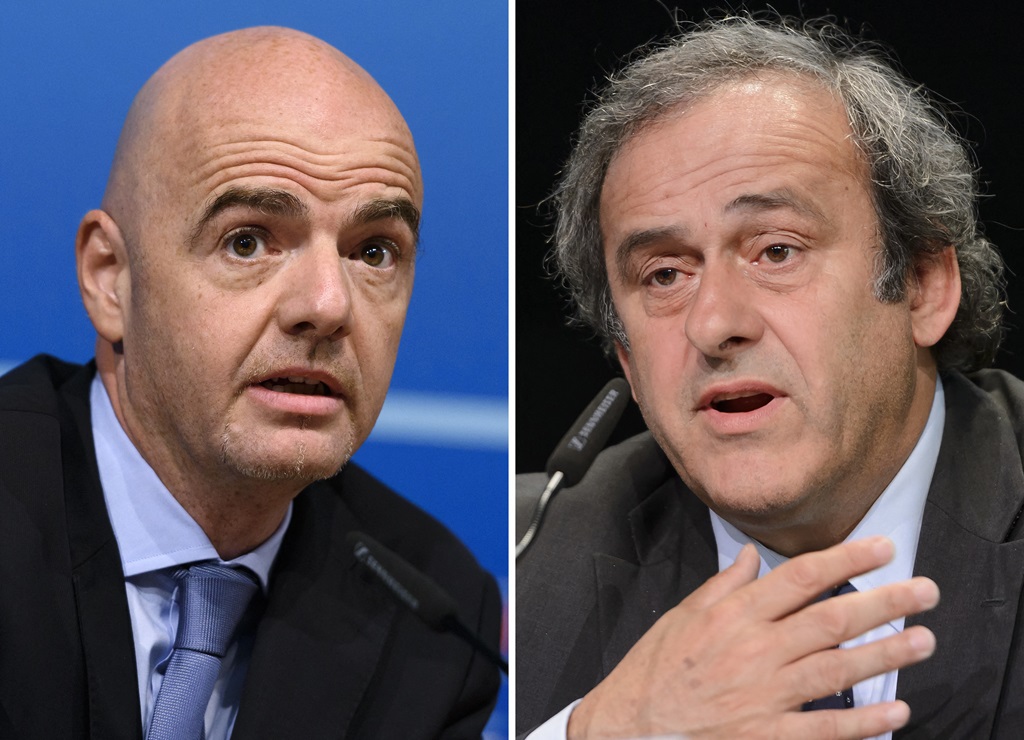
    In a candid interview with The Guardian, former UEFA President Michel Platini delivered a damning assessment of current FIFA leader Gianni Infantino, accusing him of autocratic tendencies and an excessive focus on cultivating relationships with the wealthy and powerful.

    Platini, who previously served as Infantino’s superior at European football’s governing body from 2009 to 2015, characterized the FIFA president’s leadership style as fundamentally flawed. “He was a good number two, but is not a good number one,” Platini stated, highlighting what he perceives as Infantino’s problematic attraction to moneyed influence. “He likes the rich and powerful people, the ones with money. It’s his character.”

    The French football legend specifically pointed to the pandemic period as a turning point, noting that “Unfortunately Infantino has become more of an autocrat since the pandemic.” This criticism extends to Infantino’s cultivation of high-profile relationships, including his close ties with former US President Donald Trump, whom Infantino awarded a special FIFA peace prize during the World Cup draw ceremony in December ahead of the 2026 tournament across North America.

    Platini offered a surprising comparative analysis of FIFA’s governance, suggesting the organization under Infantino has become less democratic than during the scandal-plagued era of Sepp Blatter. “There is less democracy than in Blatter’s time,” Platini claimed, acknowledging Blatter’s problematic desire to remain president for life while simultaneously characterizing him as “a good person for football.”

    The former Juventus and French national team star also expressed broader concerns about modern football administration, noting that many current officials lack genuine passion for the sport. “You find many who wouldn’t care whether it’s football or basketball. It’s not always a case of loving football if you work at UEFA or FIFA.”

    Platini’s criticism stems from longstanding tensions between the two administrators, including his belief that Infantino undermined his FIFA presidential ambitions by alerting Swiss prosecutors about a controversial $2.5 million payment from Blatter to Platini that ultimately derailed both of their careers.

  • Cuba pays tribute to soldiers killed in Maduro capture

    Cuba pays tribute to soldiers killed in Maduro capture

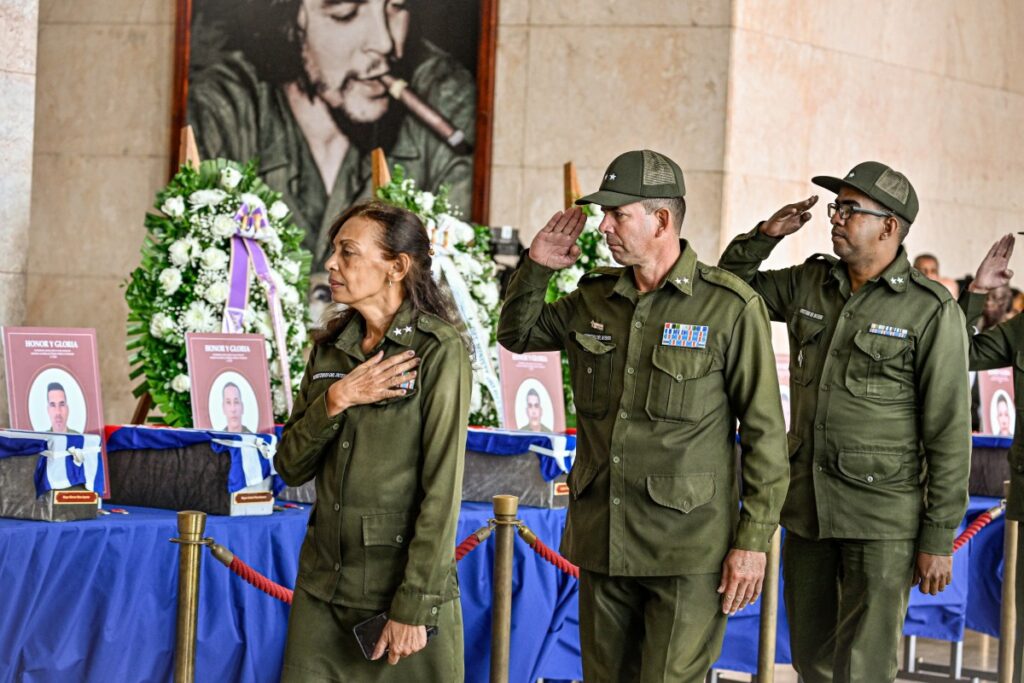
    HAVANA, Cuba — In a powerful display of national unity, Cuba conducted solemn ceremonies on Thursday honoring 32 military personnel killed during recent U.S. military operations in Venezuela. The tribute occurred amid escalating tensions between Havana and the Trump administration, serving as both a memorial and political statement.

    The ceremony featured full military honors with President Miguel Diaz-Canel and revolutionary leader Raul Castro, aged 94, attending in formal military attire. The soldiers’ remains, transported in flag-draped urns, arrived at Jose Marti International Airport where officials received them with full state honors.

    Interior Minister General Lazaro Alberto Alvarez delivered a stirring eulogy praising the soldiers who had ‘fought to the last bullet’ during U.S. operations that resulted in the capture of Venezuelan leader Nicolas Maduro and his wife on January 3. The minister explicitly condemned U.S. pressure campaigns, declaring that the United States ‘will never be able to buy the dignity of the Cuban people.’

    The procession traveled through Havana streets as citizens lined routes applauding the military convoy. The government declared two days of national tribute, concluding with a public gathering outside the U.S. embassy in Havana.

    This demonstration occurs as Cuba faces intensified economic pressure from the Trump administration. President Trump recently threatened consequences unless Cuba accepts an unspecified ‘deal,’ while simultaneously vowing to切断 all Venezuelan oil subsidies that have historically supported Cuba’s economy.

    The Cuban government has responded defiantly to these pressures despite experiencing its most severe economic crisis in decades. Havana additionally rejected recent U.S. offers of hurricane relief aid following October’s Hurricane Melissa, denouncing the gesture as ‘political manipulation’ while maintaining they would accept unconditional assistance.

    Jeremy Lewin, the senior U.S. official for foreign assistance, urged Cuba not to ‘politicize’ humanitarian offers, indicating Washington’s desire to expand direct aid programs to Cuban citizens.

    The incident marks a significant deterioration in U.S.-Cuba relations, which had seen slight improvements during the Obama administration but have regressed dramatically following Maduro’s capture and the accompanying military casualties that included 23 Venezuelan soldiers.