作者: admin

  • Mogelijke vervalsing documenten Grassalco-dochter in Guyana

    Mogelijke vervalsing documenten Grassalco-dochter in Guyana

    Serious concerns have emerged regarding the establishment and registration of GuySure Aggregate and Sand Inc, a foreign subsidiary of Suriname’s state-owned mining company Grassalco. Official documents from Guyana reveal that five private individuals were registered as shareholders during the incorporation process, raising fundamental questions about the ownership structure and the legitimacy of this overseas venture.

    Internal investigations within Grassalco have uncovered irregularities in the documentation process surrounding GuySure’s formation. The audit revealed that certain critical documents were scanned and added to the internal system at a later date, without appearing in the regular document flow initially. Administrative deviations from standard procedures were also identified.

    The subsidiary’s launch in May 2025 was publicly promoted by the Surinamese government as Grassalco’s strategic international expansion. Former President Chan Santokhi traveled to Georgetown to inaugurate the company alongside now-suspended CEO Wesley Rozenhout. At the time, no mention was made of individual shareholders in the corporate structure.

    The Guyanese registration records now identify five individuals as shareholders: Wesley Rozenhout, Patrick Bel, Wendy Aminta, Ajay Surjbalising, and Negesty Winter. The relationship between these private shareholders and Grassalco’s status as a state-owned enterprise remains unclear, with no transparency regarding underlying agreements.

    These developments occur amidst broader turmoil at Grassalco. Earlier this month, Rozenhout was suspended by the Board of Commissioners pending an investigation into the disappearance of over four kilograms of gold from the state company. The board cited potential violations of corporate statutes as justification for the suspension.

    In response to the growing crisis, Natascha Kalo has been appointed as delegated commissioner with expanded oversight responsibilities until new leadership is established. The company is currently undergoing a comprehensive ‘quickscan’ assessment while daily operations continue under heightened supervision.

  • Espaillat family says 70% of Jet Set Nightclub collapse victims have been compensated

    Espaillat family says 70% of Jet Set Nightclub collapse victims have been compensated

    In a significant development following the Jet Set Nightclub collapse tragedy, the Espaillat family has revealed they have voluntarily compensated 70% of the affected victims despite awaiting a final judicial resolution. The family made this announcement through their philanthropic arm, the Raíces de Esperanza Foundation, highlighting their ongoing initiatives to support children orphaned by the catastrophic incident.

    Antonio and Maribel Espaillat, serving as family representatives, articulated their approach has been guided by principles of responsibility, respect, and solidarity since the tragedy’s immediate aftermath. They emphasized prioritizing the human dimension of the crisis over legal technicalities, acknowledging that while no compensation can reverse the profound losses endured, their efforts aim to extend support beyond mandatory legal requirements.

    The family simultaneously clarified that judicial proceedings remain ongoing, with no definitive court ruling or officially validated technical assessment yet establishing the collapse’s precise causes or assigning criminal liability. Critical expert evaluations, solicited during the investigation’s initial phases, are scheduled for judicial examination on January 30, adhering to standard legal protocols. Reiterating their stance, the Espaillats affirmed their continuous cooperation with judicial authorities, maintaining transparency throughout the process and honoring the memory of those affected by the tragedy.

  • Peaceful march in Navarrete calls for answers on missing children cases

    Peaceful march in Navarrete calls for answers on missing children cases

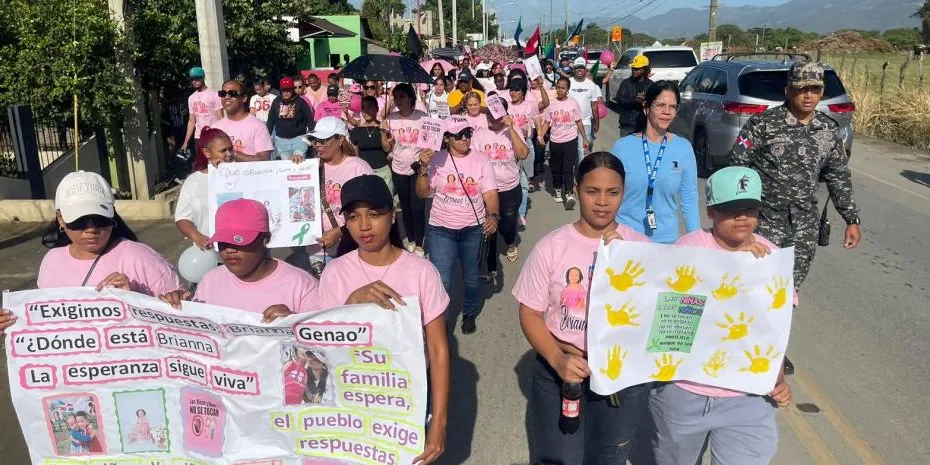
    NAVARRETE, Santiago Province – A community united in anguish took to the streets on Sunday as residents of Navarrete staged a peaceful march to demand answers in the disappearance of three-year-old Brianna Genao and to highlight a national crisis of missing children. The demonstration, comprising family members, neighbors, and local supporters, moved through the township with banners and unified chants calling for the child’s safe return and greater governmental transparency in ongoing investigations.

    At the heart of the protest was a public outpouring of grief from Brianna’s father, who articulated the family’s profound distress and the void of conclusive information from official channels since their daughter vanished. This personal tragedy was framed not as an isolated incident but as a symptom of broader systemic failures. Participants emphasized that the mobilization symbolized a collective community fear regarding child safety and the perceived inadequacy of protective measures.

    The rally broadened into a national plea, with attendees referencing numerous other unresolved cases of missing minors across the country. Protesters critiqued what they described as waning investigative efforts by state agencies and issued a forceful demand for sustained, intense search operations. The collective call to action urged authorities to implement more robust child protection policies and effective preventive strategies to safeguard the nation’s youth, maintaining pressure until Brianna and all missing children are located.

  • FLASH : The Government Commissioner of Port-de-Paix, at the head of an armed militia

    FLASH : The Government Commissioner of Port-de-Paix, at the head of an armed militia

    In a dramatic response to escalating violence in Haiti’s Northwest region, Port-de-Paix Government Commissioner Jéir Pierre has established and personally commands an armed security militia, marking an unconventional approach to combating rampant lawlessness. This development emerges amid deteriorating security conditions that have plagued the region since late December, characterized by surging armed robberies, violent assaults, and sexual attacks.

    Commissioner Pierre, expanding beyond his traditional judicial responsibilities, now directs nightly patrol operations through a specially formed brigade composed of local residents. While officials claim coordination with Haitian National Police (PNH) units, this militia operates under the prosecutor’s direct authority rather than police command structure—raising questions about legal oversight and accountability.

    The security model relies on community members selected for their intimate knowledge of local terrain and potential suspects. Financing originates from resident donations and diaspora contributions, creating an informal funding mechanism similar to that implemented by Commissioner Jean Ernest Muscadin in Miragoâne. Pierre defended the arrangement, stating, ‘The people who believe in this project did not want to leave me alone. They help cover basic costs so agents can carry out their functions.’

    Initial results suggest some effectiveness, with nighttime commerce gradually resuming in certain urban centers and residents reporting improved security conditions. However, this approach represents a significant departure from conventional law enforcement methodologies, highlighting the Haitian government’s limited capacity to address security challenges through established institutions.

  • FLASH : Trump forces 7 Caribbean countries to welcome expelled asylum seekers

    FLASH : Trump forces 7 Caribbean countries to welcome expelled asylum seekers

    The United States has finalized contentious migration agreements with seven Caribbean Community (CARICOM) member states, compelling them to accept asylum seekers facing deportation from American territory. The negotiated arrangements with Guyana, Dominica, Saint Lucia, Antigua and Barbuda, Belize, Saint Kitts and Nevis, and Barbados have sparked diplomatic tensions and revealed internal divisions within the regional bloc.

    According to Terrence Drew, Prime Minister of Saint Kitts and Nevis, nations resisting cooperation faced implicit threats of retaliatory measures from Washington, including visa restrictions and complications in international banking transactions. The negotiations exposed the challenging balance smaller island economies must strike between economic pragmatism and political sovereignty when engaging with global superpowers.

    The settlement includes specific provisions requiring candidates to possess clean criminal records, full financial coverage from the United States for transportation, accommodation, and sustenance, and prioritization of CARICOM nationals caught in migratory deadlock.

    Barbados’ Foreign Minister Kerrie Symmonds openly characterized the agreement as ‘unwilling,’ acknowledging the disproportionate pressure applied by Washington that small economies could not reasonably disregard. Antigua and Barbuda negotiated stringent conditions including an annual cap of ten asylum seekers, English fluency requirements, professional training mandates, and limited 24-month residency rights with a 90-day termination clause.

    Notably, Saint Kitts and Nevis—despite its leadership role in CARICOM—declared it would not accept Haitian refugees, citing security apprehensions that highlight internal regional tensions regarding Haitian immigration patterns.

    Guyana adopted an alternative approach, viewing the situation as an opportunity to address its substantial workforce deficit amid rapid economic expansion. The South American nation aims to attract approximately 80,000 skilled workers through this initiative, though opposition groups criticize the policy as accepting ‘unwanted populations’ from other nations.

    The Organization of Eastern Caribbean States has established a technical committee to monitor implementation, while the United States has set an annual ceiling of 7,500 refugees for the 2026 relocation program.

  • Dominican youth abroad honored at National Youth Award in New York

    Dominican youth abroad honored at National Youth Award in New York

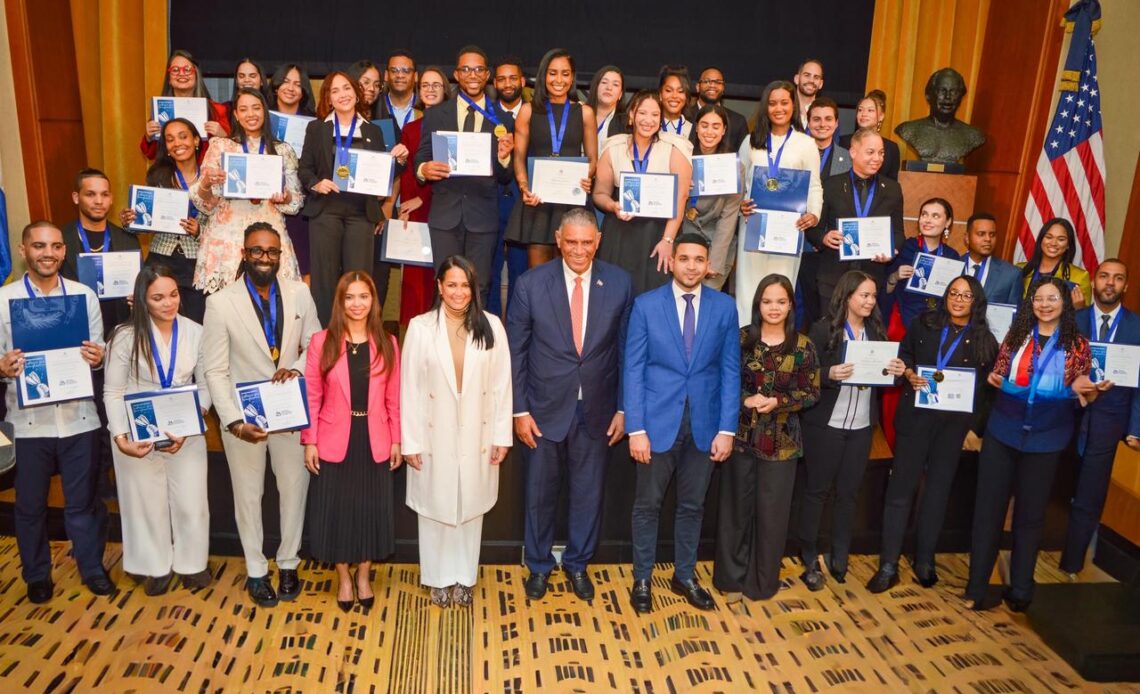
    NEW YORK CITY – In a prestigious ceremony celebrating diaspora excellence, more than forty young Dominican professionals and students residing across the United States were honored with the National Youth Award in the category of Outstanding Young Dominican Abroad. The fourth edition of this recognition event was orchestrated by the Dominican Republic’s Ministry of Youth, with collaborative support from the Dominican Consulate General in New York and the Institute of Dominicans Abroad (INDEX).

    The awards spotlight individuals who have demonstrated remarkable accomplishments across various sectors including education, scientific research, community development, and professional practice. These contributions have significantly benefited both Dominican communities overseas and institutions within their host countries.

    Distinguished attendees included Dominican Consul in New York Jesús Vásquez, Youth Minister Carlos Valdéz, and INDEX Vice Minister Celinés Toribio, alongside numerous institutional representatives and community members.

    Authorities emphasized that the award serves as an official state mechanism to acknowledge young Dominicans abroad who maintain robust academic, social, and professional connections with their communities. Officials also revealed substantial growth in program participation, with nominations surging from 57 applicants in 2023 to 272 in 2026—68% of which originated from young Dominicans living in the United States.

  • CAASD says water tariff adjustment will not affect residential users

    CAASD says water tariff adjustment will not affect residential users

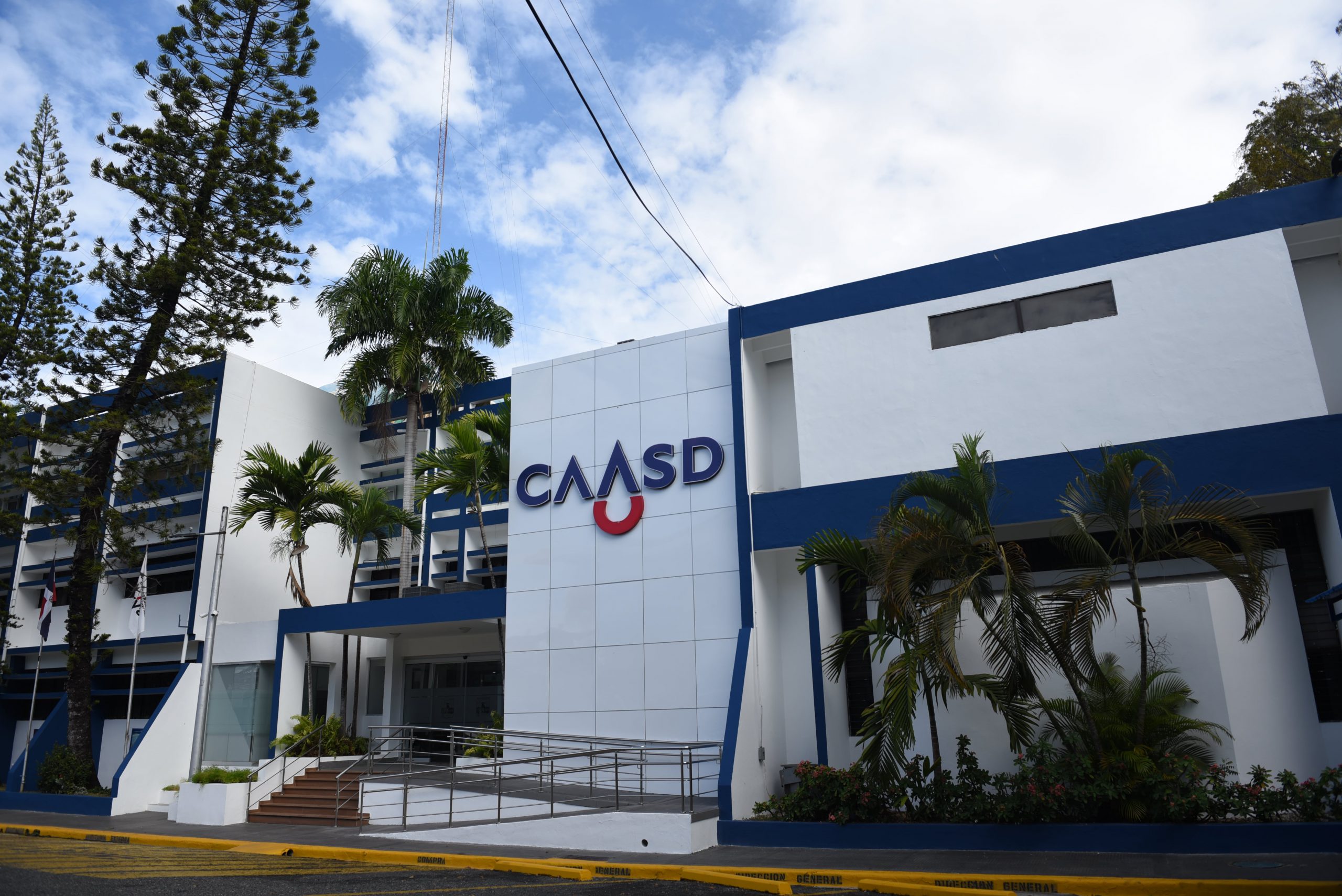
    SANTO DOMINGO – In a significant policy clarification, the Santo Domingo Water and Sewerage Corporation (CAASD) has officially confirmed that recent adjustments to drinking water tariffs will exclusively impact commercial, industrial, and governmental entities within the province. The corporation has emphatically stated that residential consumers, particularly those from low-income brackets, will experience no changes to their current water rates, safeguarding household budgets from additional financial pressure.

    The tariff revision, formally enacted through Resolution No. 001-2025 this past December, marks the first update for non-residential sectors in over two decades, with previous rates remaining static since 2003. The CAASD Board of Directors sanctioned the measure following an exhaustive technical and financial review, concluding that an adjustment was imperative to sustain the utility’s operational integrity and service quality. The new billing structure was implemented for December 2025 consumption, with invoices reflecting the updated charges for that period.

    Reiterating the existing pricing model, the CAASD confirmed that residential consumption continues to be billed at a fixed rate of RD$6 per cubic meter, a unit equivalent to 264 gallons. For commercial users, the new pricing is calculated at RD$0.079 per gallon. The corporation also issued guidance for customers observing unexpected spikes in their bills, recommending a thorough inspection of internal plumbing systems for potential leaks, which are a common cause of inadvertent water overconsumption and subsequent higher charges.

  • Dominican Navy graduates 272 cadets at Las Calderas Base

    Dominican Navy graduates 272 cadets at Las Calderas Base

    LAS CALDERAS, PERAVIA – In a significant event for the nation’s maritime defense, the Dominican Republic Navy celebrated the graduation of 272 cadets on Saturday, January 17. The ceremony, held at the prestigious Las Calderas Naval Base—renowned as the cornerstone of the country’s naval training—marked the culmination of an intensive six-month program designed to enhance the Navy’s operational capabilities.

    Presiding over the proceedings was Lieutenant General Carlos Antonio Fernández Onofre, ERD, the Minister of Defense. In his official capacity, he administered the formal oath of service, officially integrating the new cohort into the active ranks of the Navy. The event also featured Vice Admiral Juan B. Crisóstomo Martínez, Commander General of the Navy, who personally presented the top graduate award.

    Captain José Agustín José Vásquez, Director of the Naval Training Center, detailed the rigorous curriculum that blended academic instruction, technical expertise, and military discipline. He underscored the core values instilled in every graduate: discipline, honor, and unwavering loyalty, which form the bedrock of their future careers.

    Special recognition was accorded to Cadet Brayni Rodríguez Rodríguez, who was distinguished as the Honorary Graduate for her exceptional academic achievements and exemplary conduct throughout the training. The newly minted sailors, now specialists in diverse fields including marine infantry, mechanics, electricity, communications, computer science, nursing, and logistics, are set to be deployed across various institutional services.

    The graduation was attended by a host of civil and military dignitaries, alongside proud family members. The formal event concluded with a religious blessing, symbolizing the collective pride in the graduates’ commitment to serving and strengthening the Dominican Republic and its Armed Forces.

  • Four arrested with US$2.4 million worth cocaine bound for Europe- CANU

    Four arrested with US$2.4 million worth cocaine bound for Europe- CANU

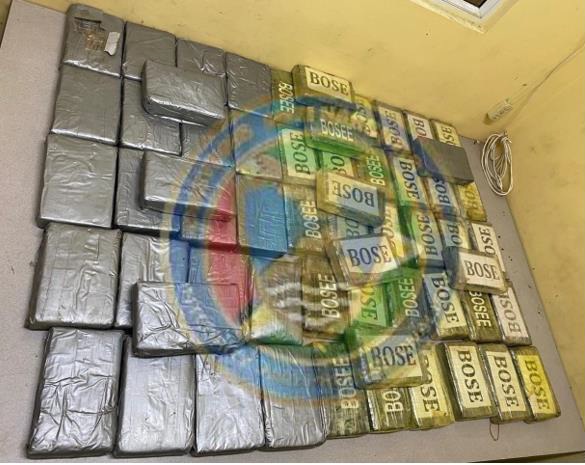
    In a significant narcotics interdiction operation, Guyana’s Customs Anti-Narcotics Unit (CANU) apprehended four individuals on Sunday, January 18, 2026, seizing approximately 154 pounds of cocaine with an estimated European street value of €2.1 million (US$2.4 million). The bust occurred near Parika, East Bank Essequibo, marking a substantial blow to international drug trafficking networks.

    According to CANU officials, the detained suspects include a Guyanese national residing in Venezuela and a young entrepreneur from the Essequibo Coast region. The illicit substance was intercepted while being transported by vehicle, with investigators indicating the drugs were destined for European markets. All four individuals were promptly transferred to CANU headquarters for interrogation and processing.

    This successful operation emerges against a backdrop of heightened narcotics surveillance in the Caribbean-European corridor. Recent weeks have witnessed Dutch law enforcement agencies in the Netherlands intercepting multiple cocaine shipments originating from Suriname. Notably, on January 12, Dutch police and customs authorities confiscated 319 kilograms of cocaine concealed within a container of deep-frozen fish, highlighting sophisticated smuggling methodologies employed by transnational criminal organizations.

    The Parika seizure demonstrates Guyana’s intensified efforts to combat drug trafficking through enhanced interagency cooperation and intelligence-driven operations. While specific details regarding the investigation remain confidential, authorities emphasize their commitment to disrupting supply chains that exploit Guyana’s transportation infrastructure for international narcotics distribution.

  • Senegal verovert Afrika Cup na zinderende finale tegen Marokko

    Senegal verovert Afrika Cup na zinderende finale tegen Marokko

    Senegal has successfully defended its African Cup of Nations championship in a thrilling final against Morocco that required extra time to determine the winner. The match concluded with a 1-0 victory for Senegal, marking their second consecutive title following their 2022 triumph.

    The highly anticipated final, played in Rabat before a passionate home crowd, was characterized by intense moments and controversial decisions that heightened the drama. The match reached its peak of tension during the final minutes of regulation time when Moroccan players were awarded a penalty kick following a contested challenge.

    Brahim Diaz, the tournament’s leading scorer with five goals, stepped up to take the potentially championship-winning penalty but failed to convert, sending the shot wide of the mark. The penalty decision sparked significant controversy as Senegalese players temporarily left the field in protest, partly due to a disallowed goal for Senegal moments earlier.

    The disruption created chaotic scenes with extended delays and growing frustration among both teams and spectators. When play resumed and regulation time ended without a score, the match proceeded to extra time.

    Early in the additional period, Pape Gueye broke the deadlock with a powerful strike that ultimately decided the championship. Despite Morocco’s persistent efforts to equalize in the remaining time, Senegal’s defense held firm against all attacks.

    This victory solidifies Senegal’s dominant position in African football while Morocco, despite the heartbreaking loss in front of their home supporters, can reflect on an otherwise impressive tournament performance. The North African team’s fifty-year wait for another continental championship continues following this narrow defeat.