作者: admin

  • Vicepresident naar Zwitserland voor World Tourism Forum

    Vicepresident naar Zwitserland voor World Tourism Forum

    Surinamese Vice President Gregory Rusland is set to embark on an official visit to Switzerland this Saturday to participate in the prestigious World Tourism Forum, convened during the influential World Economic Forum week. Accompanied by a delegation of three senior officials, the Vice President will engage in high-level discussions before returning the following week.

    Mr. Rusland received a specific invitation to join an exclusive assembly of forty international decision-makers, comprising heads of state, chief executive officers, and government ministers. This selective gathering represents some of the most influential figures in global governance and business leadership.

    The central theme of his participation will focus on translating commitments into actionable strategies under the forum’s agenda: “From Pledges to Implementation: Scaling Sustainable Tourism and Hospitality.” This dialogue aims to bridge the gap between theoretical frameworks and practical execution in sustainable tourism development.

    Unlike conventional tourism conferences, the World Tourism Forum operates as a high-level decision-making platform that reconceptualizes tourism not as an isolated industry but as a strategic pillar for global economic resilience. The forum emphasizes peer-to-peer interaction and strategic alignment among participants, moving beyond traditional presentation formats to foster genuine collaboration and policy development.

    The participation of Suriname’s Vice President signals the growing recognition of small nations in shaping global tourism policies and highlights the increasing importance of sustainable tourism in national economic strategies.

  • George Price Day 2026: “Que viva George Price”

    George Price Day 2026: “Que viva George Price”

    Belize City witnessed a profound gathering of national reverence on January 15, 2026, as citizens across the spectrum united to commemorate George Price Day. The ceremony honored George Cadle Price, the architect of Belizean independence, with this year’s observance carrying dual significance: marking six years since the holiday’s establishment and coinciding with the 75th anniversary of the People’s United Party (PUP) which Price founded.

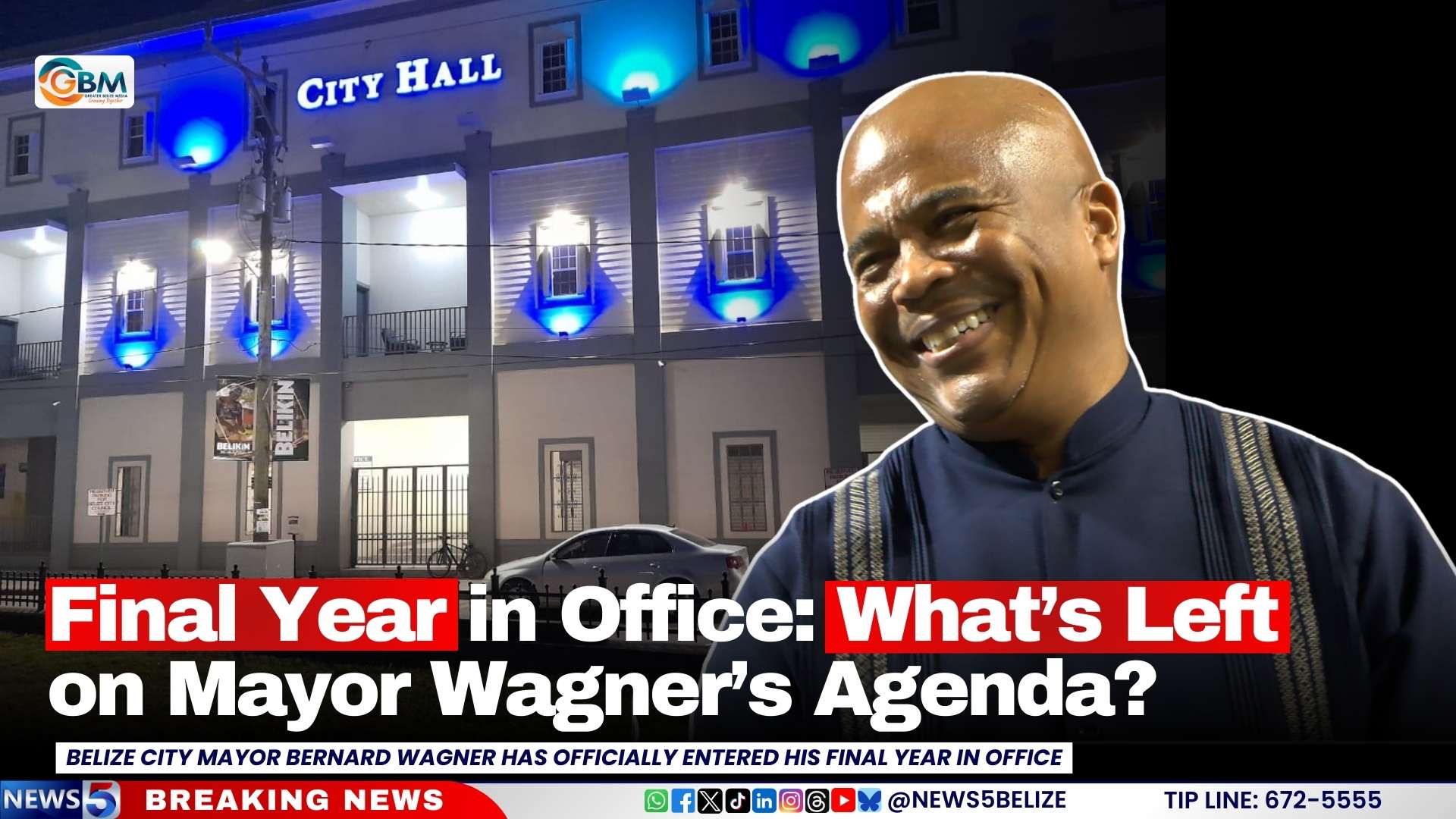
    Belize City Mayor Bernard Wagner inaugurated the proceedings by emphasizing the enduring nature of Price’s legacy. He reminded attendees that the nation inherited not just the freedoms Price secured but also the ongoing responsibility to ensure independence remains meaningful for successive generations.

    Prime Minister John Briceño delivered a heartfelt tribute, characterizing Price as a leader profoundly guided by faith and service. He recounted Price’s pivotal role in steering the peaceful Belizean revolution that ultimately achieved sovereignty in 1981. Briceño concluded his address with both a national blessing and the celebratory cry that echoed throughout the event: “Que viva George Price!”

    The program featured recitations from Price’s seminal 1950 Battlefield Park address, where he first challenged colonial authority and economic disparities, declaring that Belizeans had “awakened from the sleep of false hopes and empty promises.”

    Parallel celebrations included the traveling PUP at 75 exhibition, which chronicles the party’s central role in Belize’s political evolution. Culture Minister Francis Fonseca reported thousands have visited the exhibition nationwide, describing it as crucial for preserving political history. The exhibition, launched in Orange Walk in September 2025, will conclude in San Pedro next month.

    In personal reflections shared with media, Briceño revealed how Price’s guidance shaped his own path, recalling the founding leader’s belief that “public service is the highest call for any Belizean.”

    The commemorations extended beyond formal ceremonies with nationwide social media tributes and physical installations, including a commemorative billboard unveiled by Immigration Minister Kareem Musa at a major intersection. The day’s events culminated with a student assembly at Nazarene High School and a spectacular fireworks display, symbolizing the nation’s enduring gratitude.

  • Antiguans encouraged to hop over to DA for high-energy carnival experience

    Antiguans encouraged to hop over to DA for high-energy carnival experience

    The Discover Dominica Authority (DDA) has formally invited residents of Antigua and Barbuda to participate in the upcoming Mas Domnik 2026 carnival celebrations during a press conference held in St. John’s on Thursday. The event, scheduled for February 16-17, 2026, promises an immersive cultural experience extending beyond traditional carnival festivities.

    Communications and Public Relations Officer Monelle Alexis emphasized that Mas Domnik 2026 will feature an extensive calendar of pre-carnival activities, showcasing Dominica’s unique combination of vibrant musical traditions, authentic local cuisine, and characteristic warm hospitality. Alexis described the carnival as a community-oriented celebration that maintains a welcoming atmosphere while allowing visitors to celebrate with complete freedom.

    Addressing potential security concerns, Alexis confirmed that comprehensive safety measures have been substantially enhanced for the 2026 event. Meanwhile, Festivals and Events Assistant Ogelly Moses highlighted organizational efforts to create a high-energy, meticulously coordinated carnival experience designed to appeal to both local participants and regional visitors.

    Travel accessibility remains a key advantage, with officials noting Dominica’s geographical proximity to Antigua and Barbuda. Special airline promotions have been introduced to facilitate attendance, including LIAT Air’s 20% reduction on carnival airfares and Sunrise Airways’ 10% discount offer. The combination of rhythmic music, rich cultural displays, improved security protocols, and discounted travel options positions Mas Domnik 2026 as an essential destination for carnival enthusiasts seeking an authentic Caribbean celebration.

  • Sugar Crop Opens on Monday

    Sugar Crop Opens on Monday

    Belize’s sugar production sector is poised for a significant resurgence as the national sugar factory officially commences operations this Monday. This long-awaited opening follows comprehensive infrastructure improvements and a landmark agreement between the Belize Sugar Cane Farmers Association (BSCFA) and Belize Sugar Industries (BSI).

    The government has demonstrated substantial commitment to the industry’s recovery, allocating approximately $2 million specifically for critical cane road repairs. Prime Minister John Briceño acknowledged the ongoing challenges, stating, ‘While this investment represents significant progress, we recognize that additional work remains, particularly given the persistent challenges posed by rainfall patterns.’

    Reflecting on previous difficulties, Brinceno highlighted last year’s strategic $3 million intervention to combat fusarium disease, a fungal infection that had severely impacted cane fields. This proactive measure is now yielding tangible results, with the Prime Minister noting marked improvements in both ‘productivity and the quality of the cane’ for the current season.

    In a further boost to the industry’s long-term sustainability, Economic Development Minister Osmond Martinez revealed a monumental $50 million investment initiative facilitated through the Caribbean Community Climate Change Centre. This funding, originating from the Green Climate Fund, will enable the systematic retirement of aging cane stocks and the subsequent replanting of approximately 10,000 acres with modern, resilient varieties.

    The combined public and private sector efforts signal a robust commitment to transforming Belize’s sugar industry through infrastructure modernization, disease management, and substantial financial investment in sustainable agricultural practices.

  • Senator calls for overhaul of elderly care in health system

    Senator calls for overhaul of elderly care in health system

    Barbados faces a critical juncture in healthcare delivery as Independent Senator and public health specialist Dr. Kenneth Connell issued a stark warning about systemic failures in serving elderly patients. During a parliamentary debate on the National Policy on Ageing (2023-2028), Connell revealed fundamental flaws in how medical institutions accommodate senior citizens’ complex needs.

    The healthcare system’s fragmentation between private and public sectors creates substantial barriers for older patients, particularly regarding information sharing. Senator Connell emphasized the absence of seamless medical record transfer mechanisms, creating operational difficulties for both healthcare providers and vulnerable patients navigating treatment pathways.

    A particularly concerning issue raised involves restrictive attitudes toward family participation in medical settings. Connell challenged prevailing norms that limit relatives’ presence in accident and emergency departments, noting that many elderly patients require advocacy and support from familiar faces to effectively navigate healthcare complexities.

    Drawing from international training experiences, the senator described alternative care models where hospitals actively incorporate relatives into patient support systems. These facilities provide basic accommodations like couches in wards, enabling family members to remain overnight. This approach demonstrated tangible benefits: relatives assisted with fundamental care tasks like feeding, while medical staff gained valuable allies in patient management.

    Connell highlighted the ‘sundowning effect’ as a critical concern—a phenomenon where hospitalized elderly patients experience delirium and disorientation due to environmental changes and reduced sunlight exposure. These symptoms often mimic acute psychiatric episodes, potentially leading to misdiagnosis in already overburdened medical facilities.

    The senator warned that single agitated patients can disrupt entire ward operations, particularly in resource-constrained environments common in small island nations. He attributed these challenges to a system requiring fundamental ‘reformatting’ to properly address geriatric care requirements.

    Beyond immediate healthcare concerns, Connell urged policymakers to broaden their conceptual framework around aging. He advocated moving beyond chronological age as the primary metric and addressing the multifaceted challenges of unhealthy aging, including rising rates of diabetes, hypertension, arthritis, and dementia.

    The specialist concluded that without comprehensive reform, Barbados risks being unprepared for its demographic transition, potentially compromising care quality for its growing elderly population.

  • Grenada to enforce Madrid Protocol as of March 2026

    Grenada to enforce Madrid Protocol as of March 2026

    Grenada has officially become the 116th member of the Madrid System for international trademark registration, marking a significant milestone in the nation’s intellectual property landscape. The Madrid Protocol will take effect in Grenada on March 15, 2026, following the government’s deposition of its accession instrument approximately three months prior.

    This accession positions Grenada as the tenth Latin American and Caribbean nation to join this global framework, which the World Intellectual Property Organization (WIPO) describes as “a practical and efficient solution for protecting trademarks worldwide.” The move significantly strengthens the international trademark ecosystem while providing Grenadian businesses with streamlined access to global markets.

    From the implementation date onward, Grenadian enterprises and entrepreneurs who have registered trademarks through the Corporate Affairs and Intellectual Property Office (CAIPO) will gain the ability to seek trademark protection across all 131 Madrid System member jurisdictions through a single application process. This streamlined approach requires submitting documentation in English and paying fees exclusively in Swiss francs, eliminating the need for multiple applications in different jurisdictions.

    Concurrently, trademark holders from other member countries will be able to designate Grenada in their international applications, while existing international registration holders can extend their protection to include the Caribbean nation. This reciprocal arrangement promises to enhance Grenada’s attractiveness for international business and investment.

    In preparation for this significant transition, WIPO dispatched two high-level experts to Grenada in February 2025 to conduct stakeholder consultations. These sessions aimed to educate businesses and legal professionals about the implications and procedures of the Madrid Protocol ahead of its implementation.

    During the 2026 budget debate, Senator Claudette Joseph confirmed that Grenada formally became a signatory to the Madrid Protocol on December 10, 2025, with an initial target implementation date of April 1, 2026. The actual implementation date of March 15, 2026, represents a slight adjustment from this original timeline.

  • Senator calls for overhaul of elderly care in health system

    Senator calls for overhaul of elderly care in health system

    Barbados faces a critical juncture in healthcare delivery for its elderly citizens, according to Independent Senator and public health specialist Dr. Kenneth Connell. During Wednesday’s parliamentary debate on the 2023–2028 National Policy on Ageing, Connell issued a stark warning about systemic failures in accommodating the complex needs of older patients. The senator identified a fundamental disconnect between private and public healthcare sectors as a primary concern, creating what he described as an ‘extremely challenging’ navigation environment for senior citizens. This fragmentation manifests most visibly in the critical absence of seamless information exchange and medical record sharing between institutions, creating substantial obstacles for both patients and medical professionals. Connell further criticized restrictive hospital policies that limit family participation in care, particularly in emergency departments where he noted relatives are often perceived as occupying space intended solely for patients. Drawing from his international medical training, the senator contrasted local practices with more inclusive models where relatives receive accommodation to remain overnight with patients. This approach, he argued, provides dual benefits: family members assist with basic care tasks like feeding while helping mitigate the ‘sundowning effect’—a phenomenon where elderly patients experience delirium and disorientation in unfamiliar hospital environments. Connell warned that without systematic reform, Barbados’ healthcare infrastructure remains dangerously unprepared for the mounting pressures of arthritis, dementia, and cognitive decline within its aging demographic. The senator ultimately called for a paradigm shift in policy perspectives, urging lawmakers to look beyond chronological age as the sole metric when designing elderly care frameworks for small island developing states.

  • Opposition senator renews criticism of govt housing programme amid audit concerns

    Opposition senator renews criticism of govt housing programme amid audit concerns

    A scathing audit of Barbados’ HOPE Inc. housing initiative has sparked intense political debate, with Opposition Senator Ryan Walters accusing the government of systemic mismanagement of public funds. The controversy emerged during Wednesday’s Senate session addressing legislative corrections needed for 20 low-income homes in Christ Church, delayed due to a 2022 resolution error that omitted the National Housing Corporation as vesting authority.

    Senator Walters seized on the Auditor General’s April 2025 special audit to highlight broader failures in the flagship housing program. The report revealed that HOPE Inc. operated without clear objectives, milestones, or performance indicators despite $64.5 million in committed public funding. According to Walters, this lack of framework created legal vulnerabilities, with the state potentially facing compensation claims due to transactions undertaken without proper authority and unclear property titles.

    The audit identified significant financial mismanagement, including a $37.8 million cost overrun attributed to the decision to use precast construction instead of traditional methods. Walters further criticized the program’s renewable energy component, noting that only two of the promised solar-equipped homes actually received such installations.

    Most alarming was the revelation regarding an international housing arrangement with Guyana, where $3.5 million was transferred for approximately 60 hardwood homes without performance bonds or proper vendor vetting. When the homes arrived in Barbados, missing components rendered them uninhabitable, requiring an estimated additional $125,000 per unit to complete—potentially totaling $43.7 million if the project continues.

    Walters concluded that these findings have ‘cast a grey cloud’ over the government’s housing credibility, asserting that taxpayers deserve answers for what he characterized as a record ‘nothing to be proud of.’

  • OP-ED: Beyond passports & visa pauses – Why the Caribbean must reclaim the narrative power in Washington

    OP-ED: Beyond passports & visa pauses – Why the Caribbean must reclaim the narrative power in Washington

    The Caribbean’s ongoing Citizenship by Investment (CBI) program crisis reveals a fundamental power imbalance in international relations that extends far beyond superficial discussions about due diligence and security compliance. At its core, this confrontation represents the region’s systemic loss of narrative control within Washington’s policy ecosystem, where Caribbean nations are being defined through standards they didn’t create and judged in forums where they lack representation.

    This pattern of economic reclassification—where once-viable activities are progressively recast as risky or non-compliant—has historical precedents from banana exports to banking services. The outcome consistently demonstrates economic disqualification through regulatory means rather than market failure, with CBI representing merely the latest manifestation.

    The traditional diplomatic approach—relying on ambassadors, foreign ministries, and multilateral appeals—has become inadequate in today’s policy landscape. Contemporary legitimacy frameworks are increasingly shaped outside formal diplomatic channels within Congressional offices, regulatory agencies, think tanks, and policy advocacy networks where narratives are established long before Caribbean representatives are consulted.

    The region’s critical deficit lies in its absence from Washington’s idea economy. While the United States benefits from established idea engines like the Heritage Foundation, Brookings Institution, and CSIS that systematically cultivate and normalize policy concepts, the Caribbean lacks equivalent institutional presence. This idea infrastructure gap leaves the region perpetually defensive, explaining itself against narratives it didn’t author.

    The convergence of heightened U.S. and EU CBI scrutiny, visa bond regimes, immigrant visa pauses, and disproportionately applied public-charge doctrines signals how Caribbean economies are being systematically ranked within the global system. Simultaneously, CARICOM faces internal strains as geopolitical pressures test regional unity.

    A strategic pivot requires expanding engagement beyond traditional diplomacy into narrative formation—engaging Congressional committees alongside executive desks, addressing regulatory agencies that shape outcomes, investing in idea production rather than mere negotiation, and repositioning the Caribbean as a strategic region rather than a compliance problem.

    The fundamental question isn’t whether CBI survives in its current form, but whether the Caribbean will continue allowing external actors to define legitimacy parameters for small states’ economic survival. Without claiming space in Washington’s idea economy, every sector—from finance and mobility to education and digital services—remains vulnerable to similar reclassification and exclusion cycles.

    The Caribbean possesses its most valuable export not in passports or commodities but in intellectual talent—thinkers, diplomats, technocrats, and policy professionals who understand global systems and Caribbean realities. The existing diaspora represents an untapped resource that requires institutional harnessing through establishments like the Institute for Caribbean Studies in Washington, D.C.

    This transformation demands a fundamental shift in how CARICOM, OECS, and individual governments engage with diaspora expertise—moving beyond transactional relationships toward trust-based, sustained collaborations. Modern sovereignty defense requires not just borders and diplomacy but ideas and the capability to shape them, presenting the region with an opportunity to build idea infrastructure worthy of its talent and adequate to contemporary challenges.

  • IDB launches new Barbados strategy to drive growth, resilience

    IDB launches new Barbados strategy to drive growth, resilience

    The Inter-American Development Bank Group (IDB Group) has formally initiated a comprehensive five-year strategic framework for Barbados, designed to propel economic advancement while simultaneously fortifying social and climate resilience. The 2025–2030 strategy, officially endorsed in May 2025, was developed following rigorous economic analysis led by Cloe Ortiz de Mendivil, the IDB’s Country Economist for Barbados and The Bahamas.

    Unveiled at a stakeholder briefing held at the Bank’s Oistins offices, the strategy is structured around three foundational pillars. The first is dedicated to fostering sustainable economic growth, while the subsequent two focus on building social resilience and climate-related resilience. Carina Cockburn, IDB Country Representative for Barbados, emphasized the interdependence of these goals, stating that resilience, while necessary, is not by itself sufficient for achieving broader economic development objectives.

    In a significant departure from conventional presentation formats, the IDB employed an innovative dissemination approach to enhance public accessibility. The launch event featured an interactive session led by Neil Waithe and the Leggo Theatre Company, who utilized improvisational performance to translate complex policy terminology into engaging and relatable messaging for a diverse audience.

    Concurrently, the IDB introduced the BOLD Catalyst Board, an 18-member civil society advisory body operational across all IDB member countries. This board will provide critical feedback during the project design phase, ensuring initiatives avoid harmful practices and adequately incorporate stakeholder perspectives. The board will also assist in information dissemination and help maintain alignment with local needs throughout the implementation process.

    Cross-cutting themes of innovation, diversity, and institutional strengthening will be mainstreamed across all initiatives. Specific programs already in development include an Enhanced Credit Guarantee Fund with the Central Bank under the economic growth pillar, and a pipeline replacement project aimed at securing Barbados’ potable water supply as part of climate resilience efforts.

    Beyond financial lending, the IDB’s engagement encompasses substantial technical cooperation, providing expertise, analytical support, and advisory services to assist Barbadian policymakers. Reflecting on the enduring partnership, Kay McConney, Minister of Economic Affairs and Investment, highlighted that the relationship between the Government of Barbados and the IDB Group remains rooted in shared vision, mutual trust, and open communication.