作者: admin

  • Facebook post incites violence against union leader

    Facebook post incites violence against union leader

    Oswald Robinson, the outgoing president of the St. Vincent and the Grenadines Teachers Union (SVGTU), has initiated a formal police investigation concerning a Facebook post that explicitly incited violence against him. This alarming development follows Robinson’s recent public statements regarding teacher mobilization against unresolved educational issues.

    The controversial social media post, attributed to an individual named ‘Doug King Howard,’ emerged within 24 hours of Robinson’s appearance on the union’s BOOM FM program last Sunday. During his radio segment, Robinson had emphasized the union’s intent to mobilize educators amid ongoing governmental inaction on critical teacher concerns.

    Howard’s post contained a severe political critique, contrasting the union’s approach toward previous and current administrations. It specifically referenced the 24-year tenure of the Unity Labour Party before launching personal attacks against Robinson. The most disturbing segment explicitly advocated for violent retaliation should Robinson lead protest actions, including threats of firearm violence.

    In his response during a Hot FM interview Tuesday, Robinson revealed he had consulted law enforcement officials who deemed the matter extremely serious. The union leader emphasized the imperative of maintaining public order and preventing incitements to violence. Robinson, whose presidential term concludes this month before assuming the vice-presidency, acknowledged police resources are stretched thin due to existing violent crime investigations, including a recent fatal chopping incident in Barrouallie.

    Despite the threats, Robinson maintained a principled stance, affirming his commitment to lawful conduct and non-violence. He expressed particular concern that such threats could potentially extend beyond himself to others. While acknowledging having heard Howard’s generally reasonable radio commentary previously, Robinson expressed shock at the violent nature of these specific threats and emphasized they must be treated with utmost seriousness.

  • Dominican Republic joins Food First Pact to combat hunger by 2030

    Dominican Republic joins Food First Pact to combat hunger by 2030

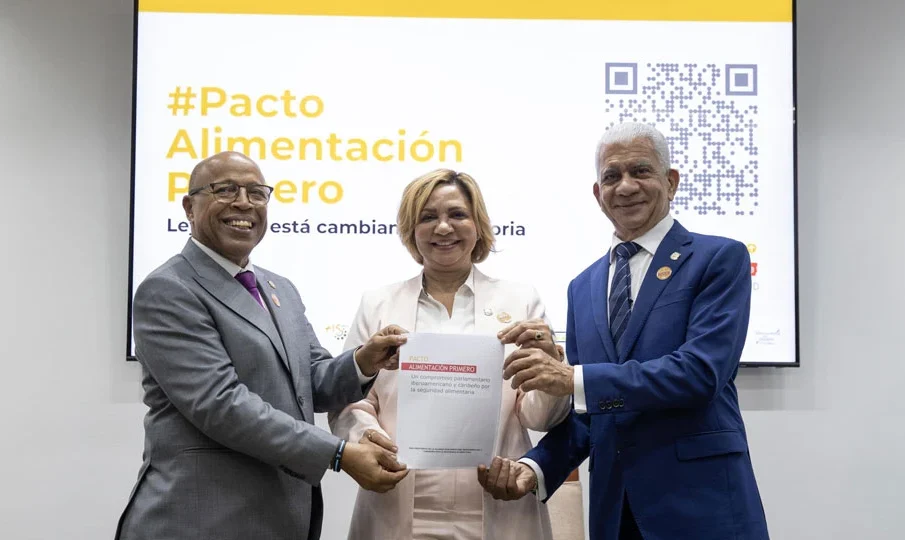
    Santo Domingo has marked a significant milestone in regional food security efforts as the Dominican Republic formally became a signatory to the “Food First Pact,” a multinational initiative designed to accelerate progress toward the United Nations’ Zero Hunger objective by 2030. This strategic alliance, previously ratified by Mexico, Guatemala, and Chile, establishes a framework for implementing concrete legislative measures and securing dedicated budgetary allocations to eradicate hunger across Latin America.

    Luis Lobo, a key representative, emphasized the pact’s commitment to delivering tangible outcomes through the enactment of specific laws and the strategic financing of nutritional security initiatives. The initiative enjoys robust institutional support from the Food and Agriculture Organization (FAO), alongside international collaborators including Spanish development agencies and the Mexican Agency for International Development Cooperation (AMEXCID). Its core mission is to embed the fundamental right to adequate nourishment at the heart of governmental policy, underpinned by commitments to fortify legal frameworks and establish rigorous monitoring systems.

    The official signing ceremony at the National Congress featured critical insights from regional leaders. Rodrigo Castañeda acknowledged the recent downward trend in hunger rates across Latin America and the Caribbean over the past two years but cautioned against complacency. He highlighted persistent severe challenges, noting that over a quarter of the region’s population continues to experience food insecurity, with millions lacking access to affordable, healthy diets. Spanish Ambassador Lorea Arribalzaga Ceballos drew attention to the disproportionate impact of food insecurity on women, underscoring entrenched gender disparities. Echoing the urgency, Chamber of Deputies President Alfredo Pacheco issued a compelling call to action for regional governments, asserting that addressing the hunger crisis admits no further delay.

  • At least 5,519 Haitians killed in 11 months

    At least 5,519 Haitians killed in 11 months

    A devastating new report from the United Nations Human Rights Office has documented an unprecedented humanitarian crisis in Haiti, revealing that at least 5,519 people were killed and 2,608 injured during an eleven-month period ending in January 2026. The findings, presented by UN High Commissioner for Human Rights Volker Türk on March 24, 2026, paint a grim picture of a nation descending into chaos as criminal gangs expand their territorial control beyond the capital Port-au-Prince.

    The comprehensive assessment details how armed groups have systematically strengthened their strategic routes and consolidated control over key maritime and land corridors, ensuring continuous funding and operational capacity. These criminal networks have terrorized civilian populations through systematic murders, kidnappings, child trafficking, and widespread extortion operations targeting businesses. Public and private property has been routinely looted and destroyed in their campaign of intimidation.

    Particularly disturbing are the report’s details of targeted violence against individuals perceived as cooperating with authorities. Victims faced brutal executions, with bodies frequently doused in gasoline and burned, while others were subjected to arbitrary detention and sham trials conducted by gang members.

    The security situation has been further complicated by the involvement of a private military company apparently contracted by the Haitian government. Their operations, including kamikaze drone strikes and helicopter attacks, have resulted in significant casualties. The UN report suggests many of these strikes constitute targeted killings due to their predetermined and deliberate use of lethal force against specifically identified individuals.

    The breakdown of casualties reveals multiple dimensions of the crisis: 1,424 deaths were directly attributed to gang violence, while security operations against gangs resulted in at least 3,497 fatalities. Additionally, vigilante justice by civilian self-defense groups armed with machetes, stones, and increasingly high-caliber firearms claimed 598 lives. The report also documents horrific sexual violence, with 1,571 women and girls falling victim to gang rape and other assaults.

    This documentation underscores the complete breakdown of public security and rule of law in Haiti, creating one of the most severe human rights emergencies in the Western Hemisphere.

  • PM Not Impressed with Panton’s Performance

    PM Not Impressed with Panton’s Performance

    BELIZE CITY – A political firestorm has erupted in Belize’s National Assembly following Prime Minister John Briceño’s sharp criticism of Opposition Leader Tracy Panton’s budget presentation and his subsequent denial of allegations that he mocked her disability.

    In a blunt assessment delivered to reporters, Prime Minister Briceño characterized Panton’s lengthy budget rebuttal as fundamentally lacking in substantive content. “I guess she had to find something to say and she spoke over two hours,” Briceño stated, adding that even members of Panton’s own political party expressed dissatisfaction with her performance, describing their internal criticism as “savage” in its intensity.

    The political confrontation escalated when journalists pressed the Prime Minister on Panton’s specific allegation that he had mocked her disability during parliamentary proceedings. Briceño offered a firm denial, responding, “I don’t remember I was mocking her about her disability. I mean she was mocking me on grandstanding.”

    Opposition Leader Panton had previously characterized the Prime Minister’s behavior as “wholly unacceptable,” asserting that the nation’s highest office holder should not consider it “fair game to ridicule or poke fun at a person’s disability or challenge or medical setback.” She framed the incident as a matter of national leadership standards, warning that such behavior from the Prime Minister could normalize the disrespect of differently abled persons throughout Belizean society.

    The exchange represents a significant deterioration in cross-aisle relations within Belize’s parliamentary system and raises questions about the tone of political discourse in the country’s governance. Both leaders appear entrenched in their positions, with no indication of reconciliation or apology forthcoming from either side.

  • San Pedro Police Uncover Major Mangrove Drug Stash

    San Pedro Police Uncover Major Mangrove Drug Stash

    In a significant counter-narcotics operation on Tuesday morning, Belizean law enforcement authorities uncovered a substantial cache of illicit drugs concealed within a coastal mangrove ecosystem north of San Pedro Town. The coordinated mission, involving both uniformed police and intelligence personnel, commenced at approximately 8:30 AM targeting a region notorious for smuggling activities.

    During a systematic sweep of the dense mangrove network along the shoreline, officers discovered a large black crocus bag strategically hidden among the intricate root systems. The concealed package contained twenty-nine meticulously wrapped rectangular bricks of compressed cannabis, representing a major seizure for local authorities.

    The confiscated narcotics underwent formal processing at the discovery site, with investigators documenting, labeling, and securing the evidence according to standard forensic procedures. With a total weight of 17.4 kilograms (38.4 pounds), the cannabis shipment has been officially logged as found property while the criminal investigation progresses.

    Though no suspects have been publicly identified in connection with the hidden contraband, police officials have characterized the interception as a substantial blow to regional drug trafficking operations. The successful operation highlights ongoing challenges with coastal security and the innovative methods employed by criminal organizations utilizing Belize’s natural landscape for concealment purposes.

    Law enforcement agencies have intensified surveillance and interdiction efforts along Belize’s coastline in recent months, responding to increased smuggling activity through the country’s intricate network of waterways and mangrove forests.

  • When Bullying Backfires: Kindness Overtakes Online Cruelty

    When Bullying Backfires: Kindness Overtakes Online Cruelty

    A viral social media incident in Belize has demonstrated the powerful resilience of human kindness in the digital age. What began as online mockery targeting a young concertgoer from Dangriga quickly transformed into a nationwide movement of support and solidarity.

    The situation emerged when footage of Natalie Garbutt dancing enthusiastically at a Punta music event circulated across social platforms, with critics focusing disproportionately on her oversized sneakers. Initially subjected to a wave of derogatory comments, the narrative shifted dramatically as Belizean citizens collectively intervened.

    Rather than perpetuating the negativity, the online community mobilized to counteract the bullying. The event organizer proactively reached out to Garbutt with financial compensation, explicitly denouncing the culture of online harassment. Simultaneously, a digital fundraising initiative gained momentum, generating sufficient contributions to provide her with a new smartphone and wardrobe additions.

    In an exclusive interview, Garbutt revealed her initial unawareness of the viral attention, mistaking early notifications as friendly jest. She acknowledged the emotional impact of the negative comments while emphasizing the confidence instilled by her upbringing. Notably, the criticized footwear held sentimental value as a birthday gift from her mother.

    The rapid community response highlights evolving social media dynamics where collective compassion can effectively neutralize digital harassment. Garbutt’s experience serves as a poignant reminder of the real-world impact of online behavior and the transformative power of community support systems in mitigating cyberbullying effects.

  • Missing Man, Hector Mejia, Found Dead in Succotz

    Missing Man, Hector Mejia, Found Dead in Succotz

    The community of San Jose Succotz, Belize, was struck by tragedy on Tuesday morning when missing local resident Hector Mejia was discovered deceased along the banks of the Mopan River. The 35-year-old man, last seen socializing with friends in Benque Viejo on Sunday, had been the subject of an intensive overnight search effort coordinated by village authorities.

    Village Chairman Armando Cocom had publicly appealed for information regarding Mejia’s whereabouts through social media channels after the man failed to return home Monday evening. In a devastating turn of events, Cocom himself made the grim discovery during his routine taxi route approximately at 8:00 AM Tuesday, spotting Mejia’s body along the riverbank.

    Mejia’s brother, Orvin Mejia, expressed profound shock and grief regarding the sudden loss, describing Hector as a talented artist and musician who maintained positive relationships within the community. “He was always friendly,” Orvin stated. “He always did his drumming. He liked to sing and always did his art.”

    Law enforcement officials confirmed no visible injuries were detected on Mejia’s body during preliminary examination. Authorities have indicated that the cause of death remains undetermined pending completion of a formal autopsy. The case continues under active investigation as the community mourns the loss of a beloved local figure known for his artistic contributions and peaceful demeanor.

  • Transport Minister: Progress Outweighs Early Problems

    Transport Minister: Progress Outweighs Early Problems

    BELIZE CITY – Belize’s ambitious public transportation overhaul is demonstrating tangible progress despite initial operational hurdles, according to Transport Minister Louis Zabaneh. The newly established National Bus Company, now operational for approximately one month, represents a significant consolidation of previously fragmented private operators under a unified national framework.

    Minister Zabaneh acknowledged the implementation challenges during a recent briefing, characterizing them as predictable growing pains associated with large-scale systemic transformation. The transition has involved integrating seventeen distinct operational cultures, creating complex human resource integration challenges that required extensive coordination efforts.

    “The consolidation process inevitably created workforce anxiety, particularly regarding compensation continuity and administrative integration,” Zabaneh stated. “Our HR department has worked extensively to address these concerns, and we’ve successfully processed three consecutive weekly payrolls while resolving account synchronization issues.”

    The mechanical reliability of inherited bus fleets has presented additional complications, with ongoing breakdowns requiring dedicated maintenance response teams. Despite these operational challenges, the minister emphasized that route stabilization and service consistency are showing measurable improvement as the system matures.

    Zabaneh characterized the current phase as a natural organizational learning curve, noting that the fundamental infrastructure is now operational and demonstrating daily improvements. The ministry maintains that the long-term benefits of a unified transportation system will substantially outweigh these transitional difficulties, ultimately delivering enhanced reliability and service quality for Belizean commuters.

    The National Bus Company initiative represents one of Central America’s most comprehensive public transportation reforms, aiming to transform what was previously a decentralized network of independent operators into a coordinated national service provider.

  • PM Monitoring US Reaction to Pro Cuba Stance in Caribbean

    PM Monitoring US Reaction to Pro Cuba Stance in Caribbean

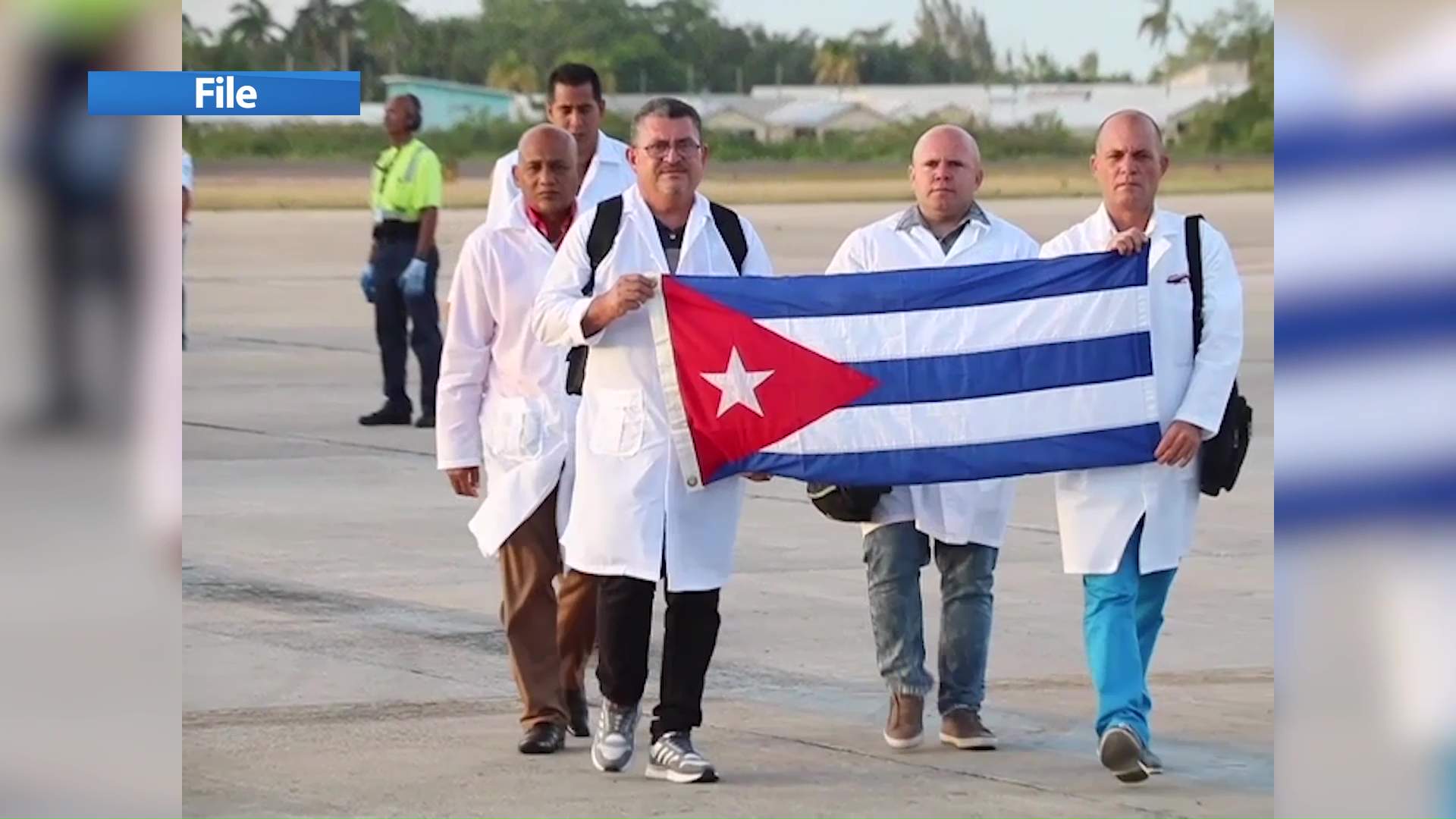
    The Belizean government under Prime Minister John Briceño finds itself at the center of escalating diplomatic tensions with the United States regarding its continued utilization of the Cuban Medical Brigade program. While facing mounting pressure from Washington that includes potential visa restrictions, the administration maintains a cautious public stance, characterizing the situation as involving “delicate negotiations.

    Prime Minister Briceño, when pressed by journalists on March 24, 2026, confirmed that discussions remain ongoing with both Cuban officials and American representatives. He acknowledged that U.S. authorities consistently raise their concerns during bilateral meetings but expressed hope for a resolution “sooner than later.”

    The diplomatic challenge presents a complex balancing act for Belize as it attempts to preserve its long-standing relationship with Cuba while simultaneously managing its critically important ties with the United States. This situation mirrors similar pressures experienced by other Caribbean nations that have maintained cooperation programs with Cuba despite American objections.

    When confronted with specific questions about alleged U.S. threats of visa sanctions, Briceño declined to elaborate, simply stating “Let’s leave it as that” while acknowledging awareness of similar developments in other islands. The Prime Minister directly denied rumors of an impending announcement regarding the matter, asserting “there’s no such thing” when asked about a purported Thursday decision deadline.

    The Cuban Medical Brigade program has become a recurring point of contention in U.S.-Caribbean relations, with Washington maintaining longstanding objections to such partnerships based on its position toward the Cuban government.

  • Blue Economy Minister Warns of Escalating Sargassum Threat

    Blue Economy Minister Warns of Escalating Sargassum Threat

    Belize’s coastal regions are preparing for another significant environmental challenge as meteorological authorities forecast a substantial sargassum influx approaching key shoreline communities. The National Meteorological Service has issued alerts for San Pedro, Caye Caulker, Hopkins, and Placencia, anticipating severe ecological and economic impacts in the coming days.

    In response to the escalating threat, San Pedro’s Town Council has implemented proactive measures, deploying specialized containment corrals along vulnerable coastlines. This initiative aims to mitigate the financial burden on local hotels and businesses that have faced relentless cleanup expenditures during previous sargassum events.

    The situation has reached parliamentary attention, with Andre Perez, Minister of Blue Economy, addressing the National Assembly on March 24, 2026. Minister Perez characterized the sargassum phenomenon as one of Belize’s most critical environmental emergencies, emphasizing that the government regards it as a national priority rather than a seasonal nuisance.

    Minister Perez outlined a comprehensive governmental strategy developed through the Ministry of Blue Economy and Marine Conservation. The multi-faceted approach includes implementing efficient collection systems, establishing environmentally sustainable disposal methods, and exploring conversion technologies that transform the seaweed into valuable resources. This forward-thinking perspective seeks to identify economic opportunities within the ecological challenge, potentially creating new value chains from the abundant organic material.

    The minister highlighted the broader Caribbean context, noting increasing frequency and intensity of sargassum blooms throughout the region. Beyond tourism impacts, the seaweed influx disrupts traditional fishing operations and presents emerging public health concerns for coastal populations.