作者: admin

  • Young slams Govt over Pt Lisas plant shutdowns

    Young slams Govt over Pt Lisas plant shutdowns

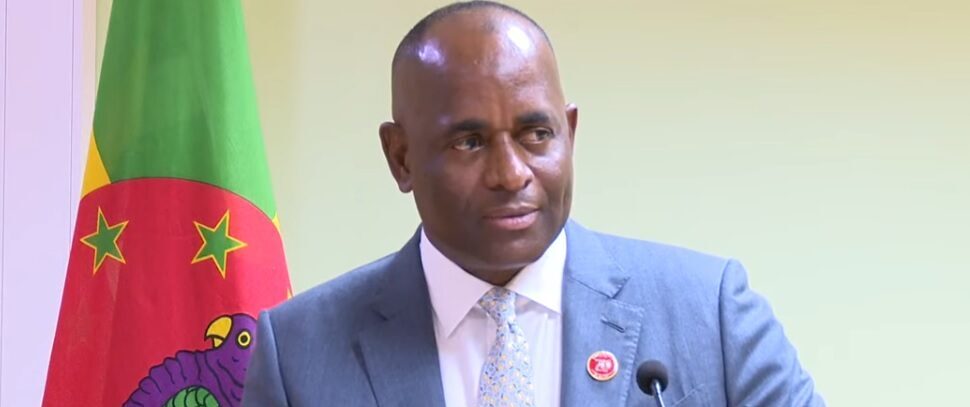
    A sharp political backlash has hit the ruling administration of Trinidad and Tobago over its stewardship of the country’s critical energy industry, with former energy minister Stuart Young leveling sweeping accusations of incompetence, policy missteps and regulatory negligence that he warns threaten thousands of jobs, critical foreign exchange revenue and long-term investor confidence. Young made the allegations public in a detailed Facebook post published over the weekend, targeting both Prime Minister Kamla Persad-Bissesar and current Energy Minister Dr Roodal Moonilal for a series of missteps that have already disrupted operations at the country’s key Point Lisas Industrial Estate, where major global petrochemical players operate.

    At the core of Young’s criticism is the government’s revised natural gas allocation policy, which he argues has diverted critical gas supplies away from established ammonia and methanol producers at Point Lisas to Atlantic LNG, a move driven purely by the short-term appeal of elevated global LNG prices. Young calls this decision a short-sighted and fundamentally flawed policy that has already forced operational shutdowns at a nitrogen plant run by Nutrien, one of the world’s largest fertiliser manufacturers, and prompted major methanol producer Methanex to issue explicit warnings that it could be forced to shutter its operations next if the current policy framework remains in place.

    Young emphasized that the current administration’s mismanagement unfolded in less than a year in office, tying the industrial disruptions directly to what he describes as the government’s fundamental ignorance of how the energy sector operates, as well as eroded business confidence among international investors that have long anchored Trinidad and Tobago’s industrial energy economy. “In less than a year Kamla Persad-Bissesar’s incompetence and mismanagement of the energy sector has led to the shut-down of the plants of one of the largest global fertiliser companies Nutrien, at Pt Lisas, and now one of the largest global methanol producers Methanex is signalling that they may follow suit,” Young wrote in his post.

    Beyond the gas allocation controversy, Young also took aim at Moonilal over the delayed response to an offshore oil spill in the Gulf of Paria first detected on May 1. He accused the minister of failing to detect and disclose the spill for nine days, noting that the incident was only publicly confirmed by the Trinidad and Tobago government after Venezuelan authorities exposed the spill. “It is clear that Moonilal has no say—in fact, sadly, as Minister of Energy he did not even know the oil assets under his stewardship were responsible for an oil spill on May 1 and it took the Venezuelans exposing the spill for the government to tell us today, May 10 (9 days later), that there was an offshore oil spill. Total incompetence or dishonesty,” Young said.

    Young also raised serious legal questions about the leadership of the National Gas Company (NGC), the state-owned entity responsible for managing the country’s gas supplies, arguing that the board and senior management will face fiduciary legal scrutiny over the controversial policy shifts that have triggered the industrial shutdowns. “Furthermore, the board at NGC has serious legal questions to answer as in a few short months under their tenure major petroleum chemical companies at Pt Lisas have shut down and are indicating further shut downs which are due to the change in gas allocation policies at NGC. These decisions will be subject to legal fiduciary scrutiny of the board and management at NGC,” he added.

    Closing his statement, Young left a provocative question for both the administration and the public of Trinidad and Tobago, challenging the government’s record on one of the country’s most economically vital sectors: “So once again Trinidad and Tobago, who exactly is winning?” Young warned that if the current policy course is not reversed, the full consequences will be felt across the national economy: permanent job losses at Point Lisas, permanent reductions in critical foreign exchange earnings, collapse of local service companies that support the petrochemical sector, and a lasting drought of foreign direct investment in the country’s energy industry.

  • I don’t know, says Lee

    I don’t know, says Lee

    A growing corruption controversy surrounding Trinidad and Tobago’s $3.4 billion suspended housing development program has put the government in the spotlight, after a local newspaper exposed an attempted bribe to scrap an investigative report into alleged bid-rigging at the state-run Housing Development Corporation (HDC).

    The Sunday Express, the outlet that broke the story, revealed that a self-described intermediary for an HDC official under investigation arranged a closed-door meeting with the paper’s investigative journalist Mark Bassant last Thursday on Ariapita Avenue in Woodbrook. During the meeting, the intermediary, a well-known figure in local political circles, offered a substantial cash compensation package to Bassant on the condition that the outlet drop the story entirely. In addition to the payout, the man also promised the journalist exclusive internal documents detailing alleged mismanagement of the HDC during the previous People’s National Movement (PNM) administration, according to the report.

    The intermediary explicitly noted that senior figures at the HDC wanted to avoid the negative public scrutiny that would come from the publication of the collusion allegations. The Sunday Express immediately rejected the bribe offer, reiterating that the probe into the HDC contract awards is a matter of critical public interest that demands full transparency.

    The sequence of events that led to the attempted bribe began last week, after the newspaper received complaints of collusion in the awarding of two large contracts under the housing program. Reporters then sent formal questions to both the implicated HDC official and the two contractors that received the contracts. The day after the queries were sent, the intermediary reached out to the paper, claiming the HDC official was willing to discuss the contract issue openly, and arranged Thursday’s meeting.

    Following the publication of the report on Sunday, Housing Minister David Lee moved quickly to distance himself from the entire affair. When contacted by the outlet for official comment, Lee stated he had no prior knowledge of any bribe attempt or the underlying allegations of collusion. He emphasized that as the cabinet minister overseeing the housing portfolio, he does not interfere in the daily operations of the HDC or any other state agency under his jurisdiction, nor does he involvement in any public procurement processes managed by those entities.

    In response to the newspaper’s investigation, legal action has already been threatened by one of the two contractors. Last Thursday afternoon, Denelle S Singh, an attorney based in Chaguanas, submitted a pre-action protocol letter to the Sunday Express on behalf of the contractor and his firm. The letter denies all collusion allegations and warns that the contractor will file a lawsuit if the outlet publishes his client’s name in connection with the story.

    The second contractor, who secured a multi-million-dollar contract under the program and spoke briefly with Bassant earlier that week, took a different approach. In a detailed set of responses sent via WhatsApp late Friday evening, the contractor said his company is unable to release any information related to confidential client relationships, commercial agreements, or project-specific details unless compelled by law or given formal permission by all relevant involved parties.

  • National prosthetics centre launched

    National prosthetics centre launched

    On a historic Saturday in Siparia constituency, Trinidad and Tobago Prime Minister Kamla Persad-Bissessar formally opened the country’s first permanent National Prosthetics Centre, a landmark collaborative project between the Trinidad and Tobago government, the Government of India, and U.S.-based non-profit Jaipur Foot USA. The opening ceremony was attended by India’s Minister of External Affairs Dr. Subrahmanyam Jaishankar, marking another milestone in the deepening bilateral partnership between the two nations.

    In her keynote address delivered at the centre’s Penal compound on Clarke Road, Persad-Bissessar framed the new facility as a transformative step forward for the Caribbean nation’s differently-abled community. For years, Trinidadian patients requiring prosthetic limbs faced a daunting set of barriers: they were forced to travel abroad for care, absorb prohibitive treatment costs, and endure months-long waiting periods for life-changing support. Now, all essential prosthetic and rehabilitation services will be provided completely free of charge to citizens right at home, eliminating those systemic barriers.

    “This centre does more than provide physical devices—it restores dignity, confidence, and independence to thousands of our citizens,” Persad-Bissessar emphasized. “It opens the door for people to return to work, to participate fully in their communities, and to live life on their own terms.” The project embodies her administration’s core promise to expand specialized healthcare access and ensure no citizen is left behind due to disability, she added.

    Beyond serving domestic needs, the new centre is poised to reshape prosthetic care across the entire Caribbean. Persad-Bissessar noted that the facility positions Trinidad and Tobago as a regional hub for specialized rehabilitation, with capacity to treat patients from across the Caricom bloc and eventually grow into a regional training centre for prosthetic expertise. She tied the project’s success to the 2025 state visit of Indian Prime Minister Narendra Modi, saying the centre stands as tangible, people-centered proof of what bilateral cooperation can deliver for ordinary communities.

    This latest initiative expands a growing healthcare partnership between the two nations, which already includes joint development of haemodialysis units, pharmaceutical cooperation, and the deployment of two sea ambulances to Trinidad and Tobago. Persad-Bissessar offered public gratitude to both the Indian government and Jaipur Foot USA for their partnership, noting that she was moved to “tears of emotion and joy” after reviewing patient testimonies from a preliminary prosthetic fitment camp held at Divali Nagar last year. That camp, organized with support from the Indian High Commission in Trinidad and Tobago, was the first of its kind held outside of India, a distinction she highlighted while praising the work of High Commissioner Dr. Pradeep Singh Rajpurohit and his team.

    Speaking at the ceremony, one early beneficiary of the partnership, limb recipient Joshua Gloud, shared his excitement about the permanent centre. “It is an encouragement to see that something like this is taking place in our nation,” Gloud said. “I really thank the honourable prime minister and everyone that has done everything possible to get this done, and I look forward to all the good this centre will do in the years ahead.”

    Trinidad and Tobago Health Minister Lackram Bodoe echoed that sentiment, framing the centre as a practical, compassionate response to a long-unmet national need. Operating under the oversight of the Ministry of Health and the South-West Regional Health Authority, the facility will clear the existing backlog of patients waiting for prosthetic care while meeting ongoing demand into the future. Local energy firm Heritage Petroleum Company Ltd supported the project by facilitating acquisition of the centre’s building, Bodoe confirmed.

    The centre will deliver a full spectrum of care, from initial patient assessment and prosthetic fitting to long-term follow-up care, while also building local capacity by providing technical training for Trinidadian healthcare workers. “Right now, more than 200 patients are on our waiting list for prosthetic services and follow-up care, and work is already underway to see those patients,” Bodoe said. He added that clinical teams have already taken measurements for the first two patients, who will receive their custom limbs in the coming weeks.

    In his remarks at the inauguration, Jaishankar reaffirmed the Indian government’s long-term commitment to supporting the centre and expanding access to care. He noted that demand for prosthetic services was far higher than initial projections from last year’s fitment camp, and India is prepared to go the extra mile to meet that growing need.

    “Following the success of last year’s camp, we as partners to Trinidad and Tobago recognized how transformative this permanent service would be for this country,” Jaishankar said. “This initiative does more than restore mobility—it reduces vulnerability, strengthens human dignity, and imparts the self-confidence that lets people rebuild their lives.” He commended Prime Minister Persad-Bissessar for prioritizing the project and locating the centre in her own constituency, a choice that reflects her deep personal commitment to supporting vulnerable communities, and confirmed that India will continue providing all necessary support to the centre as it grows.

  • Opnieuw nat en zwaarbewolkt; kans op onweersbuien blijft groot

    Opnieuw nat en zwaarbewolkt; kans op onweersbuien blijft groot

    After days of extreme rainfall that already saturated soils across the country, unstable atmospheric conditions are set to bring another round of erratic, stormy weather on May 11, raising fresh concerns over flooding and agricultural damage.

    Early on Monday morning, moderate to locally severe rain showers are already sweeping across inland regions, while scattered light precipitation is also expected along coastal areas. Through the remainder of the morning, persistent overcast skies will dominate. Combined with lingering moisture and limited sunlight, the conditions will create a stuffy, oppressive atmosphere for residents across the nation.

    Starting in the afternoon, the probability of more intense precipitation will climb steadily. Widespread moderate to heavy downpours are forecast to hit both coastal and inland zones, with many areas likely to see thunderstorms and localized gusty winds. Because the soil is already completely saturated from previous days of heavy rain, low-lying regions and poorly drained roadways face an elevated risk of renewed waterlogging and flooding.

    Among the most at-risk sectors are agricultural areas, which remain particularly vulnerable to additional damage from the ongoing streak of excessive rainfall, with crop losses and field saturation already reported in many hard-hit regions.

  • ‘Don’t mash up your family for me’ — PM

    ‘Don’t mash up your family for me’ — PM

    In a recent wide-ranging radio interview on NBC Radio focused primarily on the planned National Development Bank, St. Vincent and the Grenadines Prime Minister Godwin Friday used the closing segment of the broadcast to deliver a heartfelt Mother’s Day greeting and a unexpected, deeply personal appeal to the nation’s people. Friday’s core message was clear: political differences, even unwavering support for him and his ruling administration, should never be allowed to fracture family relationships. For the prime minister, personal and intergenerational family ties must always take precedence over partisan political loyalties.

    Opening his informal closing remarks, Friday offered warm holiday wishes to maternal figures across the country, saying, “Mothers are the most precious people on God’s earth. This is truth. I want to wish all mothers a Happy Mother’s Day. I want to wish you a happy mother’s year.”

    From there, he expanded his reflection to cover broader questions of family life, directing particular guidance to younger generations of Vincentians. He pushed young people to prioritize their parents and close kin over partisan disputes that have become increasingly common in modern political discourse.

    “I would say to young people in particular, … value and cherish your mother, but your parents as well, and in general,” Friday said. “I always tell people I know you love me and so forth, and you campaign and so on, but don’t mash up your family for me. Make sure that you stay close to your parents and your children and so forth, your cousins, your uncles and that. Build that relationship.”

    To ground his appeal in personal experience, Friday opened up about a recent loss that reshaped his perspective on life and conflict. He recounted attending the sudden funeral of one of his own cousins, a moment that drove home the extreme fragility and brevity of human life. He noted that too often, people invest time and energy into holding grudges, building political enmities, and planning retaliation against those they disagree with — investments that ultimately mean nothing when life ends unexpectedly.

    “I was at a funeral not so long ago, a cousin of mine passed suddenly, and it dawned on me how fragile life is, and how sometimes we make all these plans and we form all these enmities and we want to get back at this person and so forth. And then what happens?” he said. Through this anecdote, he emphasized the ultimate futility of holding personal and political grudges that erode the bonds that matter most.

    Closing his reflection, Friday urged all Vincentians to reframe how they spend their limited time. “So I say to people, you have very little time and as the older you get, the less there is. Use it to do good. That’s it.”

  • Marking system failing Community College students

    Marking system failing Community College students

    A current student at St. Vincent and the Grenadines Community College (SVGCC) has gone public with a widespread, distressing crisis that is upending the academic trajectories and mental well-being of hundreds of students, particularly those in their final graduating semester. The open letter, published through iWitness News, outlines systemic issues with the college’s assessment practices that have left dozens of hardworking students at risk of delayed graduation and severe psychological distress.

    While SVGCC’s official institutional policy sets a 40% score as the passing threshold for all courses, the student alleges that inconsistent, overly rigid grading practices by a subset of lecturers have made meeting this bar far more difficult than policy suggests. According to the account, many lecturers heavily deduct marks from any response that does not exactly match their personal expected answer—even when the student clearly demonstrates a solid grasp of the core concept. This one-size-fits-all approach ignores the reality that students process, understand and articulate academic ideas in diverse ways, the letter argues, and assessments should not require rote replication of a lecturer’s individual interpretation to earn full credit.

    One of the most pressing grievances centers on students failing courses by just 3 to 4 marks, outcomes that many affected students view as fundamentally unfair and unjustified. For graduating students, the stakes of these close failures are disproportionately high: SVGCC only offers two opportunities to take supplemental make-up exams, and students must already earn a minimum overall course score of 35% to qualify for a re-assessment. As a result, students who have put in two years of steady effort toward their degrees can be blocked from graduating on time simply because they fell a handful of points short of passing in one or two courses.

    Beyond disrupted academic plans, the situation has sparked a severe mental health crisis among affected students. Many report experiencing crippling anxiety, clinical depression, and overwhelming feelings of hopelessness, as the prospect of repeating an entire academic year looms large. Some students have described being pushed to breaking point by constant pressure and disappointment, while others have become so disheartened that they are stepping back from planned future career and educational opportunities—even when they have put in consistent work to reach their goals.

    Compounding the academic stress is a pattern of disrespectful and harmful treatment from some lecturers, the letter claims. Multiple students have reported being publicly labeled with derogatory terms including “dunce” and “illiterate,” and being told they are wasting their families’ money on tuition. Such demeaning comments, the student emphasizes, do lasting damage to young people’s confidence and mental health, and run counter to the core mission of higher education: institutions are meant to uplift and guide students, not erode their sense of self-worth.

    To illustrate the unfairness of current grading practices, the letter offers a common example: a student may earn a 35% through in-semester coursework, needing only a small number of additional points on their final exam or essay to pass the full course. In multiple reported cases, though, essays are graded so harshly that students receive zero marks solely because their response did not include the exact content the lecturer demanded—even when the student clearly demonstrated understanding of the core topic. The student argues that modern education should prioritize conceptual understanding and critical thinking, not the verbatim repetition of pre-written talking points.

    In closing, the student and their affected peers have issued a formal, respectful request for the Ministry of Education to launch a full investigation into the reported concerns and implement targeted reforms to better support SVGCC students. Key demands include: a comprehensive institutional review of current grading and marking practices at the college; measures to enforce greater fairness and consistency across all lecturer assessment methods; an expansion of the number of available supplemental exam opportunities to give marginal students a second chance; targeted support to address the heavy toll of unregulated academic pressure on student mental health; new guidelines requiring respectful, supportive treatment of all students by faculty; and the creation of alternative pathways to allow on-time graduation for students who fall just short of passing marks.

    “Students attend college because they want to improve their lives, contribute positively to society, and build a better future for themselves and their country,” the letter reads. “The institution that is meant to help students succeed should not become a barrier that causes emotional distress and hopelessness.”

    The student closed by expressing sincere hope that the Ministry of Education will prioritize the issue and work to implement solutions that protect SVGCC students’ academic progress, mental well-being, and access to future opportunity. iWitness News notes that the opinions expressed are those of the author alone, and do not necessarily reflect the outlet’s editorial stance. The publication accepts open opinion submissions via email for publication consideration.

  • Spring Super Sixers stand out in F15 softball cricket Week

    Spring Super Sixers stand out in F15 softball cricket Week

    The popular F15 Softball Cricket Tournament advanced to its fourth week over the weekend of April 25 and 26, treating fans to four high-stakes, action-packed matches marked by rain disruptions and standout athletic performances. No team delivered more impressive results than Spring Super Sixers, who secured two emphatic victories to solidify their position as the tournament’s in-form side.

    In their first clash, Match 11 against East Kingstown United, persistent rain cut the contest short to just five overs per side after winning the toss, Spring Super Sixers elected to bat first and posted a formidable 49 runs for the loss of 2 wickets. Jordan Charles anchored the innings with a blistering knock of 17 runs off only 9 deliveries, setting a aggressive tempo that East Kingstown United could not match. For the bowling side, Victor Cumberbatch and Jarrell Edwards each picked up one wicket, conceding 7 and 17 runs respectively.

    In their chasing innings, East Kingstown United failed to gain any momentum, managing only 27 runs for 4 wickets by the end of their allotted overs, with Cumberbatch top-scoring with just 4 runs off 2 balls. Spring Super Sixers’ bowling attack dominated the contest, led by Danroy Garraway, who turned in a match-winning spell of 2 wickets for only 4 runs across 2 overs. Seaton Watson complemented Garraway’s performance by taking 1 wicket for just 1 run in his single over. Garraway was named Man of the Match for his exceptional performance, securing a 22-run victory for Spring Super Sixers to extend their unbeaten run.

    Just a day later, the dominant side returned to the pitch for Match 12 against Kentish Jacobs Marriaqua Cricket Club, where another rain delay reduced the match to 10 overs per side. Again winning the toss and choosing to bat first, Spring Super Sixers delivered a devastating batting display, finishing with 116 runs for 4 wickets. Imran Joseph led the charge with a breathtaking half-century, scoring 54 runs off only 26 deliveries, while Akiel Mason provided explosive support with 42 runs off 21 balls. For Kentish Jacobs Marriaqua, Jerome James and Shemiah Nansom both claimed 2 wickets, conceding 21 and 26 runs respectively.

    Kentish Jacobs Marriaqua struggled to contain Spring Super Sixers’ disciplined bowling attack, and were bowled out for just 61 runs in 9.3 overs, with Kimon John top-scoring with 16 runs off 19 balls. Kevin Small turned in an incredible spell, taking 2 wickets for only 2 runs in just 0.3 overs, while Dan Charles and Seaton Watson each added 2 wickets to the total, conceding 7 and 8 runs respectively. Imran Joseph was named Man of the Match for his match-defining knock, wrapping up a commanding 55-run victory for Spring Super Sixers.

    In Match 13, the third contest of the weekend, Valley Boys faced off against Country Meet Town Outah Trouble. After winning the toss and electing to bat first, Valley Boys could not build consistent momentum, finishing at 70 runs for 9 wickets in their 15 overs, with Lyndon Lewis top-scoring with 20 runs off 18 balls. Country Meet Town Outah Trouble’s bowlers delivered a disciplined performance, led by Deroy Straugh, who took 2 wickets for only 5 runs in 2 overs, and Alwyn Quashie supported with 2 wickets for 10 runs in 2 overs.

    Country Meet Town Outah Trouble chased down the target with relative ease, reaching 75 runs for 3 wickets in just 8.2 overs to secure a 7-wicket victory. Khadir Nedd led the batting effort with 28 runs off 25 balls. Though Valley Boys’ Marcus McCoy took 1 wicket for 16 runs in 1.2 overs and Romel Jack claimed 1 wicket for 15 runs in 2 overs, they could not slow the chase. Deroy Straugh earned Man of the Match honors for his leading bowling performance.

    The final match of the weekend, Match 14, saw Fairban United take on Dr. Thomas Injectors in a tightly contested clash. After winning the toss and electing to bat, Fairban United posted a competitive total of 111 runs for 9 wickets in 15 overs, with Bernard Bushay leading the innings with 33 runs off 20 balls. Dr. Thomas Injectors’ bowlers put in a strong effort, with Kevin Jack claiming 3 wickets for 15 runs in 2 overs, and Kajaun Richards matching that output with 3 wickets for 16 runs in 2 overs.

    In response, Dr. Thomas Injectors struggled to chase down the required run rate, and were bowled out for 68 runs in 13.3 overs. Javon Nero offered late resistance with 21 runs off 11 balls, but Fairban United’s bowling attack proved too strong. Andrew Glasgow led the attack with 2 wickets for 5 runs in 1.3 overs, and Denson Hoyte supported with 2 wickets for 18 runs in 3 overs. Bernard Bushay was named Man of the Match, securing a 43-run victory for Fairban United to wrap up the fourth week of tournament play.

  • SVG’s investment door ‘unlocked, … held wide open’ – Invest SVG Chair

    SVG’s investment door ‘unlocked, … held wide open’ – Invest SVG Chair

    During a recent diaspora outreach event held in the British Virgin Islands as part of the “Home is Where the Heart Is” tour, top St. Vincent and the Grenadines (SVG) economic official Kevin Hope delivered a landmark announcement that the Caribbean nation is enacting sweeping, systemic reforms to overhaul its investment climate, moving away from a long-standing reputation for bureaucratic gridlock to a transparent, rules-based environment designed to attract global and diaspora-backed investment.

    Hope, who serves as both Ambassador of Finance and Investment and Chairman of the Board of Invest SVG, acknowledged that for decades, the nation’s investment ecosystem has been held back by a reputation for closed doors and excessive red tape. Many potential investors from the global Vincentian diaspora, who recognized the abundant untapped potential of SVG’s natural resources, maritime assets, and skilled local workforce, ultimately walked away from opportunities due to the perceived complexity and inefficiency of bureaucratic processes. But this outdated narrative is no longer accurate, Hope emphasized, noting that the SVG government has repositioned ease of doing business as a top national strategic priority, with far-reaching changes already underway to reshape the nation’s legal, regulatory, and procedural landscape for investors.

    Unlike the previous policy framework that focused exclusively on attracting inward capital investment, the SVG government has adopted a new dual mandate that incorporates two additional core goals: promoting homegrown Vincentian products and services in global markets, and mobilizing the full range of resources held by the Vincentian diaspora around the world. Hope clarified that this focus on diaspora engagement extends far beyond soliciting financial investment; the nation is also eager to leverage the diverse knowledge, professional skills, and global experience that diaspora members have built over decades living and working abroad. As a diaspora member himself who returned to SVG after 25 years living overseas to contribute to national development, Hope offered himself as a tangible example of the open door the government now extends to global Vincentians.

    On the legislative front, the government is advancing a groundbreaking new St. Vincent and the Grenadines Investment Act, which will enshrine binding, legally enforceable protections for all investors. This legislation goes far beyond a symbolic policy statement: it codifies fair and equitable treatment, non-discrimination standards, and consistent, transparent procedural rules that apply equally to diaspora investors and foreign investors, guaranteeing the same high level of legal protection for all parties. The new framework replaces the vague, inconsistent requirements of the previous system with clear, predictable rules that give investors greater confidence to commit long-term capital to projects in SVG.

    In addition to legal reform, the SVG government is completely restructuring its investment incentive system, moving away from broad, one-size-fits-all blanket concessions that delivered little economic benefit to targeted, performance-based incentives that reward concrete, outcome-driven investment. These targeted incentives will be focused on the nation’s priority economic sectors, which include agriculture, tourism, the blue economy, and the cultural and creative industries, aligning private investment with national development goals.

    To address the most frustrating practical bottlenecks for new investors, the government has committed to cutting the timeline for new company registration dramatically. Prime Minister Godwin Friday, who also oversees private sector development policy, has made a public pledge to reduce the process of starting a new business from the current two months to just five business days. To systematically identify and eliminate remaining bureaucratic barriers, the government is assembling a cross-agency Business Investment Reform Team, which will bring together stakeholders from the Private Sector Development Unit, the Ministry of Foreign Affairs, and the Ministry of Finance to root out unnecessary red tape.

    A core piece of the practical reform agenda is the development of a new digital Business Gateway portal, which will allow investors to track permit applications and approval processes in real time. This digital platform will replace the outdated fragmented system that forced investors to navigate multiple separate government agencies in person, replacing it with a single digital window for all investor interactions with the state. For micro, small, and medium-sized enterprises, the government is also strengthening the support ecosystem through a partnership with the Centre for Enterprise Development, building specialized capacity in market research and intelligence to give investors the actionable data they need to make informed business decisions.

    Positioning Invest SVG as both a dedicated partner and advocate for investors throughout their entire journey in the country, Hope noted that the agency has trained specialized staff to support investors from initial application through long-term growth, ensuring that investors do not have to navigate the market alone. Closing his address to the BVI-based diaspora community, Hope emphasized that the reforms are not just symbolic: SVG is ready and waiting to welcome both the skills and capital of Vincentians living abroad, and it is time for the global diaspora to join the nation in building a more resilient, competitive St. Vincent and the Grenadines.

  • High maintenance and proud

    High maintenance and proud

    Against a global cultural backdrop where involuntary celibate (incel) communities are growing rapidly, where gendered norms still pressure women and girls to dim their own accomplishments to lift up men, and where far too many men derive their sense of power from putting women down, single-sex girls’ schools like Girls’ High School (GHS) are far more than a nice-to-have — they are a critical necessity for nurturing the next generation of female leaders.

    This defense comes in response to a recent opinion piece that criticized GHS as an institution that produces “high-maintenance girls” and relies excessively on constant fundraising. Let’s break down why that critique misses the full picture of what GHS actually delivers for its students and the broader community.

    Critics point to GHS’s frequent, often aggressive fundraising campaigns as evidence of unnecessary extravagance. But what these critics fail to acknowledge is that every dollar raised goes toward tangible, impactful opportunities for students that go far beyond the basic education funded by the government. Unlike the outdated narrative that frames girls’ school participation as little more than attending sports day parades and wearing themed spirit wear once a term, GHS offers a vast portfolio of enrichment programs that shape well-rounded, capable young women: from science research clubs and cultural preservation initiatives to community gardening projects, student-led leadership organizations, international exchange programs, and local community development projects. Most recently, a cohort of GHS students completed a transformative cultural exchange program in St. Kitts and Nevis — an experience that broadened their global perspective but would have been impossible without additional funding.

    None of these opportunities materialize on their own. The annual baseline funding provided by the Ministry of Education only covers core operational costs, leaving no room for the extra programs and student support that make GHS stand out. That is why fundraising is not a choice for the school — it is a requirement to deliver on its mission.

    In an interview with current GHS Headmistress Latoya Deroche-John, I learned of even more unseen, impactful work that fundraising makes possible, work that the public rarely hears about. Through the school’s Student Life initiative, funds raised go directly to supporting low-income, underprivileged students by covering basic essentials that many families struggle to afford: daily school breakfasts, prescription eyeglasses, school uniforms, and blouses. This quiet, consistent support is part of GHS’s everyday operation, a commitment to leaving no girl behind that many other schools across the region do not prioritize.

    Deroche-John also clarified a key policy shift that many outside of school administration do not understand. In the past, schools could access targeted project funding through a system called “the vote”, which allowed institutions to lobby for additional allocations for specific programs. That system is no longer in place, leaving schools to rely on their own resource generation to expand beyond core services. The Ministry of Education’s current annual school budget is modest at best: it covers only basic necessities and minimal operational support, falling far short of what is needed to sustain enrichment programs, maintain campus facilities, and meet the diverse everyday needs of the student body.

    This context makes clear: when GHS students, parents, and alumni are constantly organizing fundraisers, it is not because the school is frivolous or unnecessarily high-maintenance. It is because delivering excellence requires investment. Holistic student development costs money. Life-changing cultural exchanges cost money. Extracurricular clubs that build new skills cost money. Feeding food-insecure students costs money. Providing a low-income student with the eyeglasses they need to clearly see the whiteboard and keep up with their studies costs money.

    Critics did raise one fair, legitimate concern: what happens to girls from low-income families who cannot afford to contribute to these fundraising efforts? The good news is that GHS has long centered equity as a core value, operating under the principle that excellence should never be a privilege reserved only for wealthy students.

    From my own time as a GHS student, I can attest to this commitment. Students were encouraged to contribute what they could, even if it was just one dollar a day. Older students, alumnae, and community donors regularly step in to cover gaps for students who cannot contribute. If a student shows a willingness to participate and grow, the school finds a way to make that happen — no one is excluded because their family cannot pay.

    That is because GHS’s core expectation has never been just that students show up to class. The expectation is that every girl will achieve excellence. Under Deroche-John’s leadership, students are taught that they are not just learners — they are future stewards of society, called to lead, to outperform, and to claim space in fields that have long been dominated by men.

    And GHS’s track record speaks for itself. Alumnae of the school have gone on to hold roles as politicians, journalists, diplomats, doctors, nurses, small business owners, public servants, and leaders across every sector of society. GHS does not just teach students to pass exams — it emboldens young women to reject the cultural pressure to shrink themselves, to stand tall in a world that still too often tries to diminish women.

    So to the critics who call us high-maintenance: we own that label, and we are proud of it. At GHS, we teach girls to expect respect, expect dignity, expect excellence, and to believe they deserve the very best that life has to offer. And every single dollar raised to make that mission possible is more than worth it.

  • Sandy Bay man to pay for injuring hearing-, speech-impaired man

    Sandy Bay man to pay for injuring hearing-, speech-impaired man

    A 30-year-old resident of Sandy Bay has received a mixed court sentence including a bond, financial penalties, and mandated compensation after pleading guilty to a 2024 assault that left a 51-year-old disabled fellow villager with a facial laceration. The case concluded on April 4 at the Georgetown Magistrate’s Court, where defendant Rolston Hoyte appeared before presiding Magistrate Kaywana Jacobs for re-arraignment at the request of his defense attorney, Charmaine Walters. It was during this hearing that Hoyte changed his previous plea to a guilty plea, taking open responsibility for the violent incident.

    Before prosecution attorneys laid out the official facts of the case, Walters gave Hoyte the opportunity to address the court directly. In his statement, Hoyte acknowledged he was heavily intoxicated at the time of the attack and extended a direct apology to his victim, Henderson “Dummy” Browne, who lives with permanent hearing and speech impairments.

    The official case narrative, presented by Police Inspector Corlene Samuel, details the unprovoked attack that unfolded shortly after 5 a.m. on November 24, 2024. Browne was at the popular OTR Lounge Night Club in Sandy Bay, accompanied by family and other patrons, when he stepped outside the main building to the side of the venue. Hoyte approached Browne and asked him for a drink, which Browne declined. The rejection triggered an angry outburst from Hoyte, who immediately initiated a physical altercation with the disabled man. During the fight, Browne sustained a deep cut to the left side of his face from an unidentified object. Browne and his legal guardian subsequently filed a formal report with local law enforcement, and the case was assigned to Corporal 860 Cobbler for investigation.

    In her mitigation argument to the court, Walters emphasized Hoyte’s genuine remorse for his actions, his willingness to accept a guilty plea, and his young age as reasons to grant him leniency. She framed the incident as an out-of-character incident fueled by excessive alcohol consumption, telling the court “it was the rum bottle talking that night”, and requested the court hand down a sentence of a bond and fine rather than active prison time.

    However, Inspector Samuel pushed back on the request for leniency, noting that Hoyte has a prior criminal record and that this was not his first time facing a criminal charge. She confirmed that the attack was entirely unprovoked, but ultimately aligned with the defense on a request that Hoyte be placed on a bond and ordered to pay compensation to Browne, with the amount left to the magistrate’s discretion.

    After carefully weighing both the aggravating factors of the unprovoked attack on a disabled victim and Hoyte’s prior record, alongside mitigating factors including his guilty plea and expression of remorse, Magistrate Jacobs delivered her final sentence consistent with local sentencing guidelines. Though the court initially considered a prison term of two years and 11 months, Jacobs noted that Hoyte’s last prior conviction dated back to 2020, and none of his previous offenses were similar in nature to the current assault charge, justifying leniency. Upon examining the facial injury Browne sustained, Jacobs found the resulting scar is barely visible, but still ruled that the victim deserved compensation for the pain and suffering he endured.

    The final sentence ordered Hoyte to pay EC$2,000 in compensation to Browne by July 3, with a default sentence of 12 months in prison if the payment is not completed on time. Hoyte was also placed on a one-year bond in the amount of EC$1,000; if he violates the terms of the bond, he will be required to pay the full amount immediately or serve nine months in prison. Additionally, Hoyte was fined EC$300, due by July 3, with a three-month prison sentence for default. Closing the hearing, Jacobs told Hoyte explicitly that the sentence was intended as a second chance to reform his behavior.