作者: admin

  • Phillip questions ‘differing’ police response to protests

    Phillip questions ‘differing’ police response to protests

    Trinidadian social and political activist Alyssa Phillip has ignited a public debate over law enforcement impartiality after leveling accusations of inconsistent policing against the Trinidad and Tobago Police Service (TTPS) in recent days. Her claims, shared across multiple social media posts between Wednesday and this weekend, center on starkly different police responses to separate public gatherings held in the same area on the same day, laying bare growing public concerns over unequal application of the law in the country’s protest space.

    The core of Phillip’s critique stems from a peaceful unity walk organized by the Peace Foundation TT on Piccadilly Street in Port of Spain, which was halted by police before it could get underway. She opened her series of posts with the cryptic line: “Monkey really know which tree to climb,” a direct reference to what she frames as the TTPS’ selective enforcement against groups aligned with the opposition protest movement. During the planned walk, Phillip says, popular social media influencer and recording artist Mouttxt, born Nicholas Mouttet, was barred from speaking to reporters by on-scene officers, who cited a lack of official permission for public address. Just moments earlier, however, Fuad Abu Bakr – a prominent local businessman and leader of the political party New National Vision – conducted an on-camera interview in the exact same area without any pushback or intervention from police.

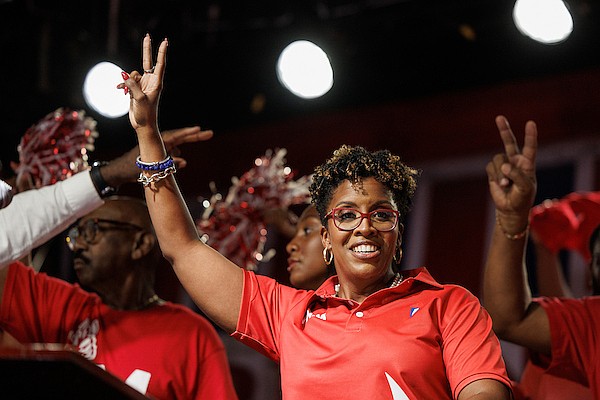
    Phillip went on to contrast the TTPS’ aggressive response to the peace walk with another event that same day: a PNM (People’s National Movement) candlelight vigil held in San Juan, where no police orders to disperse or crowd control measures were implemented at all. “They run home everybody that came to the peaceful walk like dogs…go home!” she wrote in a passionate on-platform statement, emphasizing that the contrast could not be ignored. Crucially, Phillip clarified that she was not arguing any gathering should have been broken up; rather, her goal is to highlight that unequal treatment is being meted out to citizens based on their political ties and public standing. “All citizens have a right to speak out regardless of political affiliation or public profile,” she maintained.

    Beyond the selective treatment of gatherings, Phillip also addressed a separate recent incident involving the arrest of a young man who has attended multiple events tied to the protest movement she helps coordinate. Some online actors have attempted to tie allegedly inflammatory comments made by the young man to the broader movement, but Phillip rejected that broad brush characterization. She identified herself, her mother Camille Caresquero, and Mariah Walcott as the lead organizers of the “19 Bullets, 19 Protests” campaign, which advocates for greater government accountability, transparency, and judicial reform. The arrested man’s personal views do not reflect the positions of the campaign’s organizers, supporters, or core demands, she stressed.

    While she acknowledged that every person holds a right to their own individual opinions, Phillip added that she regretted the young man had chosen to frame his views in a way that was neither respectful nor responsible. She reaffirmed that the “19 Bullets, 19 Protests” movement remains strictly committed to peaceful, lawful advocacy, and that the actions of one individual will not distract supporters from the core issues that brought them together.

    Phillip also expanded her critique to broader, systemic issues of unequal enforcement of public order laws across Trinidad and Tobago. She noted that many citizens have long observed offensive, abusive, racial, and inflammatory comments directed at political leaders and public figures on social media that have not resulted in any enforcement action, reinforcing public perceptions that different standards apply to different groups based on their connections. Phillip stressed she is not endorsing that harmful rhetoric, but argued that the double standard in enforcement cannot be overlooked.

    In a direct rebuke of the TTPS’ approach to protest management, Phillip said: “The TTPS would better serve the public by leading with empathy and understanding rather than ego and defensiveness.”

    Looking ahead, Phillip used her social media reach to promote the movement’s next action: “Protest #18,” a nationwide stay-at-home protest scheduled for today. She encouraged the general public to review educational materials about the movement’s goals shared online, including explanatory videos and social media content accessible via scannable QR codes. For members of the public who are unable to stay home and must report to work on the day of the action, Phillip urged them to wear white clothing and share photos of their participation on social media using the hashtag #Protest18.

    This public statement comes just one week after Phillip and her mother were arrested during a protest held outside the Office of the Director of Public Prosecutions (DPP). The pair appeared before Magistrate Indira Ramnarine Misir-Gosine at the Port of Spain Magistrates’ Court this Monday, where both pleaded not guilty to the two charges stemming from the demonstration.

  • Trio to face court in worker abuse case

    Trio to face court in worker abuse case

    A high-profile case alleging years of systematic abuse, captivity and torture of a 42-year-old domestic worker in southern Trinidad is set for a critical court hearing on Monday, with three defendants – a local businesswoman, her 18-year-old son and a third accused man – scheduled to answer a raft of criminal charges before the Siparia Magistrates’ Court.

    The three accused have been identified as Fareeda Balgobin, her adult son Joshua Benny, and Rohit Sitahal. All charges stem from alleged offenses that investigators say occurred between June 2019 and April 11, 2026, according to official statements from the Trinidad and Tobago Police Service (TTPS).

    The victim, named by police sources as Sabita Basdeo, a mother of two, managed to escape her captors on April 11 and made her way directly to the Barrackpore Police Station to file an official report. When she arrived, officers observed visible, fresh injuries across her face and hands, which she told investigators were the result of prolonged abuse at the hands of the three accused. Basdeo told detectives she had been held against her will, forced to work unpaid domestic labor, and repeatedly tortured at a residential property in Penal. Her allegations include being beaten, burned with hot objects, and having her head slammed repeatedly into walls; she also claims that the accused threatened to kill her if she ever attempted to escape. Captivity is alleged to have been enforced continuously from September 2025 up to her escape in April.

    Official charge documents show Balgobin faces the most severe and extensive list of charges, including one count of kidnapping, one count of false imprisonment, one count of throwing a noxious substance, two counts of inflicting grievous bodily harm, one count of assault occasioning actual bodily harm, one count of choking, and three additional related criminal offenses. Benny faces five charges: one count of kidnapping, one count of throwing a noxious substance, two counts of inflicting grievous bodily harm, and one additional related charge. Sitahal is facing four charges: one count of throwing a noxious substance, two counts of inflicting grievous bodily harm, and one additional related charge.

    Following Basdeo’s report, the TTPS launched a full criminal investigation, which was assigned to PC Lee Lum and overseen by a team of senior law enforcement officials including Senior Superintendent Simon, W/Supt Bridgelal, ASP Chulhan, Insp Ramdial, Insp Nandlal and Insp Maharaj. Legal guidance for the investigation was provided by ASP Phillip, and formal charging instructions were issued on June 3 by Supt Bridgelal with assistance from Sgt Bassarath.

    Both Balgobin and Benny have been held in police custody since April 20, after Homeland Security Minister Roger Alexander signed preventative detention orders for the pair in accordance with Paragraph 2 of the Schedule to the Emergency Powers Regulations of 2026. The detention orders name Balgobin as a resident of multiple addresses in Penal’s San Francique district, and allege that she is a confirmed member of an organized Informal Crime Group (ICG) operating across the Penal region. Investigative intelligence linked to the detention order names the group as being responsible for a pattern of serious criminal activity including kidnapping, false imprisonment, forced labor, grievous sexual assault, serious indecency, and attempted murder. Authorities also confirmed that the group had made explicit threats to kill witnesses in the case to prevent prosecution.

    The case has been marred by suspicious interference: just four days after Basdeo’s escape, on April 15, one of Balgobin’s unoccupied residential properties was damaged in a fire. No people were present at the property at the time of the blaze, and no injuries were reported. But responding officers found evidence that the fire was intentional arson: a broken bedroom window and forensic confirmation that a Molotov cocktail had been thrown at the building. No additional suspects have been named in connection with the arson to date.

    Monday’s court appearance marks the first public procedural step in a case that has shone a spotlight on the risks of abuse and exploitation faced by domestic workers in Trinidad and Tobago, and tested the country’s emergency preventative detention powers for organized criminal groups.

  • Gonzales: PNM ready to fight SoE in court

    Gonzales: PNM ready to fight SoE in court

    Trinidad and Tobago’s main opposition party, the People’s National Movement (PNM), is gearing up to take legal action against any planned extension of the country’s ongoing state of emergency, a senior party figure has confirmed. Marvin Gonzales, former national security minister and the Member of Parliament for Arouca/Lopinot, laid out the opposition’s plans during a public party gathering held in San Juan’s Croisée district on Wednesday evening.

    Gonzales told attendees that the PNM has already put together a full legal team, ready to submit a constitutional motion to the courts if the ruling United National Congress (UNC) government moves forward with its reported plan to seek parliamentary approval for another extension of the emergency measures. According to Gonzales, the administration has already publicly indicated it will return to parliament to extend the state of emergency, prompting the opposition’s pre-emptive legal preparations.

    “Tonight, we serve formal notice to the government: we have assembled our legal team, which stands ready to file a constitutional motion to bring an end to this unlawful and unconstitutional state of emergency in Trinidad and Tobago,” Gonzales stated to assembled supporters.

    The core of the opposition’s argument centers on claims that the current use of emergency powers violates core constitutional rights and freedoms guaranteed to Trinidad and Tobago’s citizens. Gonzales emphasized that the PNM is seeking a definitive judicial ruling on whether the ongoing extension of emergency measures aligns with the country’s constitution, pointing to a landmark legal precedent set in neighboring Jamaica as supporting evidence for the PNM’s case.

    In 2023, a three-judge panel in Jamaica ruled that a series of state of emergency proclamations issued in late 2022 were invalid, on the grounds that the measures violated the constitutional principle of separation of powers. The ruling rejected the Jamaican government’s use of rolling states of emergency as a long-term crime-fighting tool, a position Gonzales says applies equally to the situation in Trinidad and Tobago.

    “Enough is enough. This was already tested in Jamaica, and the Jamaican courts ruled that you cannot use repeated, rolling states of emergency to control crime and lawlessness,” Gonzales said. He added that the PNM was pursuing the legal challenge “standing in defence of democracy” and “standing in defence of the people of Trinidad and Tobago.”

    Beyond the constitutional argument, Gonzales leveled a sharp accusation against the ruling government: he claimed that the state of emergency is not being used to curb rising criminal activity as the administration has claimed, but rather to suppress political opposition and silence dissenting voices across the country.

    “Today in Trinidad and Tobago, the state of emergency and its associated regulations are not being used to protect you. They were never intended to protect the people of this country,” Gonzales said. “They have always been intended to be weaponized to suppress the population, so that the government can act with impunity in every corner of this nation.”

    Gonzales also questioned the foundational justifications the government has used to bring in and extend previous states of emergency. He noted that the administration has repeatedly justified the measures by citing alleged threats against senior law enforcement leaders, sitting members of parliament, and judicial officials. However, he claimed that to date, not a single person has been arrested or charged in connection with any of these alleged threats.

    “They lied to the people of Trinidad and Tobago when they claimed there were threats against senior law enforcement officers and members of parliament,” Gonzales said. “Today, not one person has been arrested for these so-called threats against senior officials. Not one person has been arrested or charged for any purported threat against members of the Judiciary or members of the government.”

  • Chief Magistrate recuses himself from all cases involving Jomo Thomas

    Chief Magistrate recuses himself from all cases involving Jomo Thomas

    A dramatic shift in judicial procedure has unfolded at the Kingstown Magistrate’s Court in St. Vincent and the Grenadines, after Chief Magistrate Colin John made the unusual decision to step away from every legal matter that features defense attorney Jomo Thomas as part of the legal team. The unprecedented recusal was triggered by a controversial social media post that John claims was published by Thomas on Facebook.

    The announcement was made publicly in open court on Monday, during a scheduled hearing for 35-year-old Okeeno Fergus, a resident of Lowmans Windward who is currently facing two firearms-related charges. Fergus stands accused of illegally possessing a Smith and Wesson M&P Shield 9mm pistol and eight live rounds of 9mm ammunition on May 17 at his Lowmans Windward residence, in violation of the country’s Firearms Act.

    When Fergus was first arraigned before Chief Magistrate John on May 18, he entered a not guilty plea to both charges, appearing in court with a white medical dressing covering a wound on his forehead. John granted Fergus bail set at 15,000 Eastern Caribbean dollars, conditional on one surety, required the defendant to comply with regular police reporting conditions, and adjourned the initial proceeding for June 1. When Fergus returned for Monday’s hearing, the forehead wound had healed enough that he no longer required the dressing.

    Beyond the Fergus firearms case, John also confirmed his recusal from a separate high-profile drug trafficking matter in which Thomas serves as defense counsel. That case involves 36-year-old Sebastian Audain (also known as Bush) of Lowmans Bay and 36-year-old Alvin Cyrus of Largo Height, who are charged with possession of 22.9 pounds of cocaine.

    Following John’s announcement, the Chief Magistrate adjourned Fergus’ firearms case to the next business day, to be heard by a different judicial officer at the same Kingstown courthouse. When the case moved to Senior Magistrate Tammika McKenzie’s courtroom on Tuesday, McKenzie initially requested clarification from Thomas on why the matter had been reassigned to her docket. Thomas confirmed that Chief Magistrate John had issued a blanket recusal from all cases where he represented a client.

    In a surprising procedural outcome, Senior Magistrate McKenzie adjourned Fergus’ case all the way to February 2027, a multi-year delay that marks an unusual timeline for a routine firearms hearing. This case is not the first time Thomas has represented Fergus in legal proceedings: court records show that in 2022, a High Court judge ordered the state and police Corporal Mohammed Lavia to pay financial compensation to Fergus after Lavia shot Fergus in the leg during an incident in Owia, with Thomas serving as Fergus’ legal representative in that civil claim.

  • Gonsalves says ULP will make swift political comeback

    Gonsalves says ULP will make swift political comeback

    KINGSTOWN, St. Vincent – Just months after suffering a landslide electoral defeat that ended a quarter-century of incumbency, the leader of St. Vincent and the Grenadines’ main opposition Unity Labour Party (ULP) Ralph Gonsalves is already positioning his party for a rapid return to national office, citing a burgeoning governance crisis that has eroded public trust in the ruling New Democratic Party (NDP) administration.

    In a wide-ranging interview broadcast on local radio, the former prime minister outlined what he frames as an undeniable “Labour resurgence” across the country, fueled by growing public discontent with the NDP’s first term in office. Gonsalves argued that the current government has overseen a rapid deterioration of national conditions that touches every sector of Vincentian life, from economic stability and public safety to core government administration.

    He accused the sitting administration of operating on unresponsive “autopilot”, claiming its leaders fail to grasp the full scope of the crises they have allowed to unfold, and lack the strategic vision to address the complex challenges facing the small island nation. “The present administration has no knowledge of how to proceed” on key issues impacting ordinary Vincentians, Gonsalves told radio listeners.

    The ULP leader highlighted a recent well-attended national council meeting that drew large participation from public sector workers, including teachers and police personnel, as proof of the growing momentum behind the opposition. He described the turnout as a demonstration of “the might and influence of the labour family”, noting that the display of grassroots support has left the current NDP government “dazed and frightened”.

    Gonsalves went further, claiming that even long-time staunch supporters of the NDP now privately predict the current administration will be limited to a single term, with some suggesting it could collapse and leave office ahead of the end of its scheduled mandate. He called on the ruling party to take accountability for its missteps, saying, “Grown men and women need to stand up when they’ve made mistakes and say ‘I made a mistake.’”

    For Vincentians disillusioned with the current government, Gonsalves asserted, “The only option available is the Unity Labour Party.” He added that growing numbers of citizens are reaching out directly to party headquarters and contacting him personally for guidance, a trend he says reflects eroding confidence in the NDP. Reaffirming the ULP’s deep roots in Vincentian politics, he said the party is ready to provide the decisive, competent leadership that is currently missing from national governance.

    Addressing the everyday concerns of working people, Gonsalves gave a direct assurance: “Labour has your back.” He urged ULP supporters to remain united, arguing that the ruling government’s attempts at “fear-mongering” and intimidation of civil servants who align with the opposition will ultimately fail. As public frustration grows, he noted, “people are getting less afraid” to openly associate with the Unity Labour Party, blunting the administration’s efforts to slow the opposition’s growing momentum.

    While Gonsalves remains actively engaged in regional and international affairs through his longstanding work with regional organizations, he made clear that his top priority right now is advancing the local resurgence of the ULP. Though he stopped short of predicting an exact timeline for a return to power, admitting he cannot know who will hold the prime minister’s office 12 months from now, he said mounting disarray within the NDP administration makes a swift ULP comeback far more likely than not.

    The ULP was ousted from power in a historic November 2025 election, losing by a lopsided 14-1 margin after 25 consecutive years leading the country. That defeat marked one of the most dramatic electoral upsets in Vincentian politics since 1989, when the NDP won all 15 parliamentary seats in another historic landslide.

  • Hermanos Martínez Tamayo Pre-University Institute: A Distinctive, Innovative, and Demanding Educational Model

    Hermanos Martínez Tamayo Pre-University Institute: A Distinctive, Innovative, and Demanding Educational Model

    On Thursday, June 5, 2026, Cuban President and First Secretary of the Central Committee of the Communist Party Miguel Díaz-Canel Bermúdez undertook an official visit to the unique Hermanos Martínez Tamayo Vocational Pre-University Institute, operated by the country’s Ministry of the Interior (Minint) in Havana’s Playa municipality. He was joined on the visit by Lázaro Alberto Álvarez Casas, Minint Minister, Army Corps General and member of the Communist Party Political Bureau.

    The visit came at the direct request of a student from the institute, who raised the invitation during a previous public event where the two leaders crossed paths. During an open, heartfelt exchange with students, graduates, faculty and institutional leadership, Díaz-Canel offered high praise for the institute’s educational framework, labeling it a “distinct, innovative, and demanding educational model” that aligns with the revolutionary vision first laid out by Fidel Castro during the development of the Battle of Ideas initiative.

    Díaz-Canel told attendees he was particularly impressed by the institute’s ability to maintain its high standards of operation for decades, including through the ongoing challenging period that has strained educational systems across Cuba. He noted that the Ministry of the Interior, already widely recognized by the Cuban people for its critical public service, has extra reason to take pride in hosting such an exceptional educational institution.

    Commenting on the institute’s well-maintained, orderly and welcoming campus, the president emphasized that holistic education extends far beyond textbook curriculum. Physical environments that nurture and inspire the spirit, he explained, are a core component of meaningful learning that prepares young people for public life.

    Throughout the conversation, which preceded a guided tour of the institute’s classrooms and research laboratories, Díaz-Canel stressed the ongoing importance of fostering critical thinking, revolutionary commitment, and well-rounded personal development to prepare young Cubans to contribute to the country’s socialist construction project as engaged, responsible citizens. After hearing personal accounts from students, professional insights from graduates, and reflections from teaching staff, the president noted that the visit offered a critical morale boost amid the country’s current complex context, which has been shaped by persistent external aggression from the United States. “Talking with you, seeing your willingness, your commitment, your training, and the way you express yourselves, also reaffirms the feelings of appreciation one has for this institution. This strengthens us greatly and also gives us a lot of energy,” he stressed.

    Díaz-Canel extended an invitation to students to join the Community Youth Network, a new grassroots initiative that organizes Cuban youth for neighborhood-focused public service work. He also urged attendees to prioritize rigorous study, deep exploration of history and science, and independent inquiry, explaining that these practices build the knowledge and critical perspective needed to make thoughtful, informed decisions that benefit the nation. The conversation also included open discussion of the severe economic and social strain placed on Cuba by the United States’ long-running suffocating embargo policy.

    In comments to reporters following the visit, institute director Colonel Vivian Sabuquet Larrondo outlined the institution’s 22-year legacy of public service. As the only pre-university of its kind in Cuba, the school holds a unique mission: training the next generation of Minint officers and personnel, while also preparing graduates who choose to pursue civilian higher education. To date, more than 4,000 young people have graduated from the program, many of whom now serve in the Ministry of the Interior.

    Sabuquet Larrondo explained that the institute delivers a fully holistic education that integrates patriotic formation, military preparation, physical education, cultural programming, athletic opportunities, and cutting-edge instruction in technology and scientific development. Students enter the institution between the ages of 14 and 15, graduate at 17, and learn from a faculty of highly experienced educators who bring strong professional expertise and a deep commitment to core revolutionary values. Beyond academics, the school instills foundational life skills including disciplined coexistence, strong work ethic, solidarity, humanism, and patriotism, with ongoing support from students’ family members. “I think the most important thing is the contribution we have made, not only to the Ministry of the Interior, but also to society,” Sabuquet Larrondo noted.

  • Cuba resumes production of cytostatic drugs

    Cuba resumes production of cytostatic drugs

    Against a backdrop of crippling economic constraints and a steadily tightening U.S. economic, commercial, and financial blockade, Cuba has marked a major milestone in protecting public health: the full restart of production at the AICA Laboratories cytostatic drug facility, following a targeted expansion investment designed to boost domestic output of critical cancer treatments.

    The reopening event, held on June 5, 2026, brought together senior leaders from Cuba’s biopharmaceutical sector and public health system, including BioCubaFarma president Mayda Mauri Pérez, who hosted Minister of Public Health José Angel Portal Miranda during an official tour of the upgraded facility. The visit underscored the close cross-sector collaboration between the national biopharmaceutical industry, the Ministry of Public Health (Minsap), and the Cuban government – a partnership that officials say was instrumental to completing the expansion and restart despite the country’s ongoing external pressures.

    Per an official update shared to BioCubaFarma’s Facebook page, the production restart is being carried out as a gradual, carefully monitored process. Each stage of manufacturing will be brought online incrementally, a deliberate approach chosen to guarantee consistent technological stability and adherence to Cuba’s strict quality standards for pharmaceutical products.

    Following the expansion, the upgraded plant is now positioned to supply 16 different cytostatic (cancer-fighting) medications to Cuba’s National Program for the Care of Cancer Patients. Production scheduling has been structured to prioritize the drugs classified as most clinically critical, aligned with needs assessments coordinated directly with Minsap.

    Speaking during the reopening ceremony, Portal Miranda emphasized that even amid widespread economic limitations, the facility’s return to operation represents a critical step forward in securing consistent access to life-saving cancer treatments for the Cuban people. Mayda Mauri Pérez echoed this sentiment, noting that the intersectoral alliance between the biopharmaceutical and public health sectors has emerged as an essential bulwark protecting drug access for Cubans, even as the U.S. blockade has intensified in recent years.

    The event also included participation from practicing Cuban oncologists, who held working discussions with facility leadership to align production priorities with real-time clinical needs on the ground. This direct input ensures that output from the plant will directly address the most pressing care demands facing patients across the country.

    Far from being an isolated infrastructure milestone, the restart of the AICA Laboratories plant stands as a clear illustration of the coordinated mission that unites Cuba’s biotechnology sector and public health system: to guarantee access to essential medications for all citizens, regardless of external pressures. For a country grappling with externally induced supply shortages, every treatment produced at this expanded facility represents more than just medicine – it is a testament to Cuban public health sovereignty, a source of hope for thousands of patients and families, and a reaffirmation of the state’s longstanding commitment to the universal right to health.

  • Five Islands Campus Claims Three Medals in First-Ever UWI Games Campaign

    Five Islands Campus Claims Three Medals in First-Ever UWI Games Campaign

    The 2026 edition of the University of the West Indies (UWI) Games has drawn to a close at the St. Augustine Campus in Trinidad and Tobago, capping off a week of elite regional collegiate athletic competition defined by fierce on-court rivalries and powerful cross-border unity. Defending champions Mona Campus cemented its status as the dominant force in UWI athletics by retaining the overall tournament title, while the Five Islands Campus turned heads with an extraordinary fourth-place finish in its first ever Games appearance.

    Under the tournament theme “Reunited, Reignited, Ready,” the competition brought together hundreds of student-athletes from all of UWI’s geographically scattered campuses, uniting Caribbean communities through shared sporting passion. In their breakthrough debut, the Antigua and Barbuda-based Five Islands Campus amassed three bronze medals and 44 total points, finishing ahead of the UWI Global Campus to announce itself as a legitimate emerging competitor in the regional tournament. The new program claimed bronze in three high-profile team events: men’s basketball, men’s football, and women’s volleyball.

    Mona Campus, the Jamaican flagship campus of the UWI system, delivered a dominant performance across multiple disciplines to defend its title. The campus claimed gold in seven events – including women’s football, women’s basketball, and men’s volleyball, alongside dominant wins in cricket, table tennis, tennis, and track and field – adding five silver and two bronze medals to finish atop the final standings with 136 total points.

    Host campus St. Augustine claimed second place overall with a total of 114 points, earned from four gold, four silver, and five bronze medals. The Trinidadian squad took home top honors in swimming, men’s basketball, men’s football, and hockey. Barbados’ Cave Hill Campus rounded out the top three with 108 points, notching three gold (in women’s netball, women’s hockey, and women’s volleyball), five silver, and four bronze medals. The UWI Global Campus, which fielded its largest contingent in the history of the tournament, finished fifth with 22 points; the campus earned one individual accolade, as Imani Edwards Taylor took home Most Valuable Player honors for table tennis.

    The official closing ceremony, held at the campus’ Sport and Physical Education Centre (SPEC), celebrated both individual athletic excellence and the enduring power of Caribbean regional integration. Attendees watched highlight reels of the week’s most iconic moments, joined a celebratory processional, and gathered for the official medal and award presentation before closing remarks from key institutional and government leaders.

    In her address to competing student-athletes, Professor Rose-Marie Belle Antoine, Pro Vice-Chancellor and Principal of the St. Augustine Campus, emphasized the core values that sport fosters beyond competition. Urging participants to carry the lessons of honor, courage, fairness, reliability, and discipline into all areas of their lives, she noted that lasting athletic success is only earned through merit, consistent hard work, and intentional discipline. She framed the UWI Games as a critical demonstration of regional unity, saying, “We come from different territories, campuses and cultures, we are part of one extraordinary region,” and encouraged students to nurture cross-Caribbean connections long after the tournament concluded. She also extended gratitude to the volunteers, organizers, sponsors, and participating campuses whose collective work made the successful return of the tournament possible.

    Speaking on behalf of UWI Vice-Chancellor Sir Hilary Beckles, Mona Campus Principal Professor Densil Williams praised the St. Augustine community for delivering what he called “Caribbean hospitality at its best.” Trinidad and Tobago’s Minister of Tertiary Education and Skills Training, Senator Emeritus Professor Prakash Persad, also addressed the gathering, drawing on his own experience as a school cricketer and martial arts practitioner to emphasize that the tournament’s value extends far beyond medal counts. “It is about growth, connection, and the pursuit of excellence. It is about building character, accepting losses as well as victories,” Persad said. “It is not only useful to produce graduates who are good academically but graduates who are physically strong, mentally resilient, emotionally balanced and socially aware.” He also called for the addition of martial arts to future tournament programs and encouraged students to prioritize sport as a core pillar of personal development.

    The ceremony concluded with the official handover of hosting duties to Cave Hill Campus, which will organize the 2028 UWI Games. Deputy Campus Principal Professor Winston Moore accepted the ceremonial baton from St. Augustine Deputy Principal Professor Derek Chadee, formally marking the start of preparations for the next iteration of the regional competition. Closing celebrations continued with vibrant cultural performances, live music, and an open-air reception, bringing an end to a tournament that showcased top-tier Caribbean collegiate athletics, fostered cross-island camaraderie, and introduced a promising new competitor to the UWI sporting landscape.

  • COMMENTARY: Language is Infrastructure

    COMMENTARY: Language is Infrastructure

    When we talk about critical infrastructure that holds modern communities together, most minds jump to highways, high-speed internet pipelines, power grids, and water treatment systems. These physical and digital frameworks are visible, their failures make headlines, and billions in investment flow into upgrading them every year. Yet one of the most foundational structures shaping every part of daily life, global collaboration, and cultural exchange remains almost entirely overlooked in these conversations: language. This commentary makes the case that language deserves to be framed and understood as infrastructure, because like any other core system, it enables connection, enables access to opportunity, and breaks down when it is not properly maintained and invested in.

    Infrastructure, at its core, is any interconnected system that enables the movement of people, goods, ideas, or services between different groups. Without a shared, functional language system, this movement grinds to a halt. A doctor cannot diagnose a patient if they cannot understand each other’s descriptions of symptoms. A business cannot close an international trade deal if negotiators cannot exchange clear, nuanced terms. A student cannot access knowledge written in an unfamiliar script or vocabulary, cutting them off from educational opportunity that would advance their life and career. Just as a broken bridge stops trucks from delivering food to cities, a gap in shared language stops critical resources from reaching the people who need them.

    This framework becomes even more relevant as the world grows more interconnected through digital communication and migration. Multilingual societies across Europe, North America, and beyond face growing pressure to support multiple language communities, rather than sidelining minority or migrant languages in favor of a single dominant tongue. When governments fail to invest in translation services, bilingual education, and accessibility for non-dominant language speakers, they create systemic barriers that exclude millions from public services, voting rights, and economic participation. This is equivalent to underfunding rural road networks, leaving entire communities cut off from the mainstream.

    Critics may argue that framing language as infrastructure dilutes the meaning of the term, but this perspective misses the core function that both systems serve. Infrastructure does not have to be physical to be critical. Digital infrastructure, like cloud server networks or 5G towers, is widely accepted as critical, even if most people never see the physical hardware. Language operates the same way: it is an invisible system that powers every interaction across public and private life. Neglecting it, like neglecting any other infrastructure, leads to growing inequality, disconnected communities, and missed opportunities for collaboration and progress. Recognizing language as infrastructure is the first step to investing in it more intentionally, building more inclusive connected societies for everyone.

  • OP-ED: The Watchman Has Walked Off the Wall What hurricanes cost a small island and why climate denial in Washington is a sentence passed on us

    OP-ED: The Watchman Has Walked Off the Wall What hurricanes cost a small island and why climate denial in Washington is a sentence passed on us

    As June ushers in the 2026 Atlantic hurricane season, the long-held Caribbean rhyme that guides seasonal preparation still echoes across the archipelago: June too soon, July standby, August a must, September remember, October not yet over. For generations, this rhyme has been more than a folk tradition — it is a survival manual, etched into collective memory by countless storms that have rewritten lives and landscapes.

    I grew up in St. Vincent & The Grenadines, and one story has never left me. In November 1999, Hurricane Lenny defied all seasonal expectations, roaring from the west into a coast generations had considered safe. A friend of mine, Joseph, had just finished seven years of skipping lunches and mending nets to pay off his 30-foot fishing boat. He tied it to shore with three heavy ropes, but by dawn, only the frayed ends of those ropes remained. The boat was gone. Joseph did not cry. He just sat on the beach, where the storm had rearranged the sand into an unrecognizable landscape. A month later, he left for work on a cruise ship out of Miami. In 25 years, he has come home only four times. This is what hurricanes do to small island communities: they do not always kill you, but they yank the life you built out from under your feet, forcing you to live it on someone else’s terms.

    The crisis grew more urgent just last year. In July 2024, Hurricane Beryl became the earliest Category 5 storm ever recorded in the Atlantic, cutting a devastating path through the Grenadines. Ninety percent of Union Island’s housing stock was destroyed, and every roof on the small island of Mayreau was torn off. Three weeks after the storm, I met a woman named Celia there, who had sheltered in a stone church with her two children through the worst of it. When the eye of the storm passed over, her four-year-old son Malachi looked up and asked, “Mummy, is God angry at us?” Celia told him no, but she hid the truth: the church walls were shaking, and the stained glass had shattered into a horizontal rain of colored shards. When they emerged, only one wall of their home was still standing. Pinned to that wall, where their kitchen once stood, was Malachi’s baby photograph. That photo will likely cross oceans before Celia ever sees a cent of payout from the global Loss and Damage fund promised to vulnerable nations.

    This is not just a story of bad weather. The Caribbean has warmed by nearly 2°F since 1980. That number is not an abstract statistic: it is why Beryl reached Category 5 strength in July, months earlier than the historic peak of the season. For Caribbean nations, hurricanes are never just weather events — they are reverse development, erasing decades of progress in a single night. When Hurricane Maria hit Dominica in 2017, it caused damage equal to 226% of the country’s annual GDP. More than two full years of the nation’s collective output was destroyed overnight. Ninety percent of all housing was leveled, the entire power grid was knocked out, and poverty rates were projected to jump to 43%. With no disaster reserve to draw on, Dominica was forced to borrow against its children’s future to rebuild what its people had already paid for once.

    What you will not find in World Bank reports is the human cost of repeated disaster. Maria struck Dominica just two years after Tropical Storm Erika had already gutted much of the island. After Maria, a teacher in Roseau told me of 12-year-old students who had already lost three homes since 2015. Three homes, one childhood. Small island nations are hit again before we can finish rebuilding from the last storm, mortgaging the same schools and clinics twice in a single generation — and paying interest on the debt we did not ask for. We call the constant endurance of this trauma “resilience”, but the truth is, these children are not resilient. They are exhausted. We use the word resilience because the alternative — admitting that we have abandoned them to this fate — is too unbearable to face.

    This year, the U.S. National Oceanic and Atmospheric Administration (NOAA) is forecasting a below-normal hurricane season, and many breathed a sigh of relief. But we in the Caribbean know better. We cannot afford to relax. Every leading forecaster attaches the same critical warning to this outlook: it only takes one storm to destroy a generation. A “quiet” season does not mean no dangerous storms — it just means fewer chances that the deadly storm will miss your island home.

    Who stands watch with us over the Atlantic sky today? That question has a newly devastating answer: the global power that once led climate science and storm forecasting has deliberately walked away from its post. In February 2025, the current U.S. administration revoked the decades-old legal finding that greenhouse gases endanger human health, even as the U.S. National Academies of Sciences confirmed that the evidence of climate harm is stronger than ever. The administration did not even bother to refute the peer-reviewed science — it simply stepped around it. A sitting cabinet secretary openly declared that “CO₂ was never a pollutant.” Imagine that: a politician sitting in a temperature-controlled office in Washington declaring carbon emissions harmless, while the people of Mayreau climb through the rubble of their collapsed homes and shattered lives. That official will never have to bury a neighbor killed by a storm that could have been forecast. They live in a world where the bill for climate change is sent elsewhere: to small islands that contributed almost nothing to global emissions, but are paying nearly the full price.

    This climate denial is not just words — it has tangible, deadly consequences. Washington has already cut hundreds of jobs from the U.S. National Weather Service and proposed slashing funding for the Miami forecasting laboratories that refine Atlantic storm tracking. Experts warn that without this work, hurricane forecasting accuracy could drop by as much as 40%.

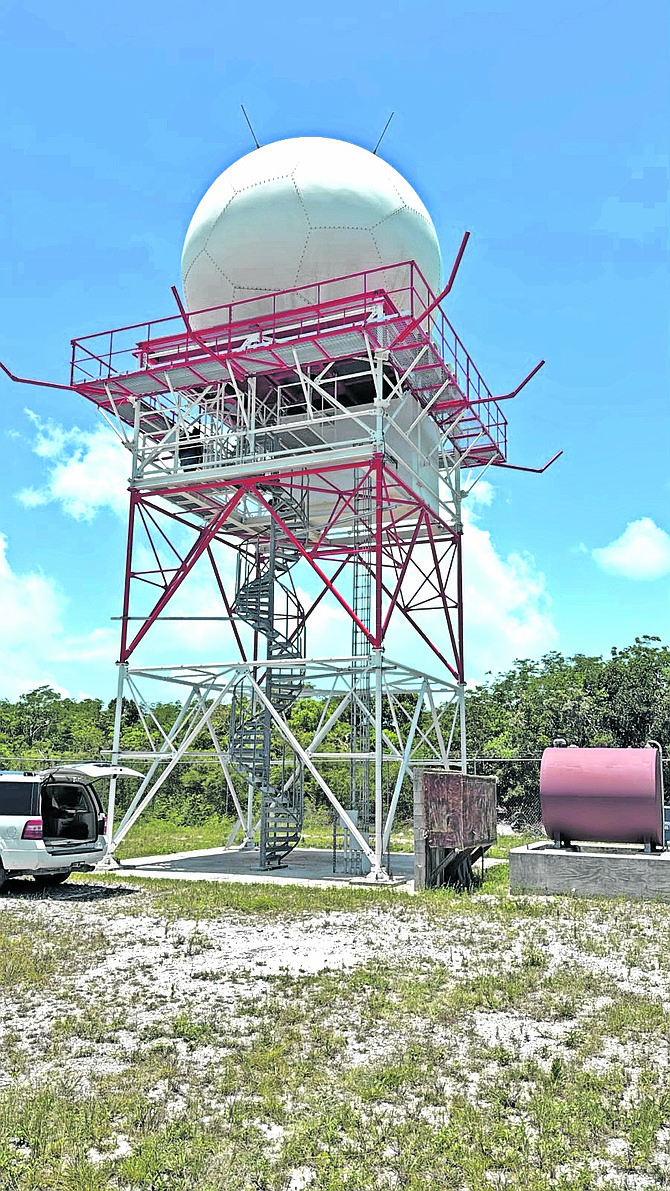
    Translate that into the lived reality of a mother in Basseterre, Bridgetown, Castries, Kingstown, Kingston, St Georges or St John’s. That 40% drop in accuracy is the difference between getting your grandmother to safety before the storm hits, and leaving her behind because forecasters said the storm would turn north. That is not a statistical error in a climate model — that is the difference between life and a search party. Storms draw their strength from warm ocean water, heated by the same carbon emissions Washington now declares harmless. The forecast cone that tells a family when to board up their home and evacuate comes out of those Miami labs. When Washington chooses to blind itself to climate science, it blinds us too.

    The Caribbean scholar Lloyd Best once taught us to see our regional economy as a modern plantation: built for the benefit of wealthy global powers, with our survival treated as an afterthought. The tools meant to protect us have always been held in other people’s hands. The United States has now withdrawn from the Paris Agreement, abandoned its seat on the board of the global Loss and Damage Fund, and let its climate pledges evaporate. When the world’s largest historical emitter decides that science is negotiable, we get no vote. We just get the bill and a fresh grave to dig. The colonial mindset did not disappear — it was repackaged as a domestic budget cut, sold to U.S. voters as “putting America first”.

    But the failure is not only Washington’s. Earlier this year, when the Pacific small island nation of Vanuatu brought its landmark International Court of Justice ruling on climate change to the UN General Assembly — asking only that all nations affirm their legal duty to protect vulnerable climate frontlines — one Caribbean nation, Trinidad and Tobago, was absent from the vote. It did not oppose the measure, did not abstain, it simply did not show up, even as a sister island spoke for all small island developing states. We cannot demand global solidarity if we refuse to practice it ourselves.

    This is no time to endure this crisis and then forget it. The U.S. president who rolled back climate protections will hold office for this season and two more, but the damage he has done will not expire when his term ends. A generation of climate-resilient infrastructure and forecasting capacity can be destroyed in one season, and takes a decade to rebuild. Whoever succeeds him will inherit a watchtower with its eyes already put out. When we say the Caribbean cannot wait, we mean it: we are facing three more hurricane seasons with a warning system that has been deliberately starved of funding and authority. Our lives are on the line, and waiting is just wagering our lives to appease political interests in a distant capital. We refuse to wager our lives.

    Lament must become a vow, because despair is just dependency in darker clothing. We are not starting from nothing: we already have a regional disaster agency that responded rapidly to Beryl, an insurance facility that delivers payments within days, and a meteorological institute in Barbados that trains our own forecasters. All that is missing is scale, sustained financing, and the political will to take ownership of our own protection.

    So it is time for us to build it ourselves. Let us build our own independent satellite reception, free from the budget cycles and political whims of foreign governments. Let us build our own regional forecasting centre, free to issue warnings without needing a signature from Miami. Let us create our own regional disaster bond facility, funded by a small levy on the tourism industry that profits from our beautiful beaches, while we bear all the climate risk.

    Let us set clear, binding deadlines: by the 2029 hurricane season, we will have a fully Caribbean-owned, regional forecasting capability. By 2030, we will have a fully regionally capitalized disaster bond mechanism. This work does not need Washington’s permission — it only needs our collective resolve.

    We must build this for the people who actually call this region home: for Celia and Malachi, for the 12-year-old children in Roseau who have lost three homes before they even hit puberty. I think of those families huddled around their radios, straining to hear a voice that can see the storm coming before it hits them. That voice is being deliberately switched off, thousands of miles away in another hemisphere. The watchman has walked off the wall, and called that action freedom. But the wall is still ours. Our children are still behind it. No one is coming to save us. We have to hold it ourselves.