作者: admin

  • Sir Lester Bird Medical Centre Responds to Allegations Over Patient Treatment

    Sir Lester Bird Medical Centre Responds to Allegations Over Patient Treatment

    Amid rising public concerns over undisclosed patient care issues at one of Antigua and Barbuda’s key public healthcare facilities, the Sir Lester Bird Medical Centre has released an official statement outlining its response to the allegations. Hospital leadership emphasized that the institution maintains a zero-tolerance stance for any lapses in patient well-being, clinical care quality, and the professional behavior of its staff, and treats every report or concern raised about these core areas with the highest level of urgency and seriousness.

    Bound by legal and ethical obligations to protect patient confidentiality and personal privacy, the facility has declined to share any details about the specific case triggering the current review. Leaders confirmed, however, that a comprehensive, end-to-end audit of the patient’s entire care trajectory is already in progress, with independent oversight to ensure the review remains impartial and thorough.

    As part of the ongoing evaluation process, hospital administrators noted that senior management will reach out directly to the patient’s family to create a space for their concerns to be voiced, and will work to address any gaps or issues that are uncovered during the audit. In closing, the Sir Lester Bird Medical Centre reaffirmed its long-standing institutional commitment to delivering clinically excellent, safe, and compassionate care to all members of the public. Leadership added that the facility will implement any corrective or preventative measures required to uphold its established care standards, regardless of the scope of changes needed.

  • Handel, investeringen en verbindingen rode draad bezoeken Brazilië en Dominicaanse Republiek

    Handel, investeringen en verbindingen rode draad bezoeken Brazilië en Dominicaanse Republiek

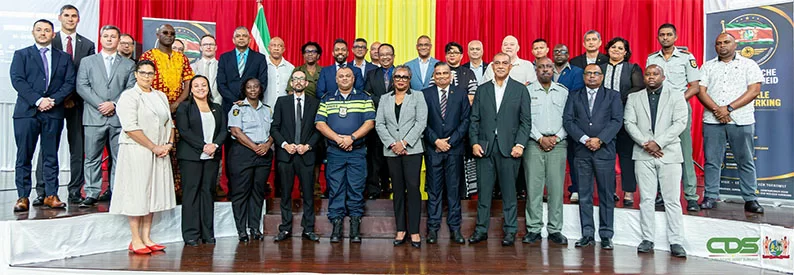
    In a press briefing held on June 5, Suriname’s President Jennifer Simons and Minister of Foreign Affairs, International Trade and Cooperation Melvin Bouva outlined concrete outcomes from recent official visits to Brazil and the Dominican Republic, announcing the government’s plan to speed up the expansion of economic cooperation with both Latin American and Caribbean nations. The cooperation strategy centers on eight core priority areas: trade, cross-border investment, agriculture, tourism, energy, improved transport connectivity, and national food security.

    President Simons emphasized that the diplomatic missions were intentionally structured to deliver tangible, actionable results rather than symbolic diplomatic engagements, with formal monitoring mechanisms established to track the implementation of all signed agreements. With Brazil, Suriname has locked in new arrangements covering a wide range of sectors, from trade, investment and agriculture to public security, energy, infrastructure, air and maritime connectivity, healthcare, and digital technology.

    One of the most high-priority initiatives discussed is the establishment of a direct maritime shipping route between Suriname and Brazil, a project Suriname’s government says will cut transit times and transportation costs for cross-border goods movement. Simons noted that this new link will not only bring down consumer prices for Surinamese households but also unlock new export opportunities for key domestic products, most notably Surinamese rice. Minister Bouva added that two private companies have already expressed formal interest in operating the new route, with one already holding technical consultations with Suriname’s Ministry of Transport, Communication and Tourism to work out operational details.

    For its partnership with the Dominican Republic, Suriname has agreed to a multi-year cooperation framework and signed six bilateral agreements covering tourism, agriculture, energy, trade, and broader economic collaboration. The Surinamese government is actively targeting new foreign direct investment from the Dominican Republic, with a particular focus on growing the country’s agriculture and tourism sectors.

    President Simons highlighted that deepened regional economic cooperation has grown increasingly critical amid shifting global geopolitical dynamics and persistent disruptions to global supply chains. Against this backdrop, she argued, Suriname must prioritize strengthening its food security, energy security, and regional connectivity to build economic resilience. All agreements reached during the visits are scheduled for implementation over the coming months, with the government projecting that the expanded partnerships will ultimately generate increased trade flows, higher investment volumes, and broader economic opportunity for the people of Suriname.

  • Ghana’s parliament passes anti-LGBTQ+ bill

    Ghana’s parliament passes anti-LGBTQ+ bill

    In a move that has sent ripples across both national and international spheres, Ghana’s unicameral parliament has passed a widely debated anti-LGBTQ+ bill, marking a significant shift in the West African nation’s legal framework around gender and sexual identity.

    The legislation, which had been tabled and debated for more than three years among legislative bodies and civil society groups, cleared the final voting hurdle this week after rounds of heated discussions between proponents and opponents. Backers of the bill have argued that it aligns with Ghana’s deeply rooted cultural and religious norms, which have historically framed same-sex relations as inconsistent with national values. Many conservative faith leaders across the country’s majority Christian and Muslim communities have publicly thrown their support behind the measure, framing it as a necessary step to protect traditional family structures.

    However, the bill has drawn fierce criticism from domestic human rights organizations, global LGBTQ+ advocacy groups, and many Western governments, which have warned that the legislation could deepen systemic discrimination, fuel violence against marginalized queer and trans people in Ghana, and undermine the country’s commitments to international human rights standards. The legislation includes provisions that criminalize certain forms of same-sex relations and public identification as LGBTQ+, while also imposing legal penalties for individuals and organizations that support or advocate for LGBTQ+ rights.

    International development partners have also raised concerns that the bill’s passage could impact future aid and trade relations with Ghana, a key economic and political partner in West Africa that has long maintained close ties with Western donors. Domestic opposition groups have already announced plans to challenge the legislation in Ghana’s Supreme Court, arguing that it violates constitutional protections for equality and freedom of expression and assembly. Meanwhile, protests both in support of and against the bill have erupted across major Ghanaian cities, highlighting the deep societal divide the legislation has exposed.

  • Guyana’s oil sector earns just over half a billion US dollars during Q1 2026

    Guyana’s oil sector earns just over half a billion US dollars during Q1 2026

    Fresh official data released by the Bank of Guyana has revealed strong performance from the South American nation’s rapidly expanding oil sector in the first three months of 2026, with total revenue from royalties, profit sharing, and signature bonuses reaching $577.6 million. The central bank’s quarterly update on the country’s sovereign Natural Resources Fund (NRF) also confirms that a $400 million disbursement from the fund was carried out on March 11, 2026.

    By the close of the first quarter, the NRF, Guyana’s primary sovereign wealth vehicle for managing long-term oil earnings, held a total balance of $3.643 billion. This marks a modest increase from the $3.435 billion recorded at the end of December 2025, according to the fund’s official quarterly report.

    Cumulative data stretching back to the start of Guyana’s commercial oil production in 2020 shows that the nation has earned a total of more than $9.28 billion in oil revenue through March 23, 2026. Since the first disbursement from the NRF in May 2022, total outflows from the fund have hit roughly $6.06 billion as of the end of the first quarter 2026.

    The report details a dramatic upward trajectory for global Brent crude prices through the first quarter, a shift driven largely by escalating geopolitical instability in the Middle East. At the opening of January, Brent crude traded at $60.85 per barrel, dipping slightly to a quarterly low of $59.96 per barrel in the first weeks of the year. From that point, prices began a steady recovery, stabilizing between $65 and $70 per barrel by the end of February. This early recovery was supported by coordinated global oil supply management and emerging early warning signs of rising political friction in the Middle East.

    The most dramatic price surge unfolded in March, as tensions between the United States and Iran escalated, amplifying instability across the wider Middle East region. Critical energy infrastructure suffered damage, and shipping disruptions hit the Strait of Hormuz, the world’s most important chokepoint for global crude oil trade, sparking widespread market fears of major supply shortages.

    As conflict intensified, Brent crude pushed past the $100 per barrel threshold after confirmed reports of extensive infrastructure damage and blockages along the strait. A brief period of market optimism around a potential ceasefire pulled prices slightly back to below $100 per barrel, but that optimism quickly faded as hostilities continued. By the end of the quarter, prices resumed their upward climb, closing at a quarterly peak of $118.35 per barrel, matching the report’s final data.

  • CARICOM leaders set to convene in St Lucia for 51st Heads of Government Meeting

    CARICOM leaders set to convene in St Lucia for 51st Heads of Government Meeting

    The Caribbean Community (CARICOM) is making final preparations for its 51st Regular Conference of Heads of Government, a landmark annual gathering that will bring regional leaders together in the coastal town of Gros Islet, St. Lucia, from July 5 to 8, 2026.

    This year’s summit comes as St. Lucia Prime Minister Hon. Philip J. Pierre prepares to take the helm of the 15-nation bloc. Pierre will officially assume the organization’s rotating chairmanship on July 1, three days before the conference kicks off, and will lead all proceedings throughout the four-day event.

    According to an official press statement from CARICOM, the summit will open with a formal ceremony scheduled for 4:00 PM Eastern Caribbean Time on Sunday, July 5, hosted at the Sandals St. Lucia venue. The opening session will feature keynote addresses from three key figures: incoming chair Pierre, outgoing chair Hon. Dr. Terrance Drew (who also serves as Prime Minister of Saint Kitts and Nevis), and CARICOM Secretary-General Dr. Carla Barnett. To expand public access to the historic gathering, the entire opening ceremony will be streamed live across CARICOM’s official social media platforms, allowing residents across the Caribbean and international observers to follow the proceedings in real time.

    Following the opening festivities, heads of government will shift into closed-door working sessions from July 6 through 8. During these business meetings, regional leaders will deliberate on a wide slate of pressing priority issues impacting all CARICOM member states, with conversations focused on advancing the bloc’s shared long-term development agenda. Key topics expected to feature in discussions include climate resilience, cross-border trade integration, post-pandemic economic recovery, public health infrastructure strengthening, and regional security cooperation.

    The conference will wrap up on Wednesday, July 8, with a closing press briefing held in a hybrid format, a flexible arrangement that allows both in-person attendance by journalists on the ground and virtual participation for correspondents unable to travel to St. Lucia.

    In advance of the high-profile gathering, CARICOM has announced plans to launch a centralized online information portal dedicated to the 51st conference by June 10. This digital knowledge hub will host real-time updates, background briefing materials, speaker profiles, and other key resources for media and the public, and will be permanently hosted at the URL https://caricom.org/51hgc/ for the duration of the summit and beyond.

  • UWI researcher contributes to major Lancet series highlighting global kidney disease crisis

    UWI researcher contributes to major Lancet series highlighting global kidney disease crisis

    A leading researcher from The University of the West Indies (The UWI) has contributed her regional expertise to a groundbreaking new series published in *The Lancet*, which sounds the alarm on the rapidly escalating global public health crisis posed by chronic kidney disease (CKD), an underdiagnosed condition that impacts hundreds of millions of people across the world.

    Dr. Lori-Ann Fisher, a consultant nephrologist, intensivist and lecturer based at the Epidemiology Research Unit of The UWI’s Caribbean Institute for Health Research (CAIHR), was invited to join a team of top international specialists assembled to produce the landmark series. The project is led by Dr. Jennifer Lees of the University of Glasgow, and its core conclusion classifies CKD as one of the fastest-growing major threats to global public health, while issuing a urgent call for increased global investment in prevention, early identification, and accessible treatment.

    “Chronic kidney disease remains one of the most concerning conditions currently impacting global health,” Dr. Lees emphasized in the series’ lead commentary. “The overriding message from our series of research papers is that there remains a pressing need for attention and resources to be focused on this condition.”

    Current global data puts CKD as the ninth leading cause of death worldwide, with an estimated 844 million people living with the condition today. If unaddressed, the series warns that current prevalence and mortality trends will push CKD to become the fifth leading cause of global death by 2040. One of the biggest barriers to tackling CKD, researchers note, is its silent progression: the disease often develops with no obvious warning signs through its early and intermediate stages, meaning most cases are only diagnosed once it reaches an advanced stage, when patients already require life-sustaining interventions like dialysis or organ transplantation.

    While the CKD burden is rising globally, low- and middle-income regions with limited public health infrastructure face disproportionate challenges. The Caribbean is no exception: data from the Jamaica Health and Lifestyle Survey shows that roughly 15 percent of Jamaicans live with CKD, and a large share of those cases are already advanced or at high risk of rapid progression when detected.

    For Dr. Fisher, who has spent her career researching CKD epidemiology, sickle cell-related kidney disease, lupus nephritis, and CKD prevalence across the Caribbean, the key to improving regional outcomes lies in expanding early detection. “We now have accessible medications that treat kidney disease and reduce progression to kidney failure,” she explained. “In the Caribbean, where access to transplant and dialysis is limited, detecting kidney disease early is crucial to improve outcomes. Investment in strengthening healthcare systems to detect and treat kidney disease is paramount for the health of our nations.”

    The *Lancet* series confirms this approach, noting that simple, low-cost blood and urine tests can effectively identify CKD in early stages, dramatically improving patient prognoses. Despite this proven tool, routine CKD screening is not integrated into standard care across most global healthcare systems, particularly in low-resource regions.

    Dr. Fisher’s participation in the series underscores The UWI’s longstanding commitment to addressing pressing regional and global health challenges through rigorous, context-aware research and evidence-based policy advocacy. Beyond her academic and clinical work at The UWI, Fisher currently serves as Chair of the North America and Caribbean Regional Board of the International Society of Nephrology, where she works to amplify Caribbean voice and priorities in global kidney health initiatives.

  • Woman Reports Sexual Assault in Bolans; Police Investigating

    Woman Reports Sexual Assault in Bolans; Police Investigating

    Authorities in Bolans have opened an active criminal investigation following a formal allegation of sexual assault filed by a 30-year-old woman. The complainant has claimed she was raped by an individual she is acquainted with, according to official police updates. The reported incident is alleged to have taken place at approximately 2 a.m. local time on June 1, with the woman submitting her official report to the region’s Criminal Investigations Department.

    Since the complaint was registered, investigative teams have completed an initial interview with the accuser and gathered preliminary evidence and witness details as part of the open probe. As of the latest official update, law enforcement has not announced any detentions or filed criminal charges connected to the allegation. Police confirmed that the investigation remains active, and additional investigative work is ongoing to establish the facts of the case.

  • Bloodshed in Malick: Two killed, three injured

    Bloodshed in Malick: Two killed, three injured

    A violent shooting incident on Friday afternoon in Malick has left two people dead and three more hospitalized with gunshot wounds, sending shockwaves through the local residential neighborhood. According to witness accounts, residents along Seventh Avenue began hearing repeated blasts, similar to the sound of explosions, just after 1:00 p.m. Alarmed by the noise, local residents rushed to investigate and made a grim discovery: five men lying motionless on the ground outside a pink residential property positioned along the street.

    Every person found at the scene had sustained at least one gunshot injury, with two of the men hit multiple times at close range. Emergency services were immediately contacted by bystanders, who waited with the victims for first responders to arrive. Within minutes, local law enforcement officers and emergency medical teams were dispatched to the Seventh Avenue location, and all five injured men were quickly transported to the Eric Williams Medical Sciences Complex for urgent care. Despite the best efforts of medical staff, two of the victims did not survive their injuries, and they were pronounced dead shortly after arriving at the hospital.

    As of the latest updates, police have not made any immediate public disclosures of the identities of the two deceased men, to allow time for next of kin to be notified. Investigative teams from the Northern Division alongside specialist homicide investigators have already processed the crime scene and opened a full formal investigation into the attack. At this early stage of the probe, detectives have not confirmed any clear motive for the mass shooting, and they are appealing to any members of the public who were in the area at the time of the incident to come forward with any information that could help advance the inquiry.

  • Women benefit from Egi and JMMB International Masterclass

    Women benefit from Egi and JMMB International Masterclass

    A transformative initiative focused on closing the gender wealth gap in the Caribbean has marked another major milestone, as the third iteration of the Women & Wealth Masterclass, hosted by women’s empowerment network Egi Women in partnership with regional financial services leader JMMB International, wrapped up to enthusiastic acclaim in Barbados.

    The in-person event, which capped its registration at 50 spots to ensure personalized, high-quality engagement, drew a full house of participants from across the island, bringing together women of diverse professional and personal backgrounds for a deep dive into actionable strategies for financial wellness, intentional investing, and long-term intergenerational wealth building. This masterclass is a core component of Egi Women’s ongoing mission to dismantle systemic barriers to financial literacy for women, by equipping them with the accessible knowledge, practical tools, and confidence needed to make autonomous, informed financial choices that benefit both themselves and their households.

    Gina Cummins, founder and CEO of Egi Lifestyle Inc. — the parent organization of Egi Women — emphasized that the initiative could not be timelier. As women increasingly take on leadership roles across every sector of the Barbadian economy, from small business ownership to household management and corporate governance, closing the gap in financial empowerment has become an urgent priority. “Financial empowerment remains one of the most critical conversations we can have with women today,” Cummins explained. “This masterclass aligns directly with our mission to help women build on the assets and resources they already hold, so they can thrive and secure a higher quality of life for their families. Collaborations like our partnership with JMMB International let us deliver meaningful, hands-on experiences that translate knowledge into real action.”

    Michael Jordan, executive director of JMMB International, echoed that sentiment, noting that the masterclass aligned seamlessly with his organization’s longstanding vision of expanding financial literacy and inclusive market access across the Caribbean region. Jordan stressed that expanding investment education is central to JMMB International’s commitment to reducing economic inequality, making the collaboration with Egi Women an obvious priority. “This is just the first of many partnerships we plan to advance investment education across the region,” he said. “Our goal isn’t just to share knowledge — it’s to open doors to both regional and global investment markets for people who have historically been locked out of those spaces.”

    The day’s sessions were led by C. Natasha Small, group chief financial officer of Goddard Enterprises Limited, a respected veteran finance executive with decades of experience in the Caribbean market. Small guided attendees through a transformative curriculum that focused on shifting deep-seated, limiting mindsets around money, aligning personal financial strategies with core life goals, building sustainable and flexible budgeting habits, and reframing investing not as a luxury for the wealthy, but as an essential tool for building long-term wealth. She provided attendees with tangible, actionable tools that could be implemented immediately after the event, rather than leaving participants with abstract theory that is difficult to put into practice.

    Following Small’s session, Leigh-Ann Norville, an investment advisor at JMMB International, walked attendees through JMMB’s client-centered approach to financial partnership, emphasizing that investing is not an exclusive opportunity reserved for high-net-worth individuals. “At JMMB International, our commitment is to walk alongside our clients every step of their journey,” Norville said. “My goal is to make investing approachable, answer questions openly, and help people take that confident first step toward reaching their financial goals. When people have the right knowledge and support, sustainable financial growth becomes possible for anyone.”

    Feedback from attendees reflected the tangible impact of the event, with many describing the session as empowering and life-changing, and reporting that they left feeling prepared and confident to begin their wealth-building journeys. Multiple attendees shared that they left motivated to explore new investment opportunities, and several moved forward immediately to create accounts on JMMB International’s investment platform following the conclusion of the masterclass.

    Looking ahead, the Egi Women team has plans to extend the impact of the event through ongoing follow-up engagement with participants, and to roll out expanded learning opportunities to the wider network of women connected to the Egi community across the Caribbean. Organizers also signaled that future iterations of the Women & Wealth Masterclass are already in planning, as demand for this kind of women-centered financial education continues to grow across the region.

  • Why is Belize at a Big Environmental Meeting in Uzbekistan?

    Why is Belize at a Big Environmental Meeting in Uzbekistan?

    On June 5, 2026, two senior Belizean government officials traveled halfway across the globe to Uzbekistan to participate in one of the world’s most influential high-stakes environmental gatherings, a decision that carries far-reaching implications for the Central American nation’s key economic sectors from southern agricultural regions to coastal fishing communities on the Cayes.

    The delegation, led by Judene Tingling-Linares from Belize’s Ministry of Sustainable Development and Leroy Martinez, director of the country’s Climate Finance Unit, is in attendance for the 8th Assembly of the Global Environment Facility (GEF) — a quadrennial summit for the world’s largest multilateral environmental funding body. The gathering brings together cabinet ministers, climate policy leaders, and conservation advocates from every region of the world to set the trajectory for global environmental action for the coming four years.

    For context, the GEF functions as a collective global financing pool, designed to support low- and middle-income countries address pressing transboundary environmental challenges that no single nation can resolve alone, from curbing the worst impacts of climate change to safeguarding threatened forest ecosystems and marine biodiversity. Belize has maintained a long-standing partnership with the organization, drawing GEF support for more than three decades to advance a wide range of local environmental initiatives, spanning from professional management of protected natural areas to community-led conservation programs rooted in local livelihoods.

    Government data from Belize confirms that past GEF-funded projects have delivered tangible benefits across the country: they have injected critical resources into rural community development, laid the groundwork for sustainable income streams that do not rely on exploiting natural resources, and boosted national efforts to protect vulnerable ecosystems including old-growth forests, the Belize Barrier Reef, and critical watershed systems that supply clean water to communities across the nation.

    During the summit in Uzbekistan, the Belizean delegation is not only participating in high-level plenary discussions but also engaging in technical negotiations focused on the GEF’s upcoming four-year funding cycle, labeled GEF-9. This cycle will determine the total amount of global financing available and set the institutional priorities that will guide funding allocation for the next four years, making early positioning a critical strategic step for Belize to secure the resources it needs.

    Beyond advancing its own national priorities, Belize is aligning with a broader coalition of Small Island and Coastal Developing States (SIDS) to push for more equitable funding distribution. The coalition emphasizes that nations like Belize face disproportionate climate and environmental vulnerability despite contributing very little to global carbon emissions, and they must not be sidelined or overlooked when global environmental financing is allocated.