作者: admin

  • Fewer inmate, detainee deaths last year

    Fewer inmate, detainee deaths last year

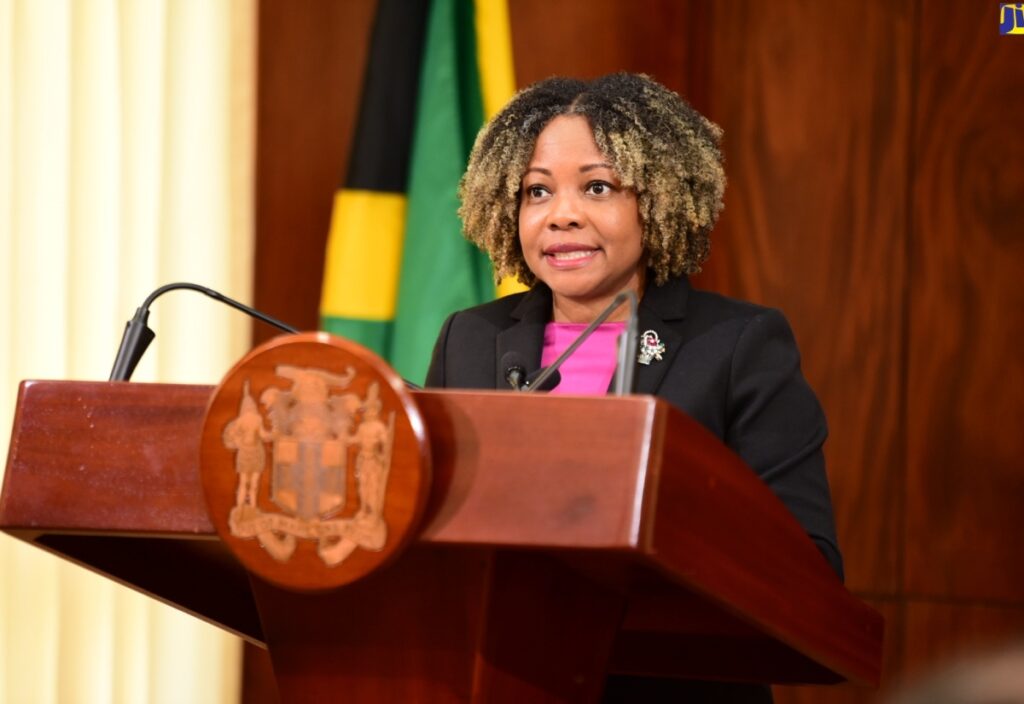
    Jamaica’s Independent Commission of Investigations (INDECOM) has documented a significant reduction in custodial fatalities during 2025, with 22 deaths recorded across prisons and police detention facilities. This represents a notable decrease from the 32 deaths documented in the previous year.

    Historical data spanning 2021-2025 reveals 116 total custodial deaths, with prisons accounting for 74 cases and police lock-ups responsible for 42 fatalities. The Tower Street Adult Correctional Center reported the highest incidence with 44 deaths, followed by St. Catherine Adult Correctional Center (17) and Tamarind Farm facility (11).

    Deputy Commissioner Yanique Taylor Wellington attributed most deaths to natural causes while acknowledging ongoing examinations into alleged medical negligence. Although suicides and homicides contributed to the mortality figures, Wellington emphasized that insufficient evidence exists to conclude systematic mishandling caused the fatalities.

    The commissioner highlighted persistent institutional challenges, particularly regarding overcrowding in police detention facilities. She noted correctional officers frequently lack adequate training and resources to properly care for detainees with chronic medical conditions, potentially delaying critical treatment and affecting health outcomes.

    While no criminal charges were filed relating to 2025 custodial deaths, INDECOM continues investigating allegations of medical attention failures. The commission operates under statutory mandate requiring automatic investigation of all custody-related deaths and injuries pursuant to Section 11 of the INDECOM Act.

    Wellington reinforced urgent calls for addressing systemic issues in the new year, stating: “Lock-ups cannot provide requisite medical attention, particularly when overcrowded. Continuing to detain medically vulnerable individuals in such conditions contradicts national progress aspirations.”

  • Big win for Jamaica

    Big win for Jamaica

    MONTEGO BAY, Jamaica — Jamaica’s tourism industry has welcomed the United States’ decision to downgrade its travel advisory for the island nation from Level 3 to Level 2, characterizing the move as a critical boost for winter season prospects. The adjustment comes just two months after Hurricane Melissa triggered elevated safety concerns across western parishes.

    The updated advisory, issued by U.S. authorities on Saturday, continues to advise vigilance regarding crime, health, and natural disaster risks but acknowledges significant improvements in traveler safety conditions. Notably, it confirms the reopening of all major airports for commercial operations while recommending travelers verify the availability of specific services before departure. The advisory further distinguishes that while violent crime remains a nationwide concern, tourist zones typically experience lower incidence rates than other regions.

    Christopher Jarrett, President of the Jamaica Hotel and Tourist Association (JHTA), revealed that the association had been engaged in discreet advocacy for the revision. “We’re obviously pleased with it,” Jarrett stated. “JHTA has been lobbying quietly behind the scenes for this change because we know the previous advisory was implemented due to the hurricane. We believed our recovery has been robust by any measure and remarkably swift compared to hurricane events of similar magnitude.”

    Industry leaders emphasized the broader economic implications of the improved advisory. John Byles, Executive Deputy Chairman of Chukka Caribbean Adventures, highlighted the potential ripple effects: “Without question, we welcome the adjustment. It has meaningful implications for group and events business, encouraging more visitors to explore beyond resort properties and experience genuine Jamaican hospitality.”

    Ian Dear, CEO of Margaritaville Caribbean Group and Chairman of the Tourism Product Development Company, framed the revision as a testament to national resilience. “This truly demonstrates Jamaica’s capacity for rapid and sustainable recovery,” Dear noted. “We had achieved Level 2 status before Hurricane Melissa, and returning to this level so quickly is an accomplishment we should celebrate.”

    The business community echoed this sentiment, with Montego Bay Chamber of Commerce President Jason Russell applauding the upgrade as “testimony to good governance and crime reduction efforts.” Russell emphasized that safety considerations significantly influence group travel decisions, predicting increased corporate clientele for convention facilities.

    While stakeholders anticipate a gradual manifestation of benefits, particularly from the Canadian market which traditionally monitors advisories closely, the consensus remains overwhelmingly positive. The revision arrives at a strategically critical period as Jamaica prepares for peak winter tourism, with industry leaders expressing confidence in reclaiming pre-hurricane visitor levels through continued safety improvements and clear destination messaging.

  • No light, no water

    No light, no water

    PETERSFIELD, Westmoreland — A stark discrepancy exists between official statements and on-the-ground reality in this hurricane-ravaged Jamaican parish. Despite claims by the Jamaica Public Service Company Ltd (JPS) of significant progress in restoring utilities, residents across multiple communities report ongoing struggles more than two months after Hurricane Melissa’s devastation.

    The Category 5 storm, which struck in October, severely damaged critical infrastructure throughout Westmoreland, one of the five hardest-hit parishes. The interconnected nature of utility services means that without electricity to power water pumps, residents simultaneously lack both power and piped water from the National Water Commission (NWC).

    JPS announced Friday that it had successfully energized power lines leading to the NWC treatment plant in Roaring River—a crucial facility serving the parish—claiming this achievement had stabilized water supplies and restored electricity to residential areas in Petersfield, Waterworks, and Shrewsbury. The company stated subsequent testing confirmed active supply, offering what appeared to be promising news for the disaster-stricken region.

    While resident Randy Martin from Shrewsbury acknowledged improved water consistency following the plant reconnection, he clarified that electricity has not yet reached actual homes in his area, despite visible infrastructure repairs including newly planted poles in nearby housing schemes.

    Contrary to JPS assertions, numerous residents report completely dry taps and absent electricity. Audley, a Waterworks resident located on the Roaring River line, revealed he continues transporting water via motorcycle from Dean’s Valley to meet basic household needs.

    The restoration appears highly localized according to community members. Reds Don from Petersfield noted that while two housing schemes in Waterworks have electricity, surrounding areas remain without power. He further contradicted plant restoration claims, stating, ‘The plant, we hear that it got current, but there’s no water in the pipe.’

    Builder Roy Bruce echoed these sentiments, indicating that power service seemingly terminates at Waterworks without reaching the broader community. He emphasized the water crisis remains paramount: ‘They say they [are] going to set up the plant but only a few people [are] getting the water. Only a few pipes [are] getting the water right now.’

    The situation highlights the complex challenges of post-disaster infrastructure recovery and the communication gap between utility providers and affected communities still grappling with essential service shortages months after the hurricane.

  • Medical records mess

    Medical records mess

    MONTEGO BAY, St James — The devastating impact of Hurricane Melissa continues to reverberate through Jamaica’s healthcare infrastructure more than two months after the Category 5 storm made landfall. At Falmouth Hospital in Trelawny, an extraordinary recovery operation unfolds daily as medical staff spread water-damaged patient records across blue tarpaulins to dry under the Caribbean sun.

    Western Regional Health Authority (WRHA) Regional Director St Andrade Sinclair revealed the extensive damage to critical medical documentation during a healthcare workers’ support fair at Pier One last Friday. “We’re experiencing major losses here,” Sinclair stated. “Some records are simply irretrievable despite our recovery efforts.”

    The destroyed documents contain essential patient information including visit histories, diagnostic reports, prescription details, and treatment records. Where recovery proves impossible, healthcare providers must reconstruct patient databases from scratch—a process that may require patients to repeat diagnostic procedures including X-rays and laboratory work.

    Financial burden for this reconstruction won’t fall on patients, however. The Jamaican government has allocated approximately $666 million (JMD) to the WRHA specifically for hurricane recovery efforts, including healthcare facility restoration and staff support.

    Sinclair identified a silver lining within the disaster, noting that the catastrophe could accelerate Jamaica’s planned transition to electronic health records (EHR). “This situation encourages the Ministry of Health and Wellness to advance healthcare information technology implementation,” he explained. “Our current system is outdated by 25-30 years. This tragedy pushes us toward modernization.”

    Jamaica’s EHR system, launched two years ago with $50 million funding from the Inter-American Development Bank, represents a historic step toward paperless healthcare management. The system features patient registration capabilities, appointment scheduling, triage management, and digital imaging interfaces allowing healthcare professionals to access X-rays and CT scans via computers and tablets.

    Initial implementation began at May Pen Hospital in January 2024 after testing commenced in November 2023. Eleven other facilities across various regions were included in the first phase, though notably excluding areas most severely affected by Hurricane Melissa.

    The hurricane’s impact extended beyond medical facilities, damaging personal documents of healthcare workers whose homes were destroyed. The support fair brought together multiple government agencies including the Registrar General’s Department, Passport Immigration and Citizenship Agency, National Housing Trust, along with private sector entities like Courts furniture store to provide comprehensive assistance.

    Sinclair praised healthcare staff who maintained patient care despite personal hardships, noting that over 200 workers became homeless due to the hurricane, with more than 1,200 experiencing significant property damage. Many faced transportation challenges and personal crises while continuing to serve their communities.

    The event at Pier One served as both practical support and recognition of healthcare workers’ dedication during Jamaica’s ongoing recovery from one of its most destructive natural disasters in recent history.

  • Peta-Gaye McLeary: Breaking ground, breaking barriers

    Peta-Gaye McLeary: Breaking ground, breaking barriers

    In the tranquil dawn hours at Sandals Dunn’s River resort, Peta-Gaye McLeary begins her daily transformation of natural spaces, serving as both senior landscaping supervisor and a pioneering figure in her field. As the sole woman in her department, McLeary represents a significant shift in gender dynamics within the traditionally male-dominated profession of landscape management.

    Her professional journey stems from a profound childhood connection with nature, where plants captivated her imagination and design inspired her creativity. What began as personal fascination evolved into professional purpose when she recognized landscaping’s transformative power to shape human experiences through environmental design.

    McLeary’s leadership philosophy emerged organically rather than through ambitious pursuit. At Sandals, she discovered the ideal environment to merge creative vision with technical discipline. Her approach to overcoming gender barriers focused on comprehensive mastery—from soil science to botanical selection—demonstrating capabilities through results rather than rhetoric.

    The emotional dimension of McLeary’s work distinguishes her leadership style. She experiences genuine joy conducting educational nature walks and feels personal investment in environmental challenges, from drought periods to excessive rainfall. This emotional connection fuels her commitment to sustainable practices and immersive engagement with the landscape.

    Throughout her career, McLeary transformed gender-based skepticism into professional motivation. Rather than confronting prejudice directly, she elevated her technical expertise and project execution, allowing her work to validate her position. She consciously integrates feminine perspectives—creativity, emotional intelligence, and nuanced design thinking—into her leadership approach, enhancing traditional landscaping methodologies.

    For women considering non-traditional career paths, McLeary advocates confident perseverance, technical mastery, and resilient presence. Her story demonstrates how professional passion can dismantle gender barriers while creating more inclusive workplace environments. Beyond her supervisory role, McLeary embodies transformative leadership that redefines industry standards and expands opportunities for women in historically male-dominated fields.

  • Grandparents’ right to access

    Grandparents’ right to access

    A complex family legal matter has emerged regarding grandparent visitation rights following the death of a child’s father. The situation involves a mother who is resistant to allowing her deceased partner’s parents access to their grandchild, citing historically poor treatment during their son’s lifetime.

    Legal expert Margarette May Macaulay, an attorney-at-law and children’s rights advocate, has provided crucial guidance on this sensitive issue. She emphasizes that Jamaican law recognizes grandparents’ legal standing to petition courts for access to grandchildren. Simultaneously, children maintain legal rights to develop relationships with both maternal and paternal grandparents, provided these relationships serve the child’s best interests.

    Macaulay’s analysis reveals a critical legal reality: courts generally grant visitation orders to grandparents unless compelling evidence demonstrates such access would be undesirable or unsafe for the child. The attorney advises proactive legal engagement rather than waiting for the grandparents to initiate proceedings. By approaching the Family Court directly, the mother can seek a formalized arrangement that establishes specific visitation parameters aligned with her comfort level and the child’s welfare.

    The legal process involves presenting comprehensive evidence to the court, including documentation of the grandparents’ previous behavior. This allows for the creation of a court-mandated visitation schedule that prioritizes child safety while acknowledging the importance of family connections. Macaulay stresses that court orders provide stronger protection than informal agreements, as violations constitute contempt of court with enforceable consequences.

    The expert concludes that obtaining a formal visitation order through the Family Court—a free service—represents the most responsible approach to balancing familial relationships with child protection concerns. The process requires the child’s certified birth certificate and assistance from court clerks in drafting necessary documentation.

  • Borrowed men, broken boundaries

    Borrowed men, broken boundaries

    A North Carolina court has delivered a landmark $1.75 million judgment against social media influencer Brenay Kennard, highlighting one of America’s rarest legal statutes: alienation of affection. The November verdict came after Akira Montague successfully sued Kennard for destroying her marriage through an affair with her then-husband, utilizing a centuries-old law that remains active in only six US states.

    This legal framework treats marriage as a institution worthy of protection against external interference, with historical settlements reaching $30 million. The Kennard case took particularly egregious turns when the influencer faced additional charges last Thursday for violating a restraining order and continuing cyber harassment campaigns against Montague—even after marrying the man she allegedly stole.

    Marriage counselor Annette Palmer-Lowe provided psychological analysis: “Some individuals seek relationships validating desirability over substance. Being chosen over a spouse temporarily boosts self-esteem, particularly for those grappling with insecurity or inadequacy. Frequently, the pursuit reflects rivalry with the wife rather than genuine interest in the man.”

    The case has sparked national conversation about relationship boundaries, illustrated through firsthand accounts:

    Bre-Ann (27) described how a church member positioned herself as emotional support for her fiancé while excluding her entirely. Kimmy (32) recounted a neighbor who claimed to believe her marriage had ended despite overwhelming evidence to the contrary. Kimari (26) observed how repeated “helping” scenarios created familiarity that led to infidelity.

    Keisha (40) confronted inappropriate messaging disguised as harmless flirting, noting: “Secret interactions rarely prove innocent.” Lori (38) identified a “work wife” who seemed more interested in replicating her life than pursuing her husband. Most shockingly, Nordia (30) received the justification that “men are naturally unfaithful” when confronting her husband’s pursuer.

    These narratives collectively demonstrate how marital interference often involves systematic boundary erosion, psychological manipulation, and complex emotional motivations beyond simple attraction.

  • Monday, January 19, 2026

    Monday, January 19, 2026

    The boundaries of luxury culinary tourism were redefined as an exclusive cohort of Michelin-starred chefs, spirits connoisseurs, and global gastronomic influencers transcended the ordinary with an inter-island expedition. Departing from the Eric Ripert-hosted Ritz-Carlton Cayman Cookout, these arbiters of taste embarked on a private jet excursion to Jamaica’s legendary GoldenEye resort on January 15th for an extraordinary luncheon orchestrated by Chef Dominic Benson.

    The afternoon unfolded as a symphony of cultural and culinary excellence, with GoldenEye CEO Marika Kessler presiding over the festivities. The event became a convergence of industry titans, featuring Michelin-starred virtuoso Eric Ripert engaging in candid exchanges with Kessler. The resort’s visionary founder, Chris Blackwell, alongside Moët Hennessy representative Louis-Philippe Lussier, participated in pre-dinner photography sessions that captured the event’s prestige.

    Authentic Jamaican mento rhythms performed by the Uptempo Band provided the soundtrack to this gastronomic pilgrimage, immersing attendees in the island’s rich cultural heritage. Chef Benson’s meticulous culinary craftsmanship took center stage as he applied final enhancements to his epicurean creations, while Lussier’s expertise in premium spirits captivated the audience, particularly during his engrossing dialogue with CEO Kessler.

    This trans-Caribbean culinary voyage epitomized the evolving landscape of luxury dining experiences, where geographical barriers dissolve in pursuit of exceptional gastronomy and cultural immersion.

  • Sister wives?

    Sister wives?

    A complex domestic situation is unfolding as a married woman faces an unprecedented marital challenge involving her husband’s former partner and their shared child. The husband’s ex-partner, who shares legal ownership of their current residence, is returning from the United States due to immigration concerns and proposes to reside in the home’s upstairs addition. While the husband supports this co-parenting arrangement under one roof, the wife expresses serious reservations based on historical tensions and prior boundary violations.

    The situation is complicated by multiple factors: documented disrespect from the ex-partner toward the wife, previous flirtatious behavior between the ex-partner and husband, and a confessed intimate encounter during overseas travel that the husband attributed to alcohol consumption. Despite the wife’s forgiveness of this incident, she now faces her husband’s dismissal of her concerns regarding the proposed living arrangement.

    Relationship experts characterize this proposal as fundamentally problematic, citing four critical risk factors: the ex-partner’s recorded flirtation with the husband, their previous sexual encounter, established patterns of disrespect toward the wife, and the ex-partner’s legal claim on the property through title ownership.

    While acknowledging the husband’s legitimate desire to maintain proximity to his child, experts emphasize that successful blended family arrangements require exceptionally clear boundaries, disciplined communication, and absolute spousal protection mechanisms. Even with separate living quarters within the property, professionals predict likely outcomes including continuous emotional distress, erosion of marital trust, frequent conflicts, and potential authority challenges with the child.

    Recommended interventions include firm spousal communication emphasizing relationship protection, temporary duration limits if relocation becomes absolutely necessary, legal consultation regarding property rights, and maintaining emotional equilibrium through strategic planning rather than panic-driven responses. The consensus maintains that spousal unity and clear boundaries must precede any consideration of shared living spaces with former partners.

  • Colombia to embrace Madrid at Fitur 2026

    Colombia to embrace Madrid at Fitur 2026

    Colombia is making a groundbreaking sustainable push at Fitur 2024, Europe’s premier tourism fair, with an eco-conscious national pavilion and unprecedented urban activations across Madrid. The Colombian government’s export and tourism promotion agency, ProColombia, revealed that 118 entities—including 59 business representatives, 11 regional organizations, 14 hospitality providers, and 34 tour operators—are participating in this strategic showcase.

    The centerpiece is Colombia’s revolutionary exhibition stand, engineered entirely from recyclable and lightweight structural cardboard. The installation operates on renewable energy and incorporates real-time carbon footprint monitoring—even tracking emissions from coffee served onsite. Visitors experience immersive digital environments highlighting Colombia’s diverse ecosystems through sustainable technology.

    Beyond the convention center, Colombia has transformed Madrid’s underground transit system. All four entrances to the Colombia metro station have been rebranded as “Colombia, The Land of Beauty” with vibrant visual displays representing the nation’s six distinct tourist regions: Greater Caribbean, Western Andes, Eastern Andes, Massif, Pacific, and Amazon-Orinoco. Tunnel walls along Line 8 feature dynamic audiovisual exhibitions visible to passing trains, while the Feria de Madrid station exit connecting directly to Fitur showcases extensive Colombian branding.

    The comprehensive tourism portfolio includes nine specialized categories: beach destinations, cultural heritage, adventure ecotourism, LGBTQ+ travel, romantic getaways, wellness retreats, MICE tourism, luxury experiences, and community-based tourism. Fitur 2024 also serves as the launch platform for Colombia’s new diving tourism initiative and its “tourism for all” vision promoting inclusivity across sexual orientation, gender identity, origin, and physical ability.