On Tuesday, October 6, 2026, a high-stakes political controversy erupted in Guyana after legal counsel for President Irfaan Ali acknowledged filing a defamation complaint with Meta over a social media post from Opposition Leader Azruddin Mohamed that linked the head of state to a recent anti-narcotics raid. The clash has ignited fierce debate over the boundaries of free political speech, the rule of law, and democratic governance in the South American nation.
Selwyn Pieters, the Canada-based Guyanese attorney representing President Ali, laid out his side of the incident in an official statement responding to accusations from Mohamed earlier that same day. Pieters explained that he first flagged the problematic post on October 3, shortly after Mohamed published it alongside public details of a Customs Anti-Narcotics Unit (CANU) raid on a property rented by local businessman Ernesto Choo-a-Fat. After reviewing the content, Pieters concluded the post crossed the line from legitimate political critique into actionable defamation, a determination he made independently based on his professional legal judgment.
Per Pieters’ account, he followed formal protocol before escalating the matter to Meta. At roughly 6:45 PM that same Saturday, he contacted Mohamed’s legal representative Siand Dhurjon to formally demand the post’s removal, warning that he would pursue all available legal remedies for his client if the content stayed online. Dhurjon responded that he would relay the request to Mohamed but could not guarantee compliance, and the post ultimately remained up. By the time Pieters reviewed the content ahead of contacting Meta, the post had already amassed 1,800 likes, 218 comments, and 618 shares – spread that amplified the potential harm to President Ali’s reputation, Pieters argued.
“Having first provided notice and an opportunity for the matter to be addressed without further action, I subsequently exercised the authority vested in me as counsel for His Excellency the President and submitted the matter to Meta for its consideration under its applicable processes and policies,” Pieters said in his statement. “Meta independently considered the submission and took whatever action it deemed appropriate based on its own assessment. I did not determine Meta’s decision, nor did I have the power to do so.”
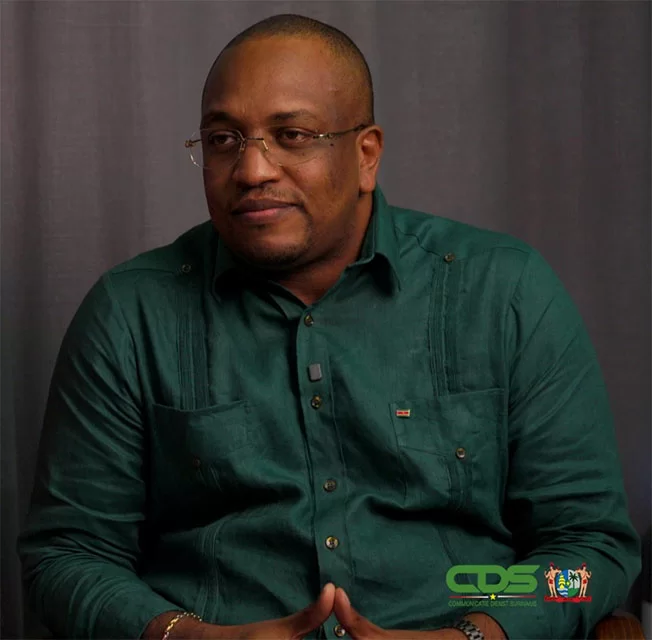
Mohamed, who leads the main opposition party We Invest in Nationhood (WIN), has framed the incident as a deliberate authoritarian power grab to silence political dissent. Earlier on Tuesday, he claimed Pieters’ complaint directly led Meta to suspend his official Facebook page, tying the action to a broader pattern of censorship targeting his political work. He pointed to the prior suspension of three of his affiliated pages – Team Mohamed’s (540,000 followers), the official WIN party page (40,000 followers), and his main opposition leader page (59,000 followers) – which forced him to continue communicating via a smaller backup page with 14,000 followers.
Mohodem recalled that when his attorney directly asked Pieters who he was acting on behalf of during their initial conversation, the answer was unambiguous: President Ali. He further alleged Pieters explicitly threatened to push for a page suspension if the defamatory content (referencing Ali’s connection to the Choo-a-Fat raid) was not removed. The opposition leader called the move an attack on core democratic values, linking it to the recent arrest of three people in Leonora, West Coast Demerara, and the temporary seizure of phones and vehicles belonging to Mohamed, his fellow parliamentarians, and staff.
“When those in power seek to silence the Opposition Leader because they object to what is being said, democracy itself is under threat,” Mohamed said. “Stifling the freedom of speech of anyone is authoritarianism; using power to silence political opposition is the conduct of a dictatorship.”
He added that his team would not back down from its work: “We will not be intimidated, we will not be silenced or afraid, and we must continue to stand for what is true and just.”
Pieters has forcefully denied many of Mohamed’s core claims, particularly the assertion that he was responsible for the suspension of the Team Mohamed’s page. The attorney called that accusation entirely unfounded, challenging the opposition leader to publish any evidence supporting the claim. He noted that Mohamed himself had previously attributed the page’s temporary suspension to a trademark infringement claim, and that the page was restored after his legal team engaged Meta on the issue. Pieters is now calling on Mohamed to release all correspondence with Meta regarding the suspension to clarify the actual cause of the outage.
Pieters also pushed back against framing his actions as politically motivated, emphasizing that he was acting solely in his professional capacity as legal counsel to protect his client’s legal rights. He acknowledged that freedom of expression and freedom of the press are fundamental democratic rights that must be protected, but argued that those rights do not exempt individuals from defamation law.
“My actions were not political, nor were they undertaken at the direction of a political party. They were taken in my professional capacity as an attorney, based on my assessment of the publication and the authority granted to me to protect my client’s legal interests,” Pieters said. “Where I determine, in the proper exercise of my professional judgement, that my client’s legal rights have been infringed, I am entitled and professionally obligated to pursue the lawful remedies available to him.”
The controversy comes amid already heightened political tensions in Guyana, and it remains to be seen whether the suspended social media pages will be restored, or if additional legal action over the original post will follow.