作者: admin

  • Nevis Water Department informs of Disconnection of Water Services

    Nevis Water Department informs of Disconnection of Water Services

    Residents and businesses across Nevis are being put on formal notice this week that the local Water Department is set to begin a cycle of service disconnections targeting customers with unpaid, overdue water balances. Scheduled to run between Tuesday, June 16 and Friday, June 26, 2026, the disconnection initiative is the department’s standard enforcement action to encourage resolution of outstanding account balances.

    In an official public notice posted Wednesday, June 10, 2026 at 2:45 PM, the department stressed that customers have until the close of business on Friday, June 12, 2026 to pay down any overdue amounts on their accounts to avoid having their water service cut off. For customers who fail to settle their outstanding balances before the June 15, 2026 deadline for avoiding disconnection procedures, the department has confirmed that a mandatory $150.00 reconnection fee will be added to their total owed amount before service can be restored.

    This routine annual action by the Nevis Water Department is designed to recover unpaid utility revenue that supports ongoing maintenance, infrastructure upgrades, and consistent water delivery services across the island. Account holders with questions about their balance or available payment plans are encouraged to contact the department directly before the June 12 deadline to arrange for settlement and prevent unexpected service interruptions.

  • Prime Minister Drew Salutes Defence Force as New Combat Uniform Debuts

    Prime Minister Drew Salutes Defence Force as New Combat Uniform Debuts

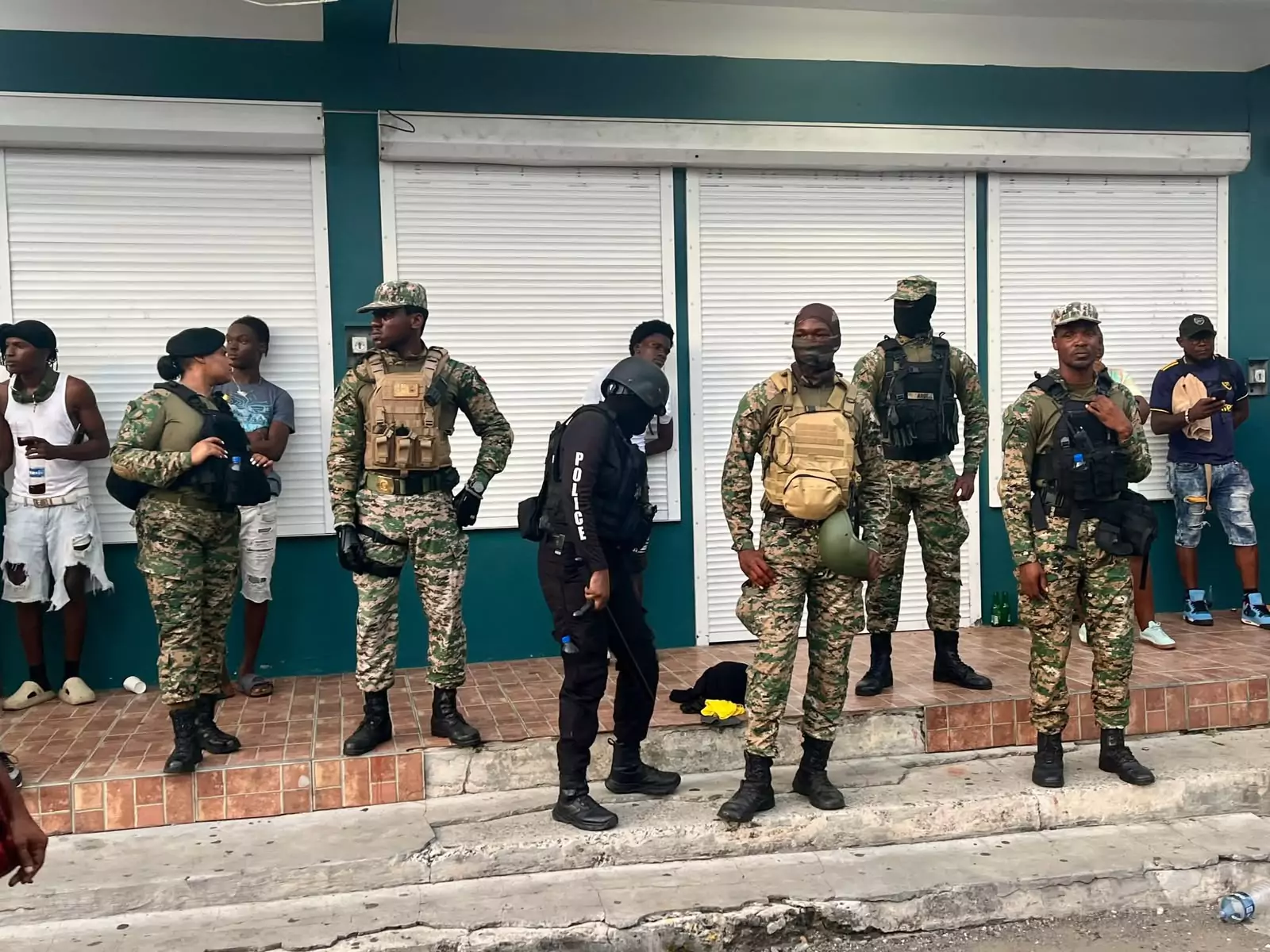
    On June 10, 2026, a ceremonial march through the capital streets of Basseterre marked a landmark moment for St. Kitts and Nevis, as the St. Kitts-Nevis Defence Force (SKNDF) officially unveiled its modern new combat uniform, with top national leadership praising the force’s decades-long commitment to protecting the federation.

    Speaking to assembled uniformed personnel, senior command staff, and local residents who turned out for the event, Prime Minister Terrance Drew — who also holds the cabinet portfolio for National Security — framed the new rollout as far more than a superficial aesthetic update. For Drew, the purpose-built uniform stands as a tangible symbol of the federal government’s ongoing investment in the SKNDF, and a reflection of the unbroken loyalty that force members extend to the people of the twin-island nation.

    “Today you look sharp, sharper, and stronger, your uniform is designed for real work, the real work that you do on our land, in our waters, through whatever weather this region, this nation faces,” Drew told attendees. He went on to explain that while casual observers may dismiss the rollout as nothing more than a new set of clothing, the uniform carries profound weight for the personnel who wear it and the nation that relies on their service.

    “It is a commitment our Federation makes to you, and a commitment you make to your federation,” Drew added.

    The prime minister extended broad praise to all active and serving members of the SKNDF, highlighting how the force consistently upholds core values of strict discipline, willing sacrifice, and deep patriotism. Unlike many professional roles, service in the national defence force routinely demands that members set personal interests aside to prioritize the safety and well-being of the nation, a standard Drew said the SKNDF meets consistently.

    Drew also took the opportunity to outline the wide-ranging, often underrecognized responsibilities the SKNDF fulfills daily to keep the federation running. These critical duties include securing national border infrastructure, leading rapid response efforts during natural disasters, coordinating support during unplanned national emergencies, and bolstering local public safety and national security frameworks that benefit all residents.

    In closing, the prime minister issued a call to all citizens of St. Kitts and Nevis to recognize, honor, and stand behind the men and women of the SKNDF. It is their consistent, dedicated service that preserves the federation’s hard-won peace, stable security environment, and long-held democratic traditions, he noted.

    This report is based on a press release issued by the Prime Minister’s Office to SKNVibes.com, which published the release in its unedited original form.

  • NIS chair rejects ‘actuary or nothing’ critics

    NIS chair rejects ‘actuary or nothing’ critics

    Amid swirling online criticism over the leadership transition at Saint Vincent and the Grenadines’ state-run National Insurance Services (NIS), chairman Stephen Joachim has publicly defended the board’s recommendation of Ronette Lewis, the current General Manager of the Centre for Enterprise Development, as the agency’s incoming executive director, pushing back against claims the top role must be held by a trained actuary.

    In an interview with Boom FM on Monday, Joachim confirmed that Lewis’ appointment will go into effect on July 1, 2026, following the departure of nine-year incumbent Stuart Haynes, an actuary who accepted a new role in St. Kitts. Appointed NIS chairman by the current New Democratic Party (NDP) administration, Joachim expressed full confidence in Lewis’ ability to lead, saying, “I think she will do a terrific job.”

    Much of the public pushback has circulated on social media, where commentators have questioned both the board’s selection of Lewis and its broader succession planning process. Joachim pushed back sharply against what he framed as uninformed, unqualified online attacks, echoing a previous description of loud social media critics as “internet crazies” from a political colleague. “You can’t run a country by social media, despite what these [people] think,” he said, challenging online critics to produce their own professional track records before judging the board’s decision. “What have you accomplished in your life? What makes you think that you’re in a better place to judge the actions and decisions taken by certain people when you have never been in those positions or have any idea what you’re talking about?”

    At the core of the criticism is the argument that NIS must be led by an actuary, given the agency’s social security mandate. Joachim rejected this assumption outright, arguing that the role requires a skilled business and people manager, not a specialist actuary. He explained that core actuarial work for the agency is already outsourced to external experts on a regular basis, and that the NIS already retains in-house specialists with actuarial, investment, accounting, and legal expertise on staff and its board. “Every three years, the NIS conducts an actuarial report and we hire external actuaries. They do the evaluations and the assumptions… The manager, the director, has to implement those decisions. There is no actuarial skills being used in running the NIS. None. Zero. Nada,” Joachim said.

    He added that even the previous incumbent Haynes would confirm that day-to-day leadership of the agency does not rely on actuarial training. “If anybody doubts me, speak to Stuart Haynes. He will tell you: ‘Steve, I do not use my actuarial skills to manage the NIS. This is about managing.’” “Why do you need an actuary? People just say it because Stuart was an actuary,” he argued, noting that the agency needs a leader who can navigate its people-focused operations, a need Lewis as an experienced business leader is well-equipped to meet.

    To counter claims that the board hand-picked Lewis outside of a formal process, Joachim laid out a full, transparent breakdown of the recruitment procedure, which launched after Haynes announced his departure even before Joachim’s formal appointment as chairman. The board asked Haynes to draft a formal job description, then contracted independent human resources consultant Janelle Allen, described by Joachim as the top HR specialist in the region, to manage the full search process. In total, the search attracted 54 qualified applicants, all of which were scored independently by Allen. A three-person board selection committee reviewed the top 10 candidates, plus scanned the remaining 44 to ensure no qualified applicants were overlooked, before shortlisting four final candidates: two Vincentians, one Trinidadian, and one Jamaican. After the Trinidadian candidate withdrew for family reasons, the remaining three candidates completed two rounds of assessment: a standard formal interview, and a second round requiring a public presentation on NIS policy and operational topics. “You can’t say we didn’t do a thorough process,” Joachim insisted.

    Joachim also dismissed circulating rumors that the NIS board had unilaterally imposed Lewis as its pick and even threatened to resign over the appointment, labeling those claims as outright false. He clarified that under NIS governing law, the board only issues a recommendation for the role, with the final appointment made by the national Cabinet. “The board does not hire anybody. The board makes a recommendation to Cabinet as to who we think is the best person to be in that position. Cabinet appoints a director and deputy director,” he explained. Prior to Cabinet’s vote, the NIS leadership held a full briefing with Prime Minister Godwin Friday, who holds ministerial responsibility for the agency, walking through the full recruitment process, selection outcome, and rationale for the pick. “We met with the Prime Minister. We told him the process we had gone through… and the ultimate selection and the rationale and the reason why,” Joachim said. “Cabinet then appoints. They agreed with the decision.”

    Joachim further noted that overriding the board’s recommendation without compelling reason would undermine fundamental corporate governance principles for the state agency. “For the Cabinet to overrule the board means that they would have to have very good reasons. Furthermore, why would you appoint a director when you didn’t consider the views of the board? What the heck’s the point of a board then?” he said. He added that such an override would represent a return to the governance practices of the Unity Labour Party, which was voted out of office in the November 2025 general election after nearly 25 years in power.

  • Leisure : Did you know ? #31

    Leisure : Did you know ? #31

    As of June 2026, Haiti’s leading local information platform HaitiLibre has announced the expansion of its popular free general knowledge quiz platform, QuizHaitiLibre, growing its total offering to 150 interactive multiple-choice quiz games after adding 31 new entries in its monthly June update. The 31st entry in the platform’s ongoing “Did You Know?” series shines a light on a little-discussed but foundational component of Haiti’s economy and food security: the bulk carriers that keep the country supplied with essential goods.

    Bulk carriers are a specialized class of cargo ship engineered specifically to move large volumes of unpackaged “bulk” goods across international waters. For Haiti, which relies on imports to meet the vast majority of its population’s basic food needs and construction demand, these vessels are far more than just commercial shipping assets—they are lifelines. Key staples that Haitian consumers depend on, including rice sourced from the U.S. and Asian markets, and core construction materials such as cement, all arrive in the country via bulk carriers.

    Unlike many major international ports, most Haitian docking facilities lack advanced, automated cargo-handling infrastructure. To address this gap, many bulk carriers calling on Haitian ports come pre-equipped with on-board cranes that allow them to unload cargo directly at docks that lack permanent heavy lifting equipment. Even with this adaptation, unloading bulk cargo remains a labor-intensive process that relies heavily on skilled stevedores, as well as carefully coordinated storage logistics to move goods to nearby silos and warehouses immediately after unloading.

    The efficient management of bulk carrier deliveries is not just a logistical concern—it is a critical determinant of national food security. Any extended delay in unloading a single bulk carrier can quickly ripple through local markets, triggering product shortages and sudden spikes in food and construction material prices that disproportionately impact low-income Haitian households.

    Beyond this deep dive into Haitian port logistics, QuizHaitiLibre offers audiences a wide range of engaging, accessible general knowledge content covering hundreds of topics related to Haitian life, culture, infrastructure and global affairs. Designed to accommodate all age groups and knowledge levels, every quiz on the platform is 100% free to access, requires no user registration, and offers three distinct difficulty tiers: easy, intermediate, and hard. All content is available in both French and English to serve Haiti’s diverse linguistic communities.

    The platform updates its content library with new quizzes every month, giving returning users fresh material to test their knowledge on a steady basis. Readers are invited to visit the QuizHaitiLibre platform at https://quiz.haitilibre.com/en to explore the full collection of quizzes, share the resource with family and friends, and submit feedback to the platform’s development team.

  • Filipijnen: Race tegen de klok om overlevenden te vinden na krachtige aardbeving

    Filipijnen: Race tegen de klok om overlevenden te vinden na krachtige aardbeving

    A powerful 7.8-magnitude earthquake has rocked the southern region of the Philippines, leaving at least 37 people dead and more than 400 others injured as rescue teams scramble to locate any trapped survivors buried under collapsed infrastructure. The devastating quake, which struck at approximately 7:40 a.m. local time on Monday around 20 kilometers off the coast of Sarangani province, was felt as far as Manado on the Indonesian island of Sulawesi, some 420 kilometers from the epicenter, according to initial geological assessments.

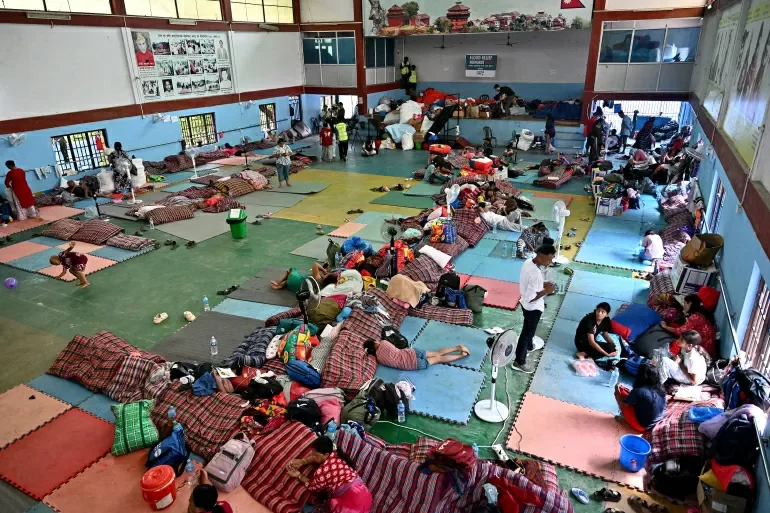
    The hardest-hit urban center is General Santos, a coastal city of 720,000 residents on the island of Mindanao. The city has been declared a state of disaster, with multiple commercial and residential buildings reduced to rubble, streets littered with fallen debris, and downed power lines cutting electricity to large swathes of the community. On Tuesday, search and rescue crews continued to comb through the wreckage of a collapsed commercial building that housed a local supermarket, where two people remain unaccounted for. Rescuers have already pulled two survivors from the site and recovered one body, with no signs of life detected at other search locations as of Wednesday.

    For families of the missing, the wait for news has been agonizing. Dioslinda Deluvio, whose son remains trapped under the collapsed supermarket, waited outside the disaster site Tuesday, clinging to a slim hope. “It is hard to accept that my son is still stuck there,” she said. “My only hope is that he is found today, so we can have peace.”

    The initial major earthquake was followed by a series of aftershocks, the strongest of which registered a magnitude of 6.5, per data from the United States Geological Survey. Immediately after the main quake, tsunami warnings were issued across multiple regional countries, though no major destructive tsunami events were recorded.

    Across affected regions, the death toll has mounted beyond General Santos. Eighteen fatalities were recorded in Sarangani province, most of which came after a mudslide buried homes in the mountain village of Glan. Additional deaths have been confirmed in the nearby provinces of South Cotabato, Davao Occidental, and on Balut Island.

    Access to remote, hard-hit areas has emerged as a major barrier to rescue and recovery efforts, with many mountainous regions of Sarangani only reachable by helicopter. Ongoing aftershocks have further slowed operations, forcing rescuers to work with extreme caution to avoid secondary collapses and additional casualties. “The aftershocks mean rescuers have to move very slowly and carefully,” explained Rodrigo Sosmena, head of regional civil defense. “That is one of our biggest challenges right now.”

    Witnesses across the affected zone described the terrifying force of the quake, which caught people going about their daily routines off guard. Jojo Calma was driving through General Santos when a nearby building crumbled around him. “It was the first time I ever felt such a strong quake, I couldn’t hold back my tears,” he said. “I immediately thought of my children and niece, and what could have happened to them.”

    In Malita, a town located east of General Santos, more than 100 students and a dozen teachers were gathered for a flag-raising ceremony to mark the first day of class after summer break when the quake hit. School principal Rosavel Cachuela reported that the students’ quick decision to stay calm and in their seats prevented serious injuries, but the traumatic event has left lasting psychological impacts on the young community.

    Preliminary damage assessments show the disaster has damaged roughly 2,000 residential homes and 117 government buildings across multiple provinces. Around 6,000 public school campuses still require full structural inspections before classes can resume, leaving thousands of students out of school indefinitely. General Santos’ international airport has remained closed since the quake, forcing the cancellation of 63 domestic flights and disrupting travel across the southern Philippines.

    Given the scale of the destruction, many observers note it is surprising that the death toll has not climbed higher. Manila-based correspondent Barnaby Lo called the relatively low fatality count a “miracle” and outlined the current priorities for response teams. “Right now, the main priority is search and rescue, with hope that more people can still be found alive under the rubble,” he said. “The biggest challenge is reaching mountainous areas, where roads and bridges have been heavily damaged. The department of public works is working around the clock to clear blocked routes, while structural engineers inspect buildings for safety. It is an enormous job.”

    Philippine President Ferdinand Marcos Jr. has already activated national emergency response agencies and reaffirmed the government’s commitment to supporting affected communities. “The national government is in action, and we will not leave Mindanao behind,” he said in a statement.

    This earthquake is the most powerful to hit the Philippines in eight months. The previous major seismic event, a 6.9-magnitude quake near Cebu last year, killed 79 people.

  • Sir Rodney Williams and Sir Vivian Richards Featured in CHOGM Mural Project

    Sir Rodney Williams and Sir Vivian Richards Featured in CHOGM Mural Project

    Antigua and Barbuda has taken a major step forward in its preparations for the 2026 Commonwealth Heads of Government Meeting (CHOGM) with the public unveiling of a striking, eco-friendly mural crafted entirely from recycled plastic bottle caps. This creative community project, which features portraits of the nation’s governor-general Sir Rodney Williams and beloved Antiguan cricket icon Sir Vivian Richards, weaves together environmental advocacy, national pride, and public engagement as the Caribbean nation gears up for the landmark international summit. More than just a public art installation, the initiative is designed to embed sustainable development goals into the lead-up to the conference, driving nationwide conversations about environmental stewardship and encouraging widespread community participation in summit preparation efforts. Government officials involved in the project emphasized that the mural’s sustainable construction is no coincidence—it is a tangible public demonstration of Antigua and Barbuda’s long-standing commitment to environmental responsibility, particularly as the country prepares to make history as the smallest sovereign nation ever to host the quadrennial Commonwealth gathering. For the small island nation, which is disproportionately vulnerable to the impacts of climate change and sea-level rise, the project also serves as a quiet, powerful reminder of its climate advocacy priorities on the global stage ahead of the high-profile summit.

  • Minister Turner Holds Talks on Improving Sewage Systems and Protecting Coastlines

    Minister Turner Holds Talks on Improving Sewage Systems and Protecting Coastlines

    As Antigua and Barbuda makes early preparations to host the 2026 Commonwealth Heads of Government Meeting (CHOGM), senior government official Minister Rawdon Turner has held high-level strategic discussions with the Sustainable Markets Initiative (SMI) to lay the groundwork for targeted progress on the country’s most pressing national development goals. The meeting, which brought together SMI chief executive Jennifer Jordan-Saifi and her communications team alongside Minister Turner, centered on aligning international support with Antigua and Barbuda’s long-term resilience and inclusive growth agendas.

    At the top of the government’s priority list is the urgent modernization of St. John’s aging sewage treatment infrastructure, a long-unresolved challenge that poses growing risks to the capital’s development trajectory, public health outcomes, and surrounding ecosystems. Outlining the administration’s vision for a future-proof, sustainable urban landscape, Turner emphasized that upgrading these outdated systems is non-negotiable for unlocking continued growth in the capital while safeguarding both community well-being and the natural environment.

    Inclusivity emerged as another core focus of the talks. Minister Turner highlighted the government’s goal to transform St. John’s into a universally accessible city for people living with disabilities, outlining plans to build connected, mobility-friendly urban corridors and upgrade existing public infrastructure. To turn this vision into actionable progress, he formally requested SMI’s technical guidance to help the government adapt and implement international best practices that will boost mobility, expand social inclusion, and raise quality of life for both local residents and the tourists that drive a key segment of the national economy.

    Climate resilience and environmental stewardship, long critical priorities for the low-lying island nation, also dominated the agenda. Minister Turner drew attention to the accelerating threat of coastal erosion and widespread beach degradation across Antigua and Barbuda, two interconnected challenges that put the country’s critical tourism industry and natural heritage at severe risk. To address this, he asked SMI to provide specialized consultancy support to develop evidence-based, practical strategies that can protect coastlines and preserve one of the country’s most economically and ecologically valuable natural assets.

    Following the productive discussions, SMI CEO Jordan-Saifi welcomed the opportunity to build a formal partnership with the government of Antigua and Barbuda. She confirmed the organization’s openness to exploring all viable avenues to deliver tangible, meaningful support aligned with the priorities laid out by Turner. Moving forward, SMI will conduct a detailed assessment of each priority area, then work to mobilize tailored support through one of several potential channels: grant funding, concessional financing, access to specialized technical expertise, or brokering targeted strategic partnerships with other global stakeholders.

    The high-level meeting underscores the Antigua and Barbuda government’s proactive commitment to leveraging international collaboration to solve long-standing national development challenges, as the country gears up to welcome heads of state and global leaders from across the Commonwealth for the 2026 CHOGM summit.

  • Patients Can Now Request Some Hospital Appointments Online

    Patients Can Now Request Some Hospital Appointments Online

    The Sir Lester Bird Medical Centre (SLBMC) has recently issued a public call encouraging all patients to shift to its new digital appointment request platform for both outpatient clinical visits and radiology services, marking a key step in modernizing the facility’s patient experience.

    Unlike traditional booking processes that require patients to travel to the medical center in person to reserve a time slot, the new online system removes this geographic and logistical barrier entirely. Patients can submit their appointment requests at any point that fits their schedule, as the platform operates around the clock, 24 hours a day, seven days a week. This flexibility caters to working professionals, caregivers, and patients with mobility limitations who may struggle to visit the hospital during standard operating hours for non-urgent booking.

    After a patient submits an online request, the hospital’s administrative care team will review the submission and reach out directly to the patient to finalize and confirm all appointment details, including date, time, and any pre-appointment preparations patients need to complete ahead of their visit.

    Hospital administrators explained that the rollout of this digital booking tool is part of the facility’s broader effort to upgrade patient access to care. By moving routine appointment requests online, the center aims to cut down on on-site crowding, reduce wait times for in-person visitors, and streamline the entire care navigation process, ultimately making essential healthcare services more convenient and accessible for the communities it serves.

  • Ministry of Sports Closes Offices, Staff to Work Remotely Until Further Notice

    Ministry of Sports Closes Offices, Staff to Work Remotely Until Further Notice

    In an unexpected official notice released Tuesday, June 9, the top leader of Jamaica’s Ministry of Sports has ordered an immediate temporary closure of the ministry’s central office facilities, with all employees transitioning to remote work arrangements that will remain in effect until the government issues new guidance. The public announcement was formally signed by Heather Samuel-Daley, the sitting Director of Sports. “Please be advised that the Ministry of Sports is currently closed,” the official notification read, confirming that all non-essential and administrative personnel would carry out their job duties off-site for the foreseeable future. Strikingly, senior ministry officials did not include any public explanation for the sudden office shutdown, nor did they offer any preliminary timeline for when staff might be allowed to return to in-person work at the main ministry campus. In a follow-up statement to the press, administrative representatives added that additional updates will be shared with the public and stakeholders promptly as new details are finalized. The ministry also extended a formal apology for any disruptions or inconveniences the sudden shift may cause for community members, sports organizations, and other groups seeking in-person services, while expressing gratitude for the public’s patience, understanding, and ongoing cooperation amid the unanticipated change.

  • Air Peace Continues To Marker Antigua and Barbuda to Nigerian Travelers Despite set back

    Air Peace Continues To Marker Antigua and Barbuda to Nigerian Travelers Despite set back

    Against the backdrop of an evolving global aviation landscape marked by post-pandemic recovery hurdles and fluctuating travel demand, Nigeria’s largest independent carrier Air Peace has announced it will continue its marketing push to position Antigua and Barbuda as a top tropical getaway for Nigerian travelers, even after facing unforeseen operational setbacks in the route’s launch phase.

    The airline first unveiled plans to connect Nigeria directly to the Caribbean twin-island nation in 2022, a move designed to tap into growing demand among West African travelers for leisure and visa-free travel options, as Antigua and Barbuda offers visa-on-arrival access to Nigerian passport holders. The partnership also formed part of Antigua and Barbuda’s broader tourism strategy to diversify its source markets beyond traditional North American and European visitors, opening up a new, fast-growing region for visitor arrivals.

    While the carrier encountered temporary disruptions including delayed route certification, adjusted scheduling, and supply chain bottlenecks that pushed back the full launch of regular commercial flights, Air Peace’s leadership reaffirmed its long-term commitment to the route. In a recent statement shared with industry stakeholders, the airline noted that ongoing demand signals from Nigerian travelers have strengthened its resolve to build out this connection. Many Nigerian leisure travelers have sought alternative warm-weather destinations in recent years, shifting away from more traditional European routes that often come with stricter visa requirements and higher travel costs.

    For Antigua and Barbuda’s tourism authority, the continued collaboration with Air Peace aligns with its 2030 tourism development goal to boost annual visitor arrivals by 25% and expand economic opportunities in the island’s hospitality sector. Industry analysts note that a successful direct air link could unlock mutual economic benefits: for the airline, it opens up a niche for long-haul leisure travel that has been underserved by major global carriers, while for the Caribbean nation, it brings in a new demographic of high-potential travelers. As of the latest update, both parties are working through the remaining regulatory and operational details to resume progress on the route, with full service expected to launch in the coming 12 months.