作者: admin

  • Government goes digital with ‘Pearly’

    Government goes digital with ‘Pearly’

    Barbados has launched a government-backed mobile application, centered on improving civic engagement and public service delivery, marking the first major step in the country’s broader national digital modernization strategy. According to Prime Minister Mia Mottley, the app – built by local Barbadian talent instead of imported generic software – will cut through red tape to speed up state agency responses and boost government accountability to everyday citizens.

    Developed by the Barbadian tech startup Touchstar Group under the guidance of lead developer Ramon Dummett, the app reimagines a beloved local cultural figure, Pearly from the classic *Bajan Bus Stop* television series, for 21st century civic life. Mottley emphasized that while national governments often prioritize large-scale economic and structural reforms, it is the small, unresolved daily community issues that shape public frustration and erode satisfaction with public services. Things like a leaking water pipe that goes unrepaired for days, with callers left stuck on hold for hours when they reach out to authorities, are exactly the frictions the new tool is designed to eliminate.

    The platform simplifies citizen reporting into an intuitive three-step process: users submit a short description of an issue, tag its exact location via the phone’s GPS, and upload photo or video evidence to support their report. Powered by automated routing technology, the system analyzes each submission and sends it directly to the relevant government department, eliminating unnecessary manual sorting and delays that slow responses. The app is built around two core features that meet distinct user needs: “Ask Pearly” centralizes access to information for 155 government entities, providing clear details on opening hours, required documentation for services, and other frequently asked questions, while “Tell Pearly” manages direct incident reporting from the public.

    Beyond civic reporting, the app integrates real-time data with the Barbados Transport Board, allowing commuters to track bus locations on live maps and access predictive traffic updates directly on their phone lock screens, cutting down on the uncertainty and frustration of waiting for public transit. Mottley even lightheartedly noted that the name “Tell Pearly” is intended to replace the frustrated four-letter words Barbadians often use when dealing with slow public service delivery, with the ultimate goal of easing public stress around accessing government support.

    The Pearly app launch kicks off three back-to-back digital transformation rollouts planned by the Barbadian government. The second initiative, BimPay, a new real-time digital payment system developed by the Central Bank of Barbados, will launch at midnight on the coming Saturday. The third app, set to launch the following week, will enable users to pay utility bills and complete financial transfers directly through WhatsApp, eliminating the need for in-person queuing at government licensing offices.

    A key point of pride for the government is that the Pearly app was developed locally, rather than purchasing a generic off-the-shelf solution from an international developer. Mottley highlighted that this decision not only supported local tech talent but also created homegrown intellectual property that can be exported as a prototype to other small island developing states (SIDS), which face many of the same public administration and service delivery challenges that Barbados does. “If you can use Barbados as the prototype to solve these problems, rest assured that there are 46 other small island states across the world that probably are experiencing similar problems,” she said, addressing the development team.

    Minister of Innovation, Industry, Science and Technology Senator Jonathan Reid echoed that praise, commending the team for taking on the risk of building a custom solution tailored specifically to Barbados’ unique needs. He noted that effective modern leadership requires a willingness to experiment, learn quickly from setbacks, and adapt, rather than relying on pre-built imported solutions that do not fit local contexts. The project originated from a practical gap identified by Roy Morris, Director of Citizenship and Engagement, who needed a more efficient system to manage the high volume of daily public complaints. Reid explained that while the initial prototype required adjustments, the team worked through technical challenges to deliver a platform that will drastically improve government response times.

    Reid added that the project serves as a model for local entrepreneurs, framing national challenges as opportunities to build innovative solutions that can have global impact. “Ultimately, we want to be a platform on which people could solve national problems but also create opportunities to create global businesses,” he said. “This could be taken—once done well—this could be taken abroad anyway, right? And it would have been a Barbadian IP with Barbadian ideas, Barbadian skills, using Barbadian data to serve the world.”

  • Seeing China, sharing civilisations: A competition bridges cultures

    Seeing China, sharing civilisations: A competition bridges cultures

    Against the backdrop of a global landscape defined by rapid transformation and growing geopolitical turbulence, the Chinese Embassy in Grenada kicked off a groundbreaking cross-cultural initiative on June 5, 2026. Held during celebrations for the second United Nations International Day for Dialogue Among Civilisations, the event formally launched the ‘China In My Eyes’ Short Video and Article Competition, a project designed to connect people across two distinct cultural contexts through personal storytelling and creative expression.

    The International Day for Dialogue Among Civilisations, observed globally every June 10, is itself a product of Chinese diplomatic leadership. First proposed by China during the 78th session of the UN General Assembly, the initiative was formally adopted and established as an annual UN observance in 2024. At a moment when clashes over cultural identity have become an increasingly pressing global challenge, the day carries a clear core message: open dialogue remains the only sustainable bridge to lasting peace, and mutual learning between different cultures acts as the guiding compass for shared human progress.

    The launch event in Grenada centered on the vision laid out in the Global Civilisation Initiative, introduced by Chinese President Xi Jinping in March 2023, which is built around four foundational calls to action. The first core principle is respect for the inherent diversity of global civilisations. As a nation with an unbroken 5,000-year cultural heritage that has nurtured centuries of philosophy, art, and social thought, China values its own unique cultural legacy while rejecting the harmful idea that any single civilisation can claim a monopoly on wisdom or inherent superiority over others. Every cultural tradition, the initiative argues, carries irreplaceable unique value and makes distinct contributions to the broader tapestry of human experience.

    This principle of diverse coexistence finds tangible expression in the cultural landscape of Grenada, where vibrant traditions such as soca rhythms during the annual Spicemas festival and the iconic Jab Jab ritual – where participants coat themselves in oil and black paint to symbolize centuries of resilience, resistance, and renewal – thrive as living expressions of local identity. A traditional Chinese dragon dance and a Grenadian Jab Jab performance may differ sharply in form and history, but both respond to the same fundamental human needs: creative self-expression and collective belonging.

    The second core call of the Global Civilisation Initiative is to advance and protect the common values shared by all humanity. Beneath the surface of differing customs, languages, and traditions, people across every culture hold the same universal aspirations: peace, sustainable development, equity, justice, democracy, and freedom. These values are not the exclusive property of any single civilisation; they are the shared birthright of every person on Earth. A soca artist writing lyrics about overcoming intergenerational hardship and a classical Chinese poet penning verses about social harmony may use different languages, rhythms, and literary devices, but their words resonate with the same core human experiences. A young Grenadian student dreaming of a better future and a young Chinese scholar pursuing advanced research are far more alike than they are different; their native languages may set them apart, but their shared hopes for tomorrow are nearly identical. The International Day for Dialogue Among Civilisations makes clear that embracing these shared values does not require abandoning unique cultural identities. When people recognize that all humans share the same desire for peace and progress, they stop seeing cultural difference as a threat – and start seeing others as reflections of themselves.

    The initiative’s third core principle is a call to prioritize both the inheritance of cultural heritage and the innovation of cultural expression. As President Xi Jinping has emphasized, communities must protect tangible cultural heritage – from historic villages to distinctive architectural landmarks that give a place its unique identity – while also safeguarding intangible cultural traditions passed down through generations. At the same time, communities must pursue creative transformation and innovative development to keep these traditions alive for new generations. China has put this principle into practice in recent years: for example, the hit action role-playing game *Black Myth: Wukong* has reintroduced the centuries-old legend of the Monkey King to global audiences through cutting-edge digital game design, bridging ancient myth and modern technology. In Grenada, similarly, beloved traditions like Spicemas and Jab Jab remain vital cultural touchstones because they have adapted to incorporate new musical styles and resonate with younger generations while remaining rooted in their historical origins. The shared lesson for both nations is clear: communities can honor the lessons and heritage of the past without being chained by it, and remember their origins while continuing to imagine new paths forward.

    The fourth and final core call of the Global Civilisation Initiative is for expanded, people-centered international exchanges and cross-cultural cooperation. 2026 marks a meaningful milestone for China-Grenada relations: it is the 21st anniversary of the resumption of diplomatic ties between the two countries. Over the past two decades, people-to-people connections have grown steadily: more than 3,200 Grenadians have traveled to China to participate in professional and educational training programs, and 251 Grenadian students have received full Chinese government scholarships to pursue higher education in China. At the T.A. Marryshow Community College (TAMCC), the local Confucius Institute continues to offer access to Chinese language learning and cultural programming for local residents, building people-level connections year-round. Just last year, Grenada’s Chief Cultural Officer Kelvin Jacob was invited to participate in the Liangzhu Forum in China, one of the world’s leading international gatherings focused on cross-civilisation dialogue.

    To build on this decades-long foundation of exchange, the Chinese Embassy launched the ‘China In My Eyes’ competition. The initiative invites all Grenadians – with a particular focus on students, working journalists, and independent content creators – to share their personal perspectives on China through original short videos and written articles. Participants are free to explore any topic that resonates with them, from the ancient grandeur of the Great Wall to the dynamic energy of Shanghai’s city streets, from the bold flavors of Sichuan cuisine to the lasting impact of a Chinese teacher who changed their life. While the competition offers generous cash and material prizes to honor outstanding creative work, organizers emphasize that the core goal is not to reward winning entries, but to foster open dialogue. Every submission, regardless of its topic, represents a small but powerful act of cross-cultural connection. Through the personal perspectives of Grenadian participants, China shifts from an abstract, distant concept on the other side of the world to a living, human story. And through these shared stories, the geographic and cultural distance between the two peoples continues to shrink. Participants are not just entering a competition – they act as grassroots cultural ambassadors, shaping how their generation in Grenada sees China, and how Chinese people see Grenada.

    As the event made clear, the Global Civilisation Initiative provides a clear global roadmap for cross-cultural coexistence, the UN International Day for Dialogue Among Civilisations serves as an annual reminder of the urgent need for this work, and the ‘China In My Eyes’ competition turns this vision into a tangible, local platform for action. Ultimately, however, meaningful cross-cultural connection depends not on institutions or governments alone, but on individual people. Through this competition, every Grenadian has the opportunity to help build a bridge of creativity and mutual understanding, turning the ideal of inter-civilisation dialogue into concrete action, and celebrating the decades-long friendship and shared future between the people of China and the people of Grenada.

  • Electrician fined for trespassing on Lethem aerodrome

    Electrician fined for trespassing on Lethem aerodrome

    Updated Wednesday, June 10, 2026, at 7:22 a.m. by Denis Chabrol

    In a landmark enforcement of Guyana’s civil aviation safety rules, a local man has become the first person convicted of unauthorized trespassing on a hinterland aerodrome, just 10 days after national aviation regulators issued urgent public warnings about unsafe activity around the country’s remote airstrips.

    Forty-three-year-old Leonard Pompey, an electrician residing in Culvert City, Lethem, Central Rupununi, entered a guilty plea to one count of trespassing on the Lethem Aerodrome, a violation of Section 83(1) of Guyana’s Civil Aviation Act. Presiding over the case at the Lethem Magistrate’s Court, Magistrate Omadatt Chandan imposed a fine of GY$300,000. Pompey will face three months of imprisonment if he fails to pay the penalty within the required timeframe. The charge carries a maximum penalty of GY$1 million in fines and six months behind bars, underscoring the severity of aviation safety violations under Guyanese law.

    The conviction comes on the heels of a joint public appeal from the Guyana Civil Aviation Authority (GCAA) and the Aviation Operators Association of Guyana (AOAG) calling for heightened public accountability around all national airstrips and runways. The warnings were triggered by a disturbing incident reported in late May, when unidentified actors deliberately placed large rocks across the entire length of the Lethem Aerodrome runway. Regulators labeled the act as an unacceptable threat to aviation operations and the lives of passengers, crew, and remote communities that rely on Lethem’s air link for essential access to goods and services.

    Despite the urgent push for improved public safety awareness, a long-standing administrative gap has left required aerodrome warning signs gathering dust in the compound of the former Ministry of Public Works in Kingston’s Wight’s Lane for multiple years. The oversight comes amid a recent government restructuring that moved aviation oversight from the Ministry of Public Works to the newly created Ministry of Public Utilities and Aviation.

    In the wake of the conviction, the GCAA reaffirmed its commitment to protecting public safety, urging all Guyanese to treat every aerodrome as critical safety infrastructure. The authority asked community members to report any suspicious activity or threats to aerodrome operations directly to regulators, including anonymous reports via the GCAA’s dedicated safety hotline at 608-4222. “The safety of the travelling public remains our highest priority,” the agency stated.

    AOAG officials have emphasized that hinterland airstrips face far greater safety risks than major international hubs, making unauthorized activity especially dangerous. Most of Guyana’s remote runways are short, narrow, and unpaved, meaning pilots already operate with extremely limited safety margins, particularly during periods of heavy rain or poor visibility. Every foot of usable runway is critical for safe takeoffs and landings, and even small hazards can drastically increase the risk of a catastrophic crash.

    The association says it continues to receive frequent reports of reckless and dangerous behavior across airstrips nationwide. Common violations include motor vehicles, motorcycles, bicycles, and pedestrians crossing active runways while aircraft are approaching or departing; leaving debris, glass bottles, and other foreign objects on runway surfaces; deliberately or accidentally placing stones and other obstacles on landing strips; using active runways as public thoroughfares or shortcuts; causing permanent damage to runway surfaces and shoulders from repeated vehicle traffic, which creates ruts, erosion, and narrows the usable landing area; and even law enforcement personnel using active runways for recreational games.

    “While these actions may seem trivial to people who do not work in aviation, they create life-threatening hazards for pilots, passengers, and entire remote communities,” the AOAG noted in its public warning. “A single discarded bottle, loose stone, uneven rut, or unexpected vehicle crossing can cause a pilot to lose control of an aircraft, trigger a propeller strike, blow a landing gear tire, cause irreparable structural damage, or result in a deadly crash. The consequences of these irresponsible acts are often irreversible.”

    Beyond the immediate risk of injury and death, such incidents can destroy aircraft valued at hundreds of millions of dollars, disrupt critical regional services, and leave long-lasting economic and social impacts on communities that depend on air travel for access to healthcare, education, and supplies. Irresponsible runway use also drives up operational costs across the entire Guyanese aviation sector: aircraft repairs, unplanned maintenance, flight delays and cancellations, insurance claims, and infrastructure repairs all ultimately raise the cost of air services for the hinterland residents who rely on them most.

  • Grenadian creatives to attend 2026 Annecy International Animation Film Festival

    Grenadian creatives to attend 2026 Annecy International Animation Film Festival

    The Caribbean island nation of Grenada is poised to step onto the global animation stage for the first time, with three of its homegrown creative talents set to showcase original, culture-driven projects at the Annecy International Animation Festival and MIFA Market — the world’s most prestigious gathering for animation professionals and storytellers.

    The trio of artists — Jassim Thomas, Robert Finlay, and Alleyne Gulston — are all graduates of the Grenada Office of Creative Affairs (GOCA)’s first-ever Animation Accelerator programme, an initiative developed in partnership with local animation studio AnimaxFYB Studios to nurture emerging creative talent and connect it to international opportunities.

    For Francis Y Brown, founder and creative director of AnimaxFYB Studios, the moment marks far more than a simple milestone for the tiny island nation. Rather, it is a tangible demonstration of Grenada’s long-term commitment to building a sustainable creative economy. “This isn’t just a one-off appearance; it’s intentional investment made visible,” Brown explained. He pointed out that the depth and originality of the projects selected for the accelerator, all rooted in Grenada’s unique cultural heritage and local imagination, prove that a strong creative foundation already exists on the island. GOCA’s accelerator programme fills a critical gap, he added, by building the forward-thinking infrastructure that bridges local talent to global markets, speeds up skills development, and integrates local storytellers into the international animation ecosystem. “This is how enduring creative industries are built: through intentional investment, global exposure, and the courage to share our culture beyond national borders,” Brown said.

    Orlando Romain, advisor overseeing Grenada’s creative economy portfolio, echoed that sentiment, emphasizing that the strength and diversity of submissions GOCA received for the inaugural accelerator programme highlight the untapped potential of the country’s creative sector. “This is why we remain committed to making strategic investments in our creatives and the broader creative ecosystem that supports them,” Romain said. “These investments open doors for our artists to access international markets and take their careers to the next level.” He extended congratulations to all participants of the first accelerator cohort, and offered special well wishes to Thomas, Finlay, and Gulston as they prepare to represent Grenada in France.

    Each of the three selected animators is bringing a project that draws deeply from Grenadian and Caribbean cultural roots to share with the global audience at Annecy.

    Thomas, whose project *Isle of Tales* will bring centuries of Grenadian and Caribbean oral storytelling traditions to animated life, said the opportunity carries profound personal and professional meaning. “As a Grenadian creative, this opportunity allows me to share stories inspired by our culture, folklore, and traditions with an international audience,” he explained. Thomas said he is eager to learn from top industry professionals, build connections with creators from across the globe, and highlight the unique richness of Caribbean storytelling through animation.

    Finlay, the creator of *The Golden Nutmeg*, said his project began as a passion project driven by a desire to create something that captures the unique richness, mystery, and storytelling spirit of the Caribbean region. “To now have that vision acknowledged on an international platform is something I am extremely grateful for,” Finlay said. What excites him most, he added, is the chance to immerse himself in one of the world’s most respected animation industry gatherings, connect with inspiring creators from all corners of the globe, and continue pushing the boundaries of what Caribbean animation can achieve as a Grenadian artist.

    Gulston, whose character-driven project *Macee, Wha Go?* has been years in the making, called his selection both a tremendous honor and a defining milestone in his creative career. A graphic designer, visual artist, and illustrator by trade, Gulston noted that visual storytelling has always been the core of his work. “Having the opportunity to showcase a character concept I’ve carried with me for many years on such a prestigious international stage is incredibly rewarding,” he said.

    Gulston specifically credited GOCA and AnimaxFYB Studios for their investment in local talent through targeted training initiatives, including the Toon Boom 2D Animation training that gave him the skills to move his concept from an early idea to a showcase-ready project. Beyond professional growth, he said the trip to Annecy is an opportunity to stand alongside his fellow Grenadian creatives to share the island’s unique stories and perspectives with the world.

    “Grenada may be a small island, but we have powerful stories to tell, unique perspectives to offer, and a rich creative spirit that deserves to be seen and celebrated,” Gulston said. He expressed hope that the trio’s appearance at Annecy will not only position Grenada as a emerging hub of creative storytelling but also open new professional doors for future generations of Grenadian artists, inspiring young creators to pursue their dreams and share their work with global audiences.

    The Annecy International Animation Festival and MIFA Market is scheduled to bring thousands of animation professionals, studio executives, and independent creators from more than 100 countries together this year, offering emerging talent unmatched access to industry networks, distribution opportunities, and skill-building workshops.

  • FRO Fest 2026 set for vibrant return to St. Kitts and Nevis on June 20 – WIC News

    FRO Fest 2026 set for vibrant return to St. Kitts and Nevis on June 20 – WIC News

    One of the Caribbean’s most beloved regional cultural and entrepreneurial festivals is preparing for a lively stop on the islands of St. Kitts and Nevis, with FRO Fest 2026 set to kick off a full day of celebration at National Heroes Park on Saturday, June 20. Built at its core to lift up small businesses and creative minds across the Caribbean, this year’s gathering centers on the theme “Sunflower & Curls,” a framing that prioritizes joyful creative self-expression and tight-knit community spirit.

    Organizers have teased an immersive experience for all attendees, describing the park as transforming into “the ultimate beauty playground” for the event. From interactive curl-focused stations and seasonal cultural activities to live product demonstrations from local makers, the day will blend learning, connection, and nonstop energy, with organizers urging guests to arrive early to take in every offering.

    A sprawling regional marketplace will sit at the heart of the festival, welcoming hundreds of expected attendees from both the local community and the tourism sector. More than 100 vendors from across Caribbean territories will showcase a diverse range of handcrafted and locally made goods, including natural hair care formulations, artisanal skincare, handmade apparel, bespoke jewelry, one-of-a-kind crafts, and holistic wellness products. For small business owners, the gathering is far more than a sales opportunity: it provides a rare platform to connect with new regional customers, build brand recognition across island markets, and grow their ventures beyond their home territories.

    Beyond the marketplace, guests will have access to a full slate of free programming throughout the day, including live musical performances from local artists, curated fashion shows highlighting Caribbean designers, interactive beauty workshops, and family-friendly activities. Local food vendors will also be on-site serving up a wide selection of authentic Caribbean comfort dishes and refreshing tropical beverages to keep attendees fueled throughout the celebration.

    FRO Fest first launched in 2018 in Trinidad and Tobago, and has grown exponentially from its small origins to become a signature multi-island touring event, with successful editions hosted across more than a dozen Caribbean territories to date. Beyond supporting local economic growth, the festival has carved out a reputation for advancing core values of self-love and regional cultural pride, turning each stop into a community-wide celebration of Caribbean identity.

    The 2026 touring iteration of the festival has already wrapped up successful stops in Antigua and Barbuda and Grenada, drawing thousands of attendees across the two islands. After the June 20 gathering in St. Kitts and Nevis, the tour will continue onward to its next stop in Barbados, continuing its mission to lift up creatives and small businesses across the region.

  • Five arrested, guns seized after violent home invasion, robbery

    Five arrested, guns seized after violent home invasion, robbery

    Authorities in Guyana have taken five suspects into custody and recovered two unregistered .32 caliber pistols following a brazen early-morning armed home invasion and robbery in the GoodHope community, located along East Coast Demerara. Regional police made the announcement in an official statement released to the public on Wednesday, 10 June 2026.

    The incident unfolded at approximately 3:45 a.m. on Monday, when seven armed attackers targeted the residence of a 49-year-old self-employed man. Police records show the gang arrived at the property carrying an arsenal of weapons, including two firearms, cutlasses, and knives, according to witness accounts. After repeatedly striking the residence’s front door, witnesses reported hearing multiple loud blasts that investigators have classified as suspected gunfire. The attackers then forced their way inside the home, catching the sleeping family off guard.

    During the home invasion, the victim, his wife, and one of their daughters were physically assaulted by the suspects, according to preliminary investigative reports. After subduing the family, the intruders ransacked nearly every room of the property, stealing a cache of personal property including an assortment of jewelry, two mobile phones, an undisclosed amount of cash, and critical personal identification documents. As of Wednesday, the total monetary value of the stolen items has not yet been finalized.

    The victim managed to evade the attackers and alert local law enforcement shortly after the robbery. Responding police officers immediately arrived at the crime scene to secure the area and provide assistance, before escorting all three injured victims to the Enmore Regional Hospital for mandatory medical evaluations and treatment for their injuries.

    Following days of coordinated investigative work, law enforcement personnel executed a targeted search warrant at a property in Phase Two, GoodHope on Tuesday, 9 June 2026. During the search, investigators made a key discovery: the two .32 pistols were concealed inside a blue cookie tin stored at the location.

    Two suspects, a 21-year-old day laborer and a 33-year-old taxi driver, both residents of the GoodHope Squatting Area in East Coast Demerara, were taken into custody immediately following the search. Both remain in police custody as of Wednesday, helping investigators piece together details of the robbery and the gang’s broader activities. Subsequent follow-up inquiries led law enforcement to three additional co-conspirators, who have also been taken into custody. The investigation remains ongoing as police work to identify the two remaining attackers who have not yet been apprehended.

  • Taxes on rum and sweet drinks still too low, Health Authorities say

    Taxes on rum and sweet drinks still too low, Health Authorities say

    Two new reports released by the Pan American Health Organization (PAHO) deliver a stark warning for the Americas: current health taxes on alcohol and sugar-sweetened beverages (SSBs) are insufficient to drive meaningful reductions in consumption, even as the region grapples with some of the highest global intake rates of these products and a growing burden of preventable noncommunicable diseases (NCDs).

    Titled *Taxes on alcoholic beverages in the Americas* and *Taxes on sweetened beverages in the Americas*, the analyses find that average tax levels across the region consistently fall below global benchmarks, undermining what public health experts widely recognize as one of the most cost-effective interventions to improve population health. When broken down by product category, the median total tax burden on beer in the Americas hits just 25.5%, compared to a global median of 29.4%. For spirits, the regional average tax rate lands at 31.5%, well under the global median of 38.7%. For SSBs, the median tax burden equals only 17.1% of a product’s final retail price—slightly below the global median of 17.8%—with one-third of all regional nations imposing no tax whatsoever on sugary drinks.

    PAHO’s data underscores the urgent gap between policy and public health need: the Americas, particularly Latin America and the Caribbean, already lead the world in per capita consumption of both alcohol and SSBs. The average adult in the region consumes 7.8 servings of sugary beverages per week, nearly three times the global average of 2.7 servings.

    Elevated consumption of these products is directly tied to a cascade of severe negative health outcomes that strain regional health systems. Higher intake is linked to rising rates of overweight and obesity, which currently affect 67.5% of adults in the region, as well as type 2 diabetes, cardiovascular disease, multiple forms of cancer, liver disease, and a range of other NCDs. For alcohol, harmful use is additionally connected to increased rates of preventable injuries and violence.

    Well-designed health taxes serve a dual public policy purpose: they discourage consumption of products proven to harm health, while generating stable public revenue that governments can allocate to underfunded health and social priorities. Targeted taxation also delivers long-term preventive benefits, such as delaying the onset of alcohol use among adolescents, cutting rates of dangerous heavy drinking, and reducing overall SSB intake that drives obesity and chronic illness.

    Despite these proven benefits, the reports outline critical structural flaws holding back policy effectiveness across most of the region. Many nations maintain artificially low tax rates, limit the scope of taxed products, or fail to update tax levels regularly to account for inflation—all of which erode the long-term impact of these measures. A key gap in coverage is the exclusion of less obvious sugary products, including sugar-sweetened dairy drinks and processed fruit juices, which pushes consumers to shift their purchases to these untaxed alternatives and blunts the public health impact of existing tax policies.

    That said, the reports do highlight small but meaningful progress from a handful of regional nations in recent years. Barbados and Colombia have rolled out new targeted taxes on unhealthy products, while Dominica has raised tax rates across tobacco, alcohol, and sugary beverages.

    “In many countries of the Americas, existing taxes have not been designed in line with international best practices and remain too low to meaningfully influence consumption patterns, reduce exposure to health risks, or generate the level of health and fiscal gains that effective health taxes can deliver,” said Dr. Anselm Hennis, Director of PAHO’s Department of Noncommunicable Diseases.

    To unlock both maximum health improvements and fiscal benefits, PAHO is calling on regional governments to strengthen their health tax frameworks through four key reforms: implementing intentional, well-structured tax design, setting tax rates at levels sufficient to change consumer behavior, expanding coverage to include all sugar-added products that pose health risks, and building in automatic regular adjustments to account for inflation. The organization also emphasizes the need for consistent policy enforcement, ongoing outcome monitoring, and evidence-based iterative reform to ensure taxes deliver on their core goal of reducing harmful consumption and improving population health.

    “PAHO is committed to providing technical support to Member States to strengthen the implementation of health taxes, an evidence-based measure that contributes to reducing risk factors and protecting population health,” Dr. Hennis concluded.

    The reports were presented in May during a public webinar hosted by PAHO in partnership with Johns Hopkins University, and they contribute to broader regional and global efforts to track how fiscal policy can be aligned to meet public health targets.

  • President Díaz-Canel visits Recycling Business Group units in Havana

    President Díaz-Canel visits Recycling Business Group units in Havana

    On Tuesday, June 10, 2026, Miguel Díaz-Canel Bermúdez, First Secretary of the Central Committee of the Communist Party of Cuba and President of the Republic of Cuba, conducted a scheduled working visit to two facilities operated by the Recycling Business Group (GER) in Regla, a municipality of Havana. The tour forms part of Díaz-Canel’s regular weekly engagements with strategic local entities that drive the island nation’s economic and social development, with a focus on advancing solutions to one of Havana’s most persistent public challenges: unmanaged solid waste.

    The president’s first stop was the Alfredo Ramonal Basic Business Unit (UEB), a facility specialized in the processing and sorting of non-ferrous waste. During a walkthrough of the facility’s operations, Díaz-Canel greeted frontline workers and received a detailed briefing on the unit’s performance amid ongoing economic and infrastructure challenges. He publicly commended the team for leveraging new opportunities for the domestic business sector to grow revenue even amid extremely difficult operating conditions.

    UEB Director Sadie Jiménez Condés shared details of the unit’s adaptive strategies with reporters following the meeting, noting that the operation has adjusted to prolonged power outages that disrupt raw material processing by implementing staggered work schedules and providing dedicated electric transportation for employees. Jiménez added that the president expressed particular interest in workforce retention and compensation, an area where the Alfredo Ramonal UEB has posted strong results: employee turnover remains near zero, with the full workforce consistently retained. Workers report high satisfaction with their compensation, which in turn drives consistent productivity.

    As of the end of May 2026, the UEB reports an average worker salary of 40,000 Cuban pesos and cumulative profits exceeding 3 million pesos. Díaz-Canel urged the unit’s leadership to reinvest these gains into refining operational processes, upgrading facility conditions, and addressing key worker needs including housing support. Looking ahead, the unit plans to roll out upgrades to raise production quality, including new mechanized crushing equipment for copper processing and the installation of independent power infrastructure for the facility’s can processing line. All processed raw materials from the Alfredo Ramonal UEB are sold with value addition to Desequip Company, the GER’s export-focused affiliate, before entering international markets.

    Following his visit to the UEB, the president traveled to Desequip, which handles all import and export activity for the GER under Cuba’s Ministry of Industries. At Desequip, he received an update on a groundbreaking locally developed waste management system that has been piloted in Havana in recent months. The project grew out of research conducted by Cuba’s Ministry of Science, Technology and Environment (CITMA), launched as part of a national priority initiative announced by Díaz-Canel in 2025 to reverse declining public hygiene conditions across Havana.

    Marian Herrera Delgado, a recovery team lead at the Havana Raw Materials Recovery Company who presented the initiative to the president, explained that the new system is designed to boost waste recovery rates through optimized process organization, eliminating the need for large capital outlays or additional workforce expansion. Early results from the pilot phase have already delivered an increase in export revenues, though organizers note key areas for further refinement, including the upcoming launch of a custom mobile app to coordinate operations and expanded engagement with local communities and non-state economic actors.

    In a key update shared during the briefing, GER executives confirmed that the successful pilot has positioned the new local waste management system for a national rollout, with plans to extend the framework to all other provinces across Cuba. In closing remarks, Díaz-Canel emphasized that the innovation—centered on more structured organization of waste dumping, collection and processing—represents a critical opportunity to convert what was once unmanaged waste into much-needed export revenue for the Cuban economy.

    The president also stressed that long-term success will depend on expanded grassroots organization at the neighborhood level, to ensure that individual residents, private businesses, state institutions and non-state economic actors all understand contractual terms, know the location of approved dumping and collection points, and can participate in a national shift toward widespread source separation of waste. This shift will allow the country to unlock additional value from materials that were once treated as valueless refuse.

    Tuesday’s tour of GER facilities aligns with Díaz-Canel’s ongoing focus on strategic sectors that underpin Cuba’s long-term progress, including food production, electrical grid recovery, digital transformation, energy transition and electric transportation, all areas that are central to the country’s ongoing development efforts.

  • PM urges overhaul of global finance rules

    PM urges overhaul of global finance rules

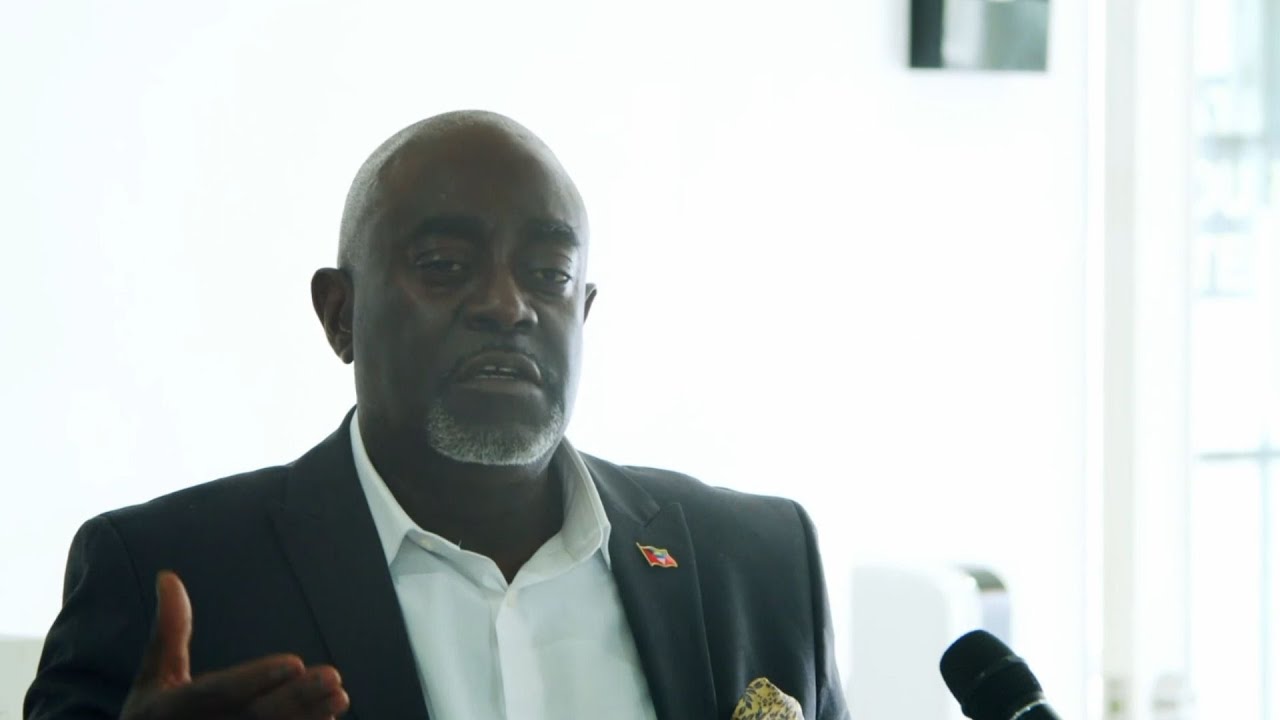
    At the “From Recovery to Transformation and Resilience” Development Partners Roundtable hosted in Kingstown, St. Vincent and the Grenadines Prime Minister Godwin Friday has delivered a urgent call for a fundamental restructuring of the global development finance system, arguing that the long-standing “one size fits all” model tied exclusively to national income levels is unconscionable and actively failing small island developing states (SIDS) across the globe.

    Friday pushed for the United Nations and leading international financial institutions to adopt the Multidimensional Vulnerability Index (MVI) as the new operational standard for determining access to concessional, low-interest financing, aligning his country’s stance with the unified position of CARICOM and the global Alliance of Small Island States.

    “It is unconscionable that Caribbean small states, which contribute less than 1% of global greenhouse gas emissions, are forced to borrow at double-digit commercial interest rates to rebuild after climate-fueled disasters, while developed nations access capital at far lower costs,” Friday told attending diplomats and representatives of multilateral and bilateral development agencies. He emphasized that arbitrary income-based metrics fail to account for small islands’ extreme exposure to climate catastrophes and inherent geographic isolation, two structural challenges that severely strain fiscal capacity. With climate projections forecasting more frequent and intense extreme weather events across the Caribbean, Friday stressed that reform cannot wait: “So action is not an option. The timing is what’s required, and that timing is now.”

    The prime minister grounded his appeal for systemic change in the string of consecutive catastrophic shocks that have pummeled St. Vincent and the Grenadines (SVG) in recent years: the global COVID-19 pandemic, the 2021 eruption of the La Soufriere volcano, 2024’s Hurricane Beryl, and the inflationary spillover from ongoing global geopolitical conflicts. The cumulative impact of these events, he explained, has forced the SVG government to ramp up public spending to protect lives and rebuild critical infrastructure, driving public debt to more than 113% of gross domestic product. Without a shift in the global financing model, Friday warned, debt levels will only continue to rise. Despite their widely acknowledged vulnerability, he added, SIDS do not seek to be defined or limited by this reality: survival from one crisis to the next is not enough; the goal must be structural transformation of national economic foundations.

    Tying his push for fairer global financing to a domestic agenda of structural economic reform, Friday outlined three core transformative priorities for his government. First, the country is moving full speed ahead with a green energy transition, aiming to cut its costly dependence on imported diesel, which drags down household budgets and national competitiveness. SVG remains firmly committed to its target of sourcing 60% of its energy from renewables by 2030, through a shift to solar power and utility-scale battery storage to replace aging diesel generators. “I know it’s ambitious, but you gotta think big,” Friday noted.

    Second, the government is addressing a persistent skills mismatch that disproportionately excludes young people and women from quality formal employment. Large-scale infrastructure projects including port modernization and the construction of the new Arnos Vale Hospital have revealed a large gap between the technical skills held by local workers and the demands of growing sectors of the economy, with the majority of certified tradespeople currently imported. To close this gap, SVG is overhauling its vocational and technical education systems to directly align workforce development with the current and future needs of the private sector and the broader national economy.

    Third, the government is strengthening fiscal discipline through a formalized legal framework. Working with international technical partners, SVG is updating and activating a modern fiscal responsibility framework to guide medium-term debt reduction. Measures including comprehensive public expenditure reviews, enhanced tax compliance, and automated social protection delivery are already underway to ensure all public spending is transparent and effective, with plans to codify the fiscal framework into national law.

    In wider discussion at the roundtable, Friday connected his calls for financing reform to a growing regional debate across the Caribbean about the difference between incremental coping and meaningful long-term progress. He referenced a widely shared analogy from Bahamian Prime Minister Philip Davis, drawn from researcher Michael Mann, that describes regional development as “walking up the down escalator”: many projects are completed, but meaningful transformation of on-the-ground conditions often remains out of reach. Friday argued that both national governments and international development partners must refocus their efforts on coordination and measurable impact, rather than just counting completed activities.

    Friday also announced a policy shift away from historical state dominance of key economic sectors, noting that the current fiscal context leaves no viable alternative to expanding private sector leadership in national development. The government has already signaled its clear commitment to this shift to domestic private stakeholders. Under the new governance model, the role of government is not to single-handedly build the economy and deliver it to citizens, but to mobilize all available domestic and international talent and resources to accelerate progress. “There is a lot of goodwill around the place. How do we coordinate this, bring this all together … so we could move forward more quickly?” he asked.

    Repeatedly stressing that neither SVG nor other Caribbean small islands can achieve this transformation alone, Friday warned that a single extreme weather event can erase a decade of hard-won development progress. “While we hope for better days, and we think of better fortunes that may come, we can’t rely on those vicissitudes,” he said. “We must plan, we must have partners in place, and be capable and willing to adapt and to adjust to these crises.”

    The two-day roundtable, convened in partnership with the UN Resident Coordinator’s Office, also featured a detailed presentation of SVG’s Growth and Stabilisation Plan from Ambassador Kevin Hope. The plan sets ambitious targets: reduce public debt to 60% of GDP by 2035, double long-term economic growth, and cut both poverty and unemployment to single-digit rates. Representatives from attending international partners including the UN, Caribbean Development Bank, World Bank, CAF, EU, Canada, Germany, China, UK, CARICOM Development Fund, UNICEF, UNFPA, WFP, PAHO, and GIZ broadly endorsed the government’s strategic direction, while calling for stronger cross-sector coordination, integration of regional priorities, and explicit targeted support for the poorest and most vulnerable populations.

  • Missing cruise crew member died after fall on Mount Liamuiga, Police confirm

    Missing cruise crew member died after fall on Mount Liamuiga, Police confirm

    BASSETERRE, St. Kitts – Local law enforcement has officially confirmed the cause of death for a missing Chinese hiker, Ziyuan Wang, a 33-year-old crew member from a visiting cruise ship, who died in a tragic accidental fall on St. Kitts’ iconic Mount Liamuiga earlier this year.

    Wang first went missing on May 27, 2026, after he set out to hike the mountain’s range alone, without an authorized guide, and strayed from the designated path. According to official records from the Royal St. Christopher and Nevis Police Force (RSCNPF), Wang was last spotted on the main hiking trail at roughly 10:00 a.m. that day, wearing a black outfit and red footwear. By 2:00 p.m., the stranded hiker managed to place an emergency call to local 911 services to report he was lost, but all communication cut off immediately after the call, leaving rescuers with no further updates on his location.

    Within hours of losing contact, a large-scale multi-agency search and rescue operation was mobilized to locate Wang. The joint effort brought together personnel from the RSCNPF, the St. Kitts-Nevis Defence Force, national Fire and Rescue Services, the National Emergency Management Agency (NEMA), and dozens of local volunteer groups. Search teams scoured large swathes of the rugged mountainside extending as far as the volcano’s crater, continuing search efforts through the evening of May 27 and resuming the operation at first light the following day. It was not until five days later, on June 1, that search crews located Wang’s body in a deep ravine far off the marked hiking route.

    A full post-mortem examination was carried out on June 9 to confirm the circumstances of his death. The examination results showed the 33-year-old died from severe trauma caused by a fall from a significant height. Investigators confirmed there is no evidence of foul play, and all findings align with the conclusion that his death is a tragic hiking accident. In the wake of the investigation’s conclusion, the RSCNPF released a formal statement thanking all participating agencies, volunteers, and community members who contributed their time and resources to the search operation.