作者: admin

  • Barnwell says no conflict of interest in her PSC membership

    Barnwell says no conflict of interest in her PSC membership

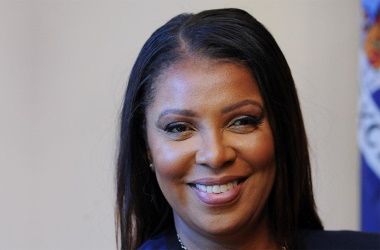
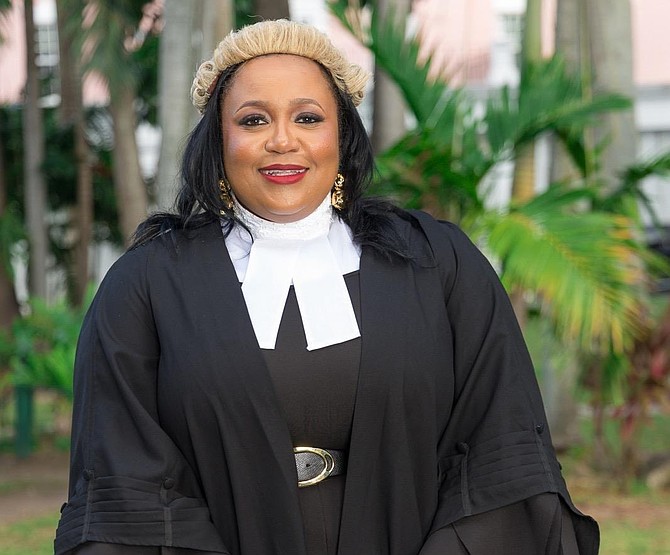
    Attorney Shirlan ‘Zita’ Barnwell has firmly rejected assertions of potential conflict of interest regarding her dual appointments to both the Public Service Commission and Police Service Commission. The controversy stems from her previous legal representation of the Public Service Union (PSU) through her firm Thomas and Barnwell, which had engaged in multiple lawsuits against the former Unity Labour Party administration.

    Barnwell clarified that her law practice no longer maintains any professional relationship with the PSU, noting that their formal retainer agreement concluded nearly two years ago. Frederick Attorney, with Maxron Holder as lead counsel, has represented the union for over a year according to Holder’s confirmation.

    The sole remaining connection involves ongoing litigation before the Privy Council regarding the vaccine mandate case, which Barnwell characterizes as a legacy matter with limited current relevance. She emphasized that neither she nor her partner Jomo Thomas serves as lead counsel in this proceeding, with Cara Shillingford and a UK King’s Counsel taking primary responsibility.

    Barnwell contends that her prior experience litigating against the PSC actually enhances her value as a commissioner. She believes her understanding of the Commission’s previous regulatory shortcomings will inform better operational practices moving forward. The attorney expressed optimism that her insider perspective could help prevent future legal challenges from public servants through improved compliance mechanisms.

  • Government to Deliver 53 New Homes Under HAPPI This Year

    Government to Deliver 53 New Homes Under HAPPI This Year

    The Antigua and Barbuda government is significantly scaling up its flagship housing initiative, with plans to deliver 53 new residences to vulnerable citizens within the year. Prime Minister Gaston Browne announced this expansion of the Home Advancement Programme for the Poor and Indigent (HAPPI) following a series of recent home handovers in communities including Swetes, Hatton, and Parham.

    The HAPPI program operates through a dual approach: constructing new housing units from the ground up and providing essential materials to renovate and repair existing substandard homes. In a major boost to this effort, the administration has procured building supplies valued at over EC$1 million, described by PM Browne as the largest single shipment of construction materials ever imported specifically for the program. This investment is earmarked for nationwide repair and upgrade projects.

    Emphasizing the equitable nature of the initiative, Social and Urban Transformation Minister Rawdon Turner stated that HAPPI assistance is allocated solely based on need and is strictly non-partisan. Assessment prioritizes households enduring the most precarious and hazardous living conditions.

    This housing expansion is a central component of the government’s broader social protection agenda. Officials confirm that the program’s overarching goals are to elevate living standards, enhance housing security, and foster stronger, more resilient communities throughout the twin-island nation.

  • St. Kitts PM to make official visit to SVG

    St. Kitts PM to make official visit to SVG

    In a significant diplomatic engagement, Prime Minister of St. Kitts and Nevis Dr. Terrence Drew is scheduled to undertake an official visit to St. Vincent and the Grenadines this Tuesday. The visit, announced by the Agency for Public Information (API), highlights the ongoing collaboration between the two Eastern Caribbean nations. Dr. Drew, who currently holds the chairmanship of the Caribbean Community (CARICOM), will be received by his counterpart, Prime Minister Ralph Gonsalves of St. Vincent and the Grenadines. The agenda for the high-level meeting is set to focus on pressing regional issues, aligning shared strategic priorities, and reinforcing the framework for continued multilateral cooperation. Both leaders are expected to deliberate on mechanisms to strengthen CARICOM’s initiatives and address common challenges facing the region. The API emphasized that this diplomatic mission is a testament to the robust and historically amicable bilateral relations shared by the two member states. Furthermore, it reaffirms a joint dedication to propelling the agenda of regional integration and fostering deeper collaboration amongst CARICOM member states to achieve collective economic and social progress.

  • Small states seek greater voice in global affairs, says Antigua foreign minister

    Small states seek greater voice in global affairs, says Antigua foreign minister

    Antigua and Barbuda has issued a compelling call for enhanced representation of small states within international decision-making forums, asserting that global policies frequently impose disproportionate consequences on vulnerable nations. Foreign Affairs Minister E.P. Chet Greene articulated this position during a farewell meeting with India’s outgoing High Commissioner to St. John’s, Dr. Amit Telang.

    Minister Greene emphasized that despite constrained resources, smaller countries persistently contribute significant value to global diplomacy and must not be sidelined in critical discussions. He declared Antigua and Barbuda’s intention to leverage its forthcoming chairmanship of the Commonwealth Heads of Government Meeting (CHOGM) as a platform to champion the specific interests of small states. This agenda will prioritize confronting existential threats and systemic challenges that jeopardize their stability and development.

    Further elaborating on his nation’s strategic vision, Greene underscored the vital importance of forging stronger alliances within the Global South. He posited that such collaborative partnerships are indispensable for equipping smaller nations with the tools to effectively maneuver through complex international crises and economic upheavals.

    The gathering also served to honor Dr. Telang’s diplomatic service, concluding a nearly four-year tenure. Minister Greene commended the outgoing High Commissioner for his instrumental role in deepening bilateral relations between Antigua and Barbuda and India. Dr. Telang reciprocated by expressing gratitude for the consistent support extended by the host government, which he cited as a fundamental component of his mission’s accomplishments.

    Adding a distinguished presence to the event was National Hero Sir Vivian Richards. The cricketing legend, who is revered as an icon in India, fulfills the role of Antigua and Barbuda’s Ambassador to CHOGM, symbolizing the unique cultural and diplomatic bridges between the nations.

  • SVG to adopt regional position on deportees from US

    SVG to adopt regional position on deportees from US

    The government of St. Vincent and the Grenadines has declared it will align with the collective position of the Organisation of Eastern Caribbean States (OECS) regarding a United States proposal for bloc members to accept third-country refugees and deportees. Deputy Prime Minister and Minister of National Security St. Clair Leacock announced the coordinated approach during a national radio interview, emphasizing regional solidarity over unilateral action.

    Leacock revealed that OECS prime ministers are convening to develop a unified response after receiving technical advice, with plans to formally engage the U.S. State Department for clarification and establish proper protocols. He framed the issue within broader global migration challenges, noting that even major powers like European nations approach such matters collectively rather than individually.

    The deputy prime minister cautioned against impulsive sovereign decisions, highlighting how regional agreements and protocols create interconnected obligations. While acknowledging potential security concerns regarding accepting displaced persons, Leacock also suggested possible benefits if newcomers possess valuable skills and resources that could help address underpopulation issues in Caribbean nations.

    Leacock confirmed no final decision has been reached, stating outcomes could range from acceptance to rejection of the U.S. request. He connected the refugee matter to broader regional security discussions, noting upcoming meetings with regional security officials regarding Venezuela’s impact on Caribbean stability as he prepares to assume chairmanship of the Council of Ministers for National Security in March.

  • Mrs Elaine LeBlanc of Penville is 101 today!

    Mrs Elaine LeBlanc of Penville is 101 today!

    The Commonwealth of Dominica witnesses an extraordinary milestone as Elaine LeBlanc, a remarkable resident born on January 20, 1925, celebrates her 101st birthday today. Hailing from the humble beginnings of Lower Penville, Mrs. LeBlanc’s life journey embodies resilience, faith, and familial devotion.

    As a widowed mother of eight children—seven sons and one daughter—LeBlanc dedicated her earlier years to nurturing her extensive family while maintaining an active community presence. Her weekly routine characteristically included Saturday market visits, diligent household management, and participation in church activities. Beyond her domestic responsibilities, she cultivated passions for social dancing and exploratory travel, demonstrating a vibrant engagement with life.

    A century of living has blessed Mrs. LeBlanc with an impressive five-generation familial legacy. Contemporary accounts from relatives describe her as remarkably spirited—maintaining physical mobility through regular walking, engaging in animated conversations, and cherishing social interactions with companions. She continues to captivate listeners with firsthand narratives spanning decades of Dominican history and personal experience.

    Dominica News Online extends heartfelt congratulations to this national treasure, whose life story reflects the cultural richness and enduring spirit of the Caribbean nation. Mrs. LeBlanc’s longevity serves as an inspirational testament to the vitality possible in advanced age when coupled with community connection and purposeful living.

  • Tell US no to refugees, deportees — Gonsalves

    Tell US no to refugees, deportees — Gonsalves

    A prominent Caribbean political figure is advocating for a unified regional rejection of a United States proposal concerning the transfer of migrants. Ralph Gonsalves, the former long-serving Prime Minister of St. Vincent and the Grenadines and current opposition leader, has publicly called on CARICOM member states to firmly refuse a U.S. request to accept refugees and deportees from third countries.

    Gonsalves revealed that the U.S. State Department had approached his administration with this proposal shortly before the recent general elections. Speaking on his party’s radio station, Star Radio, he detailed his firm rejection of the idea, arguing it serves neither American nor Caribbean interests. His central contention is that accepting a minimal number of individuals—estimated at just 10-20 persons annually per Organisation of Eastern Caribbean States (OECS) member—would be symbolically insignificant for U.S. policy objectives while creating substantial security risks for the region.

    The seasoned politician, who held office for nearly a quarter-century, expressed deep concern that such a program would inevitably lead to connections between some deportees and existing regional criminal networks. He characterized the potential incoming individuals as likely to include problematic elements, warning Caribbean nations against creating what he termed ‘another Haiti situation’ in terms of security challenges.

    Gonsalves framed the U.S. proposal within broader geopolitical strategies, including the America-first policy and historical doctrines of hemispheric dominance. He cautioned that without a concerted CARICOM-wide position, larger powers would systematically pressure individual smaller nations into compliance.

    Rather than outright confrontation or complete submission, Gonsalves proposed a middle path of strategic negotiation. He suggested CARICOM could leverage this situation to advance other regional requests, such as visa-free travel arrangements for Caribbean citizens to the U.S., the revitalization of the PetroCaribe energy initiative with Venezuela, and joint resource exploitation projects. This approach, he argued, would demonstrate the bloc’s willingness to cooperate on mutually beneficial issues while standing firm on matters of existential importance like border security and migration policy.

    The opposition leader concluded by urging the current government of St. Vincent and the Grenadines to adopt a clear position of refusal and to champion this stance within regional forums, emphasizing that collective action is the only way to prevent larger nations from dividing and overwhelming smaller states.

  • An American-led Venezuela shatters Dominican exceptionalism

    An American-led Venezuela shatters Dominican exceptionalism

    The Dominican Republic stands at a critical juncture as its longstanding position as the Caribbean’s stable economic haven faces unprecedented challenges. For two decades, the nation benefited from regional instability, attracting capital and talent by default while neighboring countries grappled with crises. This era of asymmetric advantage is rapidly closing as geopolitical shifts reshape the competitive landscape.

    Venezuela’s economic renaissance, backed by substantial American investment and operational scale, represents a structural transformation rather than theoretical possibility. Simultaneously, Cuba’s impending transition threatens to further redistribute regional capital and talent. These developments will fundamentally reprice Caribbean economic dynamics, challenging the Dominican Republic’s current development model.

    Critical examination reveals fundamental flaws in the nation’s innovation strategy. Punta Bergantín, initially promoted as a ‘Silicon Beach of the Global South,’ demonstrates concerning execution gaps. Instead of innovation infrastructure, the project has prioritized conventional tourism assets—hotels, resorts, and recreational facilities. This discrepancy between branding and implementation risks degrading the country’s credibility as a serious innovation destination.

    The national development approach continues emphasizing physical assets: expanded airports, additional marinas, and real estate developments. While nearshoring initiatives and semiconductor manufacturing represent positive steps, they remain tactical advantages dependent on labor arbitrage rather than sustainable competitive differentiation.

    The nation’s innovation ecosystem suffers from structural deficiencies. With research and development investment languishing below 0.3% of GDP—significantly lower than innovation-driven economies’ 2-3%—the Dominican Republic lacks crucial architecture: coherent venture capital systems, startup operating standards, corporate integration pathways, and exportable digital IP pipelines.

    An imminent talent crisis compounds these challenges. The educated Venezuelan diaspora, currently residing in the Dominican Republic, represents one of the hemisphere’s most capitalized migrant populations comprising engineers, entrepreneurs, and professionals. As Venezuela reopens, this talent exodus will accelerate, creating a vacuum of expertise, institutional memory, and entrepreneurial energy.

    The solution requires immediate, coordinated action across five domains: formalizing innovation as a distinct industry with proper policy frameworks; building comprehensive venture infrastructure beyond mere funding; professionalizing startups as export vehicles rather than experimental projects; creating cross-border moats through Dominican IP exports; and integrating public-private execution mechanisms.

    Without cohesive innovation architecture, the Dominican Republic risks maintaining beautiful infrastructure while the region economically reengineers around it. The window for strategic response is narrowing rapidly as competitive pressures intensify across the Caribbean basin.

  • Encouraging results with Jusvinza

    Encouraging results with Jusvinza

    Cuban President Miguel Díaz-Canel Bermúdez has announced encouraging preliminary results from clinical trials investigating the use of the Cuban biotechnology product Jusvinza for patients suffering from chronic post-Chikungunya arthritis. The findings were presented during a high-level meeting at the Palace of the Revolution attended by scientific experts and government officials, including Prime Minister Manuel Marrero Cruz.

    The clinical studies, initiated on December 2, 2025, have demonstrated notable improvement in patients from Havana and Matanzas provinces who received Jusvinza treatment. Researchers reported that the drug exhibits a strong safety profile and early evidence of clinical effectiveness in addressing the debilitating inflammatory condition that follows Chikungunya virus infection.

    Dr. Julio Esmir Baldomero Hernández, Director of Clinical Research at the Center for Genetic Engineering and Biotechnology (CIGB), indicated that comprehensive data from the study is expected by early March 2026. The research incorporates long-term evaluations focusing particularly on treatment safety and the persistence of therapeutic benefits. The study has been conducted in strict compliance with good clinical practices, receiving endorsement from Cuba’s Center for State Control of Medicines, Equipment, and Medical Devices (Cedmed) after a rigorous inspection.

    According to Dr. Miguel Hernán Estévez del Toro, Director of the Hermanos Ameijeiras Surgical Clinical Hospital and a renowned Cuban rheumatologist, a significant percentage of Chikungunya patients develop chronic inflammatory arthropathy after three months of infection. The condition shares inflammatory mediators with rheumatoid arthritis, leading to similar limitations in quality of life and functional capacity when left uncontrolled.

    ‘Having a product capable of slowing the inflammatory progression of this disease would be tremendously beneficial,’ stated Dr. Estévez del Toro. In response to these findings, Cuba’s Ministry of Public Health has launched a national survey through its Innovation Committee, the National Group, and the Cuban Society of Rheumatology to develop consensus treatment guidelines that incorporate Jusvinza alongside rehabilitation therapies.

    Dr. María del Carmen Domínguez, principal investigator of the study, emphasized that repurposing Jusvinza—originally developed for rheumatoid arthritis and COVID-19—represents a significant scientific achievement. The drug demonstrates immunomodulatory capabilities even with repeated administrations over time, presenting a substantial molecular challenge that researchers have successfully addressed.

    Experts at the meeting also noted a declining incidence of Chikungunya virus infections across Cuba, suggesting that the breakthrough treatment could arrive as the epidemic wave recedes.

  • World Economic Forum 2026 in Davos van start; wereldwijd leiders bijeen

    World Economic Forum 2026 in Davos van start; wereldwijd leiders bijeen

    The 2026 World Economic Forum (WEF) commenced officially on Monday in Davos, Switzerland, gathering approximately 3,000 participants from over 130 countries. The prestigious assembly brings together heads of state, government officials, corporate executives, and civil society leaders for a four-day convention running through January 23. This year’s theme, ‘A Spirit of Dialogue,’ emphasizes fostering cooperation during an era marked by complex geopolitical and economic challenges.

    Suriname’s Vice President Gregory Rusland is among the distinguished attendees, having received a special invitation to join an exclusive meeting of forty international decision-makers comprising heads of state, CEOs, and ministers. Rusland is scheduled to engage with global leaders on the critical topic: ‘From Commitments to Implementation: Scaling Sustainable Tourism and Hospitality.’

    For decades, the annual WEF summit has served as a crucial platform for addressing pressing global issues including economic growth, multilateral cooperation, technological advancement, and climate change. The 2026 program features more than 200 sessions covering diverse subjects such as global risks, economic inequality, artificial intelligence, and sustainable development.

    Key discussion topics this year include the role of dialogue in an increasingly fragmented global economy. According to recent WEF risk analysis, economic confrontations including trade conflicts and protectionist measures have gained significant prominence on the world stage. The forum will also address the growing divide between economic elites and broader populations. Larry Fink, CEO of investment firm BlackRock and interim co-chair of the forum, emphasized the need for economic systems to evolve toward generating broader societal benefits and reducing distrust.

    Additional focal points include digital innovation and artificial intelligence, investments in strategic sectors like defense and technology, the future of energy and climate policy, and the vital role of international cooperation in tackling global challenges.

    The geopolitical dimension features prominently in this year’s agenda. National security advisors from multiple countries convened in Davos to discuss sensitive matters including policy responses to trade conflicts surrounding Greenland, which have recently created tensions between the United States and European nations. The presence of numerous state leaders and government heads underscores the forum’s continued importance as a diplomatic platform for international collaboration amid global uncertainties including conflict zones and challenges in multilateral relations.