作者: admin

  • Iranian assembly selects son of slain cleric as new supreme leader as oil prices spike in US

    Iranian assembly selects son of slain cleric as new supreme leader as oil prices spike in US

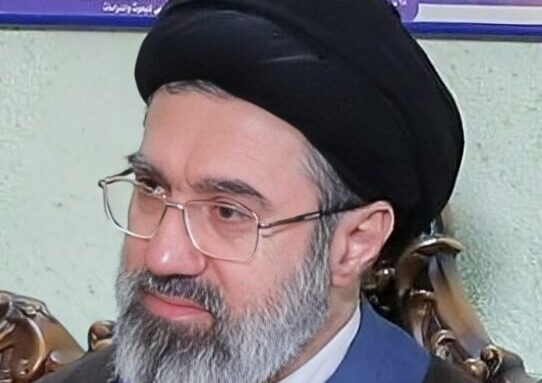
    Iran’s Assembly of Experts has formally appointed Mojtaba Khamenei as the nation’s new Supreme Leader, following the death of his father, Ayatollah Ali Khamenei, during combined U.S.-Israeli military strikes on Tehran on February 28. The decisive appointment solidifies hardline control over Iran’s political and security apparatus during escalating Middle Eastern tensions.

    The 88-member clerical body convened under extraordinary security measures to elect Mojtaba Khamenei, who had long been considered the foremost candidate. State television announced his designation as the “third Leader of the sacred system of the Islamic Republic” shortly after midnight local time. Security chief Ali Larijani confirmed the transition of power.

    Mojtaba Khamenei assumes ultimate authority over all state matters, with Iran’s armed forces and the Islamic Revolutionary Guard Corps promptly pledging allegiance to the new leader. The IRGC issued statements affirming absolute readiness to execute his directives.

    The succession occurs amid intensified hostilities between Iran and Western powers. U.S. President Donald Trump previously asserted that Washington should influence the selection process, warning that any leader lacking American approval “won’t last long.” Israel had similarly threatened preemptive actions against whoever assumed leadership.

    The conflict has exacted significant human costs, with the U.S. military reporting a seventh service member fatality from Iranian retaliatory strikes. Meanwhile, Tehran residents describe environmental catastrophes including thick black smoke and acidic rainfall following attacks on oil infrastructure, creating potentially hazardous air quality.

    Global energy markets have responded dramatically to the instability. Oil prices surged approximately 8% in a single trading session, reaching $119.50 per barrel—the largest dollar-value increase recorded. This approaches historical peaks last witnessed in 2008, when prices exceeded $147 per barrel.

    President Trump declined to directly address the leadership appointment when questioned, stating only that conflict resolution would require mutual agreement with Israeli Prime Minister Benjamin Netanyahu.


  • AZP viert 60 jaar zorg: regering investeert SRD 60 miljoen in modernisering

    AZP viert 60 jaar zorg: regering investeert SRD 60 miljoen in modernisering

    PARAMARIBO – Suriname’s Academic Hospital Paramaribo (AZP) celebrated its 60th anniversary with a major government commitment to healthcare modernization. Health Minister André Misiekaba announced a minimum investment of SRD 60 million to upgrade critical departments at the nation’s premier medical institution, founded on March 9, 1966.

    The anniversary celebrations featured an interfaith prayer gathering under the theme ‘Strong Together, Forward Together,’ reflecting on six decades of service to the Surinamese community. Hospital Director Claudia Redan emphasized that the institution’s legacy rests on its dedicated staff rather than physical infrastructure, describing healthcare work as a calling rather than mere employment.

    ‘Do good and don’t look back,’ Redan stated, addressing her team. ‘Working in healthcare isn’t just a job – it’s a vocation. Hundreds of patients depend on us daily, beyond what social media captures: 560 inpatients, over 100 emergency cases, and more than 2,000 outpatient visits.’

    Lloyd Pool, Chairman of the General Staff Union, acknowledged the persistent challenges faced by healthcare workers, noting that while thousands of employees have retired over six decades, ‘the hospital itself cannot retire – we continue for the community.’

    The substantial investment will fund several critical upgrades:
    • Doubling operational operating theater capacity
    • Expanding Intensive Care Unit (ICU) from current levels to 16 beds initially, then to 21 beds
    • Modernizing neonatal intensive care facilities
    • Accelerated renovation of Emergency Department services

    Additional initiatives will focus on recruiting specialized nurses and implementing measures to counter brain drain in the healthcare sector. Minister Misiekaba acknowledged existing challenges regarding salaries and allowances but reaffirmed the government’s commitment to supporting the sector.

    Describing AZP as an indispensable symbol of quality care in Suriname, the minister concluded: ‘This hospital cannot and must not fail. Congratulations on 60 years of dedication, and onward to the next 60 years.’

  • CARICOM Private Sector Organization commends Afreximbank’s $5 billion commitment to boost trade and investment in CARICOM

    CARICOM Private Sector Organization commends Afreximbank’s $5 billion commitment to boost trade and investment in CARICOM

    In a landmark development for intercontinental economic relations, the African Export-Import Bank (Afreximbank) has elevated its financial commitment to the Caribbean region from $3 billion to $5 billion. The announcement was formally made during high-level discussions with CARICOM Heads of Government in Saint Kitts and Nevis on February 24, 2026, signaling a new era of Afro-Caribbean economic integration.

    Dr. George Elombi, President of Afreximbank, presented a comprehensive strategic framework designed to deepen economic cooperation through enhanced trade mechanisms and investment partnerships. The expanded financial package represents one of the most significant cross-regional economic initiatives in recent history, with particular focus on developing critical infrastructure and financial systems.

    Central to this initiative is the establishment of the Afreximbank Caribbean Trade Centre in Bridgetown, Barbados, which will serve as the institution’s regional headquarters. The state-of-the-art facility, scheduled to break ground later this year, will include conference capabilities and luxury accommodations to facilitate business exchanges.

    The banking institution has also committed to supporting the creation of a Caribbean Export-Import Bank, a visionary project aimed at strengthening the region’s autonomous trade financing capabilities. Simultaneously, Afreximbank is collaborating with regional central banks to develop the CARICOM Payment and Settlement System (CAPSS), which will streamline cross-border transactions and reduce dependency on foreign currencies.

    Physical connectivity between the two regions receives particular emphasis, with Afreximbank pledging financial support for enhanced air and maritime links. This infrastructure development is considered crucial for unlocking the full potential of trade relations between the African Union and CARICOM nations.

    The institutional framework for this partnership is reinforced through the African Caribbean Business Council (ACBC), established via a trilateral memorandum of understanding between CPSO, Afreximbank, and the Africa Business Council. This platform will facilitate structured private sector cooperation through trade forums, business matchmaking services, and capacity-building programs specifically designed to empower SMEs, women entrepreneurs, and youth-led enterprises.

    Dr. Patrick Antoine, CEO of the CARICOM Private Sector Organization, characterized the enhanced commitment as “a major milestone in strengthening economic cooperation between the African Union and the Region.” He emphasized the CPSO’s dedication to ensuring these initiatives yield tangible benefits through increased trade volumes, expanded business opportunities, and sustainable economic development throughout the Caribbean.

  • Liquor Sales Banned in St. Philip’s North on By-Election Day

    Liquor Sales Banned in St. Philip’s North on By-Election Day

    Authorities in St. Philip’s North have implemented a comprehensive ban on alcohol sales during the upcoming by-election, invoking legal statutes to ensure electoral integrity. The electoral commission has activated Section 27 of the Representation of the People Act (Cap. 379), prohibiting all commercial distribution of intoxicating liquors within the constituency while polling stations remain operational.

    The regulatory measure extends to all establishments holding valid licenses under the Licensing (Intoxicating Liquor) Act, effectively suspending alcohol-related commerce during voting hours. This temporary prohibition aims to maintain public order and prevent potential influences that might compromise the democratic process.

    Non-compliance carries severe penalties, with offenders facing summary convictions including fines reaching $3,000 or incarceration for up to twelve months. The strict enforcement mechanism underscores the government’s commitment to upholding electoral laws without exception.

    This alcohol sales restriction forms part of broader preparations for the March 16 by-election, where constituents will determine their new parliamentary representative. The commission emphasizes that such measures are standard procedure for ensuring free and fair elections, though specific implementation timing varies by jurisdiction and electoral circumstances.

  • Over 20 La Ruta Maya Teams Paddle to Belcan

    Over 20 La Ruta Maya Teams Paddle to Belcan

    In an unprecedented display of unity, more than twenty canoe teams competing in the 2026 La Ruta Maya Belize River Challenge transformed their competitive race into a coordinated protest against organizational changes to the historic event. On March 9, 2026, paddlers collectively rejected the newly established finish line, instead converging at the entrance of the channel leading to the traditional Belcan Bridge endpoint.

    The dramatic scene unfolded as exhausted athletes, having completed four days and 180 miles of rigorous paddling, deliberately paused their competition to form a unified flotilla. Rather than racing individually to the new finish line, they proceeded together in a solemn procession toward the Belcan Bridge—a site that has marked the conclusion of this decades-old tradition since its inception.

    This coordinated action came as direct opposition to race organizers’ decision to relocate the finish line, a move many participants decried as excessive commercialization of the beloved cultural event. The protest garnered immediate support from spectators both on-site and online, with crowds at Haulover Bridge erupting in cheers as the unified teams approached.

    Despite the protest, competitive results were still recorded based on previous leg completions, with team PACT on TRAK—featuring paddlers Amado Cruz, Enrique Cruz, and Cristian Lopez—claiming overall victory by sweeping all four legs of the challenge.

    The event was broadcast live by News 5 Belize, capturing emotional reactions from supporters who praised the athletes’ stand for tradition. One viewer commented during the live coverage: ‘Finally Belizeans stand together for something… really proud of you all,’ capturing the national significance of this demonstration.

    The protest arrival at Belcan Bridge marked a historic moment in the event’s history, demonstrating the deep cultural importance of sporting traditions and athletes’ willingness to prioritize principle over competition.

  • UPP Candidate Alex Browne Steps Up Campaign in St. Philip’s North Ahead of March 16 By-Election

    UPP Candidate Alex Browne Steps Up Campaign in St. Philip’s North Ahead of March 16 By-Election

    With the March 16 by-election rapidly approaching, United Progressive Party candidate Alex Browne has significantly amplified his campaign operations throughout the St. Philip’s North constituency. The opposition candidate has embarked on an intensive grassroots strategy involving direct community engagement, organized political gatherings, and public demonstrations of support.

    Browne’s campaign trail featured systematic door-to-door canvassing across key residential areas including Glanvilles, Seatons, and Willikies. The political mobilization reached its peak with a Thursday evening assembly at Glanvilles Playing Field, where supporters convened to strategize voter outreach initiatives. The week’s activities concluded with a prominent motorcade on Sunday, traversing from Sir Vivian Richards Stadium through various communities before culminating in Willikies.

    The UPP candidate has anchored his campaign platform on a comprehensive development strategy termed ‘blueprint for a stronger St. Philip’s North,’ addressing pressing social and community concerns. In conjunction with International Women’s Day observances, Browne emphasized his commitment to addressing gender-specific challenges, stating: ‘We celebrate the strength of the mothers, entrepreneurs, caregivers, and community builders who hold St. Philip’s North together every day. We also confront the challenges women face in our community with a commitment to access, action, and progress.’

    Meanwhile, the Antigua and Barbuda Labour Party has deployed its own campaign machinery, with candidate Randy Baltimore conducting parallel outreach efforts across the constituency. The by-election, triggered by the seat’s vacancy, will determine parliamentary representation for St. Philip’s North, with both major parties intensifying their ground operations to secure voter allegiance in this eastern Antigua constituency.

  • Is Washington Forcing Caribbean Leaders to Shift on Cuba?

    Is Washington Forcing Caribbean Leaders to Shift on Cuba?

    A significant geopolitical shift is underway in the Caribbean region as United States diplomatic pressure appears to be altering longstanding relationships with Cuba. The transformation became evident when Guyanese President Irfaan Ali utilized a Fox News interview following the Shield of the Americas Summit in Florida to advocate for political changes within the communist-led island nation.

    President Ali explicitly stated that regional leaders concur the current situation cannot persist unchanged, emphasizing that any transitional process must prioritize democracy and freedom for Cuban citizens. This declaration positions Guyana among Caribbean nations adopting increasingly firm positions regarding Havana’s governance structure.

    The evolving dynamic occurs amid intensified Washington efforts to discourage international cooperation with Cuba’s controversial medical brigade programs. The Trump administration maintains its characterization of these initiatives as forms of forced labor while threatening visa sanctions against participating nations. These measures have already produced tangible consequences, with Jamaica terminating its decades-old medical collaboration agreement after failing to negotiate updated terms.

    Cuban officials have denounced what they perceive as regional intimidation tactics, specifically accusing the Trump administration of bullying tactics. Concurrently, Trinidad and Tobago’s Prime Minister Kamla Persad-Bissessar has faced domestic criticism after her government declined to support Cuba’s communist leadership during CARICOM’s recent 50th Heads of States assembly in February. This collective repositioning suggests a notable recalibration of Caribbean diplomatic alliances under sustained American influence.

  • ABSAR Pays Tribute to Longtime Volunteer Lee J. Sagert After His Passing

    ABSAR Pays Tribute to Longtime Volunteer Lee J. Sagert After His Passing

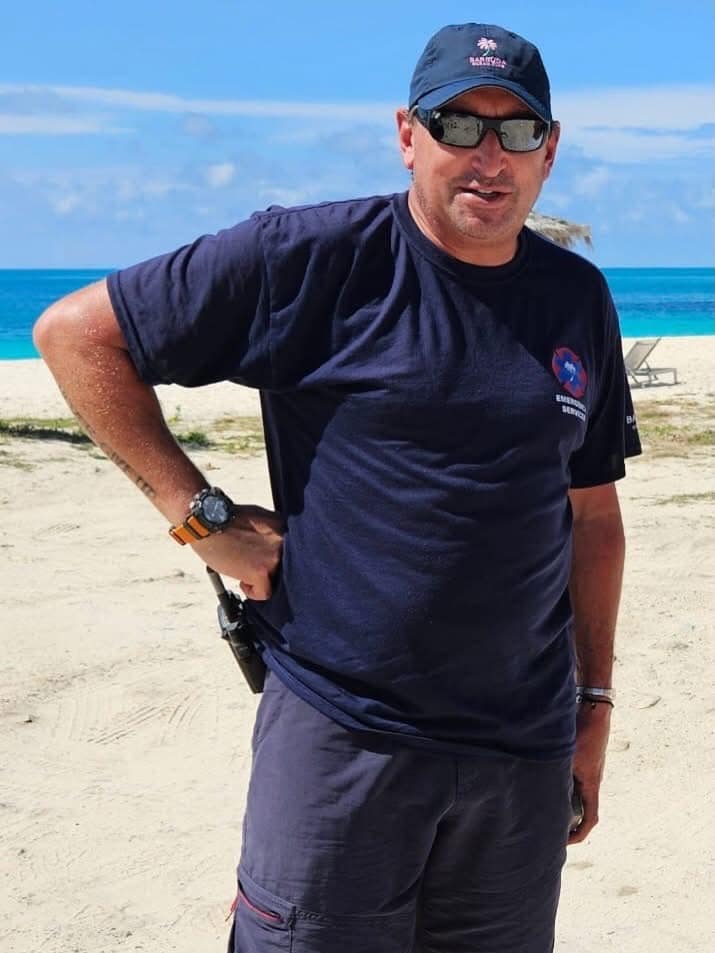
    The emergency response community of Antigua and Barbuda is grieving the tragic loss of dedicated volunteer Lee J. Sagert, who passed away following a sudden medical crisis during an active rescue operation. Sagert, whose decade-long service impacted countless lives, collapsed while answering an emergency call, marking a profound loss for the Caribbean nation’s search and rescue capabilities.

    As a multifaceted emergency specialist, Sagert exemplified extraordinary commitment through his roles as firefighter, paramedic, and rescue technician. His journey began over ten years ago when he first arrived on the island and immediately immersed himself in life-saving work. Jonathan Cornelius, Director of the Antigua and Barbuda Search and Rescue (ABSAR) service, remembered Sagert as both mentor and friend whose passion for rescue work became his defining characteristic.

    ‘Lee died doing what he loved to do, what he devoted his life to doing,’ Cornelius stated in an emotional tribute, highlighting the cruel irony that a man who dedicated his existence to saving others ultimately succumbed during that very mission. Despite immediate medical intervention from fellow responders at the scene, Sagert failed to respond to treatment.

    Most recently operating from the Barbuda Ocean Club, Sagert handled the full spectrum of emergency responses—from fire incidents to medical crises and technical rescue operations. ABSAR’s official statement emphasized his invaluable contributions to national safety infrastructure, noting how his expertise strengthened emergency preparedness across both islands.

    The organization has extended heartfelt condolences to Sagert’s family and friends, acknowledging that his legacy will endure through the countless lives he touched and the emergency response systems he helped build. This incident has sparked reflections within the rescue community about the physical demands placed on volunteers and the emotional toll of constant emergency response work.

  • PRESS RELEASE: Manicel and Majorie Simon, a Haitian father and his Suriname-born daughter, are recognized by IICA as Leaders of Rurality of the Americas

    PRESS RELEASE: Manicel and Majorie Simon, a Haitian father and his Suriname-born daughter, are recognized by IICA as Leaders of Rurality of the Americas

    In a remarkable story of perseverance and community building, Manicel Simon and his daughter Majorie Simon have been distinguished as Leaders of Rurality by the Inter-American Institute for Cooperation on Agriculture (IICA). Their four-decade journey from immigrant struggle to agricultural leadership represents a transformative narrative of integration and empowerment in Suriname.

    Arriving in Suriname in 1981 with nothing but determination, Manicel Simon worked various jobs for 17 years before acquiring his own land in 1998. Today, at 64, he cultivates plantains, sweet potatoes, cassava and squash across 36 hectares—a testament to what he describes as ‘freedom through land ownership.’

    His daughter Majorie, born in Suriname and representing the second generation of this agricultural community, has become instrumental in formalizing collective efforts. As secretary and spokesperson for the Haitian Farmers Cooperative Society of Suriname, she helped establish the organization in 2015 to address the historical isolation of Haitian farmers.

    The cooperative has revolutionized the community’s prospects by facilitating access to training, agricultural machinery, water pumps, fertilizers, and technical assistance through partnerships with IICA, FAO, and the Caribbean Development Bank. Most significantly, it has enabled Haitian farmers to secure land rights after decades of precarious tenancy arrangements where farmers could be evicted after clearing and cultivating plots.

    Beyond production improvements, the Simons have fostered a sense of community identity and rights awareness among dozens of Haitian farming families. Their work includes digital outreach through a Facebook page with over 10,000 followers that markets products and has attracted European clients.

    Current challenges include market limitations in Suriname’s small economy, where seasonal overproduction causes price collapses. The cooperative now focuses on developing export capabilities and food processing infrastructure to create value-added products like plantain chips, cassava flour, and preserved foods that would provide year-round income stability.

    The recognition includes the Soul of Rurality award, celebrating their contributions to food security and sustainability. Their story exemplifies how agricultural production serves as a driving force for immigrant integration and community development, even under adverse conditions, while maintaining cultural connections through weekly church gatherings that strengthen community bonds.

  • Former SVG PM, Dr Ralph Gonsalves, joins reparations fight

    Former SVG PM, Dr Ralph Gonsalves, joins reparations fight

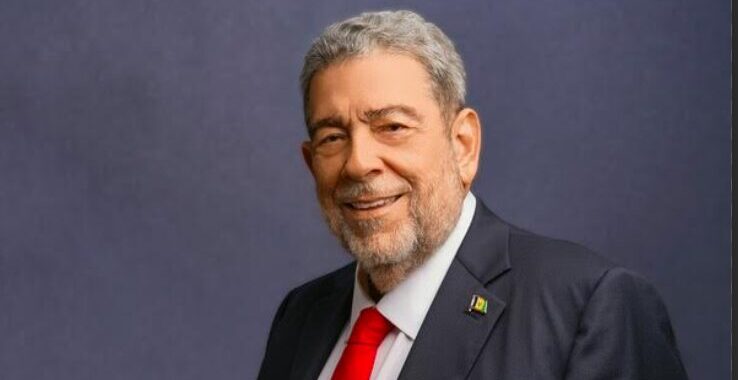
    In a significant development for the Caribbean reparations movement, former Prime Minister of St. Vincent and the Grenadines Dr. Ralph E. Gonsalves has been appointed as Senior Advisor and Elder for The Repair Campaign. The announcement marks a strategic enhancement for the regional initiative seeking reparatory justice for historical injustices.

    Dr. Gonsalves brings unparalleled political experience to the role, having served as Prime Minister for an unprecedented 24 years from 2001 to 2025—the longest continuous tenure of any Caribbean leader. Throughout his distinguished political career, he has consistently advocated for addressing the enduring consequences of indigenous genocide, the transatlantic slave trade, and colonial exploitation.

    The former Prime Minister, affectionately known as ‘Comrade Ralph’ throughout the region, has established himself as a prominent voice for Caribbean reparatory justice. His 2015 publication, ‘The Case for Caribbean Reparatory Justice,’ stands as a foundational text in the movement, compiling speeches and essays that helped launch the International Decade for People of African Descent.

    In his new capacity, Dr. Gonsalves emphasized the compelling historical, moral, and legal foundations for reparations. ‘The Caribbean’s call is not for charity, but for justice and repair so that our people can enjoy the future they deserve,’ he stated, highlighting needs for adequate housing, healthcare, education, employment opportunities, and fair wages.

    Denis O’Brien, Founder of The Repair Campaign, welcomed the appointment, noting that Dr. Gonsalves’ extensive political experience and regional insights would prove invaluable during this pivotal moment in the reparations movement. The organization aims to maintain reparatory justice as a priority for political leaders in both Europe and the Caribbean while developing practical, evidence-based solutions.

    Dr. Gonsalves expressed his commitment to collaborating with the CARICOM Reparations Commission, regional governments, advocacy groups, and grassroots campaigners to advance the Caribbean’s call for meaningful reparations through sustained joint efforts at all levels.