作者: admin

  • Chinese-linked crime networks  funnelling millions out of T&T

    Chinese-linked crime networks funnelling millions out of T&T

    Over the course of the past 10 years, transnational criminal networks allegedly tied to Chinese organized crime have steadily embedded themselves deeper into the socio-economic fabric of Trinidad and Tobago, broadening their illegal footprint across a spectrum of illicit activities ranging from drug and human trafficking to large-scale money laundering. According to multiple anonymous intelligence and law enforcement sources who spoke with local outlet Sunday Express, these criminal operations generate hundreds of millions of dollars in illegal proceeds, a large share of which is siphoned out of the Caribbean nation and moved back to China through sophisticated, well-disguised channels.

    Media coverage spanning multiple years has consistently documented the rising influence of these networks across the Caribbean, where they operate smuggling rings, unregulated underground gambling venues, immigration fraud schemes, and sham corporate front organizations that conceal illicit cash flows and shadowy business dealings. A 2022 investigative report from ProPublica highlighted testimony from a U.S. military official to Congress, which identified Chinese money launderers as the “number one underwriter” of drug trafficking activities across the Western Hemisphere, bringing global attention to the growing control of Chinese organized crime over drug-related money laundering in the region.

    Interviews with current and former law enforcement officials and financial industry insiders, all granted anonymity to protect their safety and professional standing, confirm that this trend has continued to accelerate exponentially, with criminal operations growing both in geographic reach and operational complexity across Trinidad and Tobago and the broader Caribbean. Senior intelligence sources note that illegal criminal proceeds are increasingly laundered through seemingly legitimate local businesses, outpacing the capacity of domestic law enforcement to detect and disrupt these activities as they grow in scale and sophistication.

    In its 2023 annual public report, Trinidad and Tobago’s Financial Intelligence Unit (FIU) flagged a growing volume of suspicious money laundering transactions and highlighted suspected tax evasion schemes carried out by foreign nationals operating in the country. A senior source with deep ties to the FIU confirmed to Sunday Express that the report’s findings disproportionately focus on financial activities linked to Chinese nationals, though the document does not explicitly single out Chinese citizens as a group. The source explained that the overrepresentation of Chinese-linked transactions reflects the actual prevalence of suspicious activity involving these networks, rather than targeted bias, and the findings are framed as part of broader trends in illicit financial activity.

    The FIU source detailed common methods used by these networks to move illicit funds out of the country. One widespread tactic involves employees of Chinese-owned businesses—including restaurants, casinos, and supermarkets—using their personal local bank accounts to deposit cash collected by their employers. Debit cards linked to these accounts are then sent to China, where the funds can be withdrawn directly, avoiding the formal cross-border wire transfer process that would trigger regulatory scrutiny.

    Trade-based money laundering (TBML) is another widely used technique, the source added. One common TBML scheme involves inflating invoice values for imported goods: for example, a trader importing goods with a true value of $100,000 from China may use a falsified invoice listing the value as $300,000, allowing the extra $200,000 in illicit funds to be wired to China under the guise of legitimate trade payment. A second TBML tactic involves misrepresenting the content of cargo shipments: bills of lading list legal goods that do not match the actual cargo, which may include contraband, illicit proceeds, or materials linked to other criminal activities. This method often requires collusion with corrupt local customs officials to pass through border checks undetected.

    Sources also warn of growing collusion between local Chinese business owners and transnational Chinese Triad criminal networks. Triads provide upfront capital for Chinese nationals to open businesses and purchase real estate in Trinidad and Tobago, eliminating the need for applicants to seek loans from local financial institutions that would trigger formal background and financial scrutiny. This allows criminal networks to expand their control over local assets without drawing early attention from regulators.

    Despite the sophisticated concealment tactics, these activities have not evaded detection entirely. The Financial Investigation Branch (FIB) of the Trinidad and Tobago Police Service (TTPS) is currently conducting multiple ongoing investigations into Chinese-linked money laundering networks and the local money mules they use to route illicit funds, launched following referrals from the FIU. However, investigators face significant structural barriers, most notably a persistent language barrier. Currently, investigators must rely on translation services provided by the Chinese Embassy for case-related materials, and there are ongoing concerns that the translations provided may not be fully accurate, hampering investigative progress.

    Another common channel for moving illicit funds out of the country uses bulk shipments of scrap iron as cover for large volumes of U.S. currency bound for China, according to a senior police source from a specialized anti-crime unit familiar with the operations. Compressed bundles of U.S. cash are disguised as blocks of wood and mixed into scrap iron shipments, with individual shipments often containing 8 to 9 such bundles totaling millions of dollars in illegal proceeds. While the source could not provide an exact cumulative total for the amount of funds moved through this method over the past decade, they confirmed that estimates run into hundreds of millions of U.S. dollars.

    These networks build up large supplies of U.S. cash through their network of legitimate-seeming local businesses, including grocery stores, restaurants, and casinos, before channelling the currency overseas through these smuggling routes. In a high-profile raid last year, Trinidad and Tobago Special Branch officers shut down an alleged criminal hub at a San Fernando mall linked to Chinese organized crime. During the operation, police seized more than $2 million in cash, 36 undocumented immigrants from China and Venezuela, multiple illegal firearms, and a large stockpile of ammunition. The mall’s proprietor, who held a valid local firearms license, was charged with ammunition possession violations and granted bail ahead of trial. Intelligence sources confirm the mall had long been used as a meeting location for Triad members, Chinese business owners, and corrupt local immigration officials to negotiate criminal deals.

    Multiple sources explained that the networks use a “colour coding” system to label their business operations, allowing involved Chinese business owners to quickly identify which criminal boss controls the laundering operations tied to each specific business. This internal organizational system helps avoid territorial disputes and keeps operations compartmentalized to reduce the risk of detection.

    Senior intelligence also notes that many Chinese business owners connected to the networks rent large warehouse spaces across Trinidad and Tobago to store counterfeit consumer goods including knockoff footwear, apparel, cigarettes, and unregulated pharmaceutical drugs. These goods are sold exclusively for cash, and the illicit proceeds are then converted to U.S. currency and smuggled out of the country with the assistance of corrupt local Trinidadians and bribed law enforcement officers. The source added that the networks rely on violent enforcement to eliminate internal rivals and external obstacles, smuggling in hitmen from outside the country to resolve disputes and remove threats to their operations.

    While many of these businesses appear to be routine, legitimate commercial operations to outside observers, senior financial analysts warn that they cause severe, ongoing harm to Trinidad and Tobago’s economy and institutional integrity. Beyond draining hundreds of millions of dollars in capital out of the country each year, the networks undercut local legitimate businesses through unfair competition, embed criminal influence into everyday commercial transactions, and erode regulatory oversight.

    Senior financial sources explain that while the operations may create a superficial illusion of economic growth, they are riddle with abusive and illicit practices including systematic tax evasion, exploitative low wages, and illegal currency market manipulation. A particularly damaging impact has been the networks’ large-scale purchases of U.S. dollars on the black market, which has significantly worsened the country’s ongoing foreign exchange shortage, a crisis that already harms legitimate local businesses that struggle to access sufficient U.S. dollar reserves for legitimate trade.

  • Geen eer te halen voor Suriname en Venezuela met overeenkomst visserijsector

    Geen eer te halen voor Suriname en Venezuela met overeenkomst visserijsector

    A long-running regulatory gap in the fishing sector between Suriname and Venezuela has finally been addressed through a new bilateral agreement, but the head of Suriname’s leading seafood industry body says neither government can claim credit for resolving a problem that was left unattended for nearly two decades.

    Udo Karg, who serves as both president of the Suriname Seafood Association (SSA) and CEO of local fishing enterprise SUVVEB N.V., laid out the context of the new deal in a recent statement, explaining that the original permits authorizing Venezuelan fishing vessels and crews to operate in partnership with Suriname expired all the way back in 2007. For 19 years, neither government moved to formalize an extension or restructure the existing arrangement, leaving the legal status of the involved parties in limbo. Karg placed a disproportionate share of responsibility for the delay on Venezuela, noting that Caracas shared an obligation to ensure the arrangement remained legally up to date.

    “In the signing of this agreement, there is actually no credit to be gained, not by Suriname and also not by Venezuela,” Karg stated, adding that the issue had dragged on for far too long even after the European Union raised concerns about the unclear regulatory status.

    Importantly, Karg pushed back against public misinterpretations of the new deal, clarifying that the expiration of original permits does not mean Venezuelan fishermen have been operating illegally in Suriname’s waters since 2007. For nearly two decades after the original permits lapsed, the crews and vessels have continued working under contract for Surinamese fishing companies, carrying out day-to-day fishing operations in exchange for payment and making consistent contributions to Suriname’s domestic seafood economy.

    Karg emphasized the critical distinction between the unresolved legal status of the arrangement and the legitimate on-the-ground work the Venezuelan crews have performed for years. The new agreement only addresses the former gap: it formalizes the existing, long-standing arrangement rather than opening Suriname’s waters to 200 entirely new foreign fishermen, a narrative that has sparked unnecessary public controversy, according to Karg.

    He acknowledged that the Surinamese government contributed to public confusion by failing to communicate the details of the deal clearly and accurately, leading many observers to incorrectly assume the agreement represented a sudden, new opening of Suriname’s fisheries to Venezuelan workers. Against this backdrop, Karg said calls for establishing a separate catch quota specifically for the 200 Venezuelan fishermen are misinformed, as the quota system already applies to the Surinamese companies that employ these crews, making an additional separate quota unnecessary and misaligned with how the arrangement actually operates.

    Karg’s explanation aligns with official clarification already released by Suriname’s Ministry of Agriculture, Livestock and Fisheries, which has also pushed back against the misinterpretation that the deal adds 200 new Venezuelan fishermen to Suriname’s fishery. For all parties, the agreement is ultimately just a long-overdue correction of a regulatory oversight that should have been resolved by both governments nearly 20 years ago.

  • LISTEN: PM Warns Another Fuel Price Increase Could Follow as Global Oil Tops US$100

    LISTEN: PM Warns Another Fuel Price Increase Could Follow as Global Oil Tops US$100

    The twin-island Caribbean nation of Antigua and Barbuda is bracing for another round of increases to retail gasoline and diesel prices, Prime Minister Gaston Browne has confirmed, as sustained volatility in global oil markets keeps benchmark prices firmly above the $100 per barrel threshold. Browne made the announcement during an appearance on the local *Browne and Browne Show* this past Saturday, spelling out the unavoidable implications for consumers across the country.

    The prime minister’s warning arrives on the heels of a dramatic weekly rally in global crude prices, driven by escalating geopolitical tensions in the Middle East and growing fears of widespread supply disruptions that have already stretched global energy inventories thin. Data from leading international newswire Reuters confirms that Brent crude, the global benchmark for oil pricing, closed at $104.61 per barrel this past Friday. Meanwhile, U.S. West Texas Intermediate crude settled just above the psychologically important $100 mark at $100.05 per barrel. Over the course of the week, both benchmarks recorded gains of more than 8% — a surge that aligns directly with Browne’s assessment that current trading prices hover around $105 per barrel.

    The sharpest single-day jump came on Thursday, when Brent climbed as high as $107.63 per barrel. That intraday peak followed fresh attacks on commercial shipping routes in the Middle East, which amplified already heightened concerns over interruptions to global energy supplies that have remained tight for months amid ongoing production cuts and geopolitical constraints. Reuters data shows both crude benchmarks rose more than 6% during that single trading day alone.

    In his address, Browne emphasized that the government of Antigua and Barbuda has no ability to influence or offset the movements of the global crude market. Beyond direct increases at fuel pumps, he warned, higher energy costs will send ripple effects through every corner of the domestic economy. As the prime minister noted, oil is a foundational input for nearly all manufacturing, transportation and industrial activity, meaning higher crude prices will quickly drive up costs for freight delivery, construction materials and a broad range of everyday consumer goods. “Everything that is manufactured is supported by oil. There’s a knock-on effect. Everything increases,” Browne explained.

    At this stage, the prime minister has not released details on the size of the upcoming fuel price adjustment, nor has he confirmed a specific date when the revised pump prices will go into effect for motorists and businesses across Antigua and Barbuda.

  • Jet Blue’s Financial Troubles Behind Regional Flight Cuts, Antigua PM Says

    Jet Blue’s Financial Troubles Behind Regional Flight Cuts, Antigua PM Says

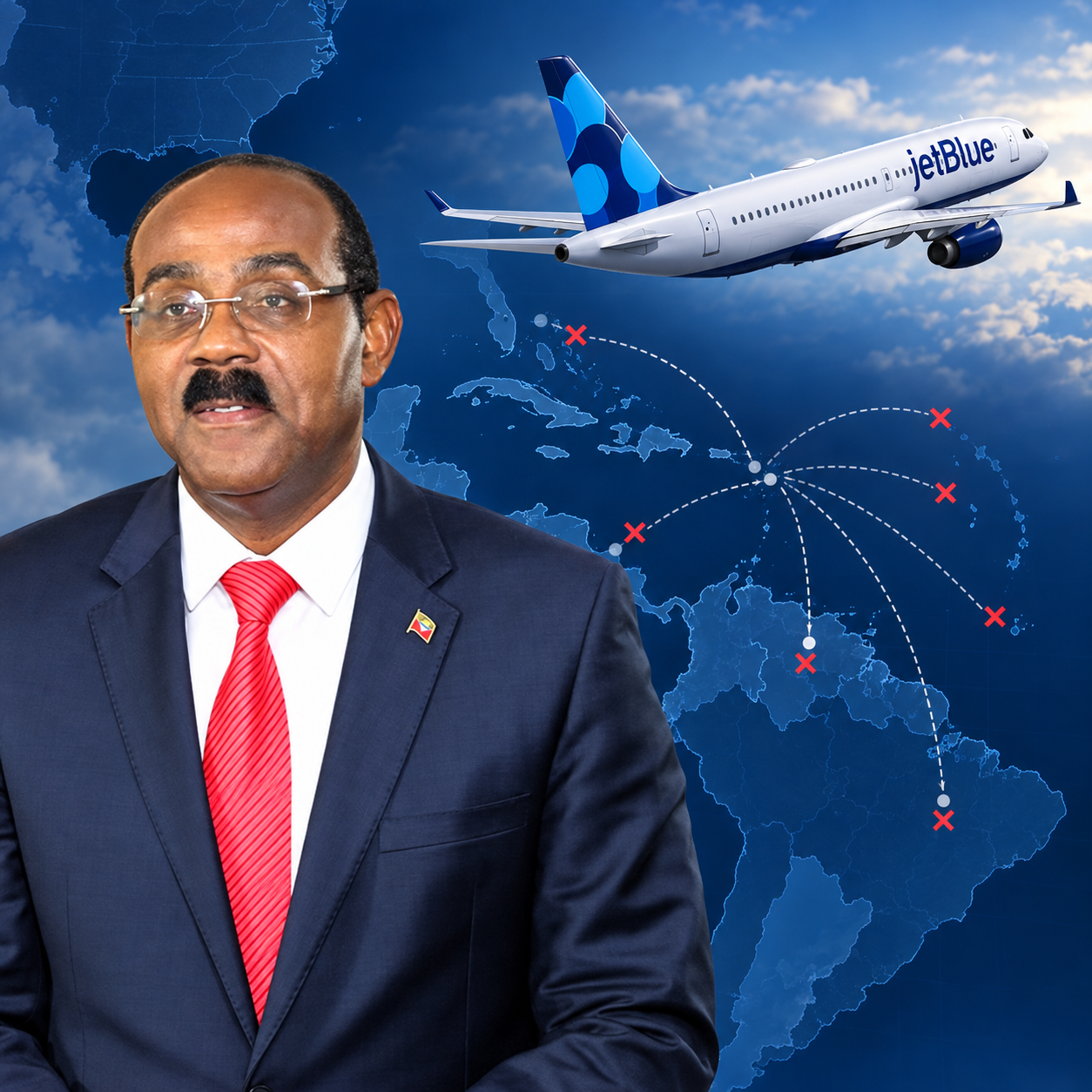
    When low-cost carrier JetBlue announced its withdrawal from Antigua and Barbuda, speculation quickly emerged that local policy or government missteps had driven the airline’s departure. But Antigua and Barbuda Prime Minister Gaston Browne has pushed back against those claims, framing the exit as one piece of a much larger corporate restructuring driven by deep financial headwinds hitting the airline across the Caribbean and South America.

    Speaking during an appearance on the *Browne and Browne Show* this past Saturday, Browne emphasized that the decision to cut the Antigua and Barbuda route was not driven by any factors unique to the twin-island nation. “It wasn’t an Antigua-specific issue,” he told listeners, outlining the cascading financial challenges that have forced JetBlue to scale back its footprint across the region.

    Per Browne’s assessment, JetBlue’s aggressive past expansion strategy has become unsustainable, after the airline posted cumulative losses totaling hundreds of millions of dollars. To right-size its operations, the carrier has pulled out of multiple destinations across the Caribbean and South America as part of its broader corporate restructuring plan.

    Two major recent setbacks have amplified JetBlue’s financial strain, Browne noted. First, the airline’s high-profile attempt to acquire fellow low-cost carrier Spirit Airlines was blocked by U.S. regulators, eliminating a key pillar of JetBlue’s long-term growth strategy. Compounding that failure, a proposed commercial arrangement between JetBlue and industry giant American Airlines also collapsed, removing another opportunity for the airline to stabilize its revenue and cut operational costs.

    Browne also addressed the gap in competitive conditions across the region, pointing out that many competing Caribbean tourism destinations offer direct subsidies to JetBlue to keep unprofitable routes running. Unlike those jurisdictions, Antigua and Barbuda does not provide public subsidies to the airline to maintain its service. The prime minister’s comments clear up widespread local confusion over the route exit, framing it as a consequence of corporate financial stress rather than any failure of local policy.

  • SpaceX Expected to Sponsor Commonwealth Business Forum, Elon Musk May Attend CHOGM in Antigua

    SpaceX Expected to Sponsor Commonwealth Business Forum, Elon Musk May Attend CHOGM in Antigua

    A high-profile new partnership is set to bring one of the world’s most recognizable aerospace firms into a key global diplomatic and business gathering, as Antigua and Barbuda closes in on a sponsorship deal with SpaceX for the 2026 Commonwealth Business Forum. Prime Minister Gaston Browne shared the update during an announcement Saturday, confirming that the Caribbean nation is in the final stages of formalizing the agreement with Elon Musk’s space and technology enterprise.

    Speaking on the progress of the partnership, Browne confirmed that SpaceX will rank among the top sponsors for the business forum, which is a core accompanying event of the 2026 Commonwealth Heads of Government Meeting (CHOGM). The high-level summit is scheduled to kick off in Antigua and Barbuda in November 2026, and the host government is framing the gathering as more than a routine diplomatic conference. Browne emphasized that the administration’s core goal is to draw long-term foreign investment, fresh capital, specialized skills, and cutting-edge technology to the small island nation, rather than just hosting a series of formal talks.

    One of the most anticipated possible outcomes of the new partnership is the attendance of SpaceX founder and CEO Elon Musk. Browne revealed that Musk has already signaled his availability to take part in the 2026 CHOGM, though the prime minister noted that his schedule has not been finalized and an official confirmation is still pending. “Potentially, Elon Musk has indicated that he is available, that he will participate, so we’re hoping that he’ll make it here,” Browne stated, framing Musk’s possible attendance as a major draw for the event.

    Beyond sponsorship and a potential Musk appearance, Browne outlined an unusual, attention-grabbing proposal tied to the partnership: SpaceX is set to provide a custom Cybertruck outfitted with SpaceX’s own Starlink satellite technology for official use during the summit. The vehicle could even be tapped to transport King Charles III during his attendance at the event, Browne added, noting that the plan is contingent on final approval.

  • Antigua and Barbuda Will Not Become Safe Haven for Foreign Criminals, PM Warns

    Antigua and Barbuda Will Not Become Safe Haven for Foreign Criminals, PM Warns

    Antigua and Barbuda’s top leader has drawn a firm line in the sand against transnational criminal activity, explicitly declaring that the twin-island nation will never serve as a refuge for offenders fleeing justice in other countries. Prime Minister Gaston Browne delivered the clear stance during an appearance on his weekly public program, the Browne and Browne Show, held Saturday, where he outlined recent encounters with criminal migrants and the government’s zero-tolerance approach to the issue.

    According to Browne, national security agencies have already identified multiple individuals who entered Antigua and Barbuda after allegedly committing serious crimes in neighboring and distant territories. “They seem to be coming to Antigua as a safe haven,” the prime minister told the audience. “Not just Jamaicans alone, but even other countries across the region and beyond.”
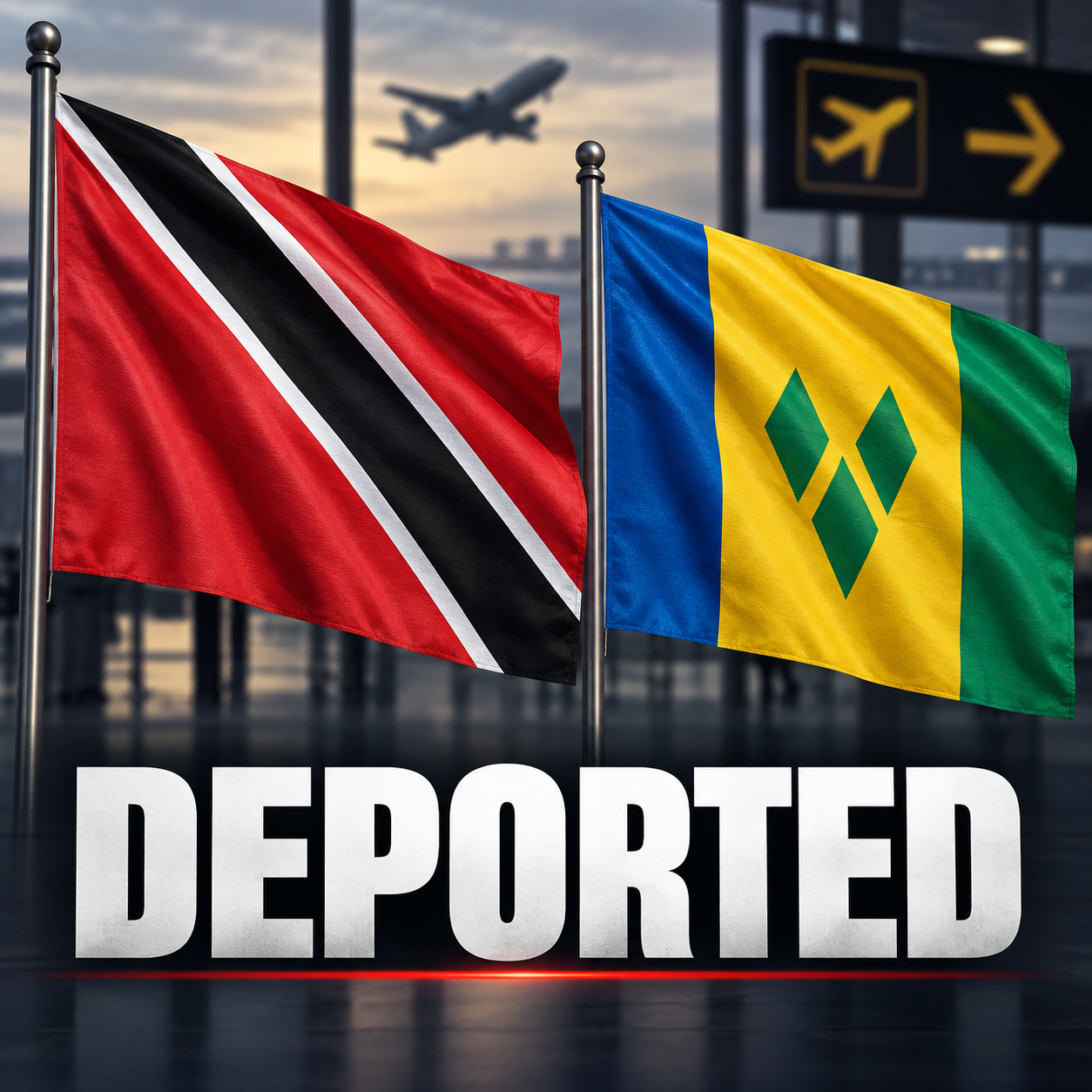
    Browne went on to cite specific recent enforcement actions that demonstrate the government’s commitment to upholding this policy. He confirmed that two individuals—a national of Trinidad and Tobago and a citizen of St. Vincent and the Grenadines—have already been deported back to their home countries in recent weeks. Additionally, a Jamaican man who is accused of fleeing Jamaican authorities to avoid prosecution is currently in custody at a correctional facility in Antigua and Barbuda, awaiting processing for deportation.

    Reiterating his message for any potential criminals considering the nation as a safe escape route, Browne emphasized that geographic origin would not lead to exceptions. “Antigua and Barbuda will never be a safe haven for criminals, no matter where you emanate from,” he warned. “You can come from the Caribbean, Europe, North America, South America, Asia — wherever you come from, you will be deported to whence you came.”

    In a crucial clarification to avoid unnecessary concern among legitimate residents, the prime minister stressed that the hardline policy applies exclusively to individuals linked to criminal activity. Law-abiding immigrants who have made Antigua and Barbuda their home and abide by the nation’s laws face no threat of deportation under this framework, he confirmed.

  • PM to Meet King Charles Before Attending UN Meetings in New York

    PM to Meet King Charles Before Attending UN Meetings in New York

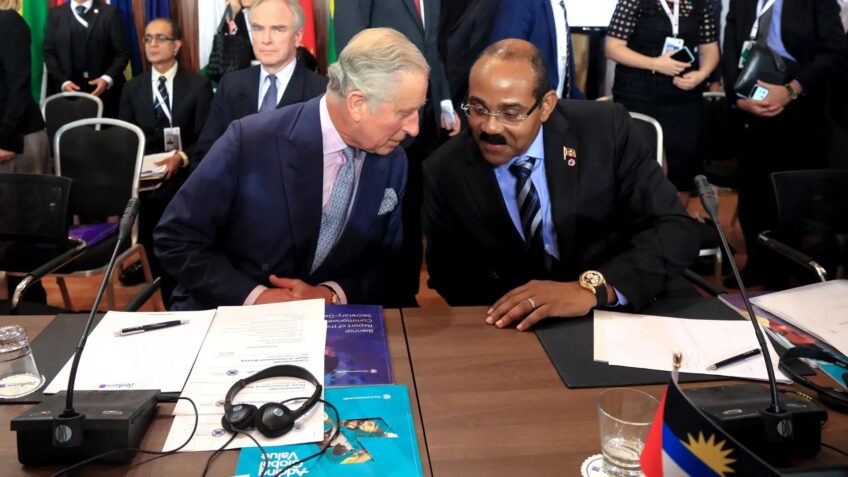
    Antigua and Barbuda’s Prime Minister Gaston Browne has unveiled his packed international travel itinerary for the coming weeks, which includes a high-profile audience with King Charles III this week ahead of key diplomatic meetings tied to the United Nations General Assembly in New York.

    Speaking publicly during the *Browne and Browne Show* this past Saturday, Browne confirmed that he will depart his home nation of Antigua and Barbuda this coming Monday, with a scheduled private audience with the British monarch set to take place on Wednesday. The prime minister noted he has one additional formal engagement planned for Thursday this week, before returning to Antigua and Barbuda this coming Friday.

    Following his brief return to the Caribbean nation, Browne will depart once again the next Monday for New York City to take part in UN General Assembly Week. While in the U.S. for the annual diplomatic gathering, the prime minister is set to hold a series of one-on-one bilateral meetings with other heads of government and official delegations from across the globe. In a notable announcement, however, Browne confirmed he will not deliver a formal plenary address to the full UN General Assembly during this year’s event.

    “I’m not making any formal statement at the UN this year, but I have a number of engagements, bilaterals in particular, with different heads of government and different delegations,” Browne told listeners during the Saturday interview.

    Beyond his upcoming trips to the United Kingdom and the United States, the prime minister also added that his schedule for the next two months remains remarkably full, with planned official visits to Fiji and Australia already locked in as part of his busy international agenda.

  • LISTEN: Police Report Increased Involvement of Jamaicans in Crime In Antigua and Barbuda

    LISTEN: Police Report Increased Involvement of Jamaicans in Crime In Antigua and Barbuda

    Antigua and Barbuda’s Prime Minister Gaston Browne has publicly confirmed that domestic law enforcement agencies have documented a noticeable uptick in criminal activity linked to Jamaican citizens operating within the twin-island nation. The head of government made the disclosure during a Saturday appearance on his signature public program, the Browne and Browne Show, noting that security officials had privately raised the concern to him multiple weeks prior to his public announcement.

    “In our country, we are observing a growing share of criminal activity that involves Jamaican individuals specifically,” Browne stated during the discussion. He cited a recent high-profile incident as a concrete example: the armed robbery at the Buckley Line Service Station, where one of the two suspects formally charged in the case is a Jamaican national.

    In an effort to head off potential diplomatic tension and community backlash, Browne emphasized that the Antiguan and Barbudan government has no intention of targeting Jamaican residents as a group, nor is it adopting a broadly hostile stance toward any nationality based on the actions of a small subset of individuals.

    “I do not want law-abiding Jamaicans who have built lives in our society to believe they are being singled out for scrutiny,” he explained. “But we have a responsibility to be honest with our population and be transparent about the security challenges we are facing.”

    Browne added that Jamaican nationals who respect Antigua and Barbuda’s laws, alongside all other law-abiding Caribbean immigrants residing in the country, have nothing to fear from the government’s upcoming security crackdown. In fact, he framed the push to remove criminal elements from the country as a measure that will protect law-abiding immigrant communities just as much as it protects native citizens.

    Closing his remarks, the prime minister issued a clear warning that all immigrants living in Antigua and Barbuda are required to comply with the nation’s legislation. He stressed that the country will not allow itself to become a safe haven for transnational criminals looking to escape prosecution in other territories.

  • LISTEN: PM Says Trinidadian and Vincentian Criminal Suspects Were Deported From Antigua and Barbuda

    LISTEN: PM Says Trinidadian and Vincentian Criminal Suspects Were Deported From Antigua and Barbuda

    Antigua and Barbuda’s Prime Minister Gaston Browne has confirmed that two foreign nationals, a citizen of Trinidad and another from St. Vincent and the Grenadines, suspected of involvement in local criminal activity, have recently been deported from the twin-island nation. Speaking during his regular appearance on the *Browne and Browne Show* this past Saturday, Browne addressed a growing concern that has emerged in Antigua and Barbuda: a steady increase in the number of Caribbean citizens from other regional states alleged to be participating in illegal activity within the country’s borders.\n\n“Within the last few weeks, we had a Trinidadian and a Vincentian, two individuals with confirmed criminal backgrounds who entered the country, and we have now completed their deportation,” Browne stated during the interview. He also took the opportunity to reference a previous high-profile deportation case, that of a well-known Vincentian national only identified publicly as “Dexter.” Browne characterized Dexter as a notoriously violent and high-impact criminal who had long evaded successful prosecution by local law enforcement authorities, making deportation the only viable resolution to protect public safety.\n\nIn an effort to push back against accusations that the government’s deportation policy is targeted at specific nationalities, Browne emphasized that the administration holds no inherent hostility toward any Caribbean national. He reaffirmed that law-abiding foreign nationals from across the region who enter Antigua and Barbuda for work, family, or residence will continue to be welcomed and enjoy full protection under the country’s laws.\n\nEven so, the Prime Minister issued a clear warning to any immigrant who chooses to engage in criminal activity after entering the country: any violation of local laws will result in immediate removal. “When you come to our country, we expect you to be law-abiding citizens,” Browne said, underscoring that the government’s top priority remains protecting the safety and security of Antigua and Barbuda’s native population and legal residents. The announcement comes amid a regional push to coordinate cross-border law enforcement efforts to combat transnational organized crime, a growing challenge for many small island developing states across the Caribbean.

  • Preliminary Information Suggests Swetes Killing May Be Drug-Related- PM

    Preliminary Information Suggests Swetes Killing May Be Drug-Related- PM

    Antigua and Barbuda’s Prime Minister Gaston Browne has publicly stated that preliminary law enforcement intelligence points to a drug connection in the fatal shooting that took the life of 39-year-old Kerew Richards in Swetes Village this week. Speaking during an appearance on the locally broadcast Browne and Browne Show Saturday, the prime minister addressed growing public anxiety over a recent spike in violent criminal activity across the islands, and shared what preliminary information investigators have so far developed.

    Browne clarified that his assessment is based on unconfirmed guidance from law enforcement agencies working the case. “I stand corrected, but I’m just saying that law enforcement officers have said to us that it’s drug-related,” Browne told listeners. The prime minister emphasized that the information remains preliminary and has not undergone full verification through the ongoing investigative process. As the probe continues, Browne also issued a public appeal to both local residents and immigrant communities to respect and abide by the national laws of Antigua and Barbuda.

    The victim, Kerew Richards, was a resident of St. Ann’s Road in Swetes. His body was discovered shortly before 10 p.m. Friday on the outdoor verandah of a local residential property. Responding officers confirmed that Richards had sustained multiple gunshot wounds, which were determined to be the cause of his death. At this early stage of the investigation, official police spokespeople have not released any public statement confirming a potential motive for the killing, leaving open all lines of inquiry as detectives work to identify and apprehend the perpetrator.