作者: admin

  • VIDEO: Shopkeeper suspects arson

    VIDEO: Shopkeeper suspects arson

    A devastating fire has completely destroyed a commercial establishment in Buccament Bay, with the business owner publicly expressing suspicions of intentional arson. The incident occurred on Friday, December 5, 2025, reducing the shop’s entire inventory and contents to ashes.

    Latoya Butcher, a Vermont resident who operates the affected business, revealed her concerns about deliberate fire-setting in the wake of the destructive blaze. While official investigations remain ongoing, Butcher’s statement marks a significant development in the case, suggesting potential criminal intent behind the incident.

    The fire represents not just a property loss but a substantial blow to local commerce and entrepreneurship in the Buccament Bay area. Butcher’s operation served as both a livelihood and community resource, making its destruction particularly impactful for the local economy.

    Authorities have yet to release official findings regarding the fire’s origin and cause. The investigation will likely involve forensic analysis of the fire scene, witness interviews, and examination of potential motives for arson if evidence supports Butcher’s suspicions.

    The case highlights ongoing challenges facing small business owners regarding property security and crime prevention. Community response and support efforts are expected to emerge as residents process the implications of this significant local incident.

  • New 70-Foot Patrol Vessel Coming as Antigua and Barbuda Steps Up Maritime Security

    New 70-Foot Patrol Vessel Coming as Antigua and Barbuda Steps Up Maritime Security

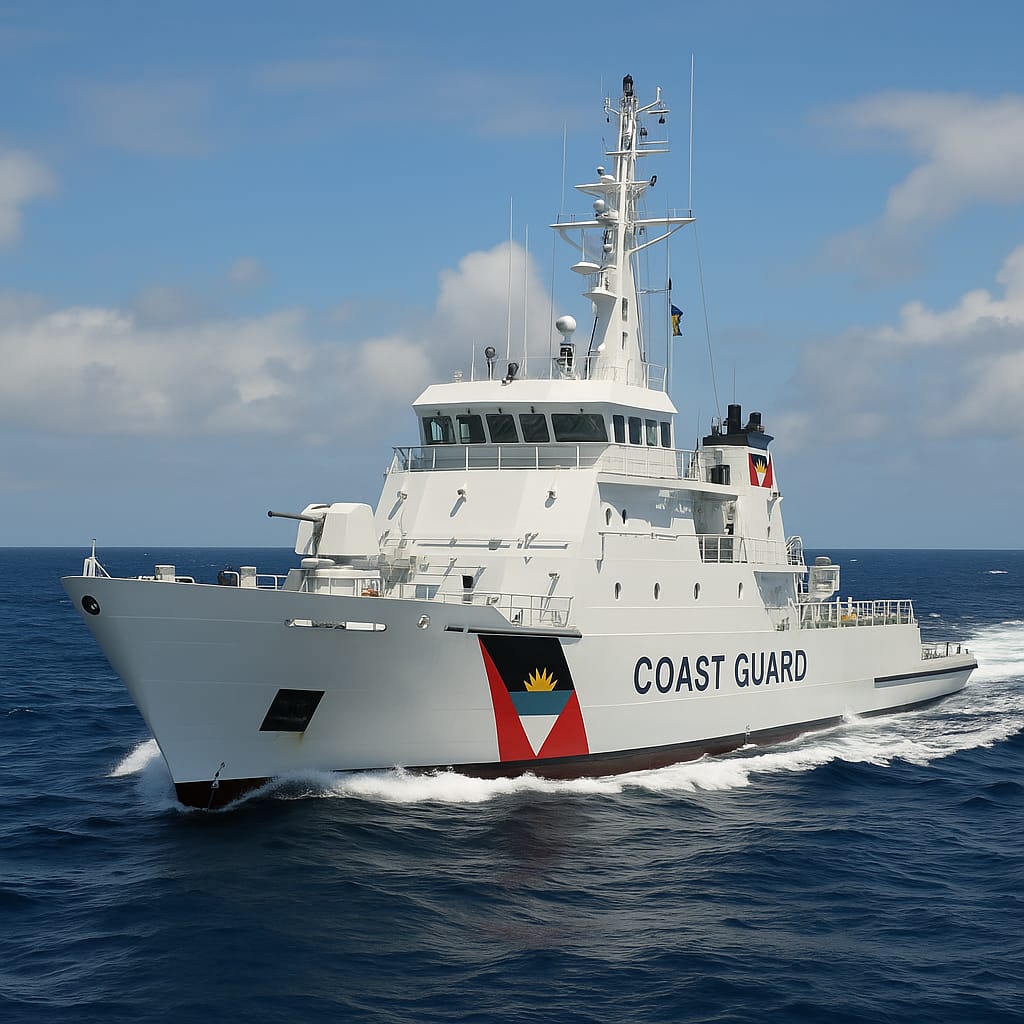
    The government of Antigua and Barbuda has unveiled a comprehensive maritime security enhancement plan as part of its 2026 national budget, signaling a decisive crackdown on transnational criminal operations in its territorial waters. Prime Minister Gaston Browne announced the forthcoming acquisition of a substantial 65-70 foot offshore patrol vessel specifically designed to strengthen deep-water operations against narcotics trafficking networks.

    The strategic investment represents a significant escalation in the nation’s border protection capabilities, building upon earlier security measures that included the deployment of a 30-foot interceptor vessel to law enforcement agencies. ‘We’re going for the drug traffickers with superior resources,’ Browne declared before Parliament. ‘We now possess vessels that outperform those used by criminal elements.’

    Complementing the naval expansion, Cabinet has approved a substantial US$1 million allocation for advanced radar systems and communications infrastructure upgrades. This technological enhancement will provide authorities with unprecedented real-time surveillance coverage across the nation’s maritime territory, addressing critical visibility gaps that smugglers have historically exploited.

    The integrated approach—combining faster interception craft, extended radar coverage, and modernized communication networks—aims to comprehensively disrupt illegal entry points and reinforce anti-narcotics operations. The new offshore patrol capability will notably extend the Coast Guard’s operational range beyond coastal regions, enabling extended missions, enhanced interdiction capacity, and improved search-and-rescue capabilities in deeper waters.

    Additional specifications regarding deployment timelines and operational details are anticipated to emerge as parliamentary budget deliberations continue next week.

  • Armed Men Kick Down Door, Confront Father in Cashew Hill Break-In

    Armed Men Kick Down Door, Confront Father in Cashew Hill Break-In

    A residential community in Cashew Hill has been plunged into a state of heightened anxiety following a terrifying home invasion by four armed assailants in the early hours of Thursday, December 4. The harrowing incident, which occurred at approximately 6:50 a.m., targeted the home of Shabo Nedwell and her father, triggering urgent calls for enhanced security measures and increased police patrols in the neighborhood.

    According to an eyewitness account from a concerned neighbor, the confrontation began when Ms. Nedwell’s father was confronted in his yard by two masked individuals brandishing firearms. The intruders immediately demanded his ‘big gold chain,’ initiating a tense physical altercation during which the homeowner courageously pushed a weapon away from his face and struggled with one assailant. Simultaneously, two additional masked accomplices scaled the property’s gate, forced their way onto the gallery, and kicked in the front door, shattering glass to gain entry into the home where Shabo was present indoors.

    The situation reached a critical turning point when a neighbor investigating the commotion approached the property, prompting the four armed men to abandon their mission and flee the scene. The perpetrators were observed escaping over the gate and retreating to a white Vitz vehicle parked two streets away from the crime scene.

    Remarkably, the family reported no stolen possessions following the invasion, deepening the mystery surrounding the attackers’ motives. The psychological impact on the residents appears profound, particularly for Shabo Nedwell, who had previously survived a traumatic pit bull attack just two months earlier at her aunt’s residence. Demonstrating remarkable resilience, Ms. Nedwell reportedly composed herself and proceeded to work merely an hour after the violent break-in.

    The community now grapples with pressing security concerns, with residents explicitly requesting the installation of surveillance cameras and improved police protection. The neighborhood’s sense of safety has been fundamentally compromised, leaving families questioning why their community was targeted and fearing future incidents.

  • Stage prepared for the 2025 CMEx Leadership Awards to honor Caribbean visionaries, global partners

    Stage prepared for the 2025 CMEx Leadership Awards to honor Caribbean visionaries, global partners

    The Caribbean tourism and media landscape prepares to honor its most distinguished contributors at the upcoming 2025 Caribbean Media Exchange (CMEx) Leadership Awards. This premier event, scheduled to unite influential professionals, cultural ambassadors, and policy makers from across the Caribbean region and its global Diaspora, serves as a pivotal platform for recognizing excellence and fostering future leadership development.

    A landmark feature of this year’s ceremony will be the inaugural presentation of the CMEx Lifetime Achievement Award to Sir Baltron Bethel, a foundational figure in Caribbean tourism. Hailed as a national hero of The Bahamas, Sir Baltron holds the distinction of being the first and longest-serving Bahamian Director General of Tourism, whose visionary policies have profoundly shaped regional tourism development on the international stage.

    The awards will further celebrate fifteen exceptional leaders whose innovative work continues to drive progress in Caribbean tourism, cultural promotion, and economic growth. The 2025 honorees represent a diverse cross-section of expertise, including:
    – Carole Alexis, Martinique’s renowned Choreographer and Artistic Director
    – Dave Chang, Senior Vice President at Carnival Cruise Line
    – Key tourism authority CEOs: Ronella Croes (Aruba), Muryad de Bruin (Curaçao), and May-Ling Chun (St. Maarten)
    – Industry pioneers including Laura Davidson (LDPR), Clarisa Jiménez (Puerto Rico Hotel & Tourism Association), and Monique Hamaty-Simmonds (Tortuga Rum Company)

    Adding diplomatic significance to the event, numerous government officials and regional leaders will participate as distinguished guests. The confirmed attendance includes tourism ministers and directors from Grenada, U.S. Virgin Islands, Anguilla, and the Bahamas, alongside chief executives of major regional organizations including the Caribbean Tourism Organization and Caribbean Hotel and Tourism Association.

    The ceremony will be elevated by a headline performance from Bahamian vocalist Simmone Bowe, whose versatile repertoire spans jazz, reggae, R&B, and gospel traditions.

    Bevan Springer, CMEx President, emphasized the awards’ broader mission: “These exemplary honorees embody the Caribbean’s spirit of leadership, innovation, and service. Their transformative contributions across tourism, business, and community development inspire our collective future.”

    Proceeds from the fundraiser will directly support educational programs, youth empowerment initiatives, and professional training designed to cultivate the next generation of Caribbean tourism and media leadership. The event enjoys substantial backing from platinum sponsor Bahamas Ministry of Tourism, Investments and Aviation, alongside major support from Nassau & Paradise Island Promotion Board, British Virgin Islands Tourist Board, Tropical Shipping, Sandals Resorts representative Unique Vacations, and numerous additional destination and corporate partners.

  • Diaz-Canel congratulates members of Cuban student organization

    Diaz-Canel congratulates members of Cuban student organization

    Cuban President Miguel Díaz-Canel has publicly commemorated the 55th anniversary of the Federation of Secondary School Students (FEEM), recognizing the organization’s enduring role in channeling youth enthusiasm toward national development. In social media statements, the head of state emphasized the significance of the federation reaching this milestone while maintaining unwavering support for the revolutionary ideals that inspired its creation.

    Díaz-Canel articulated that academic pursuit represents the most profound contribution students can offer their homeland, stating that dedicated study provides the capable support that Cuba both deserves and requires. This philosophical framework continues to guide the organization’s mission in contemporary Cuban society.

    The anniversary celebrations garnered attention from numerous high-ranking officials, including Roberto Morales Ojeda, Secretary of Organization of the Central Committee of the Communist Party, and Meyvis Estevez Echeverria, First Secretary of the Young Communist League. Their participation underscores the institutional importance placed on youth organizations within Cuba’s political structure.

    Established on December 6, 1970, FEEM emerged during a period of strengthened mass organization development aimed at revitalizing secondary education student movements. Historical documents indicate the federation inherited operational experience from predecessor organizations including the Union of Secondary School Students and the José Antonio Echeverría Student Brigades. These institutional precursors contributed substantially to developing the framework that would eventually address student concerns through structured channels.

  • Business voices demand more on tech, tourism, culture

    Business voices demand more on tech, tourism, culture

    In the wake of the Saint Lucia Labour Party’s decisive electoral victory on December 1st, prominent business executives have articulated their expectations for the new administration’s economic agenda. Three industry leaders shared their perspectives with St. Lucia Times, highlighting critical policy areas that could shape the nation’s development trajectory over the coming five-year term.

    Michelle Samuel, founder of business development consultancy SLUDTERA Inc. and Programme Lead of BizConnect Caribbean, maintains a nonpartisan position while emphasizing the government’s digital transformation promises. Her organizations rely extensively on robust digital infrastructure to empower entrepreneurs and youth across the Caribbean region. Samuel specifically referenced manifesto commitments regarding ICT infrastructure expansion, AI adoption initiatives, and enhanced digital education from primary through tertiary levels. She stressed that policy continuity in innovation support and youth empowerment would significantly advance her mission of serving underserved communities.

    Keen ‘The Mecca’ Cotter, a veteran music entrepreneur with over twenty years of industry experience, expressed approval of proposed reforms in the creative sector. He endorsed plans to reconfigure the Cultural Development Foundation into a Development and Training Agency for the Arts, noting that this institution would require a renewed mandate focused on industry-relevant training. Cotter particularly welcomed the establishment of an Orange Economy Unit dedicated to creative advancement, emphasizing that comprehensive arts scholarships should encompass business administration and music management alongside performance training. He characterized proposed inter-agency collaboration between cultural institutions as a long-overdue step toward unified creative sector development.

    Julian Adjodha, CEO of the J.A.G. Group of Companies and recent Caribbean Global Awards honoree, addressed disparities in the tourism industry. The founder of Island Adventures/Sun & Fun Tours called for equitable incentives for local operators, arguing that foreign investors currently receive disproportionate concessions. Adjodha maintained that leveling the economic playing field would enable domestic enterprises to expand operations and generate increased employment opportunities, ultimately strengthening Saint Lucia’s primary industry through enhanced local participation.

  • Perugorria’s film with first class cast at Havana Film Festival?

    Perugorria’s film with first class cast at Havana Film Festival?

    A significant new Cuban cinematic work, ‘Anonymous Neurotic or Without Fear of Life,’ is generating attention as a featured entry in the Latin American Competition section of a major film event. The 2025 production stars acclaimed veterans Mirtha Ibarra and Roberto Perdomo, bringing to screen a narrative originally crafted as a theatrical piece by Ibarra herself.

    In exclusive dialogue with Prensa Latina, Ibarra—renowned for her roles in iconic films like ‘Adorable Lies’ (1991) and the internationally celebrated ‘Strawberry and Chocolate’ (1993)—disclosed that the film tackles two profound themes: systemic mistreatment of women and the cultural resurgence of cinema as a vital social space.

    The project serves as a tribute to the late Cuban director Juan Carlos Tabío (1943–2021), best known for his groundbreaking work ‘Plaff or Too Much Fear of Life’ (1988). Ibarra emphasized that the title itself acknowledges this artistic homage, reflecting a shared spirit of fearless storytelling.

    Cinephiles will recognize numerous cinematic references woven throughout the film, drawing from both Cuban and international traditions. These elements emerge organically through the perspective of Iluminada, Ibarra’s character, who exists in a liminal space between reality and the imagined world of film.

    The narrative follows Iluminada, a rural young woman who relocates to pursue her aspiration of becoming an actress. When her ambitions are unrealized, she redirects her passion toward training as an art instructor—yet destiny ultimately positions her as an usherette in a historic movie theater. Her marriage to Osvaldo (portrayed by Perdomo) and the tensions of her daily existence gradually precipitate a psychological crisis, exploring themes of identity, ambition, and resilience within a changing society.

  • Cuba’s Failde Orchestra concerts raises excitement in Colombia

    Cuba’s Failde Orchestra concerts raises excitement in Colombia

    The acclaimed Failde Orchestra, a three-time Latin Grammy nominee celebrated for its revitalization of classic Cuban genres, is set to deliver two electrifying performances at Cartagena’s legendary Cafe Havana on January 30th and 31st. This engagement represents a significant cultural event, merging historical musical preservation with contemporary artistic expression.

    Founded in 2012 to honor the legacy of Miguel Failde—the pioneering composer credited with creating the first danzon piece, ‘Las Alturas de Simpson’—the orchestra has established itself as a guardian of Cuba’s rich sonic heritage. While danzon serves as the foundational element of their repertoire, the ensemble masterfully navigates through danzonete, bolero, son, timba, mambo, and cha-cha-cha, occasionally weaving in modern influences to create a dynamic auditory experience.

    The group’s instrumentation pays homage to the traditional Cuban charanga format popular throughout the 20th century, yet distinguishes itself with an augmented brass section. This innovative arrangement features alto saxophone/clarinet, trombone, and dual trumpets, creating a powerful and distinctive sound that honors tradition while pushing artistic boundaries.

    Cafe Havana, located in the vibrant Getsemani district, provides the perfect backdrop for these performances. The iconic venue has built its reputation on promoting authentic Cuban salsa and other traditional rhythms through high-caliber live shows featuring virtuoso musicians and exceptionally talented dancers, making it a cultural hub for music aficionados.

    The orchestra’s upcoming performances follow their recent professional milestone: a nomination for the 2025 Latin Grammy Award in the Best Traditional Tropical Album category for their critically acclaimed work ‘Caminando Piango Piango.’ This marks their third nomination from the Latin Recording Academy, significantly bolstering their international profile and validating their ongoing mission to preserve and innovate within the framework of traditional Cuban music.

  • COMMENTARY: Sometimes Good Is Unacceptable

    COMMENTARY: Sometimes Good Is Unacceptable

    A profound national conversation is unfolding in Antigua and Barbuda, challenging the very definition of progress. Drawing parallels to the biblical narrative of Cain—whose sincere offering was rejected not for its lack of effort but for its misalignment with divine standards—commentator Yves Ephraim critiques the current government’s trajectory. The central argument posits that while the administration may showcase a list of accomplishments, these achievements hold little relevance if they fail to prioritize the economic empowerment and ownership opportunities for Antiguans and Barbudans themselves.

    The core issue is identified as a fundamental misalignment between government priorities and the people’s interests. Citizens are increasingly relegated to the role of perpetual low-wage workers and mendicants, with little prospect of owning homes, building substantive careers, or securing their economic future. This model, where citizens “own nothing but be happy,” is deemed unacceptable for a nation aspiring to become a sustainable ‘Economic Powerhouse’.

    Historical and contemporary evidence is marshaled to support the thesis that national wealth is intrinsically linked to citizen ownership. China’s remarkable transformation from poverty to global powerhouse is cited as a prime example, achieved by empowering its citizens to build and own export-oriented industries. Conversely, the author finds no historical precedent for a nation achieving wealth by selling prime assets to foreign interests or ceding economic control.

    The collapse of the nation’s Gaming Industry serves as a cautionary tale. When the U.S. government threatened its citizens involved in offshore gaming, the entire sector in Antigua and Barbuda crumbled. The author speculates that a different outcome might have emerged had local citizens held a 50% ownership stake, underscoring the vulnerability of foreign-dominated sectors.

    Specific policy barriers are highlighted, particularly in the telecommunications sector, where licensing regimes allegedly prevent private Antiguan and Barbudan entrepreneurs from profiting. The article argues that liberalizing this sector could unleash a wave of young, intelligent, and entrepreneurial talent to launch international ventures, earn foreign exchange, and reverse the crippling brain drain, especially in the high-demand IT field.

    Finally, the nation’s investment in education is called into question. Without a parallel focus on cultivating an entrepreneurial class, the author contends that expensive education, like that provided at the University of the West Indies campus, merely prepares young people to flee to first-world countries for meaningful employment. The article concludes that the ‘good’ achieved by the government is ultimately irrelevant without a significant advance in Antiguan and Barbudan ownership of their land and economy.

  • FCCA Christmas Gift Project for underserved children continues in Dominica

    FCCA Christmas Gift Project for underserved children continues in Dominica

    For over twenty years, the island nation of Dominica has maintained its cherished participation in the Florida Caribbean Cruise Association’s annual Christmas Gift Project, a humanitarian initiative that delivers holiday cheer to underprivileged children throughout the Caribbean region. According to an official release from the Discover Dominica Authority, this longstanding partnership exemplifies the island’s enduring dedication to community welfare.

    The philanthropic program specifically targets children residing in foster homes and care facilities who might otherwise experience the holiday season without receiving gifts. This year’s edition will see the MV Celebrity Ascent cruise ship arriving on December 8, 2025, carrying donations destined for two hundred Dominican children. Crew members from the vessel will collaborate with representatives from Dominica’s Ministry of Tourism, the Discover Dominica Authority, and the West Dominica Children’s Federation to facilitate the special gift distribution ceremony.

    Discover Dominica Authority CEO Marva Williams emphasized the profound impact of the initiative, stating: ‘The FCCA Christmas Gift Project continues to make a real difference in the lives of our children. Every year, it reminds us of the power of kindness and partnership. We are grateful to the FCCA and the crew of the Celebrity Ascent for bringing smiles to our young ones and helping to make the season a little brighter for families across Dominica.’

    The Discover Dominica Authority reaffirmed its ongoing coordination with the FCCA to ensure the project’s seamless execution and to create meaningful experiences for participating children. Both the Ministry of Tourism and the Discover Dominica Authority expressed profound gratitude for the FCCA’s sustained generosity and commitment to improving the lives of Caribbean youth. Dominica has further pledged its continued support for this program and future initiatives that promote community wellbeing and enhance quality of life across the nation.