作者: admin

  • Economy : The US Congress is making progress toward renewing the HOPE/HELP program

    Economy : The US Congress is making progress toward renewing the HOPE/HELP program

    In a significant bipartisan move, the U.S. House Ways and Means Committee has initiated proceedings to renew critical trade legislation supporting Haiti’s economic stability. On December 10, 2025, lawmakers advanced discussions regarding the extension of both the HOPE II Act (Haitian Hemispheric Opportunity Through Partnership for Encouragement) and the HELP Act (Haiti Economic Lift Program). These preferential trade agreements have served as fundamental pillars for Haiti’s textile and apparel industry, providing tariff advantages for exports to the United States.

    Committee Chairman Jason Smith articulated the strategic importance of these programs, emphasizing their dual benefit for both nations. “Establishing equitable and mutually advantageous trade relations with Haiti generates employment opportunities and fosters stability in a nation historically challenged by humanitarian emergencies,” Smith stated during the session. “Haiti’s economic prosperity directly correlates with enhanced security outcomes for the United States within the Western Hemisphere.”

    The legislative package under consideration represents a continuation of trade policies initially established through the original HOPE Act. These measures have effectively positioned Haiti’s manufacturing sector as a primary driver of economic activity by enabling competitively priced access to the vast U.S. market. The renewal process demonstrates continued American commitment to supporting sustainable development in Haiti through structured economic partnership rather than direct aid.

    Industry analysts note that the textile and apparel sector accounts for approximately 90% of Haiti’s exports to the United States, making these trade preferences essential for maintaining economic stability. The bipartisan support for the renewal indicates recognition across political divides that economic development in Haiti aligns with broader regional security and diplomatic objectives.


  • UDP Warns of Mounting Debt Under Briceño

    UDP Warns of Mounting Debt Under Briceño

    BELIZE CITY – The United Democratic Party (UDP) has issued a stark warning regarding Belize’s fiscal trajectory, accusing the ruling People’s United Party (PUP) administration of excessive borrowing that threatens the nation’s economic future.

    In a forceful address, UDP Senator Patrick Faber revealed that government borrowing has reached approximately six hundred million Belize dollars ($600 million) over the past five years. Faber emphasized the magnitude of this debt accumulation, specifically noting for clarity: “For those who like it like the former prime minister, Musa, that is point six million dollars with a B.”

    The opposition senator framed this borrowing spree as a generational burden, asserting that while the borrowed funds have been expended, the financial obligations will persist for decades. “The point is, that money is now gone, but the stench from borrowing all that money remains for our children and our children’s children and even our children’s children’s children to pay,” Faber stated during his presentation.

    Faber’s criticism targeted the PUP’s governing approach, claiming this pattern of debt accumulation reflects the party’s operational philosophy. The UDP has consequently demanded an immediate cessation of further national borrowing.

    “The UDP calls for a cease and desist of borrowing in the name of this country, a cease and desist of borrowing in the name of our children’s children,” Faber declared, emphasizing that current policies are saddling future generations with unsustainable debt while citizens remain unaware of the long-term implications.

    The statement represents the latest escalation in Belize’s ongoing political debate over fiscal responsibility and economic management, setting the stage for continued parliamentary confrontation over the nation’s financial direction.

  • Sugar Crop Start in Limbo as BSI & Cane Farmers Deal Still Pending

    Sugar Crop Start in Limbo as BSI & Cane Farmers Deal Still Pending

    The commencement of Belize’s crucial sugar harvesting season hangs in precarious balance as Belize Sugar Industries (BSI) and the Belize Sugar Cane Farmers Association (BSCFA) have yet to finalize a commercial agreement for the current season. This recurring deadlock has historically triggered industrial actions that paralyzed milling operations, resulting in substantial financial losses across the agricultural sector and broader economy.

    Compounding the contractual impasse, unfavorable weather conditions and ongoing maintenance at processing facilities have already delayed the season’s start. Industry analysts warn that any further postponement could severely impact crop yields and economic outcomes for all stakeholders.

    Despite the tension, Marcos Osorio, Chairman of the Sugar Industry Control Board, maintains cautious optimism. In an official statement, Osorio revealed that BSI maintains its position requiring seven-year contract terms, while confirming a critical meeting scheduled for next Tuesday involving all stakeholders and government representatives.

    “We remain hopeful that an agreement can be reached within coming days or before year’s end,” Osorio stated. “Both parties must approach negotiations in good faith with willingness to compromise. True negotiation requires flexibility from all sides to reach an amicable solution.”

    The industry now faces a race against time, with the combination of contractual delays, weather challenges, and milling readiness creating a perfect storm that could determine the season’s profitability for thousands of cane farmers and the national economy.

  • Sugar Crop Start Delayed Again Amid Mill and Road Setbacks

    Sugar Crop Start Delayed Again Amid Mill and Road Setbacks

    The commencement of the annual sugar harvest is confronting significant operational delays, with industry authorities now projecting a mid-January start date. This postponement stems from a confluence of logistical challenges affecting both industrial infrastructure and transportation networks.

    Central to the delay are protracted maintenance operations at the primary processing facility. Initial projections from mill engineers in late October indicated completion by the first week of December, with subsequent steam trials scheduled to facilitate an immediate harvest initiation. However, supply chain complications have extended the maintenance timeline, with completion now anticipated for the first week of January.

    Concurrently, critical infrastructure improvements have been hampered by meteorological conditions. Roadway maintenance contracts finalized with government contractors in late October have encountered repeated weather-related interruptions. Persistent precipitation has created unfavorable field conditions, preventing contractors from initiating essential repairs to the transportation network vital for crop movement.

    Marcos Osorio, Chairman of the Sugar Industry Control Board, maintains an optimistic outlook despite these challenges. “We’re confronting operational hurdles, but the industry’s fundamental strength remains intact,” Osorio stated. The revised schedule now anticipates steam trials immediately following January maintenance completion, with crop processing commencing approximately one week thereafter, assuming favorable operational conditions.

    The industry’s resilience is being tested by these dual challenges, though leadership expresses confidence in achieving strong seasonal results despite the compressed timeframe.

  • Sugar Industry Faces Delays, Lower Yields as Weather and Pests Take Toll

    Sugar Industry Faces Delays, Lower Yields as Weather and Pests Take Toll

    The global sugar industry is confronting severe production challenges as extreme weather patterns and aggressive pest infestations converge to create one of the most difficult growing seasons in recent memory. According to Marcos Osorio, Chairman of the Sugar Industry Control Board, northern sugar cane districts are experiencing substantial delays and diminished crop quality that will significantly impact this year’s harvest.

    Agricultural experts report that the cumulative effect of post-harvest climate conditions, combined with widespread Mealybug infestations and Fusarium wilt disease, has severely impeded normal cane development. Fields that underwent harvesting in the initial half of the season demonstrate notably stunted growth compared to previous years, with many plants failing to reach adequate maturity levels.

    The crisis manifests through multiple indicators: reduced cane stocks per linear meter, decreased tonnage per acre, and compromised crop quality due to persistent rainfall and disease proliferation. The industry’s concerns are compounded by recent weeks of excessive precipitation that have further deteriorated field conditions and hindered recovery efforts.

    Agricultural authorities now urgently await drier weather patterns, including potential cold fronts, to accelerate drying processes across affected regions. These conditions would potentially facilitate improved cane maturation and partially mitigate the current quality deficiencies. The industry faces a compressed harvesting window with diminished yields, creating economic pressures throughout the sugar production chain from field to market.

  • Female Financial Freedom: A Step Towards Ending Domestic Violence

    Female Financial Freedom: A Step Towards Ending Domestic Violence

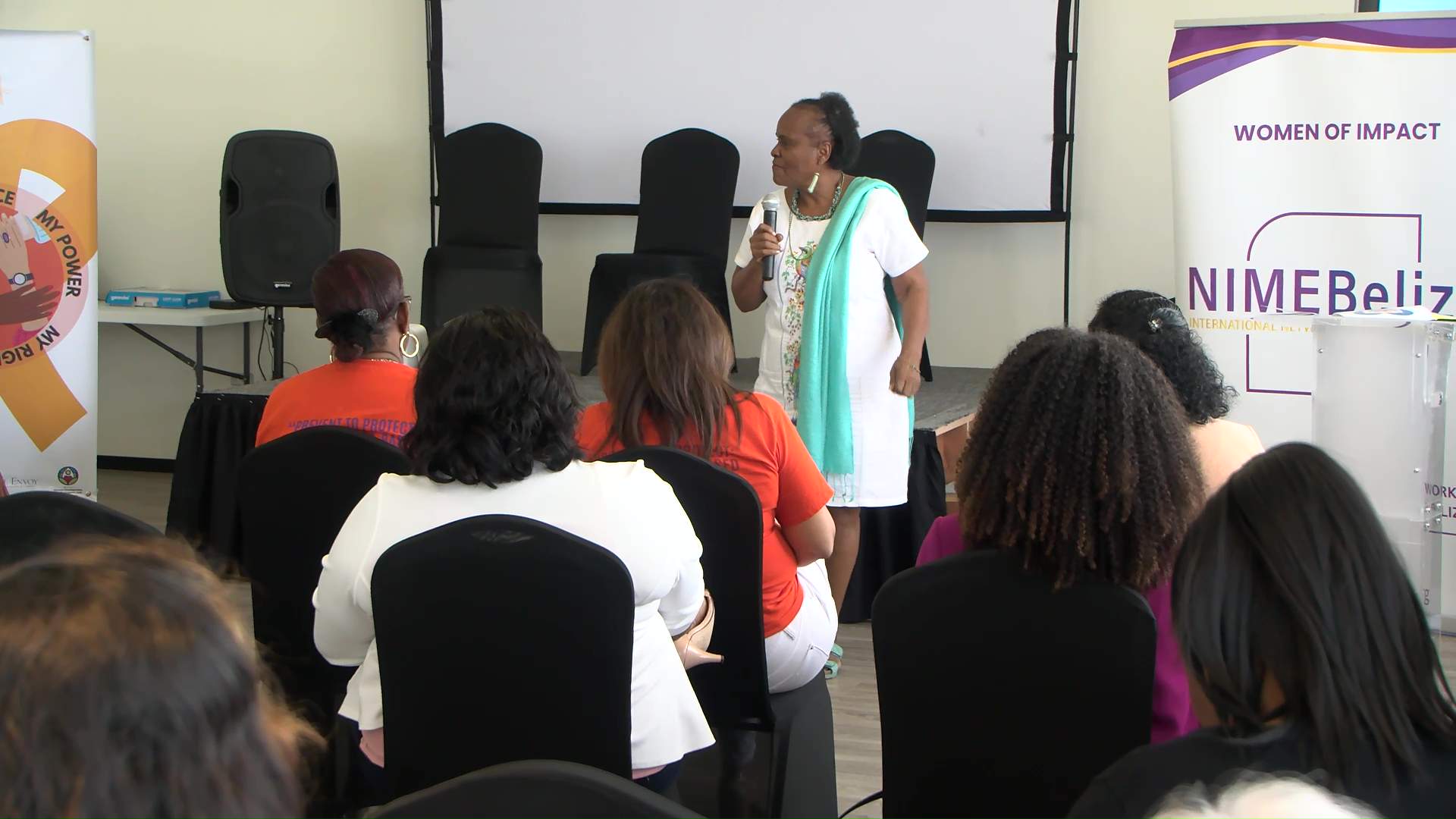
    Belize has concluded the global Sixteen Days of Activism Against Gender-Based Violence campaign with a groundbreaking roundtable discussion highlighting financial independence as a crucial defense mechanism for women facing domestic abuse. The event, organized collaboratively by the Ministry of Human Development, the International Network of Women in Business, and the Office of the Special Envoy, brought together prominent women leaders, advocates, and stakeholders to address systemic barriers perpetuating violence and exclusion.

    Michelle Rodriguez, Communications Officer at the Ministry of Human Development, emphasized the government’s proactive stance: “We have a minister championing amendments to the domestic violence bill and the JP Bill. These legislative changes, if passed, will create substantial improvements for women across our nation. We’re witnessing more women breaking their silence and demanding change—this cultural shift is exactly what we need.”

    Dr. Minerva Pinelo, Co-founder of NIME Belize, presented compelling analysis connecting economic stability to violence prevention: “When a woman achieves financial solvency, she gains the practical means to escape abusive situations. While the decision to leave remains complex and potentially dangerous, economic independence provides one of the most effective tools against what some countries are now declaring a femicide epidemic.”

    The discussion specifically addressed implementation strategies, focusing on bridging the gap between entrepreneurial ambition and practical execution. Dr. Pinelo noted: “Many women possess innovative business ideas and detailed plans, but lack the startup capital to transform concepts into reality. Our network is dedicated to connecting these entrepreneurs with acceleration programs and seed funding opportunities that can catalyze their economic autonomy and personal safety.”

  • UDP Demands Transparency on Rumored Speednet Sale

    UDP Demands Transparency on Rumored Speednet Sale

    BELIZE CITY – Political tensions have escalated surrounding the rumored acquisition of telecommunications provider Speednet by Belize Telemedia Limited (BTL). The United Democratic Party (UDP) has formally challenged the government’s transparency regarding the potential consolidation, demanding immediate public disclosure of all details concerning the speculated deal.

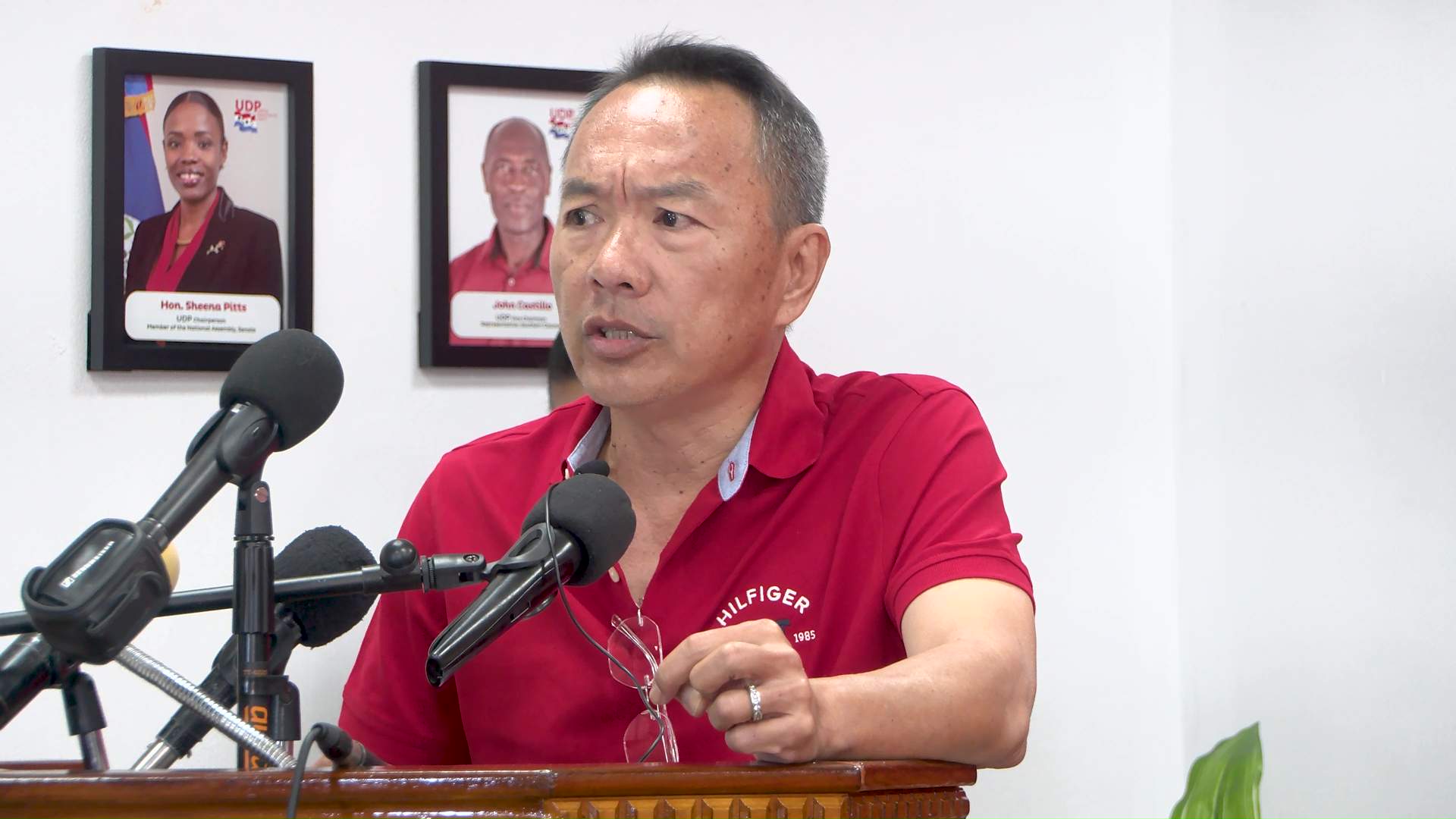
    Lee Mark Chang, Area Representative for Mesopotamia, delivered a forceful critique of the alleged negotiations, highlighting the conspicuous absence of concrete information. “For months we have been hearing whispers, rumors of a deal,” Chang stated. He emphasized that BTL is a national asset, with 91% Belizean ownership, and questioned the rationale behind using its resources to acquire competitors like Smart, NEXGEN, and Centaur.

    The opposition’s central argument hinges on a profound lack of transparency. Chang challenged the government’s narrative, asking, “They tell us that it is a good deal for Belize. But if it is such a good deal then why all the secrets?” He pointed to the absence of a signed agreement, a public report, or a disclosed purchase price, describing the process as shrouded in secrecy.

    Employing a vivid analogy, Chang compared the situation to a business owner inexplicably directing customers to a competitor, only to later be forced to buy that same rival. The core of his inquiry focused on the ultimate beneficiaries of the transaction. He posited that the primary winners would not be the Belizean public or the national economy, but rather the private family owners of the acquired companies, who would receive a “risk-free, massive payday” that would secure wealth for generations.

    The UDP’s demands have thrust the rumored corporate maneuver into the political spotlight, framing it as a matter of national interest that requires rigorous public scrutiny and accountability from the current administration.

  • PM Dodges Speednet Deal Questions, Cites Brother’s Stake

    PM Dodges Speednet Deal Questions, Cites Brother’s Stake

    Prime Minister John Briceño of Belize has strategically deflected inquiries regarding a prospective acquisition involving telecommunications providers BTL and Speednet, citing his brother’s financial stake in Speednet as grounds for non-participation in discussions. The situation presents a potential conflict of interest given that Briceño’s administration maintains majority ownership of BTL while his brother holds direct investments in Speednet.

    During a recent press engagement, Briceño acknowledged the familial financial connection but emphasized his personal detachment from Speednet investments. “Belize is a small country and you all know I have never lived off my government salary,” Briceño stated. “I do not have any direct investments with Speednet—it is my brother.”

    The Prime Minister defended the government’s approach to state-owned enterprises, noting that despite government majority ownership, BTL operates as a private entity with autonomous decision-making authority. Briceño pointed to BTL’s remarkable financial turnaround under his administration, highlighting how the company transformed from generating one million dollars in 2019 under the previous UDP government to exceeding twenty million dollars in recent performance.

    Drawing parallels to his private business experience with Centaur, Briceño explained the logical business case for expansion through acquisition. He detailed how his company grew from a small Orange Walk Town operation through strategic purchases of smaller companies across multiple communities, ultimately expanding into cable services. This growth strategy, according to Briceño, mirrors what BTL might pursue to enhance cash flow and profitability.

    The Prime Minister concluded that BTL’s leadership should make decisions based solely on the company’s best interests, despite the overlapping familial and governmental connections that have raised questions about potential conflicts in the proposed telecommunications merger.

  • Taskforce voor productieve arbeid en kansen kwetsbare groepen vergroten

    Taskforce voor productieve arbeid en kansen kwetsbare groepen vergroten

    Surinamese President Jennifer Simons has officially inaugurated the specialized task force ‘From Poverty to Welfare Through Productive Labor’ on December 10th. This high-level working group has been mandated to develop practical, targeted programs designed to help citizens acquire vocational skills and sustainably escape poverty cycles.

    The initiative comes at a critical time when numerous families across Suriname continue to face significant financial and social vulnerabilities. Chairperson Donaghy Malone emphasized that the task force’s mission directly aligns with the government’s broader social policy framework, which prioritizes sustainable poverty reduction, protection of vulnerable populations, and enhanced development opportunities for those living below the poverty line, school dropouts, and youth in challenging circumstances.

    The comprehensive approach addresses both individual development pathways and community-wide improvement strategies. The task force comprises representatives from multiple key ministries including Education, Science and Culture; Youth Development and Sports; Economic Affairs, Entrepreneurship and Technological Innovation; alongside the Foundation for Labor Mobilization & Development and the Foundation for Productive Work Units—all organizations with demonstrated expertise in workforce mobilization and vocational training.

    According to the Suriname Communication Service, the task force will initially conduct thorough field assessments to identify target populations. Malone noted the particular challenge in reaching these groups: ‘You won’t simply find the target population on streets or in schools. We must actively seek them out, precisely because they often don’t automatically access available services.’ The working group, potentially accompanied by President Simons herself, will conduct neighborhood visits to directly assess community needs.

    The program structure includes intensive training periods ranging from four to six months, with possible extensions up to one year. Significant emphasis will be placed on post-training support, including job placement guidance, entrepreneurship assistance, and pathways for participants to return to formal education systems. The task force will provide periodic progress reports to President Simons to enable timely policy adjustments throughout the implementation process.

  • FLASH : Women’s Entrepreneurship, Call for Expressions of Interest

    FLASH : Women’s Entrepreneurship, Call for Expressions of Interest

    The Haitian Ministry of Commerce and Industry (MCI) has officially announced the commencement of the second cohort for its Women’s Entrepreneurship Support Project (PAEF), marking a significant stride toward enhancing female economic participation nationwide. This strategic initiative aims to bolster women-led enterprises through comprehensive technical and financial assistance, targeting the expansion of women’s foothold in Haiti’s business landscape.

    Central to the PAEF’s mission is the augmentation of economic opportunities for Haitian women entrepreneurs by facilitating business consolidation and growth. The project outlines five specific objectives: capacity building for 500 women entrepreneurs through technical training; improved credit access for 300 micro, small, and medium-sized enterprises (MSMEs) via tailored financing solutions; startup support for 100 young women entrepreneurs through specialized mentoring; encouragement of business formalization to simplify regulatory processes; and identification of promising economic opportunities across multiple value chains.

    Priority sectors include agriculture, livestock, fishing, manufacturing, crafts, recycling, tourism, technology, and logistics. Eligibility requires applicants to be female business leaders with innovative, revenue-generating ideas, operating businesses in growth phases within Haitian territory, who are not current beneficiaries of other MCI programs.

    The application window runs from December 9 to December 31, 2025. Prospective participants must submit business plans using templates available on the MCI website and complete the online registration form at: https://docs.google.com/forms/d/e/1FAIpQLSfLxJSwiExtjB0q921yXeYA-Nboscw_dAMxw9FZ8RbOg9bw2w/viewform